Note: This leg of the trip took place in mid-January. Due to my health issue a week later I just never got around to writing this post until now.
“I think we should visit Timor Leste!” Heather exclaimed one afternoon as I swung in my hammock outside our guesthouse room in Ubud. ‘Oh God’ I thought. I was perfectly content here on Bali. Morning walks through the rice fields. A slew of great eateries available. Cooling off in the pool each afternoon. Enjoying cold Bintangs (the Indonesian beer) while watching sunsets. Why would she want to take us to one of the world’s newest, and poorest countries? No one I knew had been there. Why did we have to be the first?
World-class snorkeling. I guess that was as good a reason as any. So we packed our bags and took the two hour flight from Denpasar to Dili, Timor Leste’s capital. Dili is, as you might expect, a bit . . . rough. Three governments in the past three years haven’t been able to figure out how to use the revenue from the oil and gas found offshore, or the tourist dollars (and they’re actually dollars as the official currency is our very own greenback) to build the country up. On the ride from the airport to our guesthouse we saw crumbling sidewalks, pot-holed streets, loads of sullen-looking young men sitting around (no doubt the ladies were off working) and trash littering the shoreline. It all seemed pretty depressing. Yet, it turns out the Timorese are a pretty happy bunch. They were not about to let a little adversity get them down. Our driver, the guesthouse manager, mentioned that it was a particularly busy day. “Oh, are there many other guests?” we enquired. “No, there are no other guests. It’s just that two of my family died today. And only last month three others in my family died.” He said this rather matter-of-factly. Then he laughed and pointed out the new shopping center we were passing.
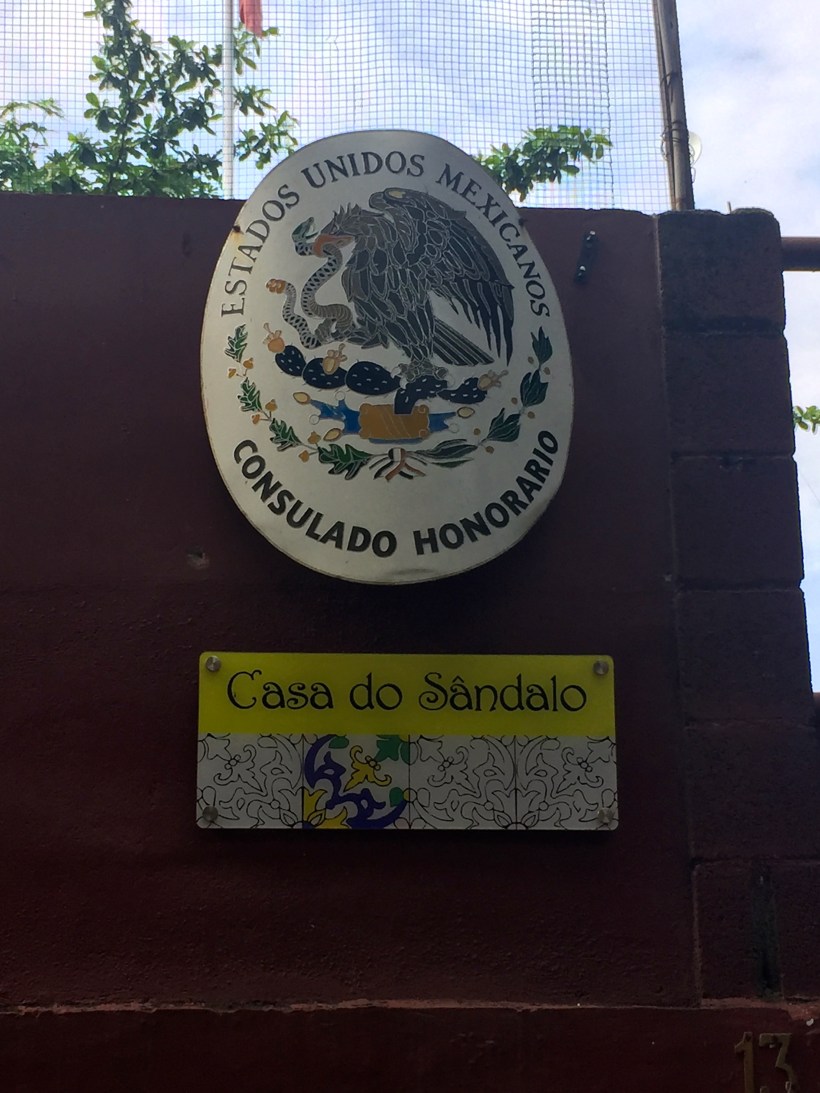
Guesthouse/consulate in Dili.
As we arrived at the Pousada Casa do Sandalo, a guard pushed back a large metal gate, allowing us access to the compound, which consisted of a cobblestone courtyard around a fountain and several trees, scattered wrought iron furniture, and a half dozen rooms facing a larger, main building. The structures were all painted a pleasant shade of yellow. A bit weird, I thought. The place reminded me of Mexico. When I went into the office to register, the same manager that drove us was sitting behind a massive wooden desk and greeted me once again. He pointed to a Mexican flag beside the desk. “Welcome to Pousada Casa do Sandalo and the honorary consulate of Mexico!” I wasn’t crazy then. I guess in Timor Leste, everyone needs a side hustle.
We would not dally in Dili. Our ultimate objective was Atauro Island, a mountainous mass on the northern horizon that we reached the next morning after a two-hour boat ride. We checked in to the Atauro Dive Resort, which overlooked the beach and boasted of an amazing house reef just offshore. Calling itself a ‘resort’ might have been a bit of a stretch. I hadn’t been to any other ‘resort’ where all the guests shared one pit toilet. The bed was comfortable and there was a huge deck facing the water, so there were pluses. What we didn’t realize at the time was how important the mosquito net on the bed would be. It would be the only safe haven, other then being in the water, from the relentless onslaught of flies and mosquitos. We could slather ourselves with DEET while sitting on the deck and lessen the biting of the mosquitos but nothing deterred the flies. Meals were eaten with one hand while waving away the flies with the other. If there was any area of the body not sprayed with repellent, it was bitten by mosquitos (imagine using that pit toilet!). After waking in the morning, the mosquitos were laying in wait outside the net as I exited our safe haven and quickly donned pants and long-sleeve shirt, then sprayed feet, hands and head with the repellent. After snorkeling, failing to immediately respray while storing gear or hanging wet clothing resulted in another round of bites.

Approaching Atauro Island from Dili.
The snorkeling was, indeed, world-class. We’d never seen such a density of hard corals anywhere. The carpet of colors was mesmerizing. Large sandy areas were littered with starfish in reds, blues and orange. All the usual tropical fish species were in evidence. Blue-spotted rays, banded sea snakes and various moray eels were icing on the cake. We would spend six days on Atauro Island – snorkeling, swatting, spraying and sometimes cursing. When the time came to return to Dili for a night prior to our flight back to Bali, we were almost grateful to be leaving the bugs behind.
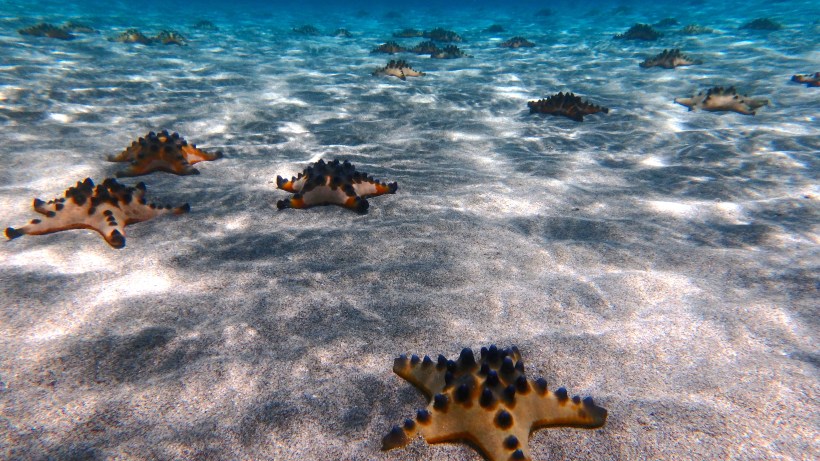
Invasion of the starfish . . .
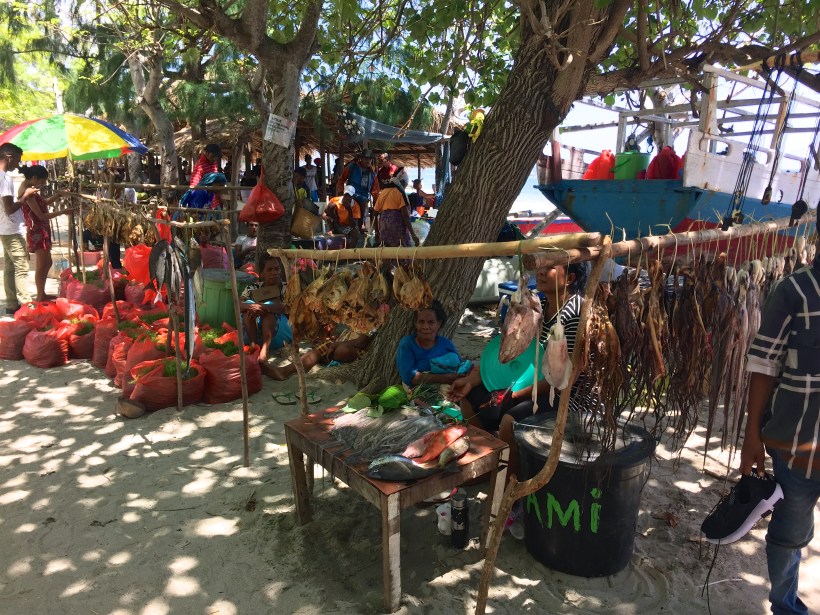
Atauro Island’s Saturday market – fresh and dried fish. The red bags contain seaweed. A pleasant diversion from all the snorkeling
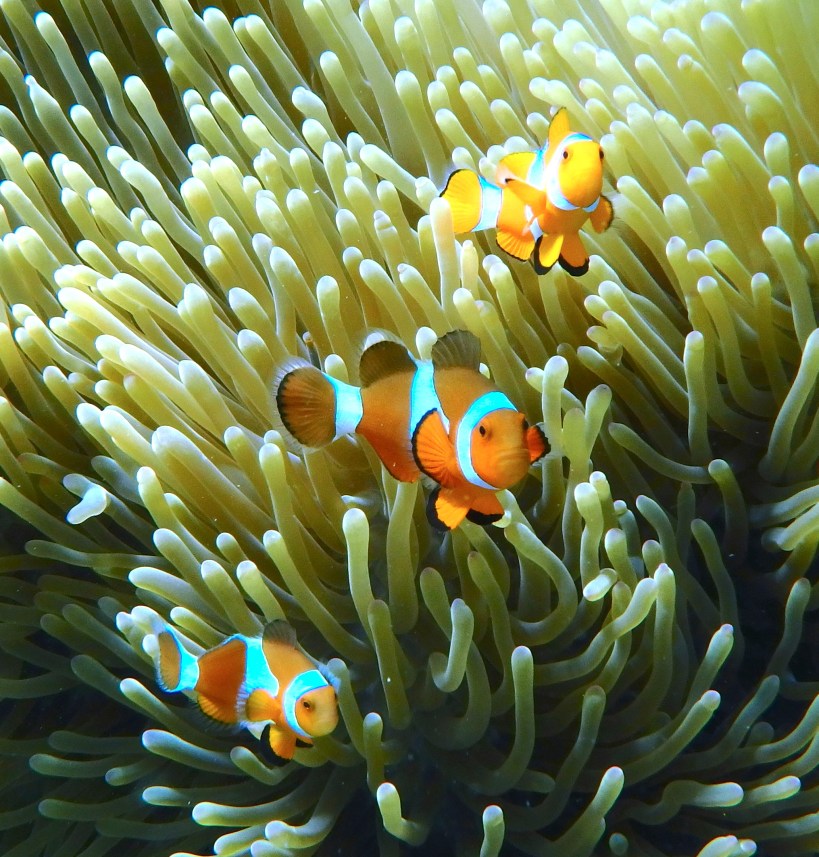
Everyone loves these little guys!

Heather gives the Atauro reef a solid 10!
 The Rhum Line