With five amazing days snorkeling in Raja Ampat already behind us, we were excited to start the second phase of our visit to this eastern Indonesian wonderland. We met our guide, Roli, on the pier in Sorong, just beside the local fish market. We chatted while we waited for the dinghy that would take us out to the Raja 4 Adventurer, an older wooden vessel that would be our home for the next ten days. As soon as we were aboard, and had greeted our fellow passengers, a group of seven Germans, we motored south from Sorong towards the large island of Misool, the centerpiece of the southern part of Raja Ampat. Crossing the Seram Sea, we didn’t see any land for hours. Eventually, in the late afternoon, the shadow of jagged islands on the horizon came into view. Just before nightfall we tied the boat to a mooring ball surrounded by small steep-sided islands covered in dense vegetation. We dined on fish (!), rice and veggies, then retired to our cabins, eager for an early start and a day in the water. Arising at sunrise, we ate fried eggs and toast, then boarded the dingy for the first of four snorkeling excursions that day. Motoring to one of the islands, we dropped in on a wall just a few feet offshore. The steep elevation above water continued down below. The wall was nearly vertical and the bottom was invisible. Immediately folks started picking their heads up out of the water to call out – ‘shark’, ‘turtle’, ‘ray’, ‘octopus’. They were all there, but for me the real stars of the show were the corals. Hard corals, soft corals, fans, whips, tube sponges in every color. I didn’t know where to look. Towards shore were the hard corals, at the top of the wall were schools of fish and soft corals, and in the deep were the larger fishes – jacks, tuna, trevalley, bump-head parrot fish and the occasional shark or turtle. Stunning stuff. And we’ve got nine days of this! Each ensuing snorkel was fantastic – more walls, a mount in the open sea teeming with big fish, shallow reefs leading to white sand beaches. Eventually, the big stuff became so commonplace we stopped boasting to each other about how many sharks or turtles we had seen (though the octopi still elicited much excitement). At the end of each day we dragged ourselves out of the water for the final time, took a quick fresh-water rinse and eagerly awaited dinner so we could eat and get to our bunks in order to rest up for the following day.
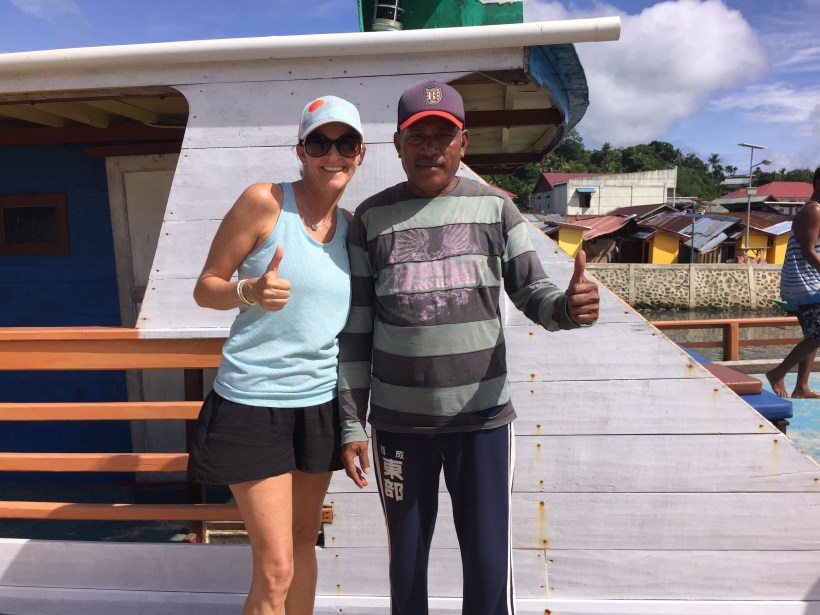
Heather and the captain, dockside, with the Raja 4 Adventurer.
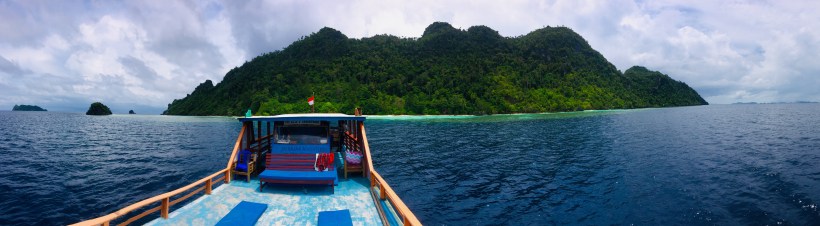
At anchor off one of many beautiful islands.

Another stunning bay. As beautiful above as below.
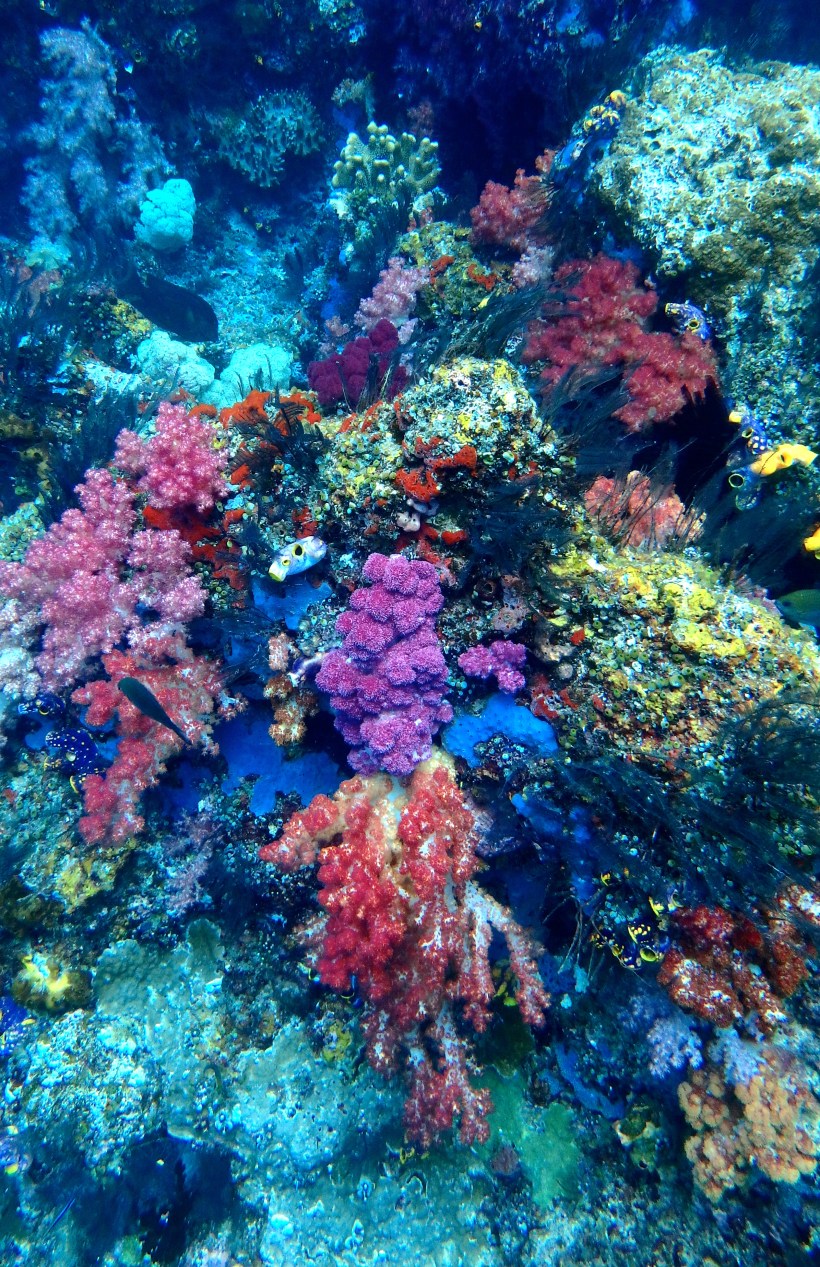
Some of the amazing color below.
In between snorkeling excursions, we would occasionally take the dinghy to one of the islands that surrounded us for a short trek to a view point. We ‘oohed’ and ‘aahed’ at the incredible views, looking down on heart-shaped Love Lagoon, or the expanse of limestone pinnacles that filled the waters around us. Even from the tops of hills we could spot sharks, turtles and larger parrotfish swimming in the clear waters of the lagoons below.
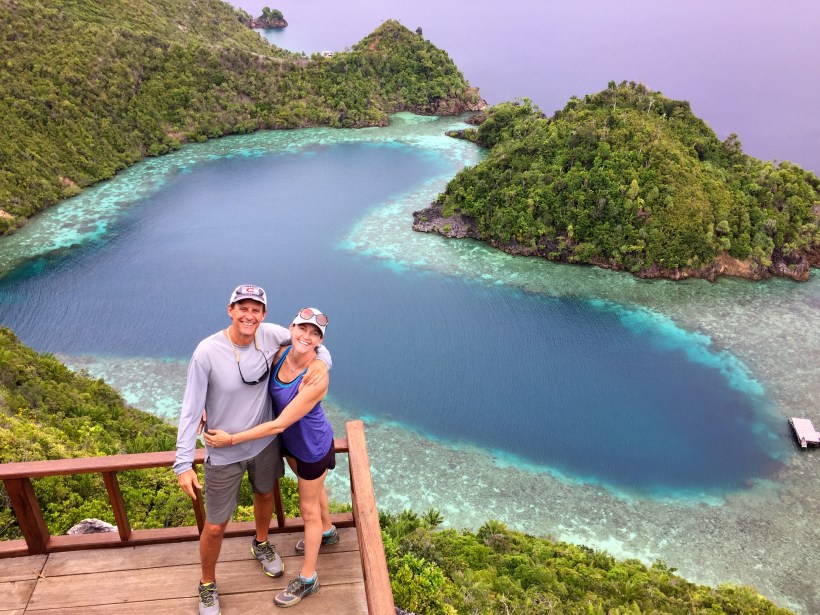
Why do they call this Love Lagoon?
During the middle of our trip, we spent an afternoon visiting Yelen village, on a small island off the eastern point of Misool. As soon as our boat dropped anchor just off the town jetty, the kids playing there stopped and started to shout and wave. By the time our dinghy reached the jetty, more kids had come out to greet us. We felt like the pied piper, leading a horde of village children through the streets of the town, shrieking and posing for photos. There wasn’t much conversation, other then repeated shouts of “Hey!”, “Mister!” or “Hello!” from them. After we strolled through town and had seen the sights – the mosque, with it’s gang of male elders sitting outside; the soccer field, hosting a herd of grazing goats; a few shops selling essentials like cooking oil, chips, candy and laundry powder; and a few stalls offering vegetables, including eggplants, onions, chilies and sour melons, we returned to the jetty with our entourage. High-fives were exchanged with each of the boys and a final group photo was taken on the dock before we departed in the dinghy. Everyone waved, not stopping until we were back at our boat.
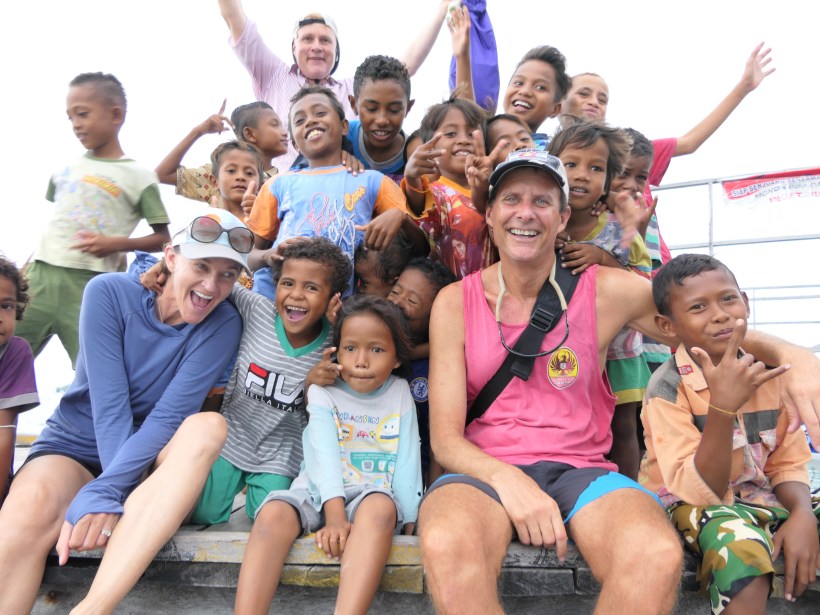
It doesn’t get better then this.
With few exceptions our tour of the area was private. On two days we spied another live aboard anchored in the distance. At one snorkeling spot a dinghy was dropping divers into the water as we were getting picked up. Despite the dozens of boats that ply the waters of Raja Ampat, the fact we saw few others is a testament to the vast area here that has, so far, escaped mass tourism. The Coral Triangle, as this region is called, is a breeding ground for coral and fish species that can eventually make their way to far flung areas to repopulate other reefs that have been decimated by overfishing and other destructive environmental practices. It’s essential this breeding ground be protected and visited responsibly.
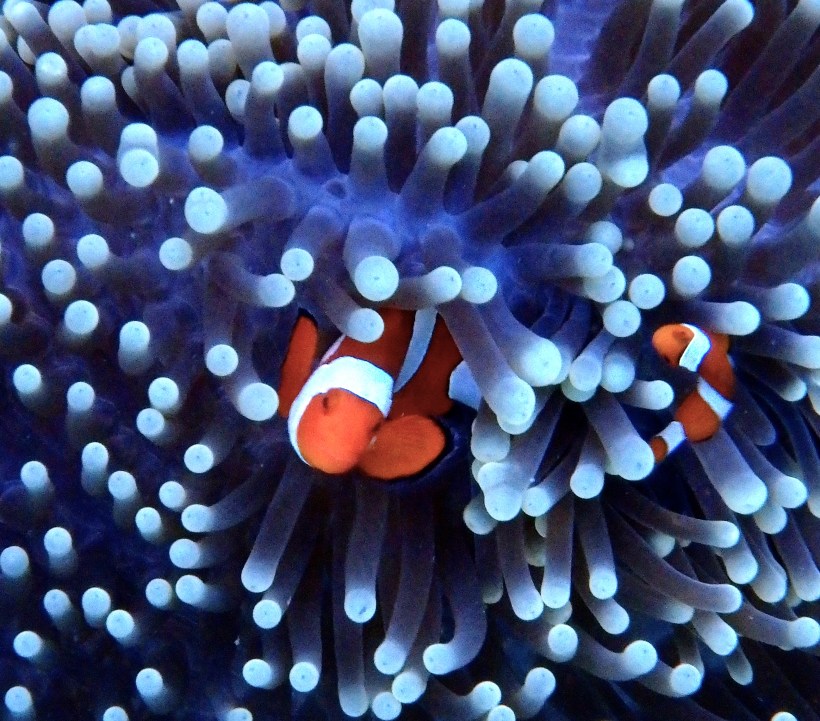
Who doesn’t love a clown (anenome fish)?
 The Rhum Line