I felt like we were trying to sleep inside a giant snare drum – such was the sound of the pounding rain on the corrugated metal roof of our cabin in Cocles, just south of Puerto Viejo, Costa Rica. While lying awake, just when you thought it couldn’t possibly rain any harder – the downpour would intensify. Every once in a while a falling coconut would hit the roof, providing the clashing cymbal to the nightlong drum solo. Then, just as it seemed we had fallen back to sleep when the storms abated, dawn brought the raucous chorus of howler monkeys, screeching parrots and squawking toucans. No sleeping in here – such is life in the rainforest.
The other thing about the rainforest – bugs. You’re always warned that you’d better be comfortable being in ‘nature’ when visiting Costa Rica. By ‘nature’ they mean bugs. Crawling, flying, slithering, hopping. Drop a cracker crumb or leave a package of snacks open and before you know it a trail of ants have found it. Hole in the window screen – beetles, mosquitoes and crickets will find their way in. In the bathroom you can always count on at least one mean-looking spider setting up shop for the duration of your stay. Due to the heavy rain and the fact nothing ever got a chance to dry out – we had snails appear in our shower.

Bad nature.
The unrelenting rain had put a literal damper on our one-week stay. Heading to Costa Rica we had dreams of swimming, snorkeling and walking the long beaches of this stretch of Caribbean coast. But the surf was big enough to swallow the beaches up, huge tree trunks rolled in the roiling waters and the frequent downpours made leaving the cabin a risky proposition. When we did get breaks in the storms we ventured out to the Gandoca-Manzanillo National Wildlife Refuge to walk it’s nature trail where we spotted spider monkeys, strolled along dirt tracks from our cabin to see sloths and, best of all, viewed those parrots and toucans right from the deck of our accommodation. The good kind of ‘nature’.
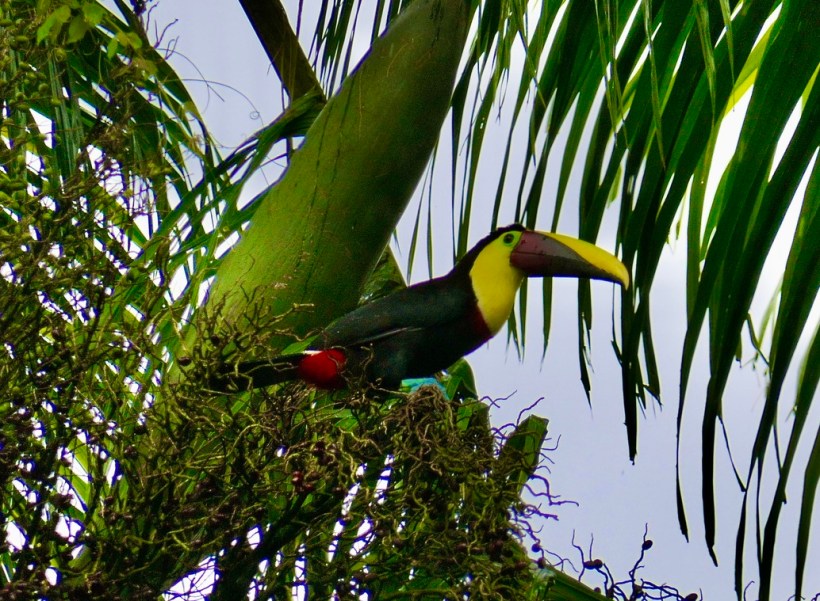
Keel-billed toucan from our deck (good nature).
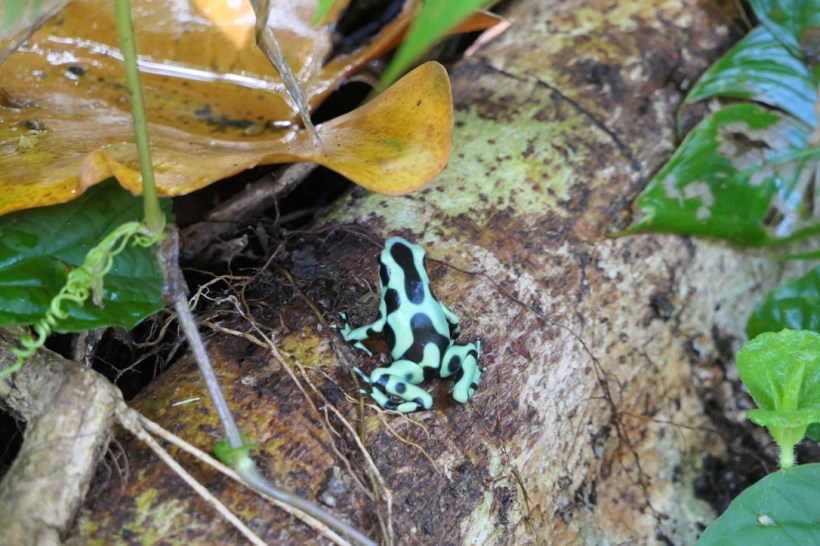
Green poison dart frog.

Spider monkey mom and babe.
After about three days of incessant rain (following a week of similar weather back in Bocas del Toro) Heather was yelling at the sky for relief. ‘Can’t fight the weather’ I’d mumble under my breath from my hammock. But by day five I too was standing next to her screaming “Enough already!”
After our wet week in Cocles, we moved north to Cahuita, which sits just outside of the national park of the same name. Once there, a funny thing happened – it stopped raining. For three whole days! We took advantage of our good fortune by strolling through the small town, which is best described as . . . unassuming. Functional, perhaps. Certainly nothing fancy, flashy or overly charming. But it held a small selection of restaurants, a couple grocery stores, and, just outside of town, what seemed like the world’s greatest collection of sloths. They were everywhere. Hanging from the lower limbs of trees, snoozing or moving at the ‘speed of sloth’ as they snacked on leaves. At first we marveled at Carlos’, our guide for our walk through the national park, ability to spot them in the upper reaches of the trees there. Once we learned what to look for, it was easy finding them on our own. But without Carlos’ eyes during our park visit, we surely wouldn’t have seen the yellow pit viper, or the brown pit viper, or the flat-nosed bats or the Jesus Christ lizards that he pointed out to us. He also gave us insights into life in Cahuita before the park, when the area was just another place that lived off the harvesting of cacao and bananas. He also pointed out all the medicinal plants that his mother would gather to treat colds, indigestion, asthma and anything else that his family might have suffered from.
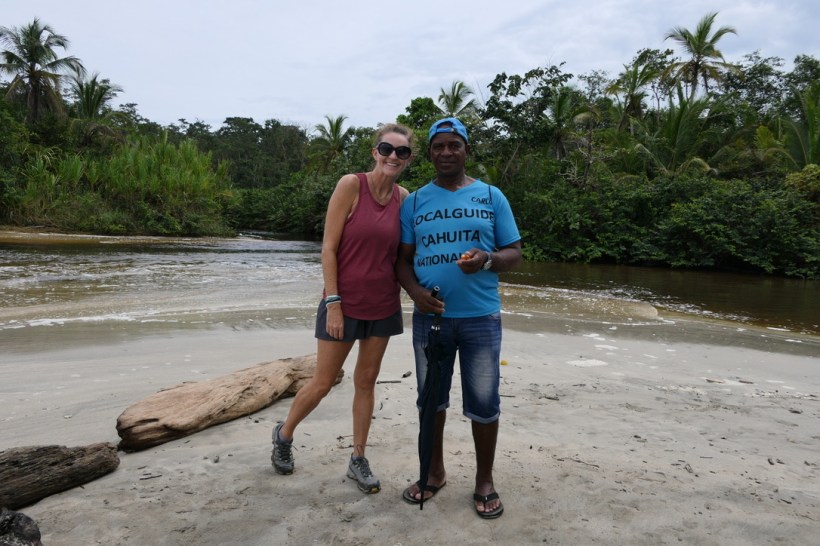
Carlos, our guide in Cahuita National Park.
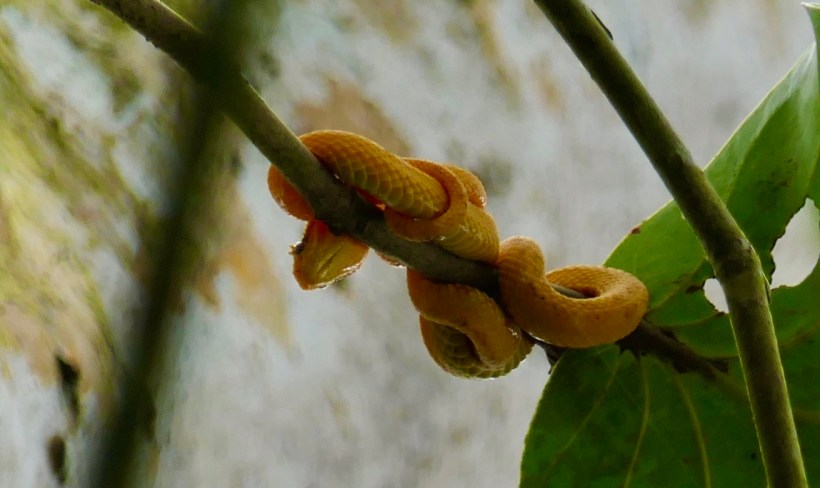
How did Carlos find this yellow eye-lash pit viper twenty feet up in a sea grape tree?
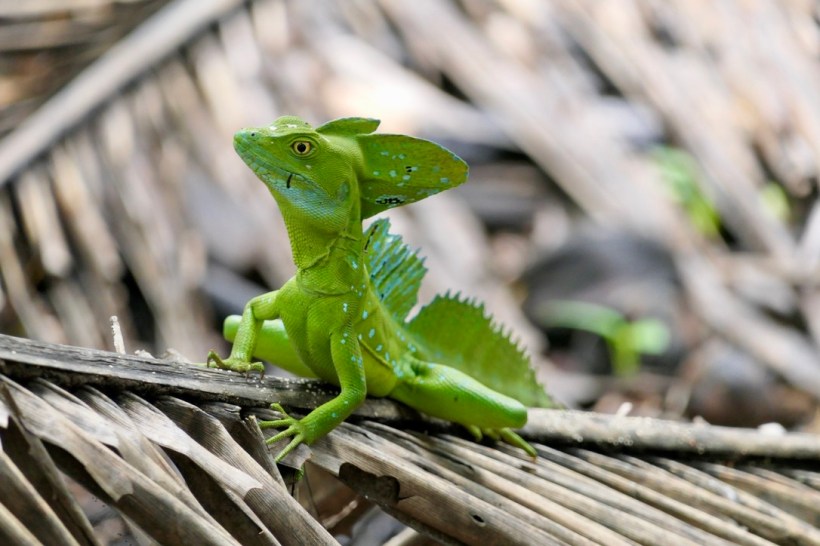
Jesus Christ lizard – so named because they can walk (or run very fast) on water.
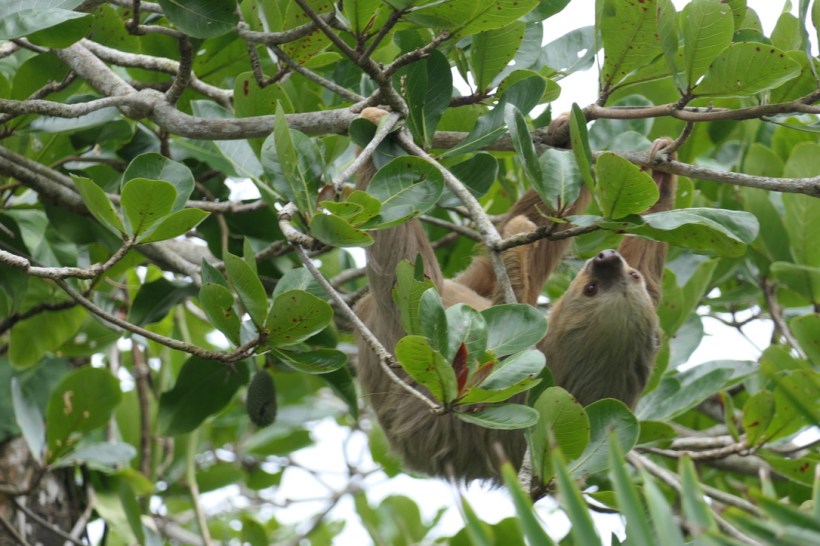
Moving at the ‘speed of sloth’.
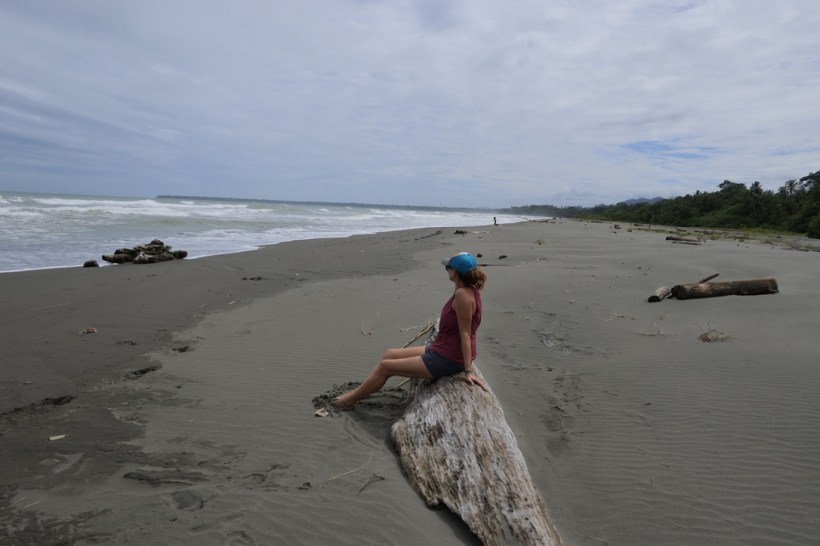
Enjoying some quiet time on Playa Grande outside Cahuita.
While we never did get to snorkel the stretch of coast here, and the heavy rain pushed us to our limits, being immersed in Costa Rica’s nature (the good kind) was immensely satisfying and enjoyable. We also managed to get a nice walk in on the desolate stretch of black sand at Playa Grande and enjoy some drinks at the Reggae Bar (which every beach town in Costa Rica has at least one of). After checking off the sloth, pit viper and a few other animals from the must-see list on the Caribbean coast we’ll head across the country to visit a couple more national parks as well as some Pacific coast beach towns, taking our time, and a cue from our new friends, by moving at the ‘speed of sloth’.
 The Rhum Line
January 25, 2020 at 3:12 am
Great read, and some awesome shots. You are surely now well prepared for the rain in the west of Ireland 😀
LikeLike