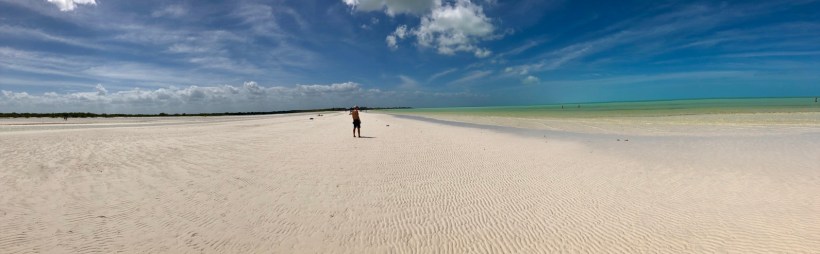
 Just over three years ago, on a one-month road trip through the Yucatan peninsula, we found Isla Holbox lying off the north coast. An island without cars. Part of Mexico’s largest nature preserve, Yum Balam, there’s more beach, mangroves, lagoons and bays than development. We fell in love with the crystal clear water, white sand beach, laid-back vibe and the handful of pink flamingoes that stalked the exposed sand bar and shallow lagoon just outside the village. It was a place that seemed too good to be true. And, as we found on our visit last week, was. Not that Isla Holbox has been ruined. Not by a long stretch. But it has been . . . discovered. Granted, our first visit was in the summer month of August. At the time, the flamingoes outnumbered the humans on the famous sand bar. The cafes were mostly empty and town was relatively quiet. The action, or what passed for action, consisted of locals strolling the streets of the town’s plaza in the evening, enjoying tacos and tortas from the collection of food carts there. Upon our return, the place was a hive of activity. Large numbers of kite surfers played in the winter winds. New restaurants offering organic fare, steaks, pizza and fresh pasta had sprung up. Construction of homes and condos out at the western end of the island, Punta Coco, was being undertaken. The locals on the town square were far outnumbered by North American and European backpackers. Our favorite hammock at Capitan Capitan (with it’s cool bar built right inside an old fishing boat) was often occupied. But, on the bright side, we had some amazing food beyond the typical Mexican fare – smoothie bowls, French pastries, waffles and pasta – that weren’t offered before. And, despite the wind, the sea was still beautiful, the sand was still blindingly white, the sand bar at low tide was a sight and the sun still put on a show each evening.
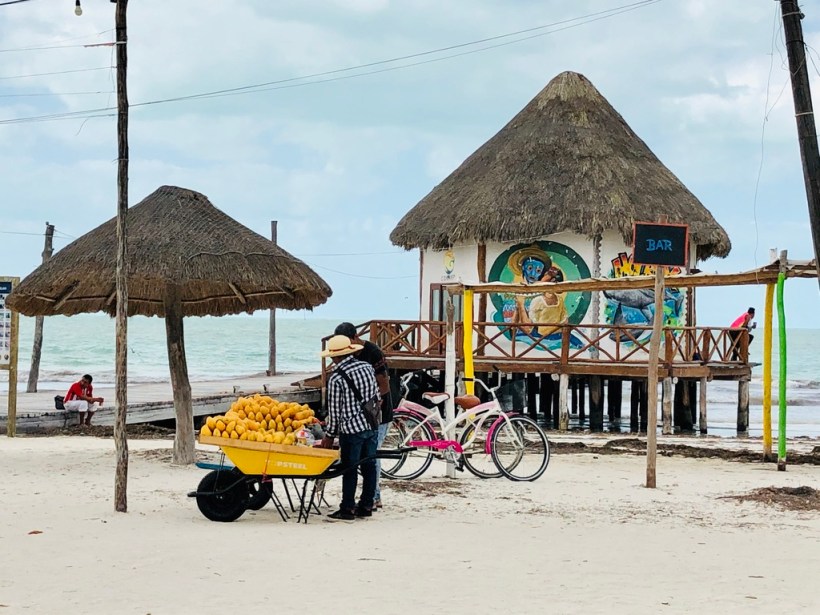
Mango vendors make their rounds.
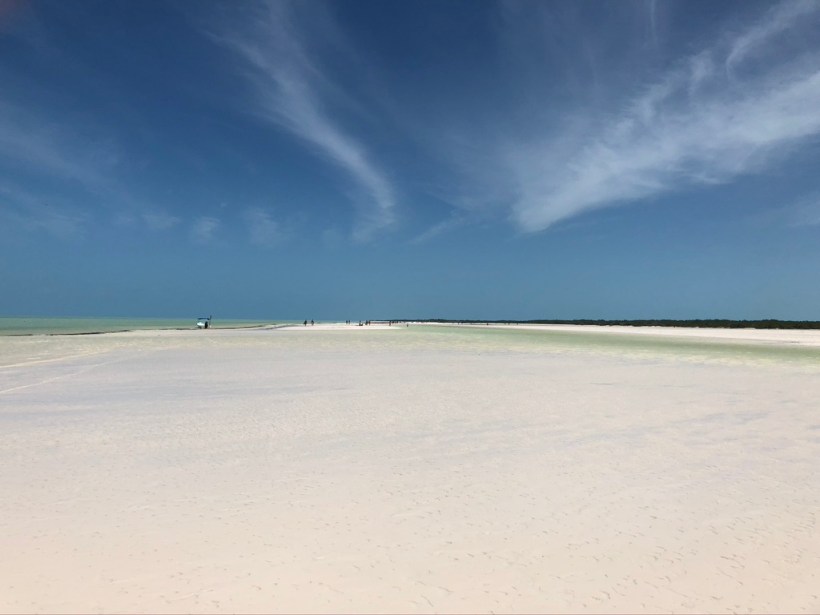
The sand bar.
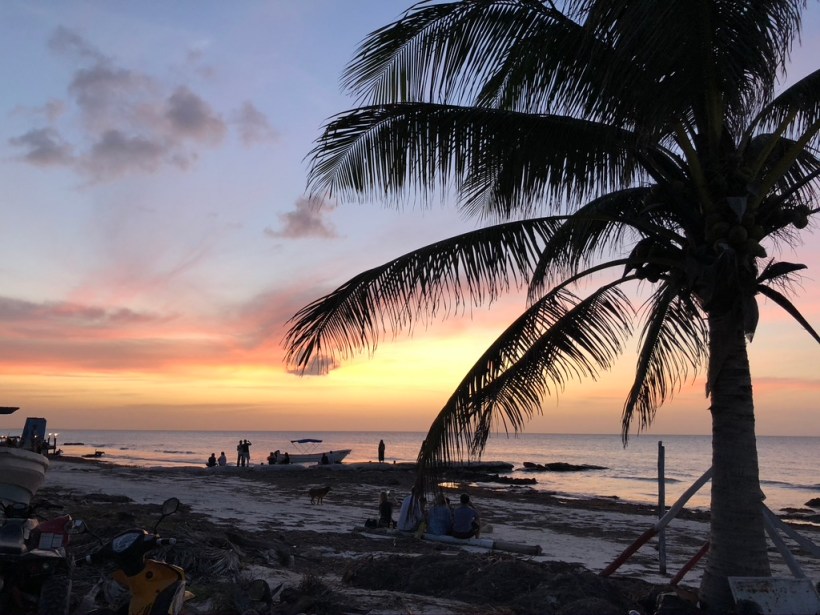
Holbox sunset.
During the summer whale sharks and manta rays cruise the waters between Holbox and Isla Mujeres, which lies to the east, closer to Cancun. Snorkeling with these creatures was the highlight of our previous visit, but they’ve migrated elsewhere for the winter months. So we were left to spend our days wandering the dusty side streets of the village admiring the colorful murals, or walking out to Punta Coco to watch the local fishermen cast their lines into the channel. Heading out of town in the opposite direction we would walk sandy paths that wound through the stunted mangroves and bushes lining the beach, eventually to emerge onto the lagoon created by the offshore sand bar. Back in town, we would dine on ceviche, tacos, gringas (simple quesadillas) or tostados camarones (plump shrimp tossed with shredded veggies and avocado piled atop a crisp tortilla). Then it was off to find our sunset spot – whether it be from a quiet stretch of beach or amongst the crowds from a hammock at Capitan Capitan. Not a bad way to pass a week.
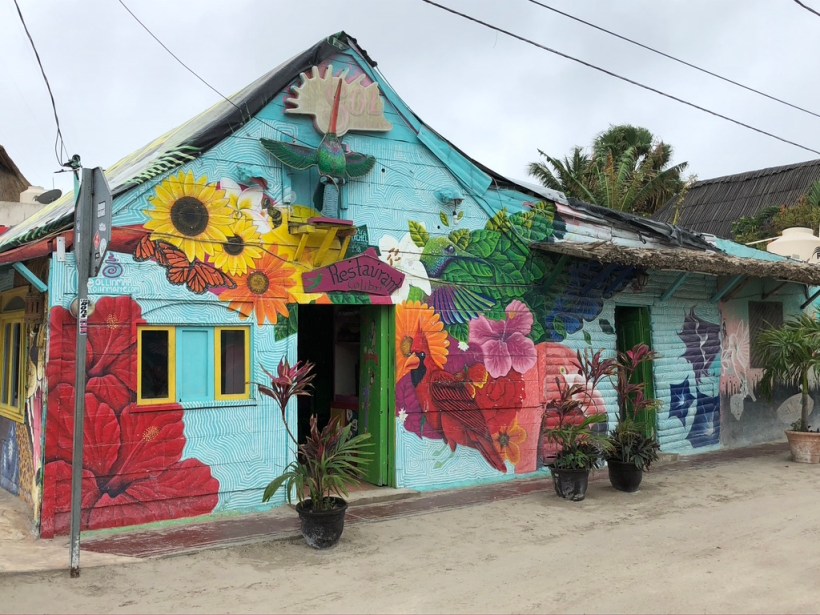
Colorful murals in Holbox village.
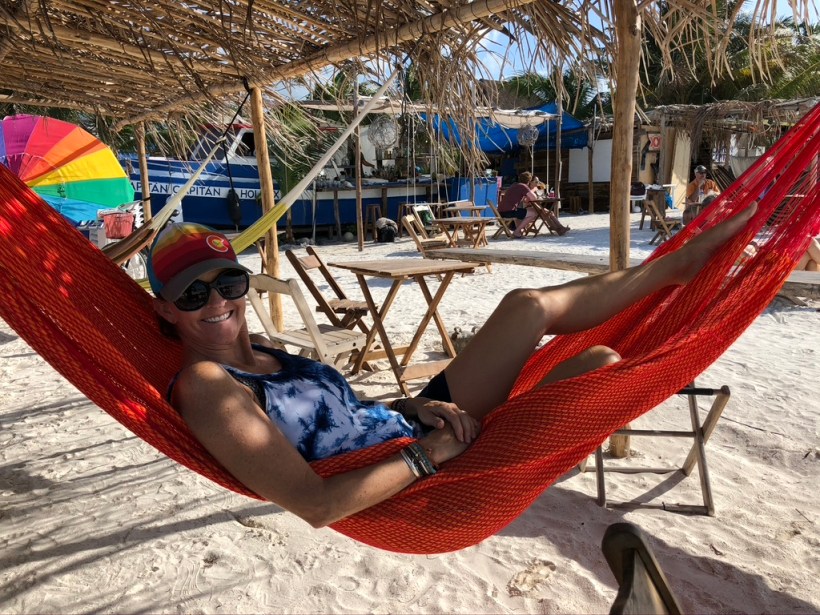
Sunset time.
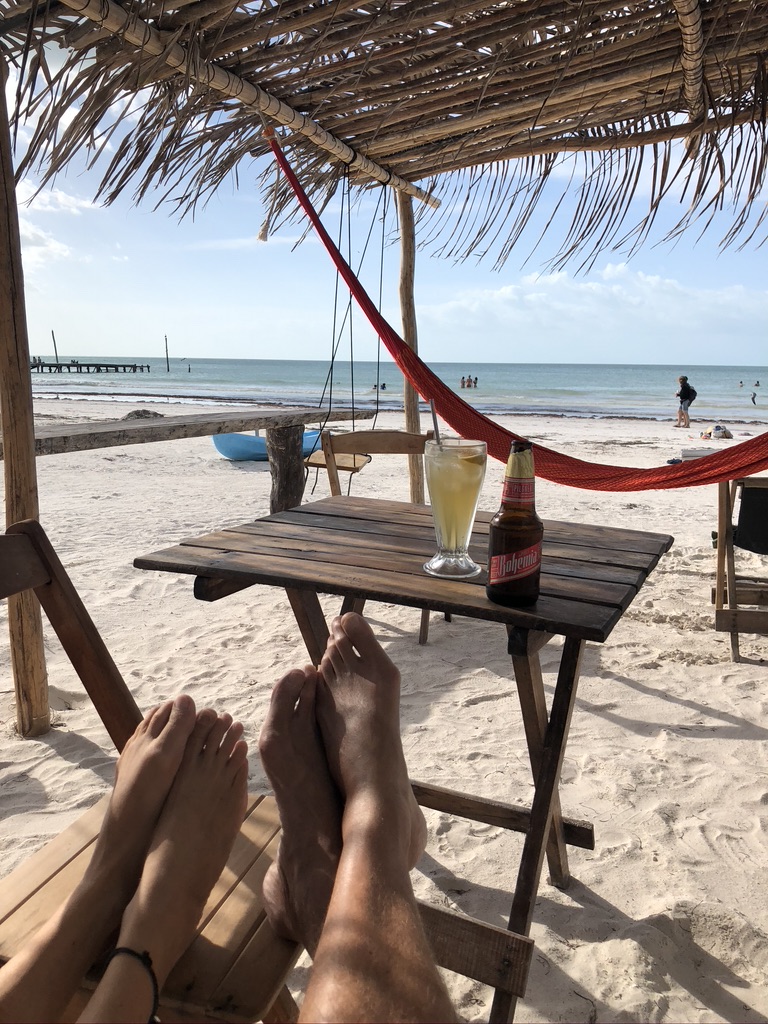
“So we’re going home in about a month.” “Remind me – why?”
 The Rhum Line