The Rhum Line

The aimless and sometimes muddled route of a traveling couple looking for their next great adventure


Leave a comment

When The Going Gets Tough . . .

San Jose is not typically on the backpackers travel itinerary. Like other Central American capital cities it’s big, sprawling, boasts a large population, traffic-clogged roads, crime and pollution. Travelers tend to limit their exposure to these big cities to passing through the international airports that are entry or exit points to their respective countries. Unfortunately, our recent visit to San Jose wasn’t to reach the airport. It was to visit one of the cities hospitals for a surgical repair of the broken bone in Heather’s left foot.

As we finished our two week visit to the Osa peninsula with a three-night stay in an ecolodge just outside of Corcovado National Park, Heather had an unfortunate misstep shortly after our arrival to our cabin in Dos Brazos. She forgot about the step down from the rear of the cabin to the lower kitchen/living area and landed on her bare left foot with a resounding crack on the tile floor. Upon inspection there wasn’t any crack in the tile itself, leaving her to realize it was her foot that had made the sound. Not ideal, considering we were in the midst of the jungle on a remote peninsula, without internet or phone service, and over three and a half hours drive to the nearest clinic. We did have our travel first-aid kit, so she swallowed some ibuprofen for the pain, wrapped her foot in an Ace bandage to combat the swelling, then settled into a hammock with a glass of red wine (yes, our first-aid kit includes that, along with white wine for emergencies before 4 pm). She was able to tolerate the pain and toughed it out over the next three days, and even felt improvement in the foot, and we held out hope that the injury wasn’t as severe as we had originally thought. But we did decide to get an x-ray to give us clarity on the extent of the injury. Finding a radiology clinic close to Dominical, where we had landed after our trip down to the Osa, wasn’t difficult, and with our guesthouse owners assistance, were able to get an appointment for the following day. We made the drive over the mountains to San Isidro the next morning and found the clinic without difficulty. Heather had a series of x-rays taken and the pictures left no doubt – a complete break of one of the metatarsal bones. As disturbing as this was, it was also apparent that the broken bone was ‘displaced’, meaning the two pieces weren’t aligned correctly and probably wouldn’t heal properly. This meant we needed an orthopedic surgeon’s opinion on whether surgery was indicated. Disheartened by this news, we left the clinic and walked across the street to our car to return to Dominical, only to discover a parking ticket on the windshield! Upon our return to Dominical we decided we had to make the two and a half hour trip to a hospital in San Jose in order to consult with an orthopedic specialist. We loaded up the car and headed north along the coast. An hour into the trip the car started to act up – without warning it would accelerate on its own – gaining speed without any pressure on the gas pedal. Unnerved, we left the highway at Jaco and found a spot to pull off the road and call the rental company. After hearing our report and my insistence that we wouldn’t continue to drive the unsafe car, they agreed to bring a replacement car to us. We waited under the mid-day sun in the 90+ degree temperatures for two hours for the replacement car to arrive. Excited to get back on the road when it did, we were further disheartened to find the new car already had a flat tire. Another half hour passed as the driver took it to a service station for repair. Finally we were able to hit the highway again – just in time to get bogged down in the slow-moving traffic approaching San Jose. If it wasn’t merging lanes through construction zones, getting caught behind slow-moving trucks going up long, winding stretches of highway or creeping past broken-down vehicles, we lost another hour, turning the two+ hour trip from Dominical into a five and a half hour slog.

When we arrived at the hospital, we were met outside the emergency entrance and Heather was placed in a wheelchair and taken in for examination. I hadn’t even completed the check-in process at the reception desk when the doctor came out and asked me to join them. Holding the x-rays, he told us that surgery was indeed necessary and would take place the following evening – Christmas Eve.
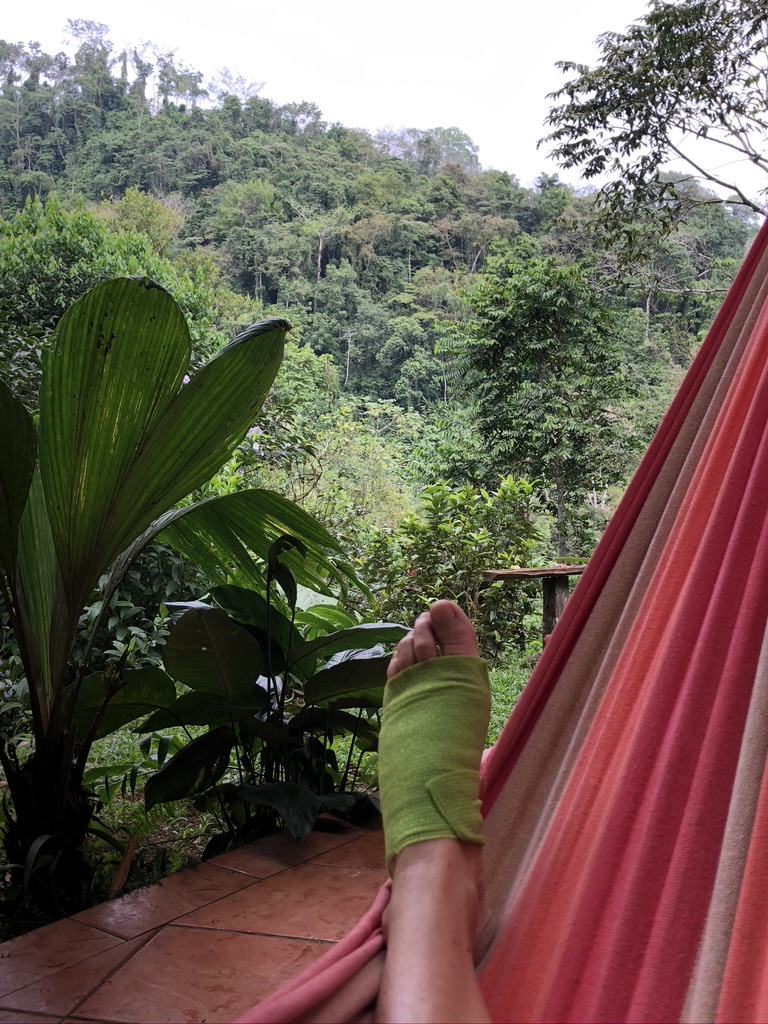
Compression and elevation at Amazonita Ecolodge.
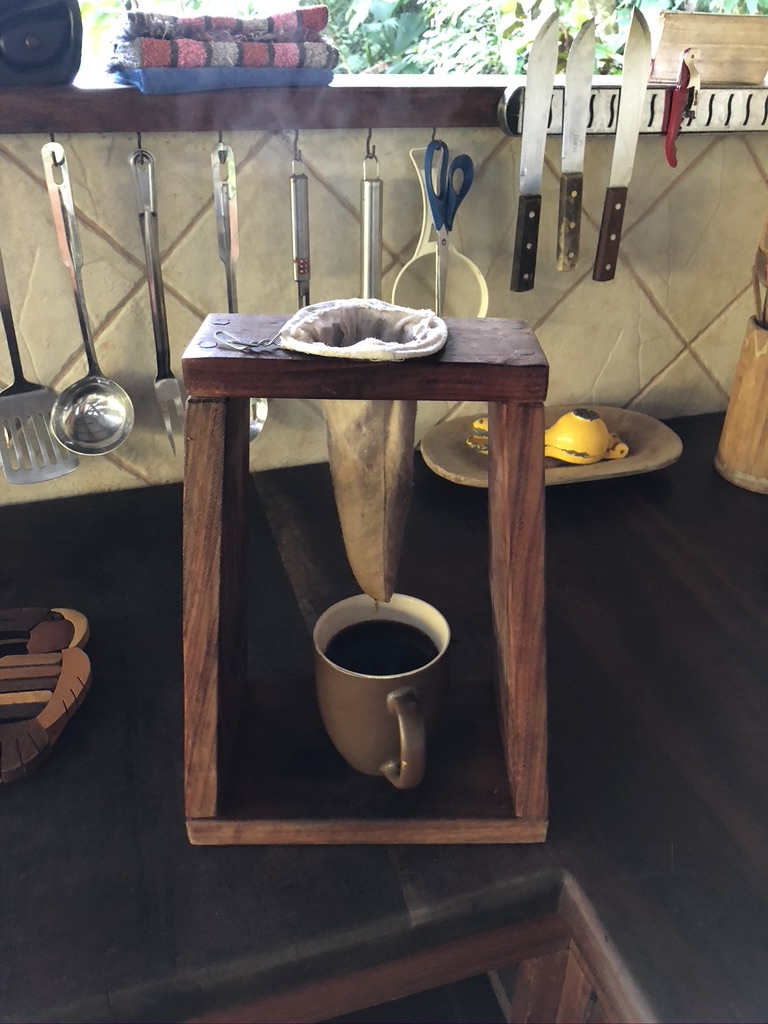
Nothing to do with the injury. Just an interesting way to brew coffee in the jungle.
Ummm, yeah, you’re gonna need surgery!

The next afternoon, as directed, we arrived at the hospital to go through the check-in process, which included a COVID test (surprise!) before the one-hour procedure to insert a metal plate and six screws into her foot. Now the recovery process begins – six weeks, non-weight bearing, in a boot and crutches. I’m going to have to restock the travel first-aid kit – a lot.
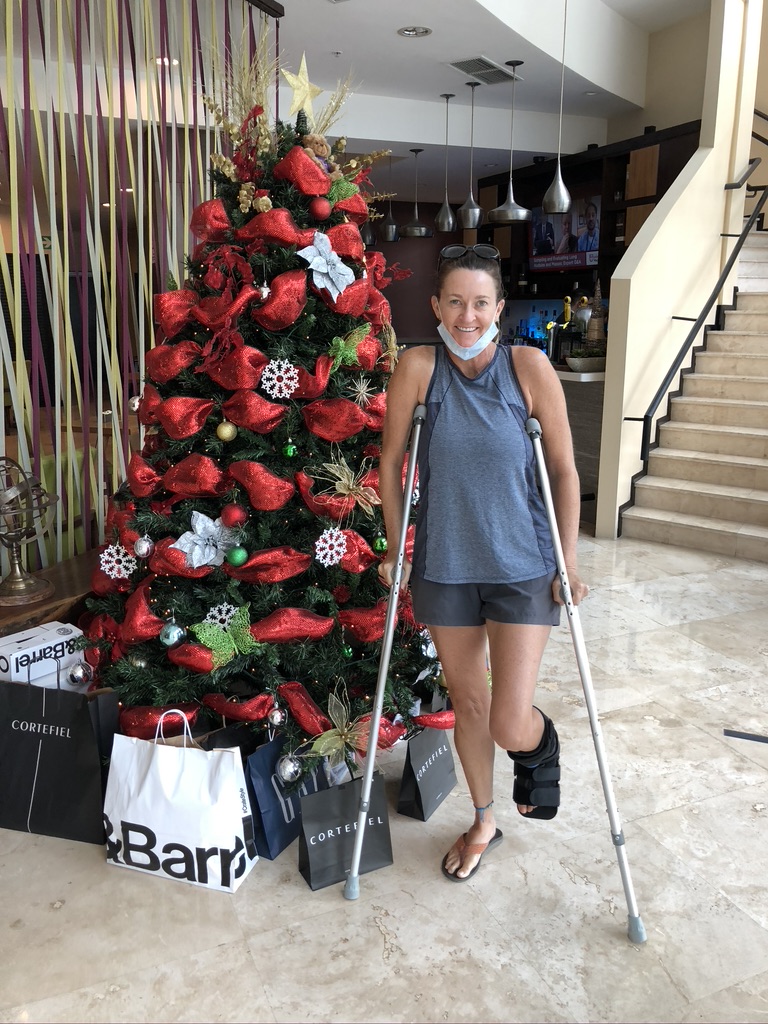
Happy holidays from San Jose! Pura Vida!


Leave a comment

Wild(er) Costa Rica – The Osa Peninsula

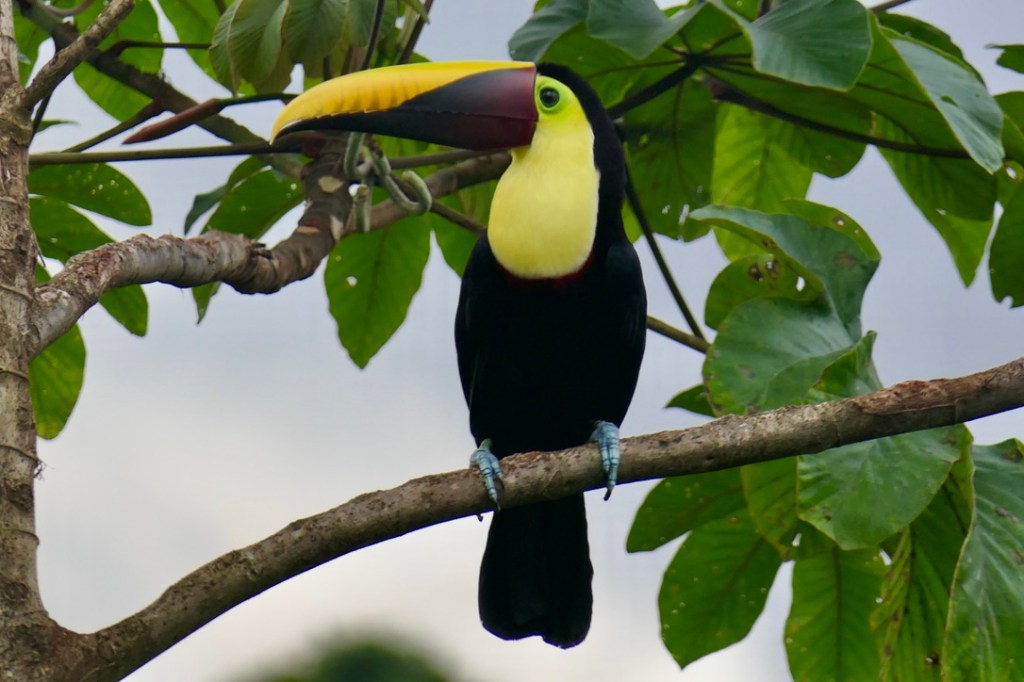
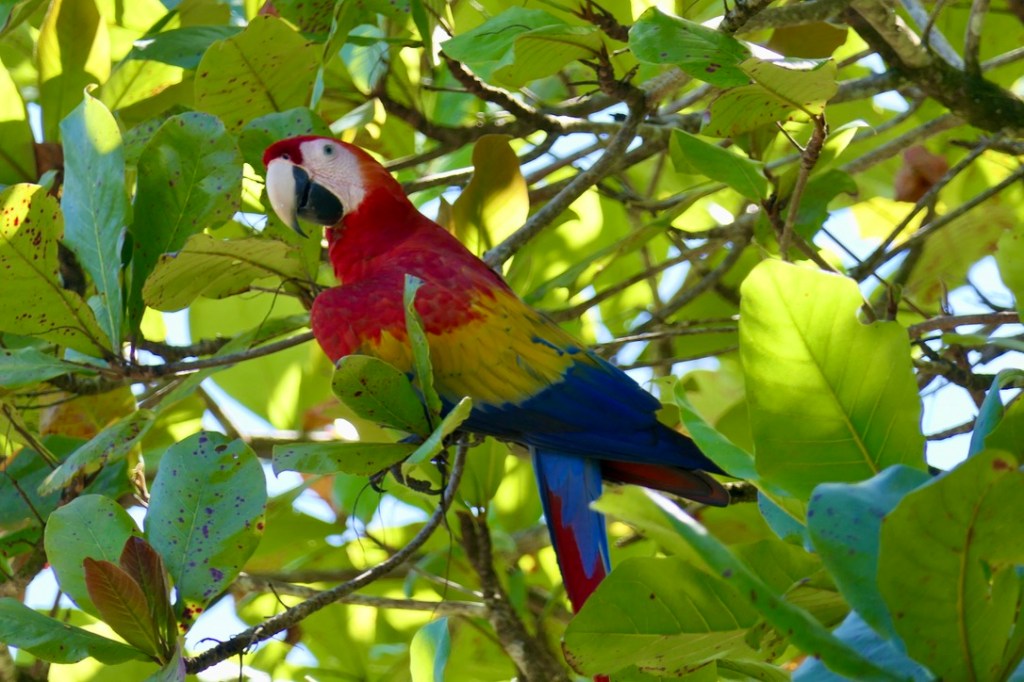
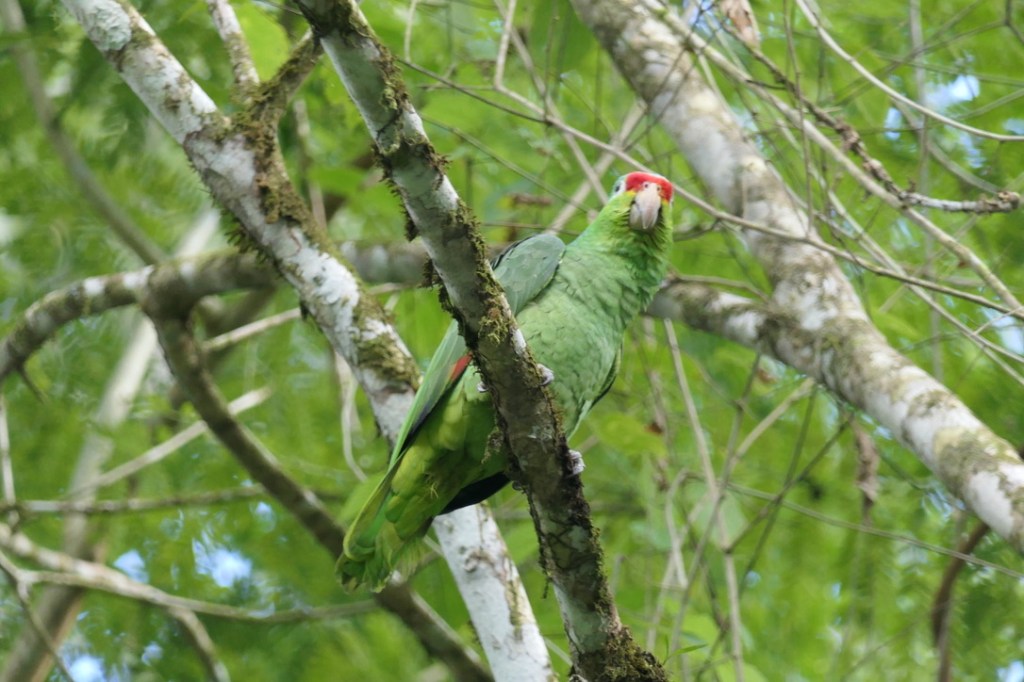
In front of us, at the horizon, we could see a line of squalls moving over the water from west to east. The setting sun filled the gaps between the clouds to our left with a golden glow. Overhead, dozens, if not hundreds, of parrots flew in pairs to their nightly roosting spots. A toucan landed in a papaya tree, the top of the tree nearly at eye level to the deck of our cabin, which perched in the jungle canopy on a hillside overlooking Drake Bay. In the bay a couple sailboats, newly arrived, barely bobbed in the calm water as they lay at anchor. It was the end of another extraordinary day on the Osa Peninsula of Costa Rica.

We had come to the Osa Peninsula to visit one of the country’s most remote and biodiverse national parks – Corcovado. To avoid the arduous dirt track and the five river crossings to get to Drake Bay, the closest entry point to the park, our rental car had been left in the small riverside town of Sierpe. There we boarded a small boat which carried us down the Sierpe River, past the mangrove-lined bank where we spotted crocodiles sunning themselves. Eventually the river emptied into the ocean and we turned south, hugging the coastline, which consisted of what seemed like one long dark sand beach, occasionally broken by clumps of black rocks, and backed by verdant green jungle-covered hills. We were dropped onto the beach in Drake Bay, driven up the hillside to our lodge and installed in a rustic, yet comfortable, cabin with one of the most striking views we’ve ever seen (at least from a rustic, yet comfortable, cabin). Our host, Josue (ho-sway) could only shake his head and chuckle as Heather ran from one end of our deck to the other, pointing out all the bird life that surrounded us. “We have a lot of birds here” he chuckled. An understatement – the next evening, I actually counted the number of green parrots that flew over our cabin in the half hour before sunset – 276! And we hadn’t even entered the national park yet.

The million dollar view over Drake Bay.

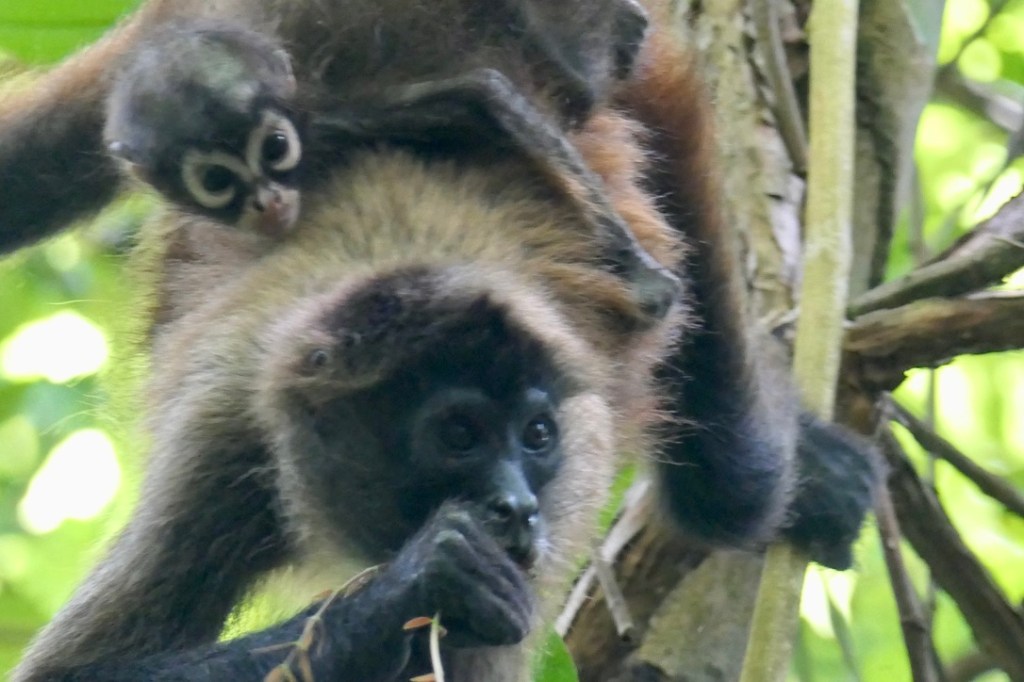
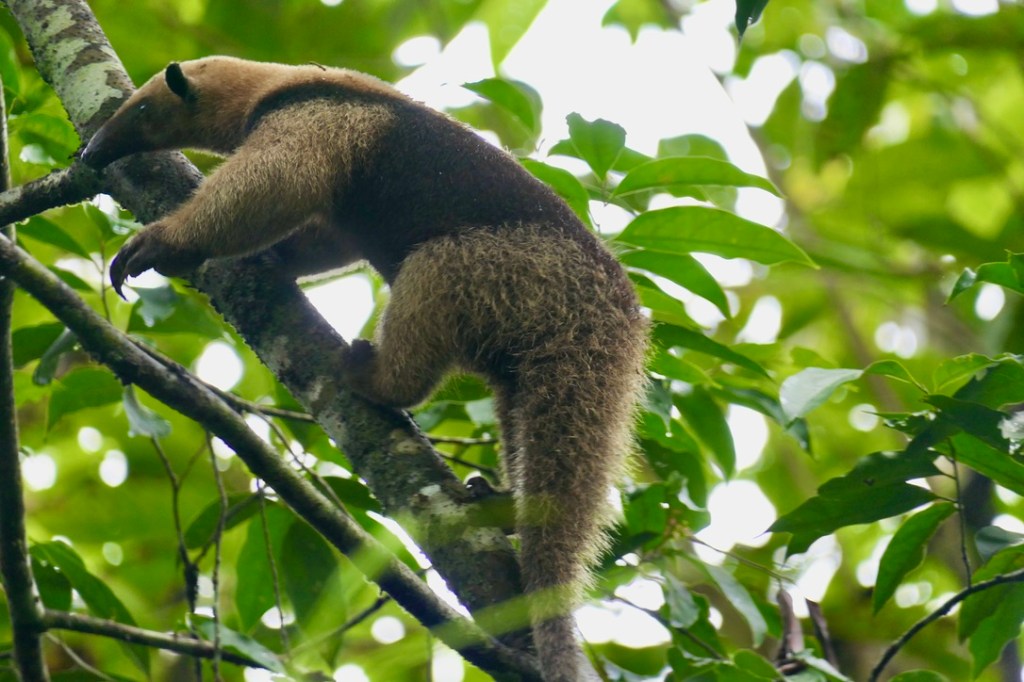
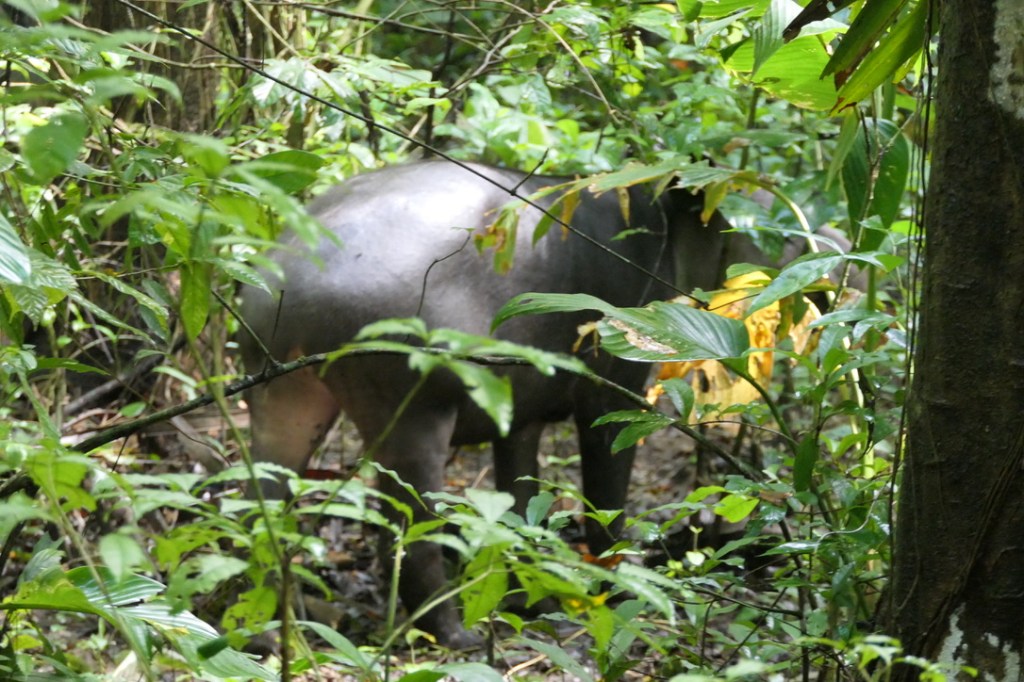
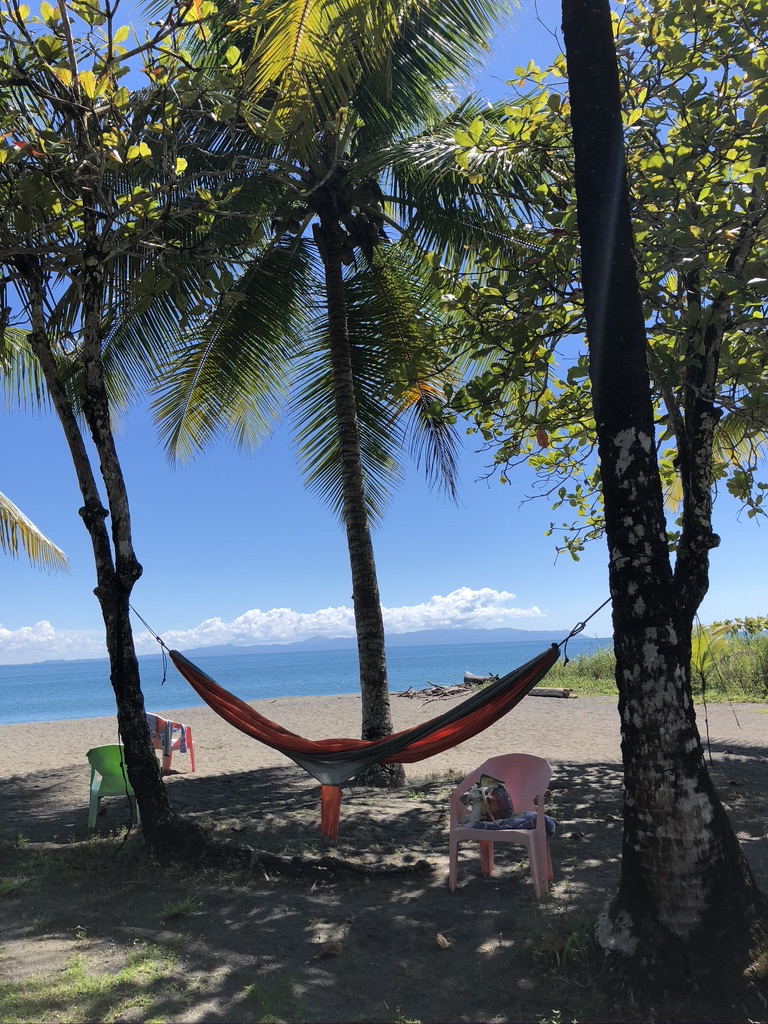
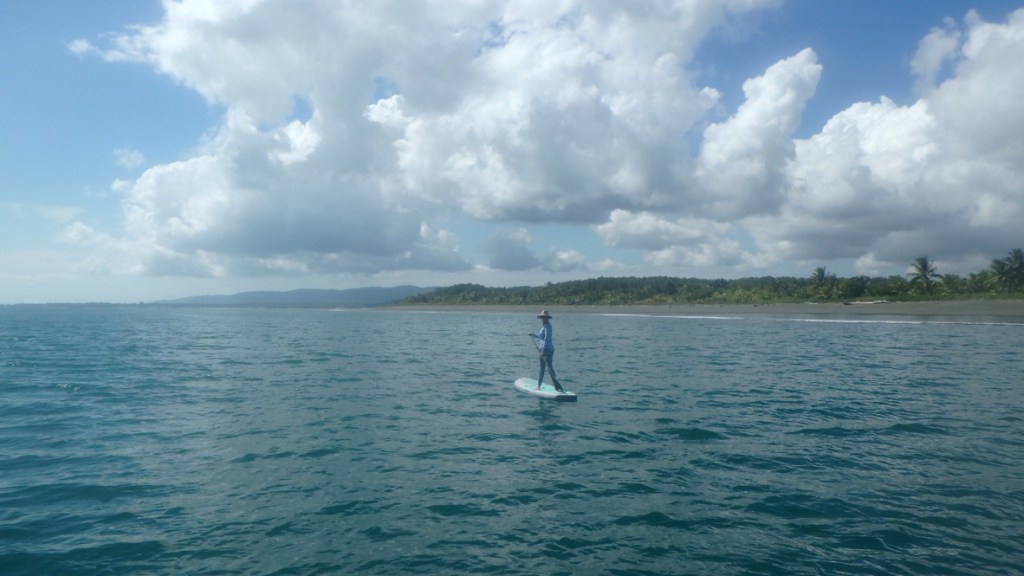
To visit Corcovado you’re required to have a naturalist guide lead you along the park’s trails. We joined a group tour our second day, which had us rise before 5 am, wolf down breakfast and be down at the beach by 6 in order to meet the boat that would take the group to one of the park entrances. The half hour boat trip was just as scenic as the trip from Sierpe to Drake Bay. We disembarked on a beach in front of the San Pedrillo ranger station, one of three within the park, and began our walk which wound through humid jungle, occasionally popping out to stunning stretches of beach. Along the trail we caught sight of spider and howler monkeys, a tree-climbing anteater called the tamandua and several curassows, a large turkey-like bird, rummaging along the jungle floor. The two most coveted animal sightings – the tapir and the puma – eluded us, but through no fault of our guide, Javier, who, at the sight of tapir tracks in the mud of the trail, would launch himself into the heavy ground cover bordering the trail, leaving us to listen to him hacking and pushing his way deeper into the foliage. Upon his return, sweating and breathless, he would make a comment like “Do you know what jungle means? Impenetrable!” After a full morning of hiking we returned to the beach, waded into the surf to board the boat and made the return trip to Drake Bay. After lunch at one of the local sodas, we retired to the deck of our cabin to watch the wildlife come to us. We booked a second tour that would take us to the Sirena ranger station in the southern part of the park, which was just reopening after being closed for the last nine months. Our guide that day, Fernando, assured us the animals would “be happy to see us”. And it seemed as if they were – spider monkeys were spotted quickly, followed by another tamandua, along with plenty of birdlife – toucans, tiger herons and an osprey. We also spotted tiny squirrel monkeys in the treetops and a group of twenty coatis crossed the trail in front of us. It was near the end of our days walk when Fernando shouted “Tapir!” and dashed off the trail into the undergrowth, our group excitedly following behind. We caught sight of a pair of the squat, hippo/pig-like animals, who possess a short nose trunk, foraging along the muddy ground. They seemed unperturbed by our presence, letting us approach fairly closely before ambling deeper into thicker ground cover and disappearing from view. On our ‘off days’, when we weren’t hiking the jungle trails of the park, we launched our paddle board from the beach in the calm of the early morning to tour the bay, walked the dirt road following the shoreline to a hill-top view point, hung our hammocks under the palms at the back of the beach, swam and spent a lot of time on the deck of our cabin enjoying the million-dollar view.

Spider monkeys.
Toucan in Drake Bay.
The tamandua on the prowl.
A fleeting glimpse of the tapir.

After five days in Drake Bay we returned to Sierpe by boat, retrieved our car and drove down the east side of the Osa, along the Golfo Dulce (Sweet Gulf), which separated that side of the peninsula from the mainland. Visitors to Puerto Jimenez, the main town on the eastern side, generally come for a couple nights in order to access Corcovado from the El Tigre entrance by land, rather than the water access through Drake Bay. Heather had found us accommodation just outside the town, along the five-mile long beach of Playa Platanares. The calm waters of the golfo, and the estuary just behind the beach, seemed like it would offer good paddling. We didn’t expect to find such comfortable lodging surrounded by abundant birdlife, fronting such a long, beautiful beach, with no around. One of our hosts, Manuel, grew up on the Osa and was a fountain of knowledge about the wildlife here. We spent six days (more had the lodge not been booked up after that) waking up to the sunrise, paddling the waters of the golfo, enjoying a feast at breakfast featuring the eggs from the lodge’s own chickens, swimming and lounging in our hammocks at the beach most of the day, paddling the estuary in the afternoons (during high tide) and enjoying fresh seafood for dinner at one of the local restaurants in town overlooking the water. Life on the Golfo Dulce was sweet indeed!

The sweet life on Playa Platanares.
Regular visitor to the beach.
Sunrise paddle on the golfo.

Our last stop on the Osa would be the secluded village of Dos Brazos, for some time immersed in the jungle. Amazonita (Little Amazon) Ecolodge is a set of three cabins on a hillside overlooking a branch of the Rio Tigre. In addition to the jungle seclusion and access to the river, the lodge abuts the entrance to a private nature reserve featuring a network of hiking trails that bring the visitor to a series of waterfalls and overlooks of the river valley. Without any wifi, this would be an opportunity to disconnect from the rest of the world, get some exercise on the trails and watch the flora and fauna from the comfort of our hammocks.

A curious neighbor at the Amazonita Ecolodge.

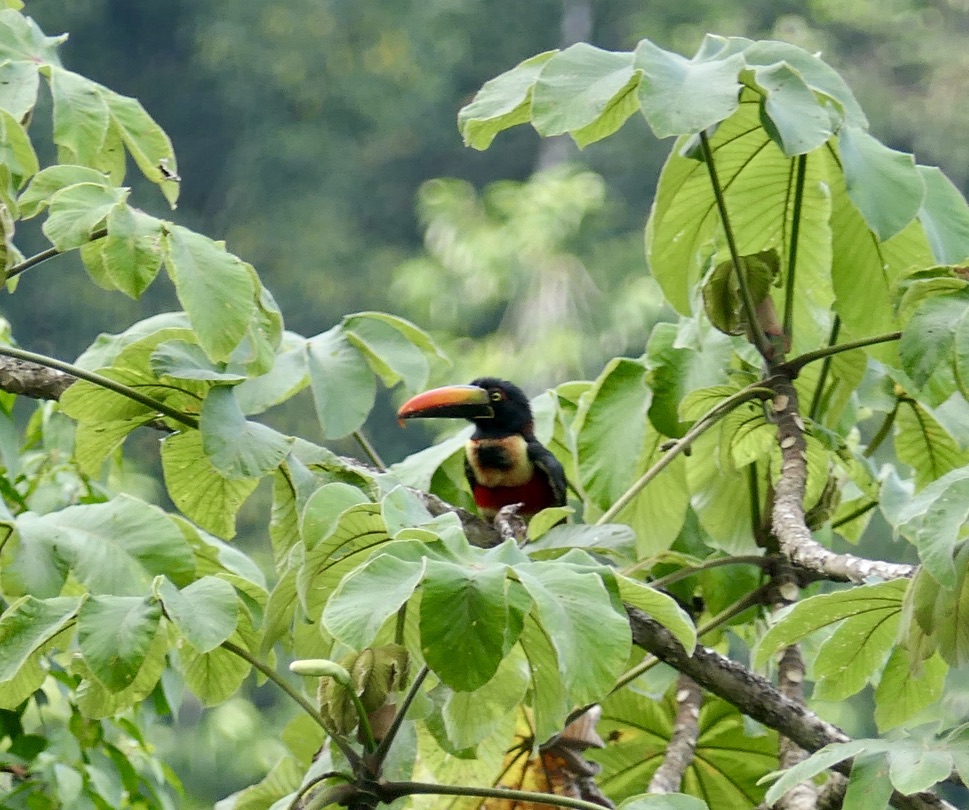
An aracari makes an appearance.

What had been planned as a six-day visit to this wild and remote area turned into a two-week trip as we couldn’t bear to leave behind such abundant wildlife and stunning scenery. From here we planned to return to the mainland and spend the Christmas holiday up in the beach town of Dominical – but that plan would soon change . . .


2 Comments

South From Samara

The roads in Costa Rica aren’t bad, as far as roads in Central America go – if you stay on the paved ones. However, a lot of the interesting sights, and certainly most of the best beaches, are located at the end of unpaved roads. And they can be pretty rough at the best of times. The end of rainy season is not the best of times. The roads of the southern Nicoya peninsula are described as the worst in all of Costa Rica. Naturally, we were headed to the southern Nicoya next.

Santa Theresa, for some reason, is a backpackers beach dream. Ask any traveler who’s been and they’ll tell you the beach is one of the most beautiful in the country, the surfing is top-notch and town has a chill, laid-back vibe perfect for relaxing. The beach is beautiful, but Costa Rica has a bevy of really beautiful beaches; the surfing is very good (I’ll have to trust them on this one), but for beginners and those looking for lessons I think there are certainly better places to learn; and town certainly is laid back, with folks wandering the dirt road through town barefoot, enjoying the hip vegan cafes and exploring the back roads on quad- and motor-bikes. On closer inspection, however, I realized that folks were wandering barefoot because after a rain the dirt road became a flip-flop sucking mud bog; the quad-bikes, which apparently all lack any kind of muffler system, would tear up the muddy street, or, if and when it dried out, would raise clouds of dust which would settle on everything within a hundred feet of the road, including the foliage, parked vehicles, buildings and my vegan chocolate cake (to tell the truth I couldn’t tell what was cake and what was dust). It’s quite possible that the road through Santa Theresa is the worst road in all the southern Nicoya, which now you know is pretty bad. We did find one outstanding aspect to our visit there – the food (I’m not considering vegan chocolate cake to be food). From the simple rotisserie chicken and sides at Chicken Joe’s, to the delicious tacos and craft beer (passion fruit ale!) at the Eat Street outdoor food court and the incredible wood-fire grilled mahi-mahi at the Argentinian-inspired El Facon, this was some of the most consistently good food we had enjoyed anywhere.

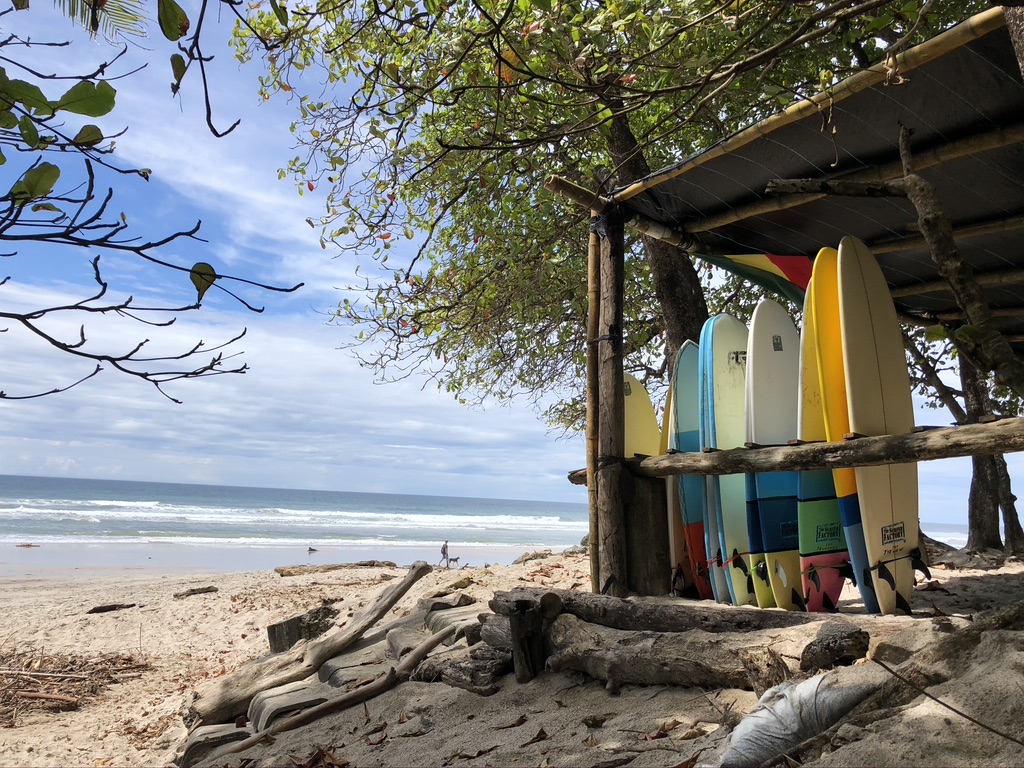
The entrance to Playa Santa Theresa

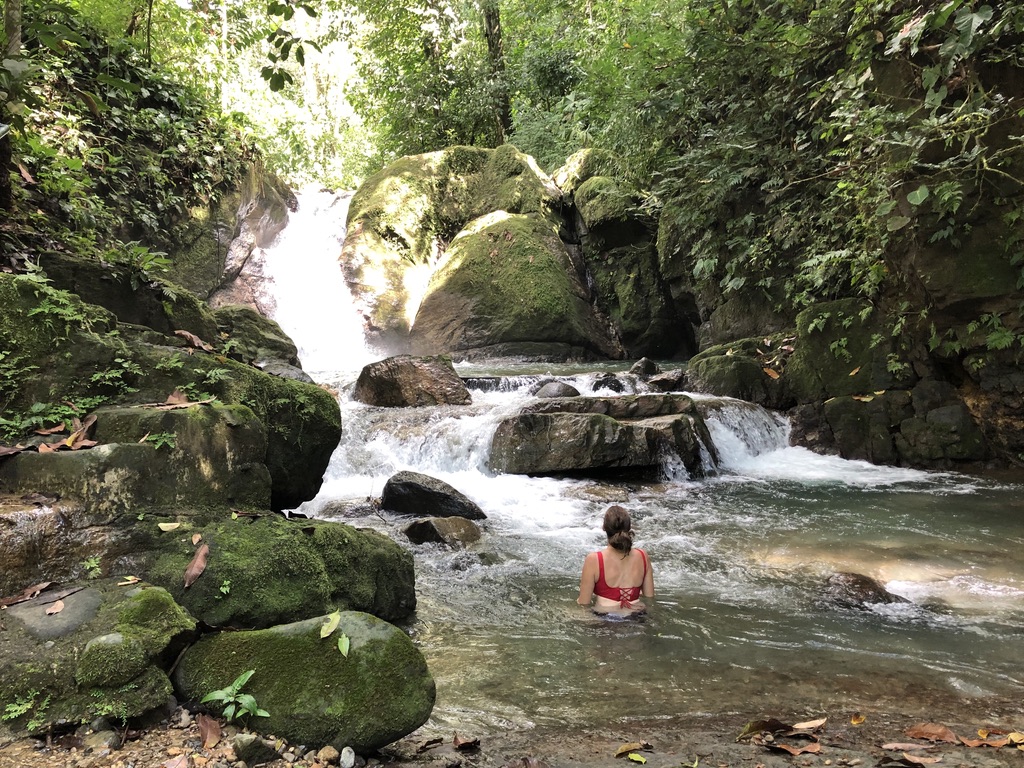
Not to be outdone, our next destination following Santa Theresa was the small town of Ojochal – dubbed the “food capital of Costa Rica”. North American and European ex-pats had gravitated to this quiet hamlet set between the black-sand beaches of the southern coast and the jungle-clad mountains of the interior, with many of them opening acclaimed restaurants. So, with high expectations of indulging ourselves in various international cuisines during our three-day stay, we rolled into town just as the sun set. We wound up the main road through the jungle, following the course of the Rio Balso to our lodge – El Mono Feliz (The Happy Monkey). Without a doubt, any monkey would be happy, if not ecstatic, to be staying here. The property is covered with lush, colorful foliage, offers an inviting pool at its center, is a haven for all kinds of birdlife and the wooden platform, at the rear of the grounds along the river, has hammocks for relaxation and contemplation. While I don’t think Ojochal lived up to it’s nickname (in no small part to the abundance of closed restaurants due to the pandemic), especially coming on the heels of our ‘foodie’ experience in Santa Theresa, our accommodation was certainly enjoyable. We did visit a couple beaches for strolling and sunsets, and spent the better part of one day relaxing in the Cascada Ojochal (waterfall). We don’t usually make an effort to visit waterfalls, finding them to be crowded and noisy (especially on a weekend) and not particularly relaxing. But the cascada was close to town so we gave it a shot. A short drive to the base of the mountains behind town we came upon the sign marking the entrance through a private residence. A young man greeted us, took a nominal entrance fee and directed us down the trail behind the family home, which was lined with cacao and banana trees and flowering shrubs. We descended a short ways into the canyon to find a two-tiered waterfall, several shallow pools for swimming, moss- and lichen-covered boulder walls leading up to a thick canopy overhead. Not another soul around – on a Sunday! While it took a couple minutes to work up the courage to plunge into the cool water, once in it was a delight to move between pools, float with the current and soak away the afternoon. When we finally dragged ourselves out of the water, we relaxed on some smooth rocks, the only sound being the crash of the falls. Overhead we caught sight of a toucan perched in the canopy. It was a great way to spend part of the day, which would precede a fine lunch at a local soda (cafe serving typical fare) before heading to a quiet beach for sunset. Not a bad way to spend the day on the Pacific coast.

Enjoying some quiet time at cascada Ojochal.
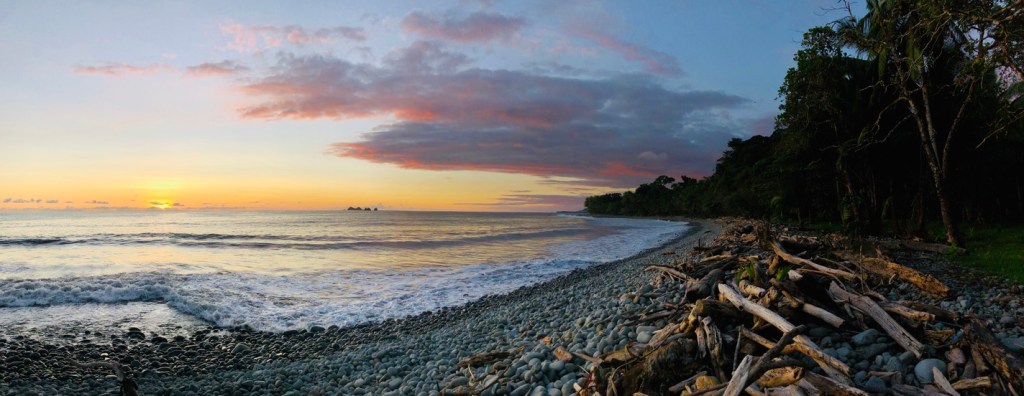
Sunset from Playa Pinuelas, outside Ojochal.

One of the many hummingbirds that joined us for breakfast each morning at El Mono Feliz.

With our fill of creature comforts (good food and comfy accommodation) it’s time to head to the wild and rustic Osa peninsula!