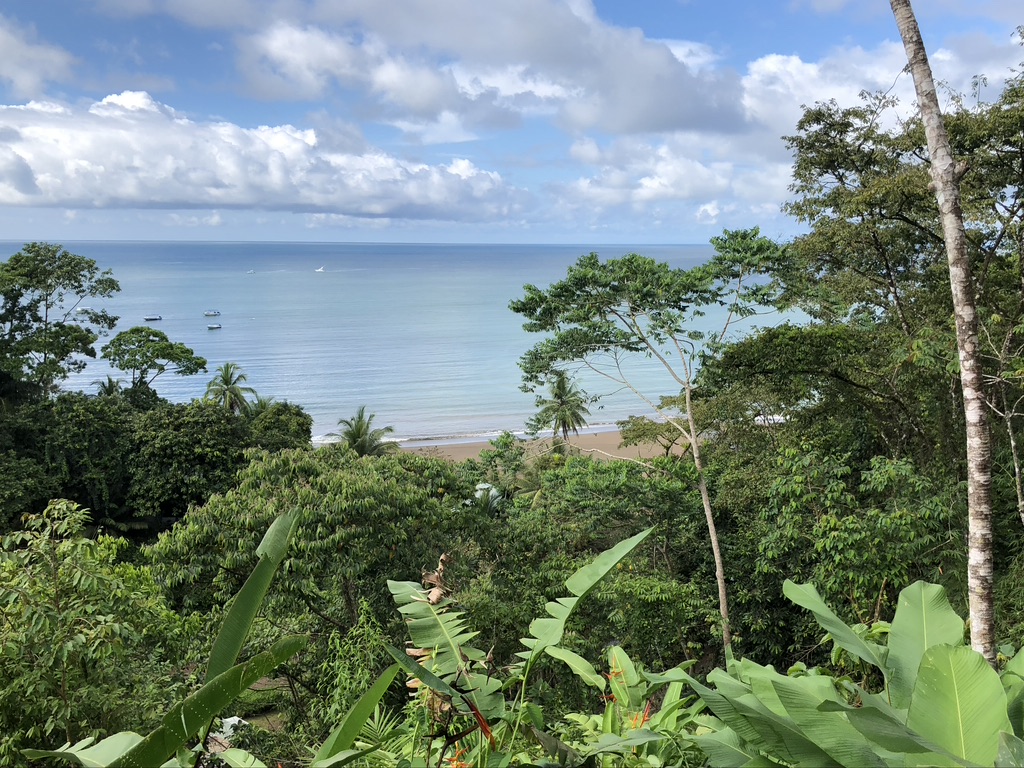
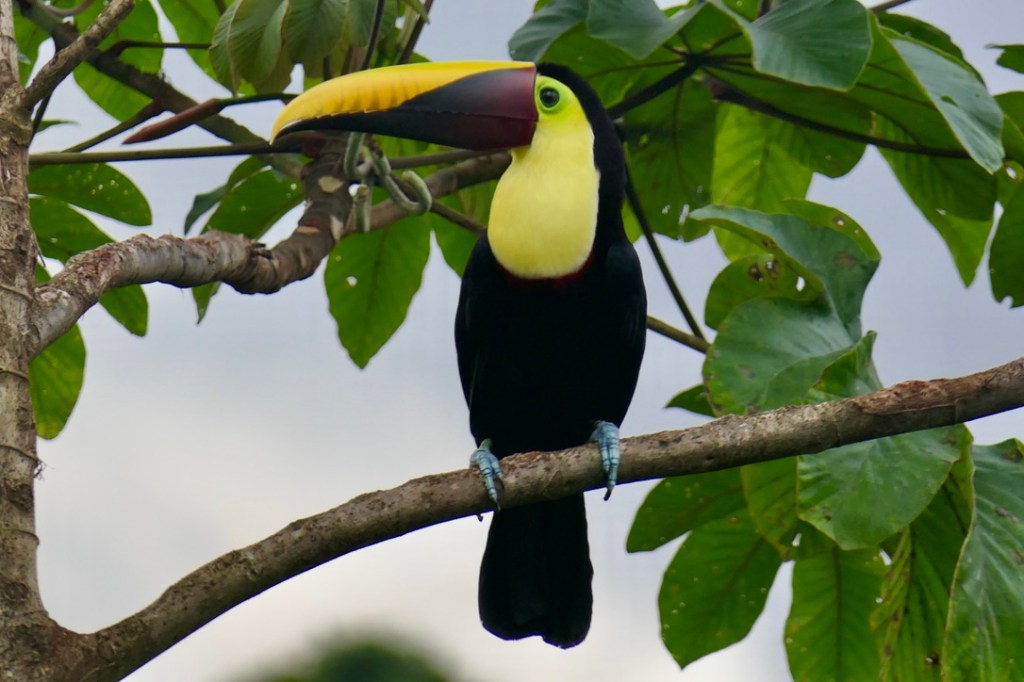
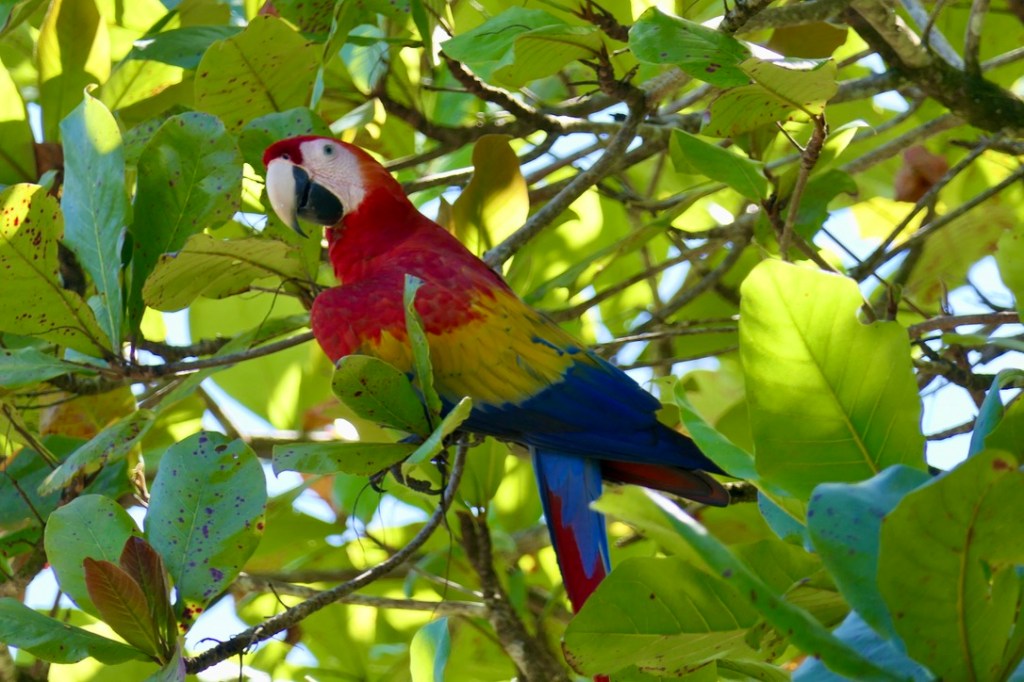
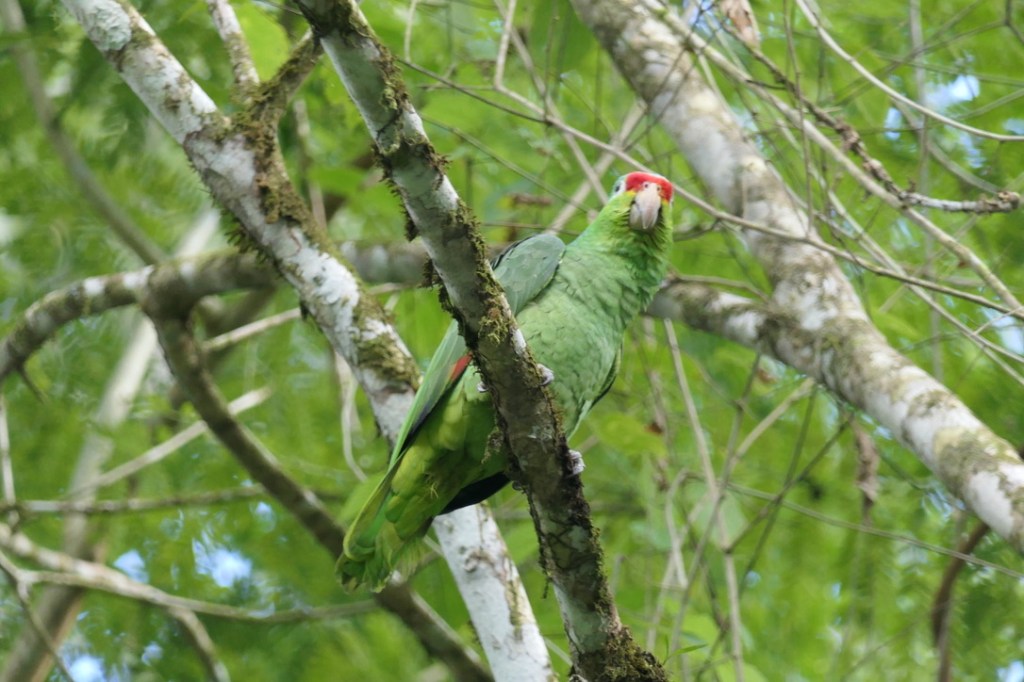
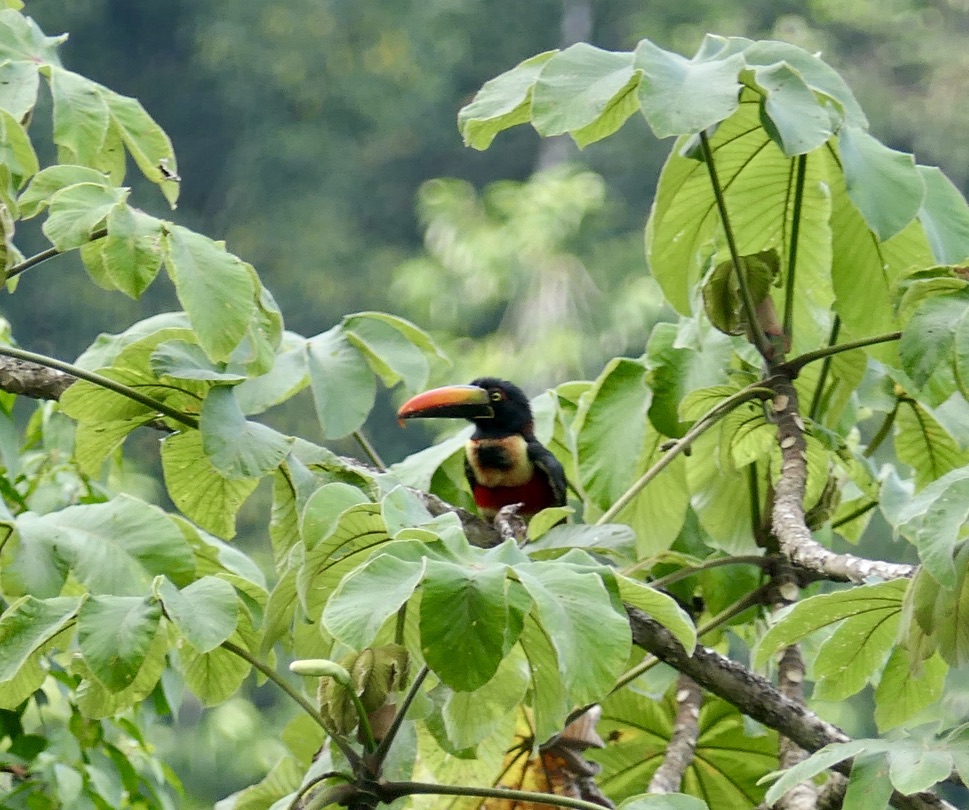
In front of us, at the horizon, we could see a line of squalls moving over the water from west to east. The setting sun filled the gaps between the clouds to our left with a golden glow. Overhead, dozens, if not hundreds, of parrots flew in pairs to their nightly roosting spots. A toucan landed in a papaya tree, the top of the tree nearly at eye level to the deck of our cabin, which perched in the jungle canopy on a hillside overlooking Drake Bay. In the bay a couple sailboats, newly arrived, barely bobbed in the calm water as they lay at anchor. It was the end of another extraordinary day on the Osa Peninsula of Costa Rica.
We had come to the Osa Peninsula to visit one of the country’s most remote and biodiverse national parks – Corcovado. To avoid the arduous dirt track and the five river crossings to get to Drake Bay, the closest entry point to the park, our rental car had been left in the small riverside town of Sierpe. There we boarded a small boat which carried us down the Sierpe River, past the mangrove-lined bank where we spotted crocodiles sunning themselves. Eventually the river emptied into the ocean and we turned south, hugging the coastline, which consisted of what seemed like one long dark sand beach, occasionally broken by clumps of black rocks, and backed by verdant green jungle-covered hills. We were dropped onto the beach in Drake Bay, driven up the hillside to our lodge and installed in a rustic, yet comfortable, cabin with one of the most striking views we’ve ever seen (at least from a rustic, yet comfortable, cabin). Our host, Josue (ho-sway) could only shake his head and chuckle as Heather ran from one end of our deck to the other, pointing out all the bird life that surrounded us. “We have a lot of birds here” he chuckled. An understatement – the next evening, I actually counted the number of green parrots that flew over our cabin in the half hour before sunset – 276! And we hadn’t even entered the national park yet.
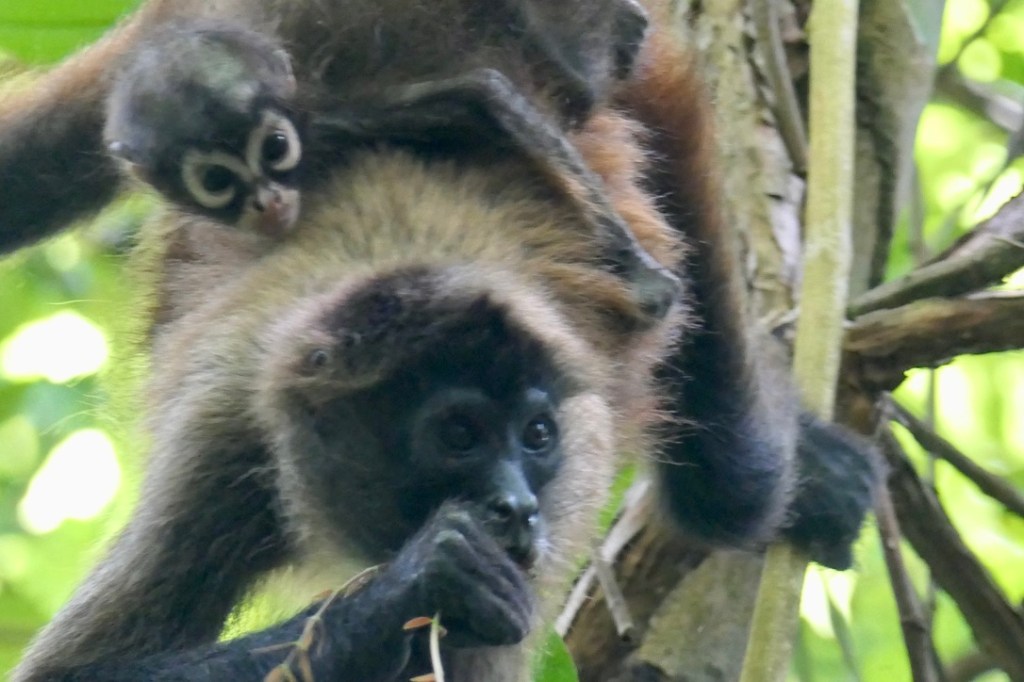
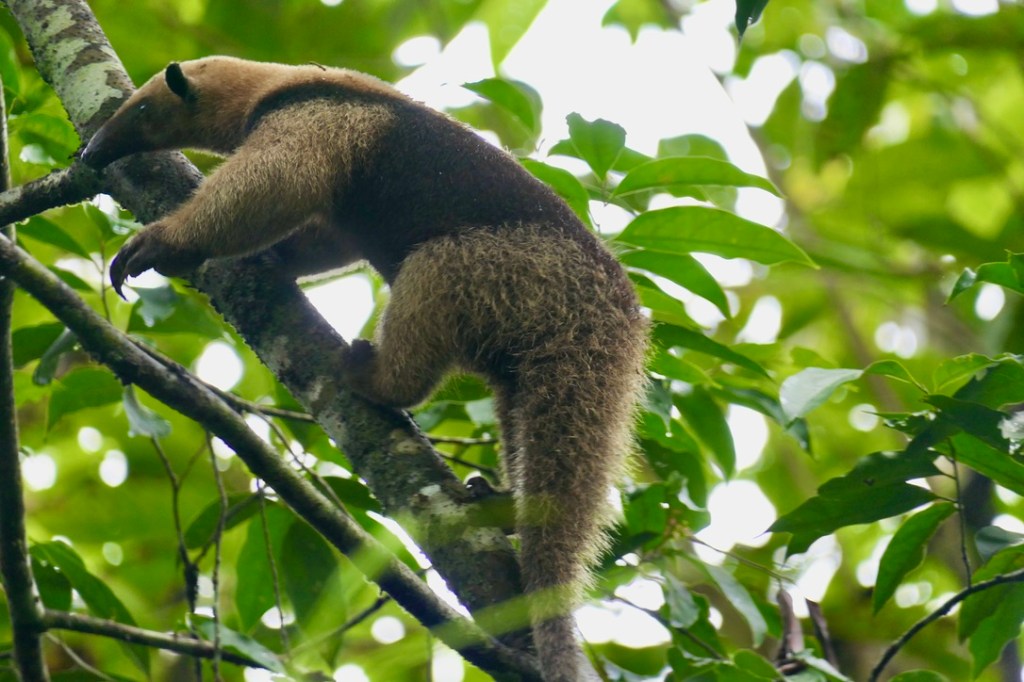
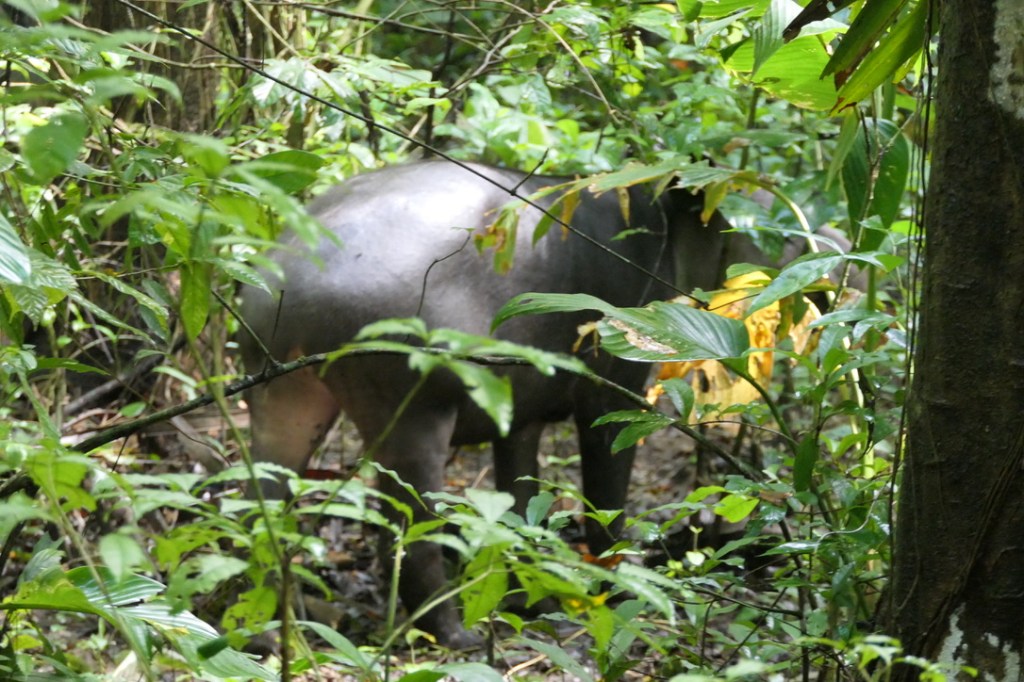
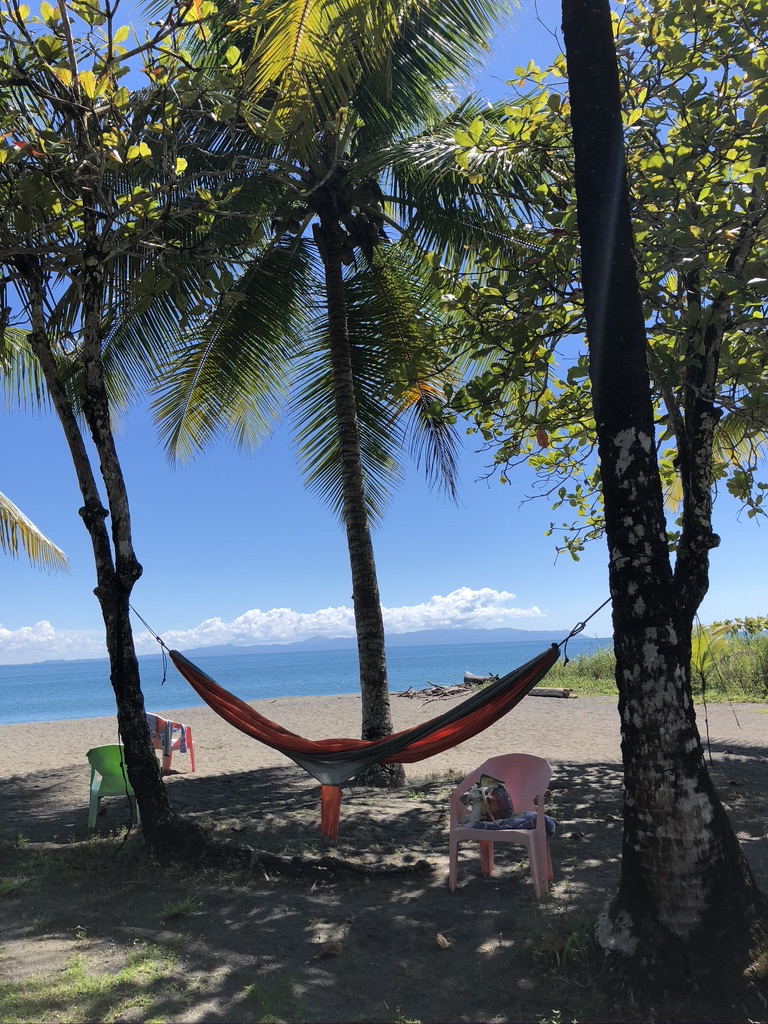
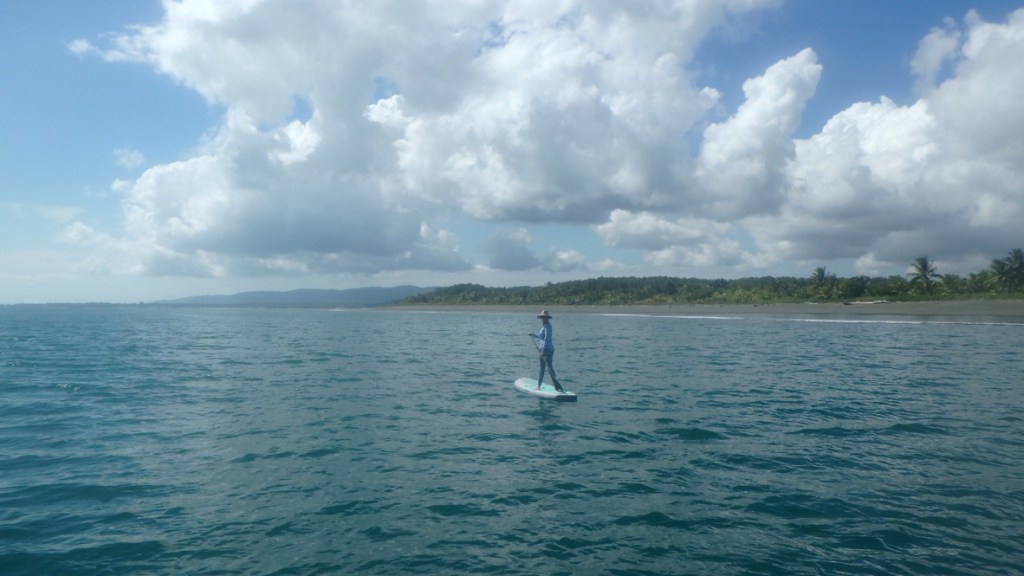
To visit Corcovado you’re required to have a naturalist guide lead you along the park’s trails. We joined a group tour our second day, which had us rise before 5 am, wolf down breakfast and be down at the beach by 6 in order to meet the boat that would take the group to one of the park entrances. The half hour boat trip was just as scenic as the trip from Sierpe to Drake Bay. We disembarked on a beach in front of the San Pedrillo ranger station, one of three within the park, and began our walk which wound through humid jungle, occasionally popping out to stunning stretches of beach. Along the trail we caught sight of spider and howler monkeys, a tree-climbing anteater called the tamandua and several curassows, a large turkey-like bird, rummaging along the jungle floor. The two most coveted animal sightings – the tapir and the puma – eluded us, but through no fault of our guide, Javier, who, at the sight of tapir tracks in the mud of the trail, would launch himself into the heavy ground cover bordering the trail, leaving us to listen to him hacking and pushing his way deeper into the foliage. Upon his return, sweating and breathless, he would make a comment like “Do you know what jungle means? Impenetrable!” After a full morning of hiking we returned to the beach, waded into the surf to board the boat and made the return trip to Drake Bay. After lunch at one of the local sodas, we retired to the deck of our cabin to watch the wildlife come to us. We booked a second tour that would take us to the Sirena ranger station in the southern part of the park, which was just reopening after being closed for the last nine months. Our guide that day, Fernando, assured us the animals would “be happy to see us”. And it seemed as if they were – spider monkeys were spotted quickly, followed by another tamandua, along with plenty of birdlife – toucans, tiger herons and an osprey. We also spotted tiny squirrel monkeys in the treetops and a group of twenty coatis crossed the trail in front of us. It was near the end of our days walk when Fernando shouted “Tapir!” and dashed off the trail into the undergrowth, our group excitedly following behind. We caught sight of a pair of the squat, hippo/pig-like animals, who possess a short nose trunk, foraging along the muddy ground. They seemed unperturbed by our presence, letting us approach fairly closely before ambling deeper into thicker ground cover and disappearing from view. On our ‘off days’, when we weren’t hiking the jungle trails of the park, we launched our paddle board from the beach in the calm of the early morning to tour the bay, walked the dirt road following the shoreline to a hill-top view point, hung our hammocks under the palms at the back of the beach, swam and spent a lot of time on the deck of our cabin enjoying the million-dollar view.
After five days in Drake Bay we returned to Sierpe by boat, retrieved our car and drove down the east side of the Osa, along the Golfo Dulce (Sweet Gulf), which separated that side of the peninsula from the mainland. Visitors to Puerto Jimenez, the main town on the eastern side, generally come for a couple nights in order to access Corcovado from the El Tigre entrance by land, rather than the water access through Drake Bay. Heather had found us accommodation just outside the town, along the five-mile long beach of Playa Platanares. The calm waters of the golfo, and the estuary just behind the beach, seemed like it would offer good paddling. We didn’t expect to find such comfortable lodging surrounded by abundant birdlife, fronting such a long, beautiful beach, with no around. One of our hosts, Manuel, grew up on the Osa and was a fountain of knowledge about the wildlife here. We spent six days (more had the lodge not been booked up after that) waking up to the sunrise, paddling the waters of the golfo, enjoying a feast at breakfast featuring the eggs from the lodge’s own chickens, swimming and lounging in our hammocks at the beach most of the day, paddling the estuary in the afternoons (during high tide) and enjoying fresh seafood for dinner at one of the local restaurants in town overlooking the water. Life on the Golfo Dulce was sweet indeed!
Our last stop on the Osa would be the secluded village of Dos Brazos, for some time immersed in the jungle. Amazonita (Little Amazon) Ecolodge is a set of three cabins on a hillside overlooking a branch of the Rio Tigre. In addition to the jungle seclusion and access to the river, the lodge abuts the entrance to a private nature reserve featuring a network of hiking trails that bring the visitor to a series of waterfalls and overlooks of the river valley. Without any wifi, this would be an opportunity to disconnect from the rest of the world, get some exercise on the trails and watch the flora and fauna from the comfort of our hammocks.
What had been planned as a six-day visit to this wild and remote area turned into a two-week trip as we couldn’t bear to leave behind such abundant wildlife and stunning scenery. From here we planned to return to the mainland and spend the Christmas holiday up in the beach town of Dominical – but that plan would soon change . . .
 The Rhum Line