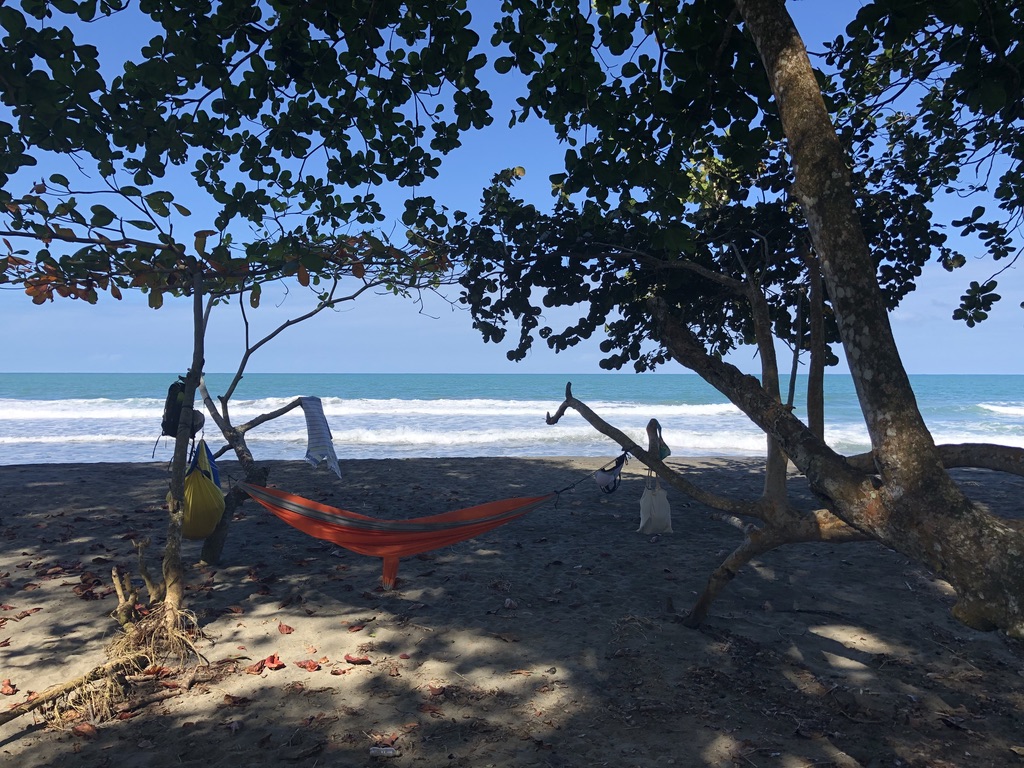
There’s a string of beaches stretching south along route 256 from the town of Puerto Viejo, on Costa Rica’s Caribbean coast, to the end of the road at the little village of Manzanillo, eight miles away. Each of them – Playa Cocles, Playa Chiquita, Playa Manzanillo and Punta Uva, attract a fair number of ticos (Costa Rican nationals) and tourists alike. On busy days (which includes every weekend of the year seemingly) they can get downright crowded. Families and groups arrive bright and early, erect their tents and shade canopies, switch on their music players, unload coolers and fire up the grills. Ticos LOVE their beach time. At times it can get a little overwhelming – a bit much for a couple who just want to hang their hammocks, read, relax and maybe grab a nap. So we were pleasantly surprised to find a beach in the area that attracted . . . no one. Playa Negra lies just north of Puerto Viejo and has nearly three miles of black sand beach, the majority of which is accessed by a narrow, potholed dirt road. Only a few scattered homes are tucked back into the forest, and the beach is completely undeveloped and wild. So it was here that Heather and I found ourselves spending most of our beach time during our first week on the ‘wild side’, with only a handful of other people to be seen throughout an entire day, most of whom would stop their car, take a photo of the uncrowded beach and then return to their car and drive off again. We swam, we read, we napped. Perfection!
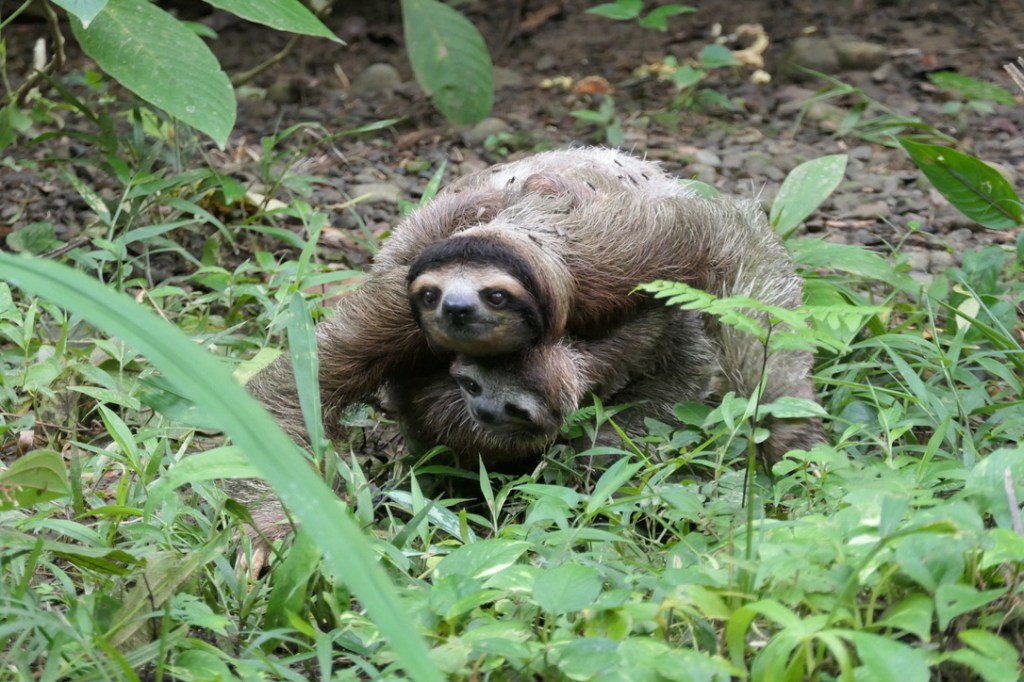
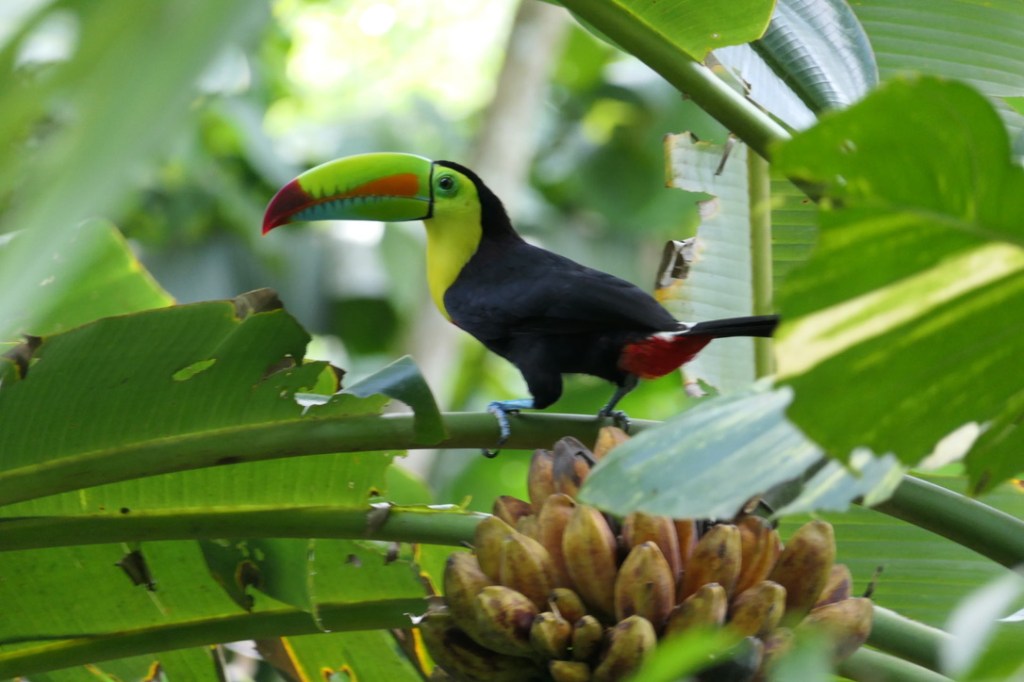
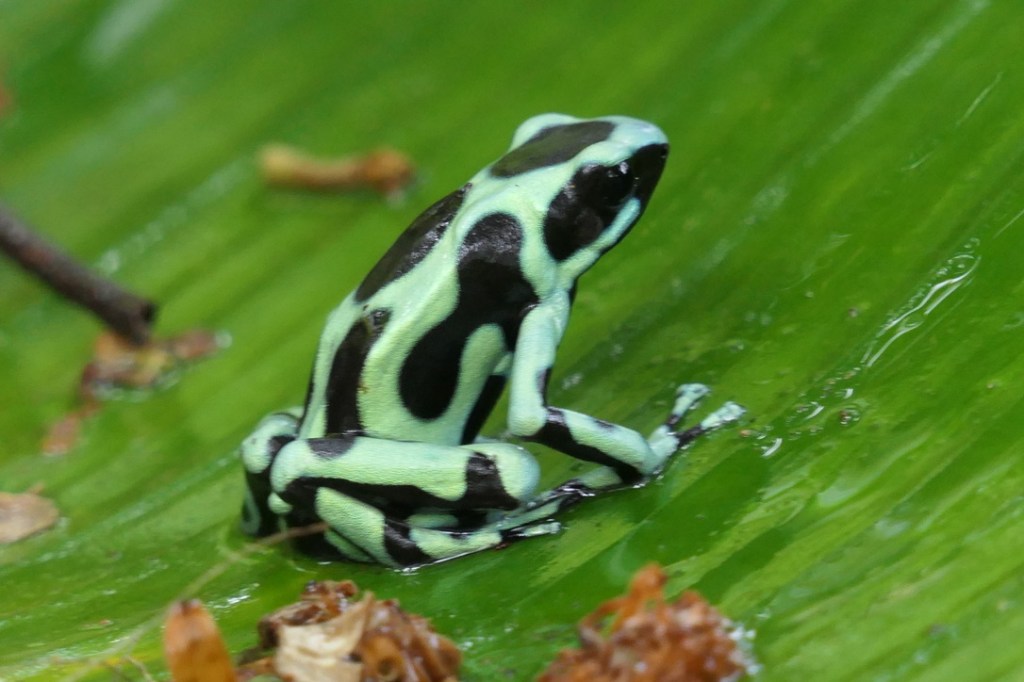
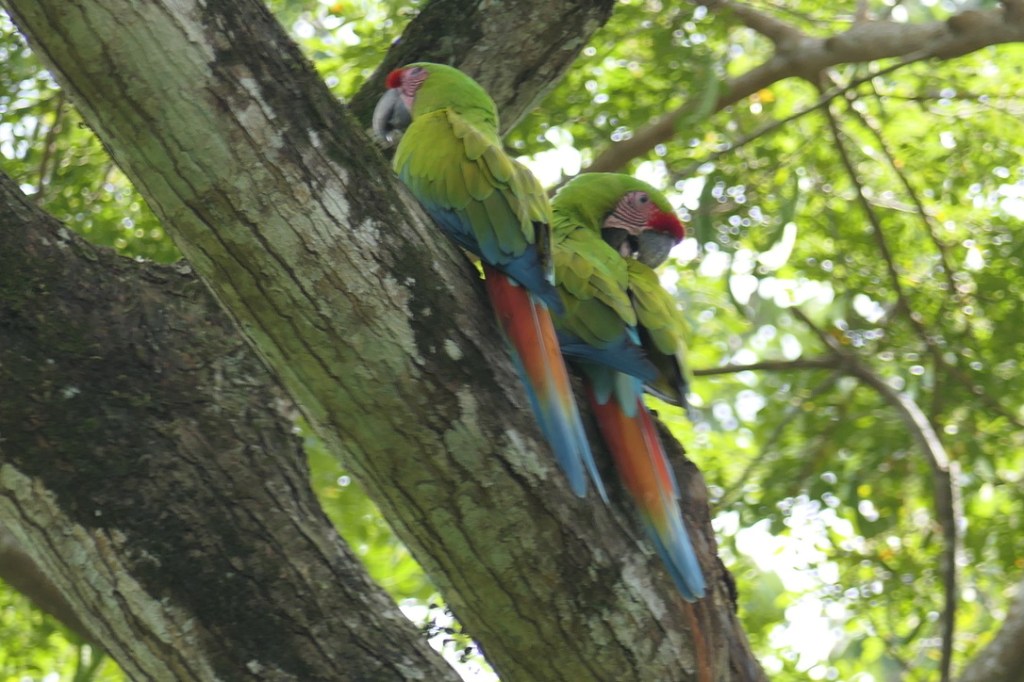
In Cocles we stayed at the aptly named Wild Side Jungalows (Jungle-bungalows!), which are set within the rainforest. We came to the Caribbean coast not just for the beautiful beaches, but because this area is teeming with wildlife. So it was no surprise that we spied a variety of creatures during our stay – sloths, howler monkeys, agoutis (guinea pigs on steroids), kinkajous (tree-dwelling mammals), mouse opossums, toucans and tree frogs. And spiders – lots of spiders. The surprise was that all these animals were seen from the deck of our jungalow! It felt like an immersive, IMAX, 3-D Animal Planet experience. All from the comfort of our deck chairs. Outside of our little enclave, we also got to view several green macaws, whose screeching calls we heard through the open car window as we drove to the beach one morning. Pulling to the side of the road we spied a band of the colorful birds high up in the trees, cackling to each other. When they moved between trees we caught sight of their green, red and blue feathers – a rainbow in flight. At times, enjoying the solitude at Playa Negra, we were joined by a troop of howler monkeys moving through the same trees we were using for shade.
About ten miles north of Puerto Viejo, where the ‘banana belt’ begins, the small village of Cahuita sits on the coast. Most folks come here to visit the national park, which lies at the southern end of town. We had stayed in town and walked the park’s lone trail on our visit last year, but chose to stay outside of town, within walking distance of the uncrowded stretch of Playa Grande (seems we’re drawn to remote and empty beaches). Cahuita has an added benefit for us – it’s the current home of an old friend from Steamboat Springs, our base in Colorado. It’s always a treat to catch up with friends in exotic parts of the world!

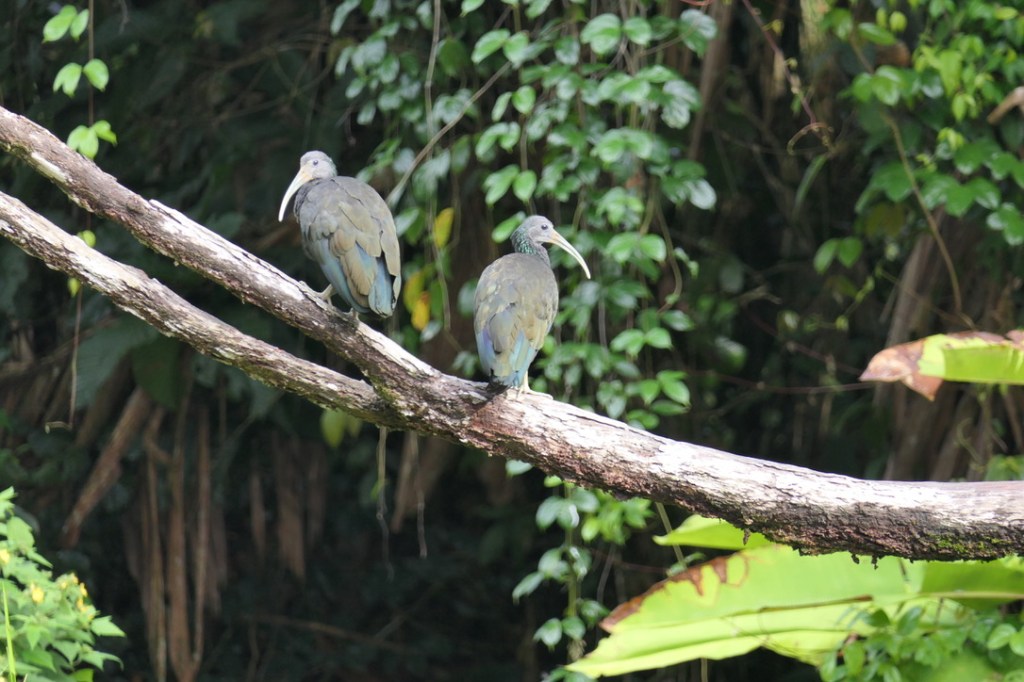
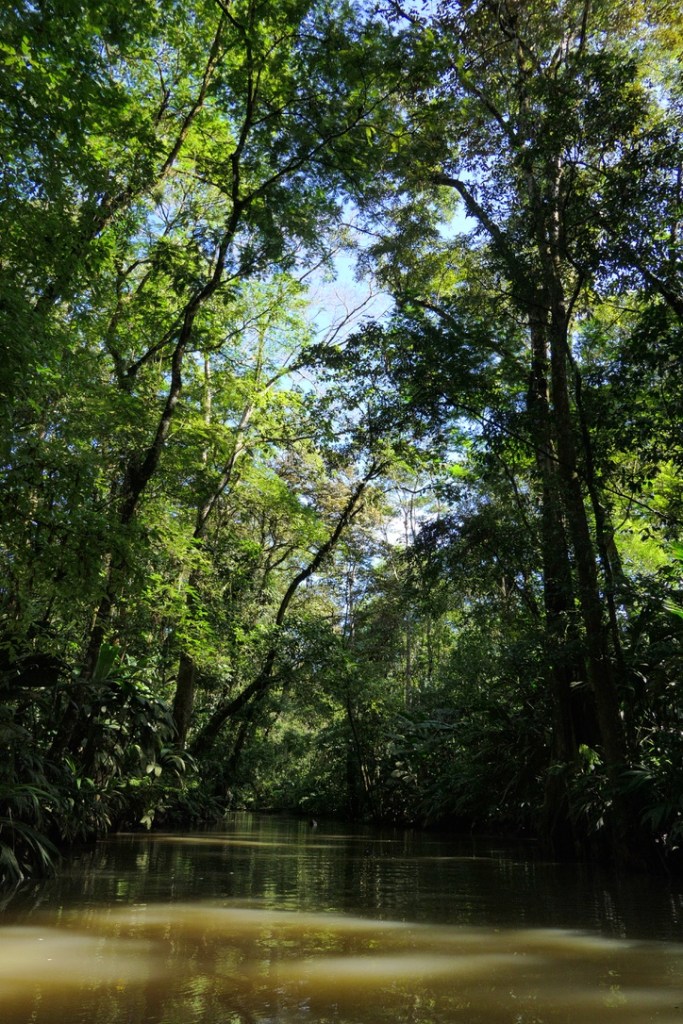
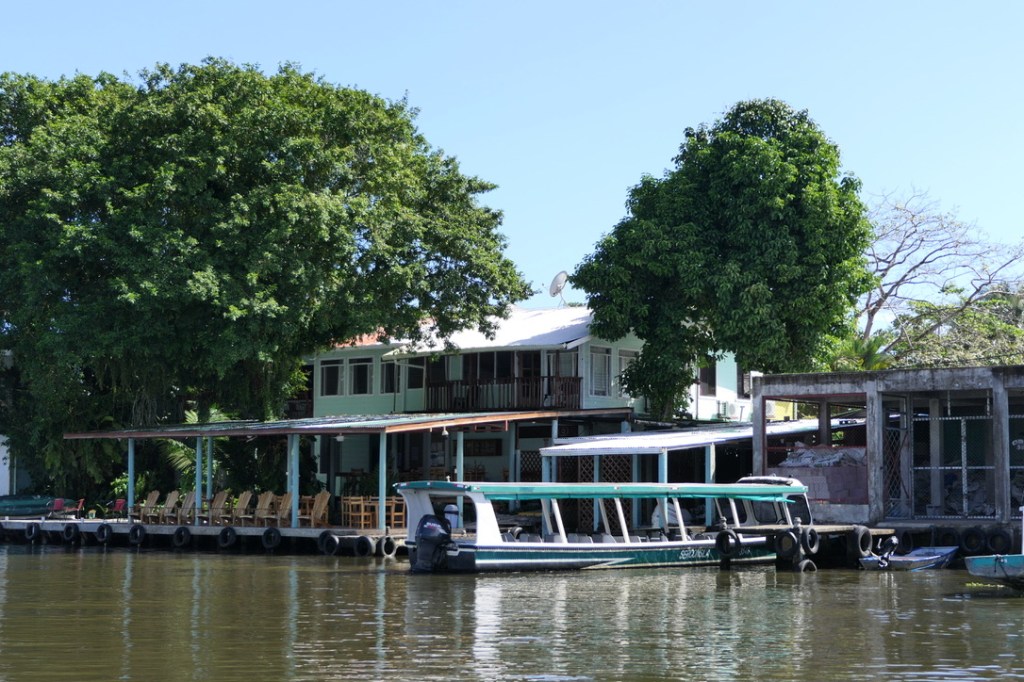
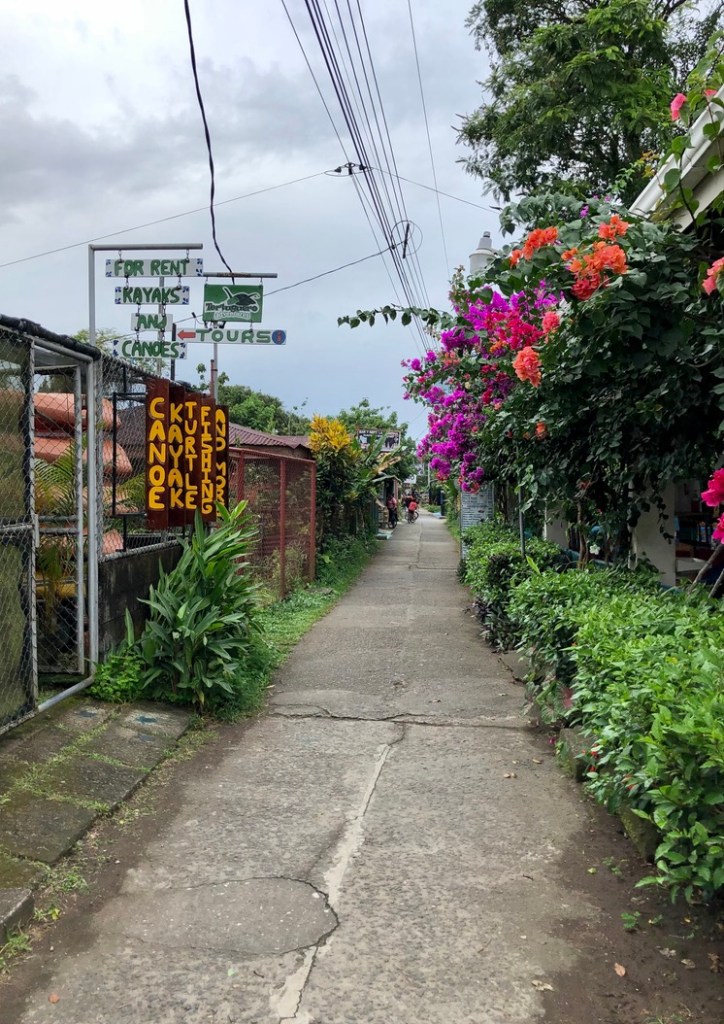
Tortuguero National Park lies on a thin peninsula in the far northeastern part of the country. Known principally as a spot for nesting sea turtles (during the nesting season from July to October) but attracts visitors year-round for wildlife spotting along the river system and on the trails of the park. For those without the deep pockets to afford the small plane flight from San Jose, the park and town of the same name are accessed via a water taxi from the mainland town of La Pavona. It’s here that we left our rental car in a secure parking area after the four hour drive up from Cahuita. Along with a dozen other passengers we boarded one of the narrow shallow-draft outboard engine boats for the one-hour trip down the Rio Suerte, where we hoped to spy some wildlife along the banks of the river. As we began the journey down the narrow, twisting river, we immediately began spotting tiger and blue herons; cattle and snowy egrets; basilisk lizards and giant iguanas; spider monkeys and even a number of caimans (small crocodiles). If the trip out to the national park was this good, we couldn’t wait to do a tour within the park itself. Our first afternoon in town we strolled the main street – which took about three minutes from end to end. We found dinner at a restaurant and retired early, since we had to get up with the sun for our morning river tour. From our lodge overlooking the Tortuguero River, we departed in a small boat powered by an electric motor with our guide. Again, we were able to spot all kinds of waterfowl, spider monkeys and several caimin throughout our three hour tour. Upon our return to the lodge we enjoyed breakfast on the terrace, followed by a walk into the national park and eventually drinks and dinner along the waterfront. Our visit ended the following morning after breakfast as we took the water taxi back to La Pavona.

Picking up our car in La Pavona, we headed inland, ending our two week visit to Costa Rica’s ‘wild side’. Our last week in the country will take us to Lake Arenal, for volcano views (and hopefully paddling on the lake) and then Monteverde, for cloudforest walks and quetzal-spotting.
 The Rhum Line