The Rhum Line

The aimless and sometimes muddled route of a traveling couple looking for their next great adventure


Leave a comment

Yucatan Road Trip – Part Four

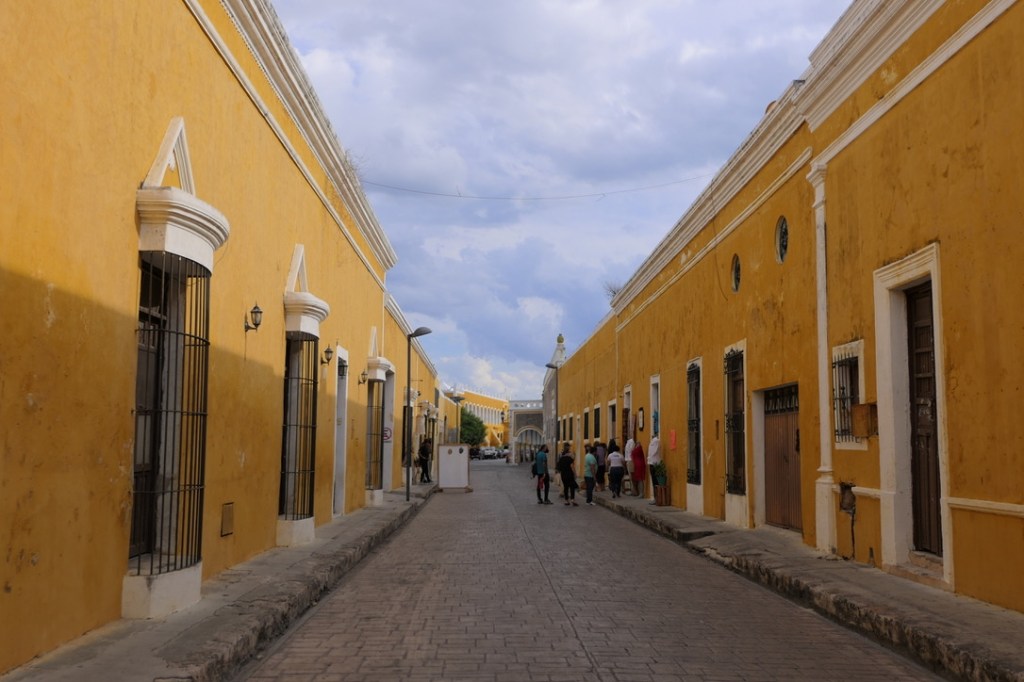
Mariachi music drifted from the car speakers. The air conditioner struggled to keep us cool in the mid-90’s heat of the day. Outside, the landscape rolled past – tinder-dry grassland, stunted trees and dry-stone walls partitioning off parcels of empty pasture. The road was straight and narrow, the bleak scenery only broken occasionally when we passed through small towns with names like Tekal, Temax and Tzimin. We were on our way to the coast, which we hoped would provide some relief from the oppressive heat of the interior of the northern Yucatan. We had just left one of the more unique little towns along our route. Izamal is called ‘The Yellow City’, and it’s easy to see where it had gotten its name – every building in the town is painted the same shade of mustard yellow. It’s a pretty town, spreading out along narrow streets and small plazas from the Convent of San Antonio de Padua, which sits on a small hill at its center. Most visitors come on a day trip from Merida, just ninety minutes away, and we had thought to do the same until Heather had found a beautiful restored hacienda just outside town that offered accommodation and looked too unique to pass up. We arrived at the hacienda around one and spent a couple hours at it’s refreshing pool, waiting for the heat of the day to dissipate, before venturing into town to have a look around and find a spot for dinner. We parked on one of the plazas below the convent and set out to explore. Beyond the obvious monochromatic color scheme, and the imposing walls of the convent looming over town, the third thing we noticed upon exiting our car were the horse-drawn carriages making rounds of the plaza. The carriages were gaily decorated with bright colors and plastic flowers, while the horses were . . . wearing matching sombreros! Chalk it up to ‘just when you think you’ve seen everything’.
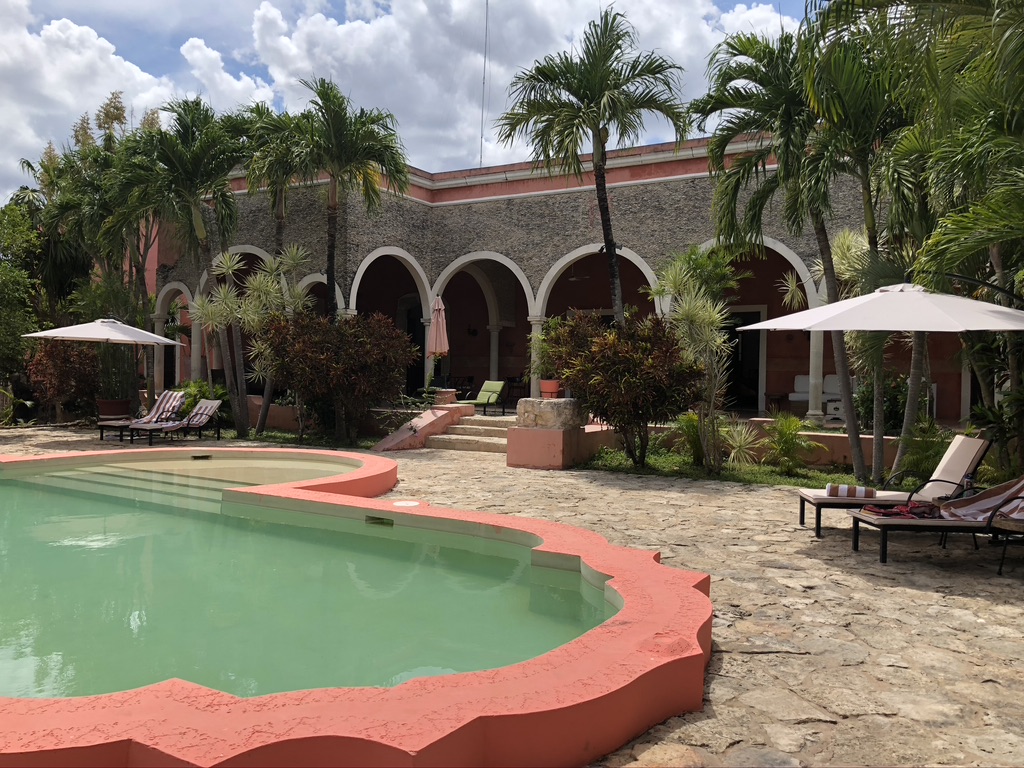
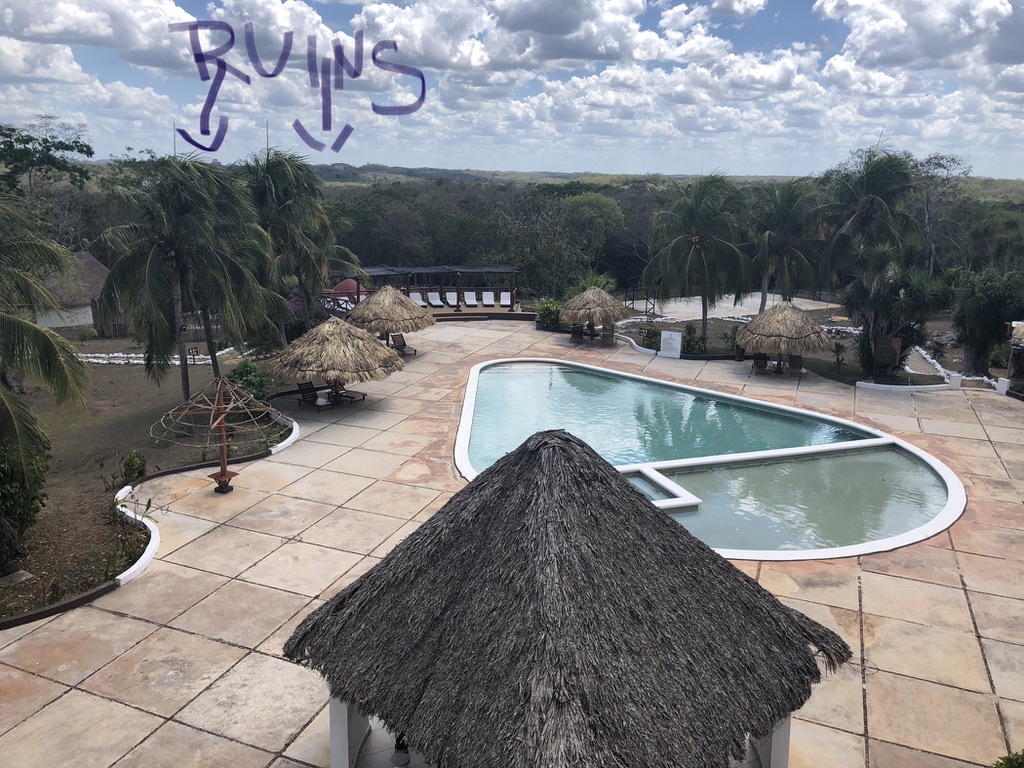
Hacienda Sac Nichte, just outside Izamal
Quiet, clean and . . . yellow – Izamal
Cute carriage, matching sombrero . . . and sleeping cabbie

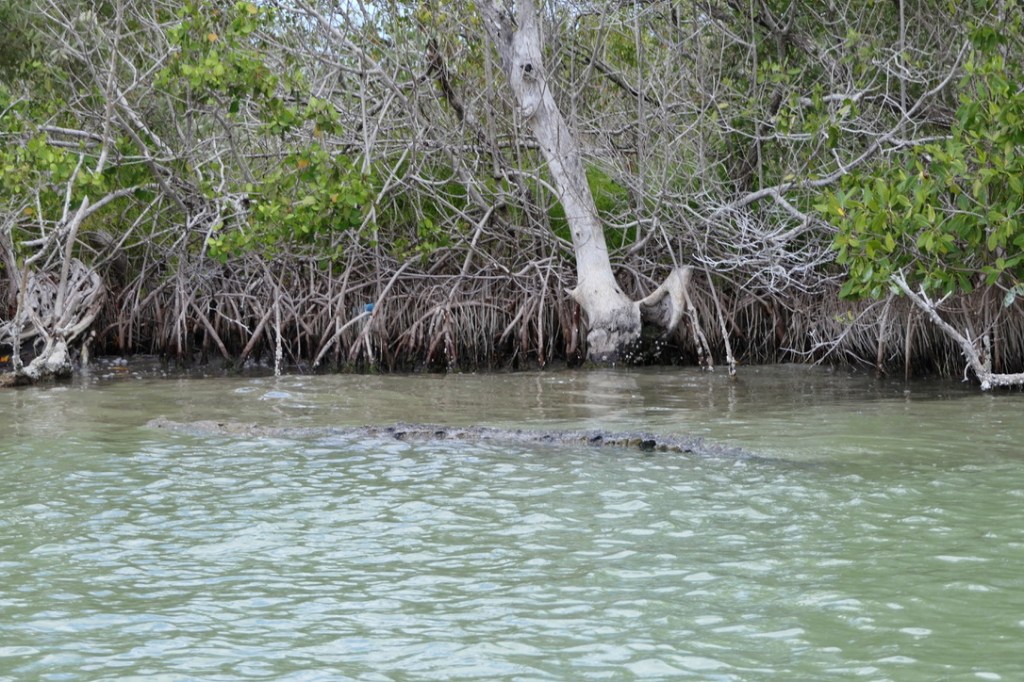
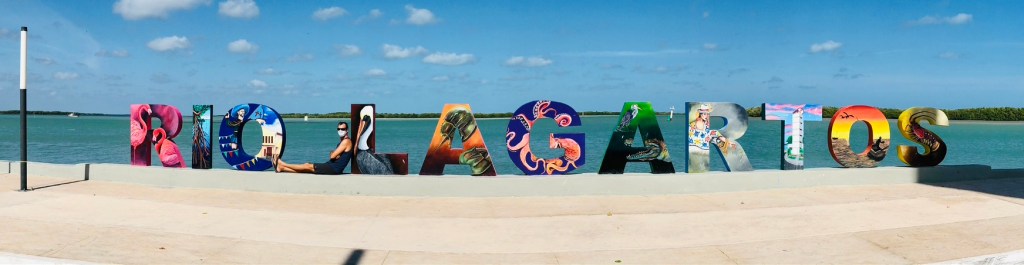
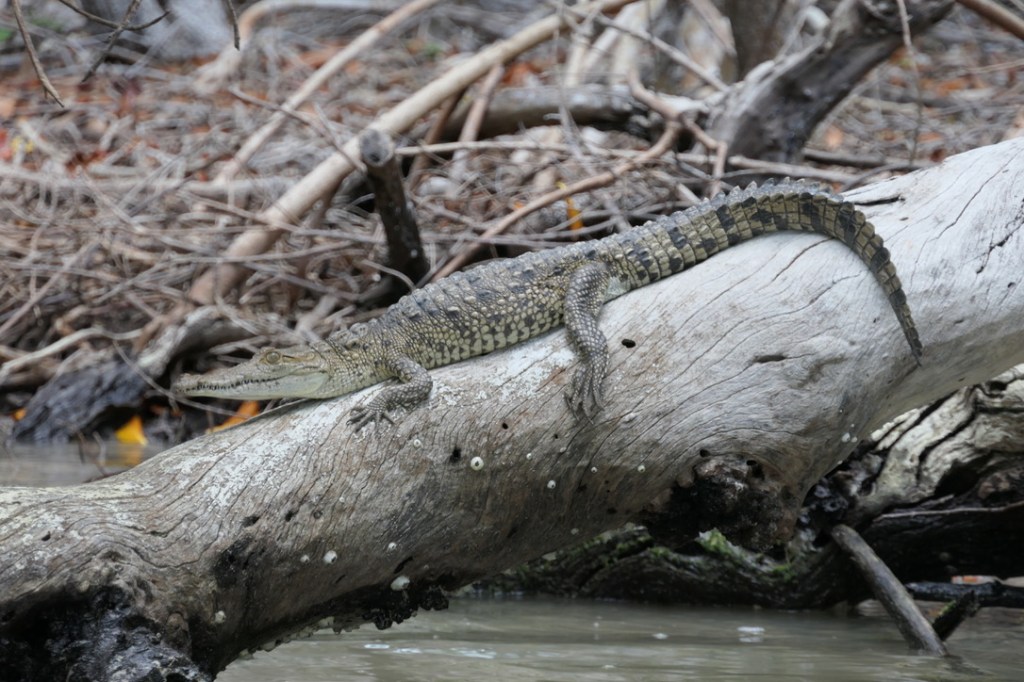
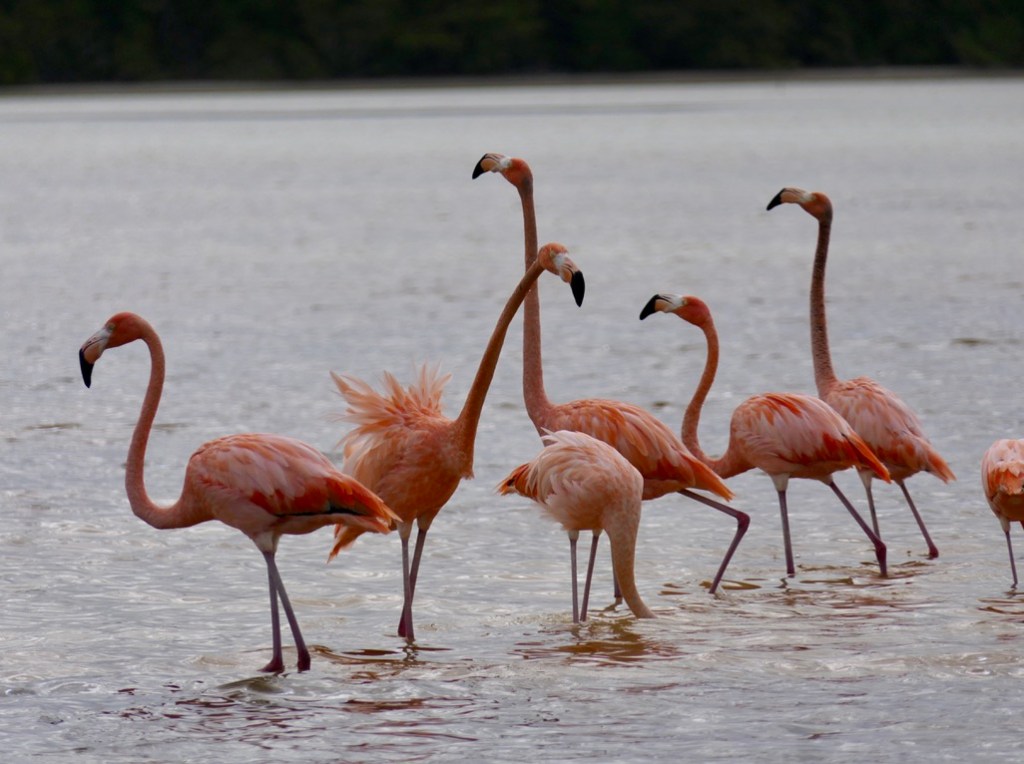
Moving on from Izamal, we hit the coast at the town of Rio Lagarto (Alligator River). The name is misleading – there are no alligators here (there are crocodiles), and the water that borders town is an estuary, not a river. The estuary and surrounding mangrove swamps are part of the Ria Lagarto Biosphere Reserve (Ria acknowledges the estuary) which is home to many species of waterfowl, including flamingoes, as well as salt ponds. An area very similar to that around Celestun, the ‘ramshackle gritty beach town’ I highlighted in the previous post that we visited a week ago. However, the town of Rio Lagarto was charming, the waterfront was busy (mostly with day-trippers taking tours of the estuary), there were several restaurants located just off the malecon, which ran the length of town, and our hotel room looked out over all the action. I chatted with one boatman and got the particulars of his estuary tour and we made arrangements for a trip the following morning. After breakfast at our hotel we met Jose at the dock and boarded his lancha for the two-hour trip. He carefully explained his plan for the morning – motor up the estuary to spot the different birds, then further on to see the flocks of flamingoes, returning to visit Las Colorados, the ‘red lakes’ where the salt mining operation was conducted, a stop at the ‘Mayan baths’ where we could cover ourselves with mineral-rich muds that would make us ‘feel ten years younger’, then ending at a white-sand beach to rinse off the mud before returning to town. And that’s exactly how it went. As we motored away from town we viewed cormorants, anhingas, eagles, pelicans and gulls, spotted a baby crocodile sunning on a log, all the while Jose providing a running commentary of interesting information about the birds, waterway and mangroves. After an hour we came upon the flamingoes in a shallow lagoon within the estuary. The numbers didn’t approach what we had seen previously in Celestun, but the birds were still beautiful to see nonetheless. As we started the return journey, we stopped to view the salt ponds and the large commercial salt extraction operation, noticing that the ‘red lakes’ were more orange-hued (similar to Celestun). Then Jose offered us the ‘Mayan bath’ – he invited us to slather on the age-reducing mud from the shoreline, which he said was full of ‘salt, minerals and flamingo poo’. Encrusted in drying mud, we flew back towards town, stopping briefly to observe a swimming six-foot crocodile, before making our final stop at the beach for a cleansing swim.
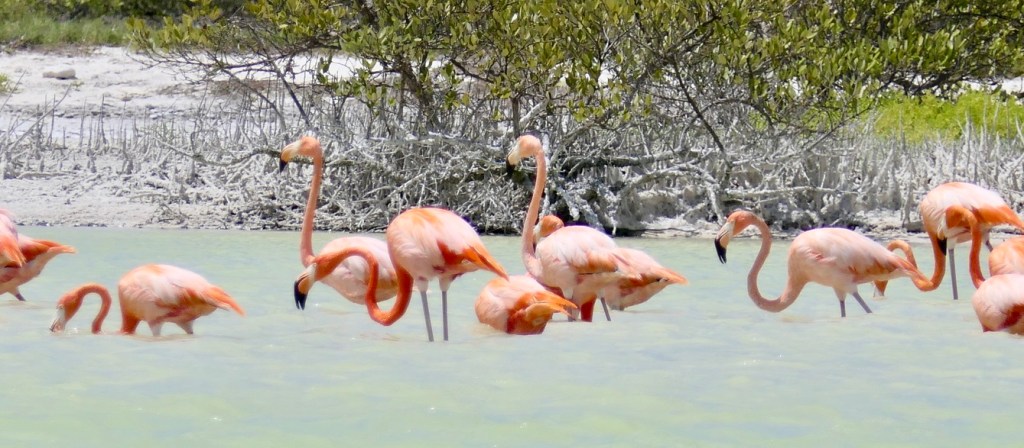
Ria Lagarto flamingoes
There was this little croc . . .
. . . and one a bit bigger
Mayan spa treatment
On the Rio Lagartos waterfront

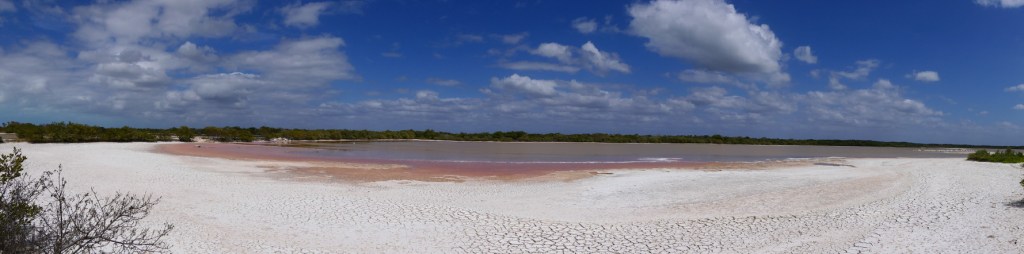
On our way out of town we visited the village of Las Colorados, which we had viewed from a distance on our boat tour. Here we found an actual ‘red’ lake, which was in fact pink, just next to the giant salt mining operation, and which couldn’t be seen from the estuary. As we approached the salt pond, ‘guides’ rushed up to our car from the side of the road, insisting that the pink pond was on private property and only ‘official’ guides could accompany us to the ponds edge where we could take photographs. Or, we could stop the car, get out and take a photo from the road, which offered a fairly unobstructed view. So that’s what we did, then turned around and headed back out of town to our next destination.
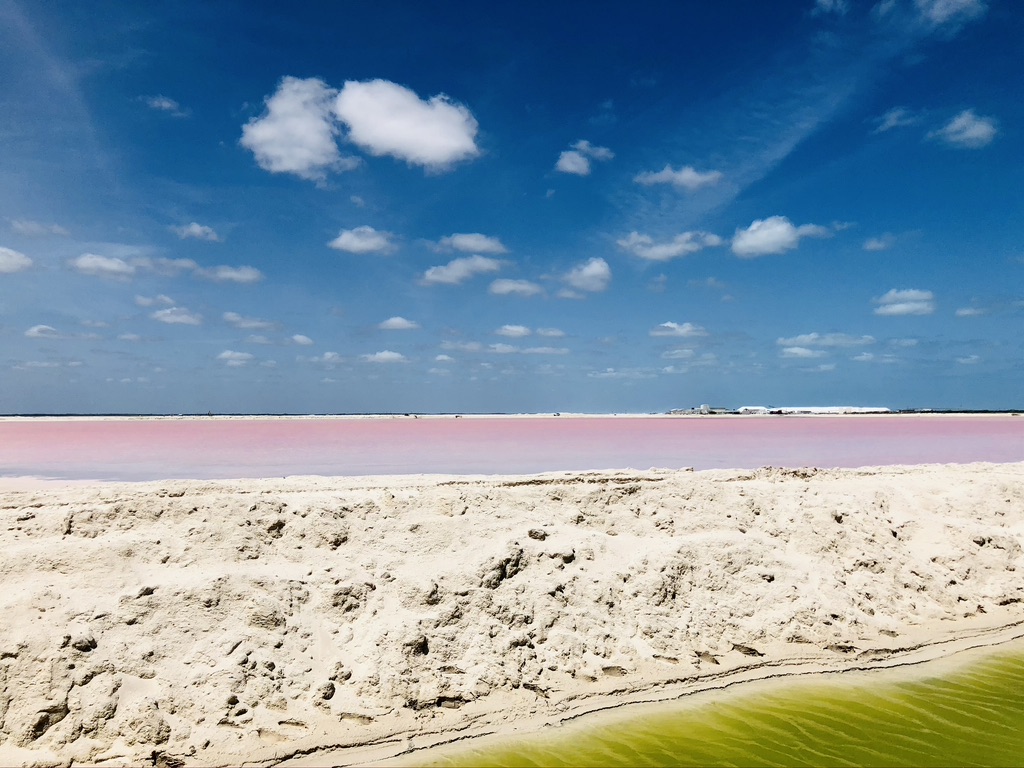
The pink lake really exists!

Valladolid would be our final inland stop before returning to the coast for the remainder of our Yucatan road trip. It would be one more small colonial city, with a main plaza and a three-century old cathedral, and more of that mid-90’s blistering heat. We opted for a single nights stay, waited out the heat in our air-conditioned room until just before sunset, then ventured out to stroll it’s cute lanes through the historic center. We found a restaurant with outside seating on the plaza and spent the evening sipping drinks and snacking on chips and guacamole, watching the weekend crowd.

After our pleasant evening in Valladolid, we hit the road to make our way back to Puerto Morelos, closing the loop of our road trip back to our first stop over a month ago.
Leave a comment

Yucatan Road Trip – Part Three

‘Quaint former fishing village’ and ‘picturesque little beach town’ are lines often used to describe many of the smaller beach destinations along the coast of the Yucatan, but will never be used when talking about Celestun. This ramshackle gritty village, located on the Gulf of Mexico just an hour and a half drive (less if you drive like a Mexican hell-bent on getting to the beach for the weekend) west of Merida is as unpretentious as they come. It doesn’t have any hip vegan cafes, boutique hotels or a craft brewery. It does have a long stretch of white sand fronting the beautiful blue water of the Gulf and it also has flamingoes. During the season, which we visited during the tail end of, thousands of American flamingoes make their winter home in the estuary of the Ria Celestun Biosphere Reserve, just at the edge of town. This is what brought us here for a couple of days.

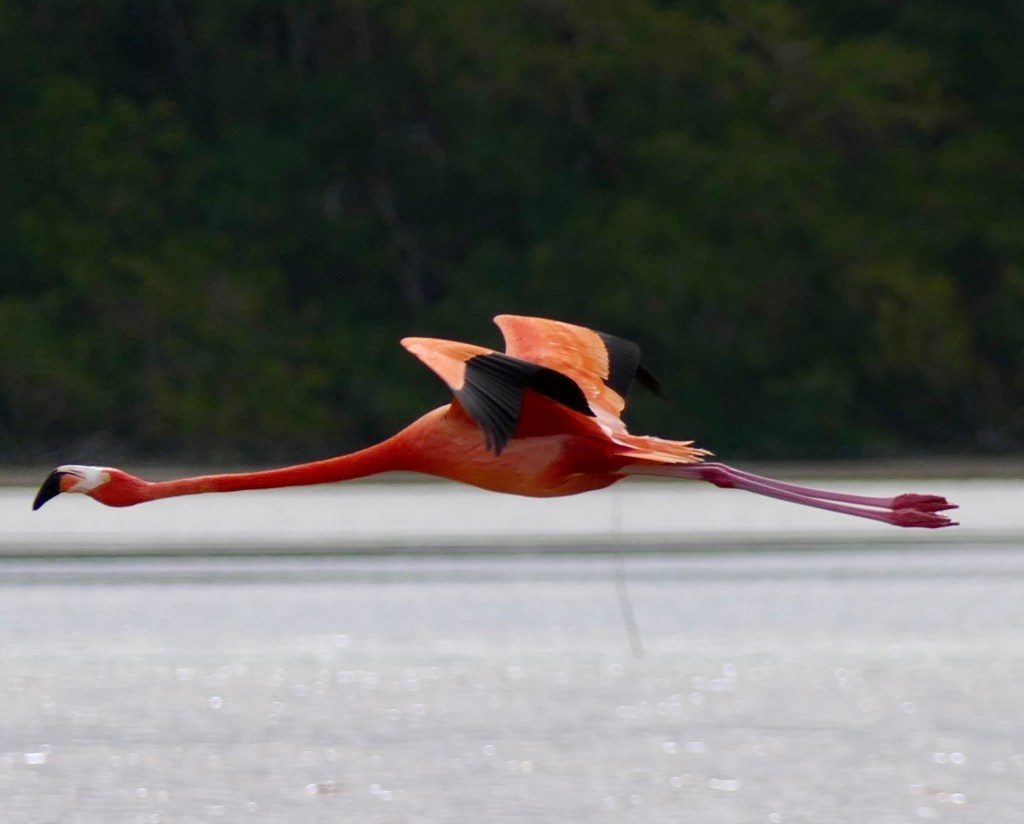
Being close to Merida, the largest city on the Yucatan, means Celestun is packed with beachgoers on most weekends. We happened to pick the busiest of all weekends, Easter, to visit. To beat the crowds, we elected to make an early start to our flamingo-spotting tour. We drove out to the edge of town just after 8 am and arrived at the official tour office and dock – before the office had even opened. Fortunately a few boatmen were around and we were able to strike a deal directly with one and were quickly on our way. The only other activity on the water that early were a handful of local crab fishermen who had already strung their nets along the mangrove-lined shore or dropped their traps into the river (blue crabs are the catch here – we sampled their meat packed into crispy empanadas at a seafood restaurant on the beach the previous evening). We motored about ten minutes downriver before we caught sight of a pink line on the water. Then we were amongst them – hundreds of flamingoes in various flocks, stalking the shallows, honking and hooting while feeding on the shrimp larvae that produces the pink coloring of their feathers. With the engine off we drifted silently past as the birds stuck their long necks into the water to feed, strolled through the river on their spindly legs and occasionally took flight by first running on the waters surface before getting airborne. When we had our fill of pink birds, we motored over to a small islet to see dozens of roosting cormorants, frigates and albatross. Our last stop would be to a small freshwater spring which bubbled to the surface to create a crystal-clear pool amongst the mangroves. Back on land, we explored a bit more of the Biosphere Reserve by car, driving dirt paths through mangrove swamps that led us to salt ponds holding mineral-laden waters with orange and pink hues.

These are funny-looking birds
A flamingo in flight
A salt pond in the Biosphere Reserve – we did see evidence of small-scale salt harvesting in places

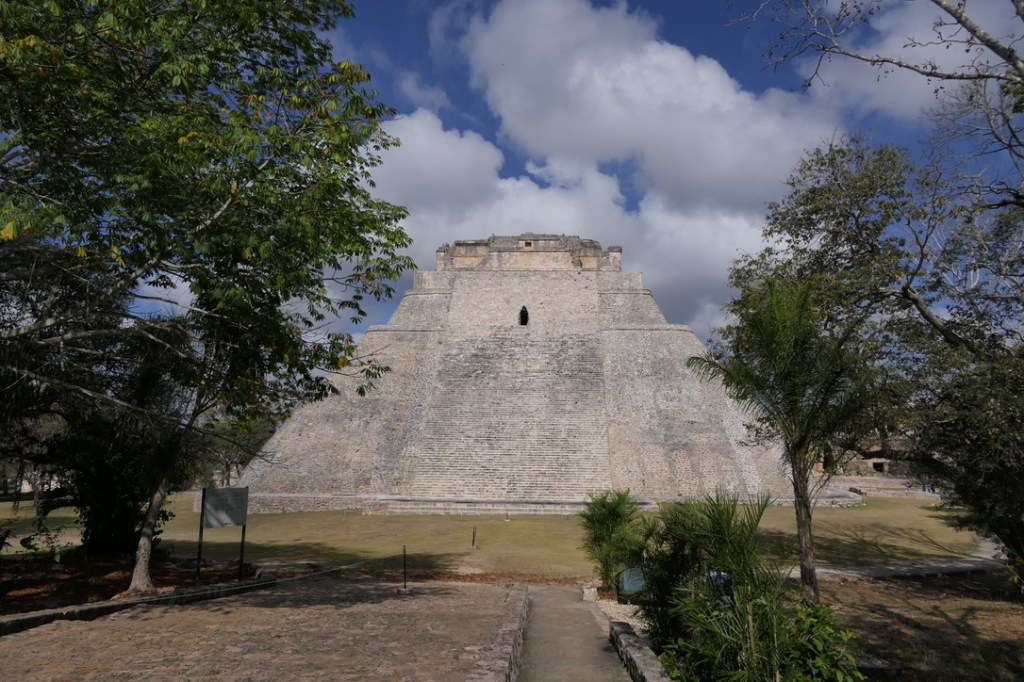
Prior to our visit to Celestun, we drove from Campeche inland to see the Mayan ruins at Uxmal. Situated along the Ruta Puuc, which contains several other Mayan sites, Uxmal is one of the only archeological sites still open to visitors in this area (the others have mostly closed during the last year – COVID casualties). Most visitors come to Uxmal on a day trip from Merida or Campeche, but we couldn’t resist the chance to stay at the Hotel Uxmal Maya Resort, which was located within walking distance to the ruins, had a large swimming pool (perfect for cooling off after a day in 90 degree heat) and rooms that looked out over the surrounding jungle with views of the tallest structures of the archeological site. We made our visit in the morning and were able to beat the day-tripper crowds, who were just arriving as we left around mid-day. Uxmal’s most impressive structure, the Pyramid of the Magician, greets you immediately upon entering. Behind it lies a quadrangle of temples surrounding an expansive courtyard, the stone facades decorated with highly elaborate carvings of human faces, animals and other objects. Uxmal also features a fairly intact ball court, where a crude game of Mayan basketball was played in front of spectators, who got the added benefit of occasionally seeing the losing team suffer the indignity of having to buy the winners beer before being sacrificed. Okay . . . I’m joking about the beer part.

A room with a view – Uxmal
The Pyramid of the Magician
Heather enjoying Uxmal (but probably thinking of the pool back at the hotel)

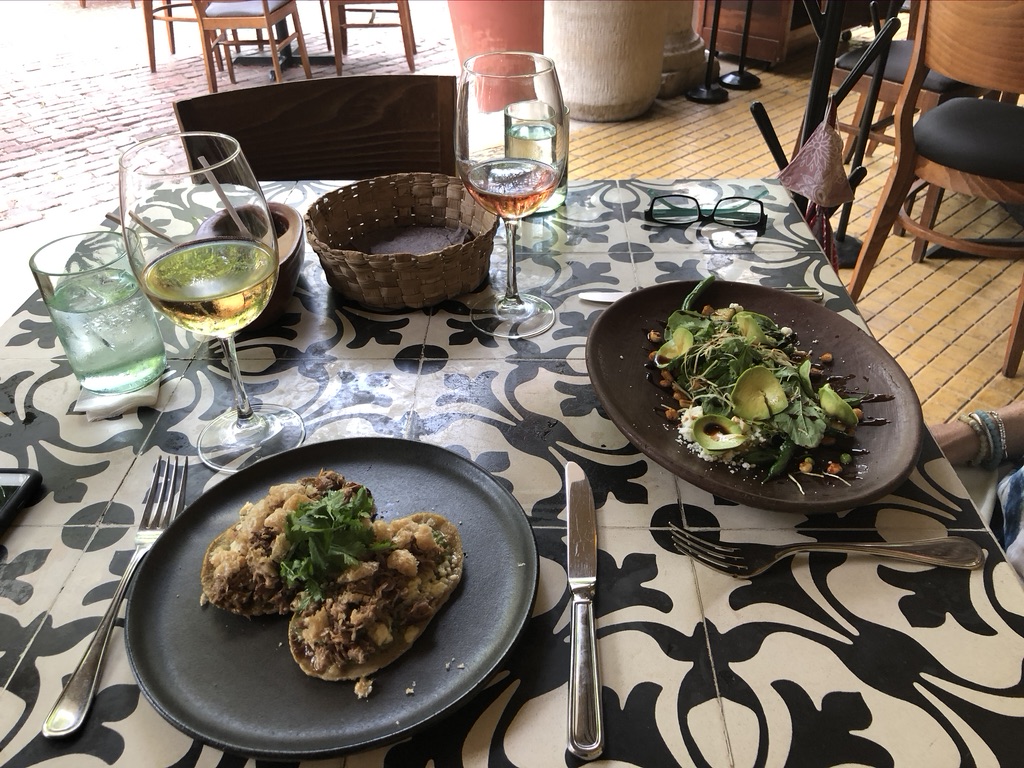
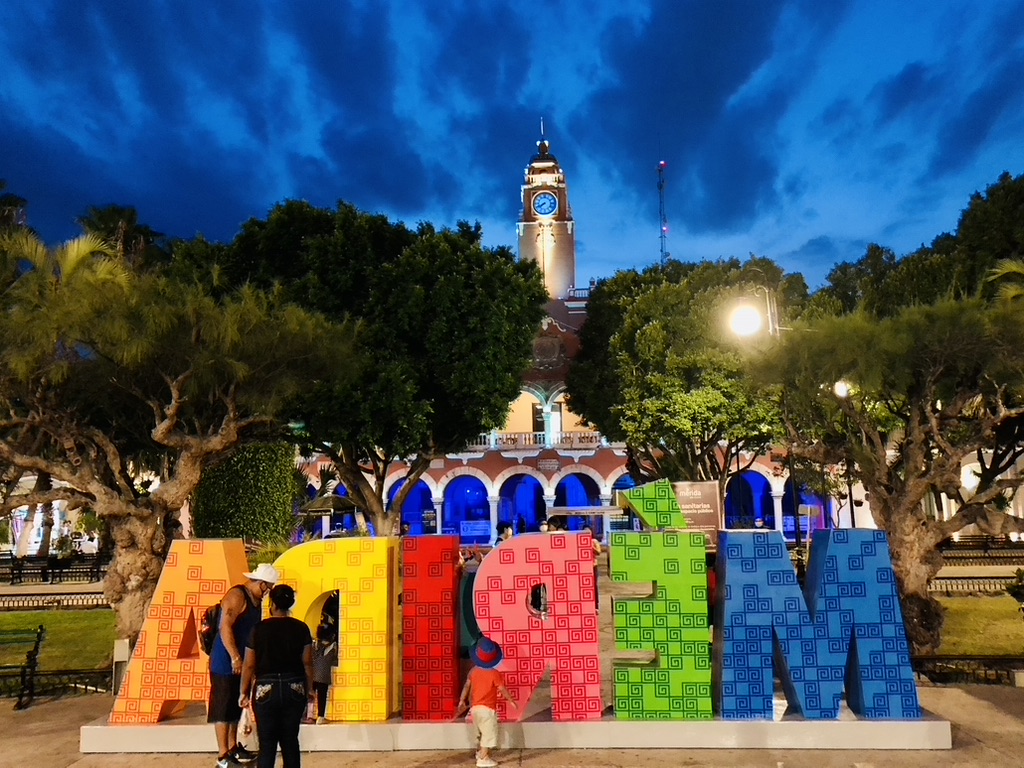
After our visits to Uxmal and Celestun, we made our way to Merida for a few days in the big city. Merida is one of those places that rubbed us the wrong way at first. The central plaza, while architecturally attractive, was crawling with numerous vendors offering the same stuff, so you couldn’t sit for a minute without being offered yet more shirts, necklaces and handbags. We found the recommended restaurant offering traditional Yucatecan cuisine to be overrated and disappointing. We had an underwhelming breakfast at our hotel. And it was hot – really hot (93). We were dispirited thinking we had another whole day to spend in town and we weren’t looking forward to it. But then something magical happened. Merida revealed its charms to us. We skipped the hotel breakfast and sought out a bakery cafe in the neighborhood where we enjoyed fresh flaky croissants followed by a quiche and fresh fruits with yogurt and granola. We strolled along the wide sidewalks of the Paseo de Montejo, admiring the beautiful architecture of the mansions that once were homes to Merida’s elite, now housing banks, museums, offices and cafes. In the evening we dined at Apoala, which is situated on a small plaza, where we feasted on Oaxacan-inspired dishes like shrimp ceviche with grilled avocado and roasted pumpkin; a fresh salad of greens, fava beans, green beans, toasted corn and tomato; and shredded roast suckling pig piled on housemade tortillas with Oaxacan cheese, cilantro, pickled onion and chicharrones. We lingered over craft cocktails and Spanish wine before strolling to the main plaza and ended the evening at the outdoor bar of an old classic hotel tucked into a small plaza, chatting with a new friend. Merida had won us over.

Food that won our hearts – dinner at Apoala in Merida
Looking across the Plaza Grande at sunset – Merida

Another week of our Yucatan road trip is in the books. Next, we’ll head inland from Merida to visit a very unique small town, another Biosphere Reserve on the northern coast (yep, more flamingoes) and one more small city before ending our trip at a couple of our favorite beach towns.


Leave a comment

Yucatan Road Trip – Inland and Across to the Gulf

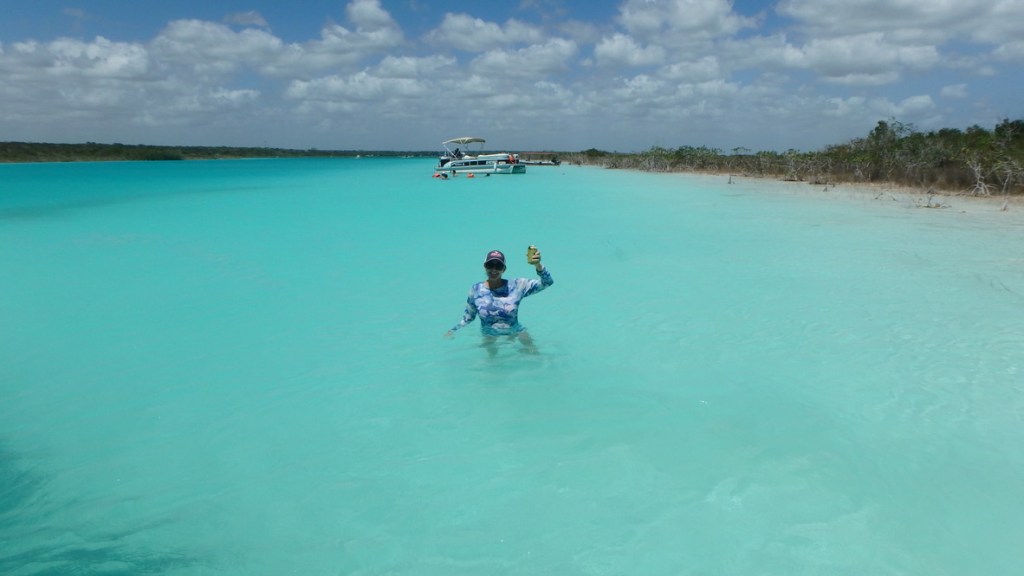
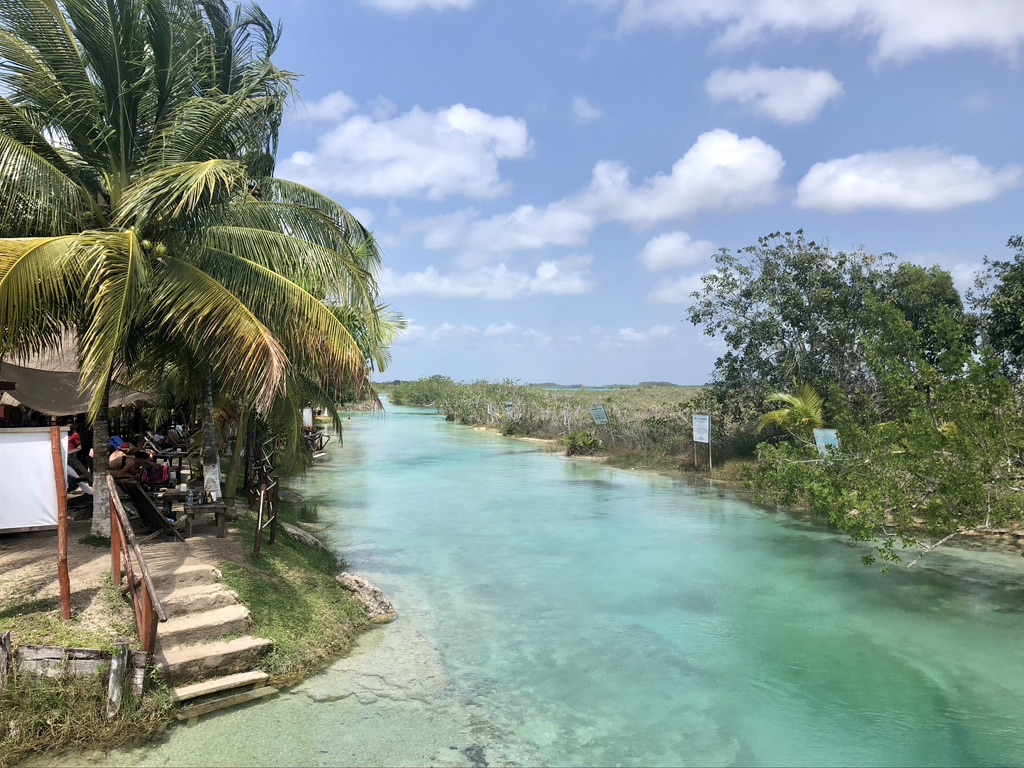
The Maya Riviera, the stretch of coastline along the Yucatan’s Caribbean side, contains most of the area’s well-known destinations for beach fun: Cancun, Playa Del Carmen, Cozumel and Tulum to name a few. Head inland from the coast and the scenery changes dramatically and the crowds thin considerably. We left the beaches behind at Mahahual and headed into the heart of Mayan country. The shimmering blue of the Caribbean Sea would be replaced by the . . . shimmering blue of an inland lagoon? Not just any old shimmering blue – Laguna Bacalar is also known as the Lagoon of Seven Colors (spoiler alert – the colors are all shades of blue). It’s hard to imagine an inland body of water that contains the lightest shade of blue where it lies over a shallow limestone bottom to the deepest blue of the nearly bottomless cenotes, of which there are four in or around the lagoon. The best way to experience the lagoon and the amazing colors of its water is by boat. Almost anywhere along the shore boats are available for hire, offering a fairly standard trip of a couple hours, allowing for plenty of swim time in the shallower sections. The boat captains are also more than happy to provide a cooler and ice if you decide to bring along some beer (spoiler alert – we did). If you prefer to stay on land while enjoying the water, there are two other options – Sac Ha offers access to a shallow bay (with that light blue water and limestone bottom) and a number of palapas for a shady spot to spend the afternoon; Los Rapidos is sited along a narrow channel where you can float the current, then sip margaritas and munch on chips and guacamole while watching others enjoying their float. When we’d had enough time on, and in, the water, we spent our evenings exploring the eateries in town. Our favorite meals ranged from the simple, traditional chicken roasted over charcoal, served with tortillas, rice and salsa at Pollo Asadero Sinaloa to the upscale offerings at Nixtamal, including wood-fire grilled tuna with coconut butter, passion-fruit aioli and a variety of grilled vegetables. The fiery salsa served with tortilla chips before our meals were washed down with mezcal – guava mojitos (so good I just had to mention them).

Enjoying some of the ‘blue’ in Laguna Bacalar

The end of the float at Los Rapidos – margarita time!

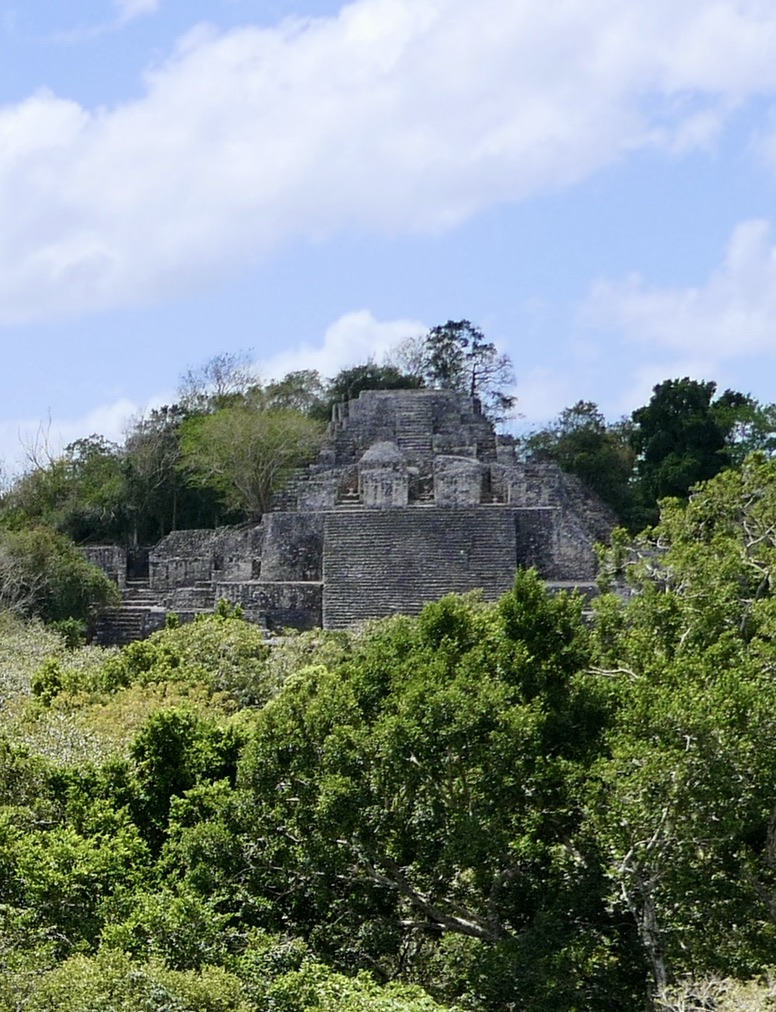
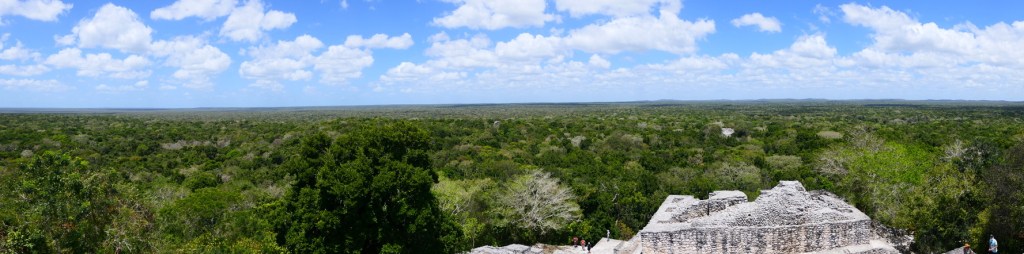
Acting on a tip from our host back in Puerto Morelos, we made a visit to the Mayan ruins at Calakmul our next stop. The ruins, located deep in the jungle amidst the Calakmul Biosphere Reserve just thirty miles from the Guatemalan border, required a two-night stay in the small market town of Ixpujil. To the tourist, Ixpujil doesn’t offer much, other than a place to sleep, and, as it turned out, decent pizza and cheap beer. But it still lies two hours away from the ruins, so we got an early start the next morning, fueled up on a delicious fruit, granola and yogurt breakfast, and made the drive to the ruins. The main attraction at Calakmul are the two towering pyramids which peak out of the jungle, offering panoramic views of the surrounding landscape, as well as the site below.

Rising from the jungle – Calakmul ruins
The flat landscape around Calakmul in the state of Campeche

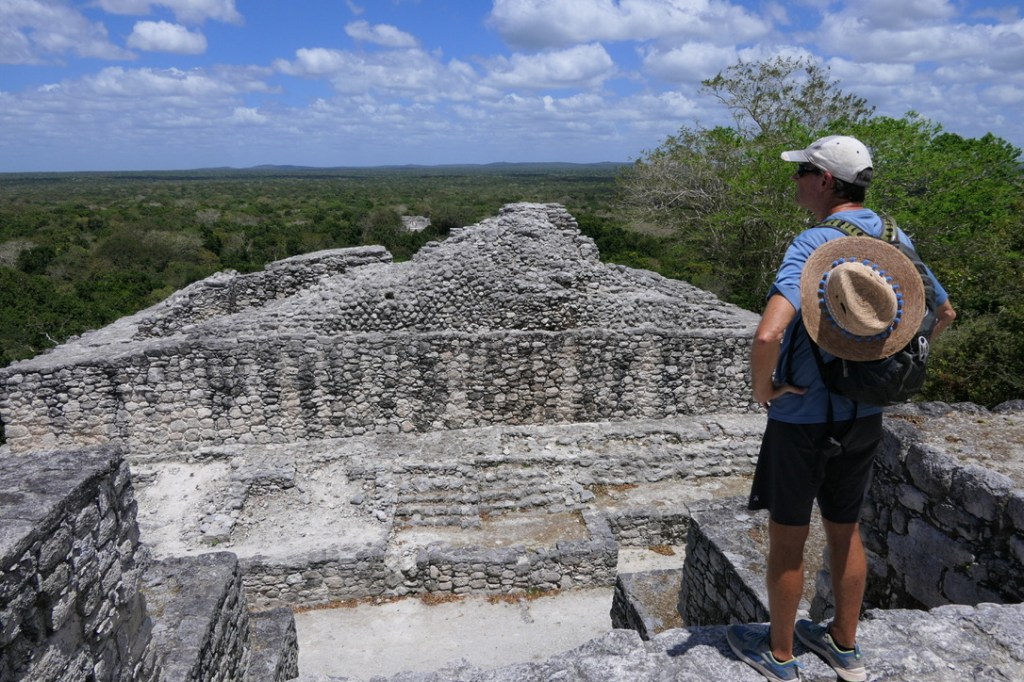
I think I see Guatemala

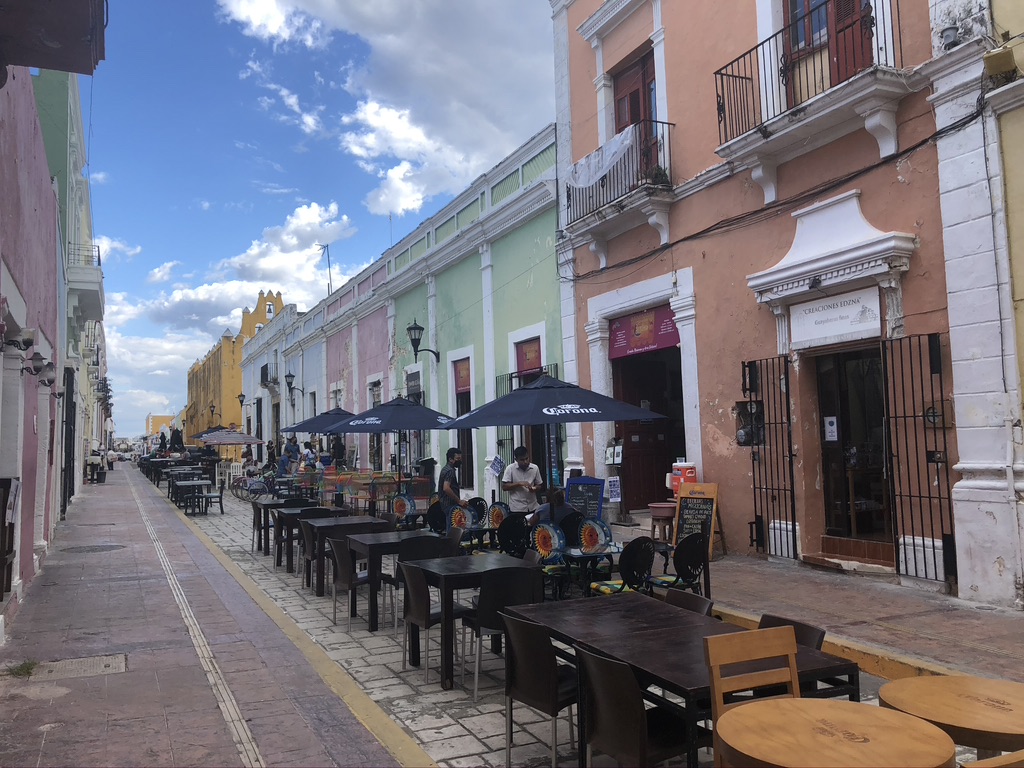
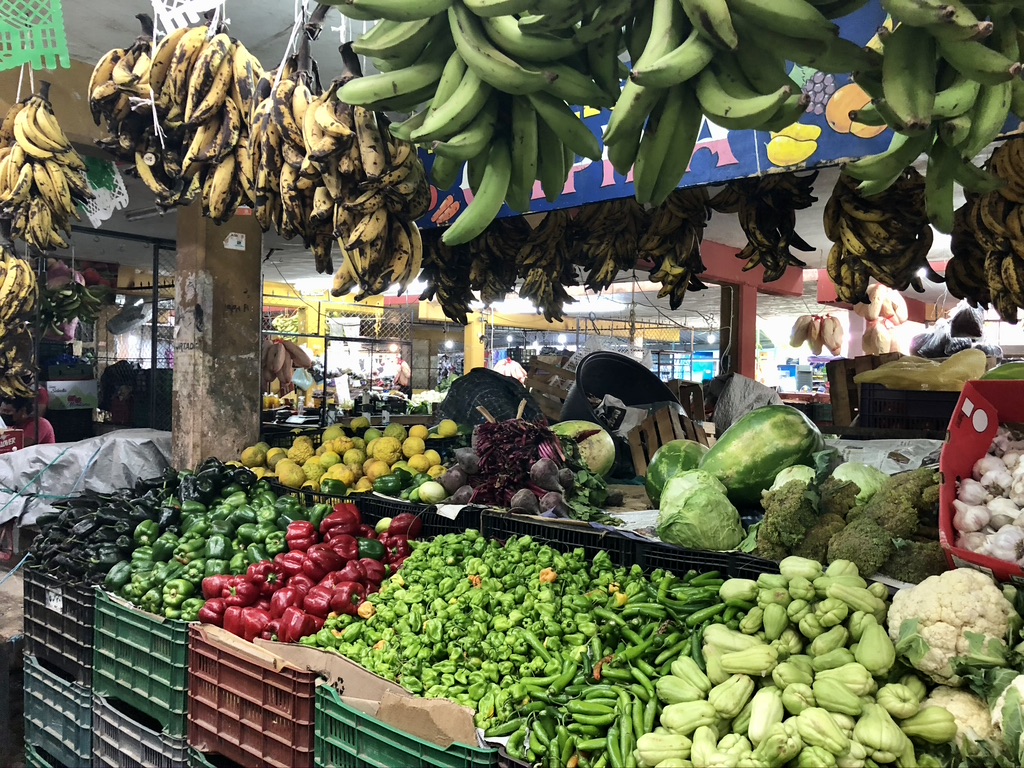
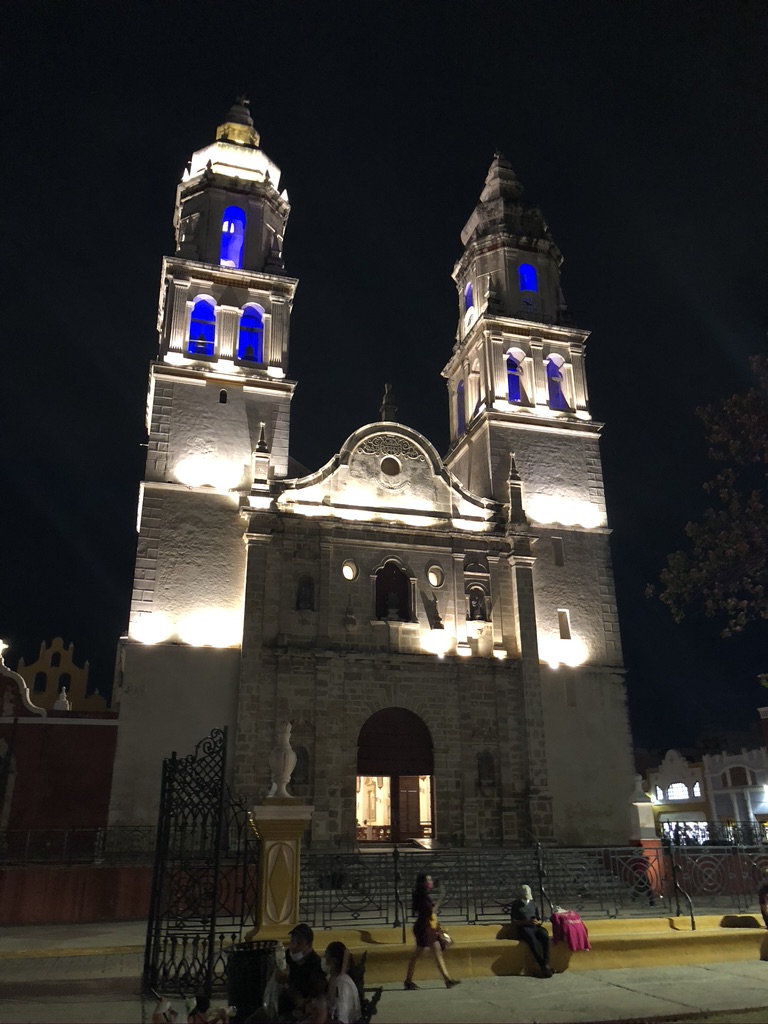
Following our jungle experience at Calakmul, we traveled four hours west to the Yucatan coast, this time on the Gulf of Mexico. We arrived in the small city of Campeche, capital of the state of the same name and second largest city (after Merida) on the peninsula. We were immediately taken by this little charmer – pastel-colored buildings, a lovely main plaza with a beautiful church and a seemingly never-ending malecon along the waterfront. We were most impressed by how clean this city was – not a scrap of trash to be seen on any of its streets. We wandered through the sprawling central market, a vast covered area with dozens of stalls offering every type of fresh fruit, vegetable, fish and meat, along with clothes, footwear and jewelry. The malecon was a great spot to watch the sunset before heading back into the historic town center for a meal and to view the plaza and cathedral lit up for the evening.

A popular pedestrian street in Campeche getting ready for the dinner hour

Some of the fresh produce on offer at the mercado
The cathedral on the main plaza, started in the 16th century

Eight days took us from coast to coast – from a lagoon to Mayan ruins deep in the jungle, to the beautiful colonial city of Campeche. The next week would see us venture back into another Biosphere Reserve for more Mayan ruins, back out to the Gulf coast for flamingo spotting and some time in the Yucatan’s largest city.