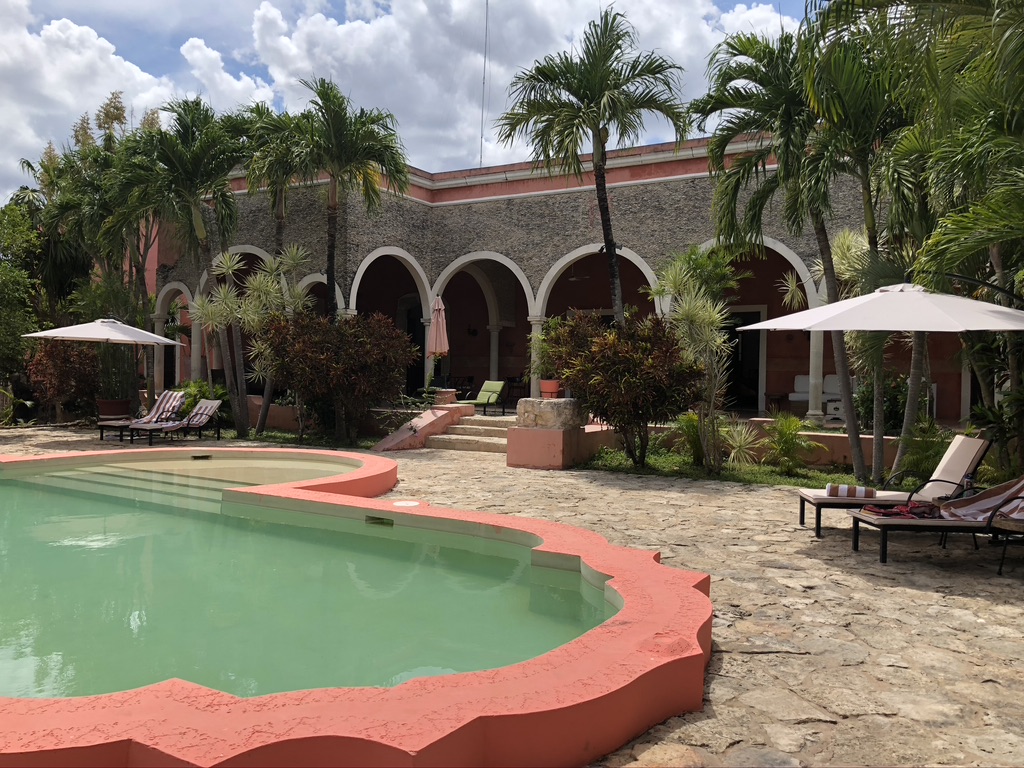
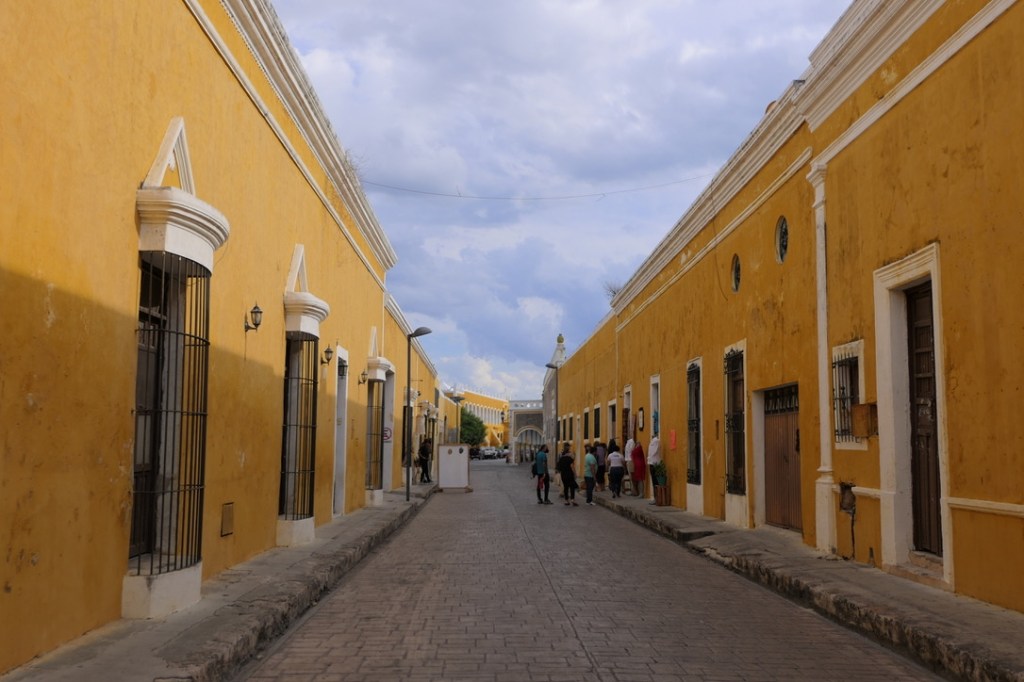
Mariachi music drifted from the car speakers. The air conditioner struggled to keep us cool in the mid-90’s heat of the day. Outside, the landscape rolled past – tinder-dry grassland, stunted trees and dry-stone walls partitioning off parcels of empty pasture. The road was straight and narrow, the bleak scenery only broken occasionally when we passed through small towns with names like Tekal, Temax and Tzimin. We were on our way to the coast, which we hoped would provide some relief from the oppressive heat of the interior of the northern Yucatan. We had just left one of the more unique little towns along our route. Izamal is called ‘The Yellow City’, and it’s easy to see where it had gotten its name – every building in the town is painted the same shade of mustard yellow. It’s a pretty town, spreading out along narrow streets and small plazas from the Convent of San Antonio de Padua, which sits on a small hill at its center. Most visitors come on a day trip from Merida, just ninety minutes away, and we had thought to do the same until Heather had found a beautiful restored hacienda just outside town that offered accommodation and looked too unique to pass up. We arrived at the hacienda around one and spent a couple hours at it’s refreshing pool, waiting for the heat of the day to dissipate, before venturing into town to have a look around and find a spot for dinner. We parked on one of the plazas below the convent and set out to explore. Beyond the obvious monochromatic color scheme, and the imposing walls of the convent looming over town, the third thing we noticed upon exiting our car were the horse-drawn carriages making rounds of the plaza. The carriages were gaily decorated with bright colors and plastic flowers, while the horses were . . . wearing matching sombreros! Chalk it up to ‘just when you think you’ve seen everything’.

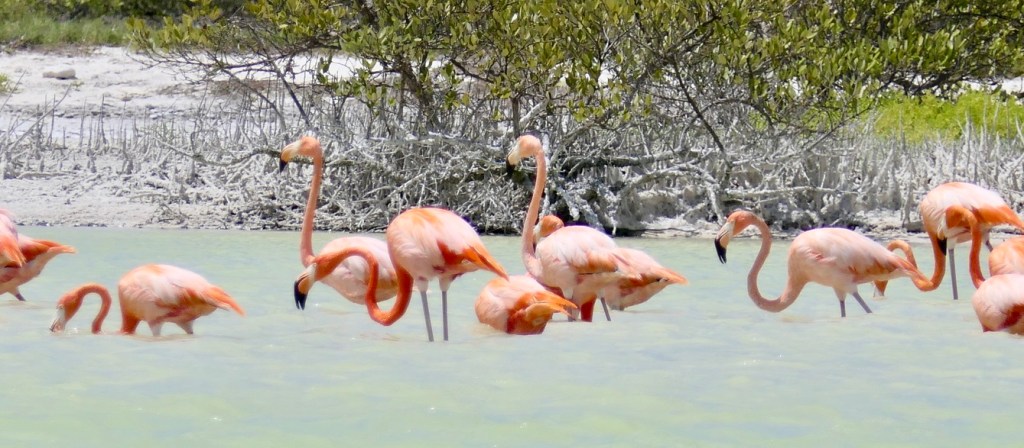
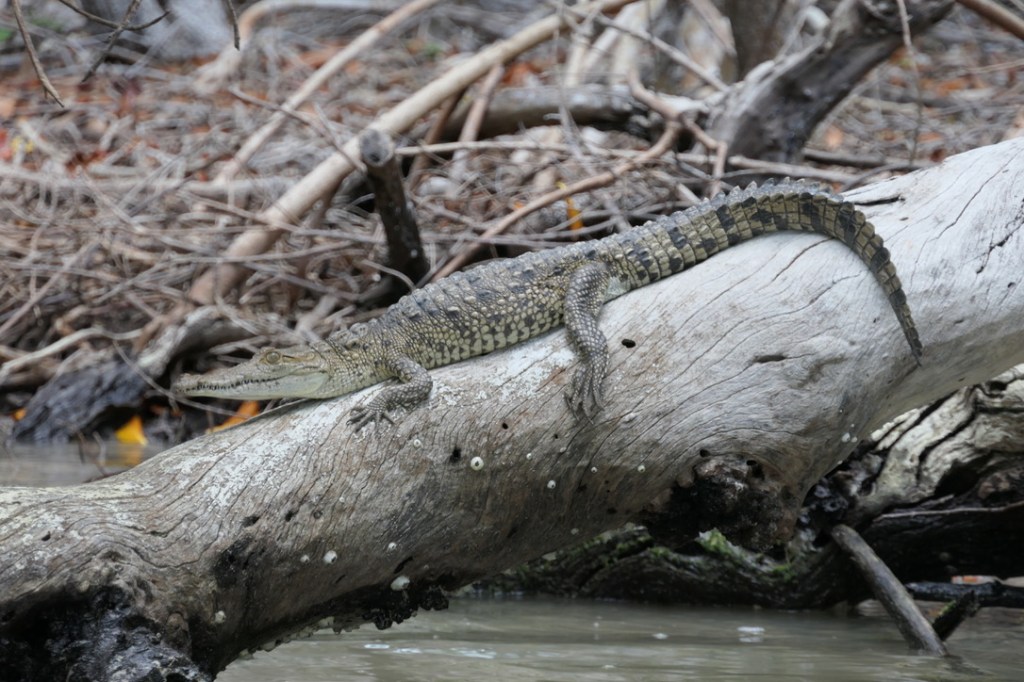
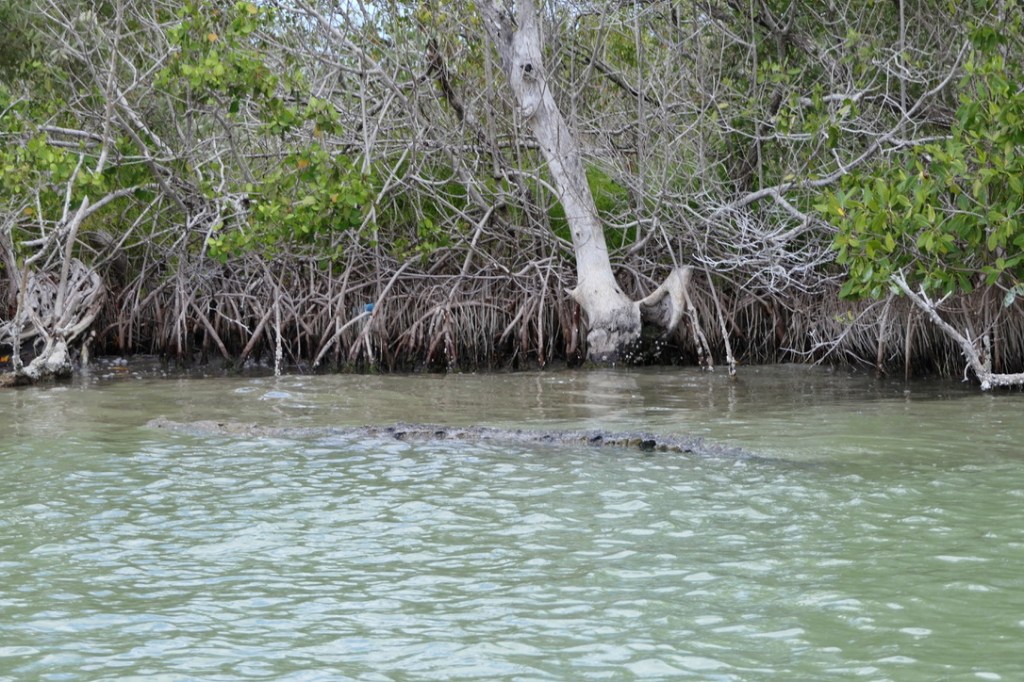
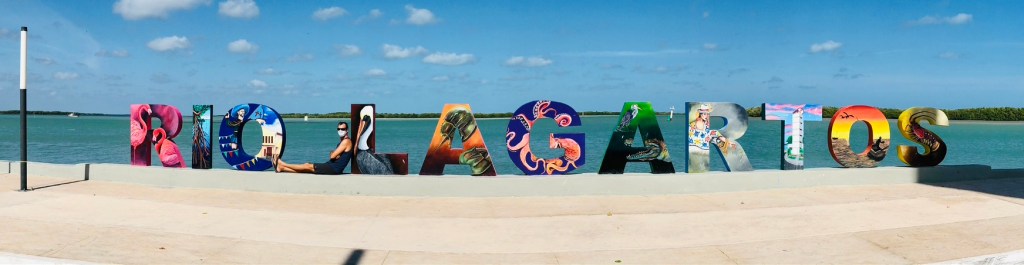
Moving on from Izamal, we hit the coast at the town of Rio Lagarto (Alligator River). The name is misleading – there are no alligators here (there are crocodiles), and the water that borders town is an estuary, not a river. The estuary and surrounding mangrove swamps are part of the Ria Lagarto Biosphere Reserve (Ria acknowledges the estuary) which is home to many species of waterfowl, including flamingoes, as well as salt ponds. An area very similar to that around Celestun, the ‘ramshackle gritty beach town’ I highlighted in the previous post that we visited a week ago. However, the town of Rio Lagarto was charming, the waterfront was busy (mostly with day-trippers taking tours of the estuary), there were several restaurants located just off the malecon, which ran the length of town, and our hotel room looked out over all the action. I chatted with one boatman and got the particulars of his estuary tour and we made arrangements for a trip the following morning. After breakfast at our hotel we met Jose at the dock and boarded his lancha for the two-hour trip. He carefully explained his plan for the morning – motor up the estuary to spot the different birds, then further on to see the flocks of flamingoes, returning to visit Las Colorados, the ‘red lakes’ where the salt mining operation was conducted, a stop at the ‘Mayan baths’ where we could cover ourselves with mineral-rich muds that would make us ‘feel ten years younger’, then ending at a white-sand beach to rinse off the mud before returning to town. And that’s exactly how it went. As we motored away from town we viewed cormorants, anhingas, eagles, pelicans and gulls, spotted a baby crocodile sunning on a log, all the while Jose providing a running commentary of interesting information about the birds, waterway and mangroves. After an hour we came upon the flamingoes in a shallow lagoon within the estuary. The numbers didn’t approach what we had seen previously in Celestun, but the birds were still beautiful to see nonetheless. As we started the return journey, we stopped to view the salt ponds and the large commercial salt extraction operation, noticing that the ‘red lakes’ were more orange-hued (similar to Celestun). Then Jose offered us the ‘Mayan bath’ – he invited us to slather on the age-reducing mud from the shoreline, which he said was full of ‘salt, minerals and flamingo poo’. Encrusted in drying mud, we flew back towards town, stopping briefly to observe a swimming six-foot crocodile, before making our final stop at the beach for a cleansing swim.

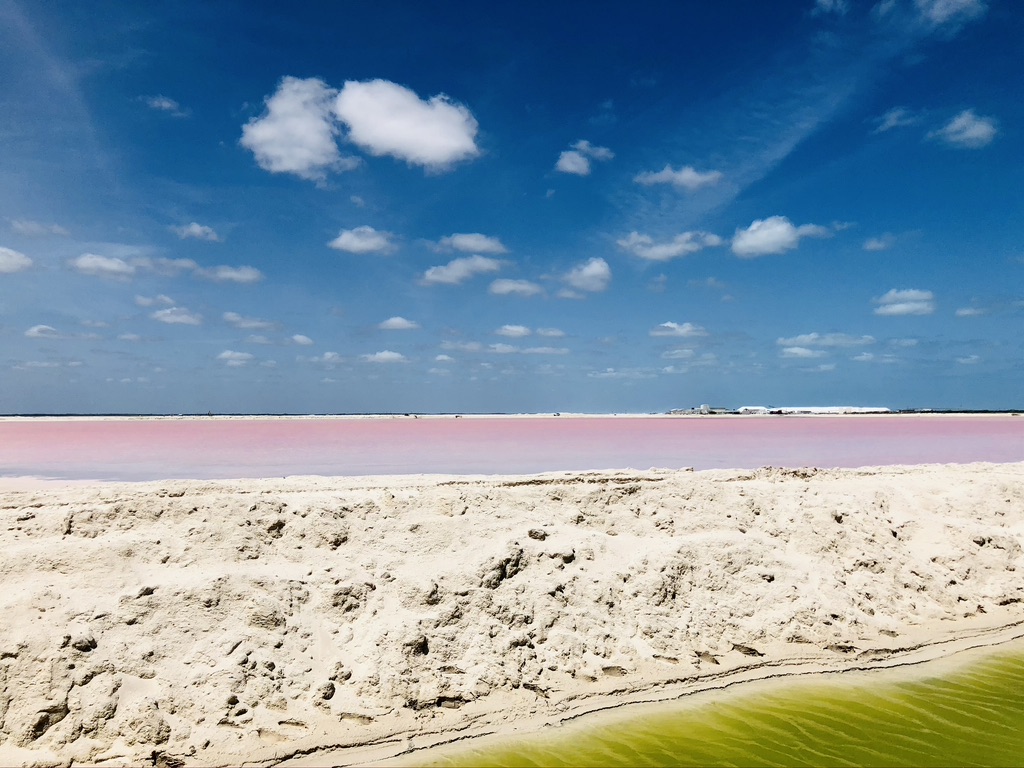
On our way out of town we visited the village of Las Colorados, which we had viewed from a distance on our boat tour. Here we found an actual ‘red’ lake, which was in fact pink, just next to the giant salt mining operation, and which couldn’t be seen from the estuary. As we approached the salt pond, ‘guides’ rushed up to our car from the side of the road, insisting that the pink pond was on private property and only ‘official’ guides could accompany us to the ponds edge where we could take photographs. Or, we could stop the car, get out and take a photo from the road, which offered a fairly unobstructed view. So that’s what we did, then turned around and headed back out of town to our next destination.
Valladolid would be our final inland stop before returning to the coast for the remainder of our Yucatan road trip. It would be one more small colonial city, with a main plaza and a three-century old cathedral, and more of that mid-90’s blistering heat. We opted for a single nights stay, waited out the heat in our air-conditioned room until just before sunset, then ventured out to stroll it’s cute lanes through the historic center. We found a restaurant with outside seating on the plaza and spent the evening sipping drinks and snacking on chips and guacamole, watching the weekend crowd.
After our pleasant evening in Valladolid, we hit the road to make our way back to Puerto Morelos, closing the loop of our road trip back to our first stop over a month ago.
 The Rhum Line