The Rhum Line

The aimless and sometimes muddled route of a traveling couple looking for their next great adventure


1 Comment

Alaska – Part Two: Denali And Skagway

If a visitor to central Alaska wants to see North America’s highest peak, they need a good dose of luck. Persistence is helpful too. Of the 600,000 folks who visit Denali National Park and Preserve every year, only about one-third will get the chance to see the massive mountain in all it’s glory. The rest might get a glimpse of a portion of it’s snow-covered slopes, but probably will see nothing at all, as clouds completely cover the mountain most of the time. In the weeks leading up to our Alaskan trip, the weather reports for all the areas we would be visiting were not good. As departure day approached we started to see some improvement in the forecasts for Seward and Homer, and those proved accurate. But the forecast for the Denali area never faltered – rain and cool temperatures were expected, and that’s what we got when we arrived on a Tuesday afternoon. Over dinner that night we consoled ourselves with the thought that while we probably wouldn’t catch sight of the mountain, the park was still known as a great place for wildlife viewing. The wild mushroom crostini, grilled sockeye salmon with house-made whole-grain mustard glaze and the seared scallops with pink peppercorn sauce were also helpful. Oh, and the bread pudding with blueberry sauce and lavender ice cream . . . very consoling. We went to bed extremely full and hoped the rain wouldn’t deter the animals from coming out the next day.
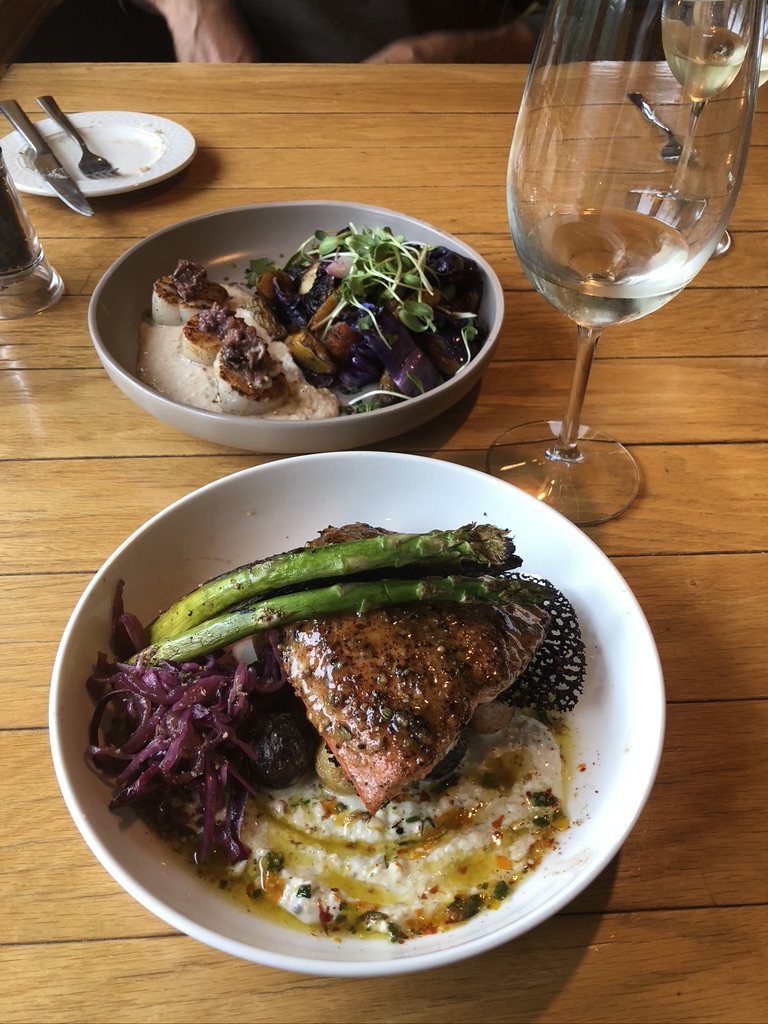
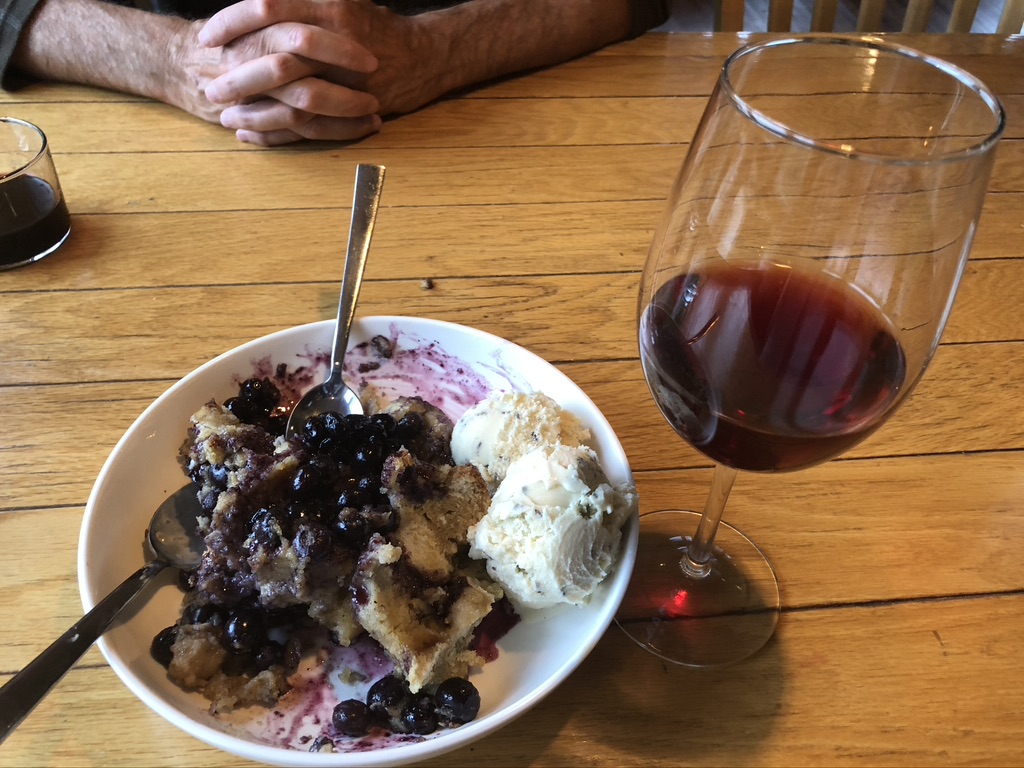
The consolation prize(s).
Me in the background exhibiting incredible self-control waiting for Heather to take the picture.

Wednesday dawned gray and bleak. The plan was to drive the fifteen miles of the park’s road open to private vehicles (another fifty miles are open to visitors who book a seat on a park service bus), then continue up the Parks Highway to visit the small town of Healy before returning to Prospectors Pizzeria and Alehouse for dinner. If we needed more consoling, I figured the forty-nine Alaskan craft beers on tap and some of the state’s best-rated pizza would do the trick. We entered the park just after 10 am, and, true to form, Denali was nowhere to be seen. A solid veil of clouds hid all but the nearest peaks. But almost immediately, our focus went from the views of the mountain to the views off the side of the road. We saw this . . .
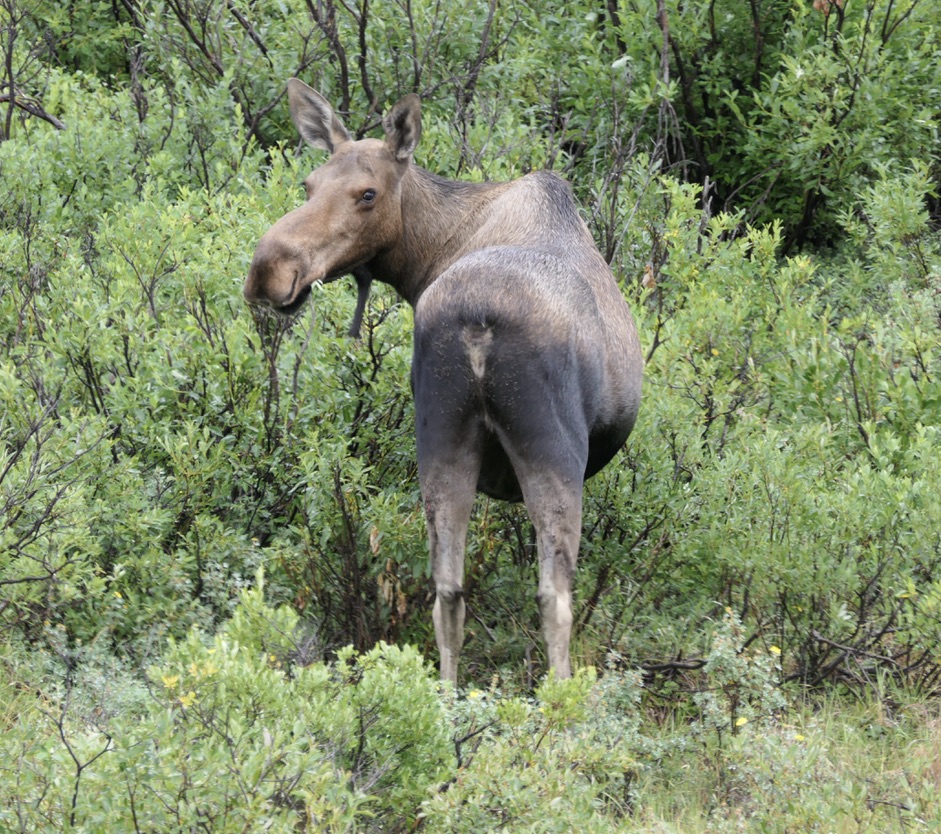
And this . . .
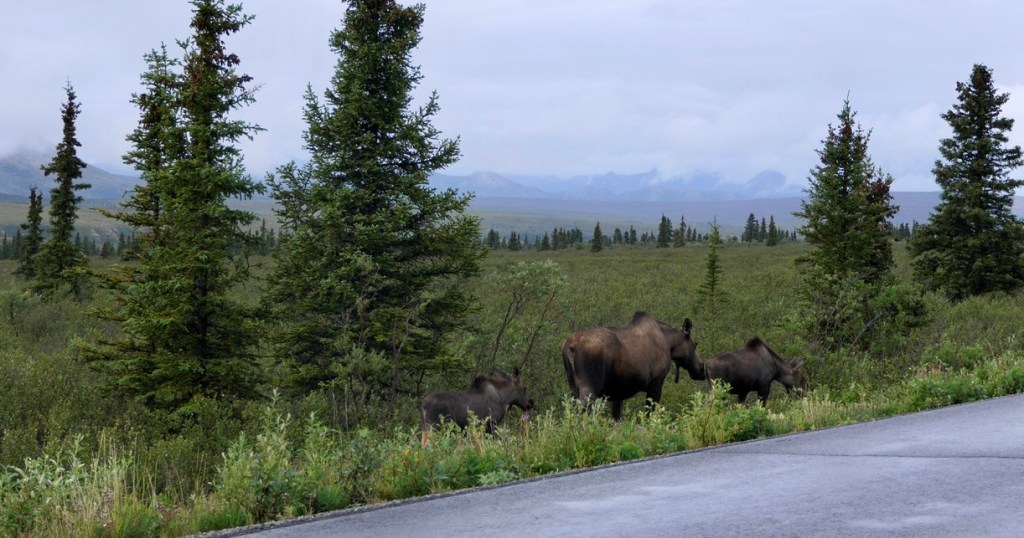
And this . . .
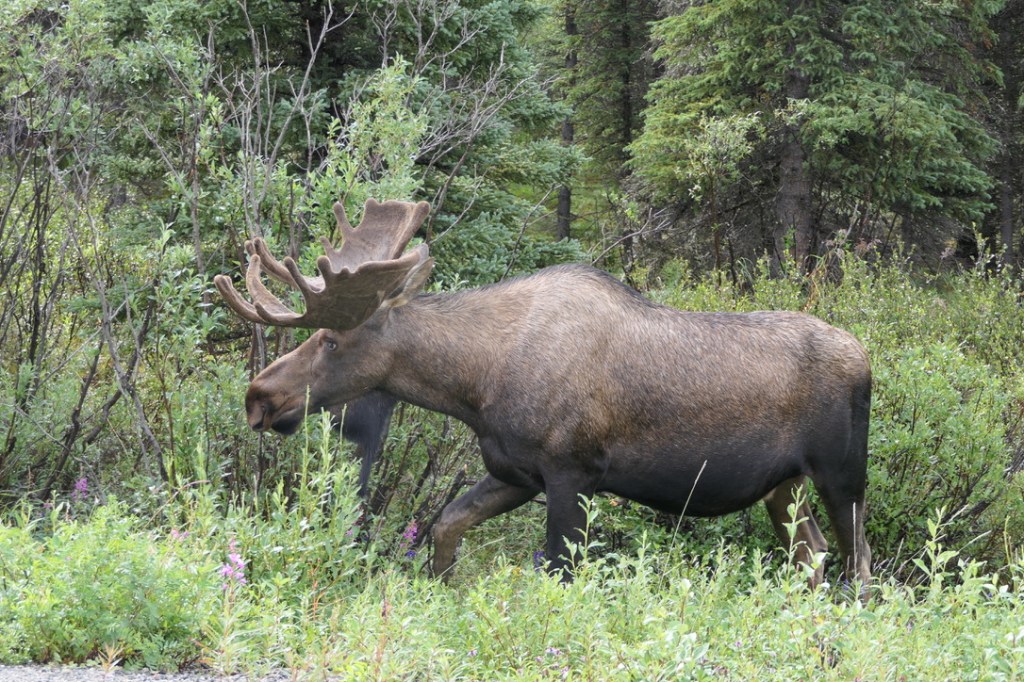
And this . . .
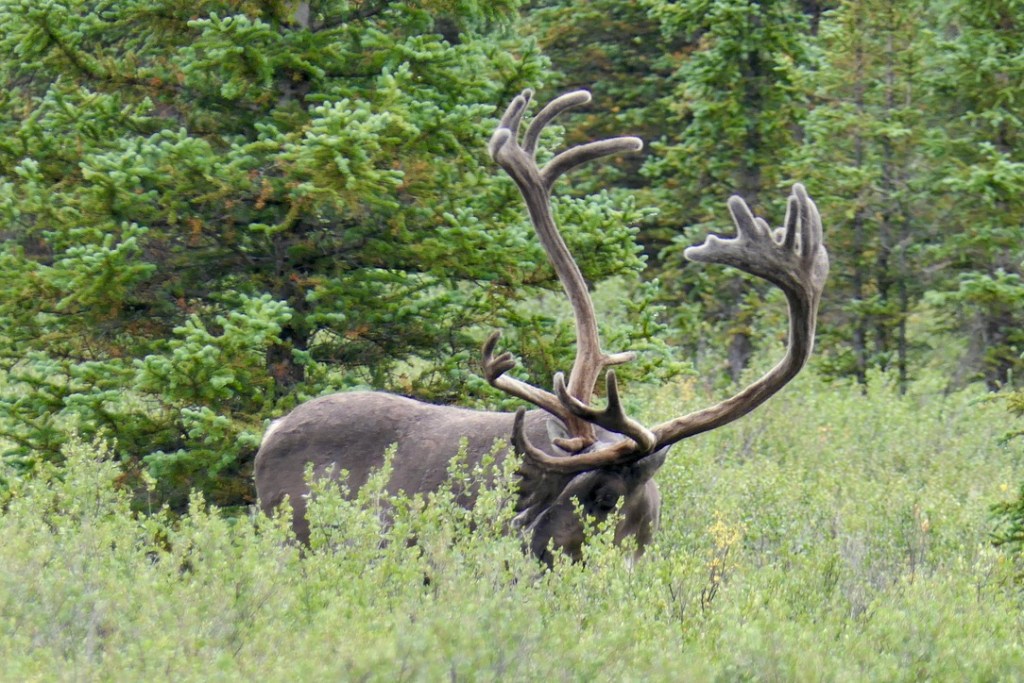
This is a caribou!!!!!!!

There was also a lynx sighting (which happened too quickly to get the camera up but also, along with the caribou, was a first for us), a nice walk along the Savage River Loop trail and a look at a porcupine. Despite her excitement at seeing and photographing all the incredible wildlife, I reminded Heather that we still hadn’t been able to catch a glimpse of Denali, so perhaps consoling ourselves with some of that pizza and beer at Prospectors was in order. Reluctantly she agreed to leave the park (although not before insisting that we drive the fifteen mile route again – just in case . . .).

The next morning dawned . . . clear and sunny! The plan was to make the 4+ hour drive down to Anchorage, return our rental car and catch our late afternoon flight to Juneau for the start of the Inside Passage portion of the trip. But we quickly decided to alter the plan to accommodate yet another trip into the national park to see if any other wildlife would present itself (bears please!) or the mountain could be seen. Our persistence paid off -not only did the mountain reveal itself, but we spotted two more caribou along the drive. By the time we left the park, the clouds moved back in and the rain began to fall once again. Lucky us!
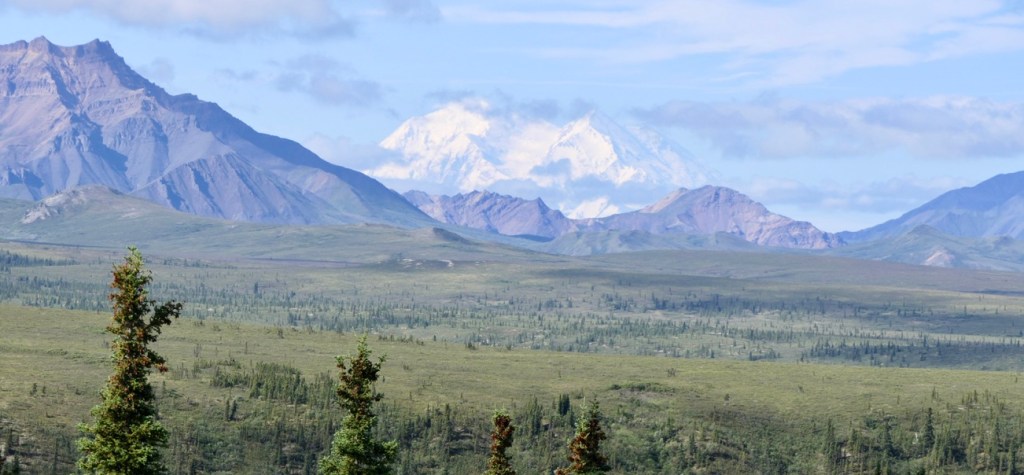
Elusive Denali – at 20,310 ft. the highest peak in North America.

One of the two caribou we spotted on day 2 of our Denali National Park drive.

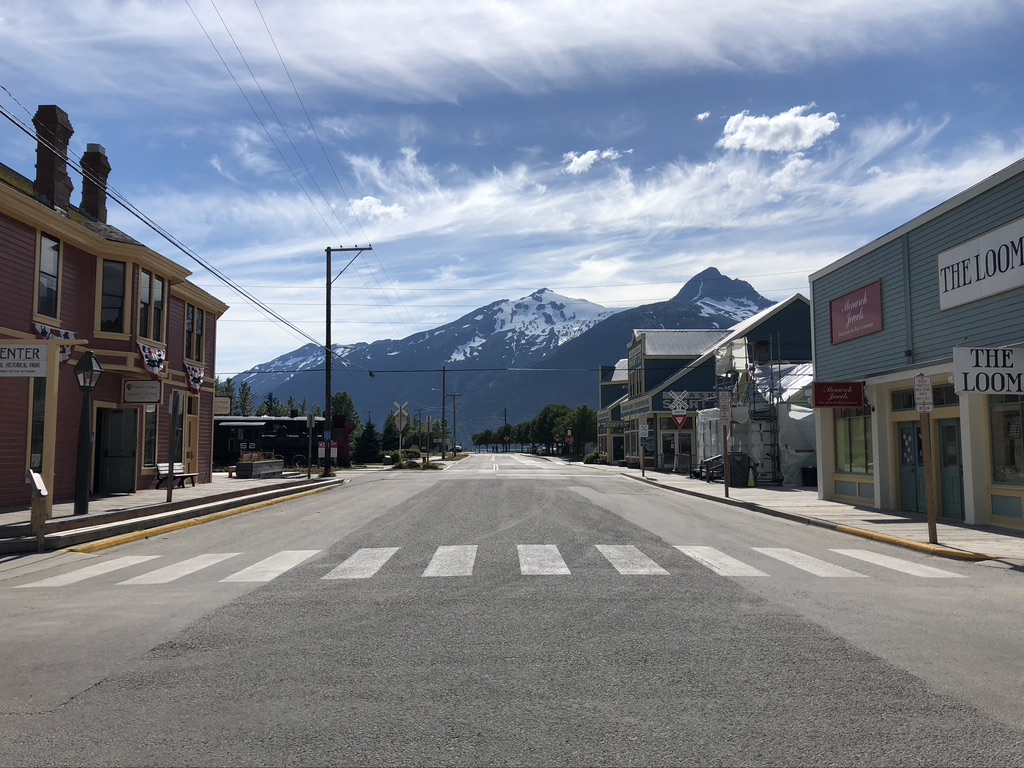
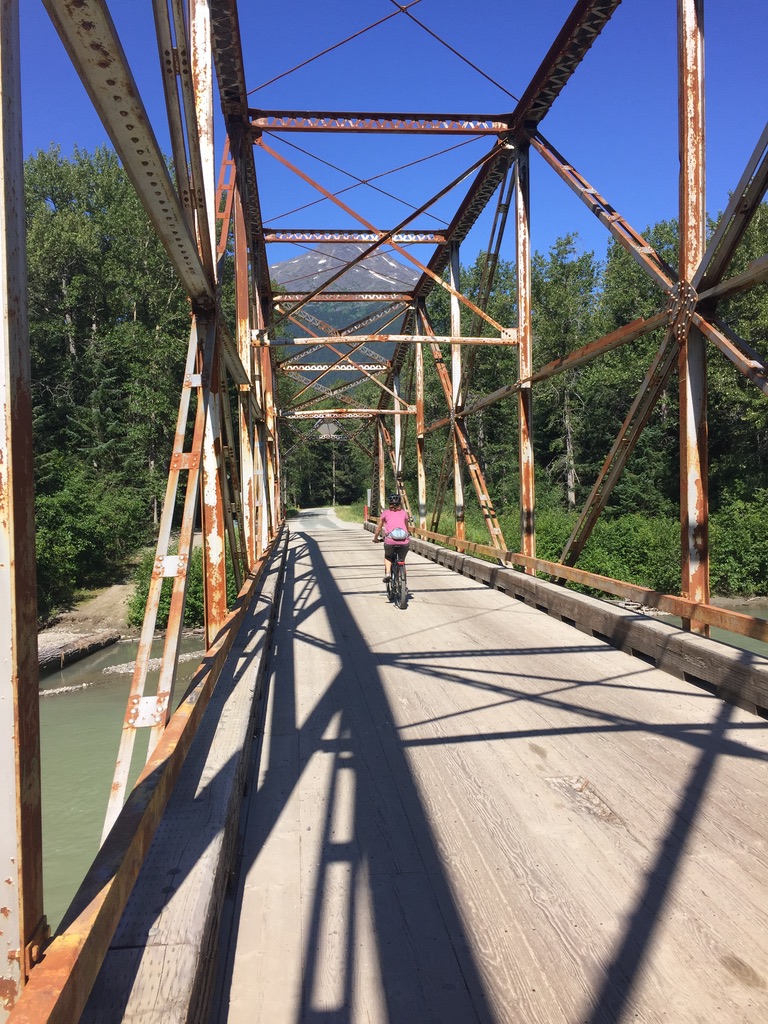
After our flight to Juneau, and a night in the state capital, we boarded the ferry for the six hour trip along the Inside Passage to Skagway. Known as a jumping-off point for prospectors heading to the gold fields of the Yukon during the rush of 1898, Skagway is now a quiet town of wooden boardwalks and old west-style buildings that house businesses catering to the cruise ships that ply the waters of the Inside Passage. On days when no ships are in port – like the full day we were in town – things can get pretty quiet. Though it was a Saturday, most shops and restaurants were closed, and those that were open only operated for a few hours. On a side street we did find Sockeye Cycle Company, which rents e-bikes, and was open for business. The owner gave us a map of the area and suggested a ride out to the Dyea town site where we could enjoy scenic views of the Chilkoot Valley and see the salmon running up the Taiya river into the smaller creeks to spawn. Sounded like the perfect way to spend the day – at least until the Skagway Brewing Company opened its doors at 4 pm. The scenery was indeed beautiful – crossing the Skagway River just outside town, cycling around Nahku Bay and then arriving at the former site of the town of Dyea, which, along with Skagway, funneled gold-seekers onto the Chilkoot Trail on their way to the Yukon. The town sat on the flats at the mouth of the Taiya river, where salmon return to spawn every summer. We left our bikes by the banks of the Nelson Slough, a small offshoot of the Taiya, and marveled at the numbers of fish choking the small stream. Bald eagles, some with a brood of eaglets, perched on driftwood, apparently already sated from feasting on the profusion of fish in the shallow waters. Eventually we mounted our bikes for the return trip and a much-deserved beer at the brewery.
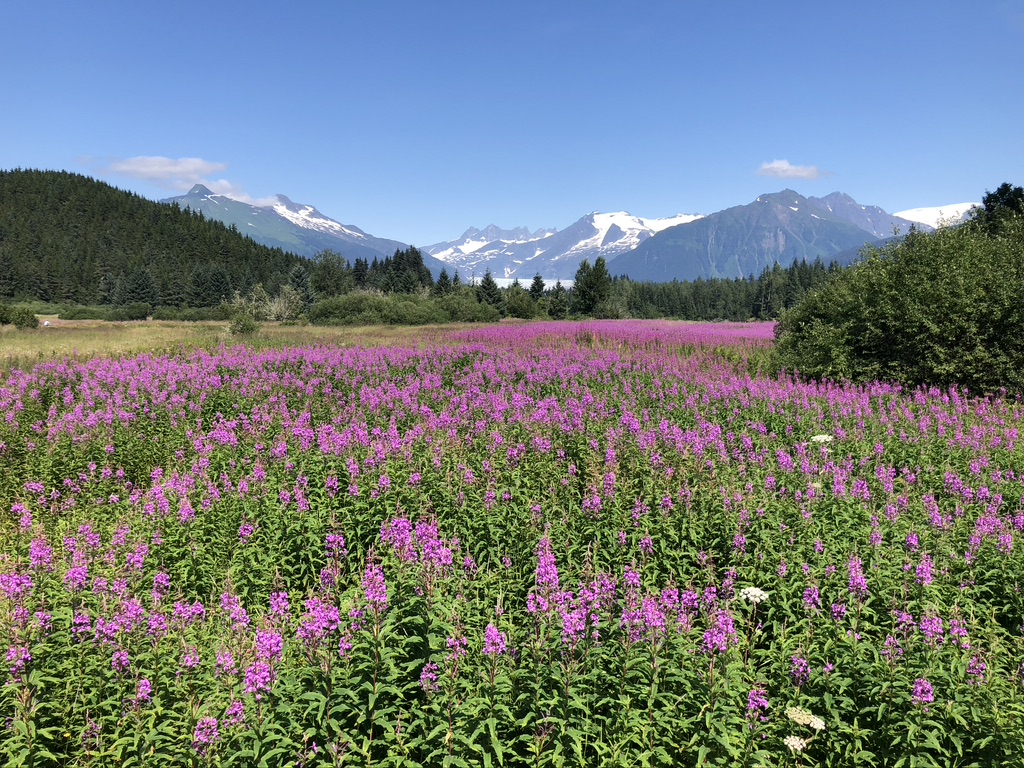
Just a couple minutes walk from our Juneau hotel we caught this view of the Mendenhall Glacier beyond a field of fireweed.
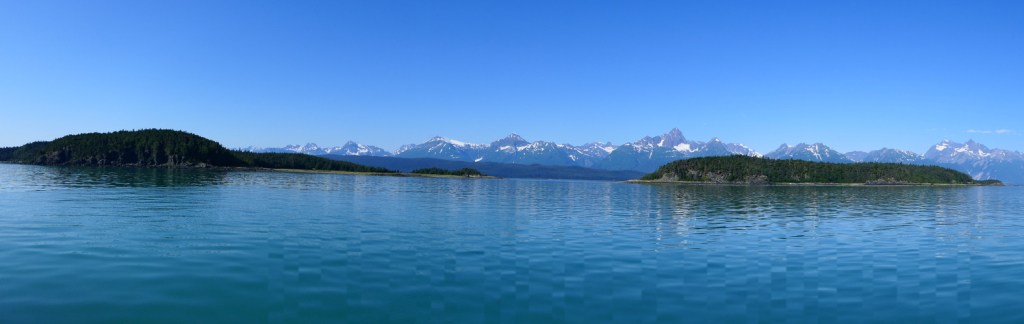
A view of the Inside Passage from the ferry bound for Skagway.
Skagway’s main drag – 3 pm on a Saturday.
Crossing the Taiya River on the way to Dyea.
The salmon in Nelson Slough along the Dyea flats.

The following morning we boarded the ferry for the return to Juneau, where we would catch a short flight to Gustavus for our visit to Glacier Bay. That story in the next post, along with the completion of our trip with stops in Wrangell and Ketchikan.
2 Comments

Alaska – South to the Kenai

The sun felt warm on my back, but not quite enough to dispel the early morning chill that enveloped the air above the water of the Cook Inlet. I eventually had to move into the cabin of Captain Mel’s boat, the Alaskan Sportfisher, as it raced across the stretch of water towards Chinitna Bay, on the Katmai Peninsula. We were heading to the Katmai because that’s where Captain Mel said we’d find bears.

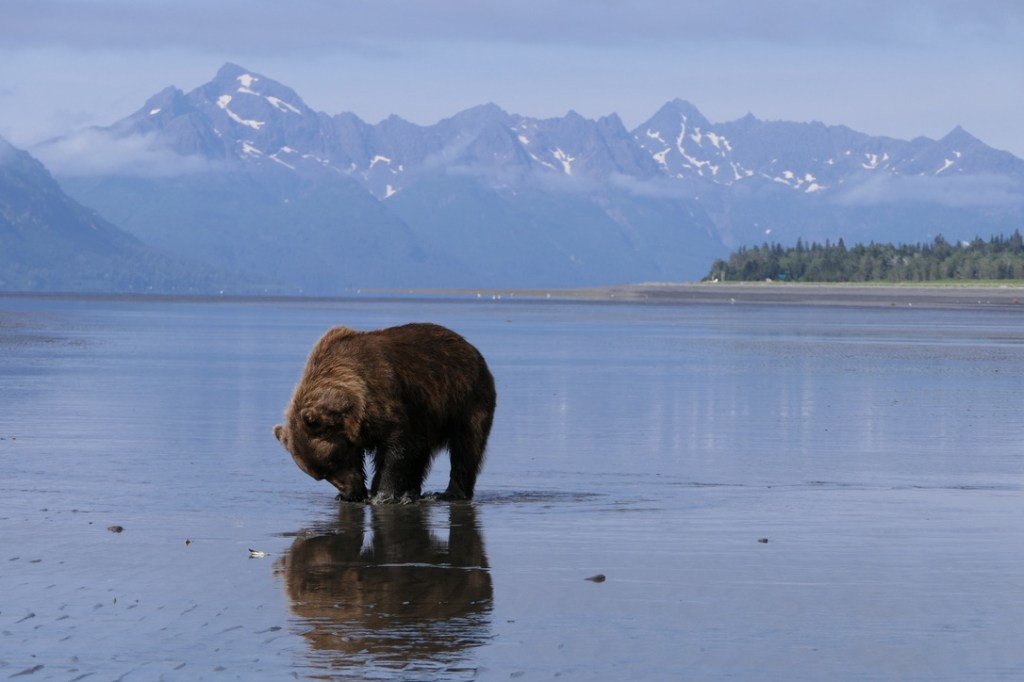
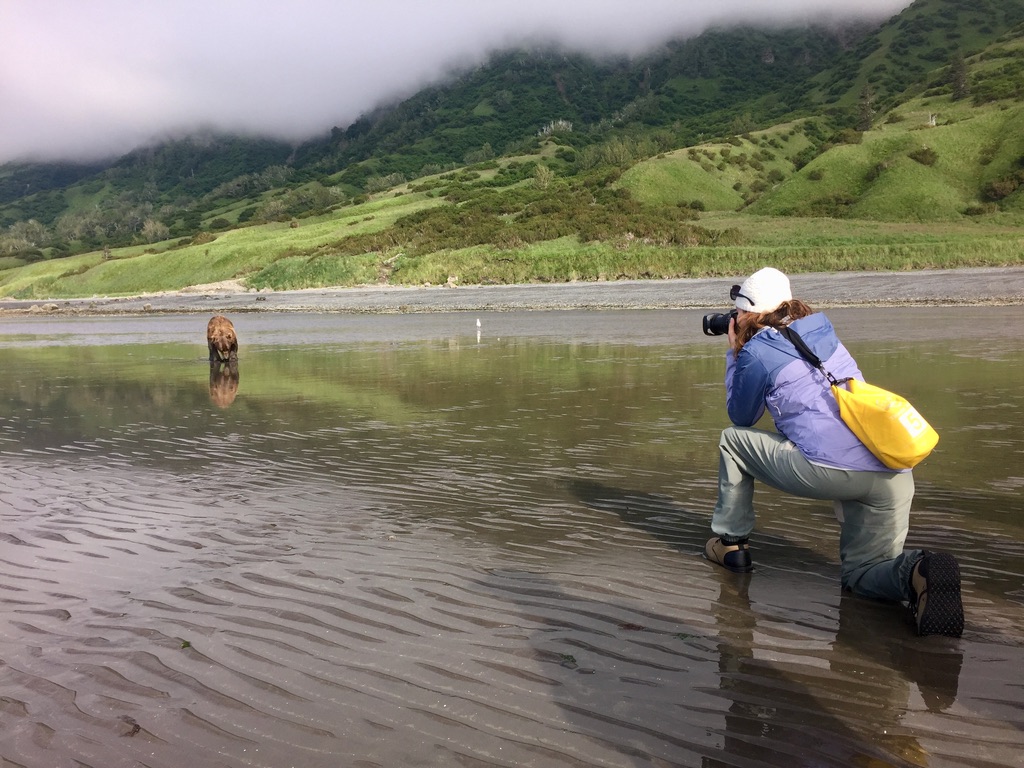
Coastal brown bears, or grizzlies as they’re more commonly known, like to come down from the hills of the Lake Clark National Park and Preserve, surrounding Chinitna Bay, to prowl the mud flats which appear during the low tide and dig for clams. Captain Mel, who had been guiding fishing excursions throughout the Cook Inlet for nearly thirty years before concentrating on bear-viewing trips, was a fountain of information about both the bears and the area. He brought his boat close to the shore where the receding tide was already shallow enough for us to slip over the side into knee-deep water (we had been outfitted in fishing waders on the way over) in order to walk towards the bears we could see had already started feeding, but not too close that the boat would be stranded by the low tide and we’d have to wait twelve hours for the next high tide to refloat the boat. Our group trudged through the water, apprehensive about approaching grizzlies who might be just a little protective about their natural ‘raw bar’, but, true to Captain Mel’s briefing, the bears were more intent on sniffing out the razor clams below the muddy surface then they were about the encroaching humans. We wandered freely along the mud flats for a couple hours between the three bears on this stretch of beach before moving back to the boat for the forty-five mile return trip to Anchor Point, back on the Kenai Peninsula.

A grizzly is reflected in the receding waters of Chinitna Bay, with the Chigmit Mountains behind.
The crazy thing about this is not that Heather is so close to a grizzly, but that she’s kneeling in mud.

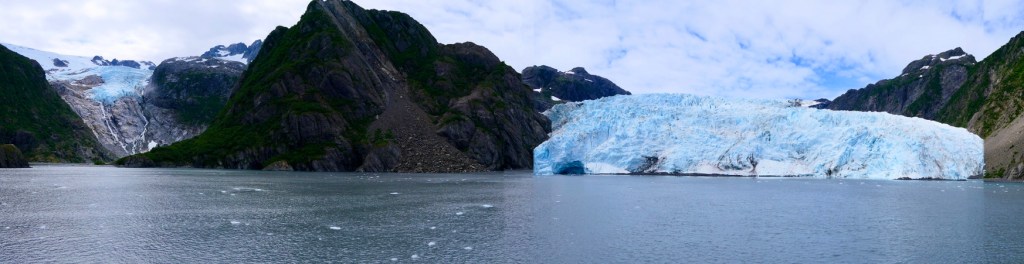
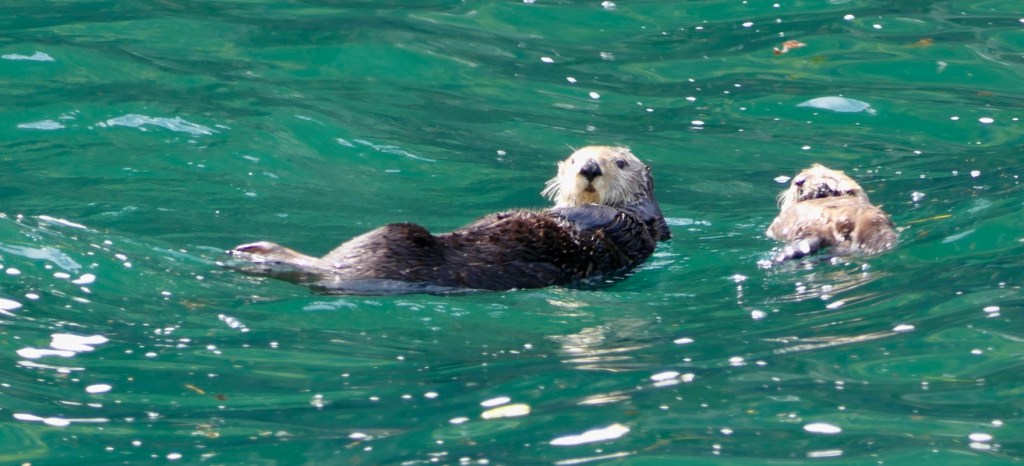
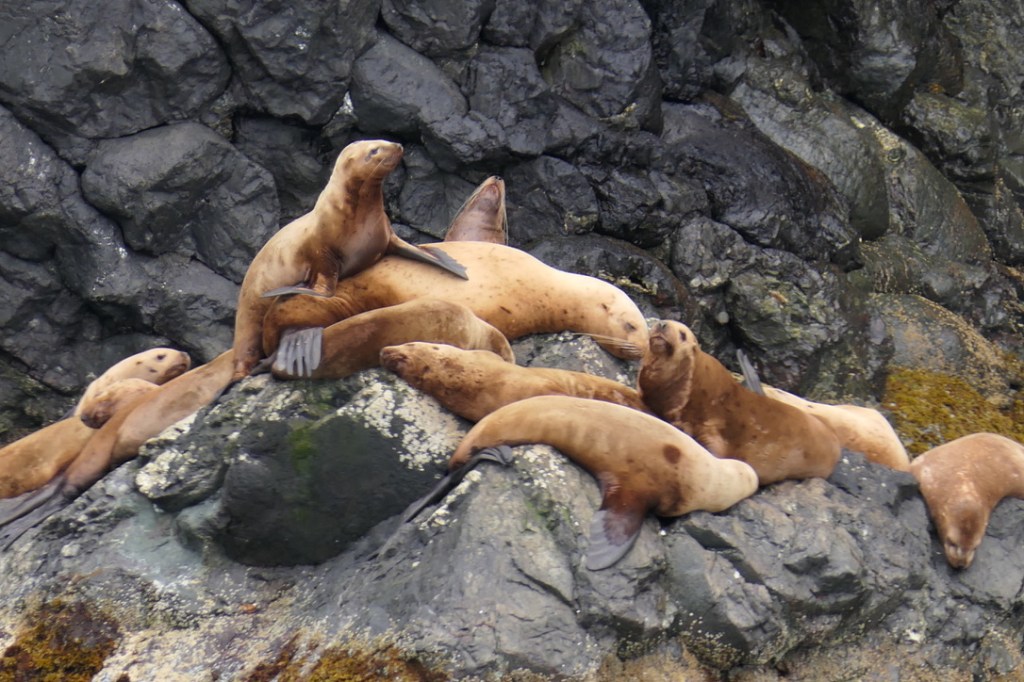
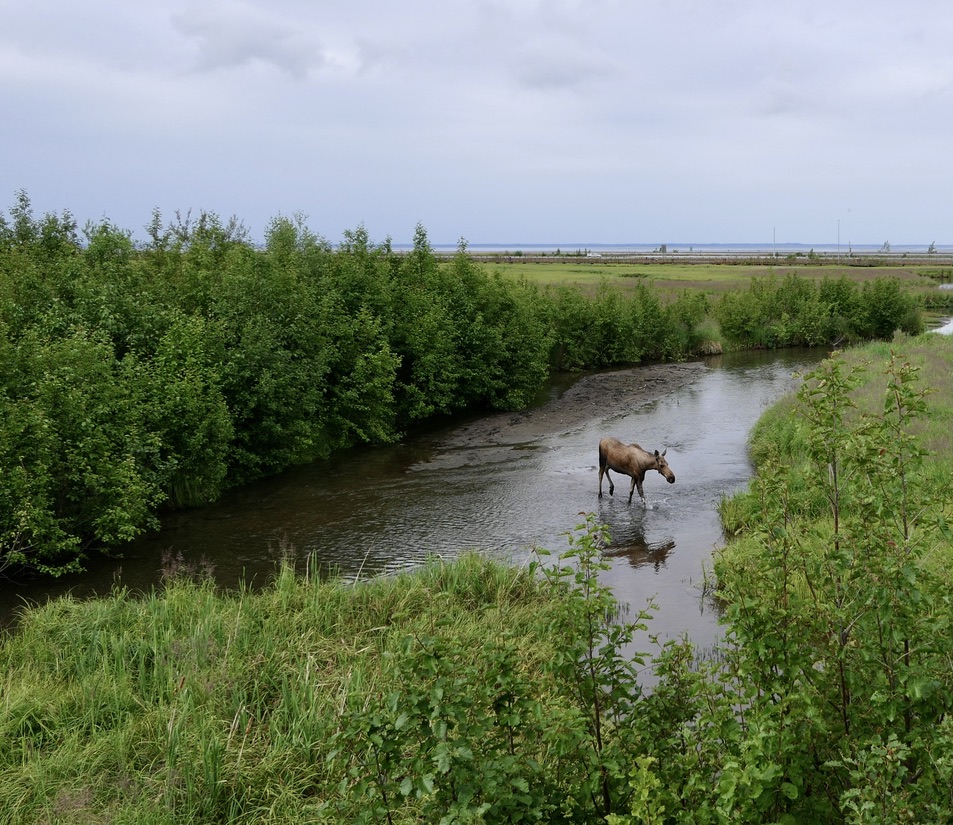
We had started our Alaskan adventure five days earlier. After flying from Denver to Anchorage, we took our rental car south around Turnagain Arm, an extension of the Cook Inlet, first stopping at Potter Marsh, where we were able to see a moose cow and her two calves moving through the wetlands just off the Seward Highway. Continuing on, we followed the Chugach Mountains along the western edge of the peninsula to the port town of Seward. Just south of town the Kenai Fjords National Park attracts visitors to it’s wildlife-rich waters and numerous fjords hiding tidewater glaciers (those ice flows that reach down to the waters edge). Onboard the Spirit of Adventure, we traveled down through Resurrection Bay, across the Gulf of Alaska and into Aialik Bay to the Holgate Glacier, seeing humpback whales, sea lions, porpoises, otters and puffins along the way.

A moose crosses the creek in Potter Marsh, just south of Anchorage.
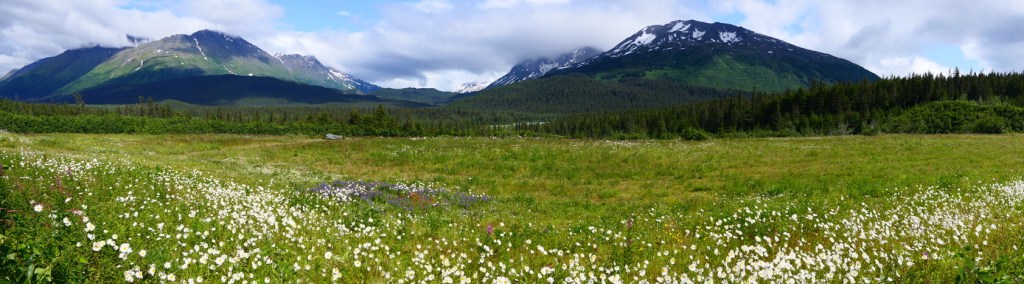
A field of wildflowers along the Seward Highway.
The Holgate Glacier at the foot of Aialik Bay, Kenai Fjords National Park.
Sea otters don’t seem bothered by our passing boat.
Sea lions try to get some zzzz’s on a rock in Resurrection Bay.

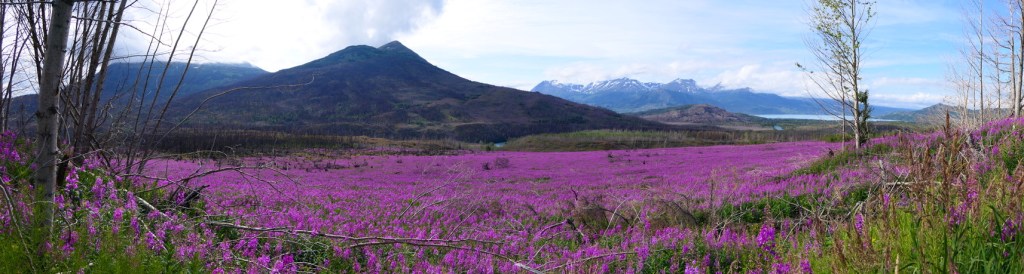
Crossing the Kenai Peninsula bound for Homer we drove a section of dirt road through the Kenai National Wildlife Refuge that ran above the Kenai River and Skilak Lake. Interestingly, it wasn’t the wildlife that gave us the ‘wow’ moment here, but the abundant wildflowers that stunned us. Coming to a stop above the lake in an area that had been ravaged by a 2019 wildfire, we came upon a hillside carpeted with fireweed, a magenta-colored flower that provided a sharp and beautiful contrast to the charred remains of the spruce, cottonwood and birch trees that had covered the area. We had never before seen such a profusion of wildflowers as this.

Fireweed adorns the hillside above Skilak Lake.

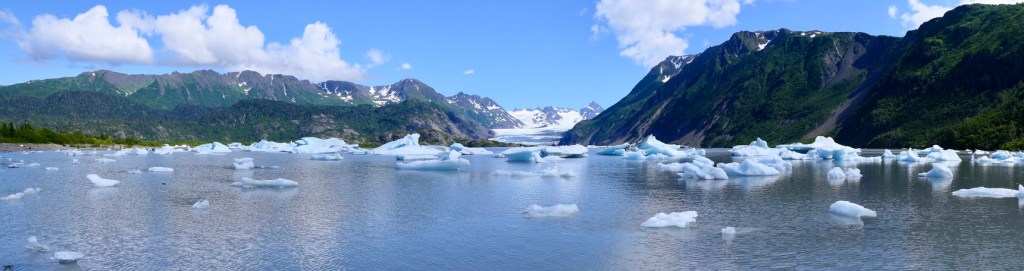
Arriving in Homer in the afternoon of Day 3, we found our lodging, checked in and then made our way to the famous ‘Homer spit’. The two-mile long sand spit extends into Kachemak Bay and hosts campgrounds, a boat harbor and most of Homer’s restaurants and tourist shops. Homer is known as Alaska’s halibut fishing capital, and recently caught specimens of the fish were on display at just about every dock lining the waterfront. We dined on halibut fish and chips and pan-seared halibut with crab risotto at a seaside restaurant, then retired back to our accommodation, which offered a stunning view across the bay to the Kenai mountains, still easily viewable in the bright light of 9 pm – at least two hours before the sun would set (we’ve yet to see an Alaskan sunset). The following day we boarded Bay Excursion’s water taxi, which would shuttle us across Kachemak Bay, dropping us off on a stretch of beach on the edge of Kachemak Bay State Park, where we found the trailhead for the Glacier Lake trail. Following the trail, originally through a forest of spruce, then across a gravelly flat interspersed with alder, we came upon Glacier Lake, which was perfectly placed at the foot of the Grewingk glacier and contained pieces of the glacier that had calved off and floated towards the beach. After marveling at the glacier and the multi-hued chunks of ice floating on it’s surface, we completed the hike to Halibut Cove, which could very well be one of the prettiest coves we’ve ever seen. On schedule, the water taxi chugged into the cove, maneuvered to the rock outcropping at the trails edge, and whisked us back across the bay.

Happy fishermen stand behind the day’s catch on the Homer spit.
The Grewingk glacier and ‘bergy bits’ in Glacier Lake, Katchemak Bay State Park.
The view looking down into Halibut Cove, at the end of the Glacier Lake trail.

After the next day’s boat trip over to the Katmai peninsula for bear-viewing, we departed Homer for a night in the small community of Girdwood, nestled at the base of the Alyeska ski resort in the heart of the Chugach mountains. The next day we would head further north to one of Alaska’s crown jewels – Denali National Park. Stay tuned.