The Rhum Line

The aimless and sometimes muddled route of a traveling couple looking for their next great adventure


Leave a comment

A Trip To The Boundary . . . Of The Boundary Waters

“Where’s the food pack?” Mark asked. He had gone to the rear of our campsite overlooking Birch Lake to retrieve some items for our dinner preparation, which was taking place at the front of the site. Matt and I looked at each other, thinking that Mark was just goofing around. But when we walked to where he was turning in circles looking over our pile of camping gear, we realized our food pack was really missing. ‘What the f…’ we all thought. We fanned out and stepped into the thick brush and shrubs bordering the back of our site. Almost immediately Mark called out that he had found the pack – splayed open, the small duffel bag that contained all our dinner items lying a few feet away with two large holes torn in its side. As we gathered it and a couple more items that had fallen out of the larger pack I heard a rustle of brush and caught the western end of an east-bound brown bear lumber into the deeper forest. Nervously chuckling as we repacked the food, noticing only our large ziplock bag of trail mix had been devoured but most everything else was intact, Mark and I returned to the duty of dinner prep, while Matt pulled out the ropes, carabiner and pulley that he would now have to rig to hang our food pack from one of the nearby pine trees.
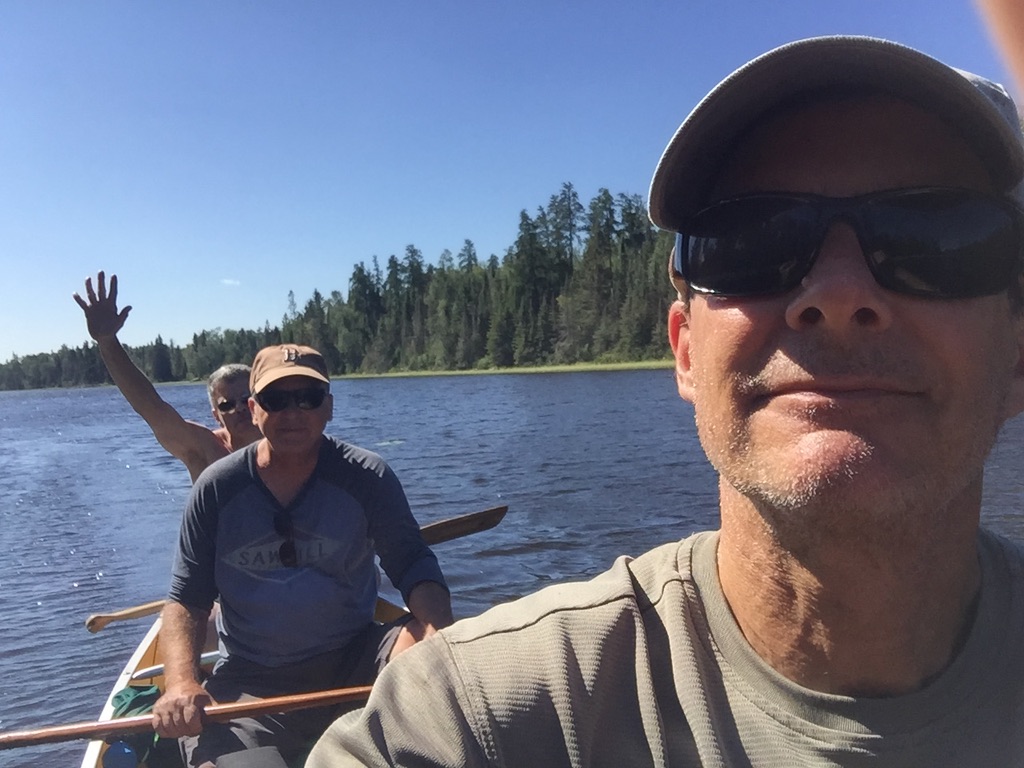
On the boundary of the Boundary Waters

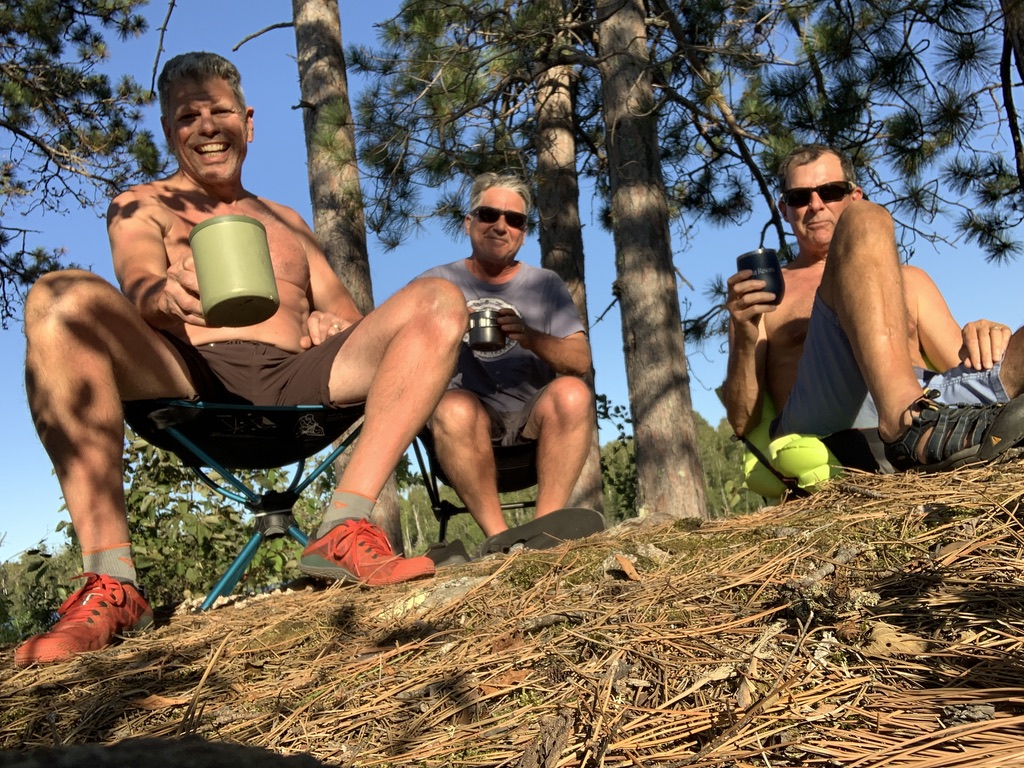
Matt, Mark and I have been visiting the Boundary Waters (officially the Boundary Waters Canoe Area or BWCA) of northern Minnesota for over ten years. The wilderness area stretches for 150 miles along the US-Canada border, encompasses over 1,000,000 acres and contains 1,100 lakes of various sizes. The three of us, friends who met while attending SUNY Plattsburgh in northern New York maaaany years ago, spend six days paddling the pristine lakes, portaging the trails that link them and enjoying evenings around the campfire grilling meat, sipping libations and swapping stories. Matt excels at the role of planning, logistics and provisioning. He sketches out our route, secures the necessary permit and canoe rental and plans our meals. Mark revels in staying active during our camp stops, so enjoys swimming out to fill our filtration bags in the frigid lakes, gathers and splits firewood, and supplies tunes for the evening campfire sessions. My sole responsibility is to execute Matt’s meal plan – grilling the steaks, chops and sausages over a wood fire and embellishing the freeze-dried or instant side dishes. And making cocktails – a changing selection of various liquors mixed with purified lake water, that when called a ‘mojito’, ‘margarita’ or ‘dark and stormy’, seem infinitely more satisfying after a day of paddling. This year marked my tenth trip to the BWCA and Matt had plotted a course starting from Sawbill Lake in the eastern portion of the wilderness area. One day prior to my departure from Colorado Matt emailed to inform us that the east side had been shuttered due to fire danger. But he had acted quickly upon being informed of that closure and had secured the last permit to enter the western section through Moose Lake, outside the town of Ely. Crisis averted. Upon our arrival at the Duluth airport the next day, Matt had more bad news for Mark and I – wildfires had now forced the closure of the entire Boundary Waters. With a rental car full of provisions and our camping gear, we sat in the car in the airport and discussed our options. Eventually, a new plan was hatched. We would drive to Ely, confer with the outfitter who was supplying our canoe, and find a lake, any lake, that we could paddle and camp on for the next six days. The guys at Canoe Country Outfitters in Ely suggested we try Birch Lake – only twenty miles from town, large enough to keep us busy for six days, and offering about a dozen free campsites. Since it was outside the boundaries of the BWCA, and had road access to several points along the lakeshore, there would be motor boat traffic and more people than we would normally see during our week inside the Boundary Waters. But it sounded promising and we drove off the next morning towards the lake. Our first day we loaded our canoe and paddled along the shore, scouting out several of the campsites before settling on one that offered a nice rock ledge where we could enjoy the sunset over the lake as well as a spacious site to spread out on. As it turned out, maybe it was too spacious, as neither of us had any inkling of the bruin shenanigans going on behind us as we focused on the scenery in front of us.

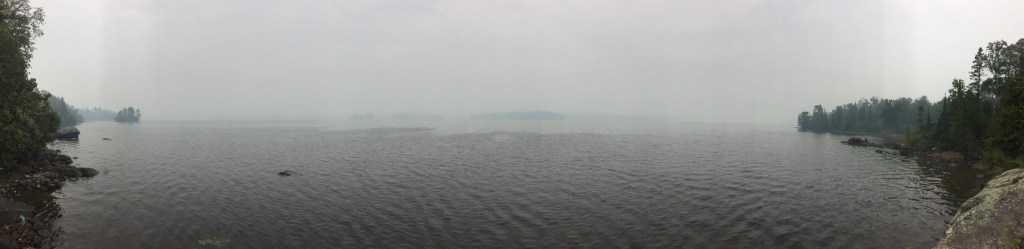
Waking up the following day to another gorgeous cloudless sky, I wandered down to the waters edge only to find a huge billowing cloud of smoke filling the eastern sky. The reason for the closure of the BWCA was now staring us in the face. While unsettling to see how close the smoke was (we would later learn that the fire had moved to within nine miles of our location), we were at least a bit comforted by the fact that it was on the other side of Birch Lake. So we spent the day exploring the bays and inlets of the southern shore of the lake, returning to our campsite early in the afternoon when the wind picked up and small white-capped waves formed on the surface. By the following morning, a wind shift had pushed the smoke our way and we watched from shore as the opposite side of the lake disappeared from view, cloaked in the heavy grey smoke. It seemed prudent to return to our access point and seek out some information on the status and movement of the fire, which was provided by the knowledgable host of the campground that abutted the boat ramp. Satisfied the smoke would clear and the fire activity would dampen with the approach of a cold front that afternoon, we spent the night in the Motel Ely (which advertises ‘Color TV’ as one of its modern amenities!) before returning to the lake and another delightful campsite on the bucolic shore of Kangas Bay, about four miles west of our previous site. The next two days were spent paddling the western reaches of the lake, dining on the rest of our provisions (cooked over our new gas stove due to the fire ban) and telling stories about our college years sitting around an unlit fire ring. On the sixth day we left Birch Lake and made the drive back to Duluth for our final night together, continuing the Boundary Waters traditions of celebratory beers at Sir Benedicts pub and pizza at Luce’s, two of our favorite Duluth institutions. While this trip may have lacked the peaceful solitude, wood-fired cuisine and the hauling of heavy packs along portage routes that makes the Boundary Waters so unique, there’s no doubt that the simplistic act of paddling your canoe across the calm waters of a lake, any lake, in northern Minnesota, with your friends, is simply one of the best ways to spend a summer week.
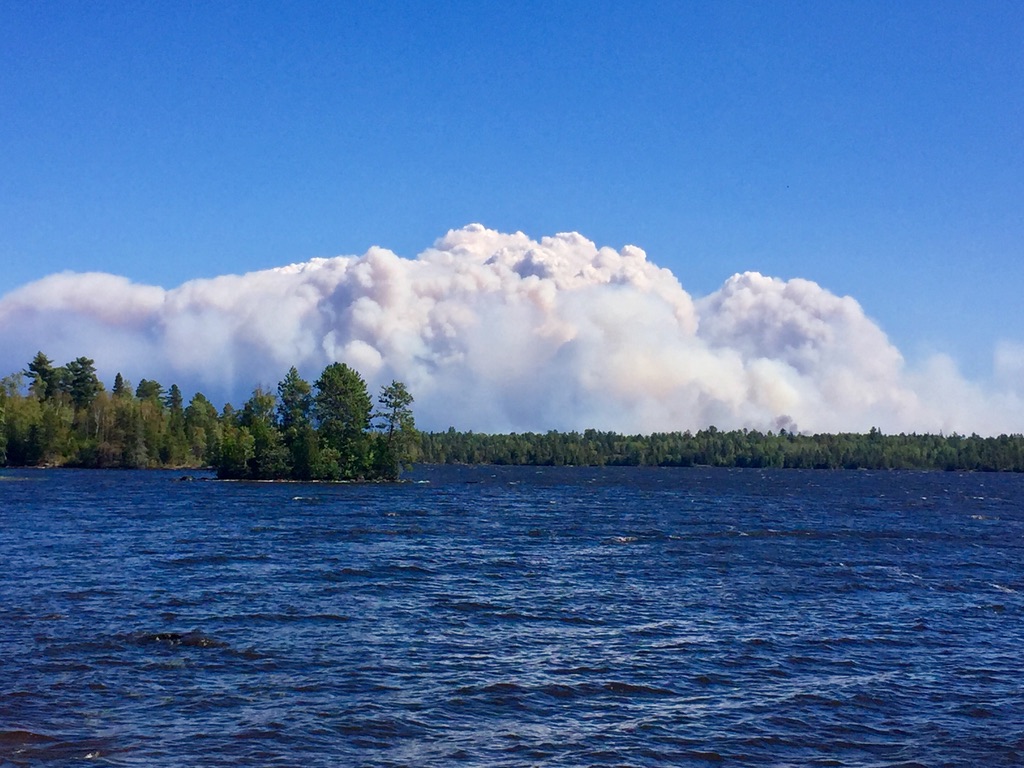
Bears on our side and fire on the other . . .

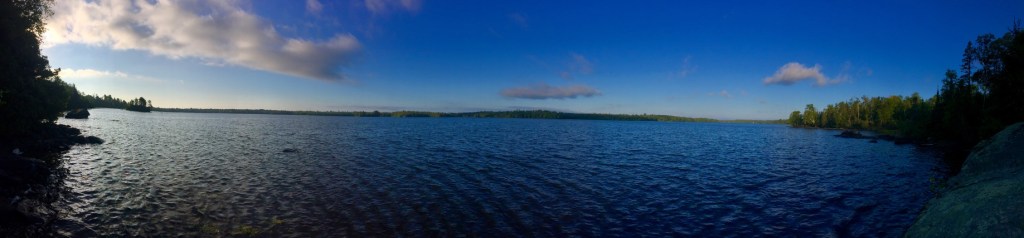
The view from campsite 1 Monday morning . . .

and then on Tuesday morning.

Bears, fire closures, smoke – the fun must go on!!

Back in Colorado once more fall has descended. The summer tourist crowds have thinned (thank god for in-school learning once again), the weather is stellar and the leaves are starting to turn gold and orange. Heather and I can start counting down the days until winter arrives and these ‘snowbirds’ flee to the warmth of the tropics. We plan to start with a month back on the Yucatan peninsula in one of our new favorite beach towns – Puerto Morelos. But before we head out we’ll enjoy one last fall road trip with Heather’s mom to the deserts of Utah and Arizona and a weekend down in the central Colorado mountain town of Crested Butte for a friends wedding.
1 Comment

Alaska: The Final Stops – Glacier Bay, Wrangell And Ketchikan

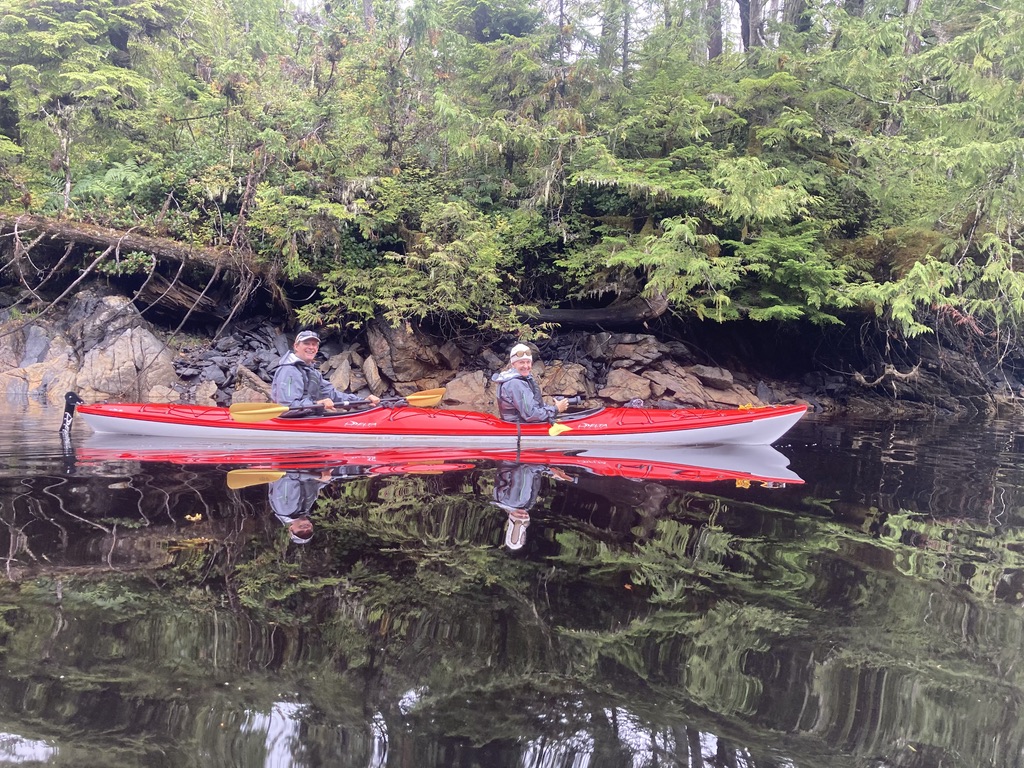
To say Tim and Mary from the Alaska Kayak Company are enthusiastic about ‘Southeast’, as local Alaskans call the Inside Passage, would be an understatement. They are authorities on all things in and around the waters that surround the beautiful islands of this area and love to talk it up. A question about commercial fishing? Tim will happily expound on the business. The timber industry? He’s got plenty to say (and apologizes for being so harsh). Birds, fish, whales, bears – reeeaaally loves to talk about them. Mary expounded on the local school system (she’s a science teacher there), the history of the area’s Native populations and her recent efforts to smoke and can the various types of salmon the couple catch in their free time. The four of us were experiencing another stellar Alaskan day – sunny skies, warm temperatures and light winds that were perfect for our three-hour kayak tour of the inlets and coves just south of Ketchikan. The weather was all the sweeter given that the forecast had predicted rain for our tour day right up until the previous evening. It made for the perfect ending to our 18-day trip to the ‘Last Frontier’.

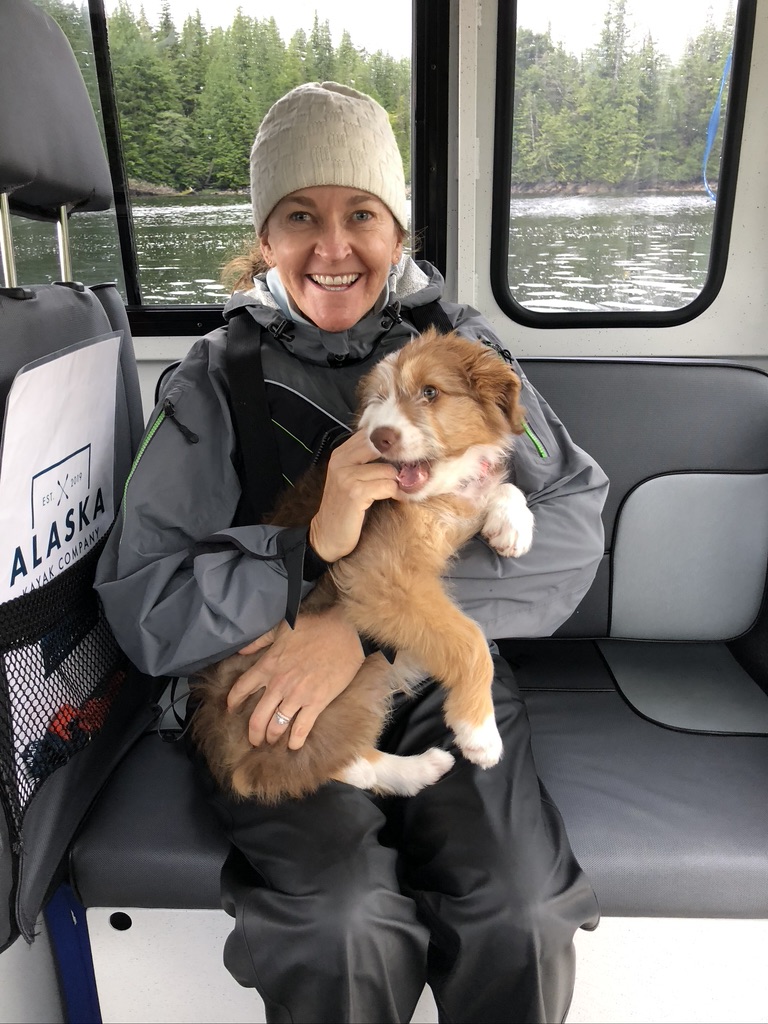
Ketchikan is a little town – though it’s population of just under fourteen thousand folks ranks it as the state’s fourth largest city and is home to a busy cruise ship port. The area around the docks is lined with the typical cruise port trinket shops, jewelry stores and tour operator stalls, interspersed with dive bars and restaurants offering fresh Alaskan seafood. COVID killed the cruise business last year and ships had just started returning to Alaskan ports during our visit. The disruption in business forced small operators like Tim and Mary to cater their trips to the few independent travelers that came last year, and they’re much happier for it. Accepting a maximum of only four guests per trip (Heather and I were the only ones this day) helps them offer a more intimate experience customized to that day’s guests desires. Having their adorable eleven-week old puppy ‘Mudpuddle’ aboard didn’t hurt either.

Mudpuddle!
Exploring the nooks and crannies of the Inside Passage
A view of Creek Street in Ketchikan’s Historic District

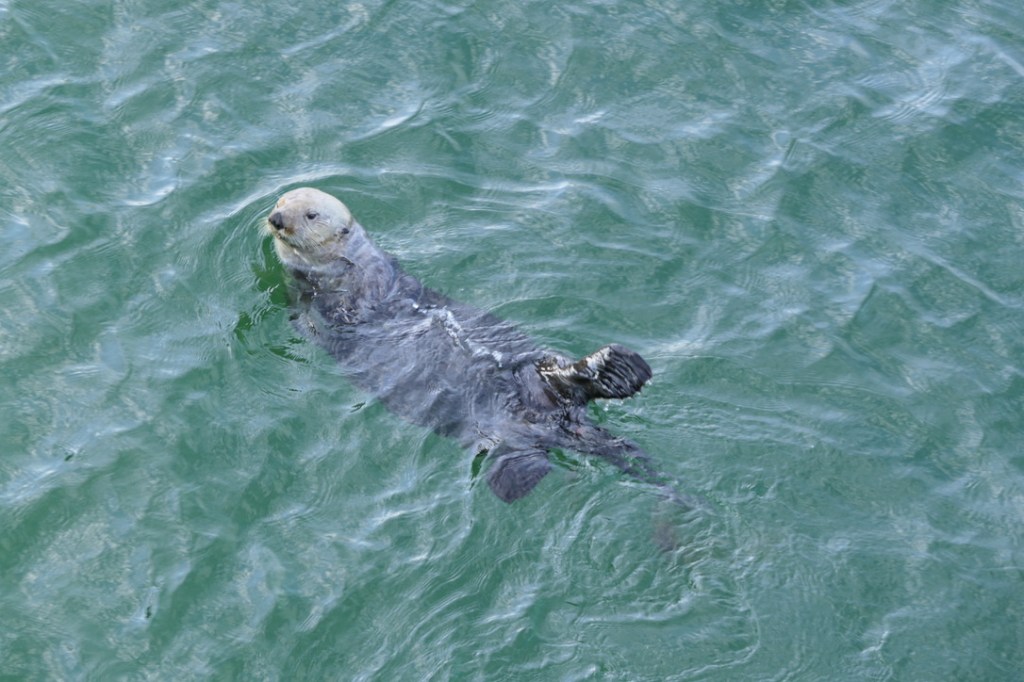
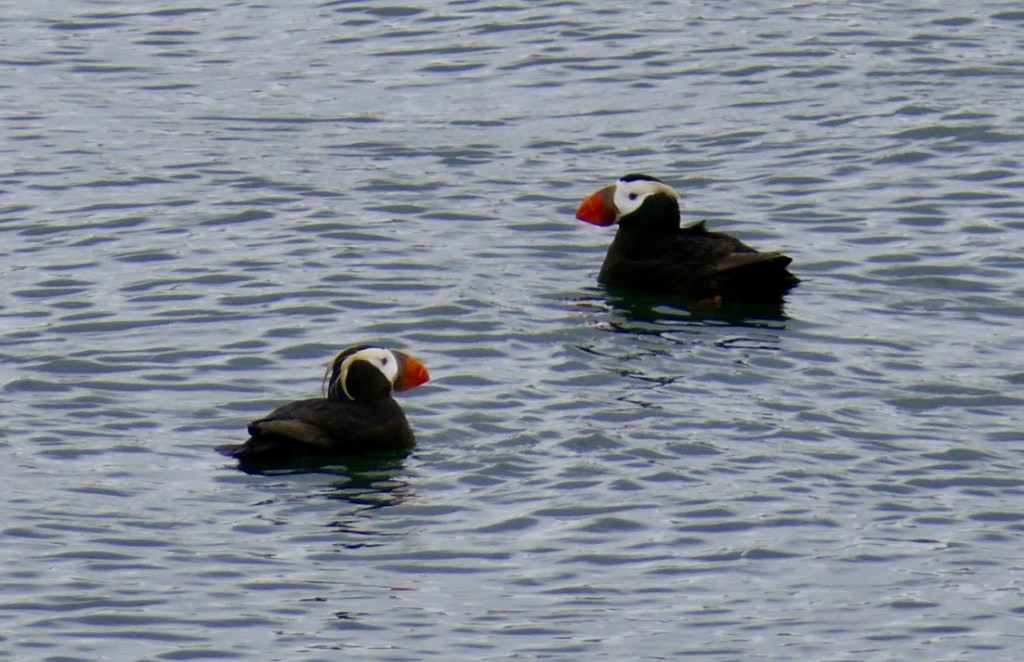
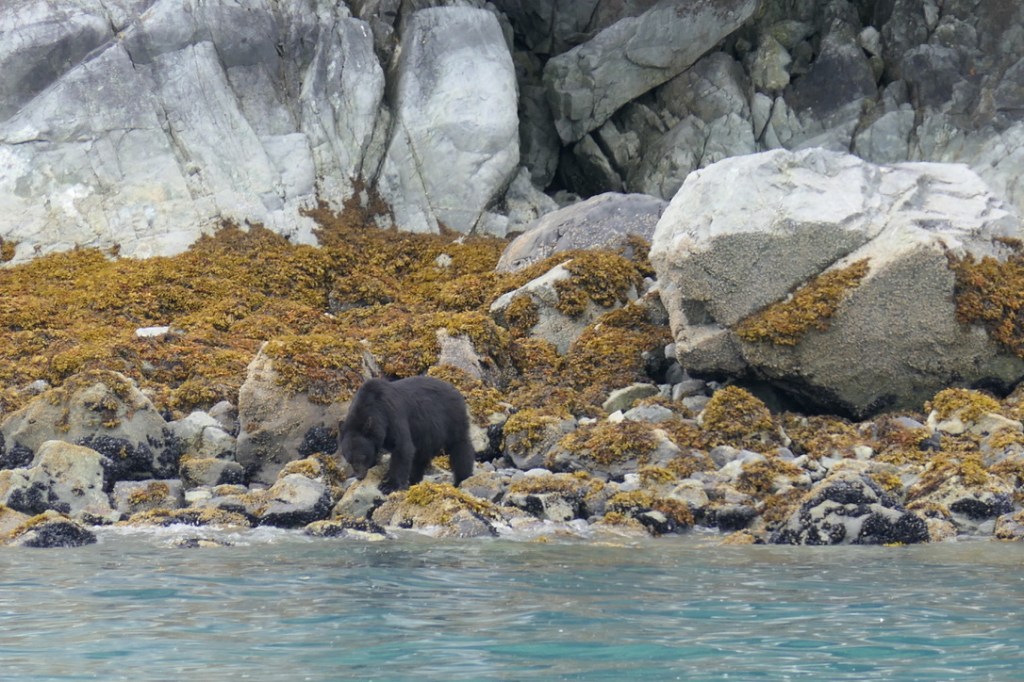
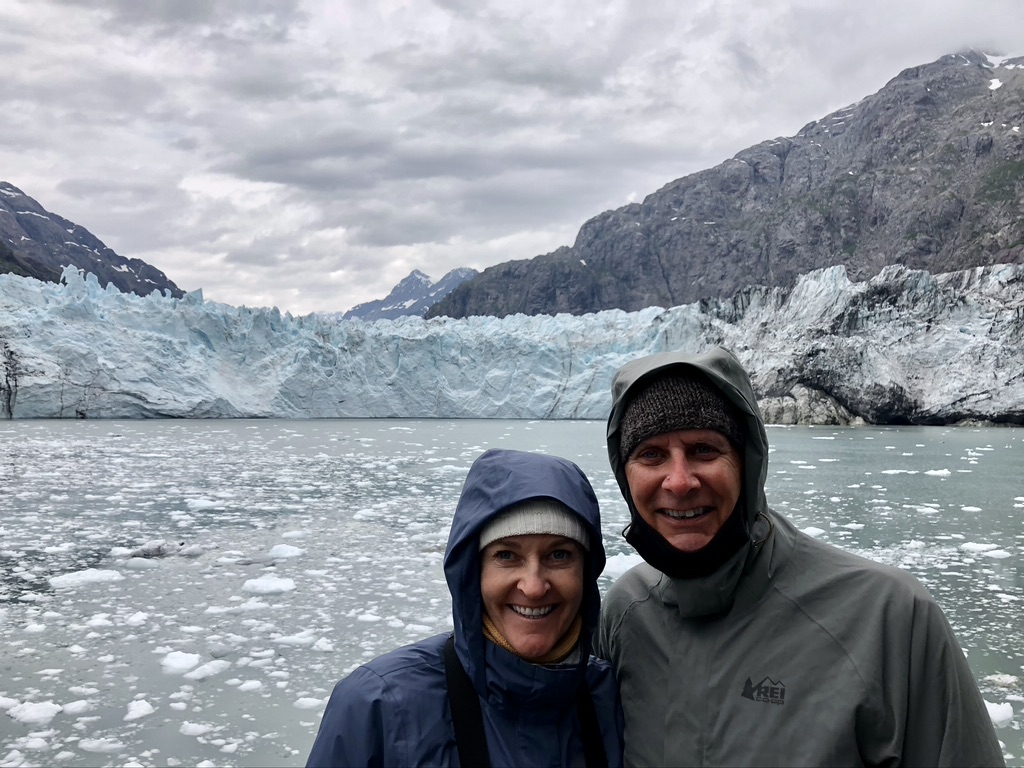
The final leg of our trip started five days prior with a stop in Glacier Bay National Park and Preserve. Arriving on a short flight from Juneau we were shuttled to the Glacier Bay Lodge, which sits right on the waters of Bartlett Cove at the southern end of the bay. It would be a convenient base (if only for one night) to explore the bay aboard the only boat tour allowed in the park, which departs from a dock just below the lodge. Bright and early the next morning as we headed to the lodge’s dining room for a quick breakfast, we stopped to watch a mother moose and her calf grazing just steps from the restaurants front door, before moving off into the thick woods. We were seated at a table just in time to hear the folks sitting next to us lament that they had yet to see a moose during the entirety of their eight day Alaskan trip. We didn’t have the heart to tell them of our sighting moments ago (that brought our total to 13). After breakfast we boarded the high-speed catamaran and set out into the waters of Glacier Bay. The onboard National Park naturalist offered commentary on the ecology and geology of the park, the history of the Natives who first inhabited the area, the arrival of Western traders and trappers, and provided plenty of information on the wildlife. And there was plenty of wildlife – harbor seals played in the waters of Bartlett Cove as we departed, sea otters floated on the waters surface near the shoreline, puffins and other seabirds populated the rocky islets we passed, humpback whales could be seen spouting and flicking their tails in the distance (the whales were in protected areas of the bay which prevents the boat from altering it’s course to get closer to them), brown and black bears prowled the rocky coast and mountain goats appeared unfazed as they clung to steep rocky faces that dropped precipitously to the waters edge. The final attraction was arriving at the face of the immense Margerie Glacier, a 21-mile long tidewater glacier at the northern reaches of the bay.

Sea otters greet us as we begin our tour of Glacier Bay
A sea lion siesta
Colorful puffins
A black bear looking for lunch amongst the rocks along the bay
It’s as cold as it looks at the Margerie Glacier – August in Glacier Bay

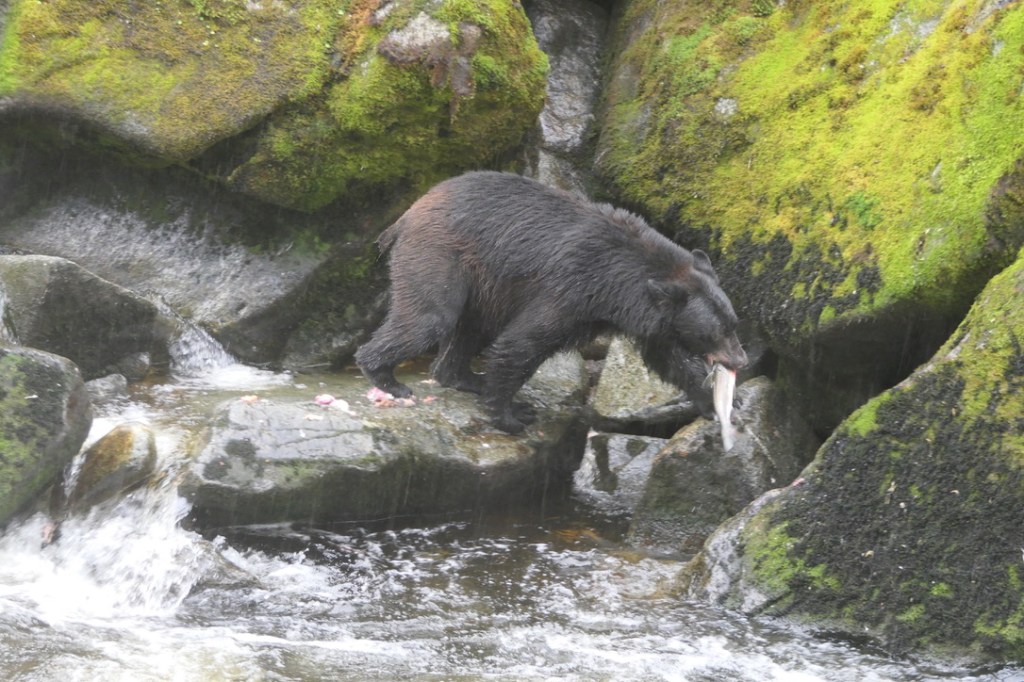
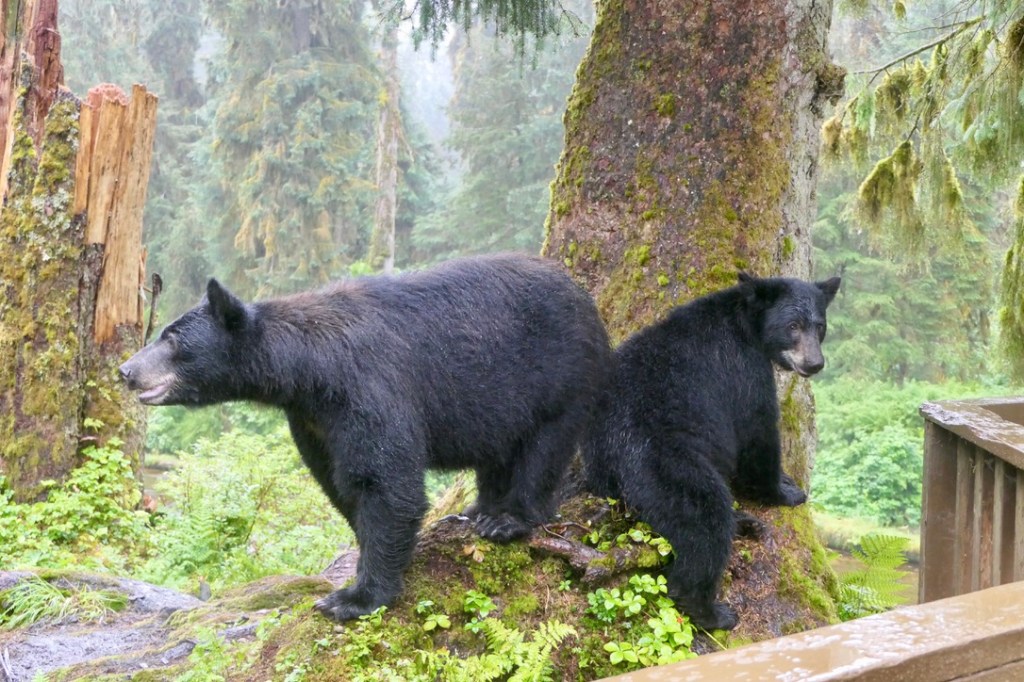
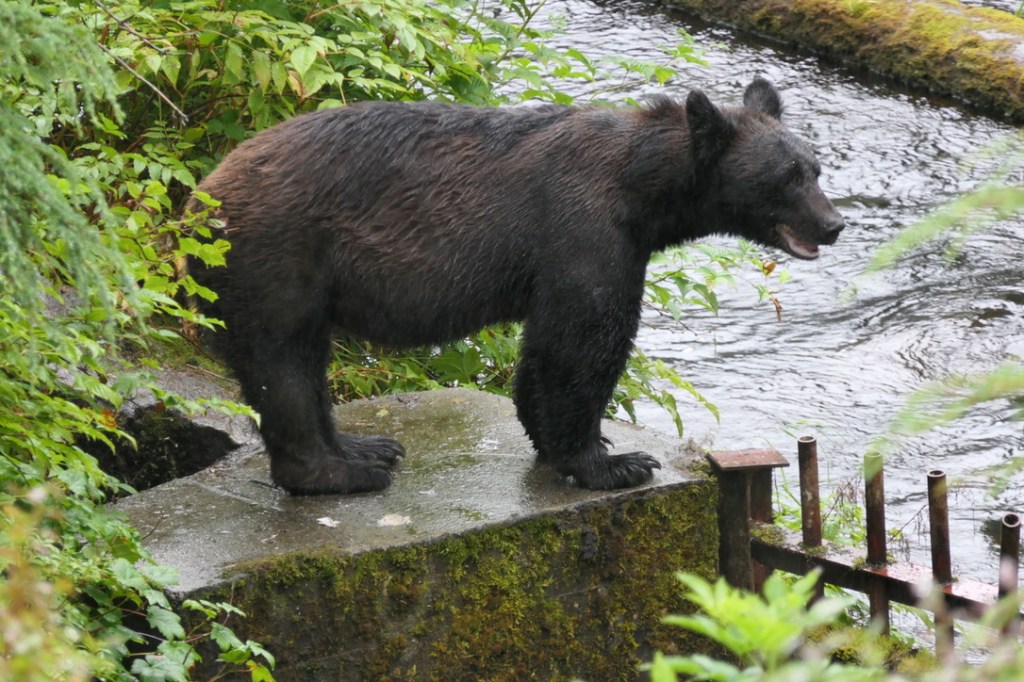
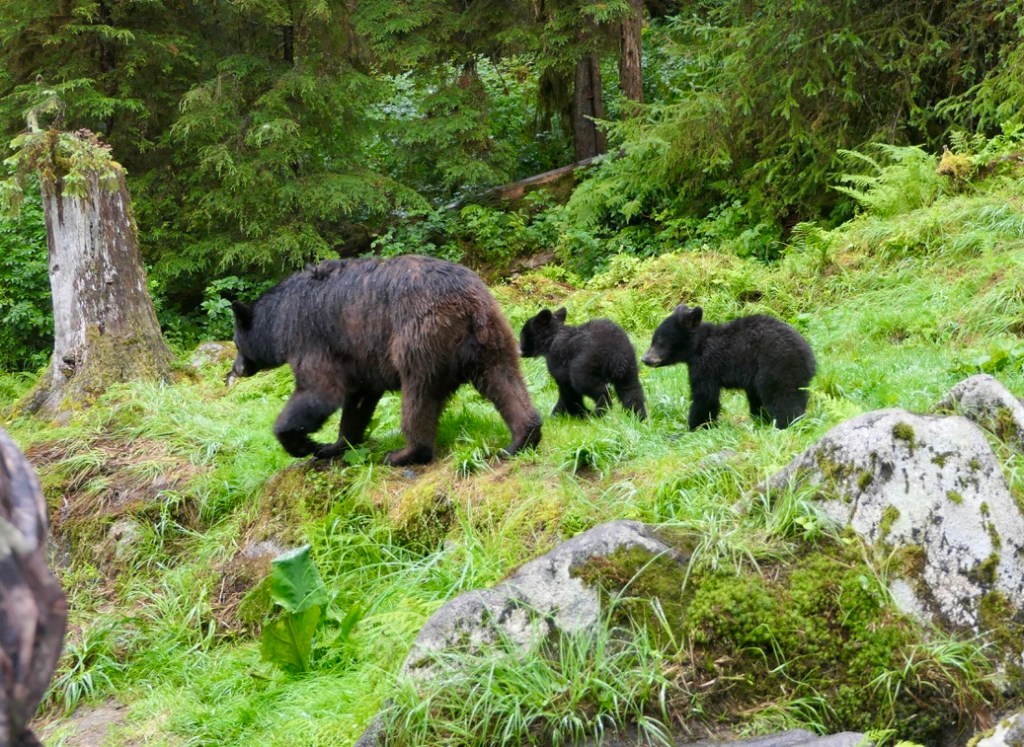
After our Glacier Bay experience we traveled south to the town of Wrangell, which sits on the northern tip of the island of the same name. Wrangell is, and always has been, a working town – its marina is filled with fishing boats of all sizes, and its history is full of colorful characters who were attracted to the areas riches. From Tlingit chiefs, Russian, Spanish, British and American traders, trappers and gold miners to famous gunslingers (Wyatt Earp did a spell as the town’s lawman) and finally the fishermen and outdoor enthusiasts who fill the town today. What attracted us was the Anan Wildlife Observatory, which sits in the Tongass National Forest 30 miles south of Wrangell. Perched above Anan Creek, which hosts one of the largest runs of pink salmon in Southeast Alaska, the observatory offers guests the chance to watch both brown and black bears feeding from the creek. We visited Anan on a rainy day with the good folks at Alaska Waters, making the hour-long trip in their new boat. We recognized just how ‘immersive’ this encounter would be when our guide slung a rifle over his shoulder to bolster the can of bear spray strapped to his belt. Instructed to stay in a tight group as we walked the half-mile trail through the rainforest, we marveled at the diverse array of ferns, mushrooms and mosses that carpeted the Sitka spruce trees and ground. Passing another small group coming out of the forest they indicated we were in for a treat – “plenty of bears up there!” Our excitement, unfettered by the falling rain, only grew. When we climbed the short set of steps onto the platform of the observatory we moved to the railing . . . and saw nothing. No bears below us in the creek. None on the hillside across the way. What the . . . had they already gorged themselves, to the delight of the previous group, and melted into the surrounding forest? But then there was movement across the creek. A solitary black bear appeared at the waters edge. Then another below us on our side of the creek. Minutes later three more black bears appeared further down stream. We moved from one side of the platform to the other trying to keep an eye on all the bears fishing for salmon. We marveled as most of them easily caught fish and carried their catch to a boulder or into a hidden area of the forest to eat. We laughed as one juvenile floundered in a pool, salmon jumping past his nose or swimming just behind him as he turned in all directions. More black bears kept appearing as time went by. Some would wander just inches beyond the railing of the platform as they moved between different stretches of the creek. As our time wound down and our guide was preparing to lead us back to the boat Heather lamented that she had really hoped to see a mother and cubs, but it didn’t appear that would happen. Until it did. Moments later a mom appeared with her two spring cubs, who huddled under her bulk while she sniffed the air, apparently trying to determine if any aggressive males were around that might pose a threat to her little ones. Satisfied, she moved her cubs to a mound high above the creek, where they contented themselves with chasing each other up a small tree while mom moved to the waters edge to catch dinner. She was quick and accomplished, returning to her young and sharing her meal. At the same time a pair of juveniles sat at the base of a tree, scratching themselves, climbing a few feet high and generally being oblivious to our presence. Finally, with hundreds of photos and several minutes of video taken, we reluctantly departed for the short walk back to the waiting boat and our return to Wrangell.

A black bear gorges on fresh Alaskan seafood
The Anan Observatory lets you get real close to the wildlife
Real close . . .
In the nick of time, mom and the cubs appeared
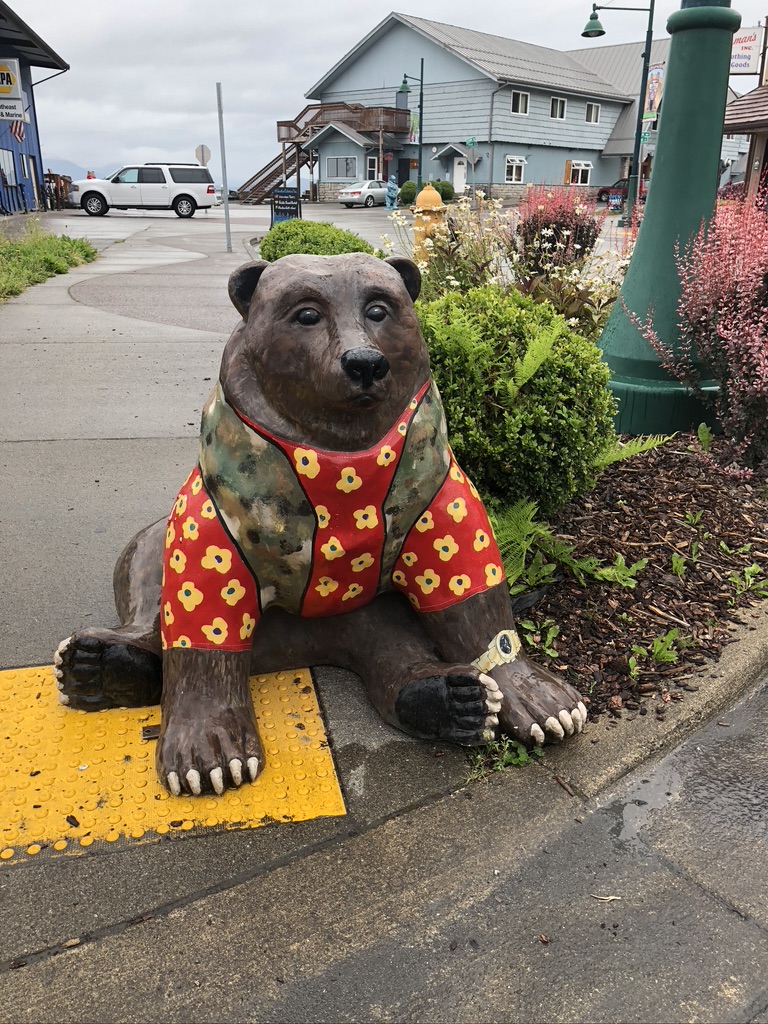
There are even bears right in town

Back in Colorado it’s hot and hazy, as wildfires both near and far (as far away as California) cloud our skies and the temperatures climb into the 90’s. The heavy traffic that has plagued us at times during the summer still rumbles through town as yet another mudslide has closed Interstate 70. But there’s no time to fret – Heather is busy editing A LOT of photos. In two weeks I’m off to northern Minnesota for a rendezvous with two old friends for a canoe trip in the Boundary Waters. That story in my next post.