“Where’s the food pack?” Mark asked. He had gone to the rear of our campsite overlooking Birch Lake to retrieve some items for our dinner preparation, which was taking place at the front of the site. Matt and I looked at each other, thinking that Mark was just goofing around. But when we walked to where he was turning in circles looking over our pile of camping gear, we realized our food pack was really missing. ‘What the f…’ we all thought. We fanned out and stepped into the thick brush and shrubs bordering the back of our site. Almost immediately Mark called out that he had found the pack – splayed open, the small duffel bag that contained all our dinner items lying a few feet away with two large holes torn in its side. As we gathered it and a couple more items that had fallen out of the larger pack I heard a rustle of brush and caught the western end of an east-bound brown bear lumber into the deeper forest. Nervously chuckling as we repacked the food, noticing only our large ziplock bag of trail mix had been devoured but most everything else was intact, Mark and I returned to the duty of dinner prep, while Matt pulled out the ropes, carabiner and pulley that he would now have to rig to hang our food pack from one of the nearby pine trees.
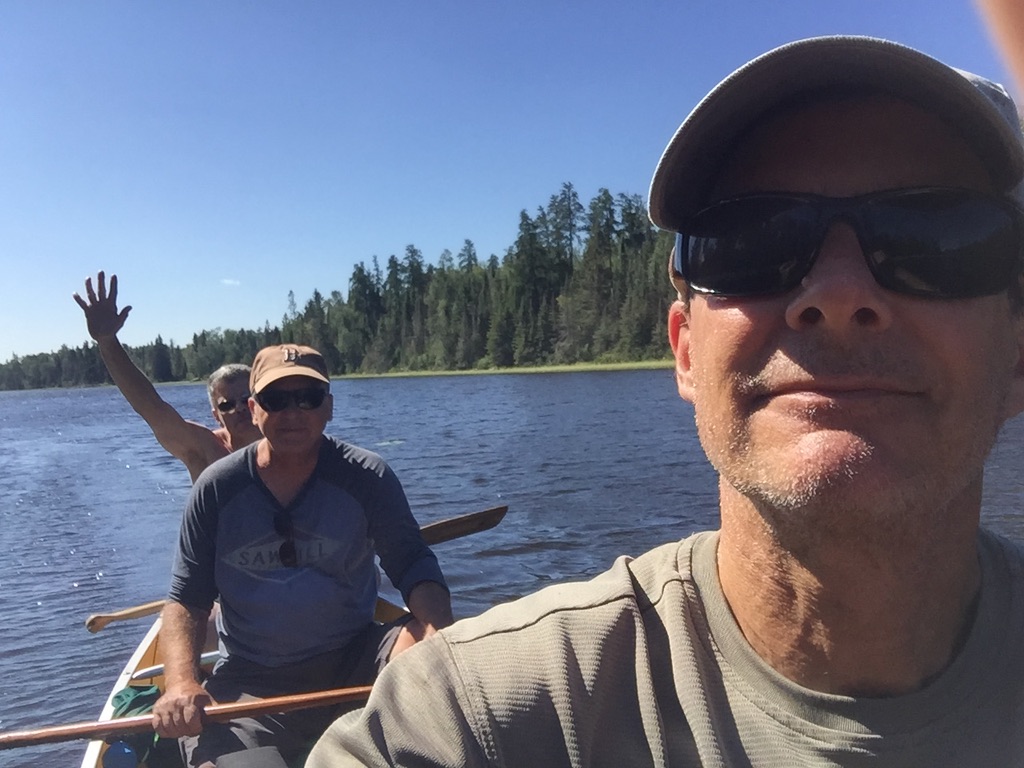
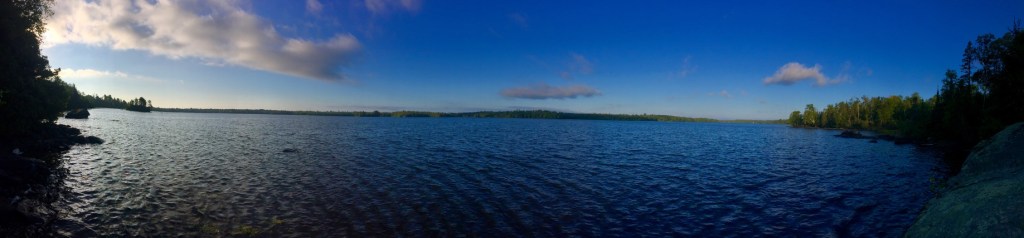
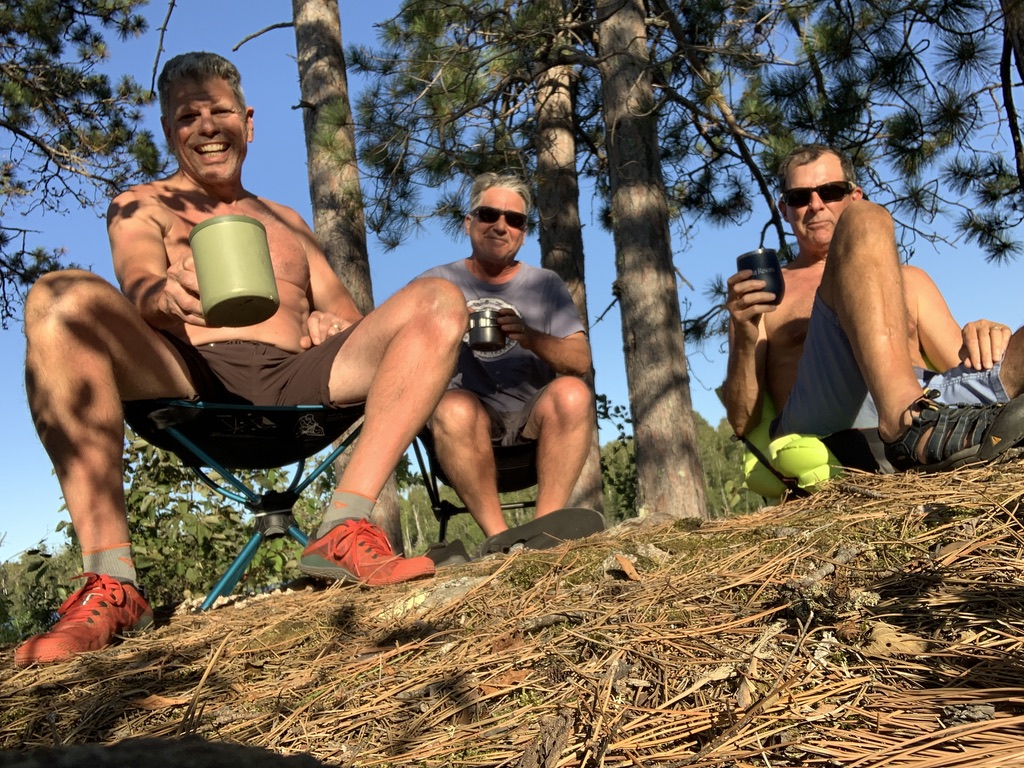
Matt, Mark and I have been visiting the Boundary Waters (officially the Boundary Waters Canoe Area or BWCA) of northern Minnesota for over ten years. The wilderness area stretches for 150 miles along the US-Canada border, encompasses over 1,000,000 acres and contains 1,100 lakes of various sizes. The three of us, friends who met while attending SUNY Plattsburgh in northern New York maaaany years ago, spend six days paddling the pristine lakes, portaging the trails that link them and enjoying evenings around the campfire grilling meat, sipping libations and swapping stories. Matt excels at the role of planning, logistics and provisioning. He sketches out our route, secures the necessary permit and canoe rental and plans our meals. Mark revels in staying active during our camp stops, so enjoys swimming out to fill our filtration bags in the frigid lakes, gathers and splits firewood, and supplies tunes for the evening campfire sessions. My sole responsibility is to execute Matt’s meal plan – grilling the steaks, chops and sausages over a wood fire and embellishing the freeze-dried or instant side dishes. And making cocktails – a changing selection of various liquors mixed with purified lake water, that when called a ‘mojito’, ‘margarita’ or ‘dark and stormy’, seem infinitely more satisfying after a day of paddling. This year marked my tenth trip to the BWCA and Matt had plotted a course starting from Sawbill Lake in the eastern portion of the wilderness area. One day prior to my departure from Colorado Matt emailed to inform us that the east side had been shuttered due to fire danger. But he had acted quickly upon being informed of that closure and had secured the last permit to enter the western section through Moose Lake, outside the town of Ely. Crisis averted. Upon our arrival at the Duluth airport the next day, Matt had more bad news for Mark and I – wildfires had now forced the closure of the entire Boundary Waters. With a rental car full of provisions and our camping gear, we sat in the car in the airport and discussed our options. Eventually, a new plan was hatched. We would drive to Ely, confer with the outfitter who was supplying our canoe, and find a lake, any lake, that we could paddle and camp on for the next six days. The guys at Canoe Country Outfitters in Ely suggested we try Birch Lake – only twenty miles from town, large enough to keep us busy for six days, and offering about a dozen free campsites. Since it was outside the boundaries of the BWCA, and had road access to several points along the lakeshore, there would be motor boat traffic and more people than we would normally see during our week inside the Boundary Waters. But it sounded promising and we drove off the next morning towards the lake. Our first day we loaded our canoe and paddled along the shore, scouting out several of the campsites before settling on one that offered a nice rock ledge where we could enjoy the sunset over the lake as well as a spacious site to spread out on. As it turned out, maybe it was too spacious, as neither of us had any inkling of the bruin shenanigans going on behind us as we focused on the scenery in front of us.
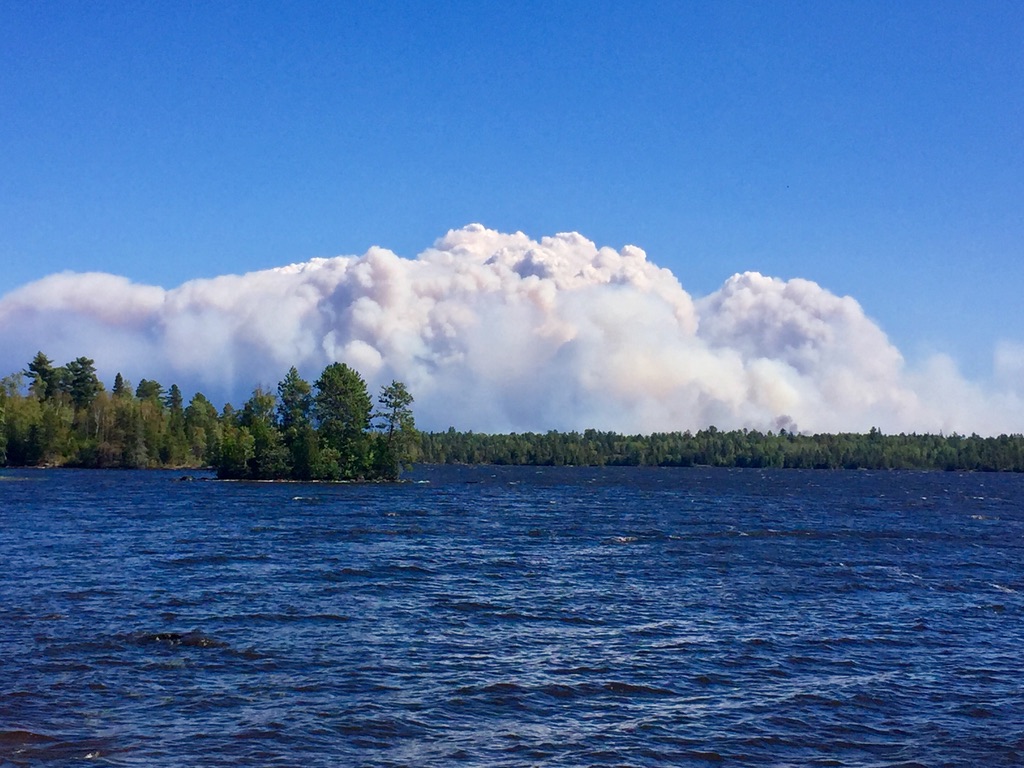
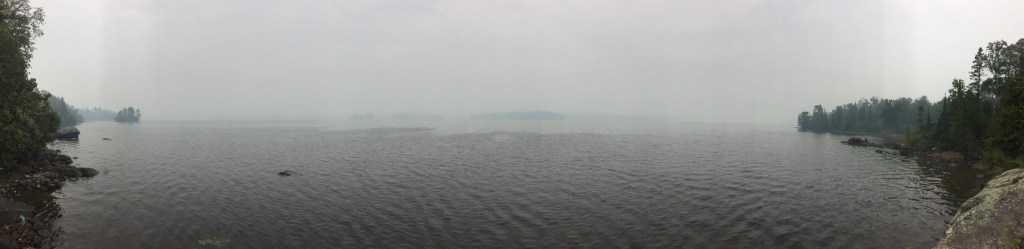
Waking up the following day to another gorgeous cloudless sky, I wandered down to the waters edge only to find a huge billowing cloud of smoke filling the eastern sky. The reason for the closure of the BWCA was now staring us in the face. While unsettling to see how close the smoke was (we would later learn that the fire had moved to within nine miles of our location), we were at least a bit comforted by the fact that it was on the other side of Birch Lake. So we spent the day exploring the bays and inlets of the southern shore of the lake, returning to our campsite early in the afternoon when the wind picked up and small white-capped waves formed on the surface. By the following morning, a wind shift had pushed the smoke our way and we watched from shore as the opposite side of the lake disappeared from view, cloaked in the heavy grey smoke. It seemed prudent to return to our access point and seek out some information on the status and movement of the fire, which was provided by the knowledgable host of the campground that abutted the boat ramp. Satisfied the smoke would clear and the fire activity would dampen with the approach of a cold front that afternoon, we spent the night in the Motel Ely (which advertises ‘Color TV’ as one of its modern amenities!) before returning to the lake and another delightful campsite on the bucolic shore of Kangas Bay, about four miles west of our previous site. The next two days were spent paddling the western reaches of the lake, dining on the rest of our provisions (cooked over our new gas stove due to the fire ban) and telling stories about our college years sitting around an unlit fire ring. On the sixth day we left Birch Lake and made the drive back to Duluth for our final night together, continuing the Boundary Waters traditions of celebratory beers at Sir Benedicts pub and pizza at Luce’s, two of our favorite Duluth institutions. While this trip may have lacked the peaceful solitude, wood-fired cuisine and the hauling of heavy packs along portage routes that makes the Boundary Waters so unique, there’s no doubt that the simplistic act of paddling your canoe across the calm waters of a lake, any lake, in northern Minnesota, with your friends, is simply one of the best ways to spend a summer week.
Back in Colorado once more fall has descended. The summer tourist crowds have thinned (thank god for in-school learning once again), the weather is stellar and the leaves are starting to turn gold and orange. Heather and I can start counting down the days until winter arrives and these ‘snowbirds’ flee to the warmth of the tropics. We plan to start with a month back on the Yucatan peninsula in one of our new favorite beach towns – Puerto Morelos. But before we head out we’ll enjoy one last fall road trip with Heather’s mom to the deserts of Utah and Arizona and a weekend down in the central Colorado mountain town of Crested Butte for a friends wedding.
 The Rhum Line