Naxos is often described by a host of adjectives: it’s the largest of the Cyclades islands (the group that includes Santorini and Mykonos amongst others); it contains the highest point in the Cyclades (Mt. Zas, fabled birthplace of Zeus); it’s the most fertile island (the high mountains bring more rainfall – its extensive agricultural sector makes it almost self-sufficient); and I can add one other observation – it has the most cats of any Greek island we’ve visited (which are all known for their cat populations). In every taverna you’ll usually have to move a cat from your chair before sitting down; every lane in every village will have felines lounging on stoops, stairs and window sills; our guesthouse provided a haven for more cats than it had rooms for guests. With a week on the island we’d have ample time to play with the friendly kitties, explore this large island by car, spend an afternoon hiking in the mountains and enjoying all the home-grown produce and seafood available to us.
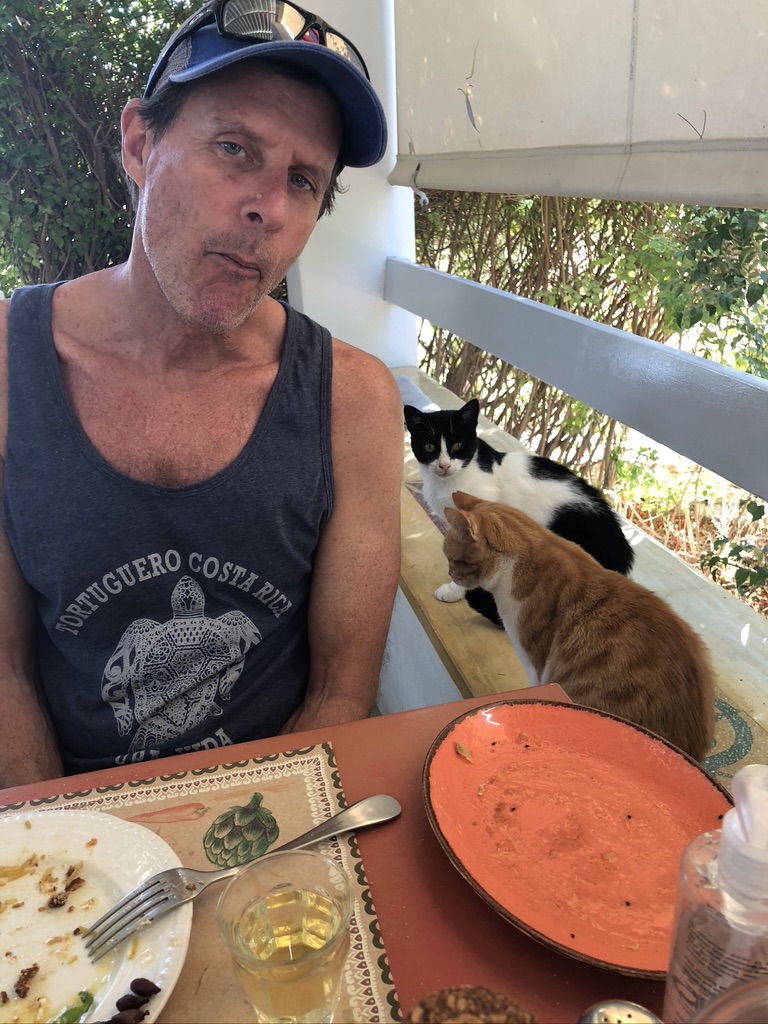
Ummm, that’s my seat . . .
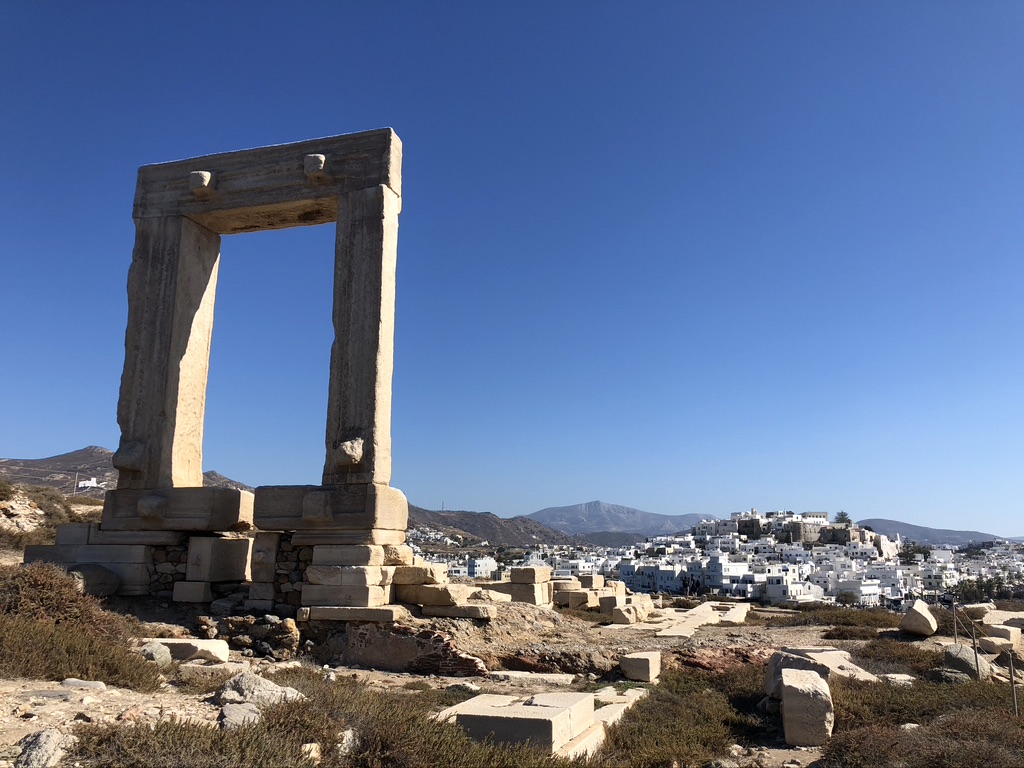
We spent one day in the port town wandering the maze of lanes in the ‘old market’ area; climbing up to the ruins of the old Venetian castle for the views over to Paros, a neighboring island; visiting the ruins of the temple of Apollo, and finally, indulging in fresh seafood offered at one of the waterfront tavernas.
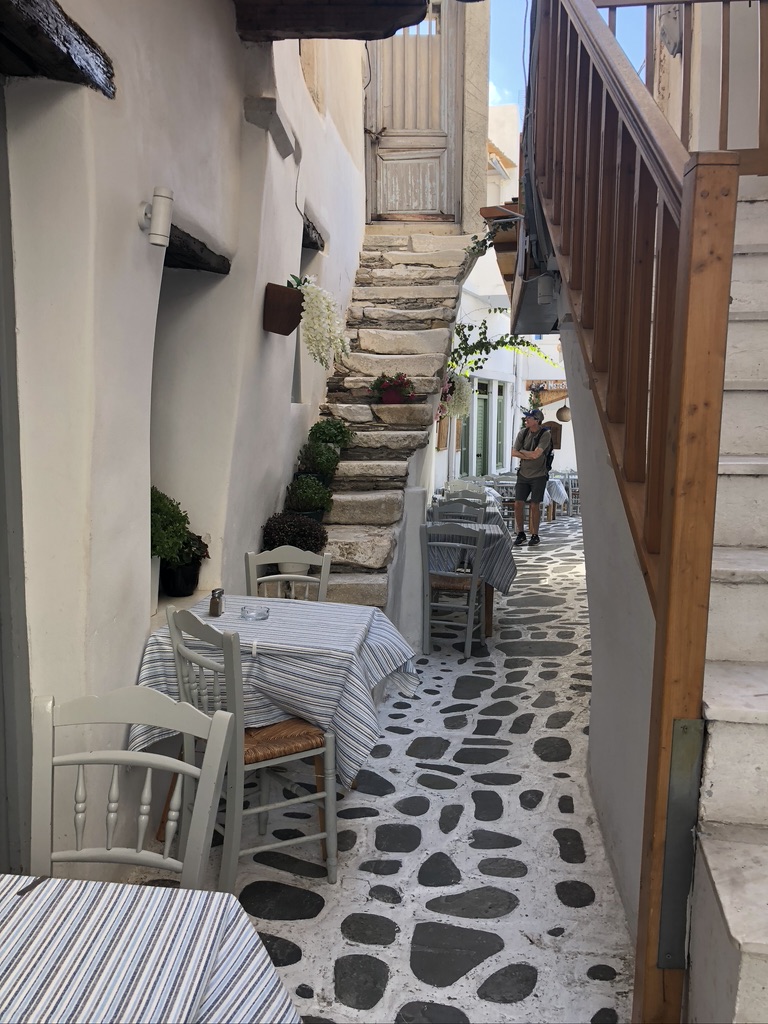
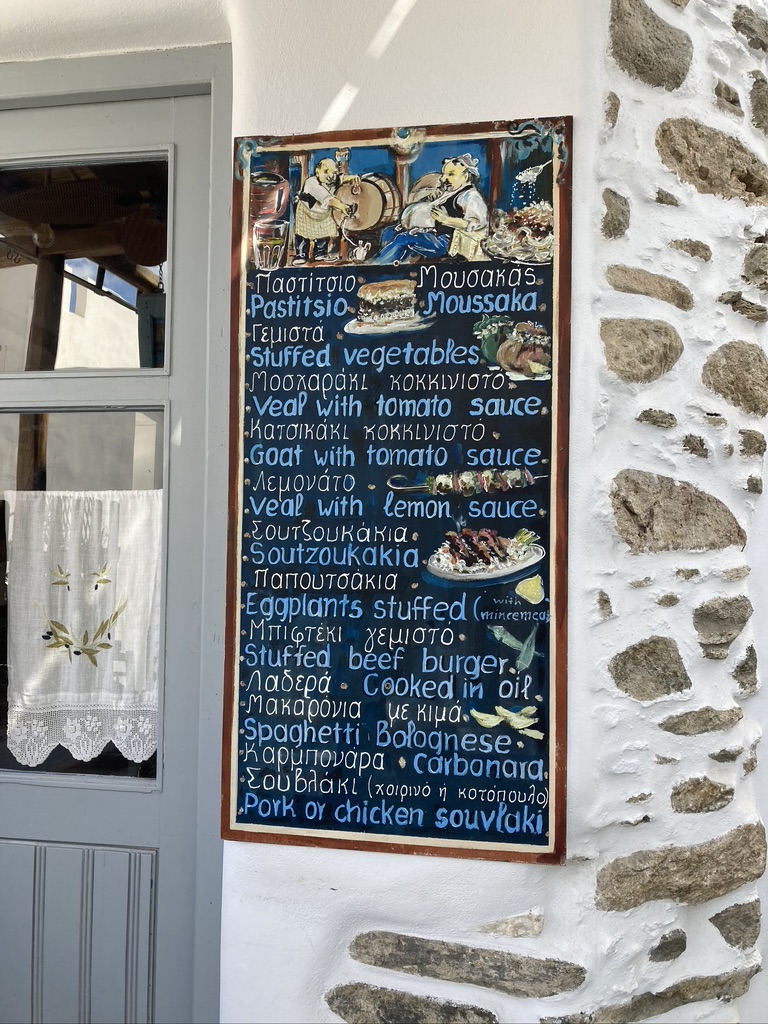
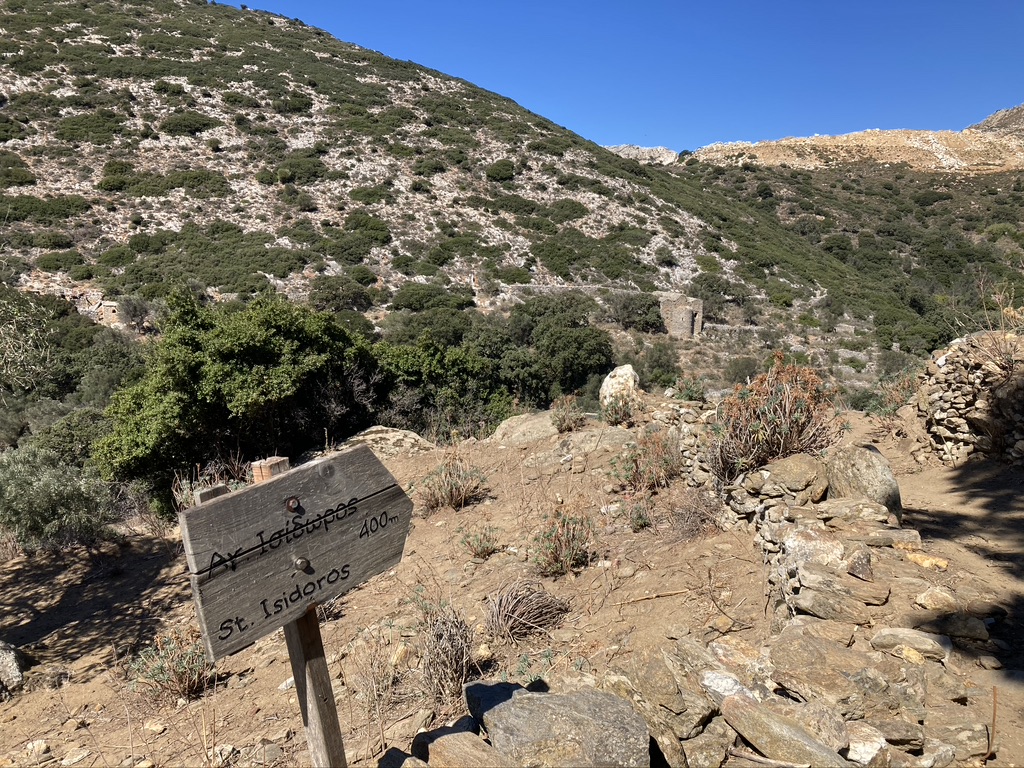
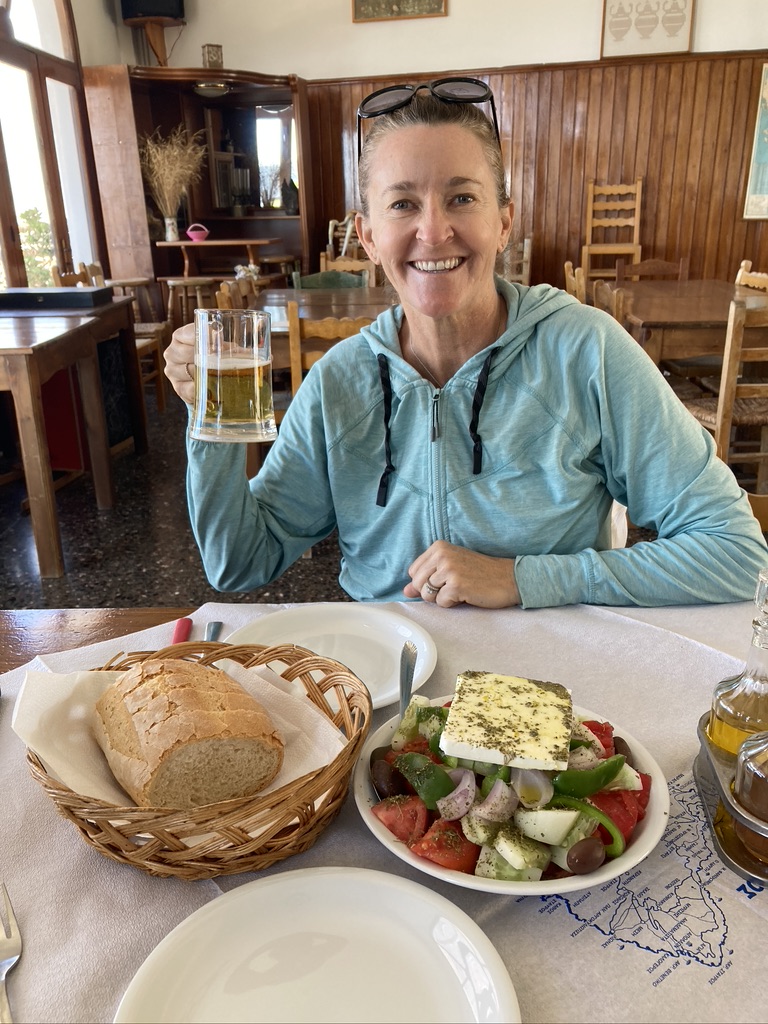
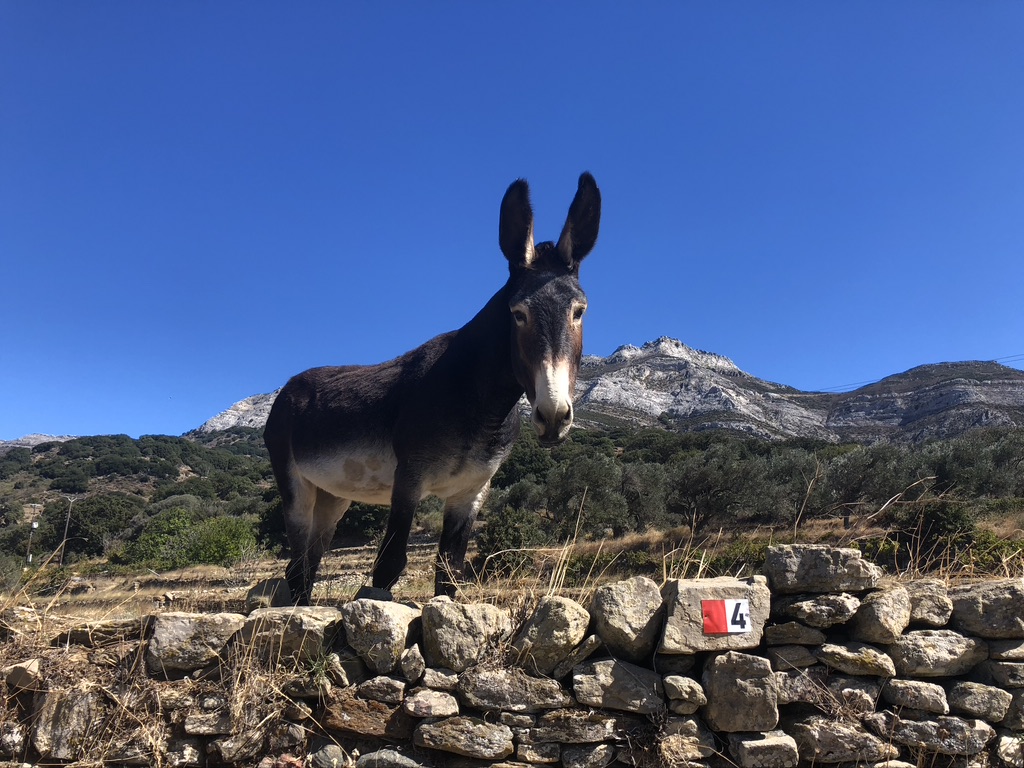
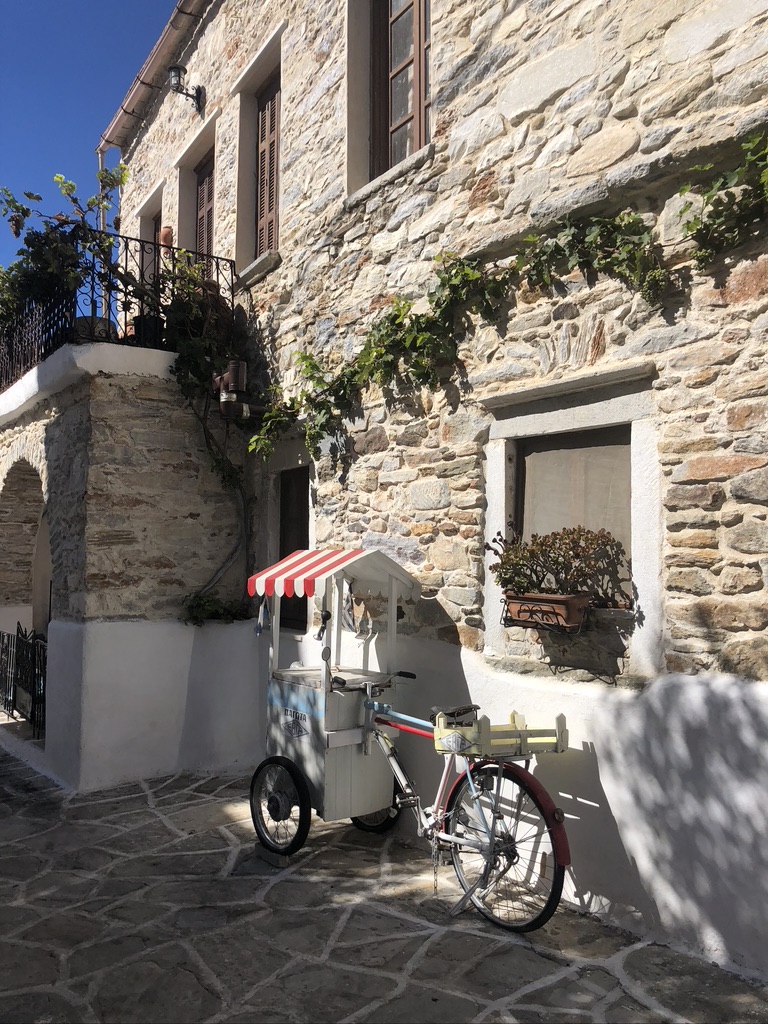
A highlight of Naxos is the well-maintained trail network, one of which connects the central mountain villages of Chalki and Moni. The trail follows a cobbled lane out of Chalki, passes several small chapels before meandering on a dirt path along a dry streambed, always ascending up the valley until reaching the village of Moni about an hour later. If you were pressed for time you could continue the loop, descending back to Chalki along the other side of the valley, but then you’d miss the experience of dining at To Panorama in the middle of Moni. We were wandering along the street when an old local, sitting on a chair outside the taverna, beckoned us in. Setting foot inside we were warmly greeted by an elderly woman. Seated at a table in the empty restaurant we asked if there was a menu. “No” replied the woman, who then listed what she had to offer us – beans, salad and bread. “Yes” we said, though with no real choice in the matter. Soon, after our cold bottle of Mythos beer was served, the plates arrived – a heaping platter of stewed fava beans in a light tomato sauce and a towering bowl of Greek salad, topped with a thick slab of feta cheese dusted with oregano. A basket of bread rounded out our lunch. We happily munched our food while taking in the ‘panoramic’ views of the valley from the large windows. Reluctantly, with full stomachs, we departed for the return to Chalki, descending through olive groves and vineyards, stopping to pick pomegranates from a tree whose loaded branches were drooping over the rock wall beside the trail, passing a lonely donkey who walked with us the length of his pasture until the fencing prevented him from going any further and wandered through the charming, nearly deserted village of Kaloxylos before reentering Chalki, where we treated ourselves to dishes of ice cream made from local cherries and strawberries.

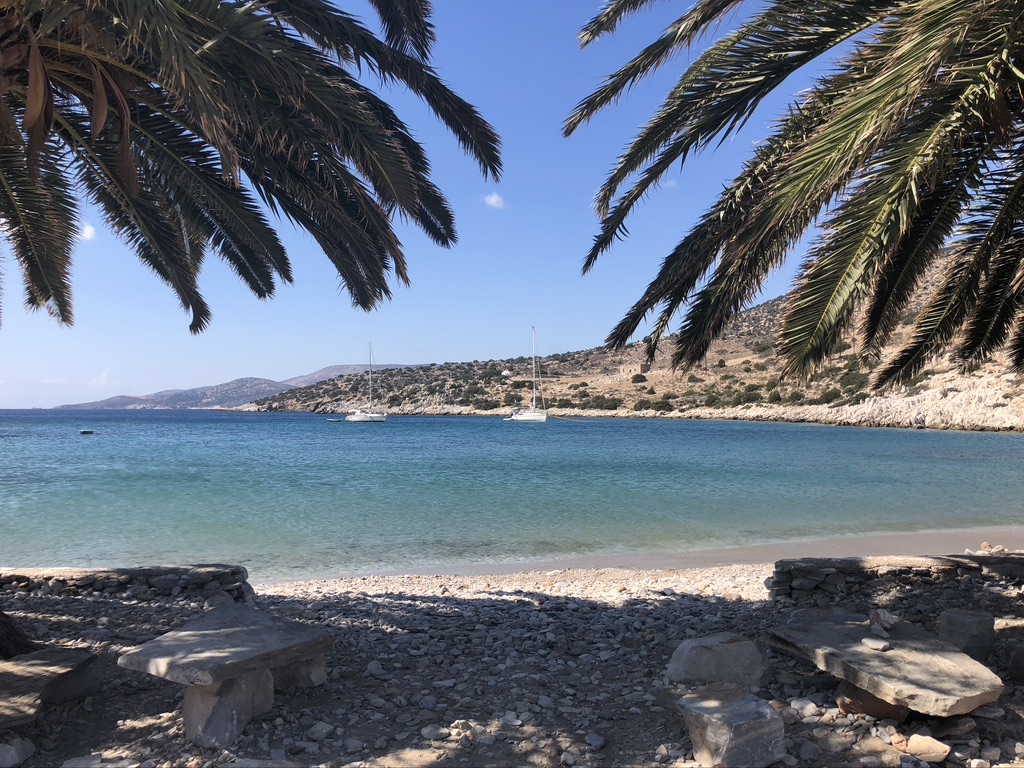
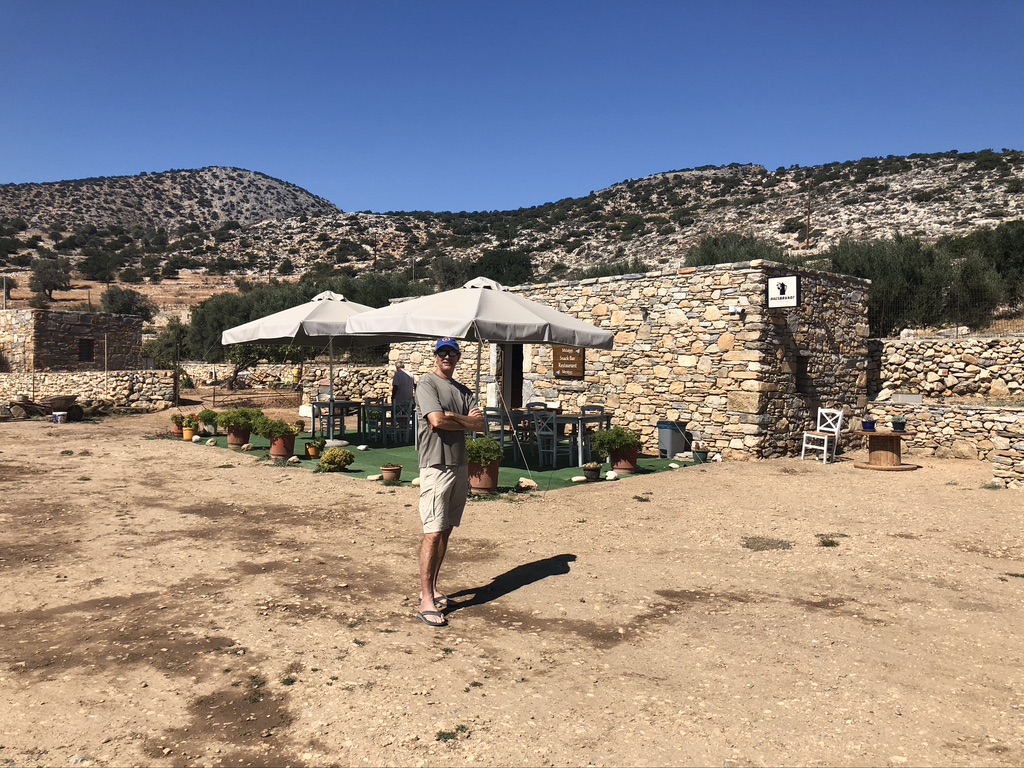
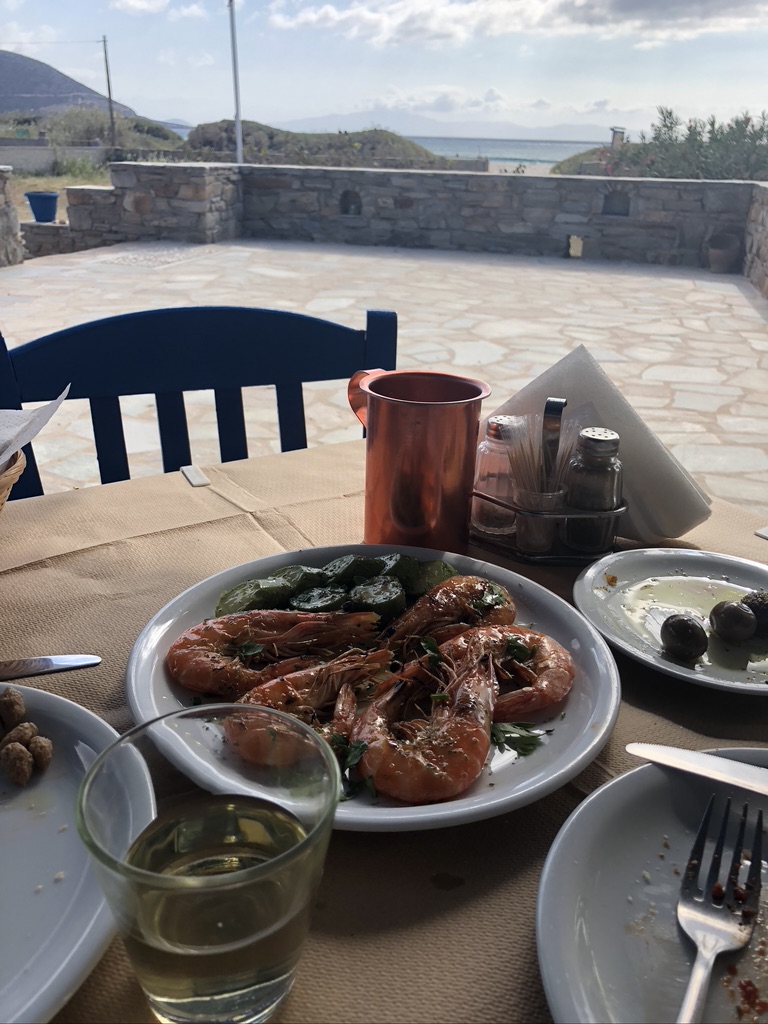
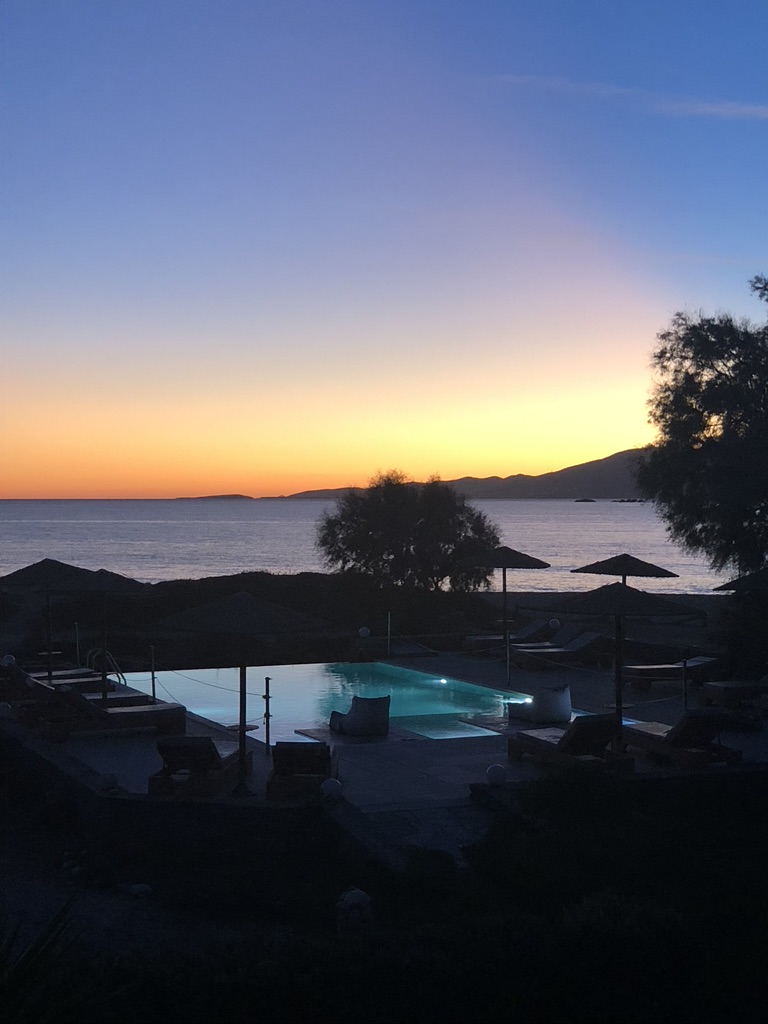
One day we drove through the center of Naxos and climbed over a mountain pass before descending to the coast on the eastern side of the island. At Moutsounas we turned south and followed a twisting road that hugged the shoreline. The road ended at the village (as far as five stone houses constitutes a village) of Panormos, and more specifically at a dusty parking area in front of Mitatos taverna, which overlooks tiny Panormos Bay, with views even further to the islands of Koufonisia, Schoinousa and Ios. There were a few other intrepid visitors swimming in the bay, but we elected to forego the chilly water and instead enjoy a chilly beverage on the terrace of Mitatos and take in the view. Another day was spent navigating yet another dirt road to Agiossos Beach on the southwest side of the island in order to have lunch on the sun-splashed terrace of Panormitis Cafe. We dined on grilled prawns, baked eggplant, olives and baklava before heading back to our guesthouse for sunset.
As the calendar moves to mid-October, things are starting to close down on Naxos. Several restaurants have already shuttered for the winter and we’re seeing more close each day. We asked our host if it would be possible to stay in our room a little longer on our last day, as our ferry wouldn’t depart until the evening. Her response – “Stay as long as you like. You’re the last guests of the season”.
After enjoying our return visits to Santorini and Naxos, we’re headed to new territory for us: the islands of Milos and Sifnos, where we’ll celebrate a milestone occasion . . . in the next Rhumline post.
 The Rhum Line