The Rhum Line

The aimless and sometimes muddled route of a traveling couple looking for their next great adventure


Leave a comment

Europe ’22 Part 6: Matera, Calabria and Sicily

The sky was blue, the sun was warm and we were barefoot on a beach. While the water was too cold to even contemplate swimming, it was just great to be walking in the sunshine. Perhaps, with the thought of returning home to Colorado in just four days, and the knowledge that we’d have to wear just about all our clothes to keep warm in the sub-freezing temperatures we’d soon be seeing, for at least one day it was still summer, and we were still in southern Italy. After our walk on the sands of Marina Di Ragusa, on the southern coast of Sicily, we found a restaurant just at the back of the beach and settled in for a long, leisurely lunch. Heather had pasta with the small local clams while I opted for a piece of seared umbrina with a puree of pumpkin and blistered cherry tomatoes. It was quiet and the staff took the time to linger at our table, chatting about the weather, the expected influx of northern Europeans over the upcoming winter season and the impending election back home in America. After lunch we took a couple glasses of rose out to the loungers set in front of the restaurant to enjoy the last of the afternoon sun. We were trying to store up what was left of the warmth in order to take it home, hopefully to last until the next time we found ourselves on another sunny beach.
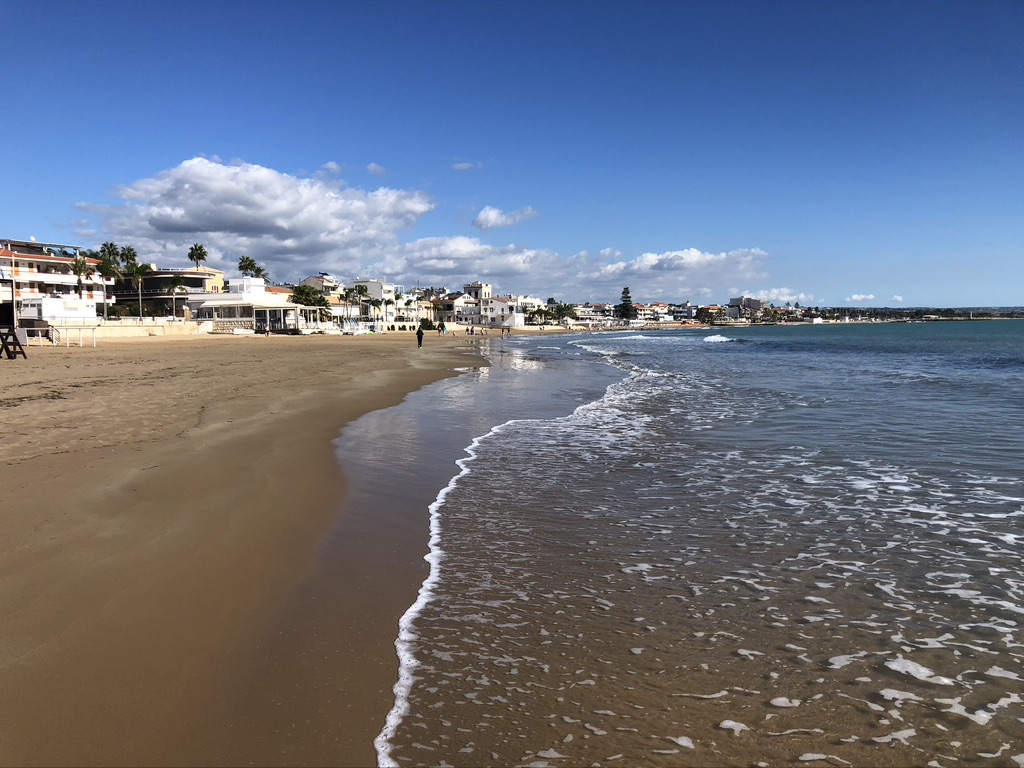
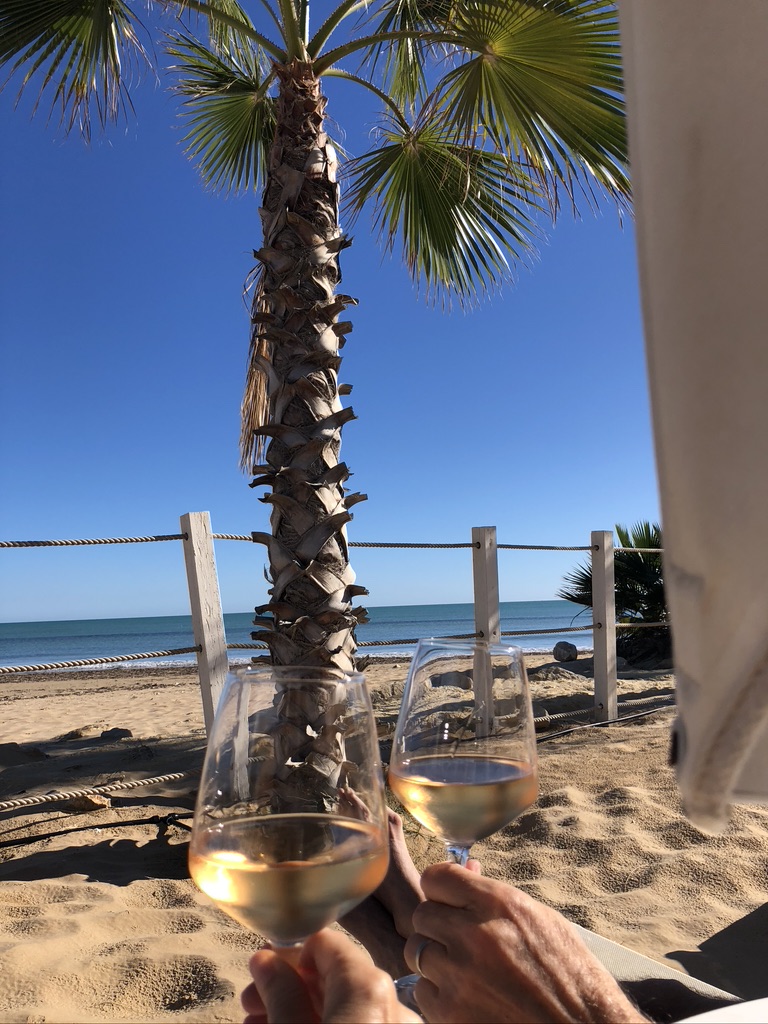
The beach at Marina Di Ragusa
Cheers – to the last days of summer

The final week of our six-week fall trip started with a visit to the town of Matera, in the region of Basilicata, in the hills of central southern Italy. Believed to have been occupied by folks going all the way back to the Paleolithic Era – about six thousand years ago – Matera is thought to be the oldest continuously inhabited city in the world. The original cave dwellings, and the subsequent limestone homes and churches are recognized by UNESCO for their historic and cultural significance. Our visit, on November 1, was a holiday, and the town was swarming with visitors, mostly Italians on a long weekend trip. It was still a pleasure to wander the lanes of the Sassi, as the old town is known, taking in the views of the historic buildings and the surrounding hills. We managed to find a terrace bar to enjoy a drink and an antipasti plate while looking down over the town center. Lit up at night the Sassi had a beautiful warm glow to it.

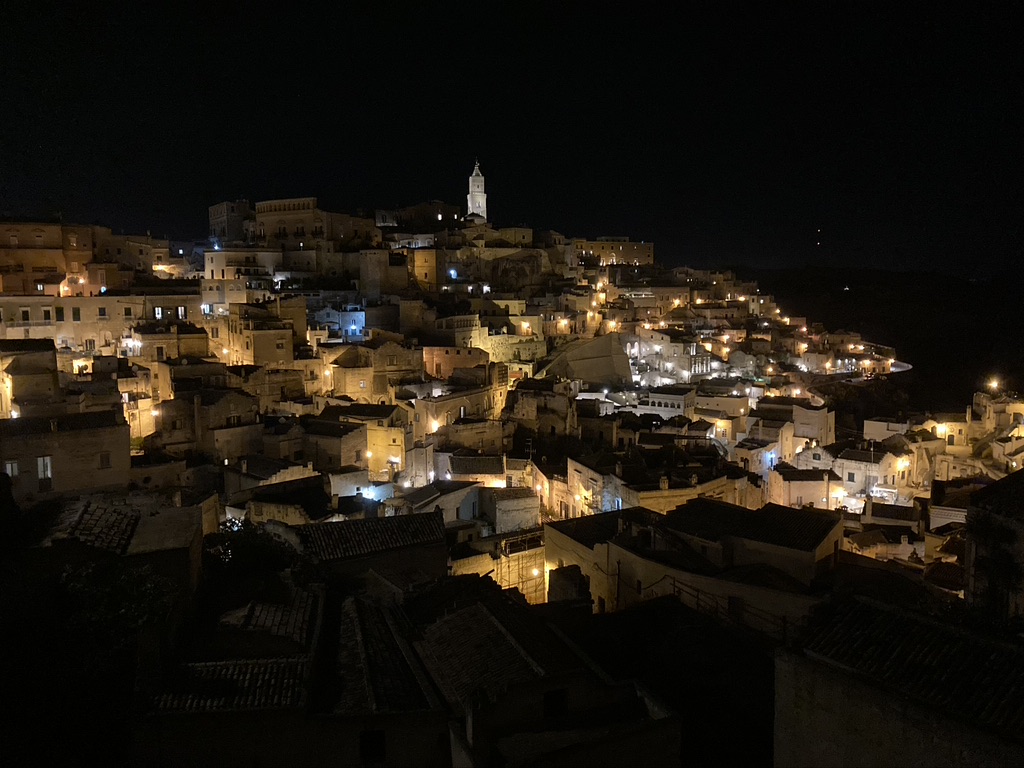
Overlooking the Sassi – Matera
Just as pretty at night

Venturing on to Sicily, we had an overnight stop in Tropea, in the region of Calabria. This old walled town, perched on a clifftop, overlooks the Tyrrhenian Sea and offers a number of sandy beaches below. Our visit was brief, but we had time to stroll the waterfront before climbing stairs up into the old town, wander it’s time-worn cobbled streets, watch the sunset and have dinner before departing in the morning
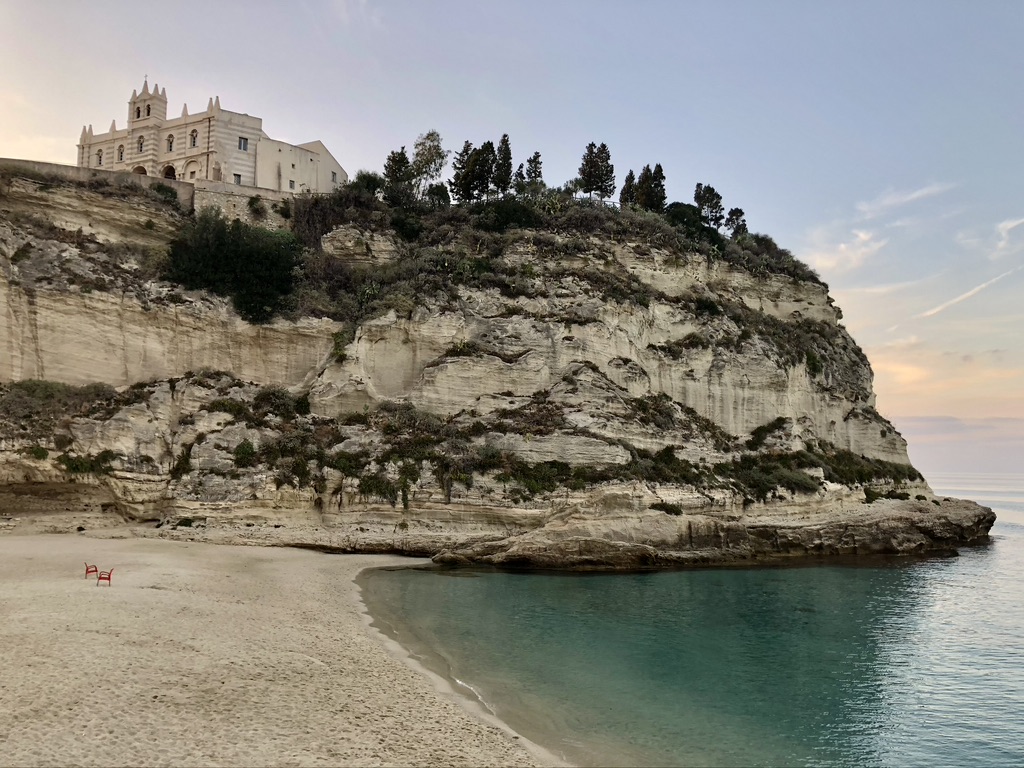
The Santa Maria dell’Isola Church and one of the beaches below Tropea
Old town Tropea

From Calabria we caught the ferry that took us and our car over to Sicily, arriving in the port city of Messina. We headed south and then inland to the slopes of Mt. Etna, stopping at Randazzo, which would be our base for the next three days. With views of the smoking cone of Etna – Europe’s highest and most active volcano – and surrounded by vineyards and olive groves, the home of our hosts, Tina and Nicola, was the perfect place to stay. The garden area outside our comfortable apartment had a dining area, loungers, a barbeque, roses, herb and chile plants, fruit trees and was the playground for the couples two dogs. Tina supplied us with fresh eggs from their hens, homemade cherry jam and muffins, while Nicola proudly pointed out the bottle of his homemade grappa he had provided us. We spent our time touring the countryside and exploring the slopes of Etna, waking one morning to marvel at the fresh snow that had fallen overnight on its upper slopes.
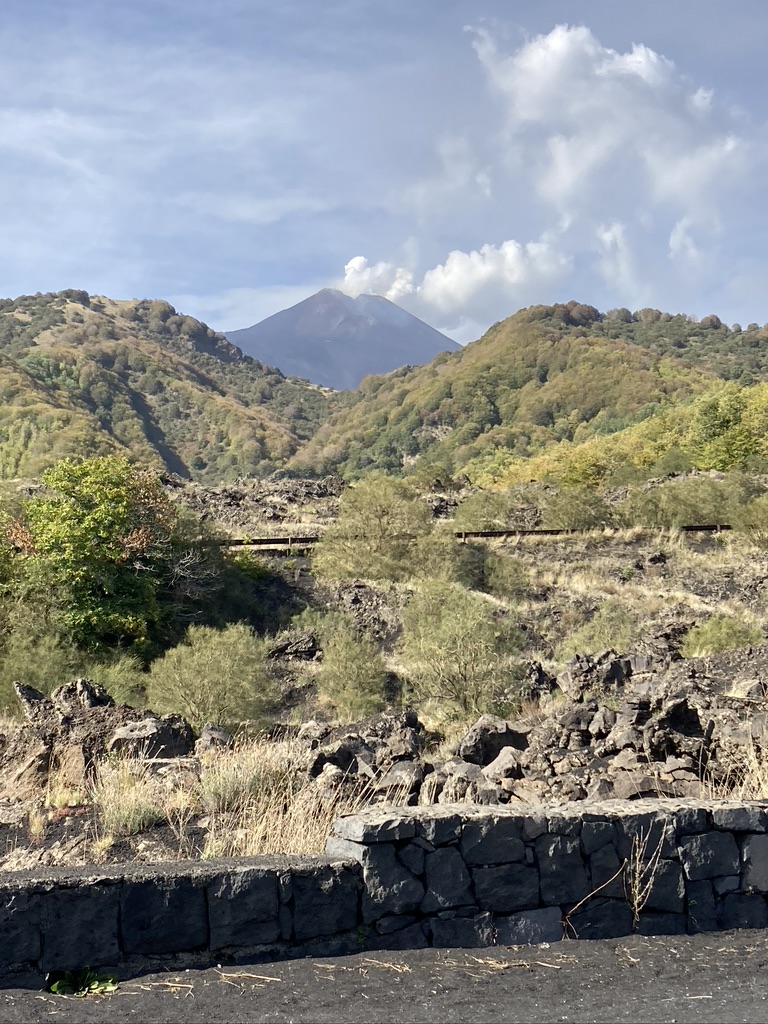
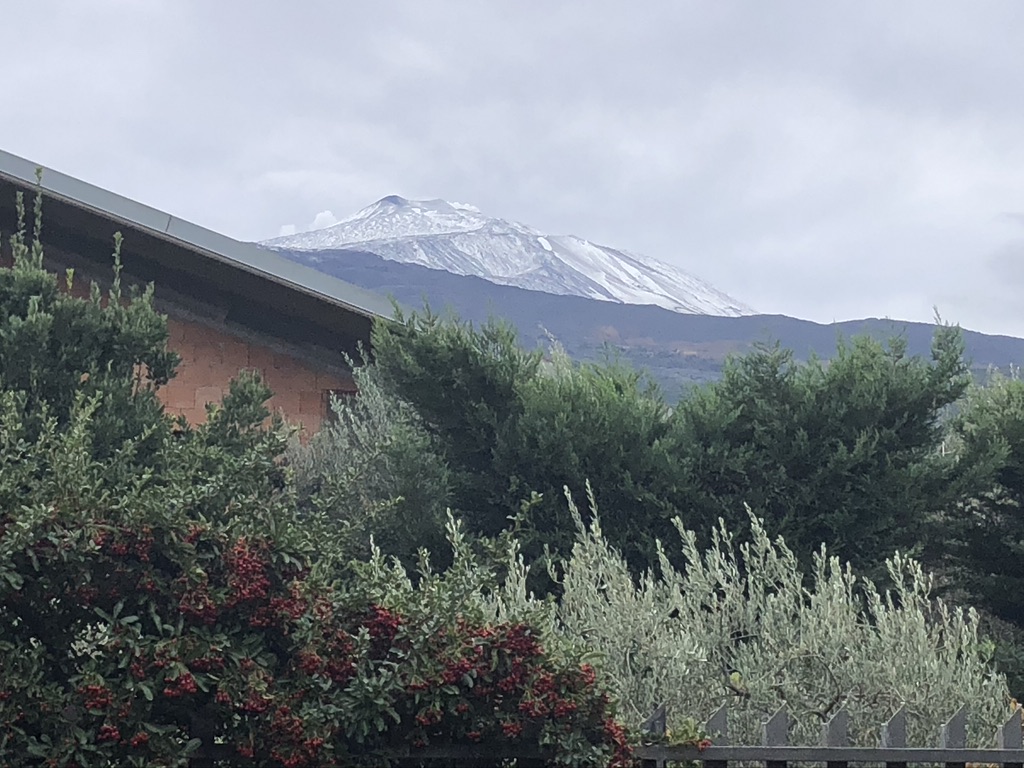
Mt. Etna blowing a little smoke
The view of Etna from Tina and Nicola’s place in Randazzo

Our final stop before we turned northward for our return to Naples, and our flight home, was the southeastern town of Ragusa. Noted for its Baroque architecture showcased on its palaces and churches, Ragusa Ibla, the old town, occupies a hilltop just outside the newer part of town. Our B&B offered a wonderful view of Ibla from its terrace, as well as an impressive breakfast spread set up each morning by our host, Salvo, who would bring fresh pastries and savory treats from the local patisserie to supplement the yogurt, juices, cured meats, cheeses and fruits he offered. We walked up and down the quiet lanes of the old town, strolled through the villa comunale, or town park, and enjoyed a gelato while sitting on the Piazza Duomo, gazing at the massive cathedral on the main square. From town it was just a twenty minute drive down to the sea where we spent the next day on the beach at Marina Di Ragusa.
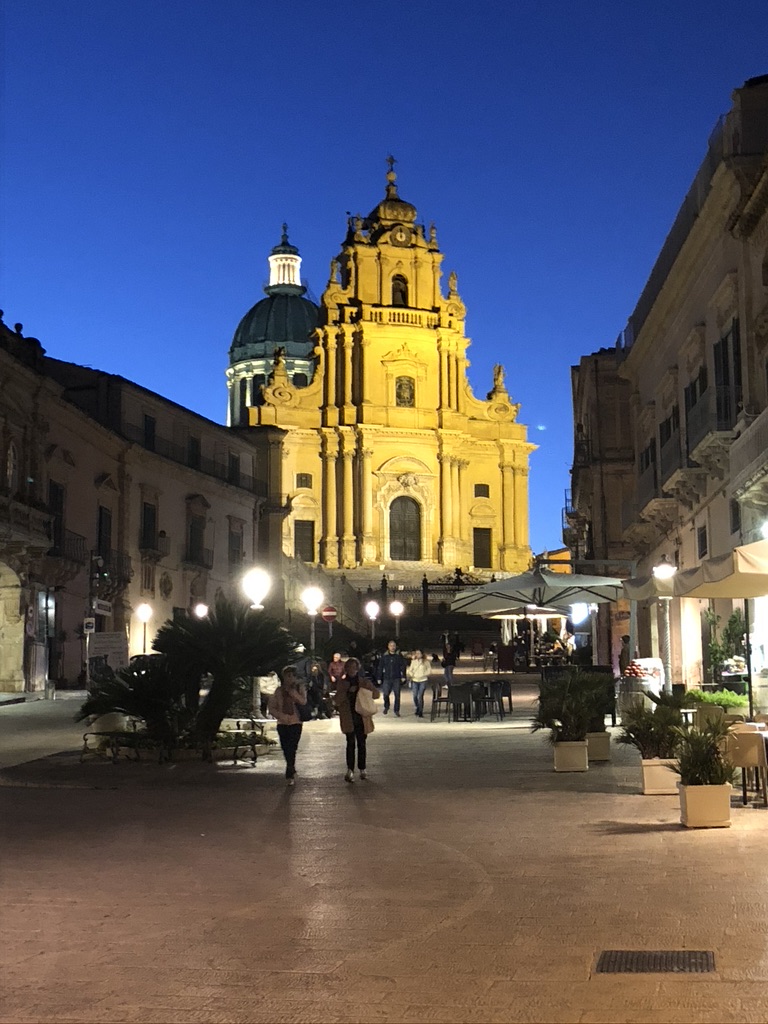
The cathedral dominates Ragusa Ibla’s main piazza
Ragusa’a old town from our B&B

Our final night would be spent in Naples, where we were happy to drop off the car at the airport before taking a thrilling taxi ride through the chaotic traffic-choked streets into the city center before being dropped off at our hotel. Fortunately, we were smack dab in the middle of the Decumani neighborhood, which featured a grid of pedestrian lanes (Italians consider themselves pedestrians even when they’re on their motorbikes) lined with restaurants, pizzerias, gelato stands, street food stalls and souvenir shops. It made for a nice way to spend our final evening. The next morning, after breakfast at our hotel, we were off to the airport for the flight home – via Istanbul, Chicago and a night in Denver, finally arriving back in Steamboat Springs some thirty-five hours later.
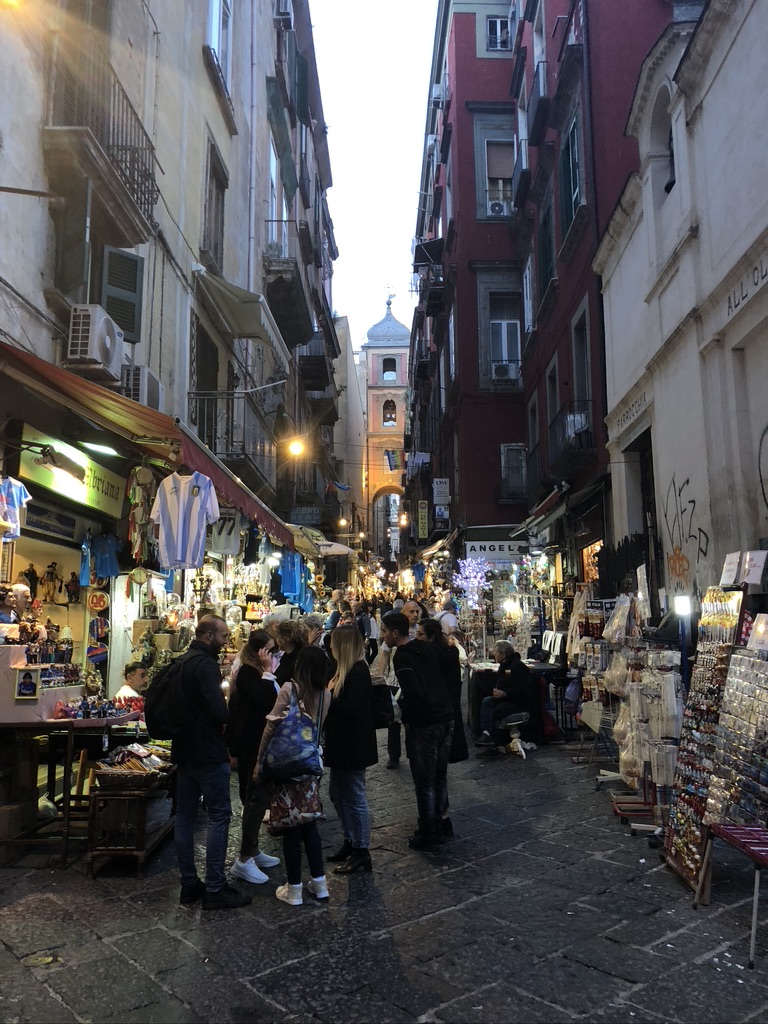
A bustling street in Naples Decumani neighborhood


Leave a comment

Europe ’22: Part 5 – Puglia

Olives.

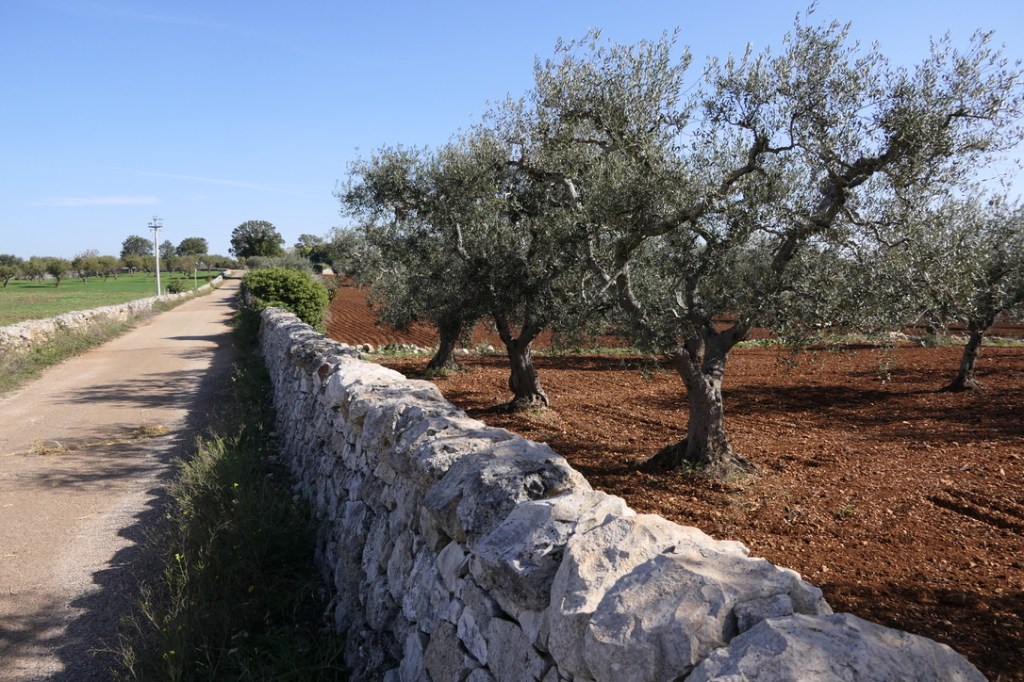
Everywhere you look as you travel through Puglia, in southern Italy, you’ll see olives – hanging on the trees that carpet the hillsides, littering the dusty country lanes, served alongside your glass of wine at a cafe and offered as first-press extra virgin oil at roadside stands. The region encompasses the ‘heel’ of the Italian boot – an agricultural region that produces the most grapes for winemaking of any Italian region as well as 40% of Italy’s olive oil (from over fifty million trees). After leaving the Amalfi coast, and it’s crowds, we were thrilled to be driving through rolling hills crisscrossed with limestone walls and small villages. We didn’t stop driving east until we hit the Adriatic Sea at the end of the Gargano Peninsula, in the north of the region. At the tip of the peninsula lies Vieste, a picturesque town atop limestone cliffs jutting out over the sea. The old town, or centro storico, is a maze of cobblestone streets, beautiful cream-colored block buildings, churches and small piazzas. We stayed just outside town at the Agriturismo Posta Pastorella, surrounded by vineyards and olive groves. The owners produce a line of wines and their own olive oil, and offer a handful of rooms, though we were the only, and the seasons last, guests. Fabio and his brother Tony were extremely gracious hosts, providing us a personalized tasting of their wines and oil and serving us breakfasts of fresh-baked croissants with homemade jam, fresh fruits, juices and cookies. Each morning we would rise and open our door to the expansive terrace to find breakfast laid out on a table, with Fabio appearing soon after to bring Heather a cappuccino. Following breakfast we spent our days walking through the farm or driving the coast road to visit the towns of Rodi Garganico and Peschici, with wide sandy beaches completely devoid of anyone, a stark contrast to the busy beaches back on the Amalfi coast. When asked for a restaurant recommendation for Vieste, Fabio didn’t hesitate to tell us to dine at Al Duomo, his favorite osteria. We found Al Duomo, as the name would suggest, in the shadow of the main church, along a narrow lane of whitewashed buildings in the center of the old town. At seven o’clock we found the front door open, yet the osteria wasn’t yet open – that wouldn’t happen until seven-thirty, but the hostess invited us in to sit and have a glass of wine while we waited for the rest of the staff to show up. At her suggestion we ordered glasses of spumante, which she served with a basket of taralli, a small baked bread knot, to help curb our appetites. For dinner we started with the charred octopus, followed by grilled lamb chops and baked sea bass and ended the meal with a dessert of rich chocolate mousse over pureed figs.

A typical scene in Puglia – olive trees, stone walls and country lanes

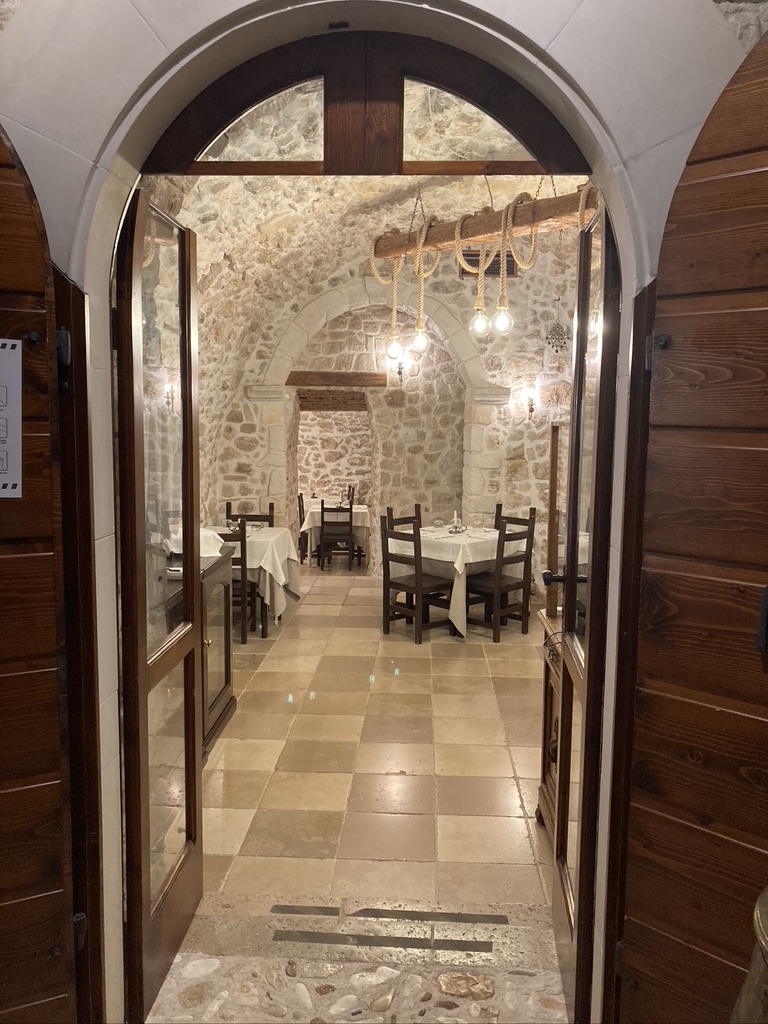
Looking into Osteria Al Duomo

Breakfast on the terrace at Agriturismo Posta Pastorella

A quiet lane in Vieste’s centro storico

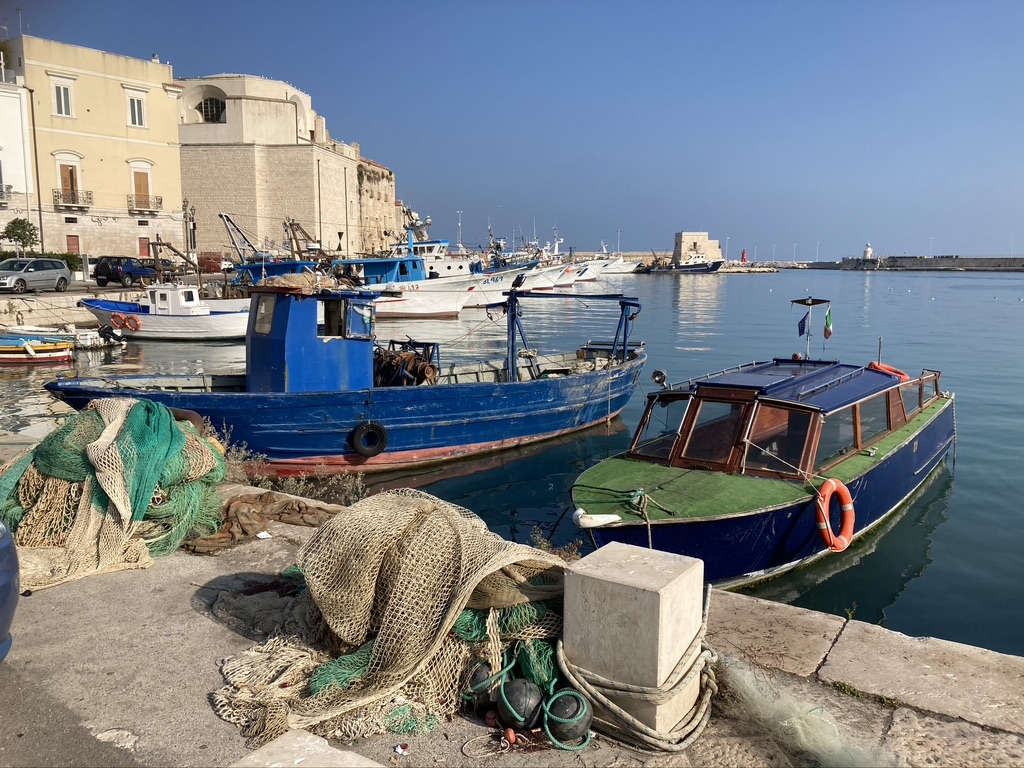
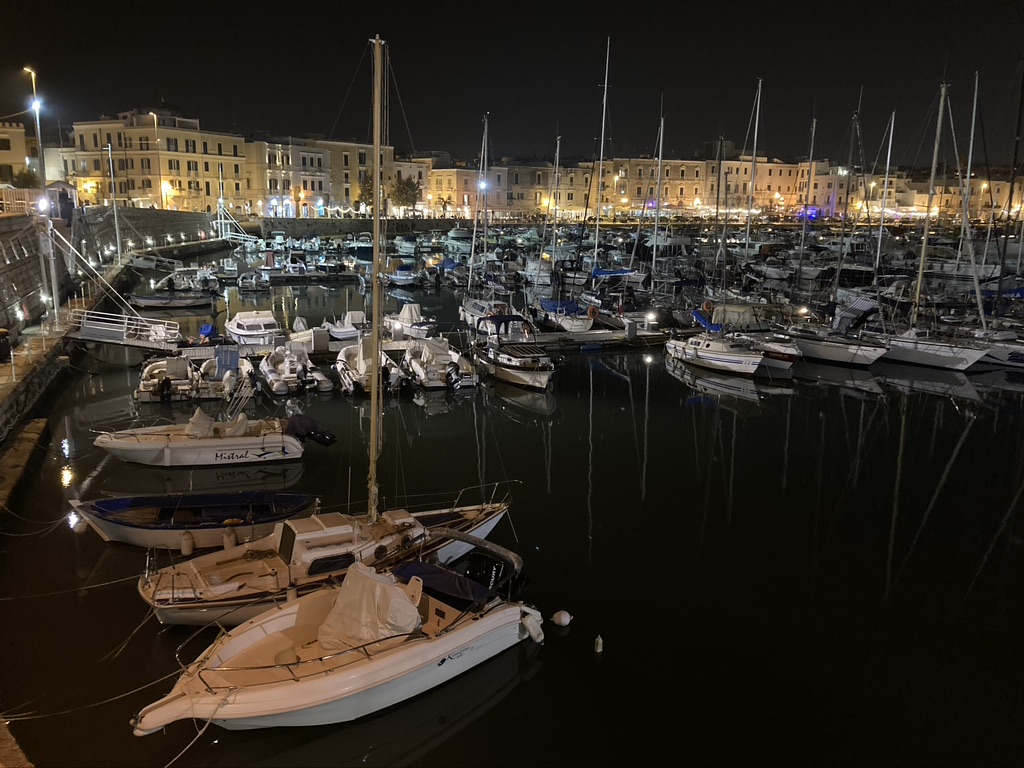
Our next stop was just down the coast – the seaside town of Trani. We were deceived at first, turning off the highway and making our way through the bustling ‘modern’ section of town, but when we entered the old town, and came upon the scenic harbor, full of colorful fishing boats, the streets paved with time-worn cobblestones, the tower of the Trani Cathedral looming over all, we were instantly charmed by this village. We parked the car and then wandered through the maze of lanes to find our accommodation, and after checking in went out to satisfy a craving for pizza. Fortunately, we had a clue – our host had given us the name of Al Covo delle Chiacchiere. We found it on a side street a block back from the harbor, and, as is our custom, were the first customers of the evening (still not used to that 7:30 opening time). Pizza is the only thing they do – Neapolitan-style pies baked in a very hot oven that turns out an airy, slightly charred crust topped with local ingredients and fresh cheeses. We barely had time to pour the red wine from the carafe before our pizza arrived. Later, strolling the waterfront, gelato in hand, we took in the sights of the town, made even more beautiful at night.

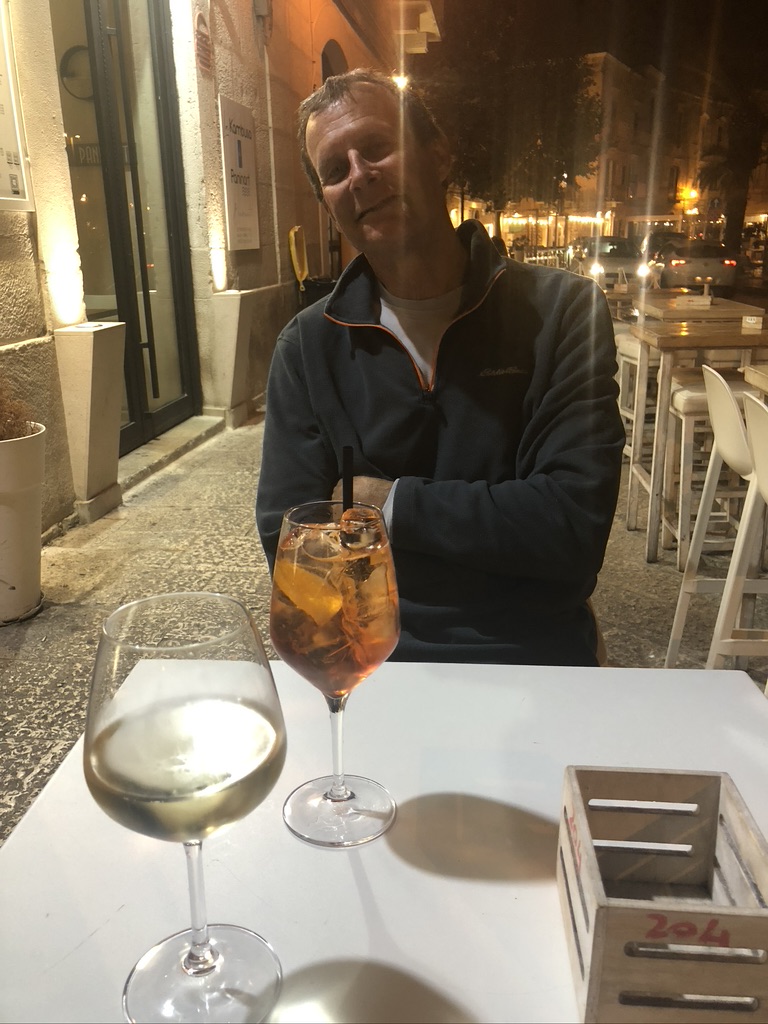
Yep, had to do it – my first Aperol Spritz, the classic Italian aperitivi cocktail (helped to kill time until the pizzeria opened)

The Trani waterfront by day . . .

. . . and at night

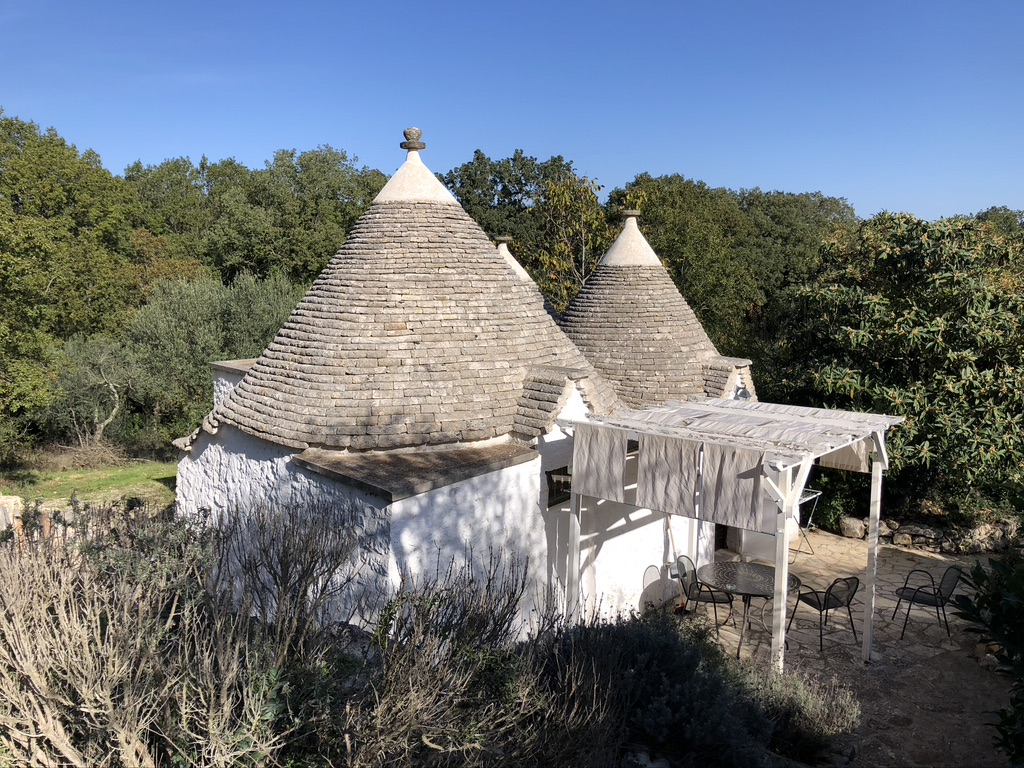
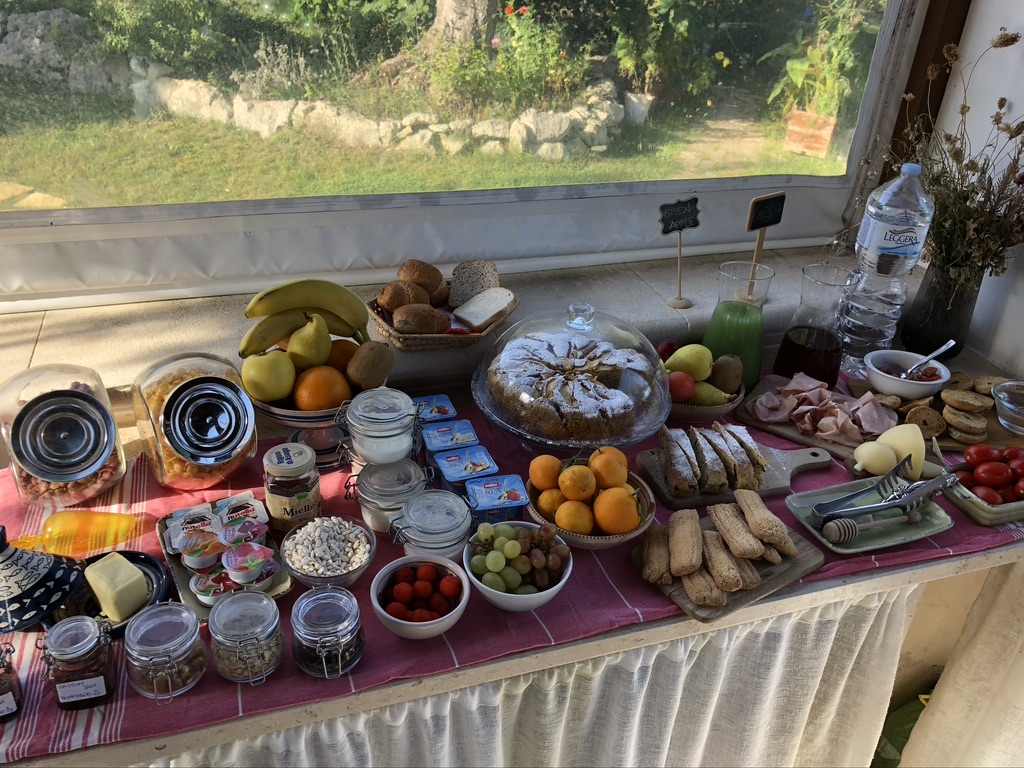
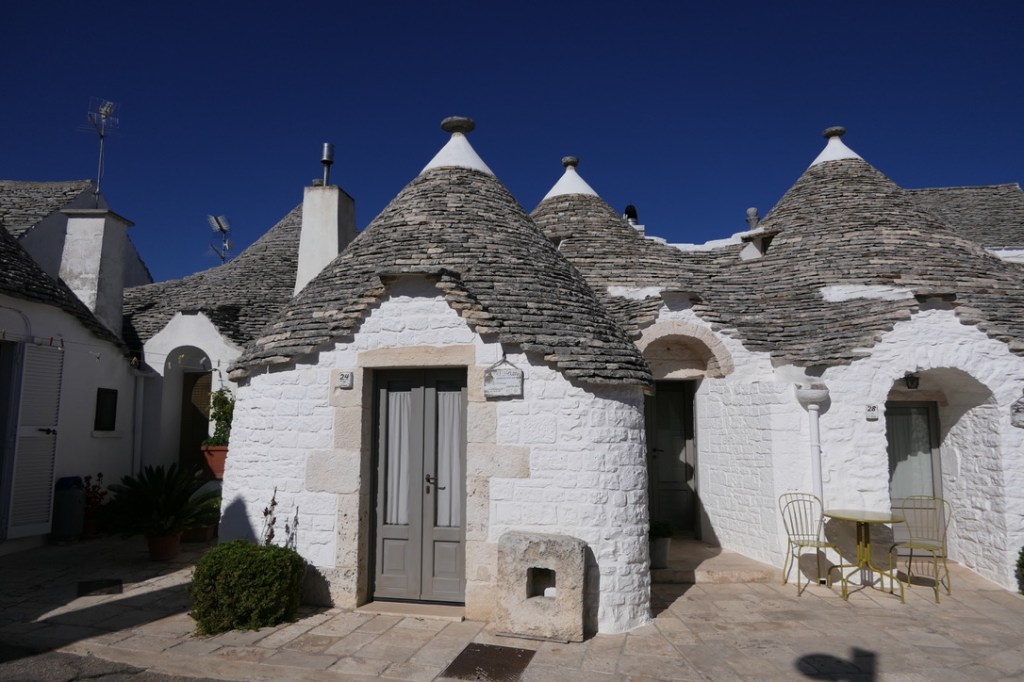
Moving further into Puglia our next stop was the UNESCO-listed town of Alberobello, renowned for it’s trulli – limestone buildings with conical stone roofs, which appeared in this part of the region beginning over a thousand years ago. While trulli can be found throughout the area, the largest concentration of them is in and around Alberobello. Many have been turned into guesthouses, which is where we elected to stay just outside town at Trulli del Bosco. Our host Guilia, in addition to providing all sorts of information on the area, also laid out a pretty impressive breakfast buffet each morning. To start our day we had our fill of homemade yogurt, fresh fruits, local meats and cheeses and a different fresh-baked torte each morning. After tearing ourselves away from breakfast, we spent our days exploring town, walking the countryside or driving to one of the neighboring villages for a wander and lunch.

Our trullo (singular) room outside Alberobello
Giulia’a sumptuous breakfast buffet

Trulli in town
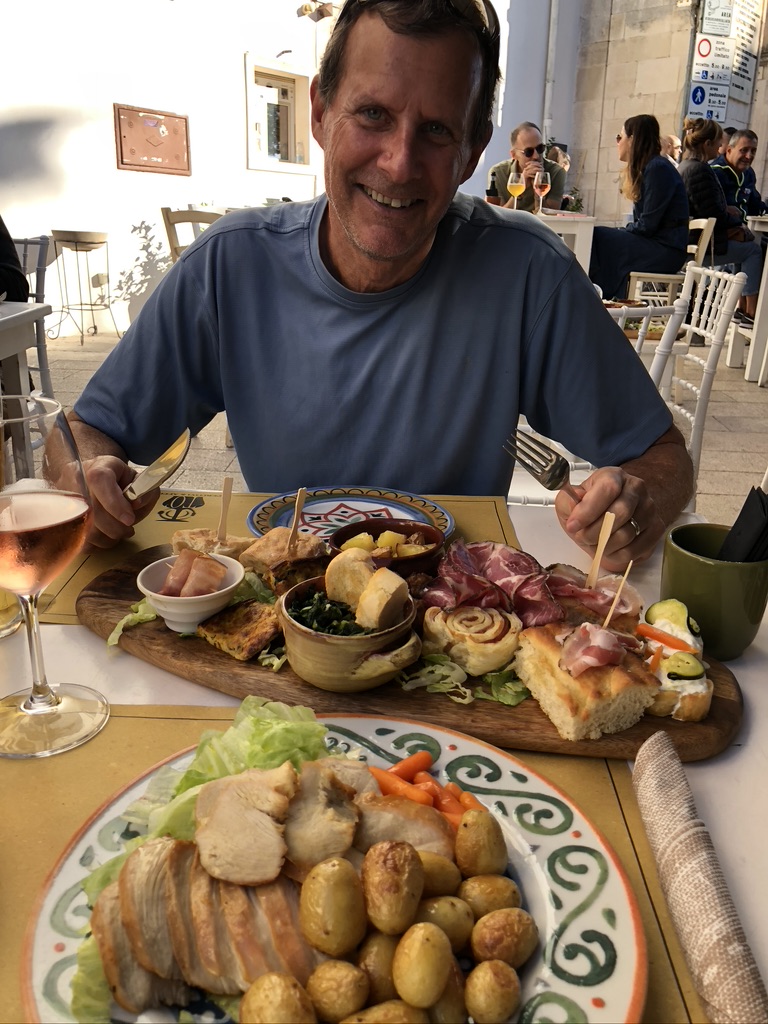
Digging into lunch in Locorotondo, a small village near Alberobello. Heather has the sensible meal while I opted for the antipasti platter for 2.

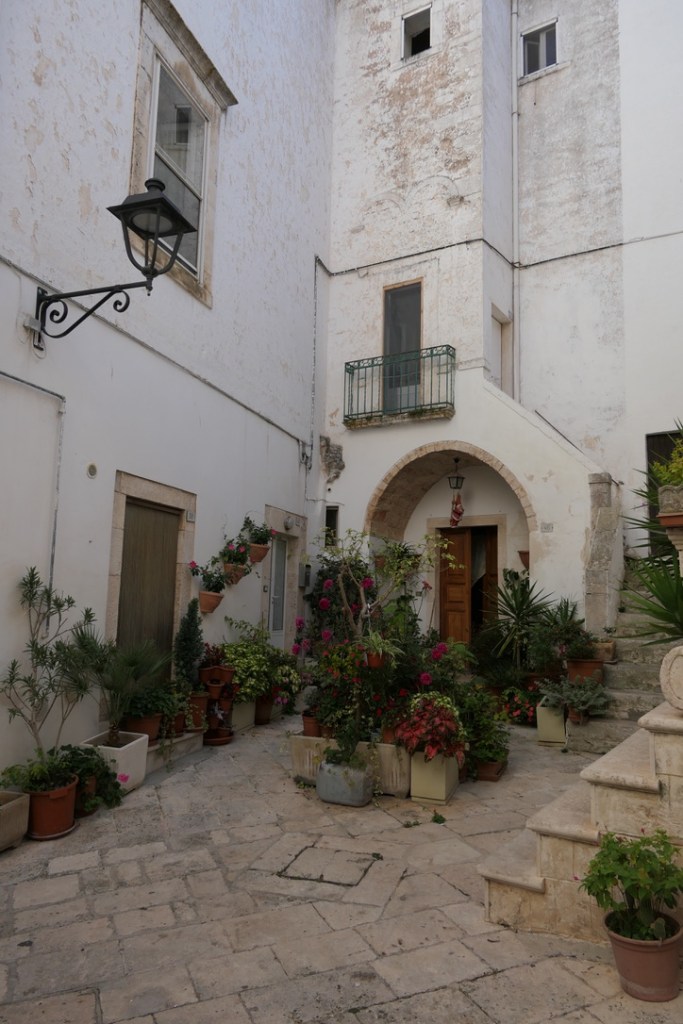
A quiet courtyard on a side street in Locorotondo

Finishing up our tour of Puglia we’ll head west with stops in the regions of Basilicata and Calabria as we make our way to Sicily for the final week of our trip. That’s in the next Rhumline.


Leave a comment

Europe ’22: Part 4 – The Amalfi Coast

The mountainsides are even steeper than I imagined. The roads are even more twisted than I had read about (and the Italians are even worse drivers than I feared). The crowds were more overwhelming than I expected (even in late-October!). The prices for mediocre food are – pun intended – hard to swallow.

We don’t like the Amalfi coast. There, I’ve said it. Per favore, don’t hate us.

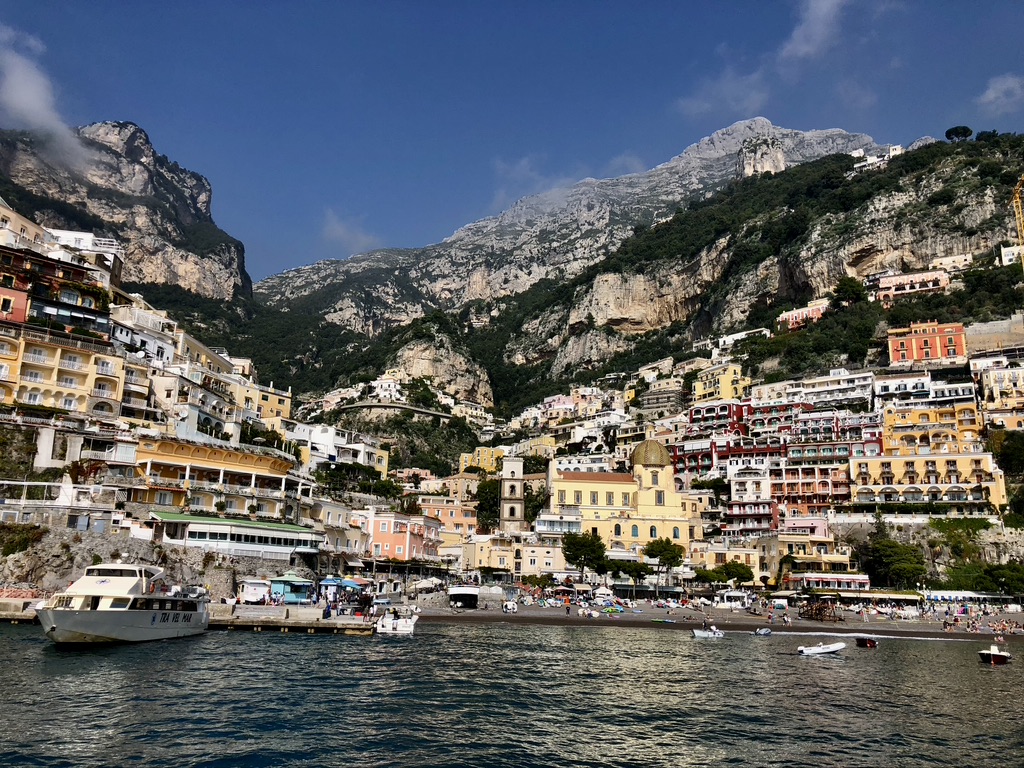
Positano from the ferry – yes, it’s pretty

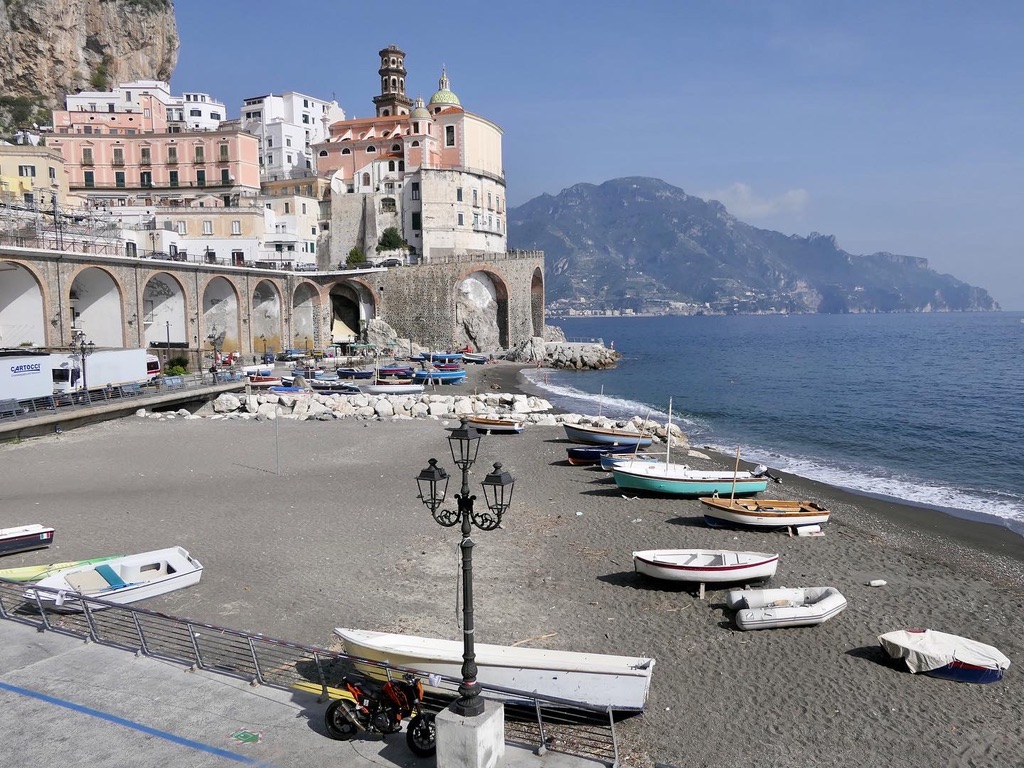
The beach at Atrani, just outside Amalfi – also pretty

But . . . we still had one fantastic day that I’d like to tell you about.

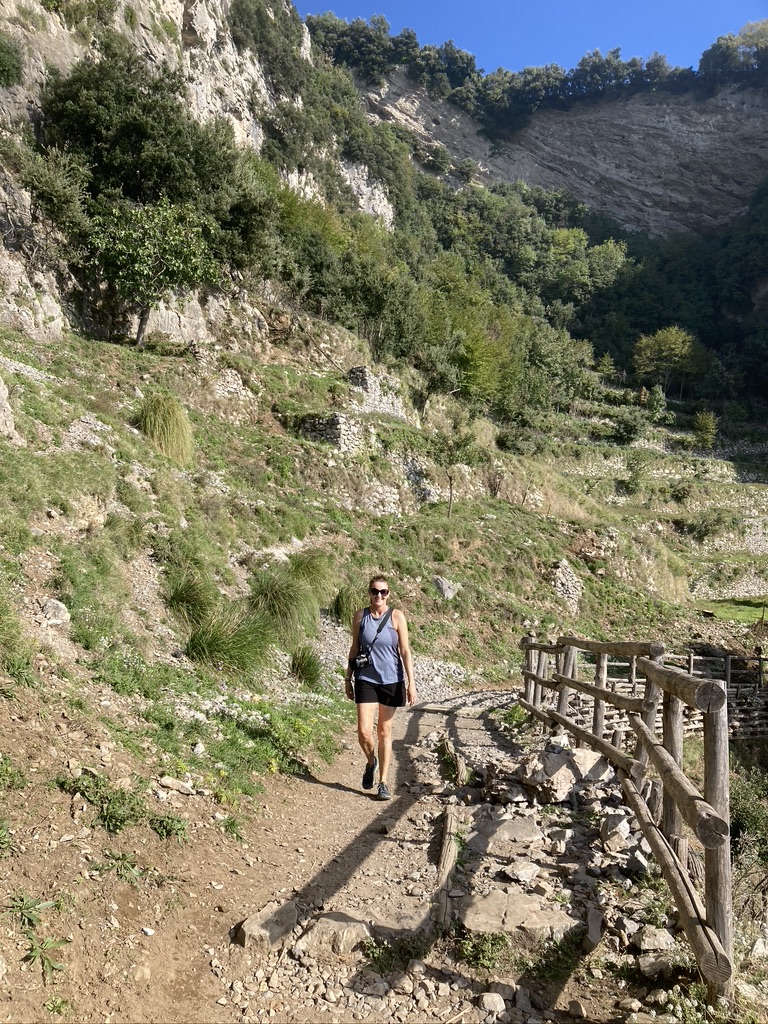
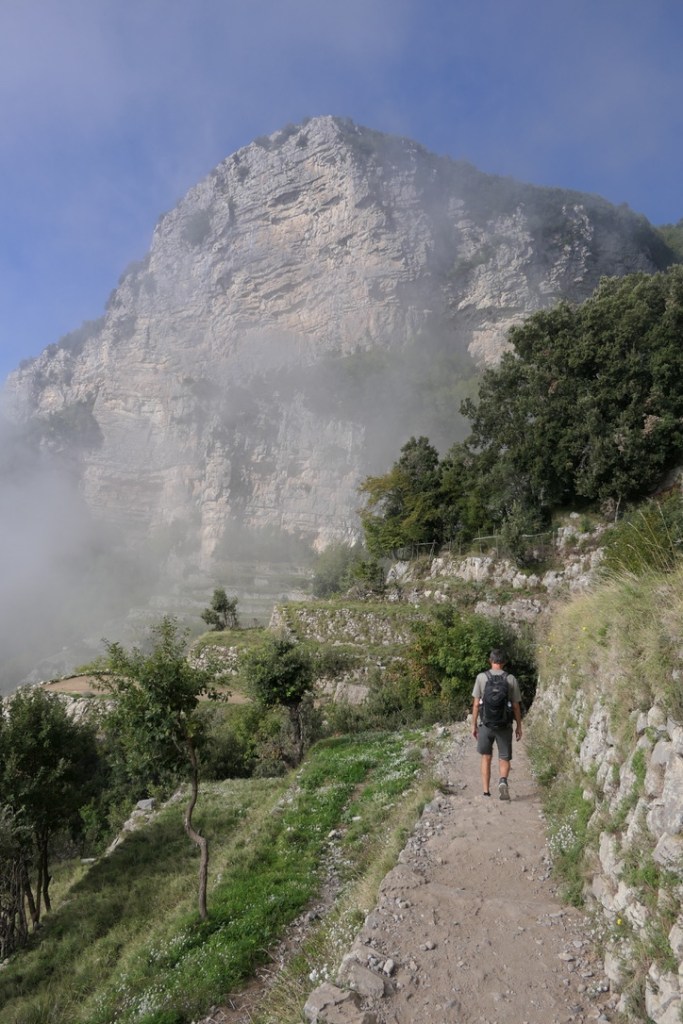
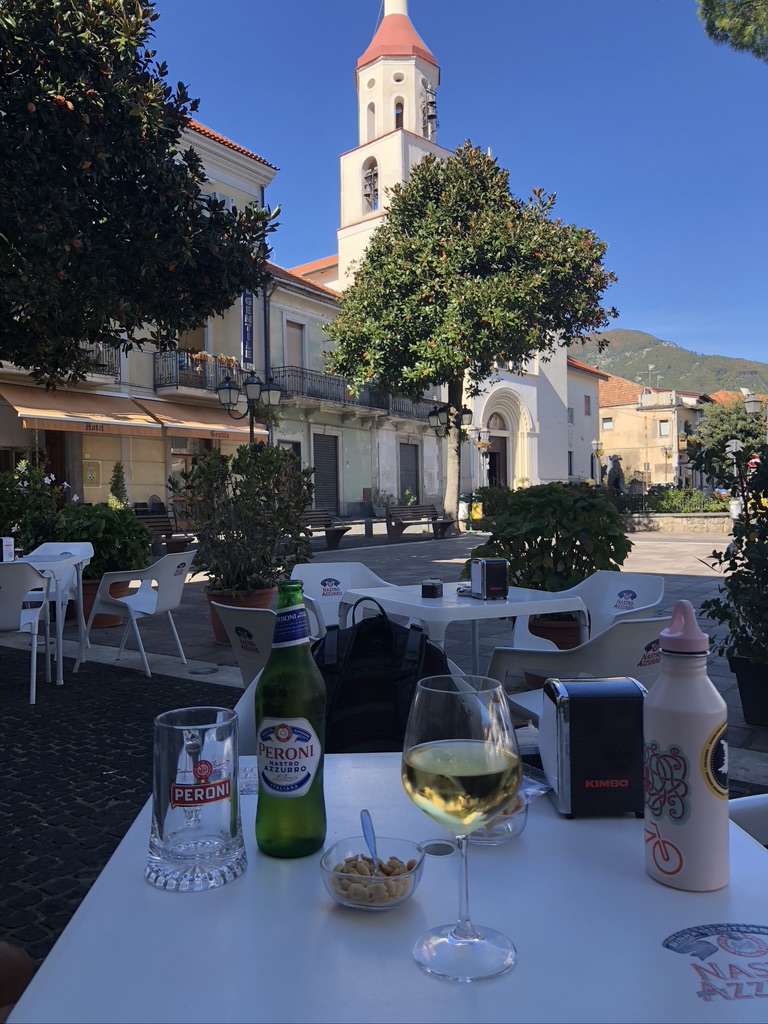
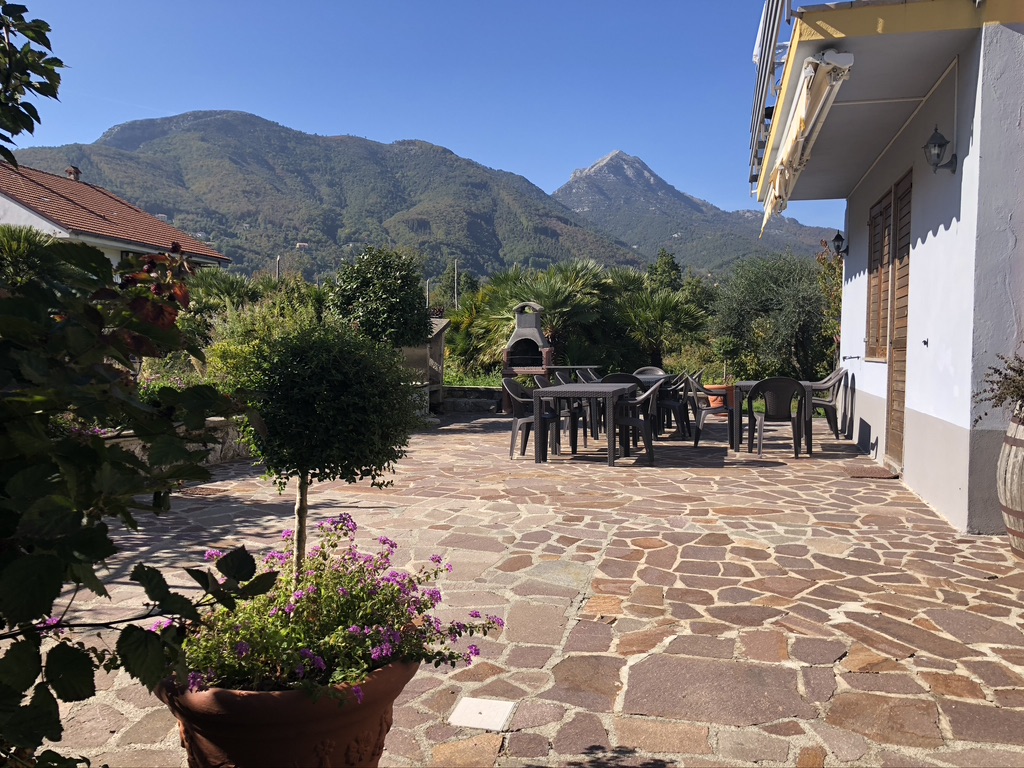
We chose to stay in the small village of Bomerano, in the Agerola valley, high above the busy coast. On a beautiful Monday morning, the sun was already warming the terrace outside Villa Elisa, the family farmhouse turned guesthouse run by two sisters, Cristina and Antonella. We woke to the gobbling of turkeys and mooing of the cows from the neighbors barnyard before joining the family cat, who was already lazing in the brilliant sunshine, out on the terrace where we were served breakfast. Sharp mountain peaks lined the horizon to the north. The guesthouse is surrounded by grape vines, flowers and trees bearing olives and persimmons. The Agerola has a rural, alpine feel, far removed from the hustle and bustle of Amalfi and Positano, a thirty minute drive away and a drop of two-thousand feet in elevation. Our plan for the day was simple – stay away from the crowds down on the coast by walking the Sentiero Degli Dei, the Path of the Gods, which starts right in the center of tiny Bomerano and follows the mountainsides past terraces of grape vines, goat herders huts, cliff-hugging monasteries and the ruins of ancient chapels, eventually ending in the village of Nocelle, just above Positano. We strolled into the Piazza Paolo Capasso to find Salumeria Manna, where we purchased fresh-made sandwiches from the gracious proprietor as well as a few pieces of fruit for a picnic lunch to have somewhere along the trail. At 10:30 we were on the path, following a cobblestone lane out of town, crossing a wooden footbridge and climbing a set of stairs to meet the trail which climbed up to give us our first views of the sea, before descending to a dirt path we would follow for the next hour and a half. It was slow going – not because the trail was particularly arduous, but because we couldn’t help but stop every couple minutes to take in the views and snap photos of the breathtaking scenery. Morning mist was still wafting up from the sea below cloaking the mountainsides. At times we could hear the tinkling of the bells worn around the necks of the goats grazing nearby. As we neared the end of the trail Positano came into view as we wound around another cliff face. At this point most walkers continue on, descending to Positano, but determined as we were to avoid the crowds there, we elected to turn around and retrace our steps back to Bomerano. On the way back we found a shady spot just off the trail with a view down to Praiano, another of the coastal towns below. By one o’clock we were back on the piazza, sweaty and gratified to have found a piece of paradise high above the Amalfi coast. We settled in at a cafe table overlooking the piazza for a celebratory beer and to watch a few other hikers as they came off the trail. An amazing morning indeed. But the perfect day wasn’t over.

On the Sentiero Degli Dei

Morning mists high over the Amalfi coast

Enjoying the reward after returning to Bomerano

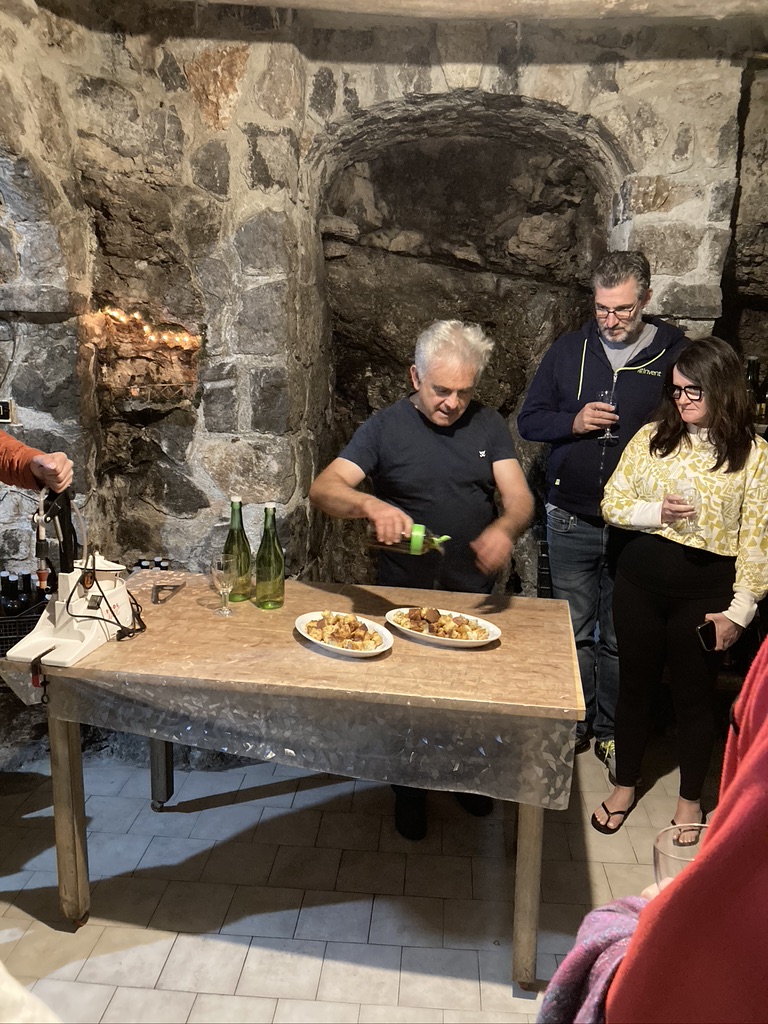
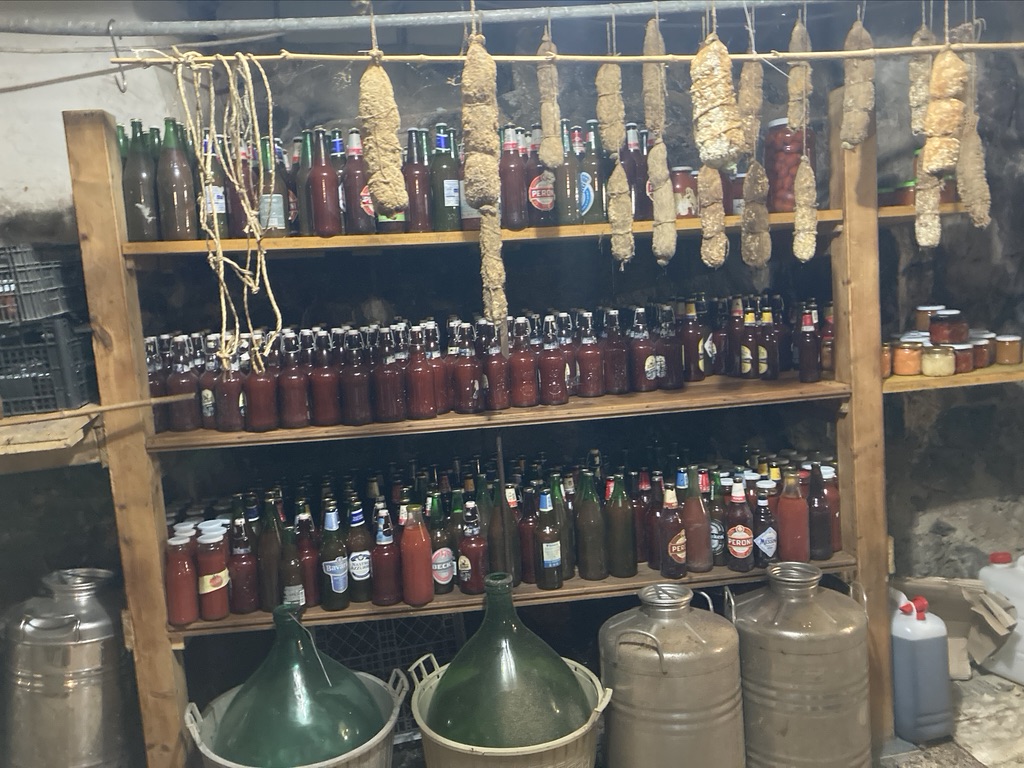
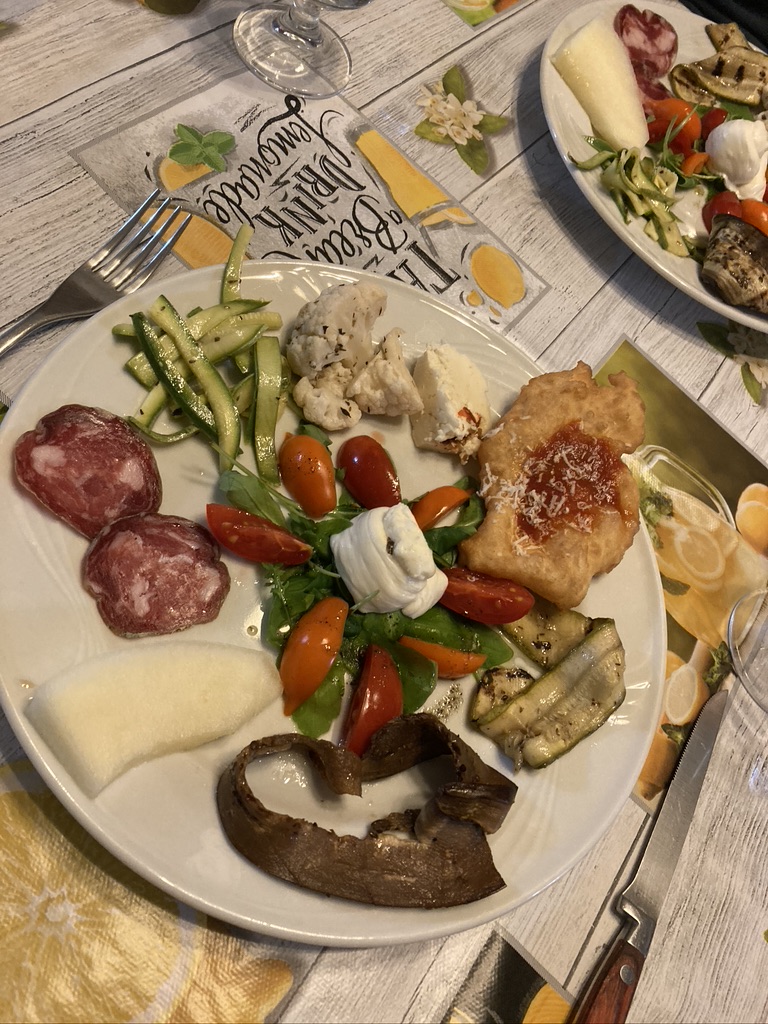
San Lazzaro is another of the small villages in the Agerola, just a couple miles from Bomerano. On the outskirts of the village sits La Vigna Degli Dei, a bed and breakfast/restaurant/farm/winery run by Pasquale and Rosanna. We had heard that they offered a pretty special experience and were keen to try them out for dinner. We drove over around five o’clock and found Pasquale working outside the restaurant. He confirmed they were open for dinner and we should come back around seven o’clock. In the meantime we could explore San Lazzaro and take in the views down to Amalfi. At seven we returned to find one table in the small restaurant – with eighteen places set. Pasquale explained that he and Rosanna were hosting a tour group that evening and we would be joining sixteen strangers at their table. When we raised an objection to intruding on their party, Pasquale insisted that we stay (“English-speaking group. You will enjoy yourselves – I promise!”) The group arrived shortly thereafter and he was right – they welcomed us warmly to their table. While Rosanna bustled around in the kitchen preparing the four courses we would be served (no menus – you eat what they’re cooking that night), Pasquale ushered us downstairs into the stone cellar where the winemaking operation was housed to explain his methods (he produces about 2,500 bottles a year – all for consumption in the restaurant), his family history (he’s the third generation winemaker) and the hard work that goes into managing a farm (everything on the plates we would be served later comes from the property). After tasting the wines (one white and one red – it’s a simple operation) we returned to the table for dinner. The antipasti plate, our first course, contained grilled eggplant slices, pickled cauliflower, julienned raw zucchini dressed with olive oil, slices of salumi (which we had seen curing in the wine cellar), melon, fried pizza dough, cherry tomatoes and two cheeses – a fresh mozzarella and a spiced goat cheese. When those plates were cleared, they were replaced by the pasta course – house-made fusilli tossed with a fresh tomato and eggplant sauce, topped with grated parmigiano. Our main course was a ground pork and beef rollatine baked in a bread ring with a side of bibb lettuce salad. To finish we were presented with individual ramekins of tiramisu as well as Pasquale’s homemade limoncello. It was truly a memorable evening, made more special by enjoying it with new friends and being embraced by the warmth and hospitality of Rosanna and Pasquale. Before we left we were able to wrangle a couple bottles of the house wine to take back to Bomerano to be enjoyed on the terrace at Villa Elisa over the next couple days.

Pasquale pours the fruit of his labors in the wine cellar

Curing salumi and canned tomatoes (in recycled bottles) ready for the sauce

Farm to table – the antipasti plate

My favorite view from the Amalfi coast – the mountains around Bomerano from the terrace at Villa Elisa

After four days on the coast we would be heading right across the country to the region of Puglia, along the Adriatic Sea for a week of walled medieval towns, vineyards and far too much Puglian cuisine – in the next Rhumline post.