While I had fallen for the Algarve during our seven-day visit, it would be the Alentejo that won Heather’s heart. The region that sits just above the Algarve and covers the south up to the capital city of Lisbon is a jewel. The region is described as “Portugal the way it used to be “. The country’s largest region and agricultural heartland, its rolling hills are covered with cork trees, vineyards and olive groves (all of the olive oil, and most of the wine we found in restaurants so far was from the Alentejo). In spring the countryside is covered with wildflowers of all colors. Our drive from Lagos to the seaside town of Vila Nova de Milfontes took us from the southern coastline through the hill country, past lush pastures of horses, cattle, goats and sheep, to the rugged cliffs of the west coast, where isolated rocky coves bore the brunt of the Atlantic ocean. At a stop at Praia da Arrifana we watched a horde of surfers brave the chilly waters, staring down from the cliffs high above the beach; at Praia de Monte Clerigo a couple fisherman cast lines into the breaking waves along an otherwise deserted beach; above a cove outside Zambujeira do Mar, we stopped for lunch at O Sacas, a ramshackle restaurant at the end of a potholed road. The place was doing a brisk business as it sat astride the Fisherman’s Trail, one of Portugal’s long distance walking trails, a section of which we would walk the following day. We ordered a couple of seafood dishes specific to the region: fried cod finished with onions and served with the perfect fried potato chips, and a sea bass stew in tomato sauce with prawns and clams. While the grilled fish in the Algarve had been wonderful, this, to date, had been my favorite meal of all. To complete the meal we took our servers suggestion to try the house specialty dessert – a custard pie doused with a liberal sprinkling of cinnamon, drizzled with honey and topped with a preserved white plum, a specialty of the region. With regret, we dragged ourselves back to the car to complete the trip to Vila Nova de Milfontes, where we would stay for two nights.
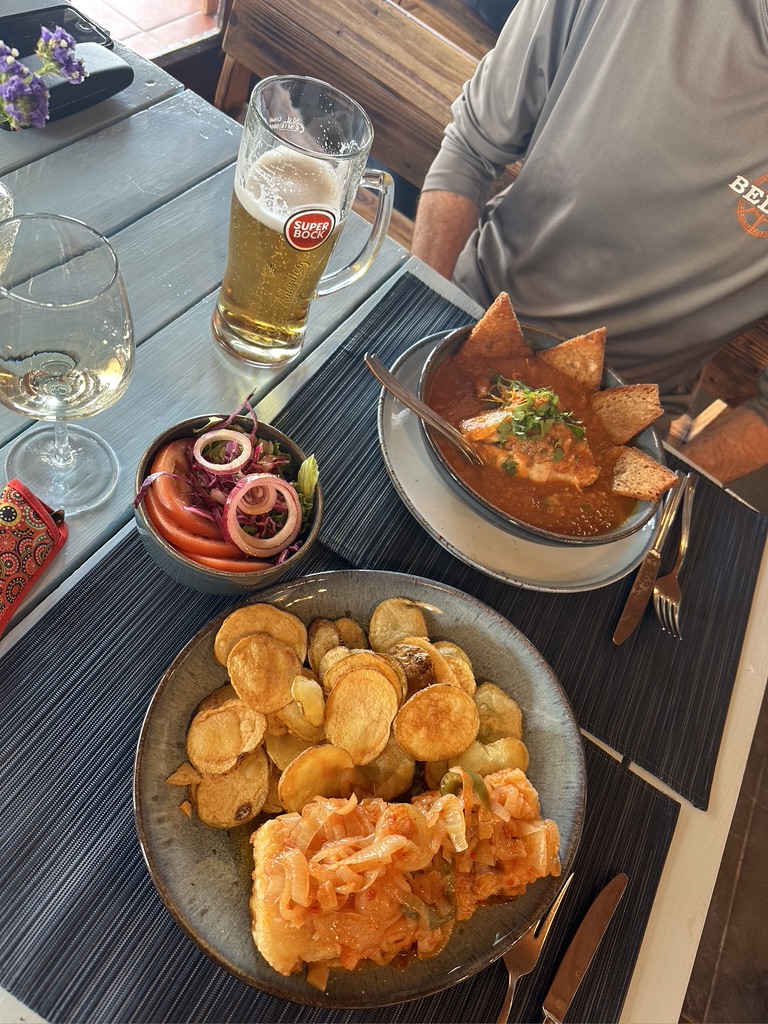
An unforgettable meal – cod and sea bass stew
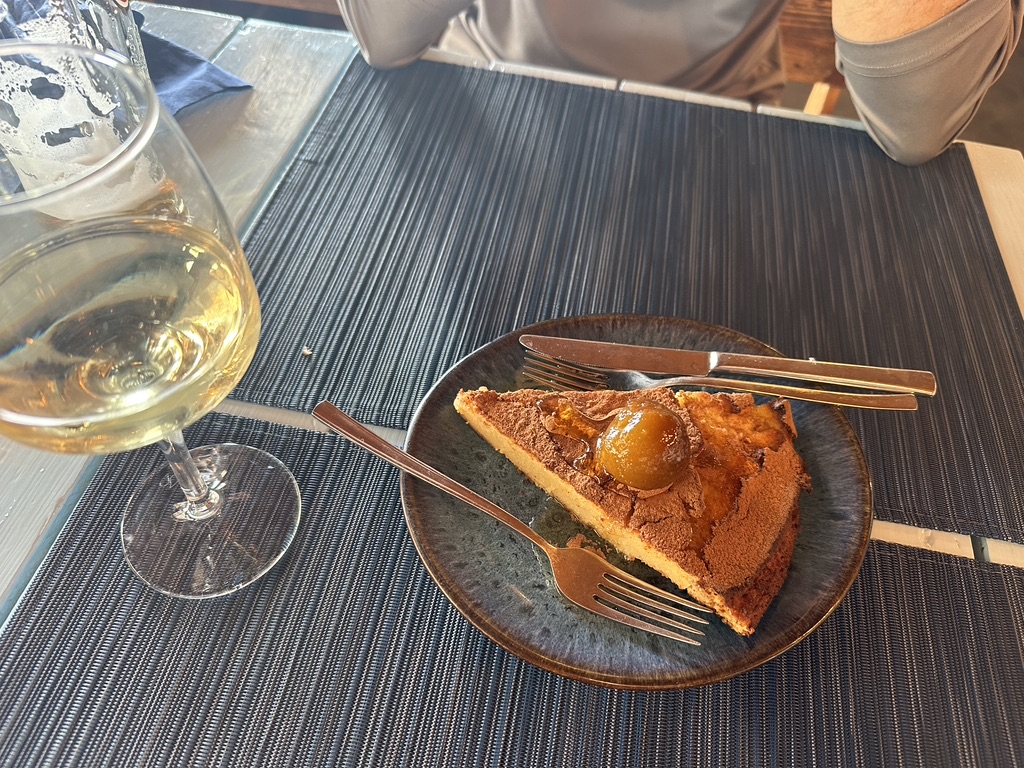
An unforgettable dessert
The section of the Fisherman’s Trail north from Vila Nova de Milfontes runs twelve miles to Porto Covo along flower-strewn cliffs. Our plan was to walk about halfway, then retrace our steps back to town. We couldn’t have asked for better walking weather: 65, sunny skies and a fresh breeze. After breakfast in our hotel room we set out for the walk, leaving town along a country lane bordered by wildflowers and passing through large grassy fields. We strode past a small cove with a handful of fishing boats bobbing at their moorings and hit the sandy trail that would follow the cliffs for the remainder of the walk. With the ocean to our left, we marveled at the profusion of blooms that colored the low-lying vegetation covering the clifftops. Red poppies; yellow, white and red sour figs; pale purple asters and a host of tiny white, yellow and blue flowers kept making us stop to take photos. At our turn-around point we plopped down just off the trail to rest, eat our packed lunch, and marvel at the views along the coast and out to sea. During the return walk we had to stop several times to empty the sand out of our shoes, but continued to marvel at the riot of colors along the cliff top. When we returned to town we headed down to a restaurant overlooking the river to dine on steamed clams and a platter of pork strips sauteed in olive oil and garlic.

There were so many beautiful views from the Fisherman’s Trail . . .
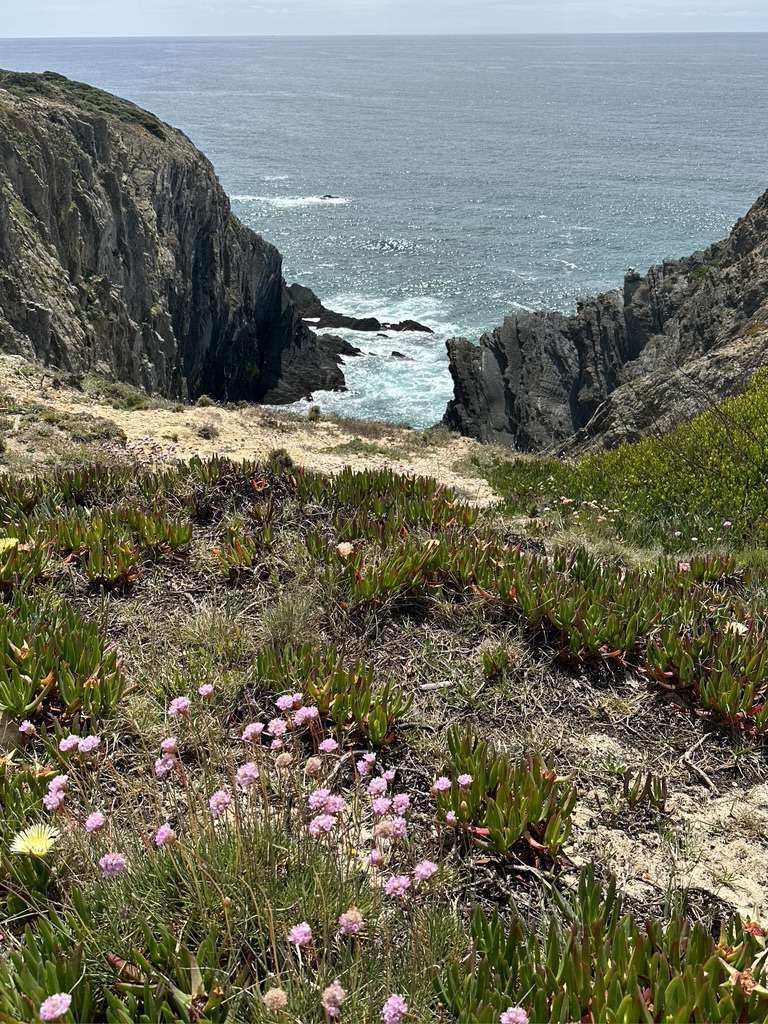
Wildflowers frame the view
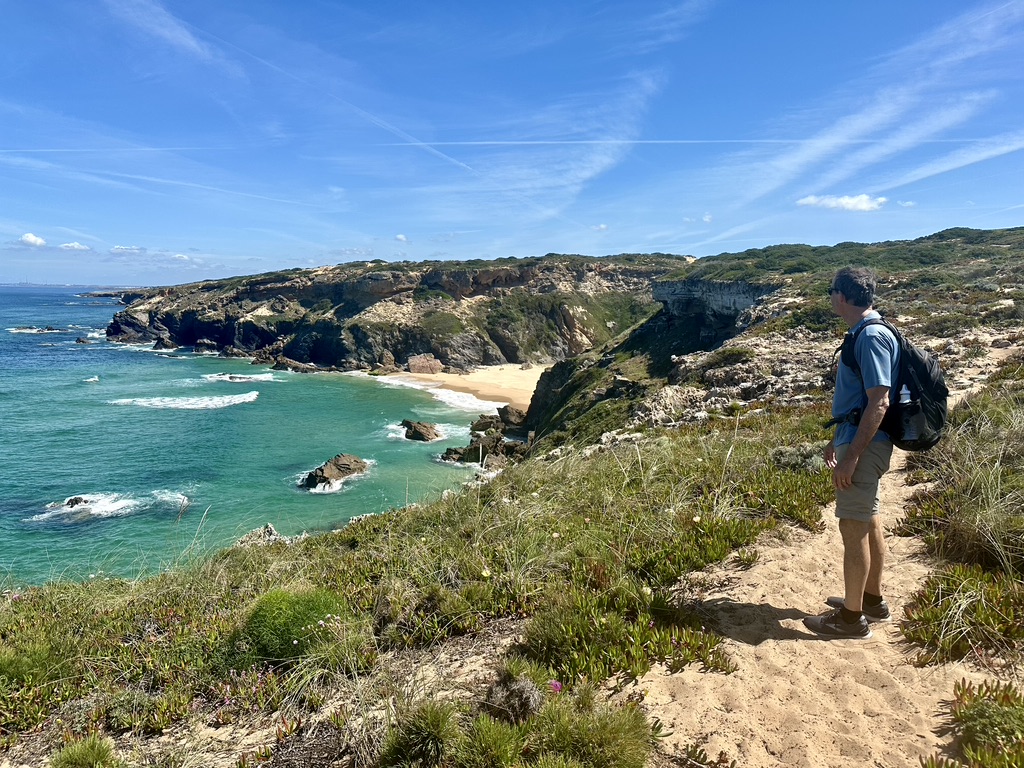
From the Fisherman’s Trail

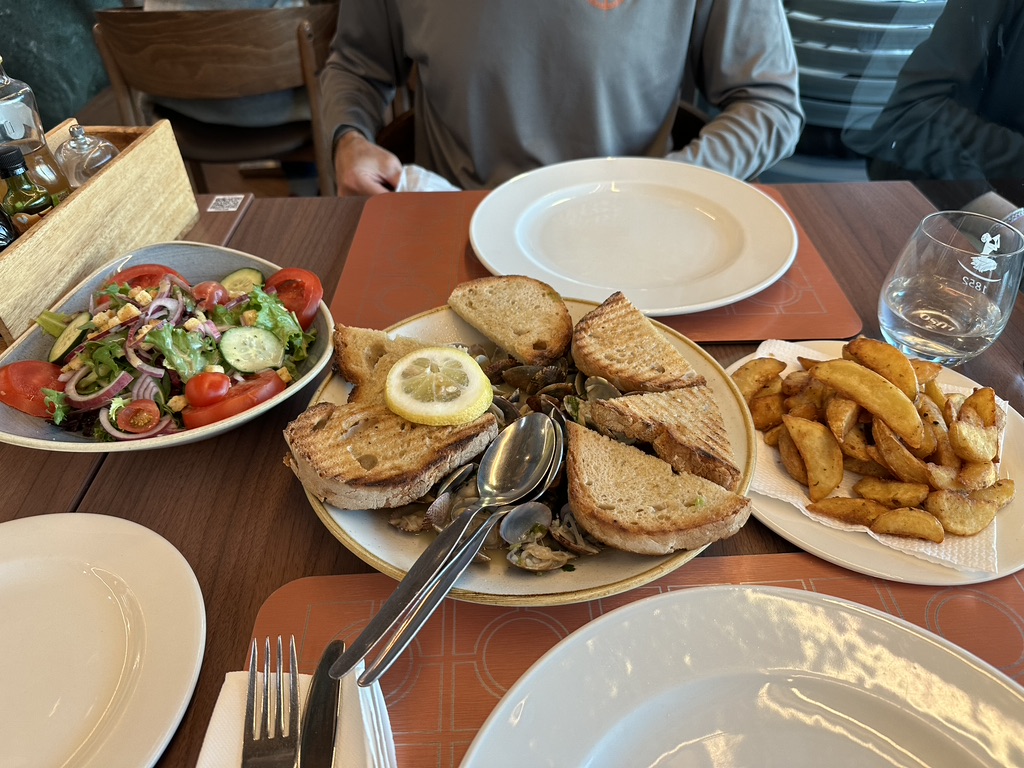
Clams, bread, wine, river view . . .
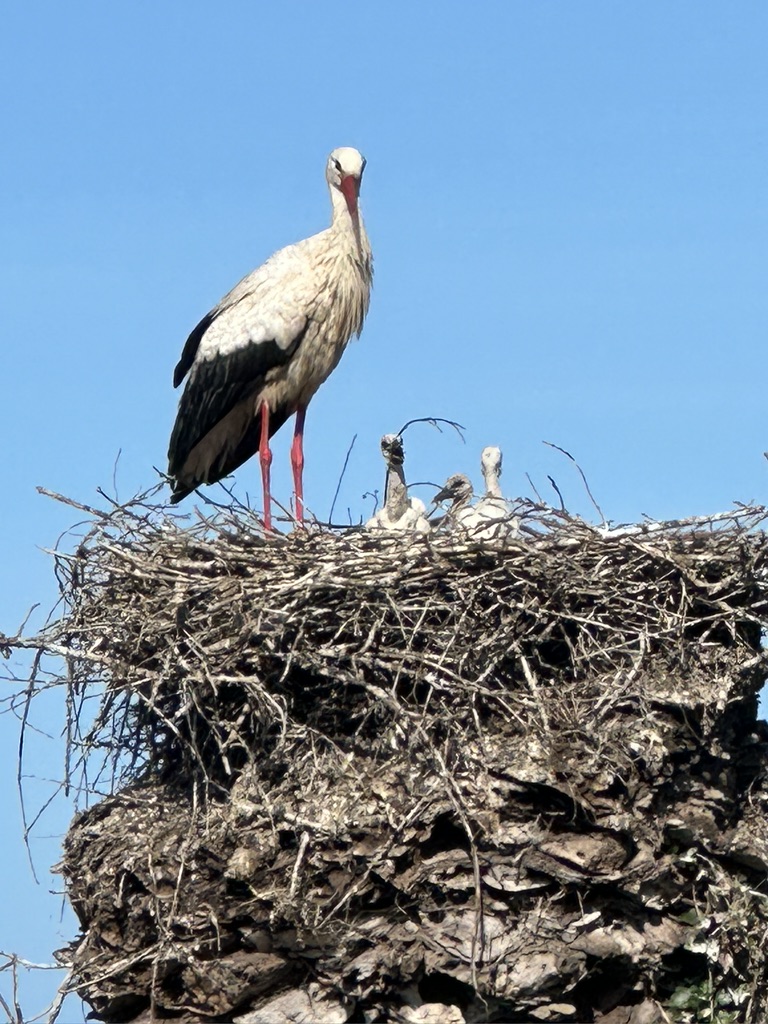
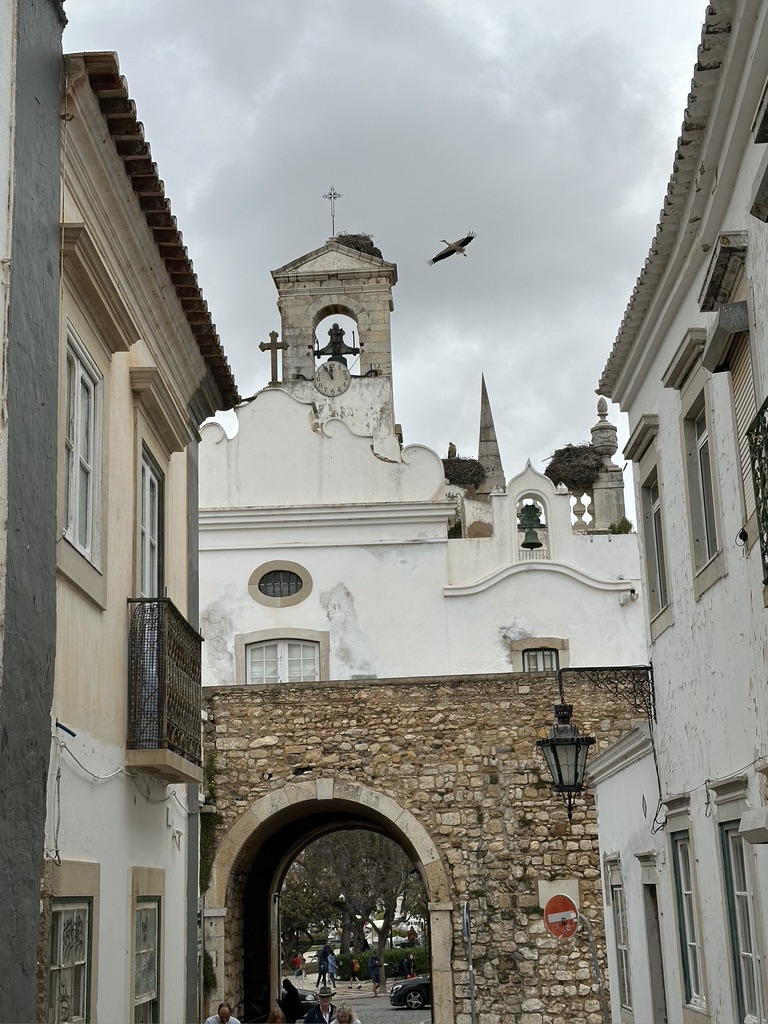
A bonus was the stork’s nest right outside our room in Vila Nova de MIlfontes
Moving on from Vila Nova we headed once again north, curving inland to avoid Lisbon, and headed for the town of Obidos. It’s described as a ‘quaint medieval walled town’ and that it is. It is also one of the most-visited ‘quaint towns’ in all of Portugal. As we drove up to the town the parking area devoted to tour buses should have been a give-away. Obidos is a small town, with Rua Direita traversing it’s entirety, lined with restaurants, souvenir shops offering shots of ginja – an overly sweet cherry liquor for which the town is famous – and flower-bedecked side streets. It’s all a bit much when the narrow cobblestone street is choked with tourists who have just disgorged from one of the many buses, but step off the main lane and find a restaurant on a side street and you can actually enjoy drinks and a meal at a reasonable price. The highlight of our two-night stay would be our accommodation: Casa d’Obidos, a former manor house surrounded by gardens (and a tennis court and swimming pool) with stunning views of the Obidos castle and town walls and offering one hell of a breakfast spread. I won’t bore you with all the offerings spread out on the breakfast table each morning; suffice it to say we left stuffed afterwards (from pastries, breads, fruits, cakes, eggs, meats, cheeses, homemade jams, fresh-squeezed juice, yogurt and coffee – there, I said it anyway). On our full day in the area we drove westward to the Obidos Lagoon (Europe’s largest saltwater lagoon) to gawk at the birdlife and walk a portion of the trail around it’s perimeter. After returning for another afternoon braving the tourist crowds in town we returned to the manor house to sip wine, watch the sunset over the castle and count the hours until breakfast would be served.

The Obidos castle and walls from our accommodation at Casa d’Obidos

The manor house

Obidos is listed as a “city of literature” – the tiny town has 14 bookstores, some doing double duty . . .
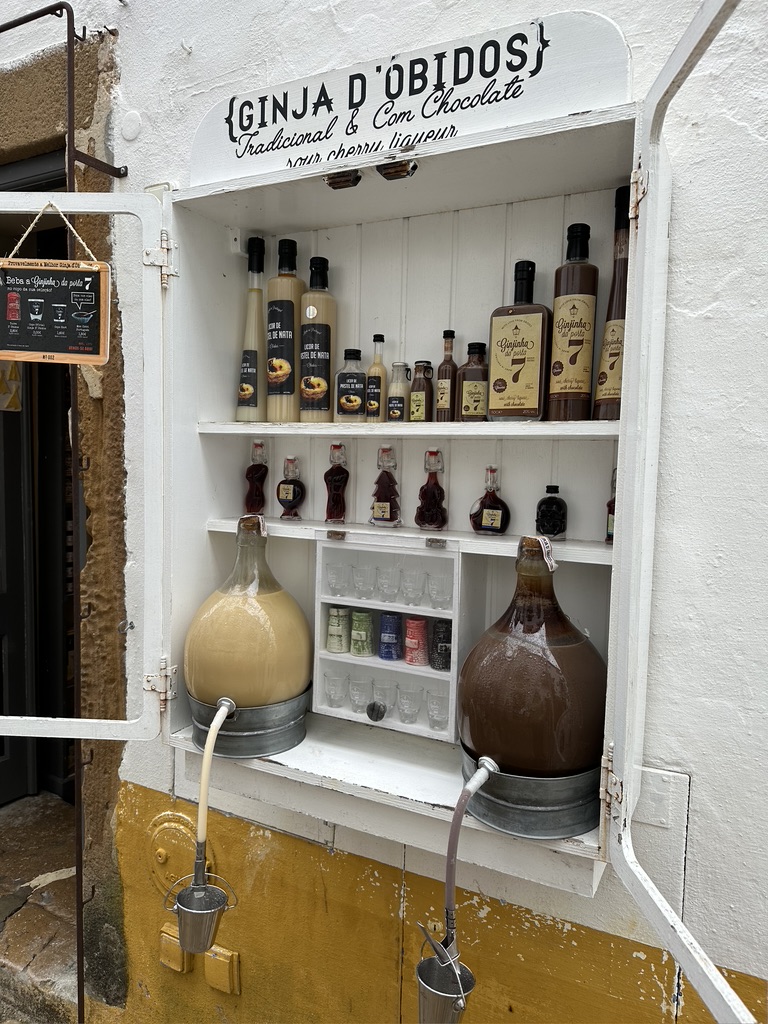
You don’t even need to break your stride to sample some local ginja.
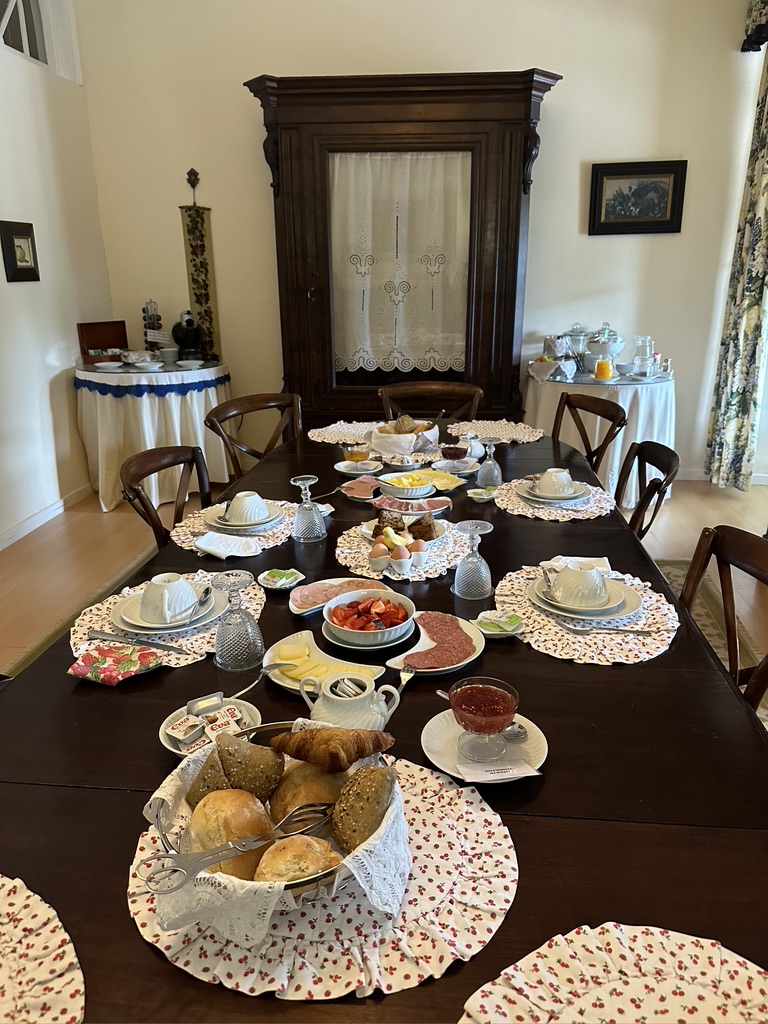
The breakfast spread – for just the two of us – at Casa d’Obidos.
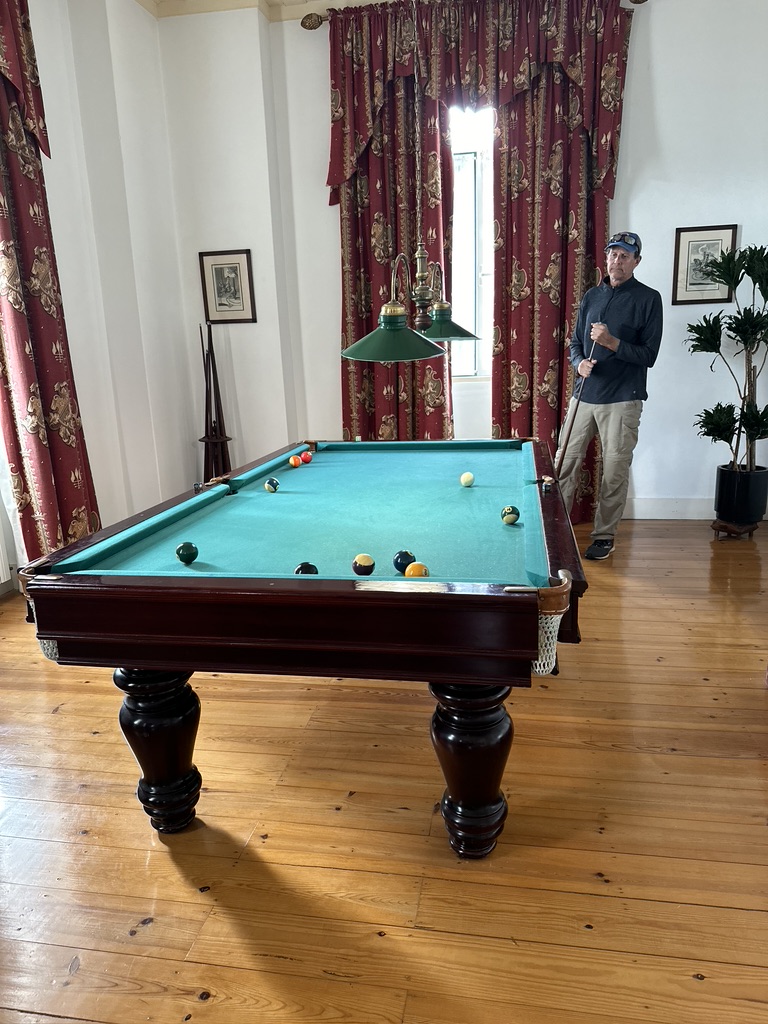
Did I mention the billiard parlor at Casa d’Obidos? Or the complimentary port wine?
From Obidos we would drive northeast to reach the Douro Valley, Portugals most famous wine region. I thought this area would fit nicely into this post, but I hadn’t a clue as to how the Douro would blow me away – and our four-day visit would deserve a post of it’s own.

 The Rhum Line