The name evokes thoughts of an exotic, far-flung destination, much like Kathmandu or Zanzibar or Borneo. Home to one of the worlds most famous national parks – Torres del Paine – and some of the globes worst weather, Patagonia beckons the hard-core traveler looking for out of the way adventures.
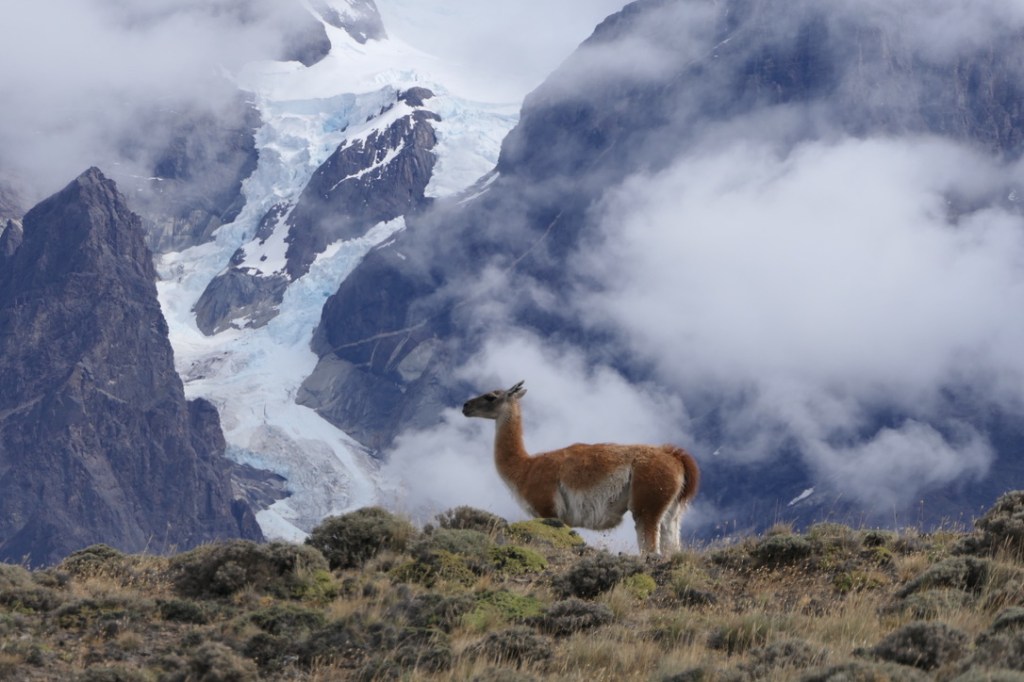
Our guide, Roberto, couldn’t be blamed for the lack of pumas. He promptly picked us up at 4:30am for our Puma Spotting Tour we had booked for our first day in Patagonia. Given the early hour of the day, he was remarkably enthusiastic about our upcoming adventure. Before we had even entered Torres del Paine National Park and during the one and a half hour drive from Puerto Natales, we had discussed the habits of the puma, the Chilean political situation (“I grew up with the president of the country – we rode bikes together as kids!”), Roberto’s dating situation (“My girlfriend buys me steak, but she won’t cook it for me. She’s vegan. I respect that.”) and had bonded over our mutual love for skiing in the backcountry of our respective homelands. By the time we reached the gates of the park (“The rangers are still asleep – we’ll let ourselves in” Roberto said as we sped past the welcome/check-in building) the sun had lit up the sky and it looked as though we would have a beautiful day for sightseeing. The tour was expected to have us back in town by 1:00pm, but because the puma is an elusive animal and proved to be just that on this day, Roberto crisscrossed the park roads in his pickup truck for an additional two hours, desperate to provide us with a glimpse of the big cat. But alas, it was not to be, and Roberto joked that the trip had turned into a ‘bird tour’, as we were able to spot a falcon, owl, eagle and a pair of kestrals, as well as several guanacos and a beautiful grey fox before reluctantly exiting the park and returning to Puerto Natales. The scenery was breathtaking and we enjoyed our tour nonetheless, and were eager to revisit the park in a couple days with a rental car to more thoroughly explore the sights.
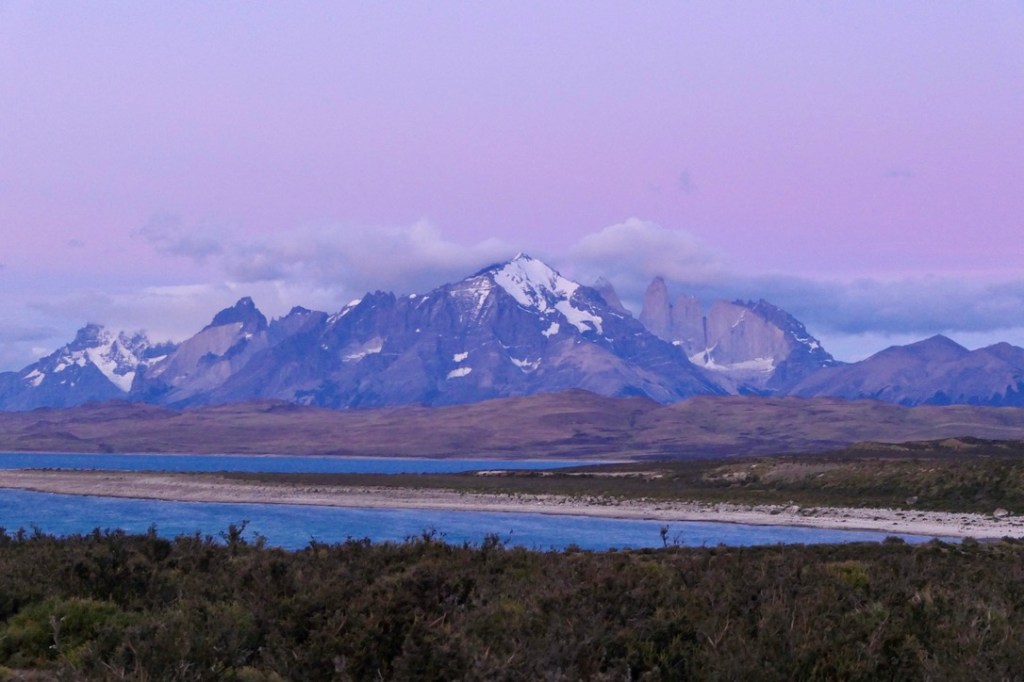
Sunrise at Torres del Paine National Park
A kestral resting in the National Park
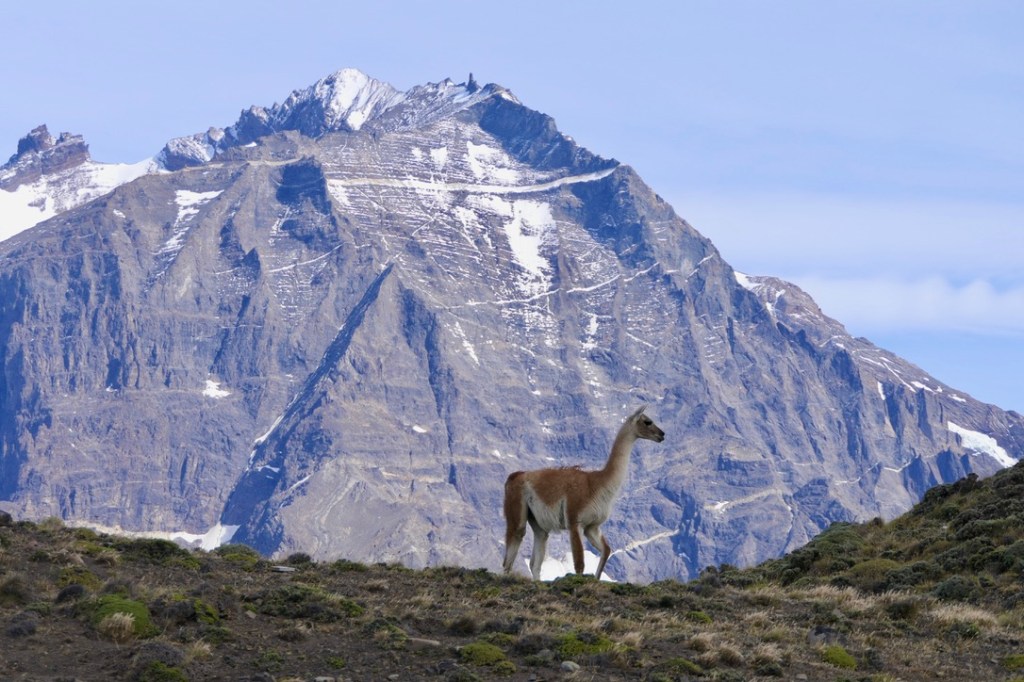
A guanaco strikes the perfect pose
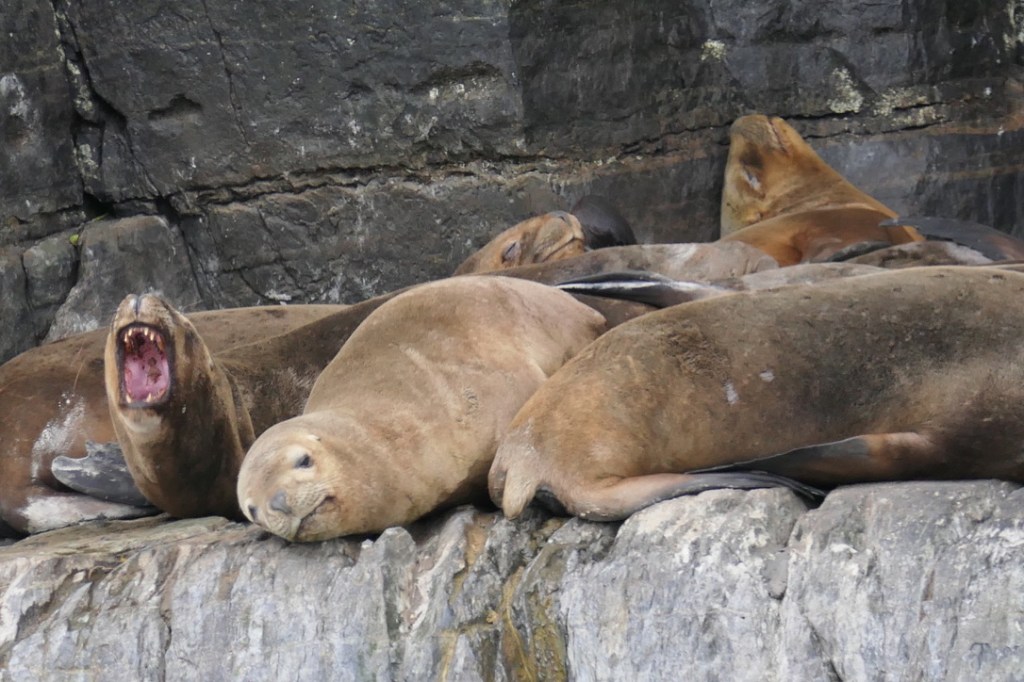
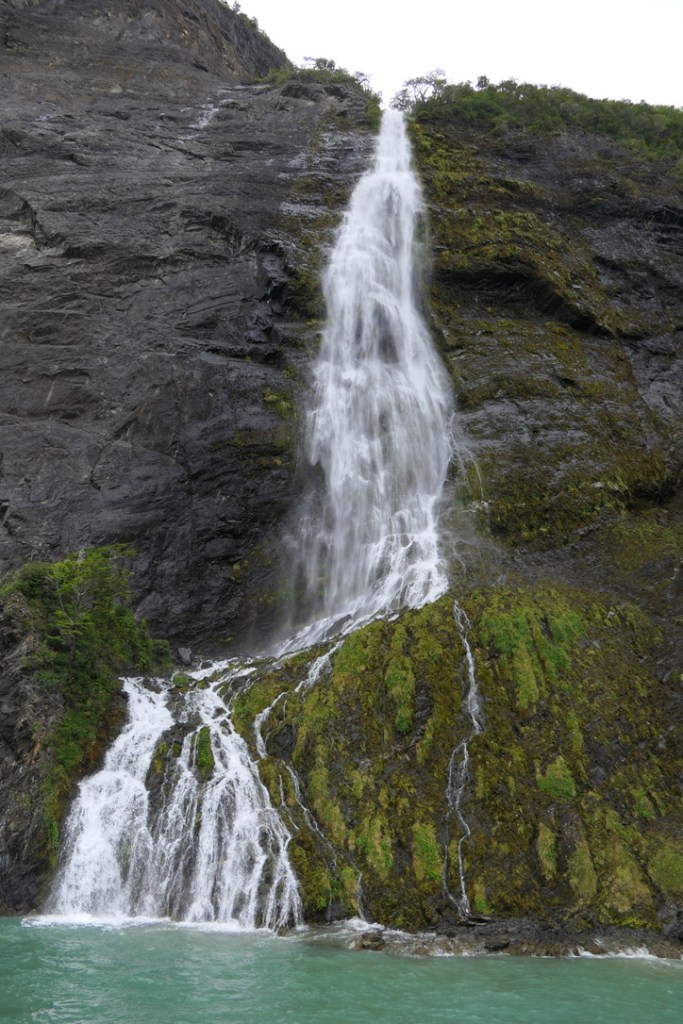
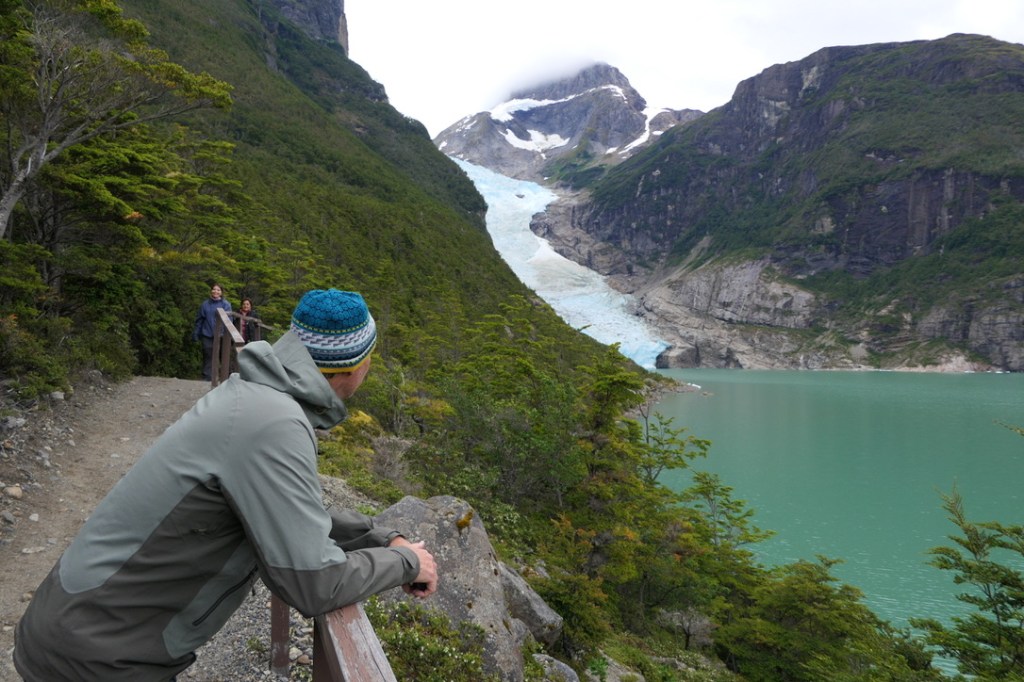
In between our visits to the national park we took a boat tour out to view the glaciers just outside Torres del Paine National Park. Our boat headed out of Puerto Natales (our base for our four days in Chilean Patagonia) bound for the Serrano and Balmaceda glaciers. Along the way we edged up to several waterfalls and got a look at sea lions and condors that inhabited the rocky spaces along the water. Disembarking from the boat we entered Bernardo O’Higgins National Park for a walk to the base of the Balmeceda glacier. While we gawked at the beauty of the glacier hanging above the blue waters of the lagoon at its base, the crew of the boat retrieved chunks of glacial ice, which were then broken down into cubes and chilled the whiskey we were served upon our return. The trip ended with a stop at an estancia, where we feasted on roast lamb and chicken and sipped glasses of the ranch’s own wine. Disturbing the napping sea lionsOne of many waterfalls on the way to the glaciersEven in the middle of the summer it’s cool at the base of the Balmeceda glacier
With one more day to explore the national park, we set out early with our rental car and made the two hour drive from Puerto Natales. We made several pitstops at viewpoints along the park road before parking and taking a walk to view the Salto Grande waterfall and then continuing onwards to a lookout over Lake Nordenskjold to the Cuernos – the Horns – of Torres del Paine.
The guanacos are certainly photogenicThe Salto Grande waterfallThe Cuernos behind Lago Nordenskjold
While this concluded our visit to Chile, it wasn’t the end of our trip through Patagonia. Next, we cross the border into Argentina and continue our journey through Patagonia in the next TheRhumLine.
“We don’t talk about east and west in Chile, only north and south.”
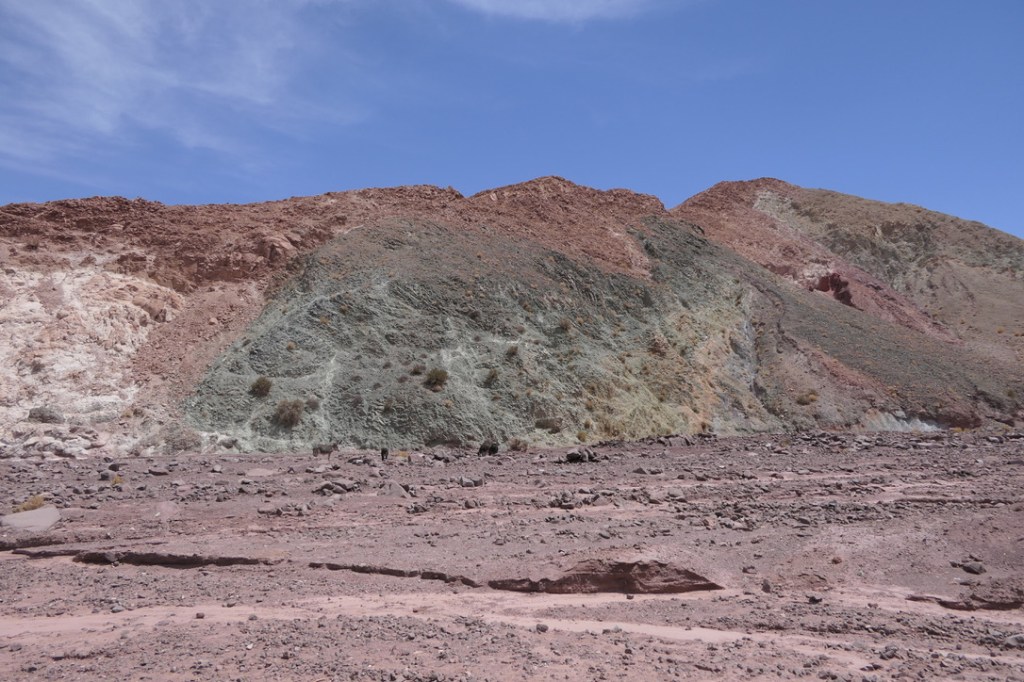
That, from a Chilean couple dining next to us one morning, was an apt description of Chile’s geography – long and narrow and pinched between the Pacific Ocean and the soaring peaks of the Andes. Stretching for 4,000 miles from the Peruvian border in the north down to Cape Horn and the Straits of Magellan in the south, and no more than 110 miles wide, one only needs to travel north and south to see the country. We began our visit up north, after flying into Santiago, the capital, and connecting to a domestic flight to Calama before picking up our rental car and heading out to the Atacama Desert for a few days of exploration. San Pedro is the only town of any size in the Atacama, home to the lodges, tour operators and restaurants that host and serve the visitors looking to explore the surrounding desert. Highway 23 runs from Calama through San Pedro before turning to the frontier with Argentina. Along its path a number of lesser traveled (and lesser-paved) roads head out to the various attractions lying in the barren expanse of the Atacama Desert. When we left Calama on day 1, we turned off Highway 23 to explore Valle de Arcoiris – Rainbow Valley – passing through a gray landscape of bare rock and sandstone, occasionally spotting small herds of guanacos – a relative of the llama – before descending down to the Rio Salado, which flowed into the Valle de Arcoiris. After stopping at the ranger station at the head of the valley and paying our entrance fee, we drove into the valley to stop at a number of parking areas to explore and take in the views of the multi-colored rock formations. After our visit we backtracked to the highway and continued on to San Pedro to check into our accomodation and get a meal in town. San Pedro is best described as . . . dusty. By late afternoon, as the wind blows swirls of red dust over everything, visitors fill the dirt streets of the main pedestrian area, looking to book the next days tour at the slew of outfitters offices, slake their thirst at a bevy of drinking establishments or fill their bellies with steaks, burgers, pizzas, pastas, ceviche or seafood. The culinary offerings are extensive, with a heavy dose of Italian and Peruvian influences.
The multi-colored rock formations in Rainbow Valley Heading to San Pedro de Atacama from Rainbow Valley Guanacos on the move
On our second day, we drove east from San Pedro headed to the Reserva Nacional Los Flamencos, lying on a high-altitude plateau abutting the border with Argentina. After climbing from town we passed a series of volcanic peaks before eventually reaching the reserve. A small wetland area hosted dozens of guanacos, flamingoes and ducks, a respite of water and green space tucked between the dry rocky peaks of the Andes. A half hour further took us to two more lagunas, or salt lakes, at the center of the reserve. Here too we spotted guanacos feeding on the sparse grasses at the edge of the lakes and flamingoes wading in the shallow waters.
An oasis in the desert of Los Flamencos National Reserve
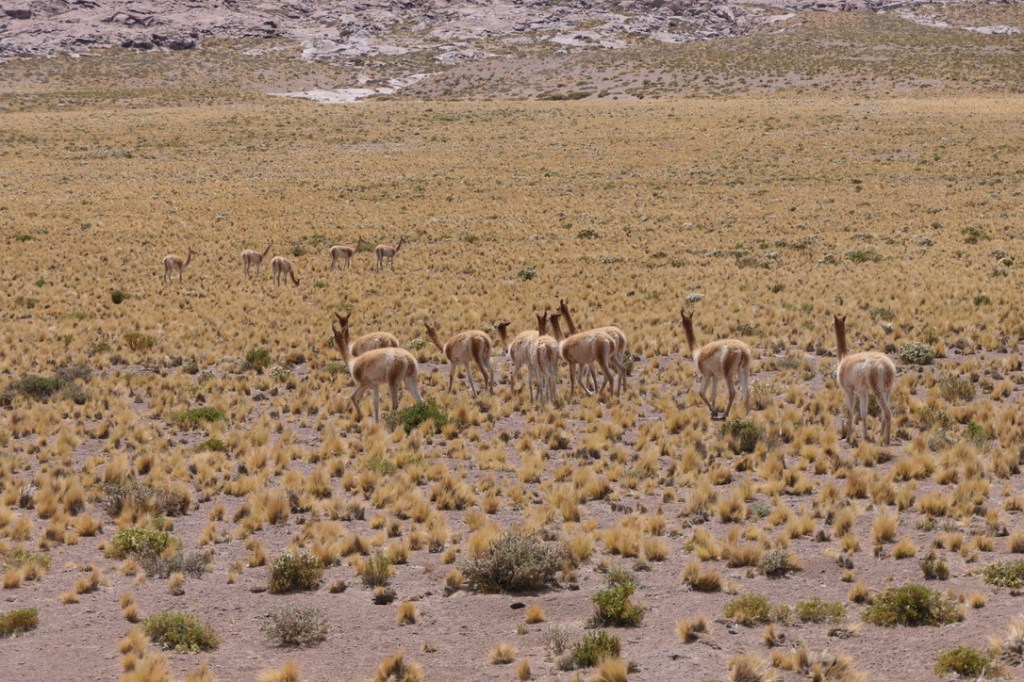
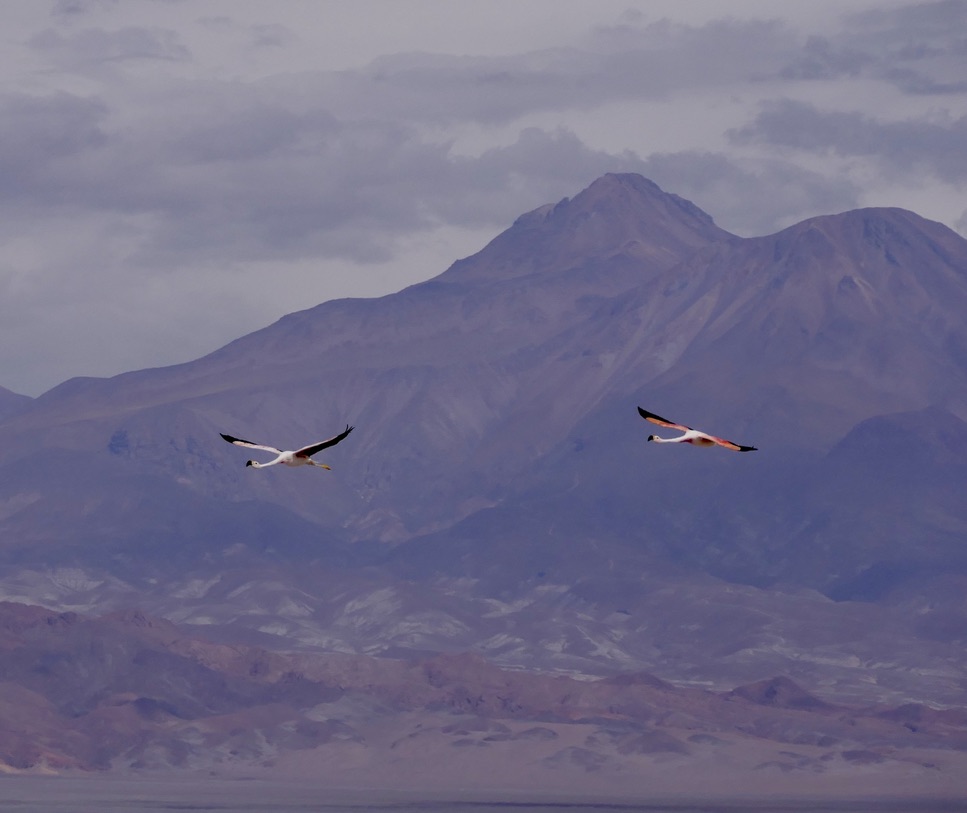
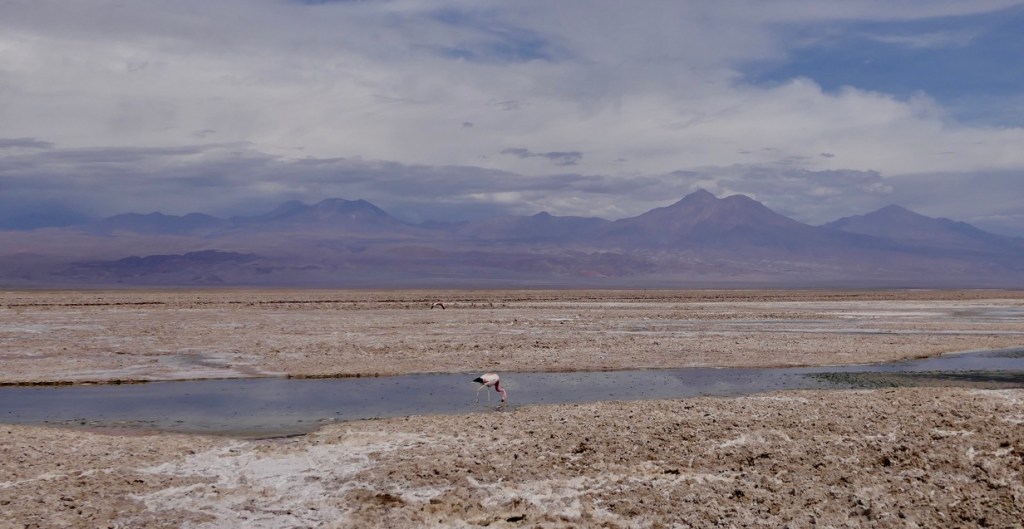
The next day we drove south for a couple hours, climbing to an altitude of 13,500′ before reaching the lagunas altiplanicas, or high-altitude lakes, of Miscanti and Miniques. Set at the base of yet more volcanic peaks, the lakes hosted a herd of vicunas, a relative of the guanaco, as well as flocks of flamingoes. Leaving the park we wound down the road through meadows of short grasses and yellow flowers, eventually reaching the desert floor and heading back north towards San Pedro. Just past the town of Socaire, we turned off the highway and headed towards our next stop, the salt flats of the Parque Laguna Chaxa. The floor of the desert here was streaked with white – the salt remaining behind after what little water had made its way down from the surrounding mountains to evaporate from the basin of Laguna Chaxa. In the small lakes that remained on the desert floor, dozens of flamingoes stalked through the briny water to feed on the shrimp larvae that existed there, and which provide the pinkish hue to the birds feathers.
Laguna MiscantiVicunas below the lagunas altiplanicas Flamingoes in flight over Laguna Chaxa The Andes backdrop to Laguna Chaxa
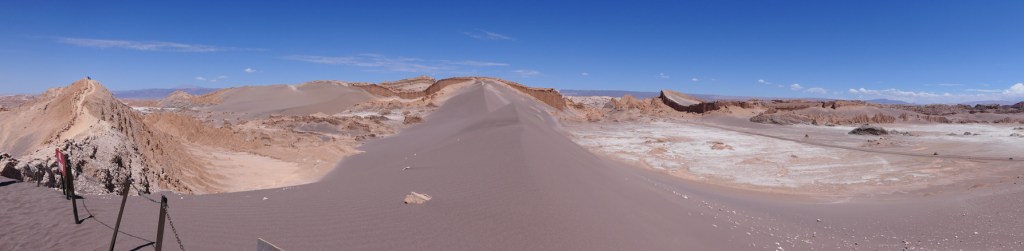
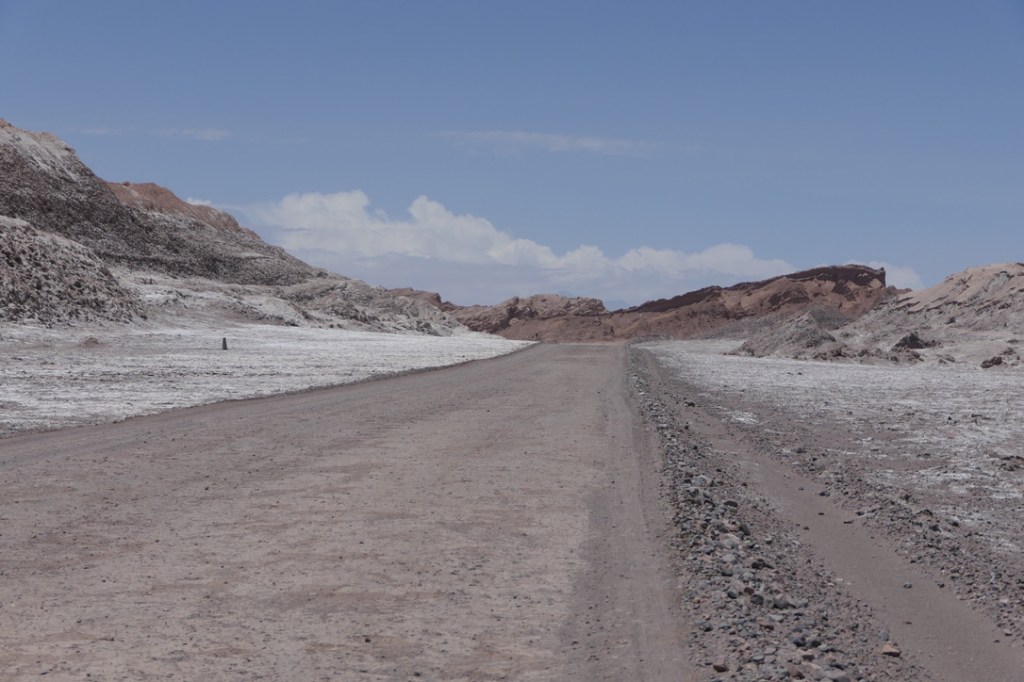
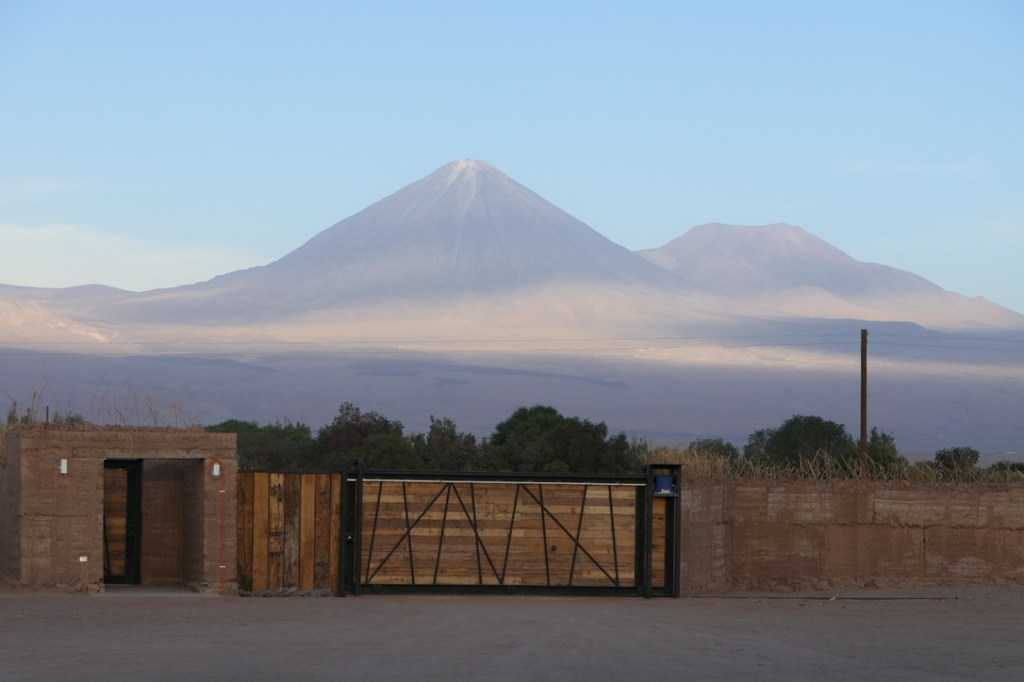
Our final day in the Atacama took us to Valle de la Luna – the Valley of the Moon – and it’s otherworldly landscapes of black volcanic sands, red rocks and salt-encrusted valley floor. We explored massive dunes, looked out over ravines carved by ancient waterways and marveled at the total absence of any living thing – no plants or animals could possibly exist in such a bleak landscape. Upon our return to town, we enjoyed cold drinks in the shaded courtyard of a restaurant and dined on ceviche before heading out to our guesthouse on the edge of town to watch the sunset against the slopes of the Licancabur Volcano.
Valley of the Moon from the top of a black sand dune The road through the salt basin of the Valley of the Moon The view that awaited us each evening at our guesthouse on the edge of San Pedro
The drive back to Calama gave us our last glimpses of the desert landscapes before boarding our flight to Puerto Montt in the Lakes District of south-central Chile. This is where volcanoes meet the lakes, wild rivers entertain rafters, thick forests of the national parks host a network of trails and quaint and peaceful lakeside towns provide a base for travelers. Puerto Varas is one of these towns, stretching along the southwestern shore of Lake Llanquihue, offering perfect views of three snow-capped volcanoes on the lakes eastern side, a German immigrant heritage and a quaint European vibe featuring modern alpine architecture alongside older wood-shingled homes containing gardens bursting with flowers and a downtown area lined with blooming roses. A pleasant waterfront promenade runs for nearly two miles, and the black sand beaches along its length fill with Chilenos on summer weekends. On a drive around the lake we visited the Osorno Ski Center located just below the cone of the Osorno volcano, stopped to peruse the roadside shops that offered local honey, jam, cheese and woolen products and enjoyed a delicious lunch in Puerto Octay, a town on the lakes north shore founded by German immigrants in the mid-19th century. Another day took us back to the lakes eastern side to view the waterfalls at Petrohue in the Vicente Perez Rosales National Park, a visit to Lake Todos Los Santos and an incredible lunch of pan-seared salmon (farm-raised in the lake) at a restaurant back on the shores of Lake Llanquihue. Venturing further south we visited Alerce Andino National Park for a walk through the forest to Lake Sargazo before finishing the day at Cerveza Bosques, a craft brewery set in the forest (bosque) just outside Puerto Varas. In town we also found Mesa Tropea, another craft brewery, this one set in an old warehouse built on stilts right over the lake. Our final night in lovely Puerto Varas we visited Delicias – an old-school steak house where I indulged my carnivorous habits by feasting on a ribeye steak alongside a mound of mashed potatoes (studded with caramelized onions and roasted peppers), a glass or two of Chilean red wine and a dessert of baked custard.
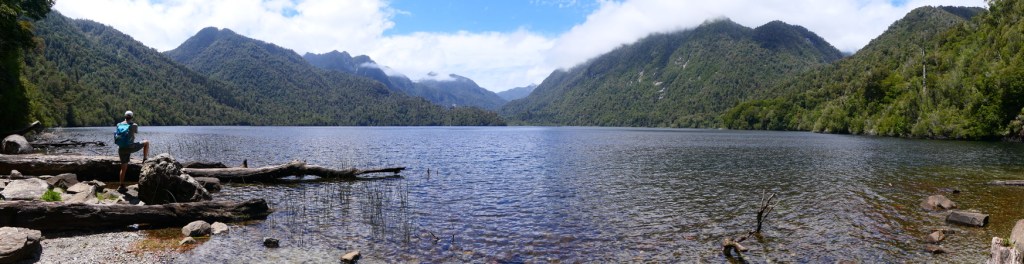
Lago Sargazo in Alerce Andino National ParkThe Osorno Volcano looms over Petrohue Waterfall at the eastern end of Lago Llanquihue
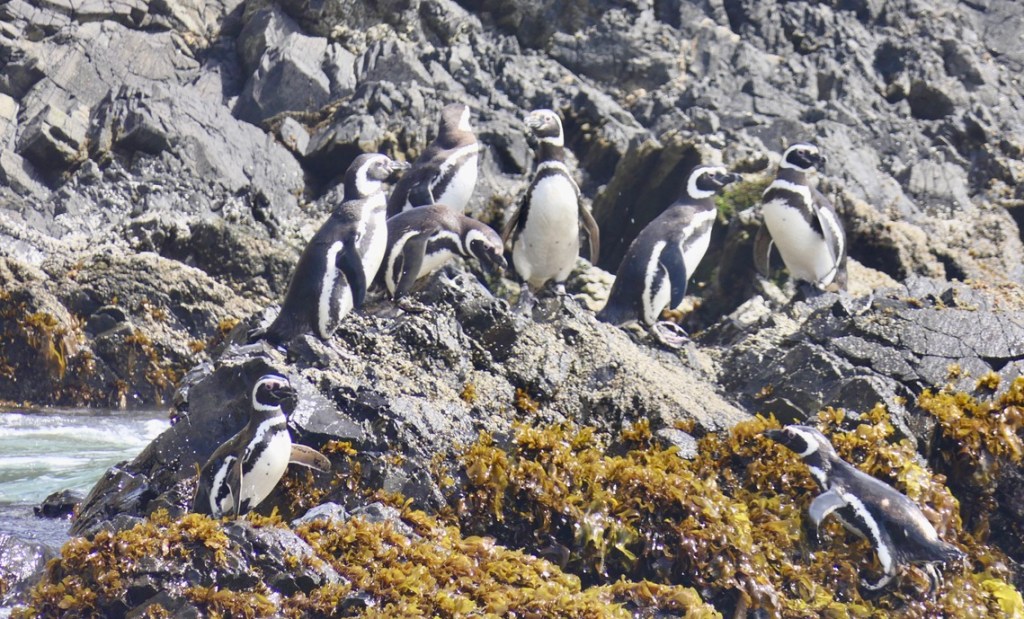
Driving a couple hours south from Puerto Varas took us to Chile’s largest island – Chiloe, at the heart of the Chiloe archipelago in the Pacific Ocean. The island is known for its pastoral landscapes – gentle rolling hills, pastures hosting cattle and sheep, remote villages where residents sold homemade cheeses from their farmhouses, and a series of wooden churches built by Jesuit missionaries in the 17th and 18th centuries. Another attraction of the island is the chance to see wildlife – on the northwest coast small offshore islets host colonies of penguins. Arriving on the beach at Punahuil, we parked and purchased our tickets for a visit to the penguineras. Offshore several rocky islets hosted small groups of Magellanic and Humbolt penguins, stoically braving the bracing winds and chilly waters of the southern Pacific.
After our visit to the penguin colonies we took a drive to Mar Bravo, a long sandy beach backed by pastures where groups of cattle and horses grazed. During our walk along the beach both the horses and cattle ventured down to the beach to frolic on the sand and move to other pastures. At the end of the beach we found basalt cliffs towering over the sand, a remnant of the areas volcanic past.
Penguins at PunihuelThe beach at Mar Brava
Completing our visit to Chile’s lakes region, we headed further south to one of our “bucket list” destinations – Patagonia. That story in the next TheRhumline.
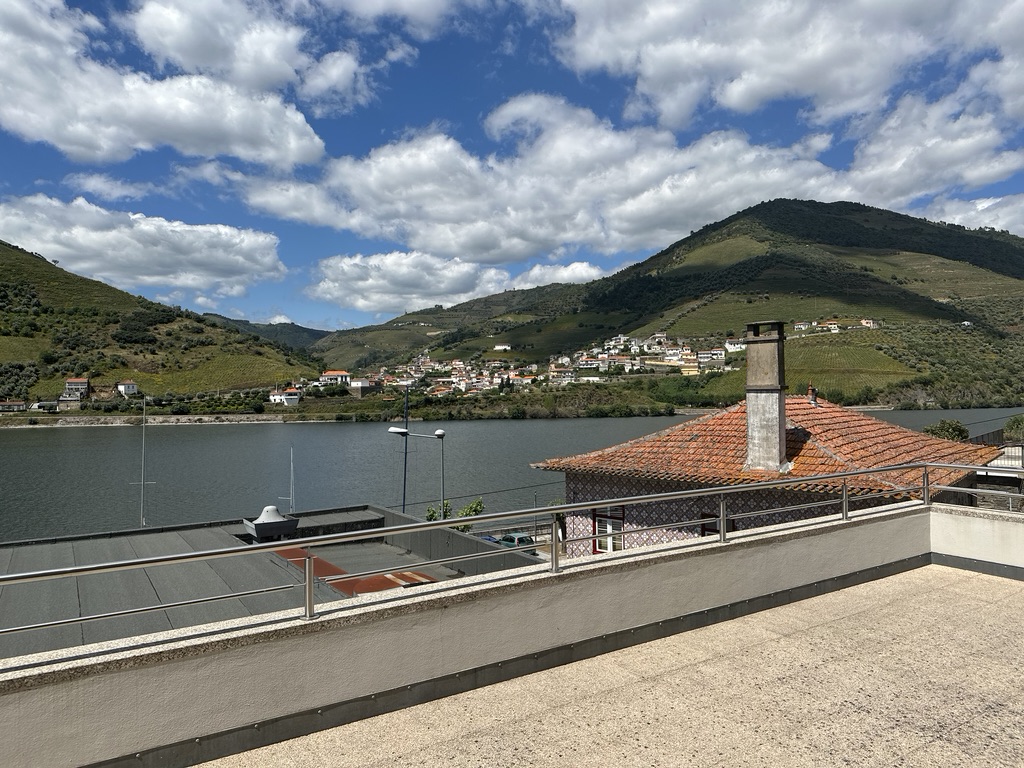
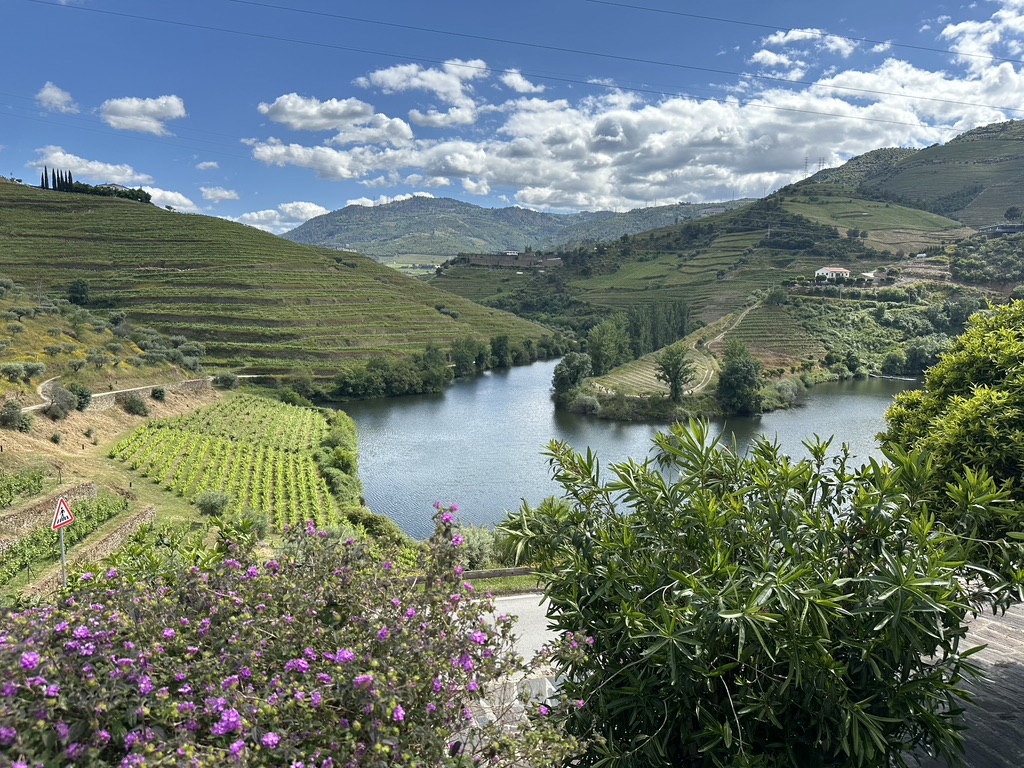
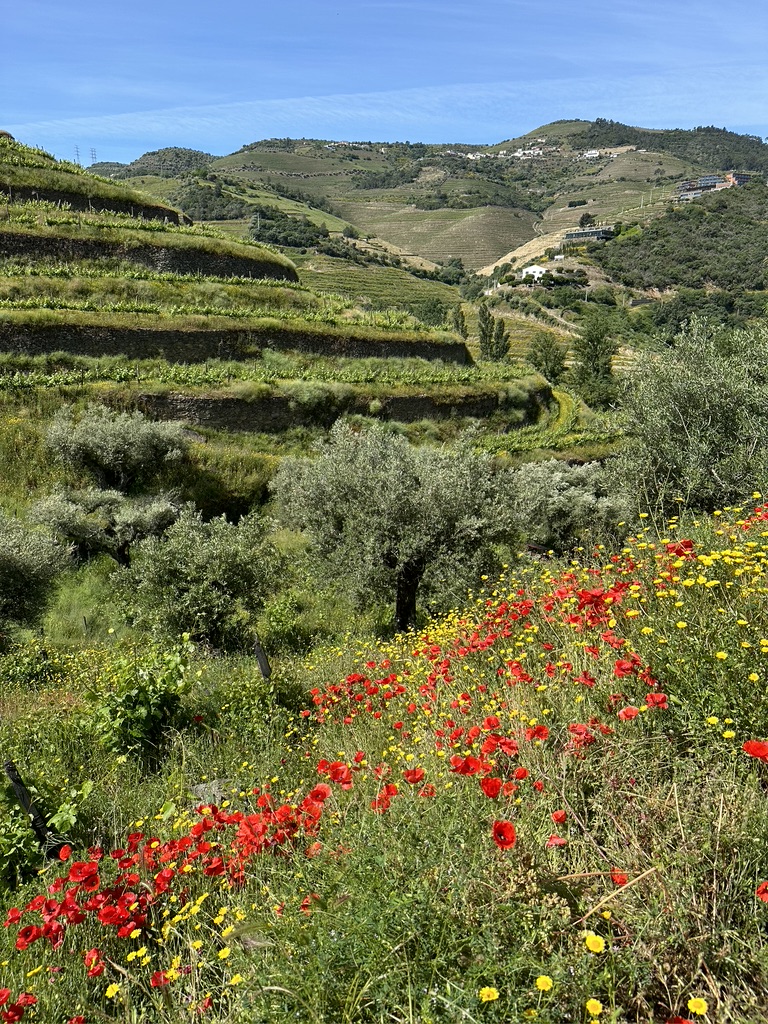
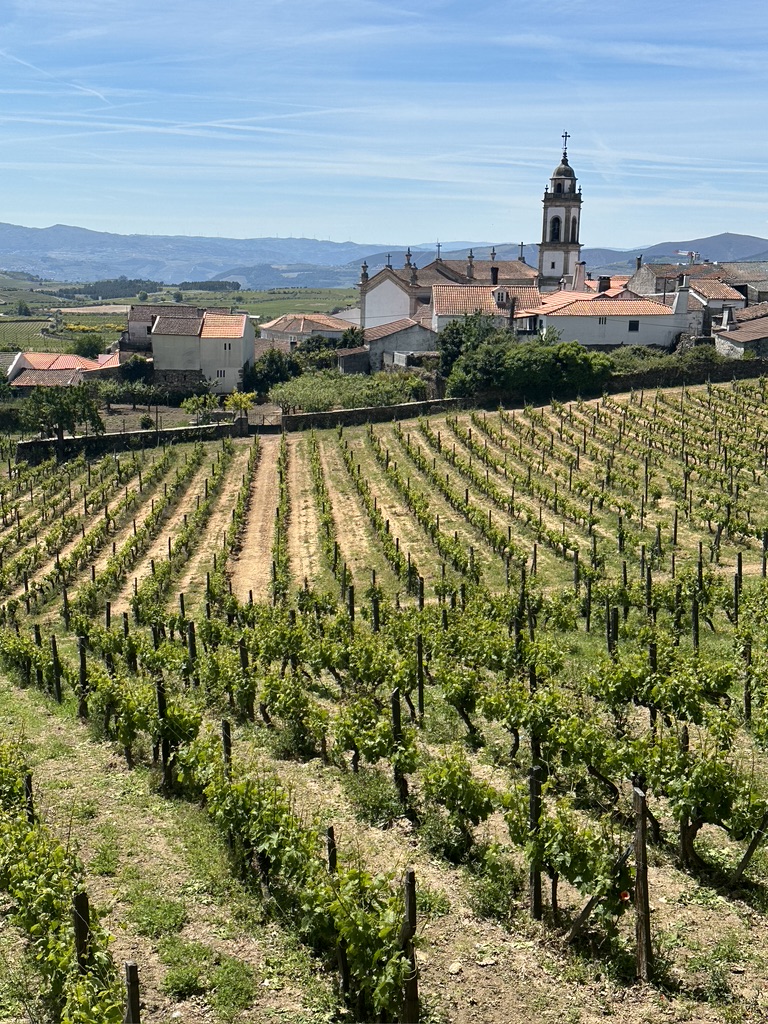
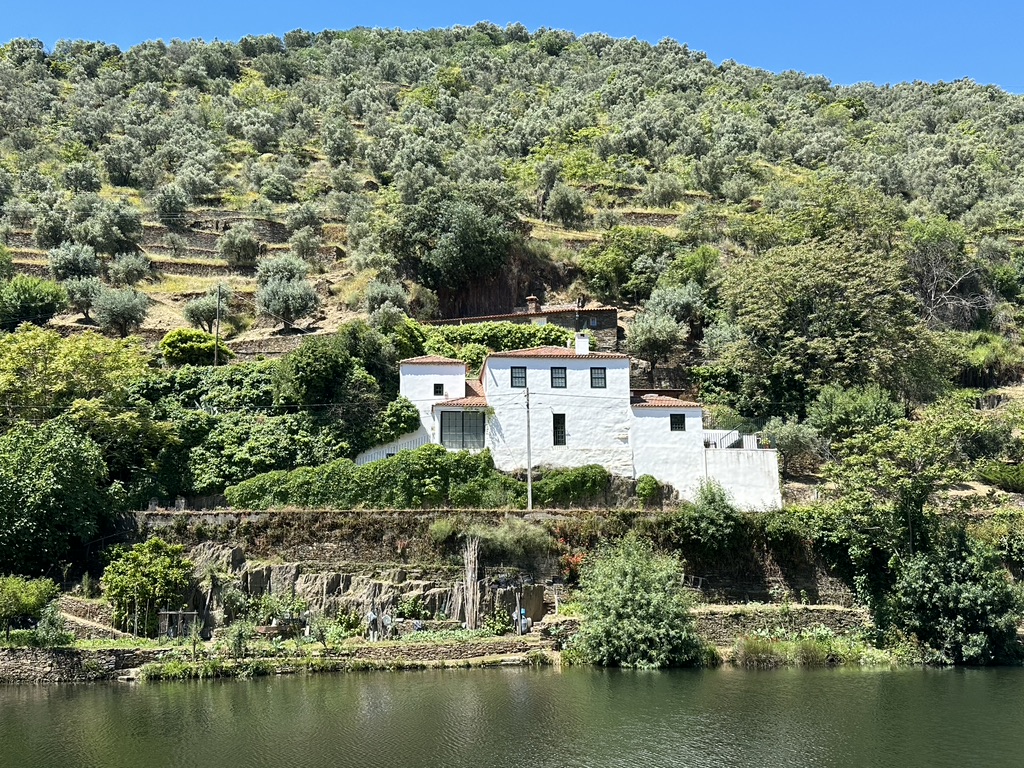
As the sun dropped below the hills along the northern shore of the Douro River, I drained the last of the Quinta da Pacheco port wine from my glass. Just across the river, which runs just the other side of the road from the front of the Hotel Folgosa, our base for our four-day stay in the Douro Valley, the last rays of sun still shone on the red tiled roofs of the white-washed homes in the village of Covelinhas. Grapevines, olive and eucalyptus trees covered the hillsides that rose up from the river. All was quiet on the water, as the smaller cruise ships had docked for the night and the rabelos, the traditional wooden boats that carried the port wine casks downriver to Porto, and now carry tourists on one or two hour trips along the Douro, had retired for the evening. The wine was complimentary, an amenity from the hotels affiliated quinta, which translates as one-fifth, or the typical rent, payable in harvested crops, given to the lands owner by the farmer who worked it back in earlier times. Today, many of the quintas are industrial-sized operations, hosting bus tours and boasting Michelin-starred dining rooms. But there are plenty of family operations left, such as the Quinta do Tedo, which we visited on our first day in the valley. Sitting above the confluence of the Douro and Tedo rivers, the tasting room commands an incredibly beautiful view of the Tedo valley. While port is on every tasting rooms menu, we weren’t quite ready for the sweet stuff just yet – it was the first seventy degree day of our two weeks in Portugal and we were ready for something cold and crisp. Fortunately, their Rose was part of a three-wine tasting menu and fit the bill. As the mid-afternoon crowds thinned out, we were left alone in the tasting room, chatting with the staff and owner. Complimenting the wine selection, the owner offered us a couple glasses of their award-winning port, and in response to Heather’s question about the availability of walking trails in the valley, invited us to return to walk their private trail system the following day. After dinner at a quiet restaurant back in Folgosa, and breakfast at our hotel, we returned to Quinta do Tedo for the walk. If we thought the views from the tasting room were impressive, we were soon blown away by the sights along our walk through the vineyard and the banks of the river. Besides the vibrant green of the grape vines, the olive trees, which lined each area of the winery, were beginning to flower. Then we came upon patches of wildflowers – brilliant red poppies, purple thistles, an abundance of sun buttons – that were growing amongst the vines and along the stone walls that crisscrossed the winery. Following our walk we got back in our rental car and made the drive up valley to Favaios, a small town that the staff at our hotel had suggested we visit. It was a thirty-minute drive filled with ‘oohs’ and ‘aahs’ as we climbed along a narrow two-lane road, winding through vineyards, each turn revealing another beautiful perspective of the Douro Valley. Arriving in Favaios, we found the streets deserted. After parking, we wandered for a bit, then decided it was time for lunch. On the outskirts of the village we found O Cleto, along with everyone else in town. We just managed to score a table in the busy restaurant as the lunch rush was ending. Seems the locals like to enjoy a leisurely lunch, a bottle, or two, of wine, dessert and coffee before returning to work. It seemed rude not to follow suit. Our meal of fish, salad, bread, dessert and wine (bottle) totaled less than 20 euros. That was when Heather said, not for the first time, “We could live here.”
The view from Hotel Folgosa across the Douro River At a turn of the river Poppies and Sun Buttons color the hillside outside Quinta do Tedo Outside Faivios
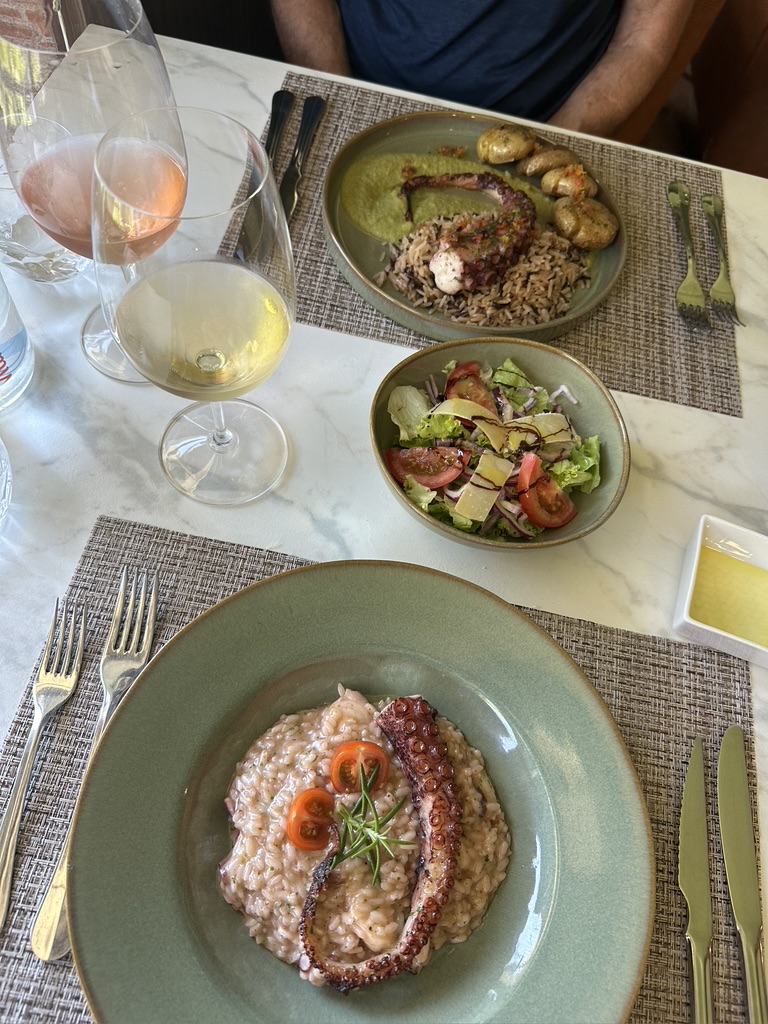
Our third day in the valley began with a walk along a country lane leading from our hotel to the hilltop village of Armamar. After climbing steeply for a half mile, the road leveled out and offered commanding views past vineyards and back down to the river. The entire route was bounded by vines on one side and eucalyptus trees on the other. After an hour we turned back and descended to Folgosa with the intention to drive to Pinhao, a half hour to the east, where we would spend the afternoon cruising up river on a rabelo, taking in the sights from the water. Arriving in Pinhao a bit hungry after a stroll we headed to The Bridge, a restaurant on the edge of town, for a bite to eat before our river excursion. Our excitement over the boat trip was soon replaced by our enjoyment of our lunch – the risotto was delicious: rich, creamy and cheesy with tender chunks of roasted octopus; followed by a refreshingly tart cheesecake-like lime pie, washed down with some cold Douro white wine.
The hills along the Douro seen from a rabelo Octopus for lunch – two ways
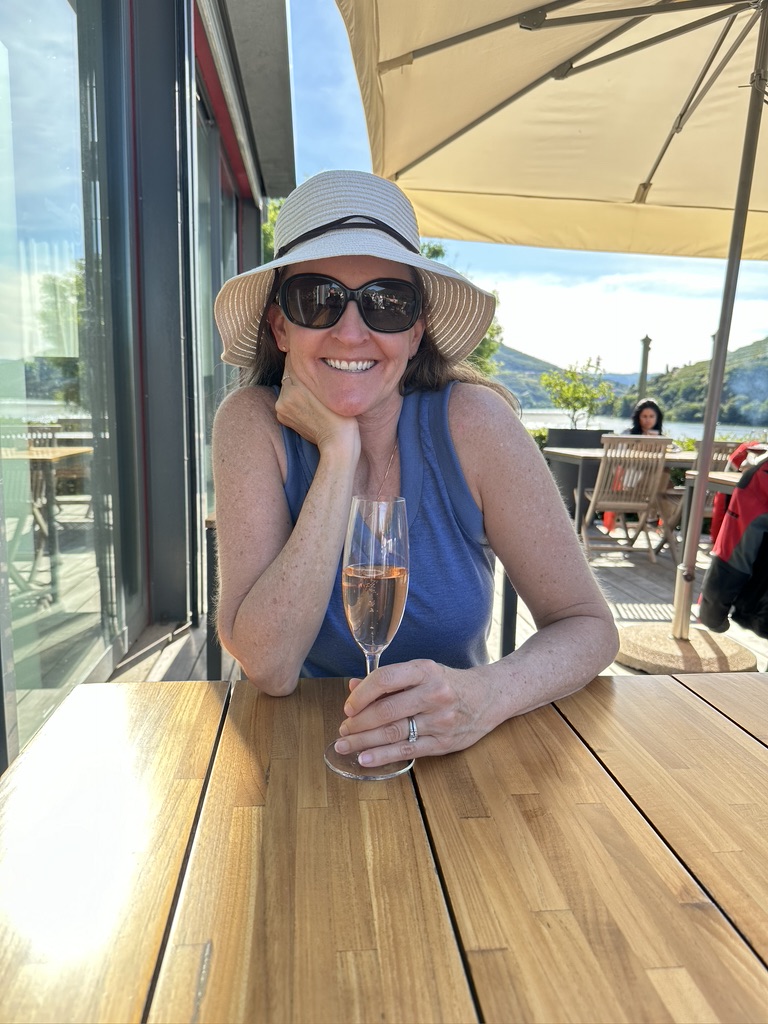
During our four days in the Douro it wasn’t all wine-tasting and delicious seafood. An afternoon was spent back in Pinhao at an outdoor cafe, enjoying pints of beer and toasted sandwiches overlooking the river; another on the terrace of Foz do Tavora, a bar on the river offering ridiculously cheap glasses of wine and beer along with a variety of cheeses and cured meats. No matter where we were, the views of the river, hills and vineyards were center stage. “I could live here” I said.
Enjoying a glass of Rose at Foz do Tavora
After our four day visit ended we pointed the rental car south, leaving the Douro valley and headed to Parque Natural da Serra da Estrela, the largest of Portugal’s national parks. The two lane road climbed and descended across the mountaintops and valleys of the park, offering views of flower-covered meadows, alpine lakes, pine forests and even across the border into Spain. Eventually leaving the mountains we entered the flat plains of the Alentejo before stopping for the night outside the city of Estremoz. The next day we returned to the Algarve for our final three nights, finding a villa just outside of Albufeira, with views of the sea and a neighborhood restaurant that offered some of the best food we had during our entire trip.
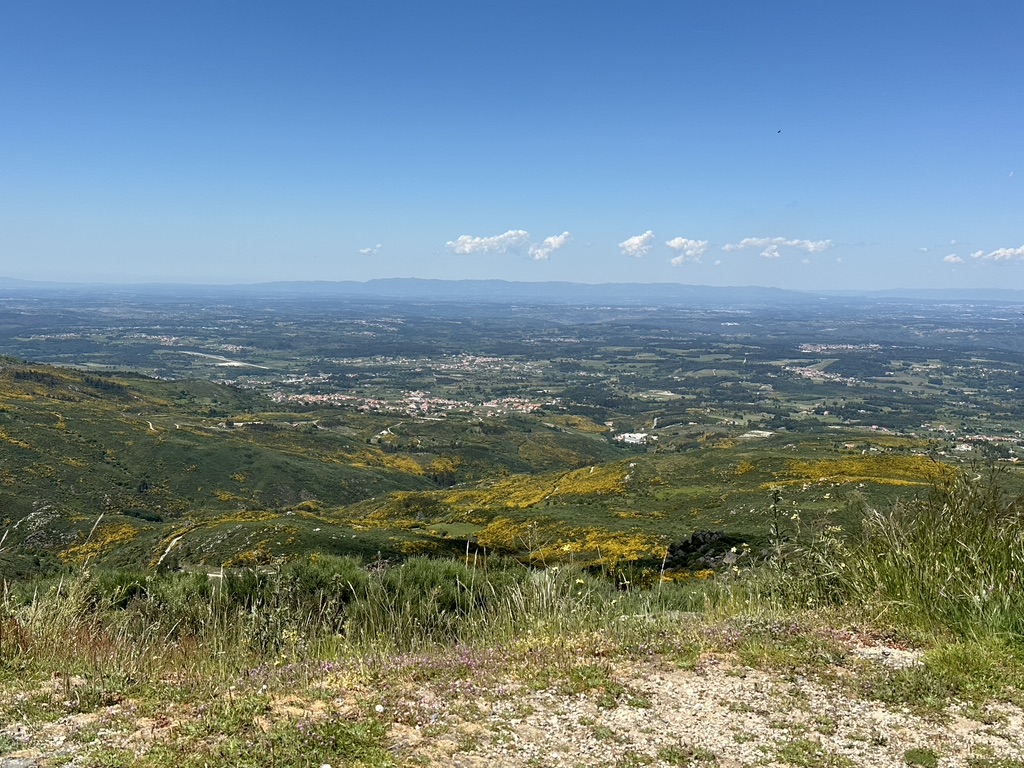
Looking down towards the Alentejo from the heights of the national park
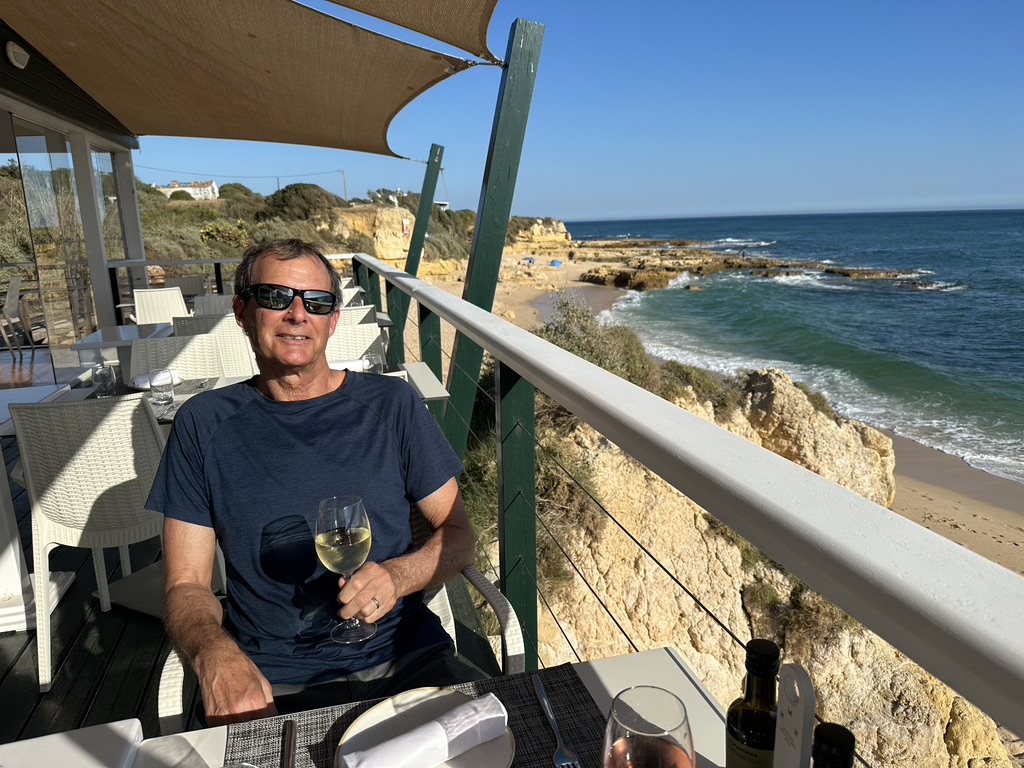
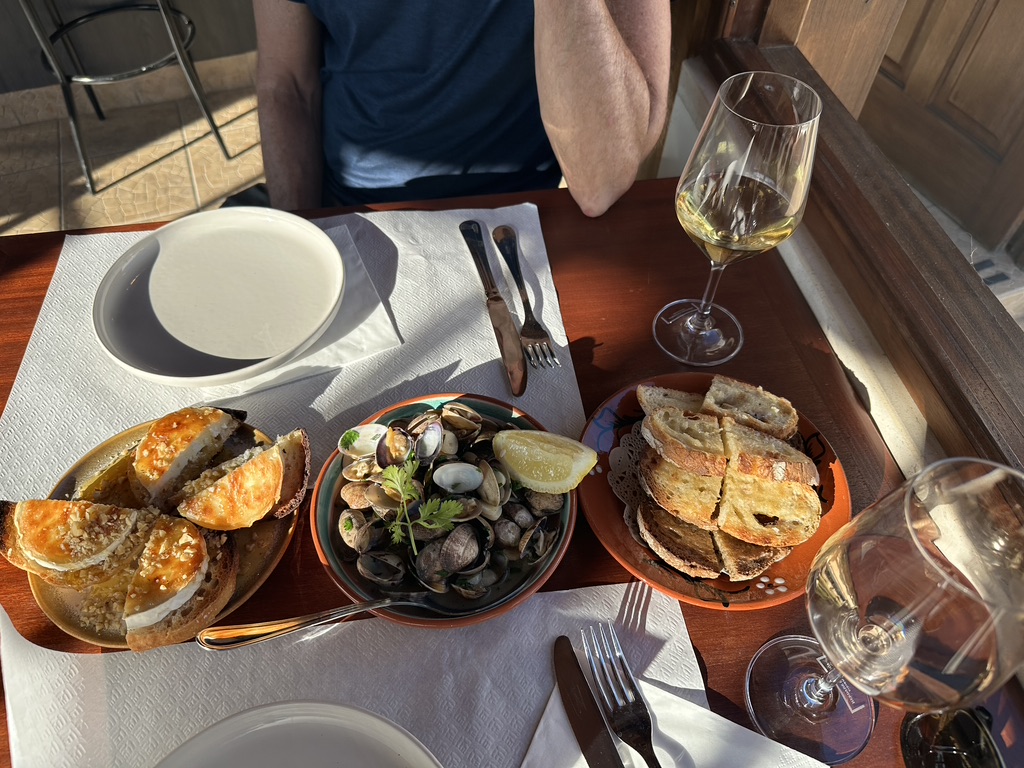
After a day of driving to reach Albufeira, we didn’t want to get back in the car to find dinner so we walked ten minutes down to the beach to find Restaurante Lourenco. At 6pm we were the first patrons in the dining room and scored a table outside overlooking the small beach. The service was warm and friendly, the steamed clams and grilled squid were simple and delicious, the wine was wonderful and the desserts were a perfect ending (along with the sunset). As we left, the staff said goodbye and we replied “See you tomorrow.”
Seaside at Restaurante Lourenco
Just like outside Lagos, there’s an extensive boardwalk system running over the dunes, connecting Albufeira to the next town to the west, Armacao de Pera. We spent the next morning strolling the walkway before returning to our rental for an afternoon on our terrace and dinner back at Lourenco. Our final day was designated to hike the Seven Hanging Valleys trail near the town of Carvoeiro, just a thirty minute drive from Albufeira. The trail had been touted as one of the best walks in the Algarve – what they don’t tell you is it’s also one of the busiest. We spent about an hour dodging folks on the trail, and while we still enjoyed the views of the rugged coast, we elected to turn around about half-way through the walk. Venturing into Carvoeiro, we found crowds of a different kind – Brits on holiday, drinking the day away in the numerous outdoor cafes lining Carvoeiro’s center. Thinking ‘when in Rome’, we found a table and joined the fray. Wrapping up our tour of Portugal the next day, we drove back to Faro, returned our rental car and flew home to start another Colorado summer.
Along the Seven Hanging Valleys trail A final delicious meal Being back in Colorado for the summer isn’t so bad…
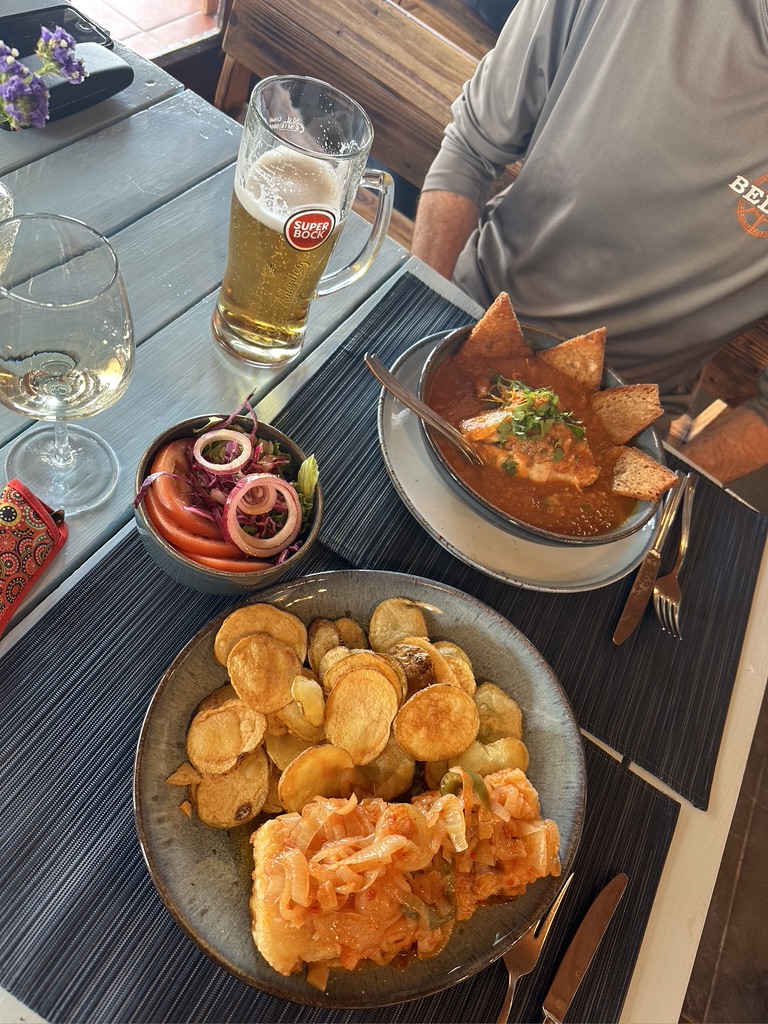
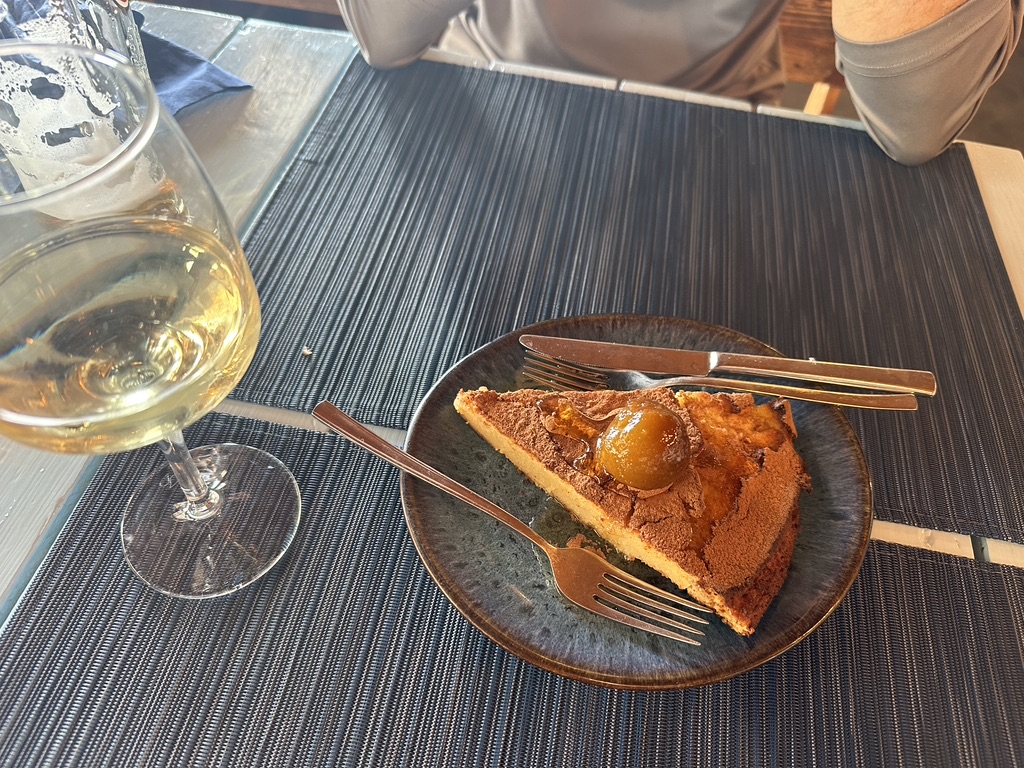
While I had fallen for the Algarve during our seven-day visit, it would be the Alentejo that won Heather’s heart. The region that sits just above the Algarve and covers the south up to the capital city of Lisbon is a jewel. The region is described as “Portugal the way it used to be “. The country’s largest region and agricultural heartland, its rolling hills are covered with cork trees, vineyards and olive groves (all of the olive oil, and most of the wine we found in restaurants so far was from the Alentejo). In spring the countryside is covered with wildflowers of all colors. Our drive from Lagos to the seaside town of Vila Nova de Milfontes took us from the southern coastline through the hill country, past lush pastures of horses, cattle, goats and sheep, to the rugged cliffs of the west coast, where isolated rocky coves bore the brunt of the Atlantic ocean. At a stop at Praia da Arrifana we watched a horde of surfers brave the chilly waters, staring down from the cliffs high above the beach; at Praia de Monte Clerigo a couple fisherman cast lines into the breaking waves along an otherwise deserted beach; above a cove outside Zambujeira do Mar, we stopped for lunch at O Sacas, a ramshackle restaurant at the end of a potholed road. The place was doing a brisk business as it sat astride the Fisherman’s Trail, one of Portugal’s long distance walking trails, a section of which we would walk the following day. We ordered a couple of seafood dishes specific to the region: fried cod finished with onions and served with the perfect fried potato chips, and a sea bass stew in tomato sauce with prawns and clams. While the grilled fish in the Algarve had been wonderful, this, to date, had been my favorite meal of all. To complete the meal we took our servers suggestion to try the house specialty dessert – a custard pie doused with a liberal sprinkling of cinnamon, drizzled with honey and topped with a preserved white plum, a specialty of the region. With regret, we dragged ourselves back to the car to complete the trip to Vila Nova de Milfontes, where we would stay for two nights.
An unforgettable meal – cod and sea bass stew
An unforgettable dessert
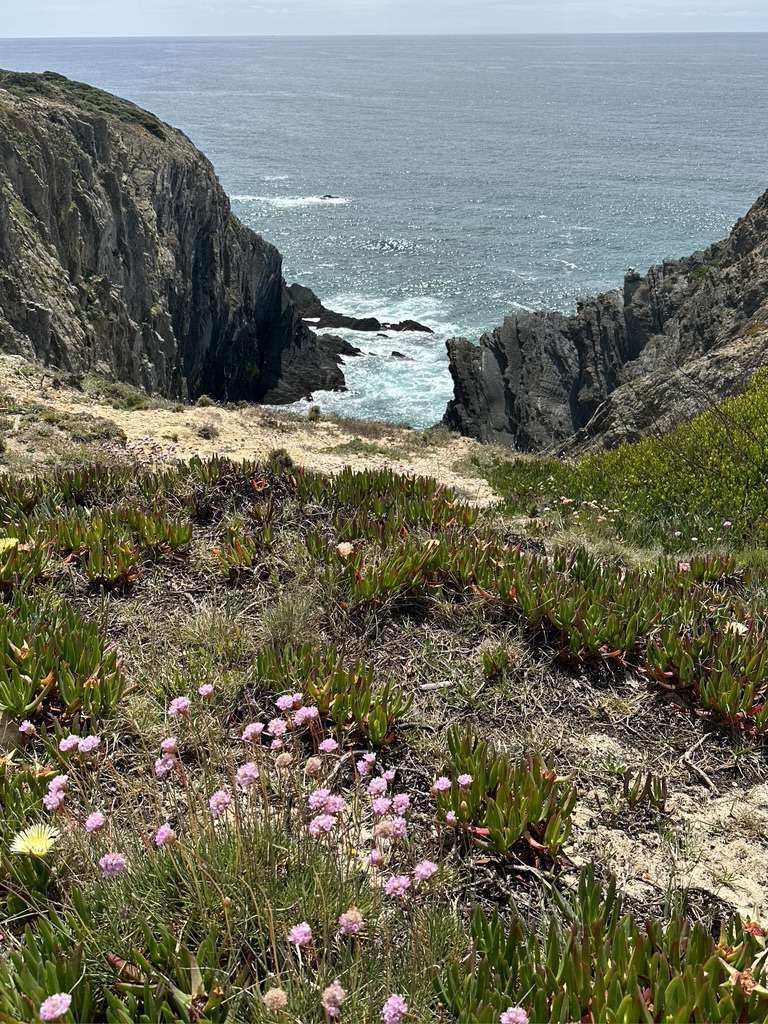
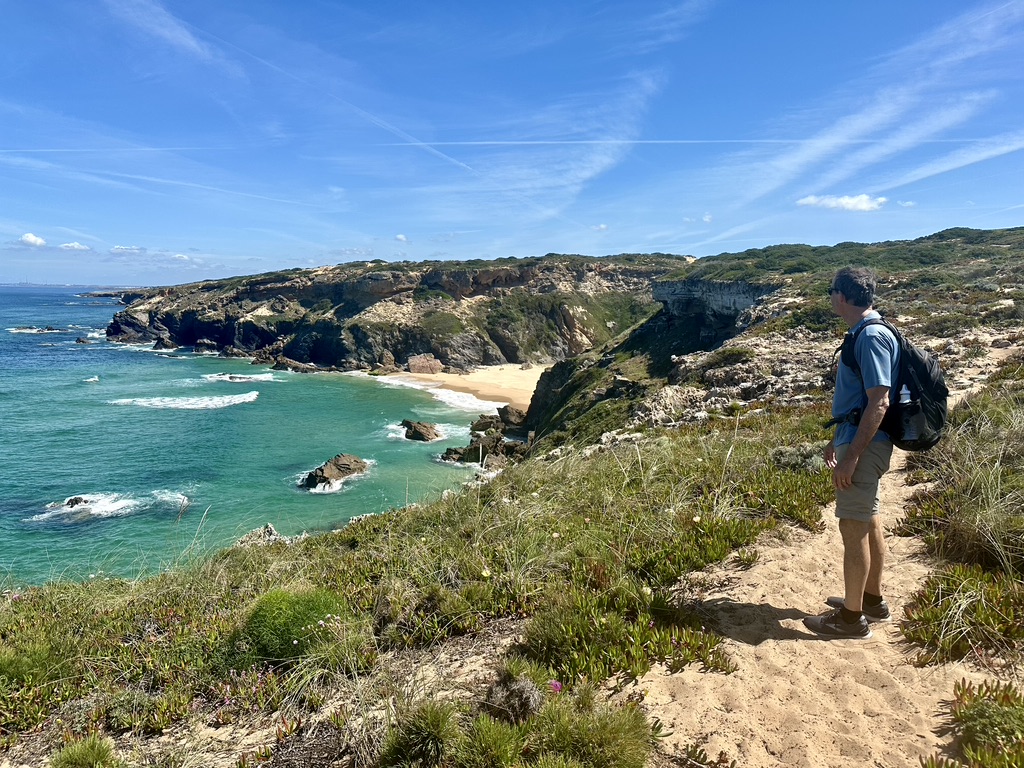
The section of the Fisherman’s Trail north from Vila Nova de Milfontes runs twelve miles to Porto Covo along flower-strewn cliffs. Our plan was to walk about halfway, then retrace our steps back to town. We couldn’t have asked for better walking weather: 65, sunny skies and a fresh breeze. After breakfast in our hotel room we set out for the walk, leaving town along a country lane bordered by wildflowers and passing through large grassy fields. We strode past a small cove with a handful of fishing boats bobbing at their moorings and hit the sandy trail that would follow the cliffs for the remainder of the walk. With the ocean to our left, we marveled at the profusion of blooms that colored the low-lying vegetation covering the clifftops. Red poppies; yellow, white and red sour figs; pale purple asters and a host of tiny white, yellow and blue flowers kept making us stop to take photos. At our turn-around point we plopped down just off the trail to rest, eat our packed lunch, and marvel at the views along the coast and out to sea. During the return walk we had to stop several times to empty the sand out of our shoes, but continued to marvel at the riot of colors along the cliff top. When we returned to town we headed down to a restaurant overlooking the river to dine on steamed clams and a platter of pork strips sauteed in olive oil and garlic.
There were so many beautiful views from the Fisherman’s Trail . . .
Wildflowers frame the view
From the Fisherman’s Trail
Clams, bread, wine, river view . . .
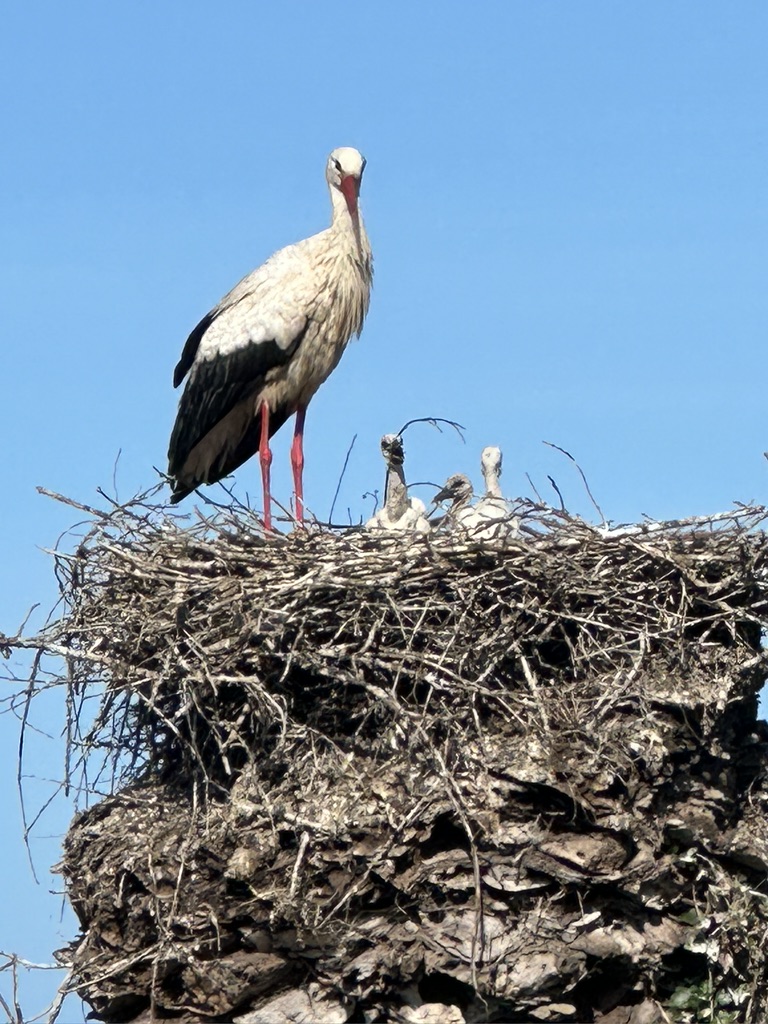
A bonus was the stork’s nest right outside our room in Vila Nova de MIlfontes
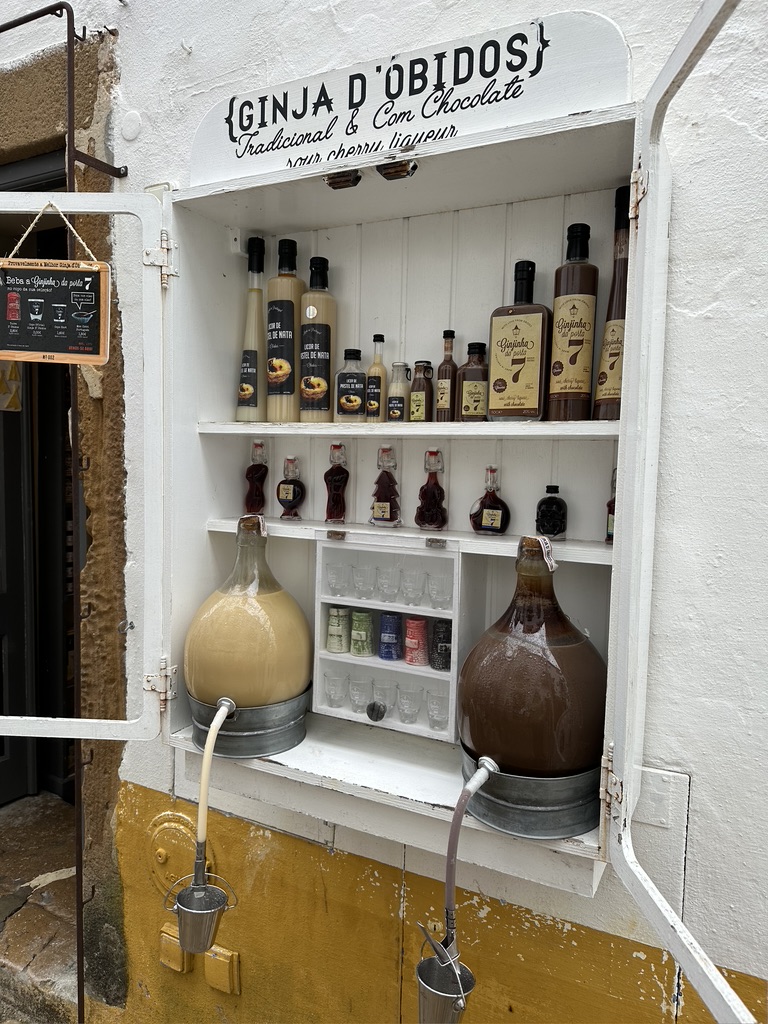
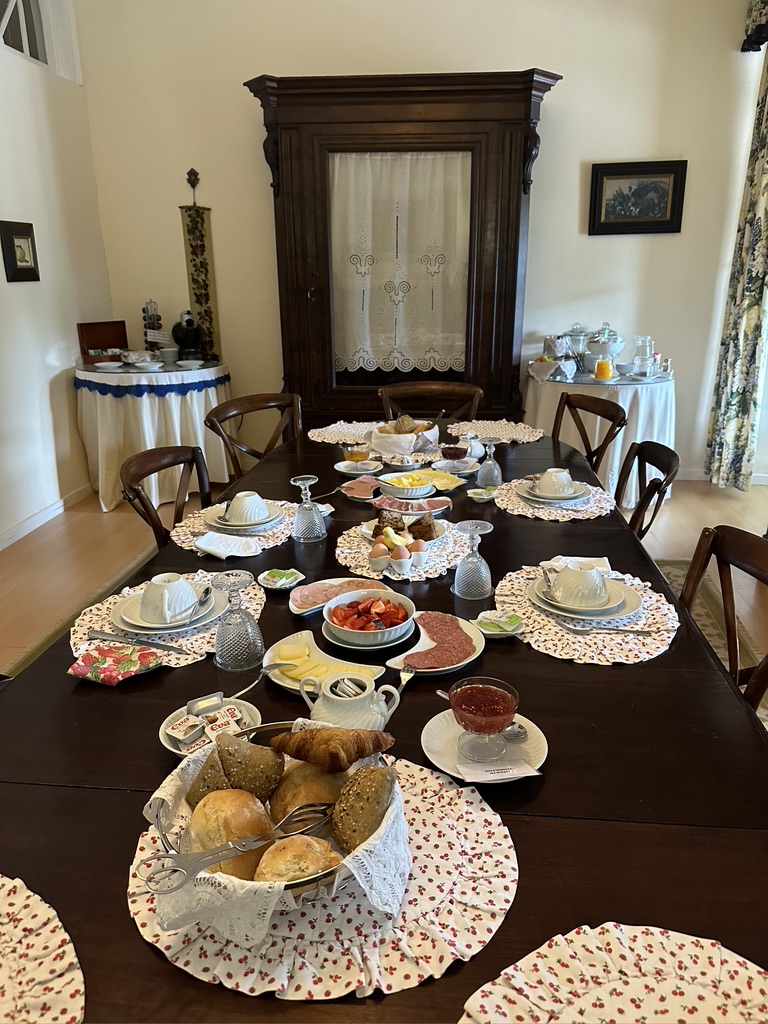
Moving on from Vila Nova we headed once again north, curving inland to avoid Lisbon, and headed for the town of Obidos. It’s described as a ‘quaint medieval walled town’ and that it is. It is also one of the most-visited ‘quaint towns’ in all of Portugal. As we drove up to the town the parking area devoted to tour buses should have been a give-away. Obidos is a small town, with Rua Direita traversing it’s entirety, lined with restaurants, souvenir shops offering shots of ginja – an overly sweet cherry liquor for which the town is famous – and flower-bedecked side streets. It’s all a bit much when the narrow cobblestone street is choked with tourists who have just disgorged from one of the many buses, but step off the main lane and find a restaurant on a side street and you can actually enjoy drinks and a meal at a reasonable price. The highlight of our two-night stay would be our accommodation: Casa d’Obidos, a former manor house surrounded by gardens (and a tennis court and swimming pool) with stunning views of the Obidos castle and town walls and offering one hell of a breakfast spread. I won’t bore you with all the offerings spread out on the breakfast table each morning; suffice it to say we left stuffed afterwards (from pastries, breads, fruits, cakes, eggs, meats, cheeses, homemade jams, fresh-squeezed juice, yogurt and coffee – there, I said it anyway). On our full day in the area we drove westward to the Obidos Lagoon (Europe’s largest saltwater lagoon) to gawk at the birdlife and walk a portion of the trail around it’s perimeter. After returning for another afternoon braving the tourist crowds in town we returned to the manor house to sip wine, watch the sunset over the castle and count the hours until breakfast would be served.
The Obidos castle and walls from our accommodation at Casa d’Obidos
The manor house
Obidos is listed as a “city of literature” – the tiny town has 14 bookstores, some doing double duty . . .
You don’t even need to break your stride to sample some local ginja.
The breakfast spread – for just the two of us – at Casa d’Obidos.
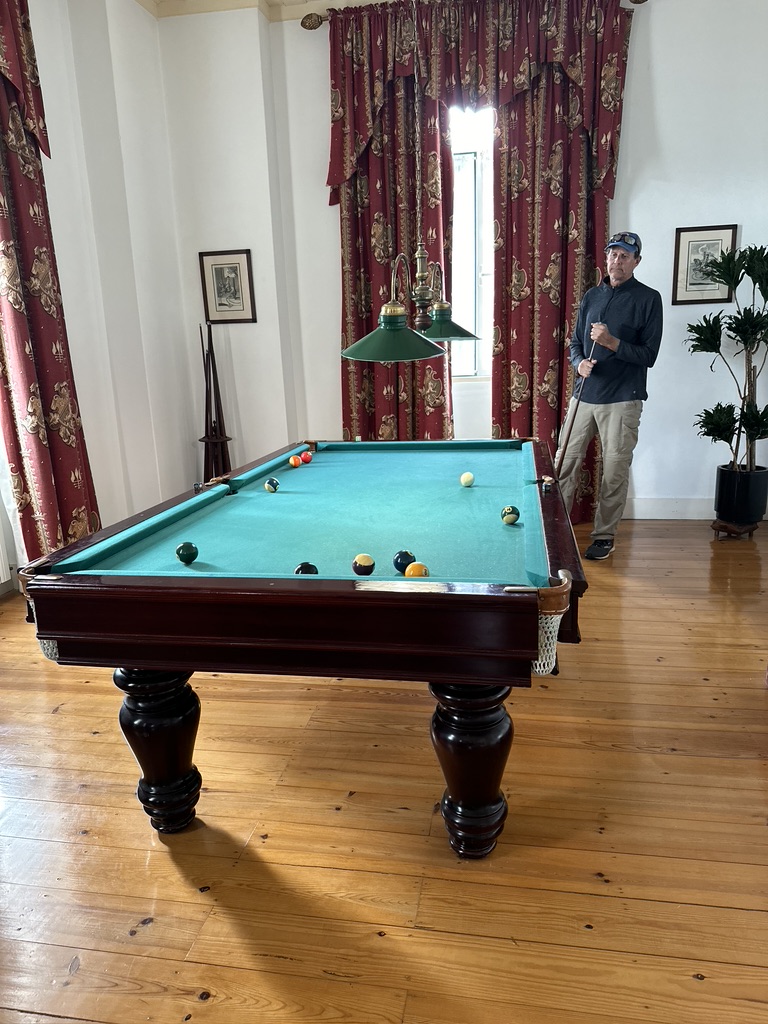
Did I mention the billiard parlor at Casa d’Obidos? Or the complimentary port wine?
From Obidos we would drive northeast to reach the Douro Valley, Portugals most famous wine region. I thought this area would fit nicely into this post, but I hadn’t a clue as to how the Douro would blow me away – and our four-day visit would deserve a post of it’s own.
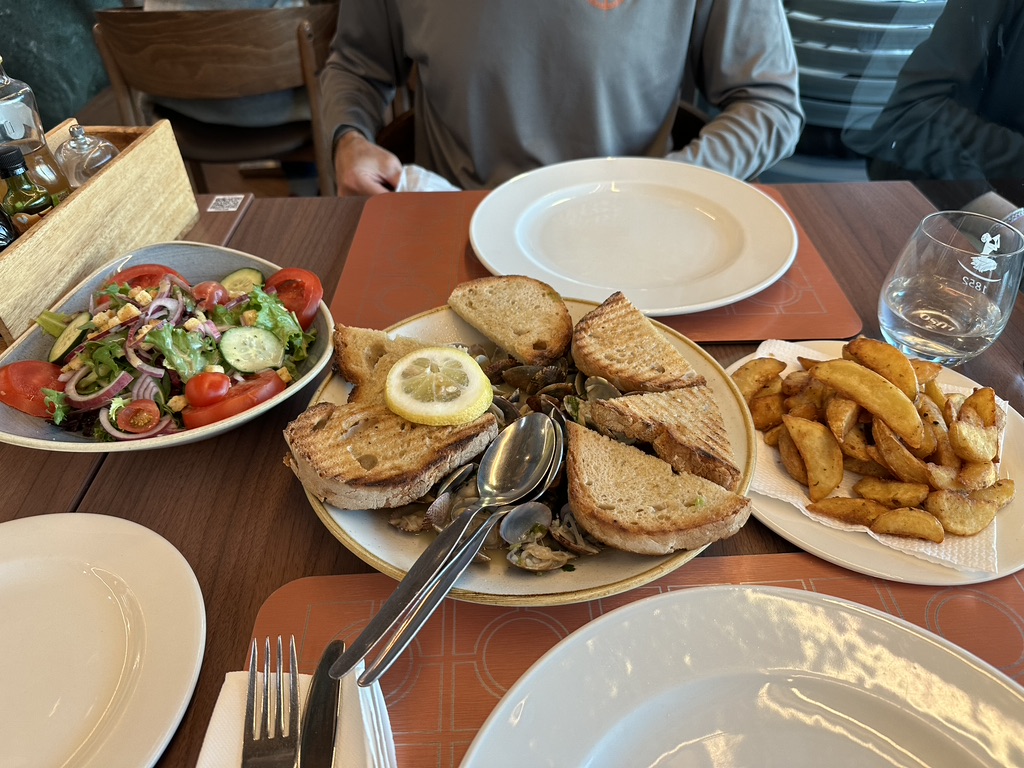
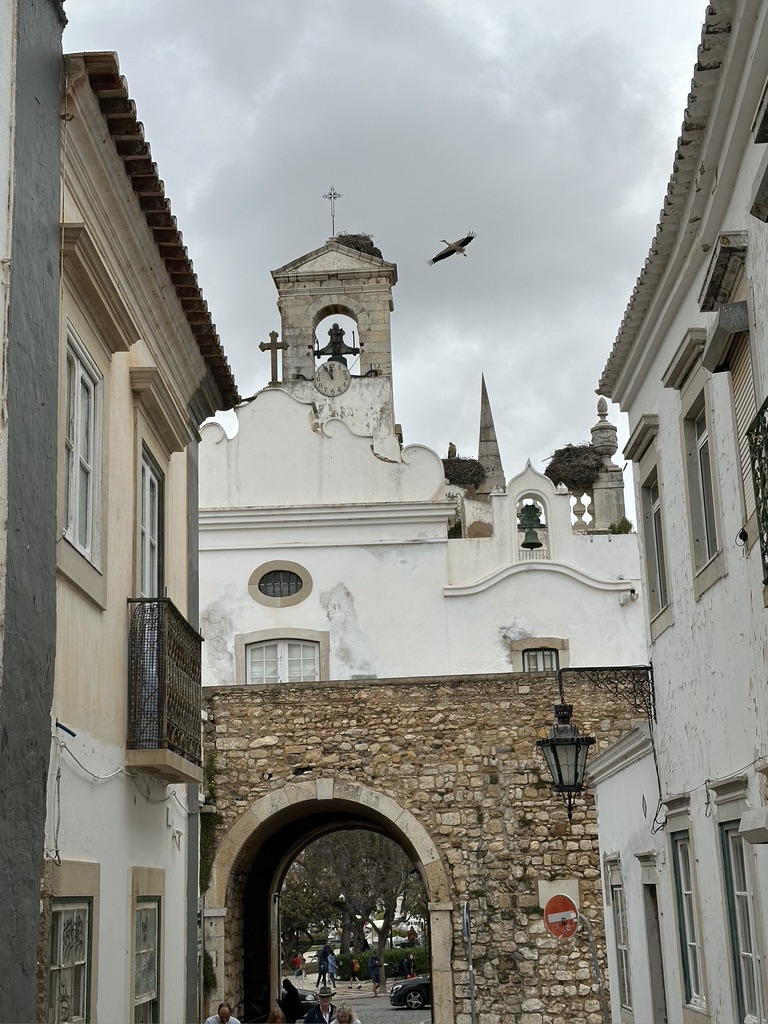
It’s not easy getting from northwest Colorado to . . . just about anywhere, especially the southern coast of Portugal. After twenty-six hours of travel, with a stop in London, we arrived in Faro, the capital of the Algarve region, and bleary-eyed, we dragged ourselves out of our hotel room after checking in 7:00pm to stretch our legs by wandering along the town’s waterfront, eventually finding a seat at a table inside O Coreto, a welcoming cafe overlooking the towns marina. The servers were friendly, smiled at our feeble attempts at Portugeuse and insisted on using English to recommend some dishes and take our drink order. After a couple sips of cold and crisp white wine we began to come out of the travel ‘funk’ and started to feel human again. Then the platter of steamed clams, fried potatoes, salad and grilled bread arrived and we were invigorated. We were impressed by the delicious food and delectable wine and that set the table for our expectations of the important things to come – food and wine. A good nights sleep followed and we were ready for some sightseeing the following day. It doesn’t take long to see the main sights – the Arco da Vila (the arched entry to the old town), Igreja de Santa Maria (the 16th century cathedral that looms over the square of the same name), and the cobbled streets of the walled town, as well as another walk along the marina left us plenty of time to relax at the Olde Tavern with mugs of Sagres beer and glasses of white wine to wash down the chilled octopus salad and platter of leafy greens, veggies and local cheese. Another night of sleep got our internal clocks adjusted to local time and we were ready to pick up our rental car and head to the beach.
Our first Portuguese meal sets a high bar
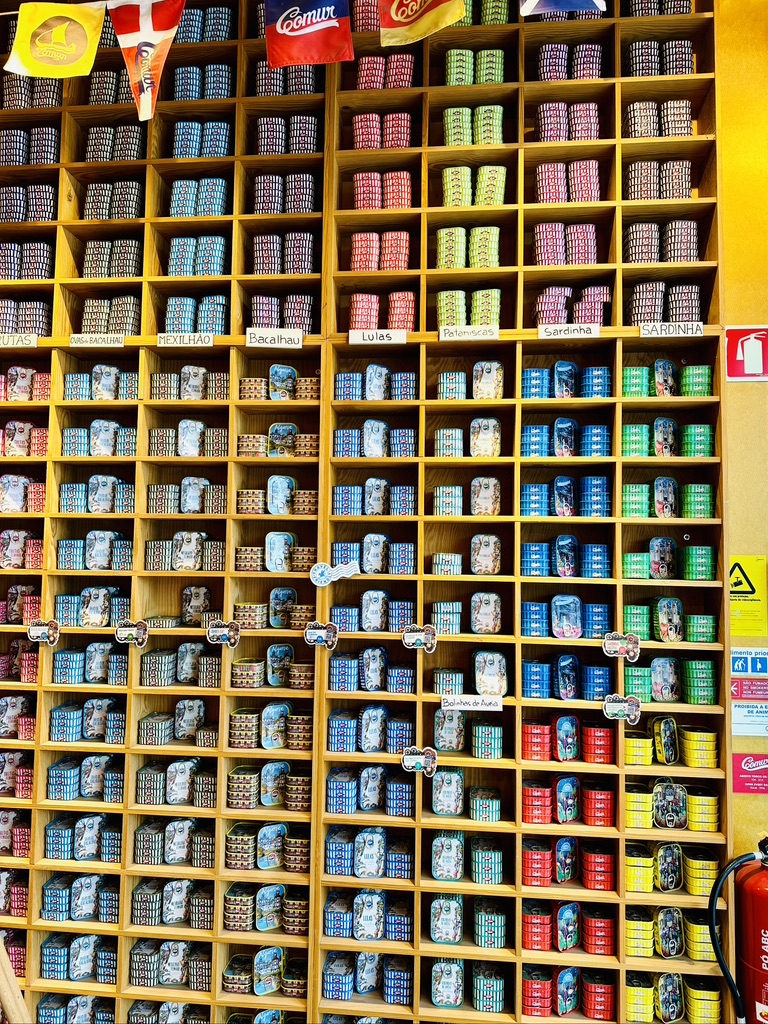
Colorful tins of preserved fish (of all varieties) at a shop in Faro
Storks nesting above the Arco da Vila, Faros
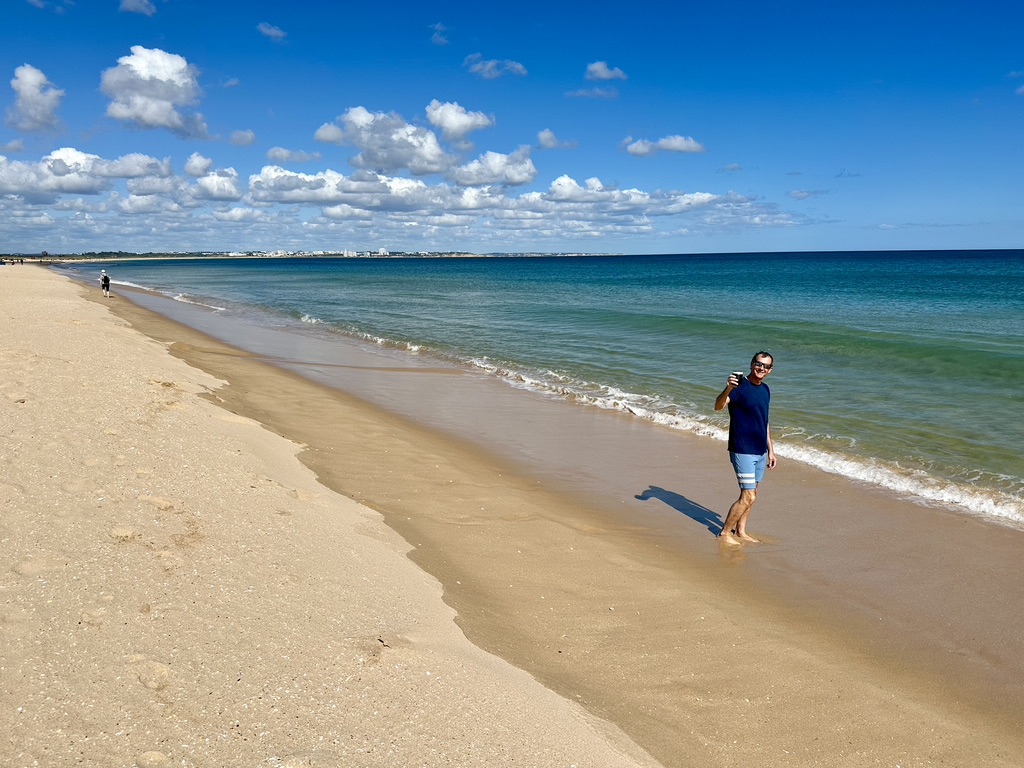
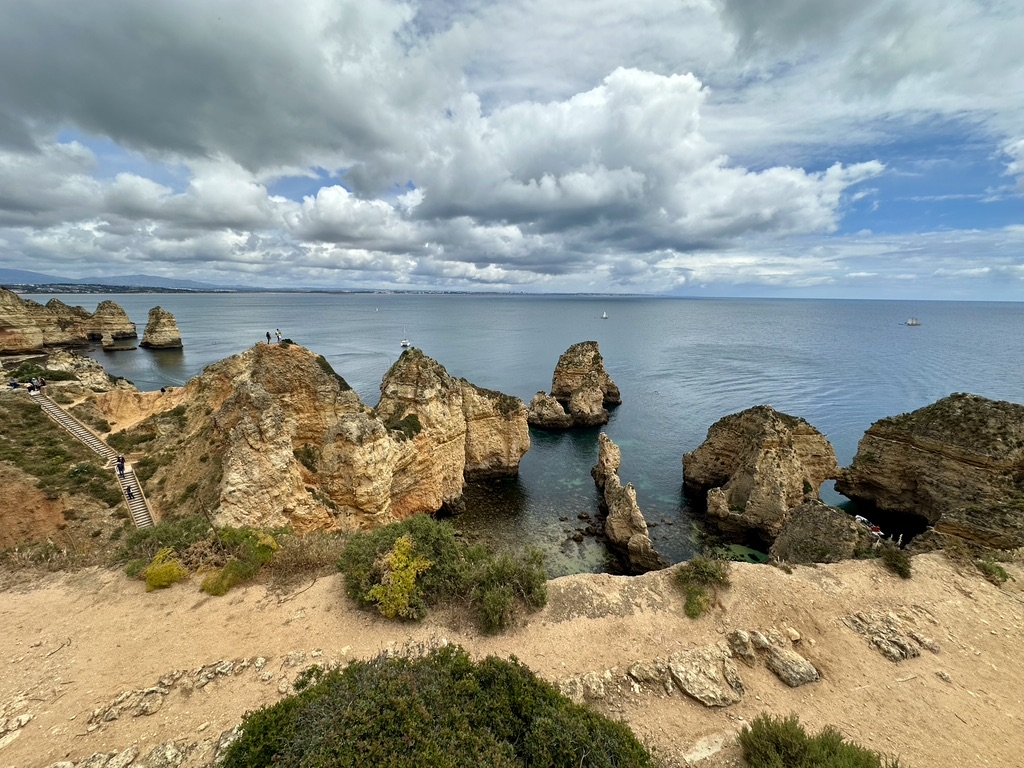
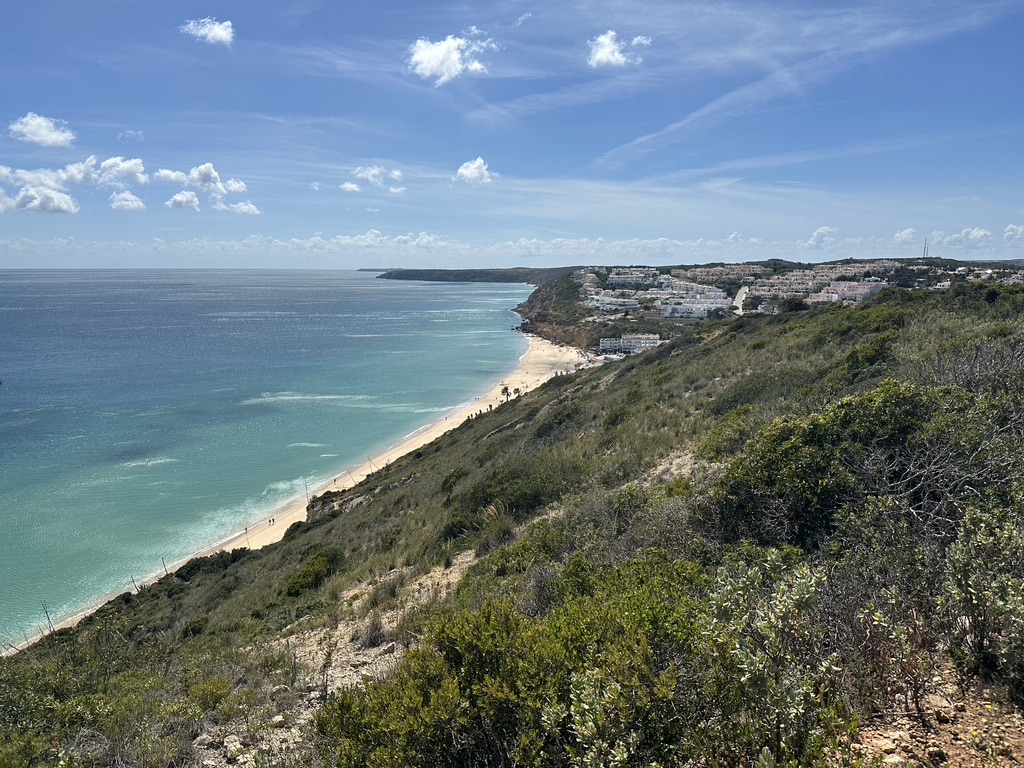
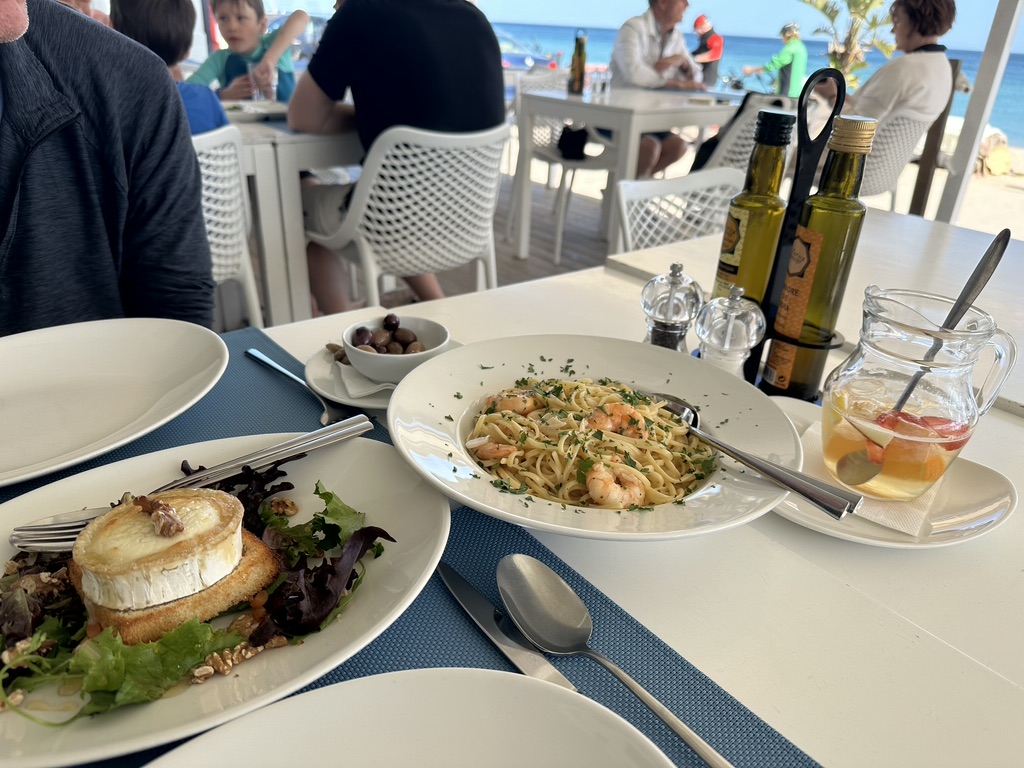
Lagos, our home for the next five days, can get pretty busy during the high season. But in late April, we felt like we had the entire three-mile stretch of Maia Praia, the main beach across the Bensafrim River from town, all to ourselves. Just behind the beach a boardwalk traverses the dunes and provided the perfect opportunity for morning walks, easily reachable from our accommodation overlooking the sea. A handful of restaurants were nestled in the dunes, offering a bounty of fresh seafood, fantastic wine and cold beer. In town, along with the tourist crowds, were an endless array of restaurants, gelateria, gift shops and charming squares. A walk out to Ponta da Piedade, at the end of the peninsula that juts out into the Atlantic from Lagos town, provided plenty of viewpoints from which we admired the limestone pillars and cliffs that fronted the ocean. After the seven mile roundtrip we found a small pizza joint and feasted on southern Italian-style pizza, salad and wine. After strolling around the old town on another day we found a table at Adega da Marina, one of Lagos’ most famous fish houses, to dine on grilled sea bass and swordfish steaks. On evenings out at the beach we enjoyed stewed baby squids and grilled turbot at Quintal do Peixe and more grilled sea bass at Gaivota Branca. One day we drove west out of Lagos to Sagres on the southwestern tip of Portugal to visit the town and the lighthouse on Cabo Sao Vicente. In Sagres we couldn’t resist the smell of barbequed chicken over a charcoal fire and had an impromptu lunch before getting back in the car for a short drive to the seaside village of Salema. From the fishing village we walked a couple miles along the clifftops to Praia Boca do Rio before returning to town and finding the lovely little terrace of Olhos N Agua, right on the waterfront. It seemed wrong not to stop for a pitcher of sangria, munch on a bowl of olives and indulge in a starter of baked goat cheese topped with honey and toasted walnuts, followed by a bowl of linguine tossed with shrimp. And yes, it was all delicious. Everywhere we went we found fresh seafood at reasonable prices, friendly service and outstanding views. The Portuguese wines were lovely at prices that couldn’t be beat. Before I knew it Lagos had won me over.
There’s a lot of empty beach outside Lagos
The view over Maia Praia from our rental
The landscape at Ponte de Piedade
Looking back towards Salema while walking to Boca do Rio
Waterfront dining at Salema
All too soon our week on the Algarve was coming to a close. We loved the lack of crowds during the shoulder season, but would have loved for it to be just a bit warmer (temps hovered around the low-to-mid 60’s) and for the wind to have died off (there was a definite chill to the north winds that were blowing) so we could’ve enjoyed that uncrowded beach a bit more. Alas, as we loaded the rental car for our drive out to the wild western coast of the Alentejo region, the wind did die off and we departed under a cloudless sky. Hopefully that’ll hold out until we return for our final three nights in another week and a half. In between we’ll undertake a coastal walk in the Alentejo, visit a medieval hilltop village north of Lisbon and explore the Douro Valley before our return to the Algarve.
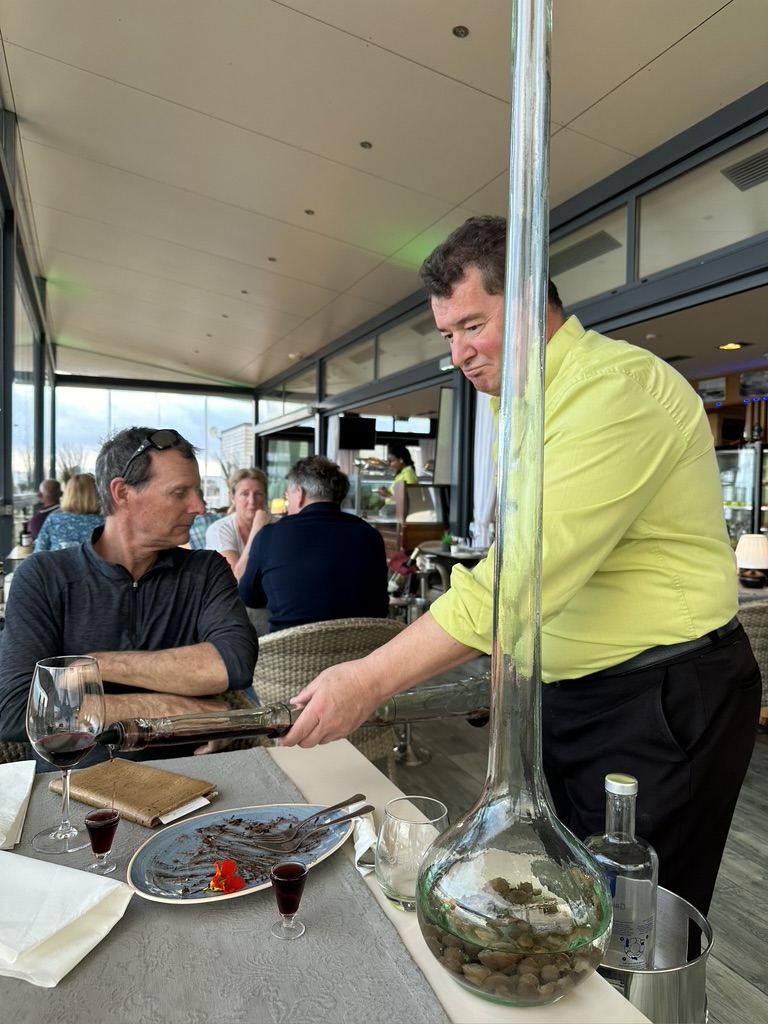
A pour of complementary port wine from a very large bottle into very small glasses following dinner at Gaivota Branca
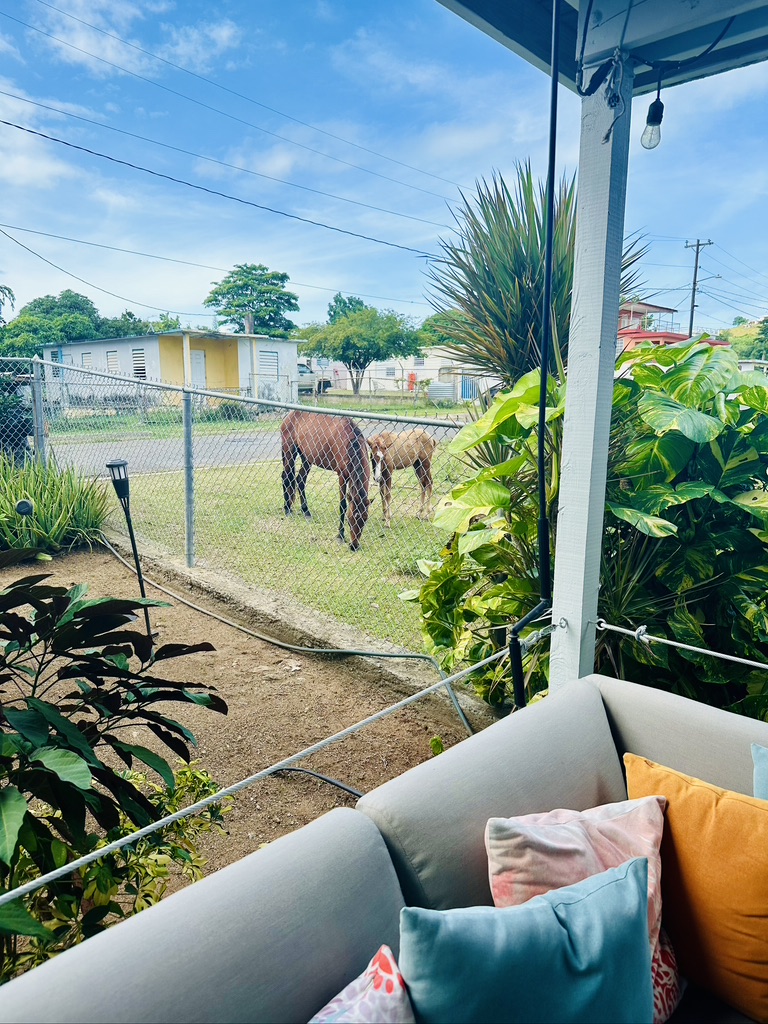
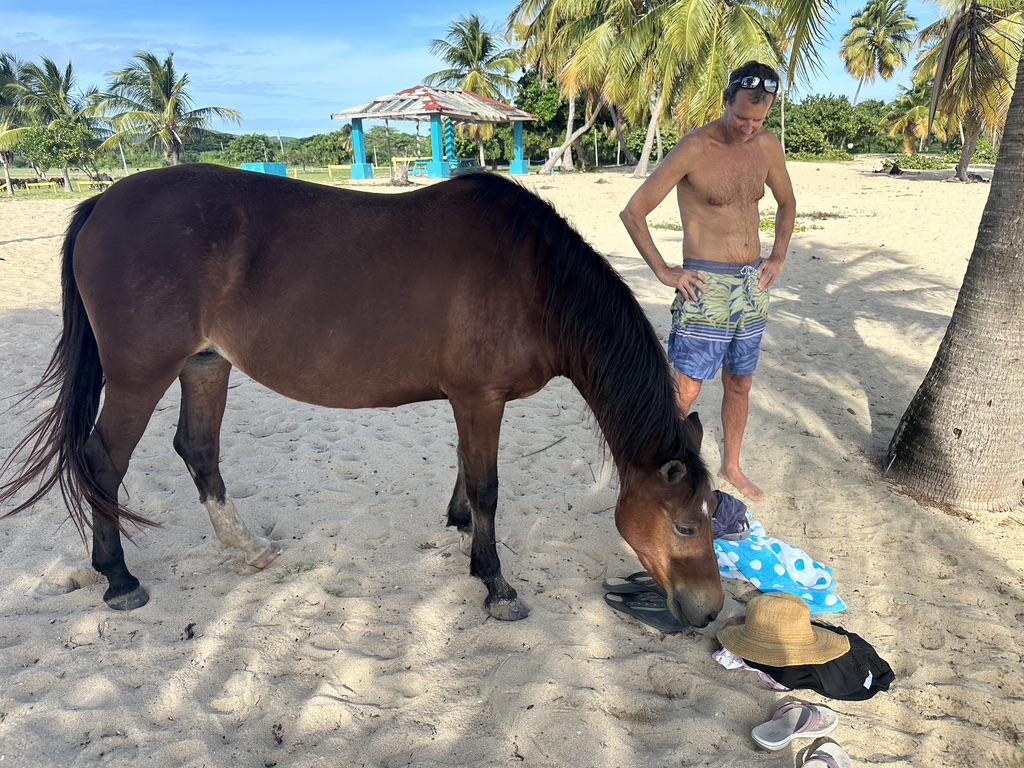
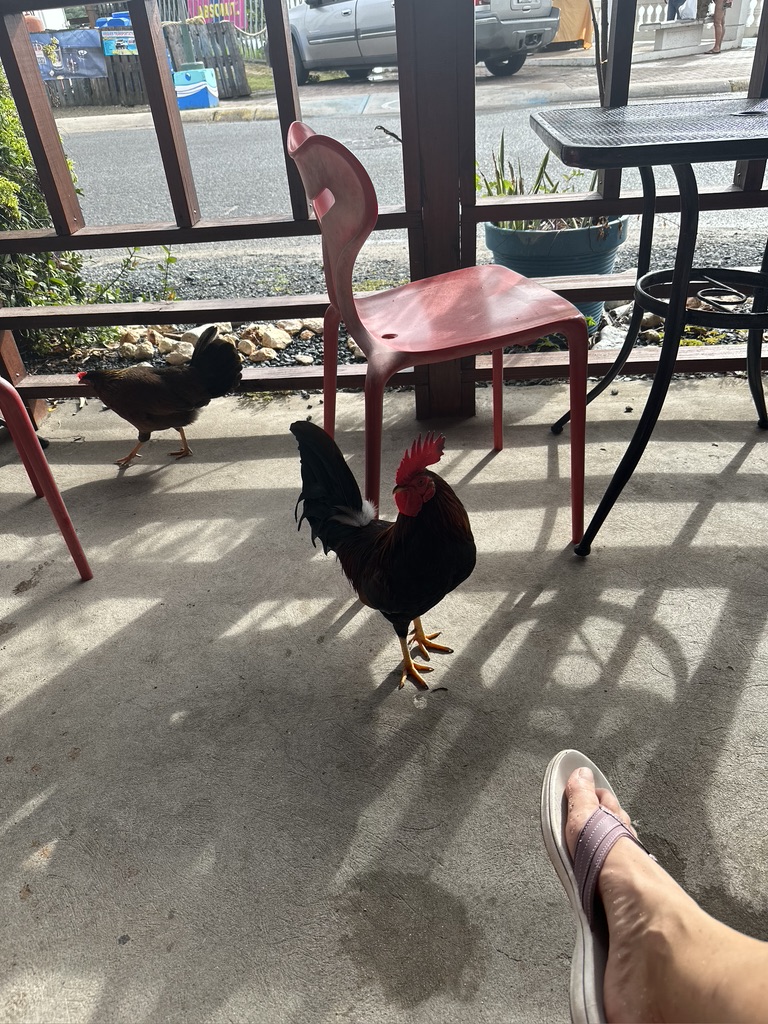
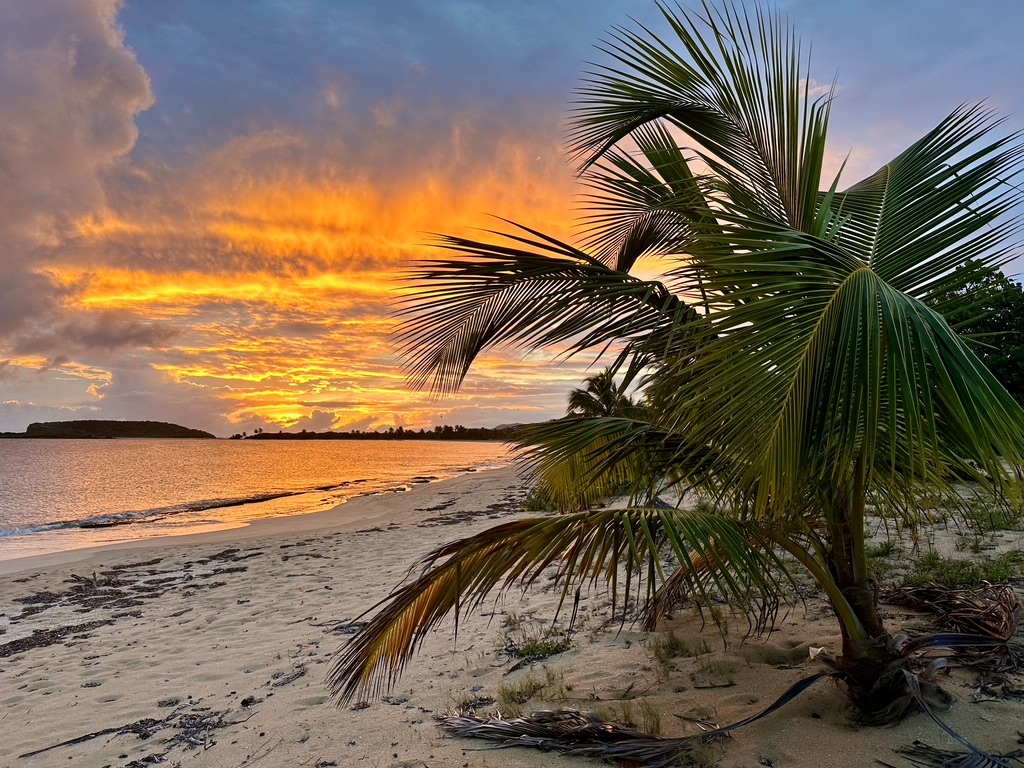
Esperanza sits on the southern coast of Vieques, which lies just off Puerto Ricos eastern coast. It’s an unassuming little beach town that overlooks a beautiful bay where sail boats bob on their moorings, the island of Cayo de Tierra (connected by a narrow strip of sand to the mainland) sits offshore and the mile-long stretch of Sun Bay Beach, backed by palms and sea grape trees, stretches eastward. A string of eateries, including Tradewinds, Lazy Jacks, Duffy’s, Bananas and Bilies offer traditional Puerto Rican dishes, fresh seafood and classic pub fare while diners gaze out over the water while the setting sun paints the sky in shades of red. Just behind the strip of restaurants, kayak tour operators, golf cart rental companies and the lone gift shop lies a local community of modest homes, pot-holed lanes and the towns two grocery stores. In the midst of this residential area we had rented a cozy casita for our two week stay. While staying in a local neighborhood, rather than along the main road, has it’s advantages (nice and quiet in the evenings and the friendly residents who always wave and say hello as we walk by), it also has its drawbacks. First, there are the horses. Vieques in general, and Esperanza in particular, has a horse problem. Hundreds of ‘free-roaming’ horses graze the grassy patches of the island and residents have to fence their yards or risk having their gardens and decorative plants nibbled to the ground. The streets of town are spotted with piles of horse poop. As small herds cross the highways they can stall traffic. Even on the beach, specifically Sun Bay, which is backed by a large open field which attracts them, they can be a bit of a nuisance – or incredibly cute, depending on how you look at it. On more than one occasion, as we sat in our beach chairs, one or more horses would wander over to our spot to sniff around our cooler hoping for a snack. Not receiving anything, though, doesn’t deter them. In fact, they usually then just hover over you until we gently prod them to move along. One afternoon, a group of five young mares came nosing around, then, satisfied we didn’t pose any sort of threat, decided to lay down and take naps next to us. Another minor issue is the chicken problem, or rather, the rooster problem. Like their equine brethren, hundreds of chickens wander the town and fences do not deter them from making themselves comfortable in your yard. While I always thought that roosters only crowed around sunrise, these pesky pollos belt out a chorus of cock-a-doodle-dos day and night. I can’t for the life of me figure out when these critters ever sleep.
Not really a problem – from our terrace in Esperanza
Nosy!
Siesta time
While the bulk of our two week visit revolved around afternoons on Sun Bay beach and evenings dining along the waterfront or lounging on the large terrace outside our casita, we did venture out of Esperanza to see some of the other sights on the island. Over 60% of Vieques is located in a wildlife refuge, which contains lagoons, beaches and mangrove forests as well as providing offshore protected areas for manatees and turtles. With a rental car we explored a couple stretches of the refuge to see the Kiani lagoon and La Chiva and Grande beaches. While we had the car we also made a stop at the ‘farmers market’ – a large truck which comes over on the ferry from the mainland twice a week and offers a variety of fruits and vegetables from a stand on the side of the road just outside the main town of Isabel Segunda. Another stop was the Crab Island distillery for their Saturday afternoon party with a barbeque, rum cocktails and a salsa band.
The rooster problem – dining along the Esperanza waterfront
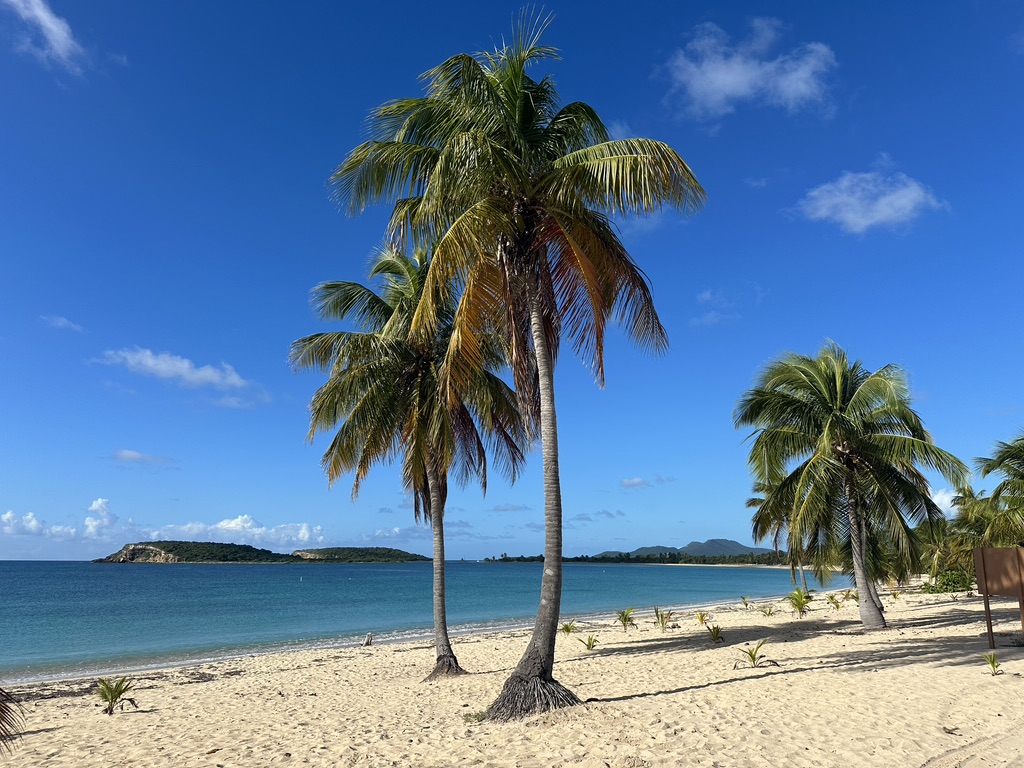
For us, though, it was all about time on Sun Bay beach. With the chairs provided by our host and a cooler filled with Puerto Rican craft beers, we would stroll over to the beach, enjoy a swim, or two or three, and take in the wonderful view of the sea, watch the occasional sailboat pass by, listen to the parrots squawking in the palm trees overhead and feel grateful for a chance to enjoy this little slice of paradise. As time here wound down our thoughts would turn to our next destination – just a hop, skip and a jump to another island group to the east . . . that story in the next TheRhumLine.
Sun Bay beach is best enjoyed during the day . . .
I pulled our rental car over to the side of the highway and executed a u-turn to before turning into the dusty dirt parking lot of Rancho Carbon Express, an open-air roadside stand offering delicious-smelling whole chickens turning on spits over a charcoal fire. It was the smell that had wafted in through the open windows of our car that first alerted us to its presence. As we drove past we spied the golden brown hens on the barbeque, but it was the sight of the long line of locals at the counter that convinced us to stop.
We had set out that morning from the popular surf town of Rincon, on Puerto Rico’s west coast, heading to Aguada, just a fifteen minute drive north, to spend the afternoon on the beach and then find a joint to enjoy some ceviche and a cold beverage, before returning to our accommodations. We were just over half-way through our two week Puerto Rico road trip, making stops along the coast before returning to our starting point in the capital city of San Juan. After our impromptu lunch stop we continued on to Aguadas town beach to enjoy an afternoon swaying in our hammocks beneath a sea grape tree, watching the pelicans and listening to the waves on the beach. To cap off the day we stopped at Olajas, a nearby beach bar, for rum drinks as the sun dropped into the sea.
Post-beach cocktails outside Aguada
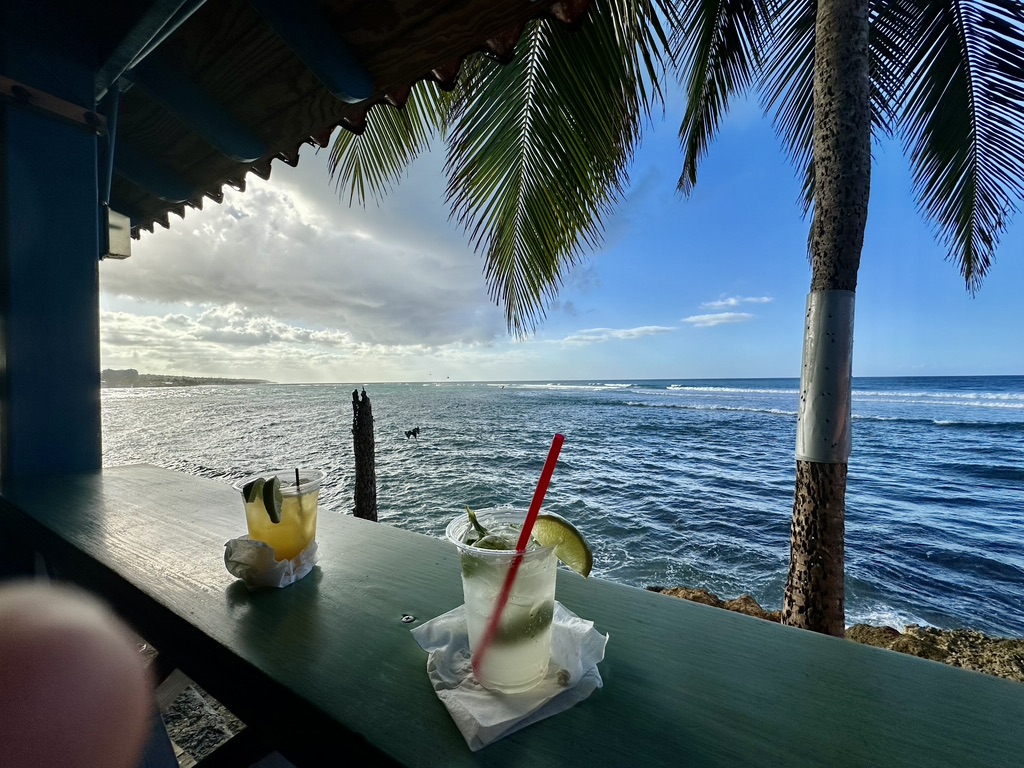
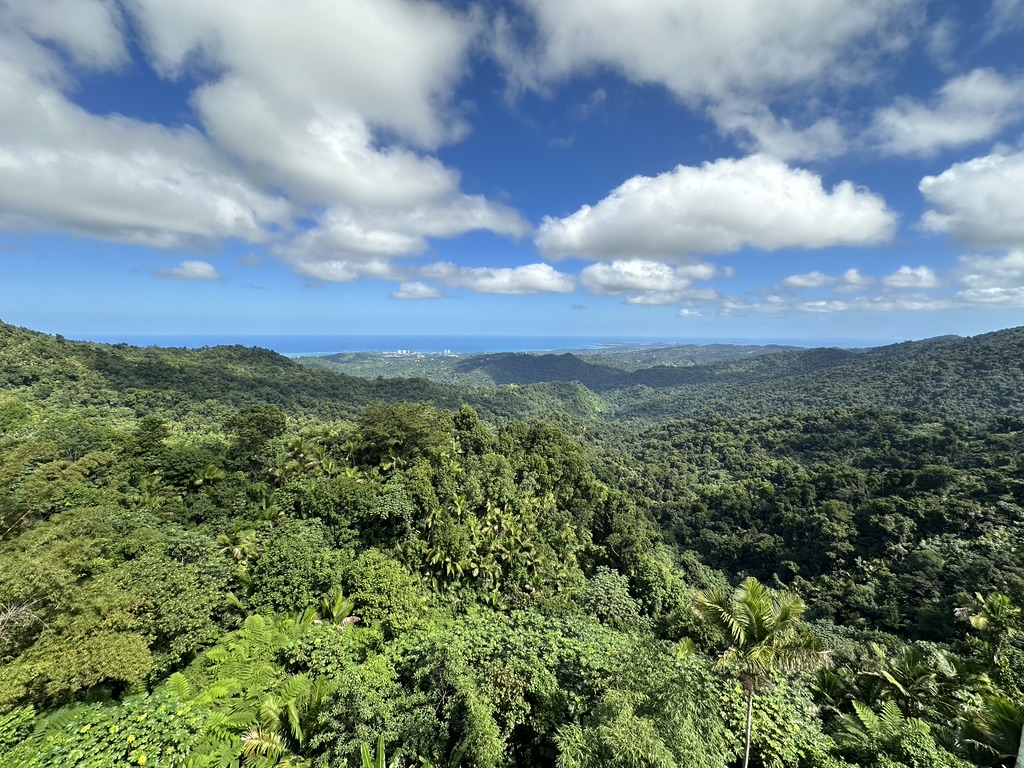
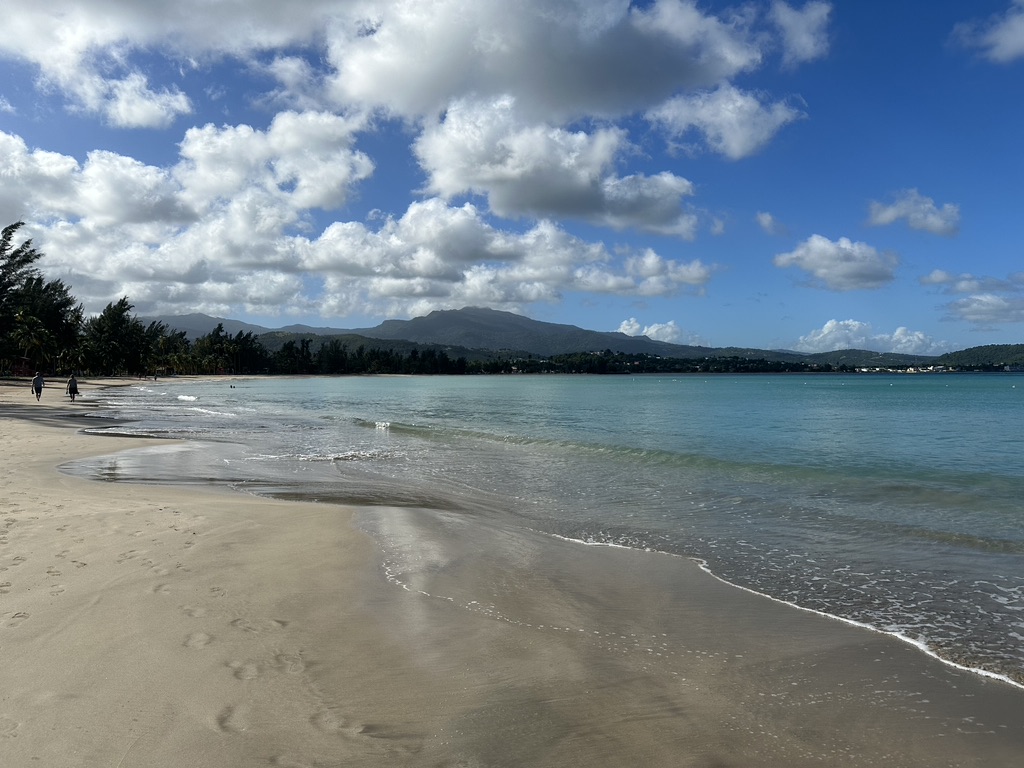
Our trip began with a couple days in San Juan, exploring the old towns cobbled streets and the remains of the forts and defensive walls dating back to the 16th century. We also spent some time on Carolina beach, just across the street from our Air B&B in the Isla Verde neighborhood, which was perfect for a morning walk, and where, in a sign of the times, the beach volleyball courts had been taken over by pickle ball players. After picking up our rental car we headed east to the beach town of Luquillo, via El Yunque National Forest, for three nights in a 17th floor condo with commanding views over Azul beach and the Atlantic ocean. The real gem of Luquillo lays just around a bend in the coast to the west from Azul beach: Luquillo beach is a long strand of golden sand with no development, calm water perfect for swimming and a commanding view of El Yunque, the islands highest peak. At the far end of the beach, just off the highway, a string of food stalls, known as the kioskos, offer all manner of typical food – mofongo (a popular dish of mashed plantains, usually topped with seafood or meat in a Creole-style sauce); grilled and fried seafood; paellas; ceviches; and of course cold beer and mojitos in dozens of flavors (we’re big fans of the passionfruit). Another beautiful beach in the Luquillo area is Seven Seas beach, where we spent an afternoon shaded by palms and pines while gazing out at the view of the Las Cabezas de San Juan lighthouse.
Beautiful Carolina beach
Colorful Old Town San Juan
A view towards Luquillo from El Yunque National Forest
From Luquillo beach to El Yunque
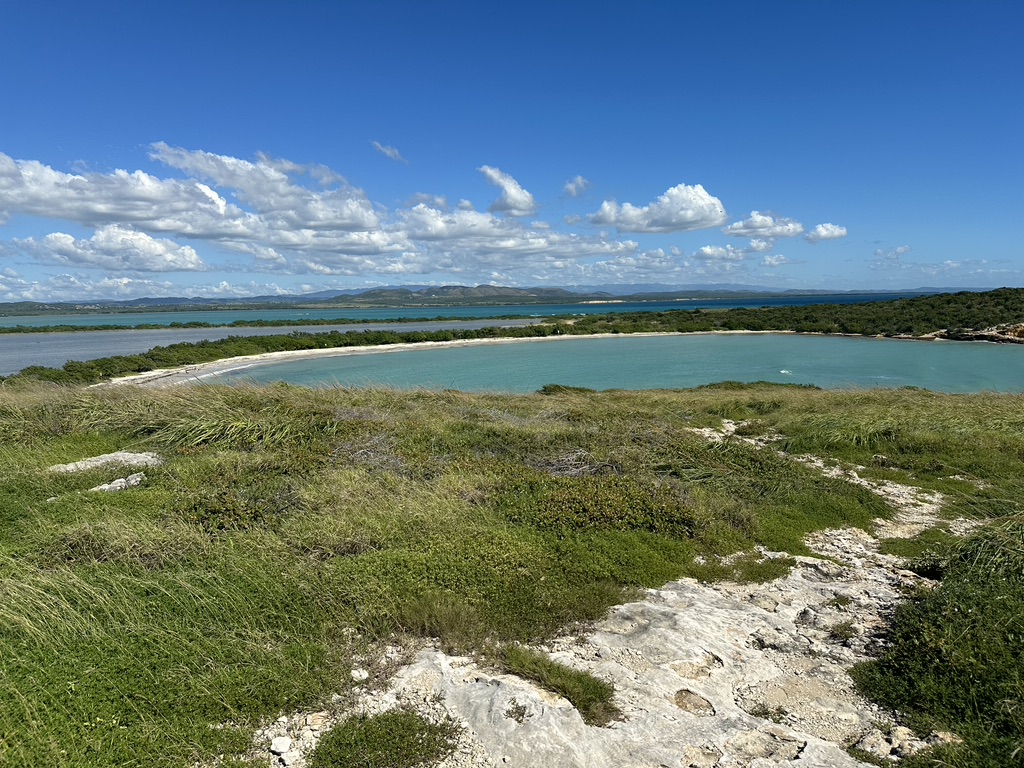
Our stop on the south coast would be just outside the town of Guanica, where we spent three nights at a parador, a family-run hotel on the site of an old sugar plantation. One day was spent exploring the Guanica State Forest, hiking a six-mile out and back trail to the remains of an old fort that had impressive views over Guanica Bay and out to the Caribbean Sea. Another day was spent exploring Cabo Rojo (Red Cape), which contained the Los Morillos lighthouse and Playuela beach. Afterwards we stopped in the small fishing village of La Parguera for one of the tastier meals we had on our road trip – small triangles of fried cheese drizzled with guava sauce followed by arroz con mariscos, yellow rice bursting with chunks of lobster, squid, shrimp and fish.
Looking toward the Caribbean from a hike in Guanica State Forest
The view from the Los Morillas lighthouse to Playuela beach on Cabo Rojo
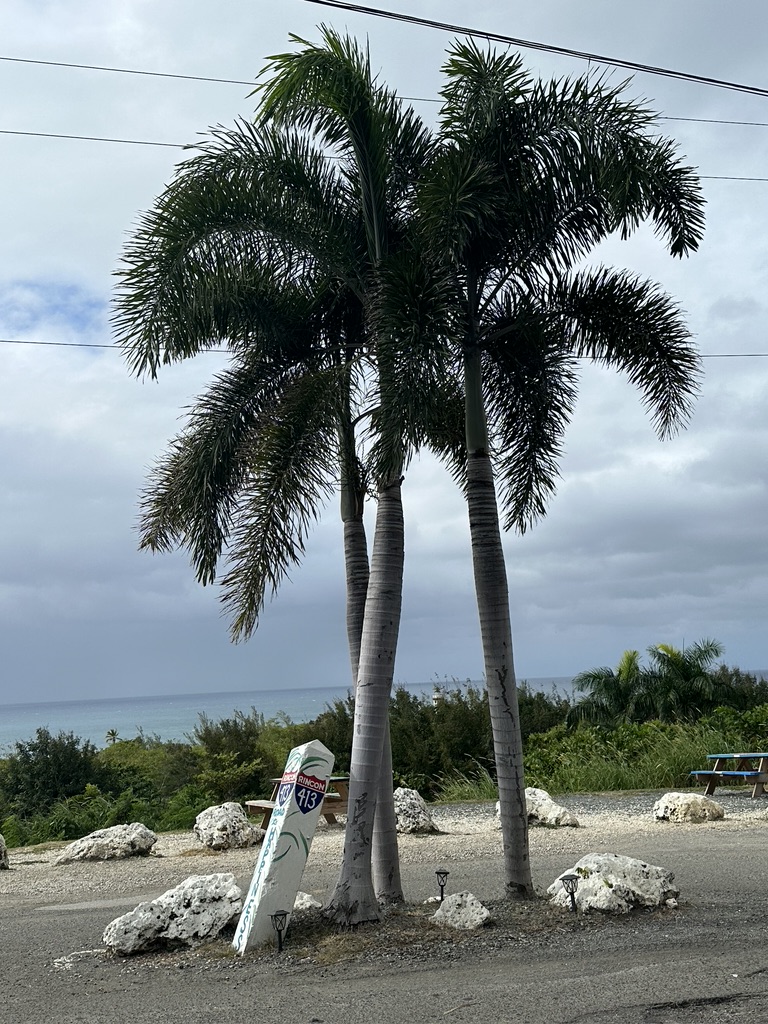
As mentioned earlier, Rincon is a popular spot on the islands west coast, known for its surf beaches with names such as Domes, Tres Palmas, Maria’s and Sandy Beach. From our guesthouse perched high on a hillside just above Sandy Beach, we could stroll down for acai bowls at Jake’s Java, pub fare at Big Kahunas or delicious seafood at Tamboo, perched right on the beach and ideal for sunset viewing.
Highway 413 passes through Rincon
Wrapping up our road trip, we returned to San Juan, dropped off the rental car and boarded a shuttle to catch the ferry that would take us across to the island of Vieques. A recap of our two week stay there coming in the next The Rhum Line.
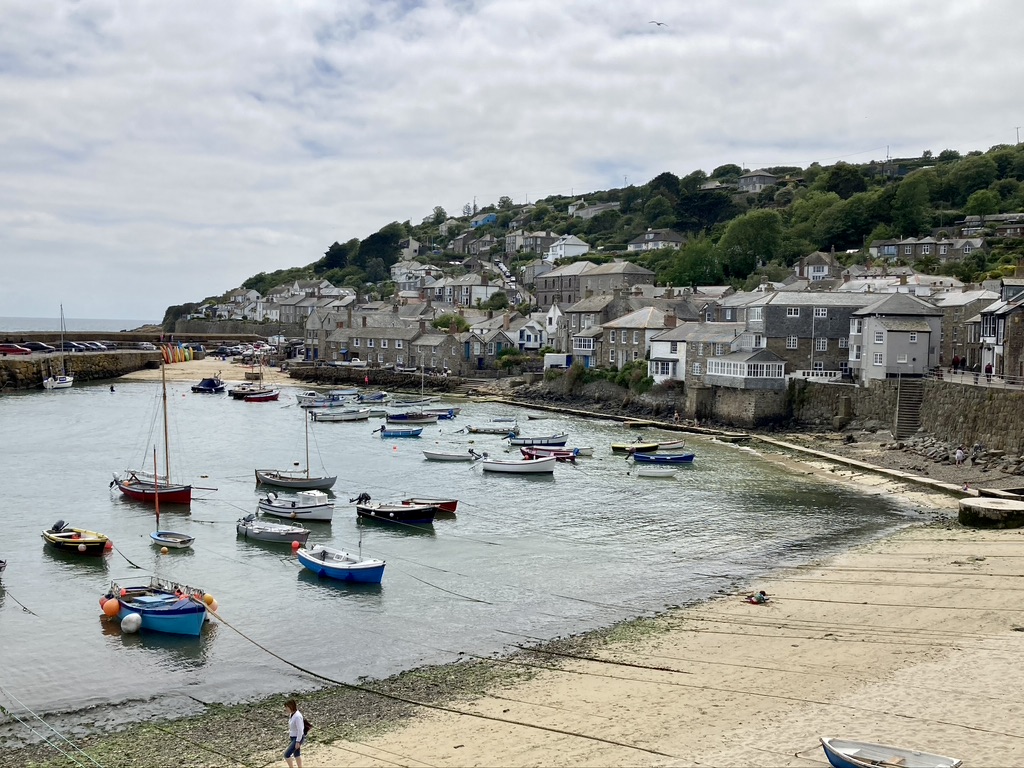
If you think of the world’s most well-known surf spots, Hawaii or Mexico’s Pacific coast might come to mind. Never had I thought of England as a surf hotspot. So I was genuinely surprised when I arrived in Newquay, on England’s southwest coast, to discover a rabid surf culture. As I traveled through Cornwall, the county that covers the southwestern part of England, I don’t think I’ve come across a more enthusiastic bunch of surf nuts than those found in Great Britain. Having just come from spending three weeks on the Spanish island of Menorca, and being unable to immerse myself in the waters of the Mediterranean Sea in May, I certainly couldn’t conceive of getting into the north Atlantic at the time. Yet folks were happy to don a wetsuit and hurl themselves into the frigid water (55 degrees at the time) in order to spend hours attempting to ride small waves, and some were crazy enough to enter the water – without wetsuits – to swim! Absolutely nuts!
Newquay would be the starting point for a week of walking along the Cornish coast, where I met two old friends (Mark, Matt and I have been doing canoe trips in the Boundary Waters of northern Minnesota for several years) to tackle a section of the South West Coast Path. The SWCP is Britain’s longest national trail, measuring a whopping 630 miles, running from Minehead to Plymouth through three counties on the southern coast. By the time we finished in the town of Penzance, we would cover 88 miles, climb about 15,000 feet (and descending the same amount as we started and ended at sea level) and wonder at the sanity of those crazy Brits and their affinity for cold water.
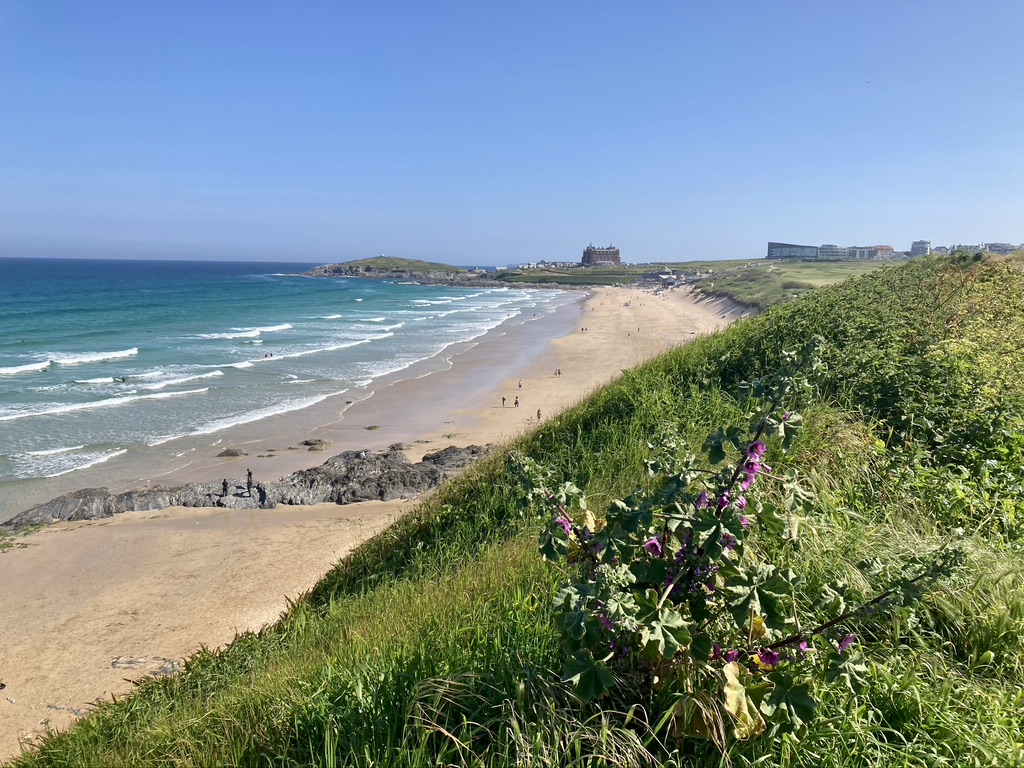
Matt, as he does on our canoe expeditions, handled the logistics of route planning, including making reservations for each of our eight nights of the trip. He also retained the services of a baggage transfer company, who would pick up our large bags from our accommodation each morning and drop them at our next nights guesthouse, allowing us to walk with only a daypack. With a daily distance averaging 12.5 miles, we expected to walk about six hours a day, which would typically have us savoring our first pints by 4pm. After a hearty ‘full English’ breakfast (eggs, bacon, sausage, hash browns, beans, mushrooms, broiled tomatoes, toast, yogurt and muesli) we were fueled for our first days walk. Starting from the center of Newquay the path wound through urban streets, past the small town harbor and then followed a sandy trail squeezed between a golf course and Fistral Beach (‘the home of British surfing!’) before cutting through a peaceful residential neighborhood and eventually bringing us to the Gannel River. We crossed over the river using the ‘ferry’, a small open skiff piloted by a jovial local who runs folks to the opposite bank in the summer, allowing walkers to bypass the 2-mile trek around the Gannel. Leaving Newquay behind we walked through rolling dunes and fields to start what would become the routine for the next week: strolling along wildflower studded cliffs with endless views along the coast before descending down to a stretch of beach or a small rocky cove, then climbing back up again for another session of cliff walking. At the end of our first day we dropped down to Perran Sands, a three-mile stretch of golden sand that led us to the seaside resort town of Perranporth and a well-deserved beer at The Watering Hole before we checked in to our accommodation.
Fistral Beach in Newquay
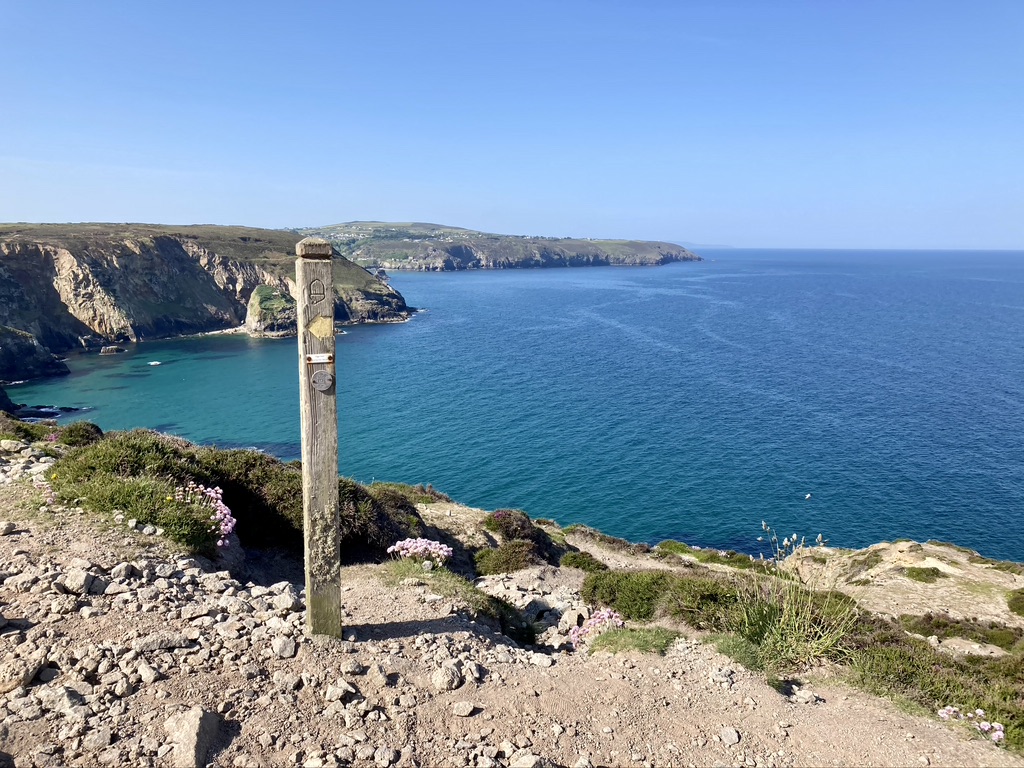
Just follow the acorn – a SWCP signpost
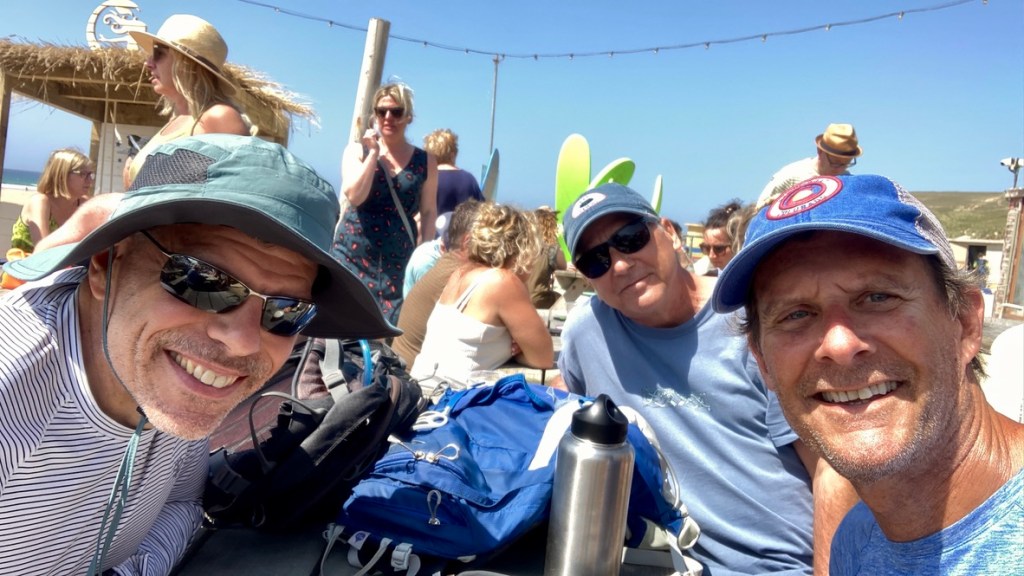
Thirsty walkers at The Watering Hole at the end of Day 1
We wouldn’t be starting every day with the ‘full English’. At the Seiners Arms in Perranporth, I enjoyed avocado toast topped with a poached egg and drizzled with a citrus vinaigrette. A very civilized (and with less arterial stress) way to start day 2. We easily fell into the rhythm of walking the easy paths on the clifftops, brushing past clumps of blooming flowers, including sea thrift, bluebells, foxglove, heather and the small pink flower of Jupiter, which would at times fill entire fields. After striding effortlessly for a mile or so we would come upon a steep descent which would soon be followed by an equally steep climb. By midday we reached Trevaunance Cove and the small village of St. Agnes. Here we would enjoy our first Cornish pasty, a meat-filled hand pie that is one of Cornwalls most famous foods. They would prove to be the perfect lunch item, found in every village bakery, able to withstand several hours of travel in our packs, and both delicious and filling. Pushing on from the pretty cove at St. Agnes we reached our days destination at Portreath, in time for a tasty pint at our guesthouse, the Portreath Arms. While there was plenty of beer on offer, it being a Sunday there was no food available after 3pm. After trying a couple other pubs, and failing to find anyone offering dinner, we settled on the only option available – a Chinese takeout. So rather than fish and chips or a steak and ale pie, we dined on pork with beansprouts, sweet and sour chicken, beef and mushrooms, fried rice and prawn crackers.
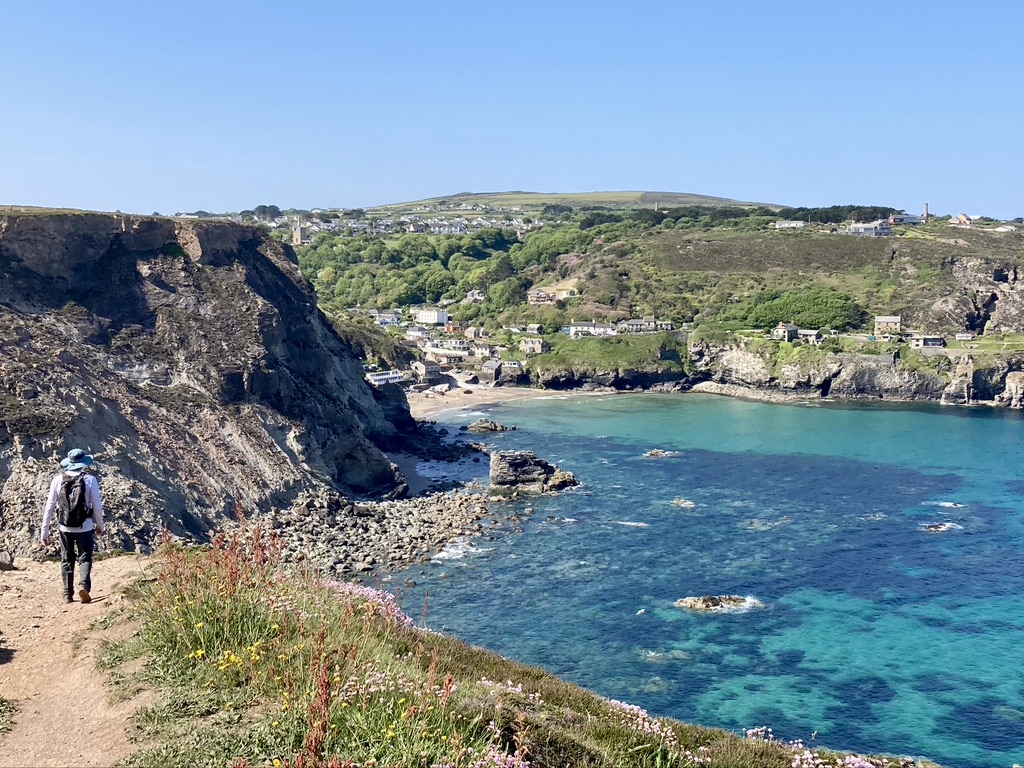
Mark leads the way down to Trevaunance Cove
Sea thrift lines the path
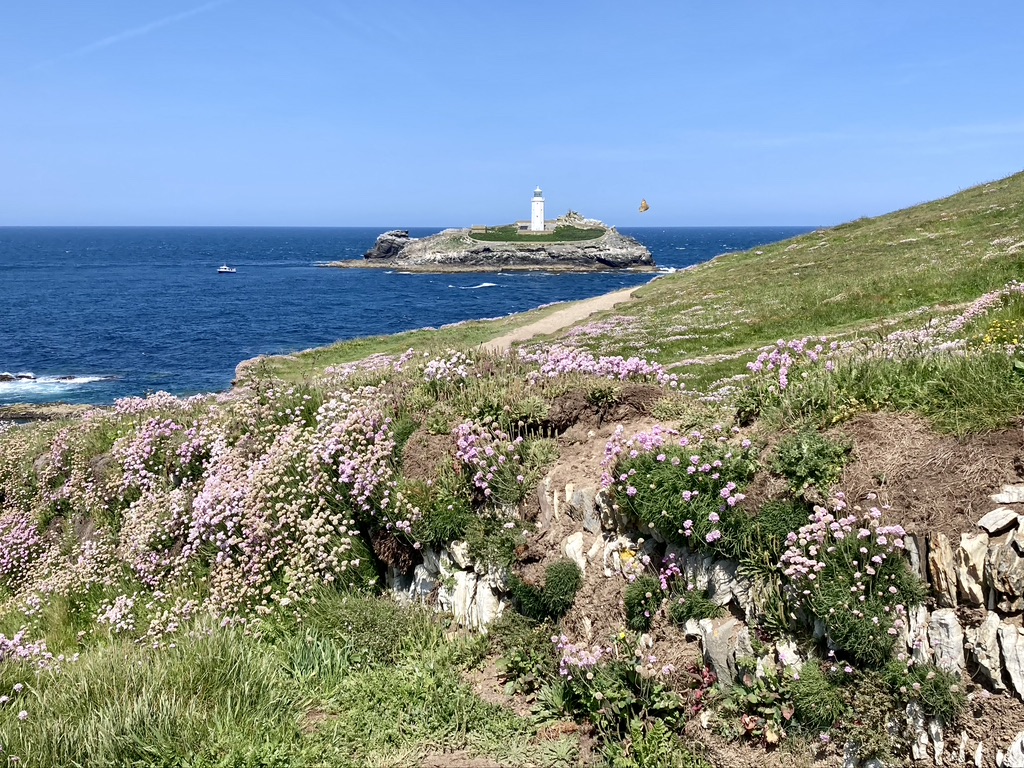
Day 3 had quite a bit of cliff walking, a trip around Godrevy Point past it’s pretty island lighthouse, then a fair bit of traipsing through the Upton Towans, the hummocky dunes behind Gwithian Beach, before finishing the day with a barefoot stroll along the sand of Hayle Beach, which brought us right into the town of Hayle and our stop for the night at the White Hart Inn. Offering a cozy pub and decent dining room, we saw no reason to leave the premises this night. The following morning we departed Hayle, walked through the charming, leafy village of Lelant before hitting the coast again. Next came Carbis Bay, tucked onto a steep slope above the bay of the same name before entering St. Ives, the most touristy town we encountered in the week. It was a weeklong school holiday, and the narrow cobblestone lanes of town were crammed with families headed to or coming from one of the three beaches bordering town. We stopped briefly at a bakery to pick up sandwiches before continuing on to a spot above Clodgy Point, where we sat on a grassy slope above the sea to have lunch. The day would end at the village of Zennor, lying about a mile inland from the path, with a pint of local beer at the Tinners Arms, before walking through cow pastures to reach our beds for the night at a farmhouse B & B just outside town.
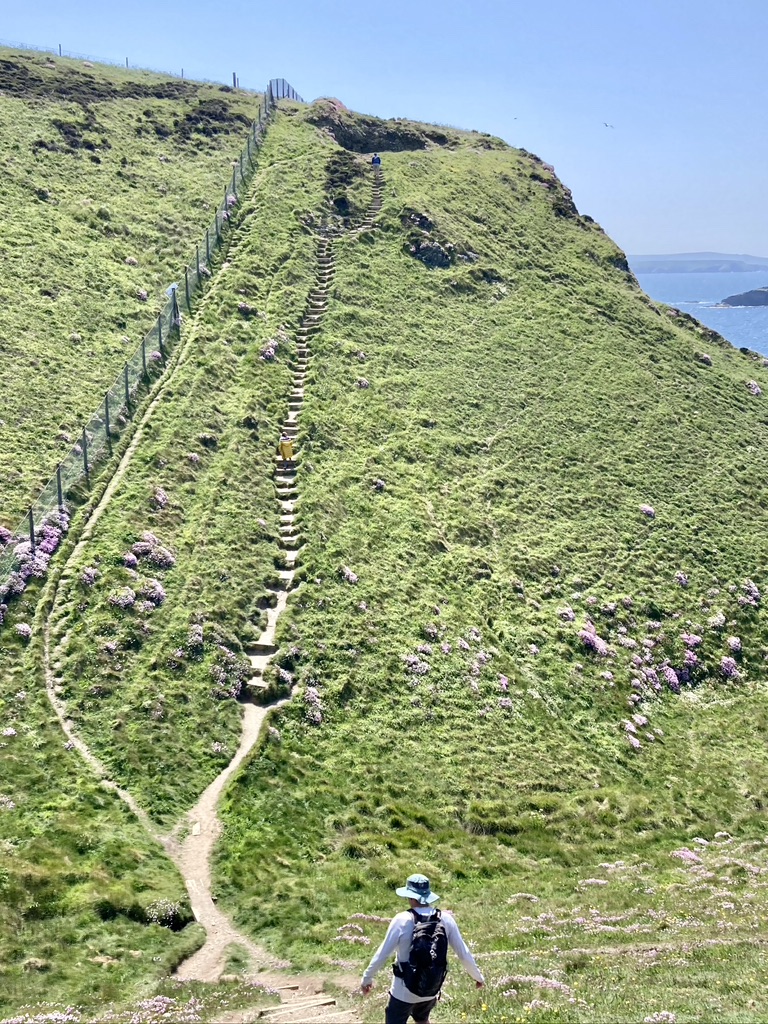
What goes down must go back up . . .
A view of the Godrevy Point lighthouse
The only thing(s) between me and my pint at the Tinner’s Arms
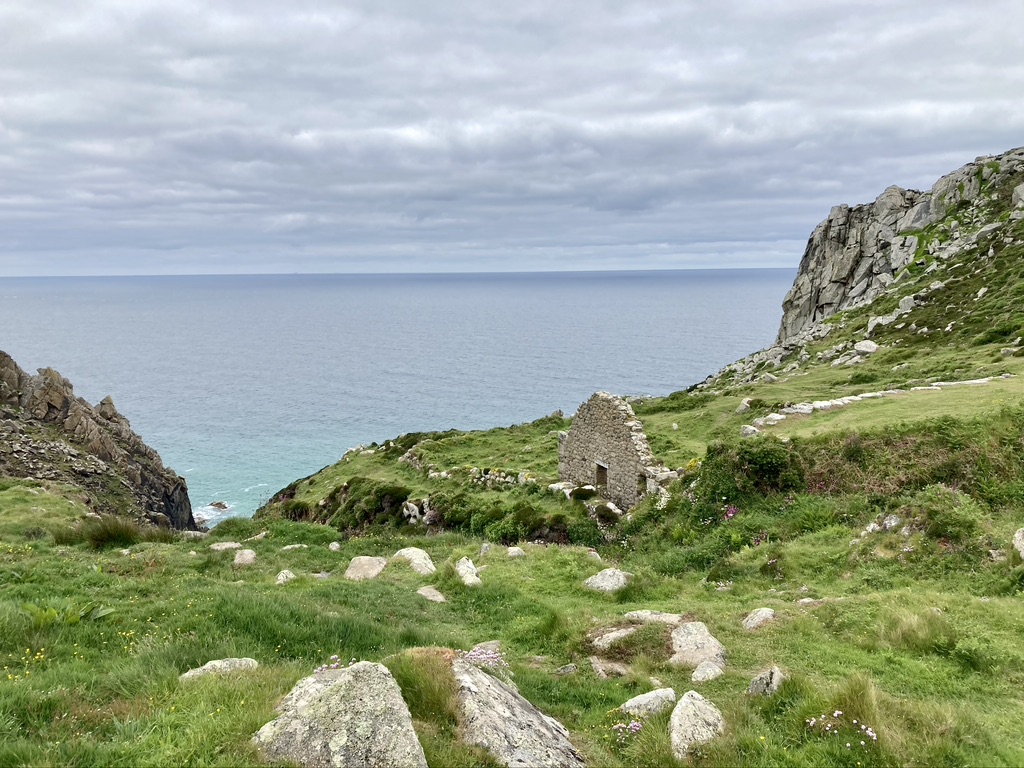
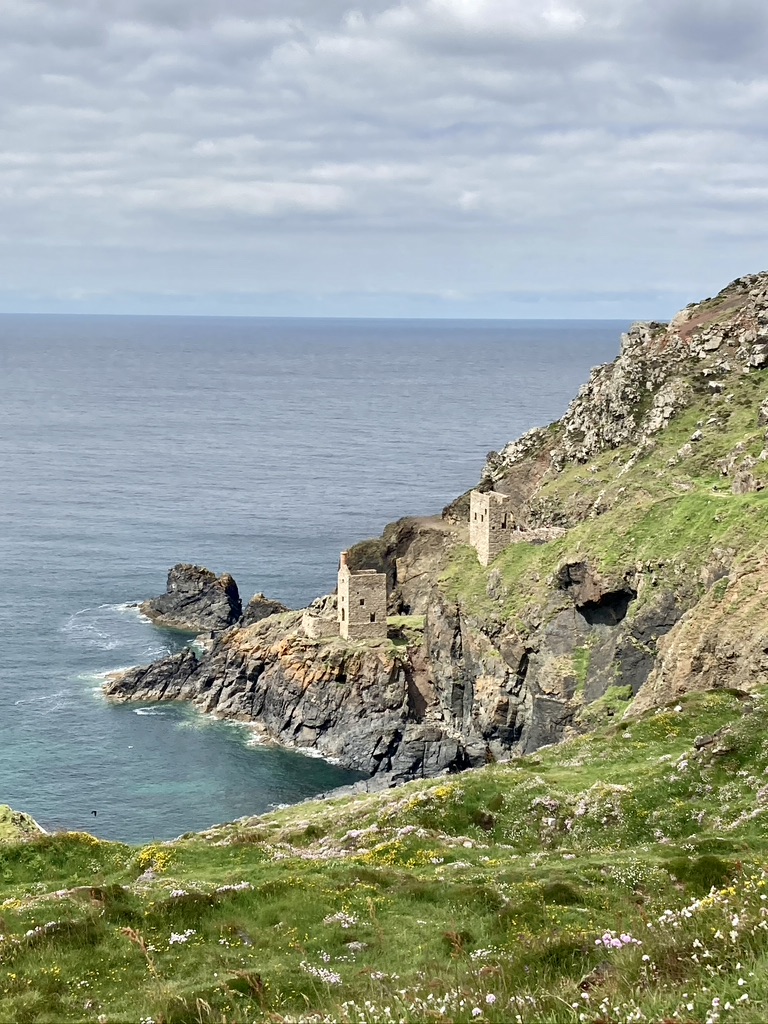
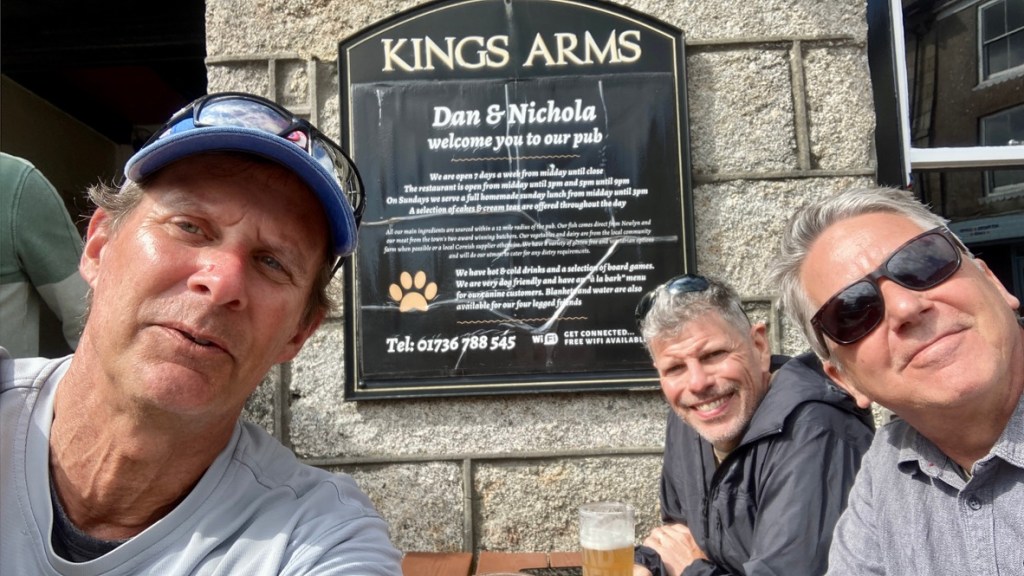
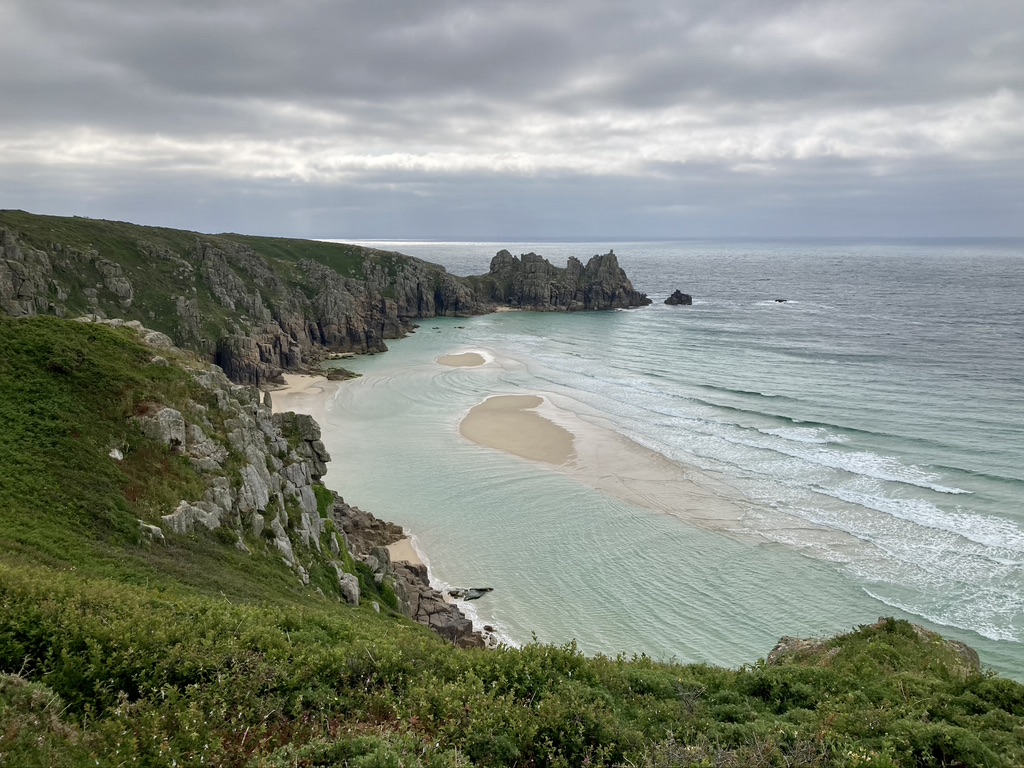
Leaving Zennor the next morning, a friendly farmer pointed out a shortcut through his property that took us back out to the coastal path and we were on our way past Gurnard’s Head, Porthmeor Cove and the Pendeen Lighthouse before stopping for lunch at a cafe outside the Geevor Tin Mine. We had entered the ‘Tin Coast’ of Cornwall, with much of the next two days passing the ruins of the areas mining heritage. We ended the day in St. Just, joining the locals for a few pints at the King’s Arms, relishing the sunshine from the tables outside overlooking the town square. Day 6 would take us around Land’s End, England’s westernmost point, and what turned out to be a mostly disappointing over-commercialized fun park. Folks were lined up to have their pictures taken at the Land’s End sign, the fudge shop was doing a brisk business and, if one wanted to, indoor mini-golf was on offer, along with a petting farm and a pirate museum. We quickly pressed on and soon left the crowds behind to enjoy the quiet of the clifftop and fields of flowers before descending to the small village of Porthcurno, our next-to-last stop, and our room at the Seaview House B&B. Tiny Porthcurno had no pub or restaurant, so we had to call a taxi to take us to the nearby village of Treen, where we found the popular Logan Rock Inn and it’s sunny garden. A couple rounds of beer were followed by an outstanding meal of crab bisque and grilled mackerel.
The ruins of a cottage outside St. Just
Remnants of the mining heritage along the ‘Tin Coast’
The best part of the day
Looking down on a cove outside Porthcurno
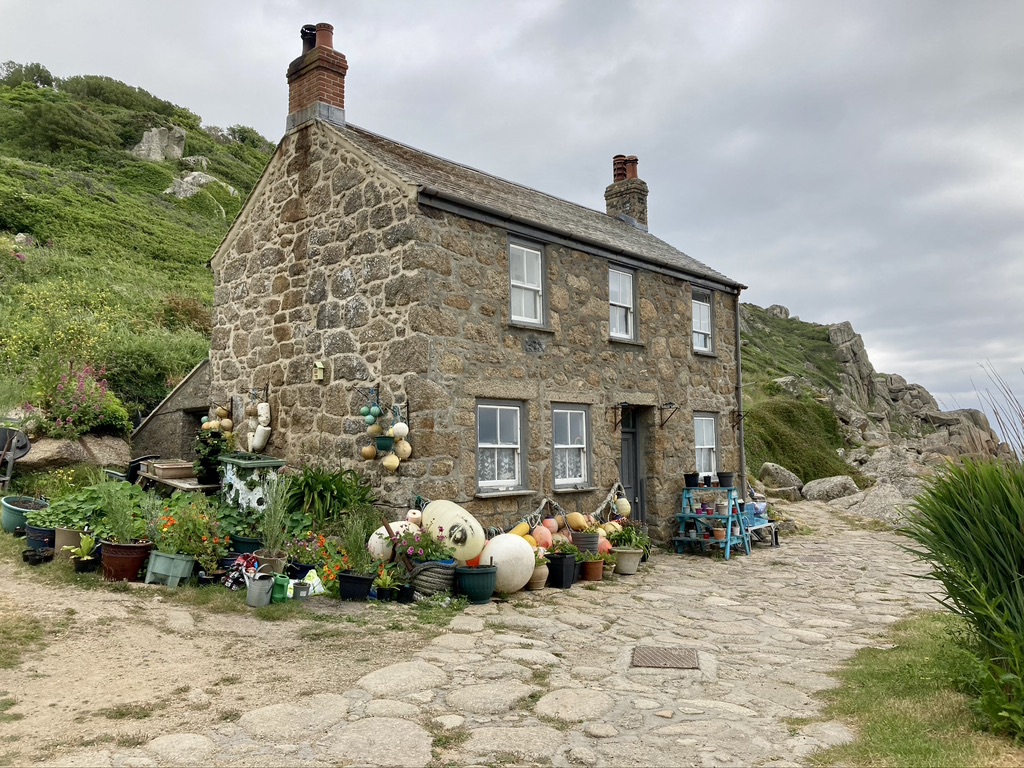
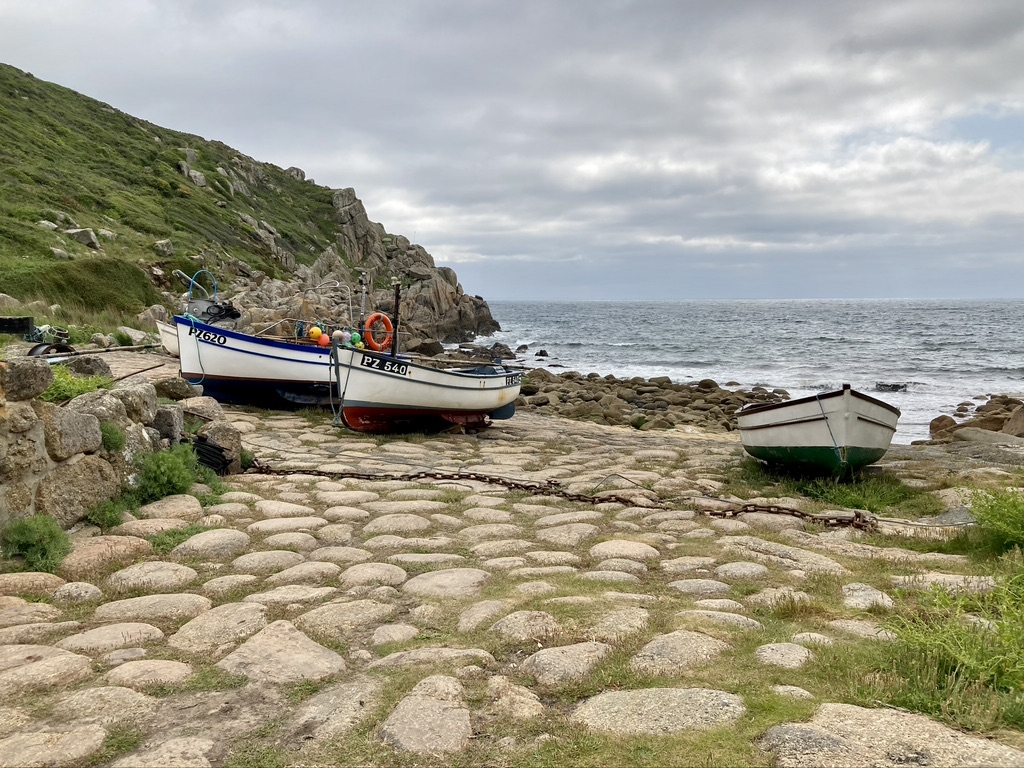
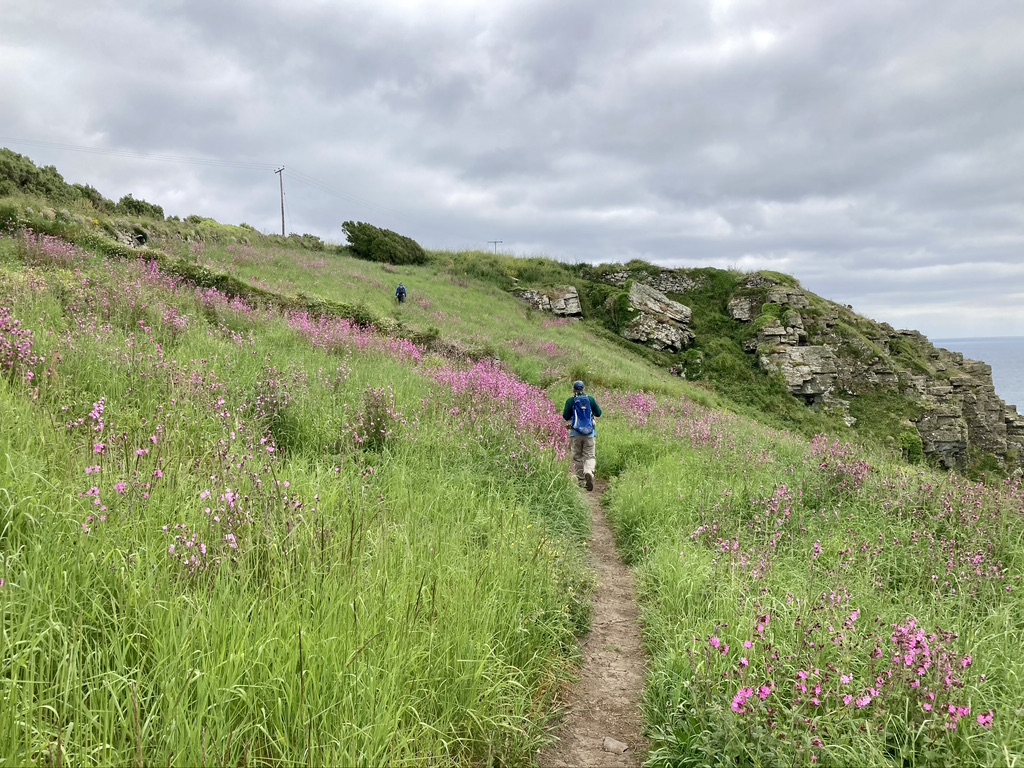
Our final day began with a climb out of Porthcurno to follow the cliffs before descending to the incredibly quaint hamlet of Penberth Cove, consisting of a cafe and a handful of cottages situated amongst a riot of colorful flowers. Several more climbs and descents reminded us we weren’t quite done yet, but after the final drop down to pretty Mousehole, we finished on four miles of pavement through Newlyn and into Penzance, ending at the comfortable pub at the Longboat Inn. The following day we would go our separate ways – Mark returning to Washington D.C., Matt and his wife heading south to Portugal, and I would make my way home to Colorado to be reunited with Heather, where all the fabulous recreation opportunities of a summer in the Rockies awaits.
A fisherman’s cottage in tiny Penberth cove
Looking out from Penberth Cove
A last stretch through a field of Flower of Jupiter
Mousehole, where the trail ended and the pavement began – only four more miles to Penzance!
“I’ve got an idea!” is how many of our best trips have begun. Heather and I had been searching for a location for a spring trip, something to take the chill off a long winter in Colorado (our first in ten years). I had been looking at a couple of possibilities for a month-long stay: the Adriatic coast of Croatia and the Algarve region of southern Portugal. Then Heather made her exclamation and suggested Menorca. “What does a Jewish candleholder have to do with our trip planning” I thought to myself. Seeing my curious stare, she clued me in to what would turn out to be a little gem of a spot.
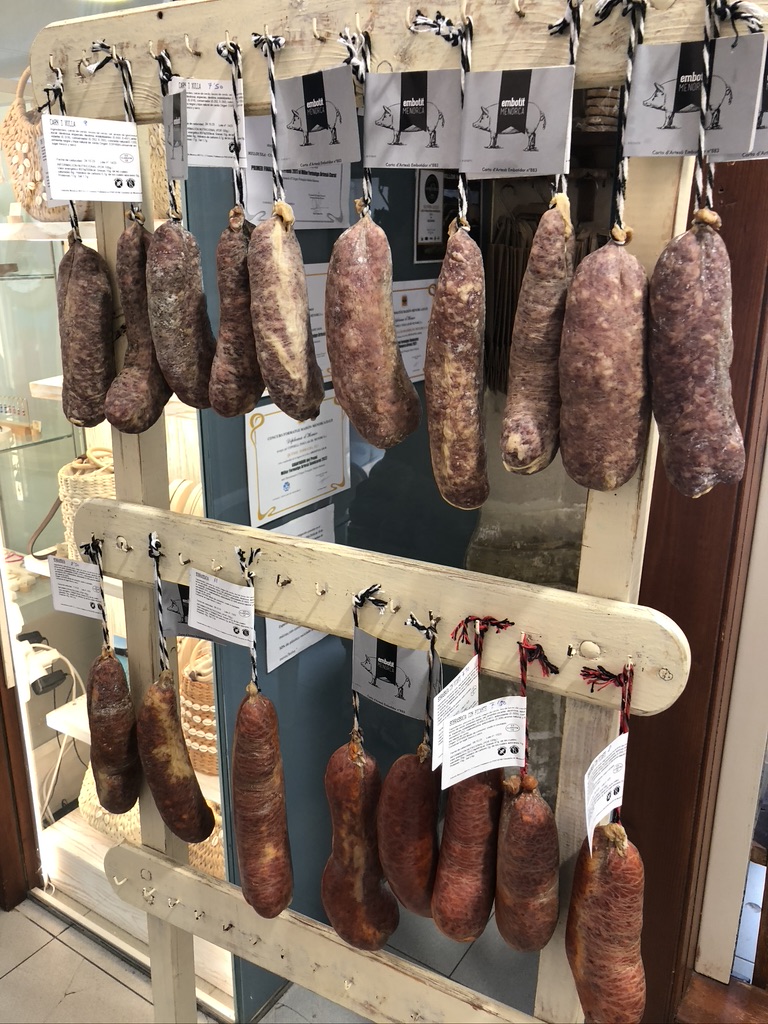
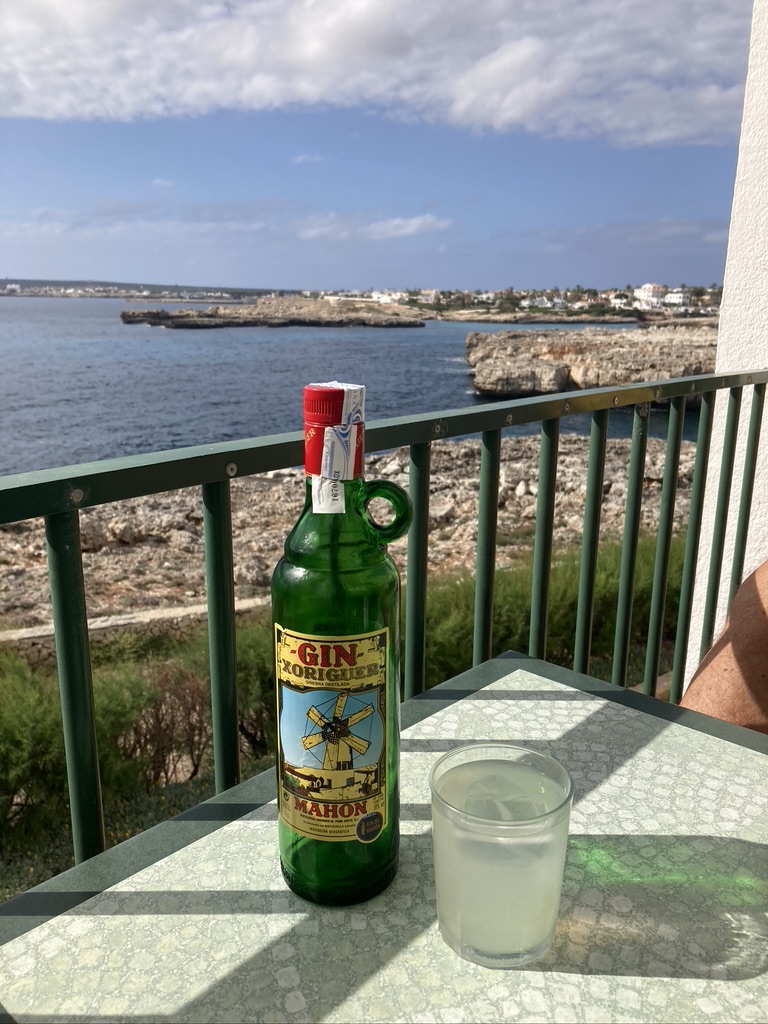
Lying in the western Mediterranean Sea, the Balearic islands sit just off the Costa del Sol of southern Spain. Ibiza is probably the most well known, famous as one of Europe’s hottest party spots. Mallorca, the largest island of the group, boasts mountain scenery as well as beautiful beaches and the cosmopolitan city of Palma. Tiny Menorca sits on the eastern edge of the group and has several stunning beaches of its own, the same clear aquamarine waters along its coast and enjoys the same sunshine as the others, all with just a fraction of the visitors. Along with being much quieter than its neighbors, Menorca also boasts a bevy of locally produced products such as gin, cheeses and sobrassada – a pork sausage found on cheese boards and in stuffing (such as the stuffed calamari I enjoyed our first night). Another unique asset to Menorca – the Cami de Cavalls, is a 110-mile walking trail that rings the island, connecting a series of 14th century stone defensive towers and offers opportunities to access remote beaches and affords stunning coastal views. And there’s also the wind. I’ll get to that later in the story. Suffice it to say, we were excited to begin our three-week visit and feast on seafood, sip local wines and pomades (a drink combining the local gin and fizzy lemonade), bask in the sunshine and get a fair bit of walking in as well.
Sobrasadda hanging in Ciutadellas market
A pomade with a view from our apartment
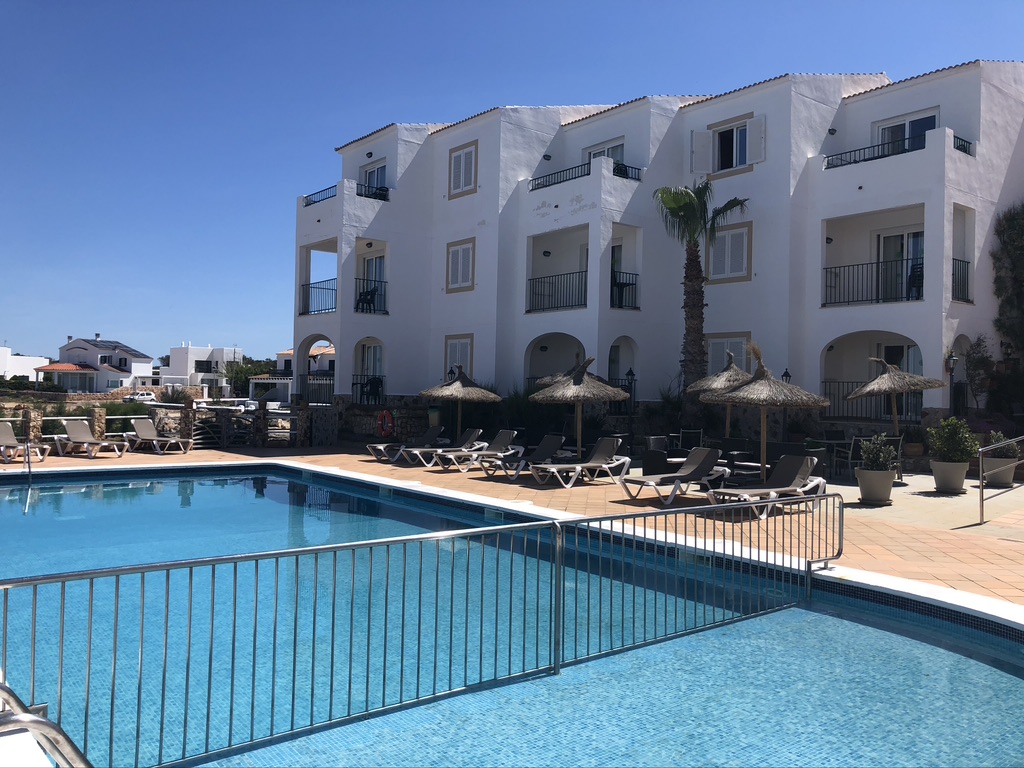
Our base for our stay would be in the small community of Cala Blanca, on the islands ‘south coast’, which actually faces west. We had rented an apartment overlooking the sea, with killer sunset views, a pool, an on-site restaurant (which would prove to be one of the best we visited on the whole island), easy access to the Cami de Cavalls and a village center with well-stocked grocery stores and several other dining options. We had rented a tiny Fiat 500 for the duration and picked it up just after arriving at the airport outside the capital city of Mahon. After a 45-minute drive along the main highway we arrived to Cala Blanca, got settled, dined on stuffed calamari and roasted chicken and then promptly fell into bed, exhausted from a 26-hour travel day.
Apartamentos Blancala – home, sweet home
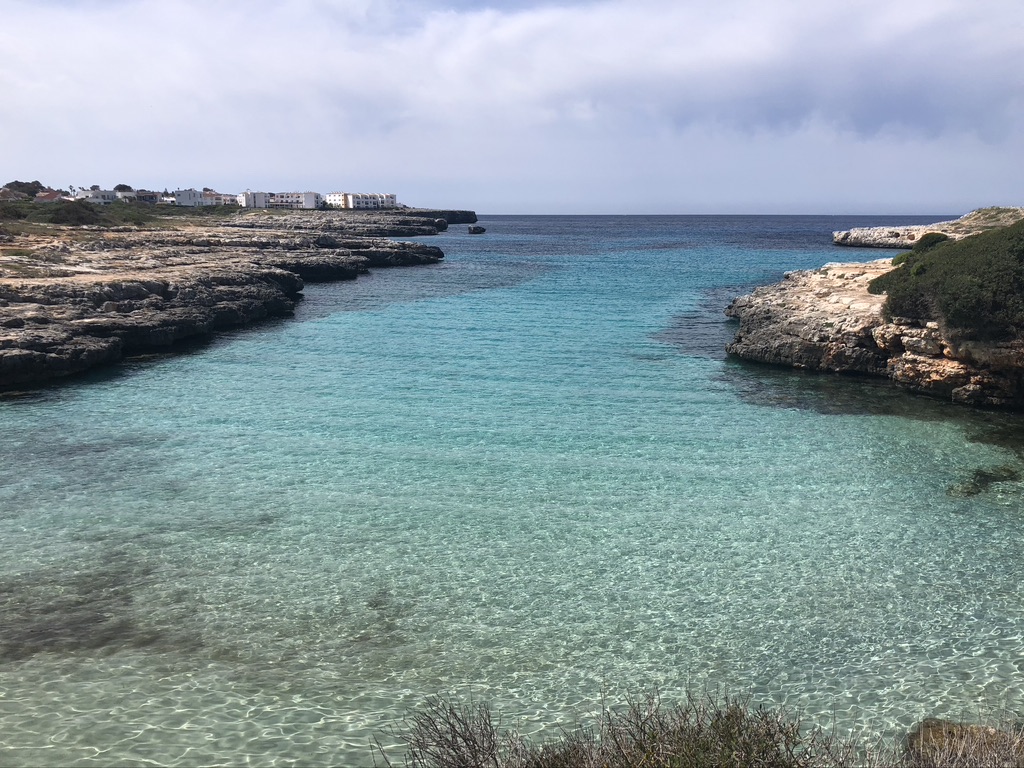
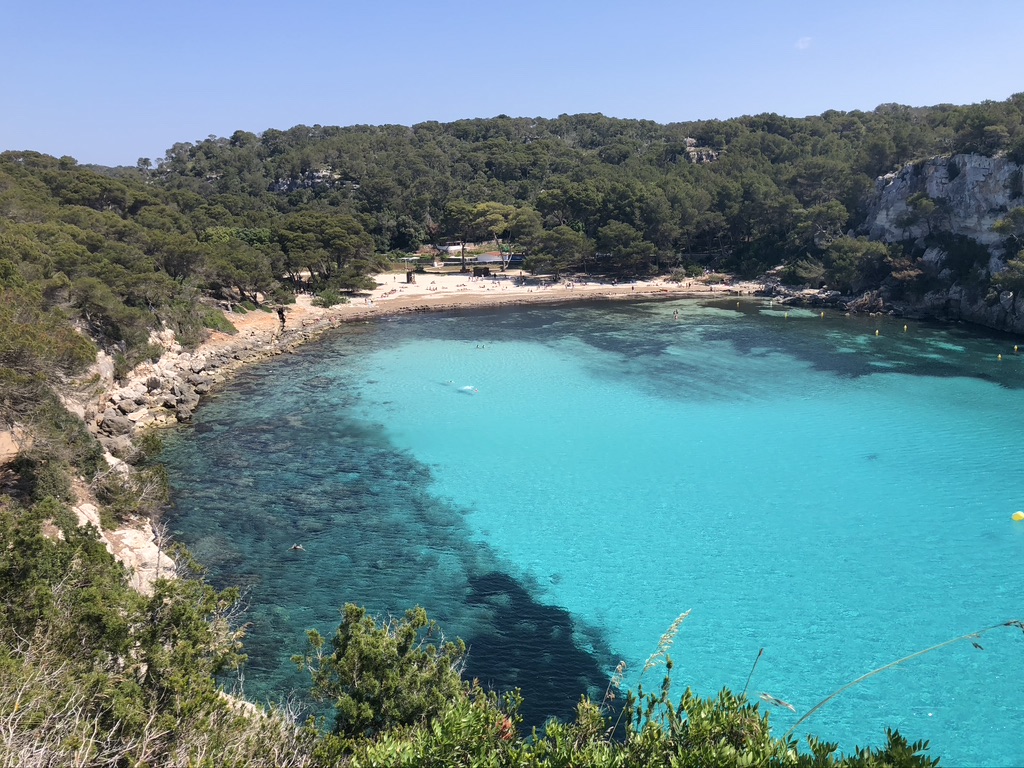
One of the crystal clear coves outside Cala Blanca
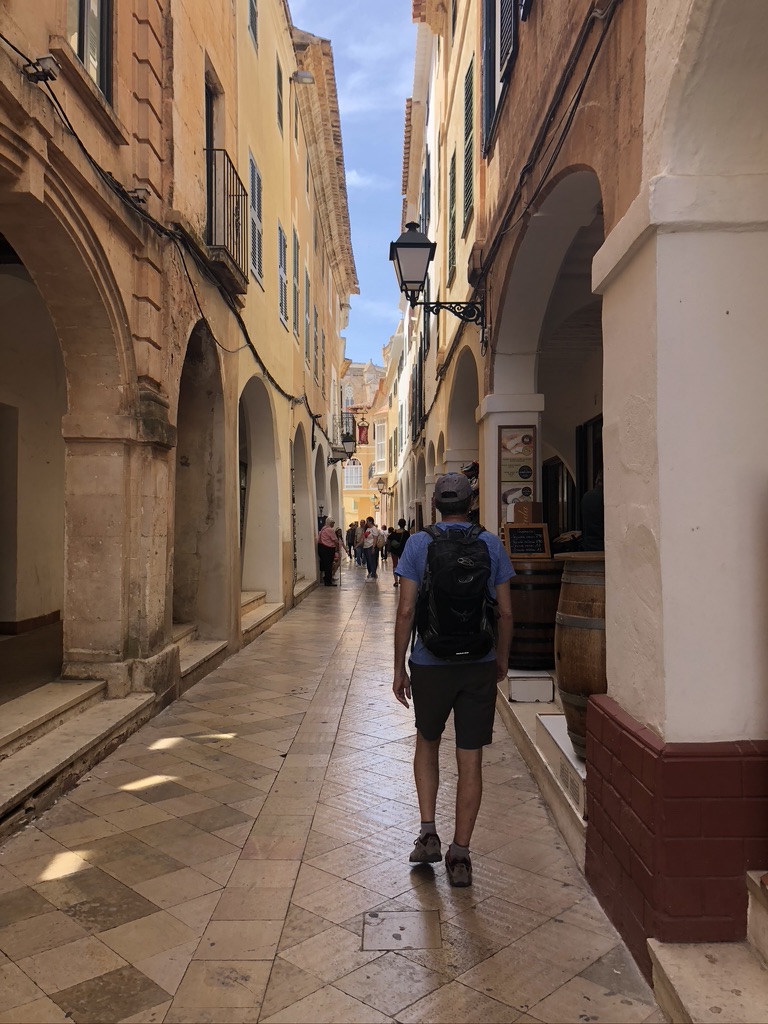
Over the ensuing days we crisscrossed the island in our car, visiting small seaside villages, walking sections of the Cami, strolling the cobblestone lanes of Ciutadella (Menorca’s second largest city) to peruse the fresh produce stalls and cheese shops in the market square, sip and snack in a variety of tapas bars and generally gorge ourselves on the incredible seafood – sea bass, snapper, bream, scallops, squid, octopus, prawns, tiny clams and mussels.
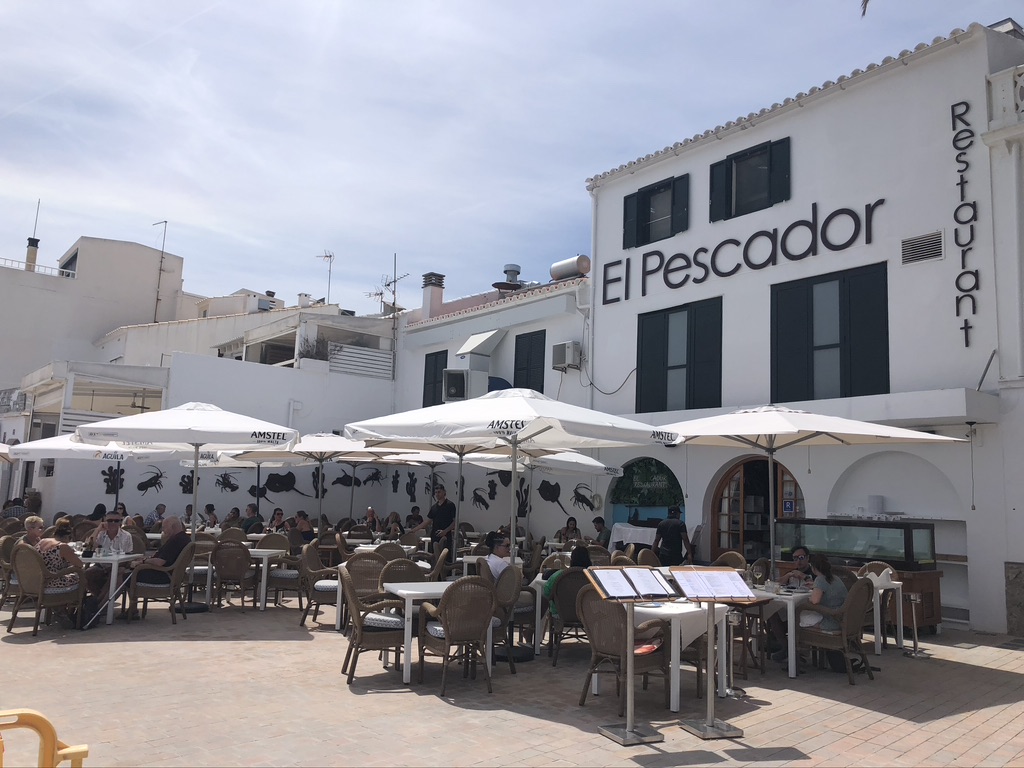
Wandering through Ciutadella – “Where was that tapas bar?”
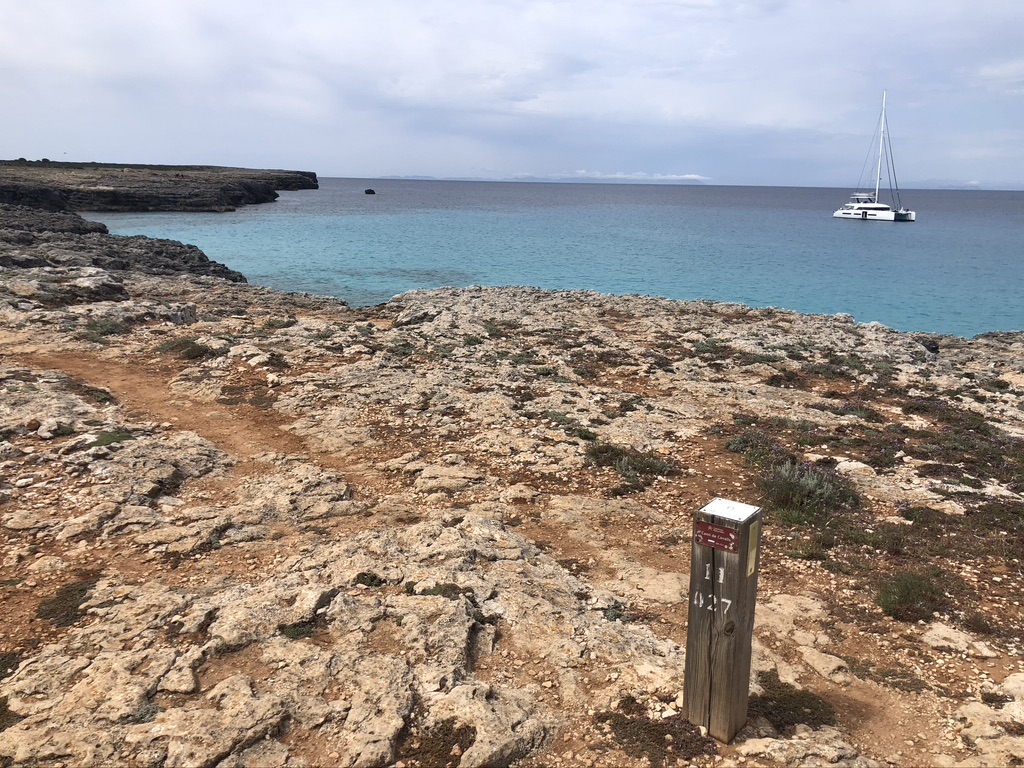
The Cami de Cavalls follows the coast past a peaceful anchorage
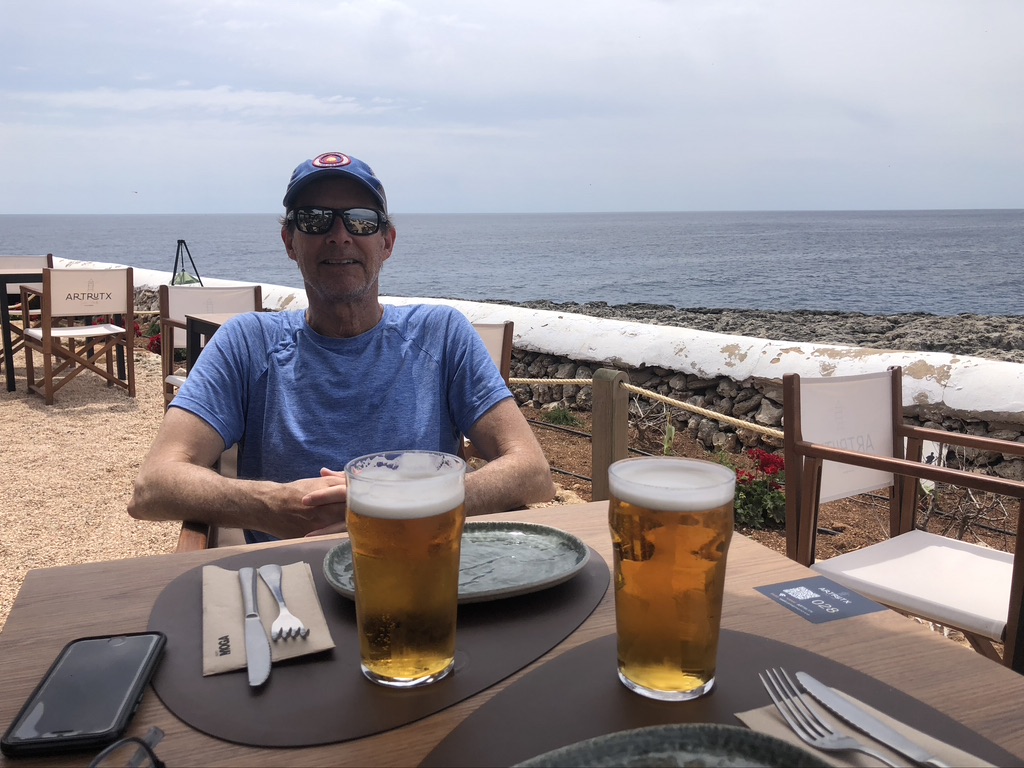
Quenching our thirst after walking the Cami to Cap d’Artrutx
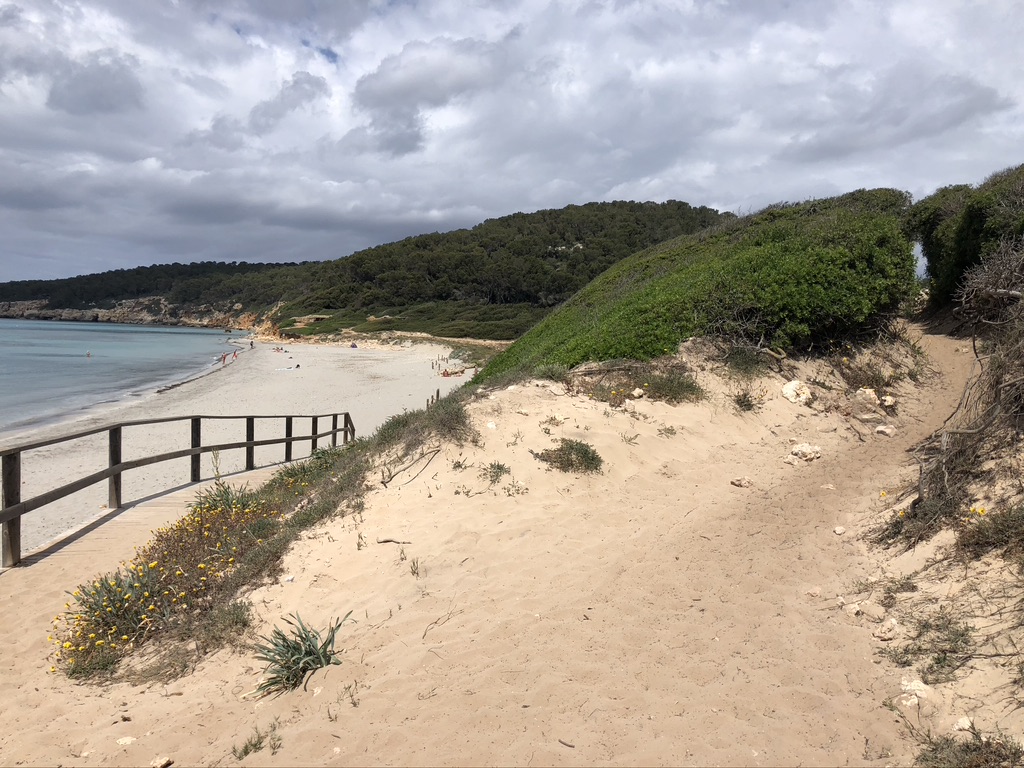
Just another pretty beach found along the Cami
During our second week the wind made its appearance. I suppose it was inevitable – only after our arrival did I find that Menorca bills itself as ‘the windy island’. I learned that the locals have named the winds, depending from which direction it happens to be blowing from. We got to experience the tramuntana, the north wind that barrels down from the mainland, picking up speed as it sweeps across the open sea. A welcome relief in the height of the summer when temperatures are scorching hot, in May it meant the temperatures dropped to an unseasonable mid-60’s. Still pleasant but blowing sand made for a couple unpleasant beach outings. When the wind abated as our visit came to a close, we enjoyed stellar weather and made trips to the long white sand beaches at Son Bou (enjoying prawns with garlic and a pitcher of sangria afterwards) and Son Saura (dining on steamed clams, grilled calamari and sea bass along with a bottle of Rose).
We visited tiny Fornells, known to have some of the best restaurants on the island, three times
The trail passes some pretty impressive beaches – Platja Binigaus outside Sant Tomas
We couldn’t be more pleased with our decision to visit Menorca, getting to know this little Mediterranean jewel before the summer crowds arrive. We got our fill of delicious seafood (all simply prepared with local olive oil on the grill); tasted crisp white wines, fruity roses and floral gin; snacked on a variety of local cheeses and succulent olives (I think they brine them with smoked paprika – amazing!); walked miles of ancient trails past rugged coastline, scrubby pastures surrounded by limestone walls, lighthouses and inviting coves.
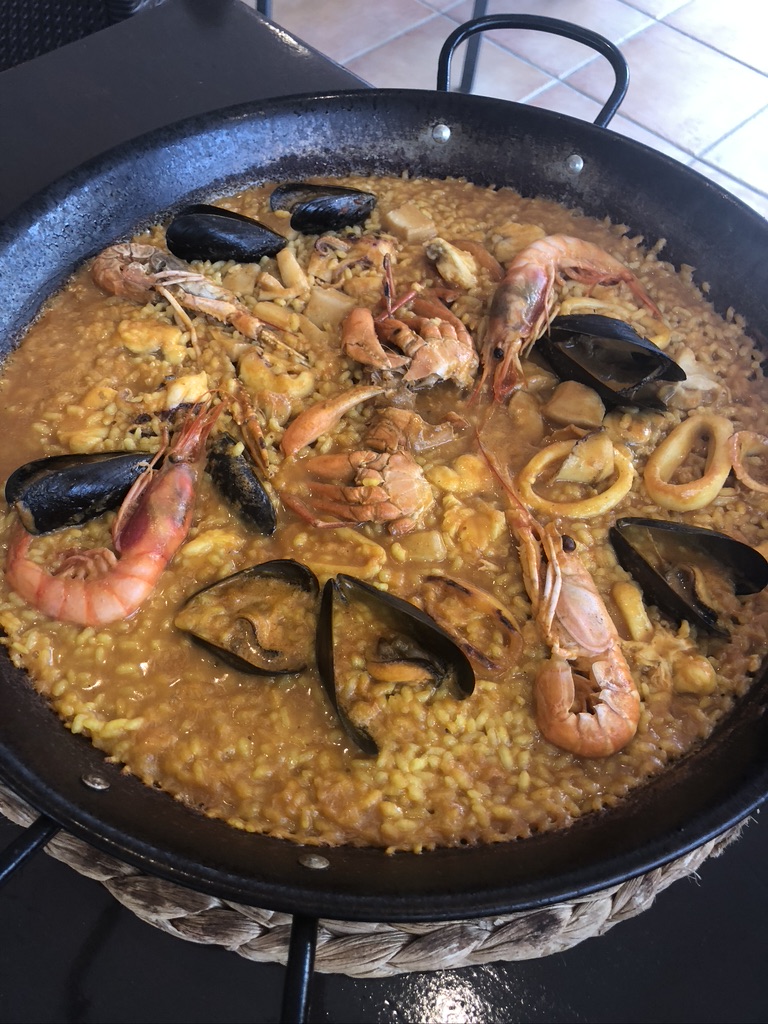
Seafood paella for two . . . or more
There are worse places to work . . . or not work
With our visit winding down over the last week of May, it was time to head back to Colorado, at least for Heather. I had a stop to make on the way. In the next post on The Rhumline, I join some friends to explore Cornwall, in southwestern England.
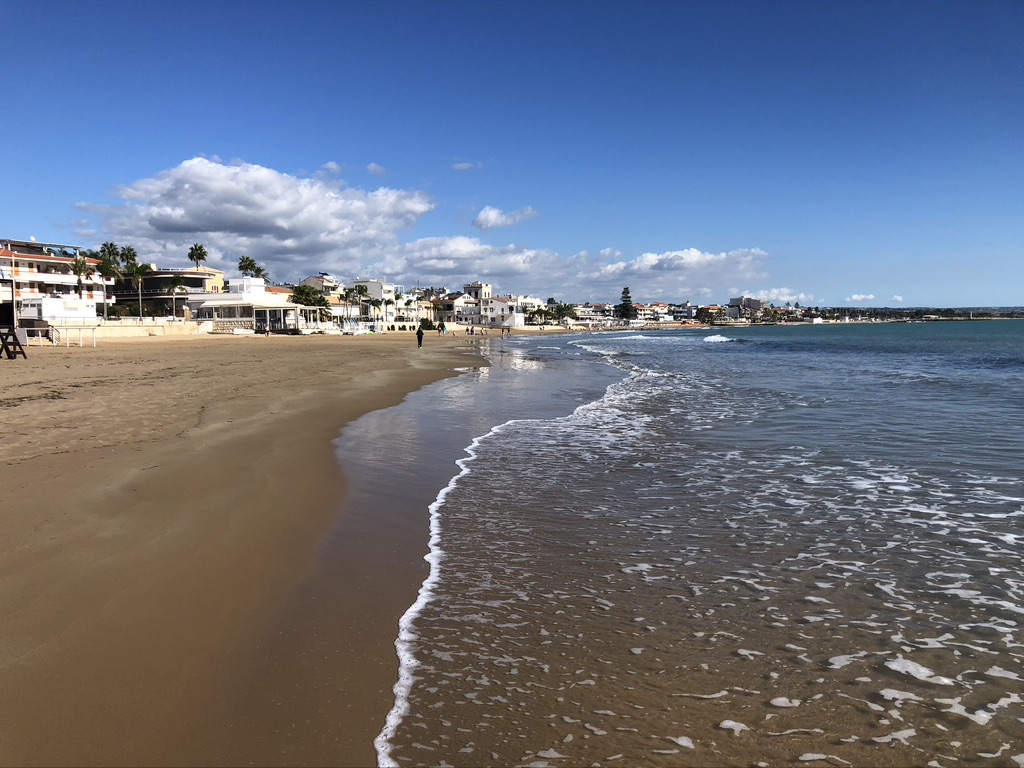
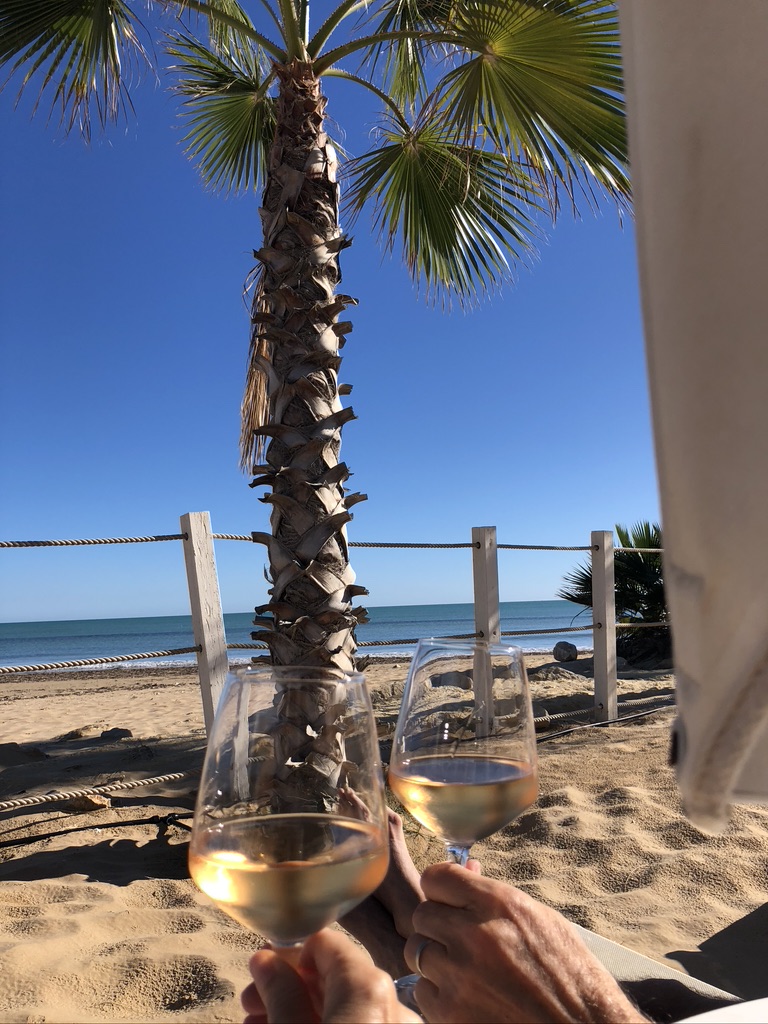
The sky was blue, the sun was warm and we were barefoot on a beach. While the water was too cold to even contemplate swimming, it was just great to be walking in the sunshine. Perhaps, with the thought of returning home to Colorado in just four days, and the knowledge that we’d have to wear just about all our clothes to keep warm in the sub-freezing temperatures we’d soon be seeing, for at least one day it was still summer, and we were still in southern Italy. After our walk on the sands of Marina Di Ragusa, on the southern coast of Sicily, we found a restaurant just at the back of the beach and settled in for a long, leisurely lunch. Heather had pasta with the small local clams while I opted for a piece of seared umbrina with a puree of pumpkin and blistered cherry tomatoes. It was quiet and the staff took the time to linger at our table, chatting about the weather, the expected influx of northern Europeans over the upcoming winter season and the impending election back home in America. After lunch we took a couple glasses of rose out to the loungers set in front of the restaurant to enjoy the last of the afternoon sun. We were trying to store up what was left of the warmth in order to take it home, hopefully to last until the next time we found ourselves on another sunny beach.
The beach at Marina Di RagusaCheers – to the last days of summer
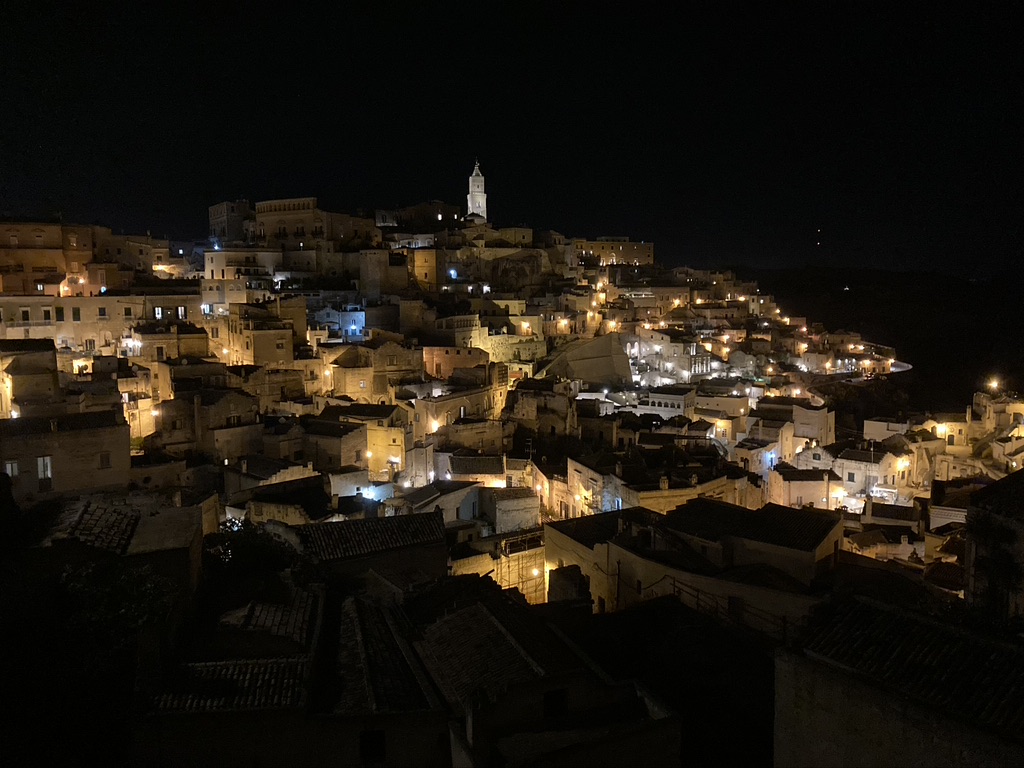
The final week of our six-week fall trip started with a visit to the town of Matera, in the region of Basilicata, in the hills of central southern Italy. Believed to have been occupied by folks going all the way back to the Paleolithic Era – about six thousand years ago – Matera is thought to be the oldest continuously inhabited city in the world. The original cave dwellings, and the subsequent limestone homes and churches are recognized by UNESCO for their historic and cultural significance. Our visit, on November 1, was a holiday, and the town was swarming with visitors, mostly Italians on a long weekend trip. It was still a pleasure to wander the lanes of the Sassi, as the old town is known, taking in the views of the historic buildings and the surrounding hills. We managed to find a terrace bar to enjoy a drink and an antipasti plate while looking down over the town center. Lit up at night the Sassi had a beautiful warm glow to it.
Overlooking the Sassi – MateraJust as pretty at night
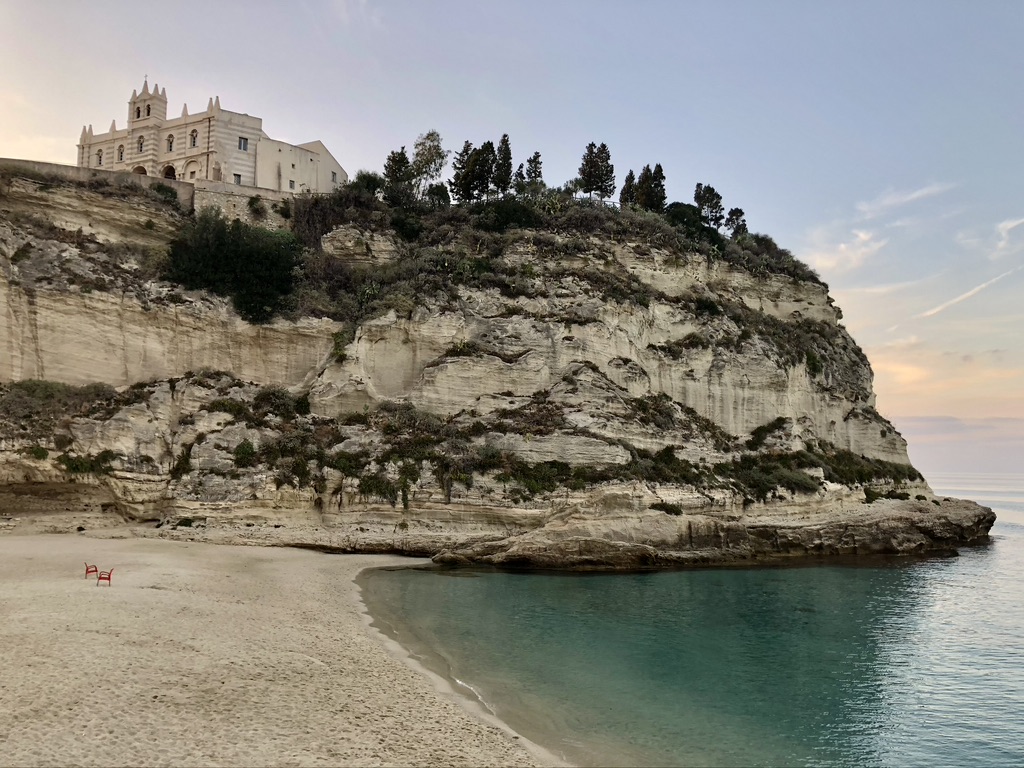
Venturing on to Sicily, we had an overnight stop in Tropea, in the region of Calabria. This old walled town, perched on a clifftop, overlooks the Tyrrhenian Sea and offers a number of sandy beaches below. Our visit was brief, but we had time to stroll the waterfront before climbing stairs up into the old town, wander it’s time-worn cobbled streets, watch the sunset and have dinner before departing in the morning
The Santa Maria dell’Isola Church and one of the beaches below TropeaOld town Tropea
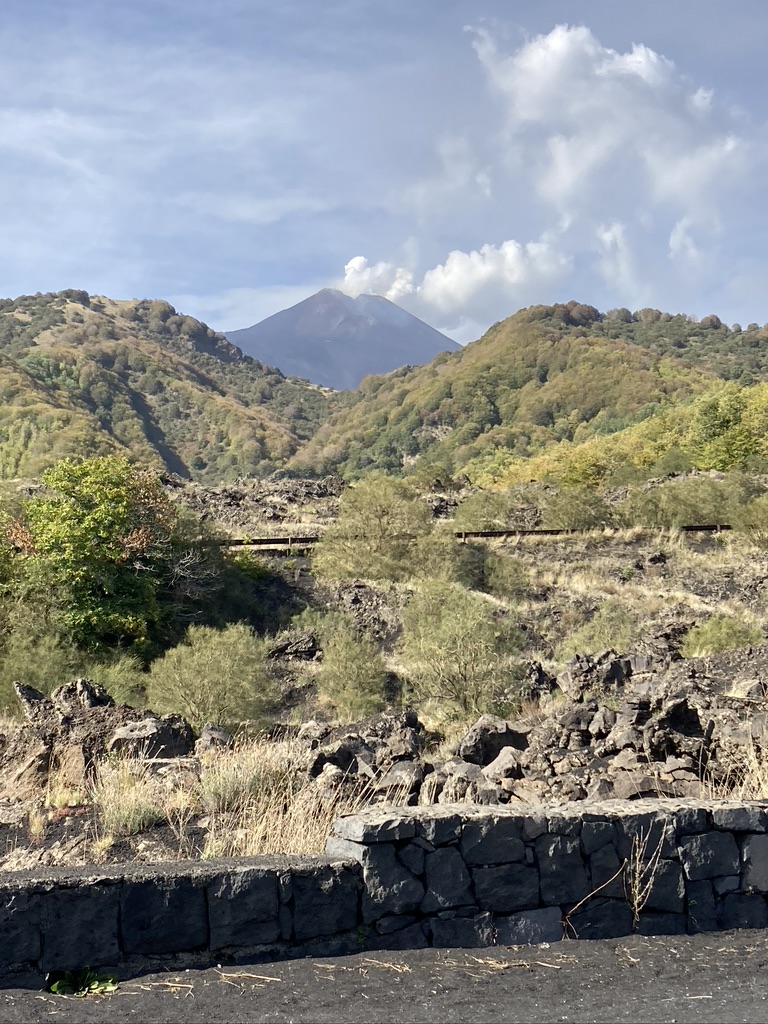
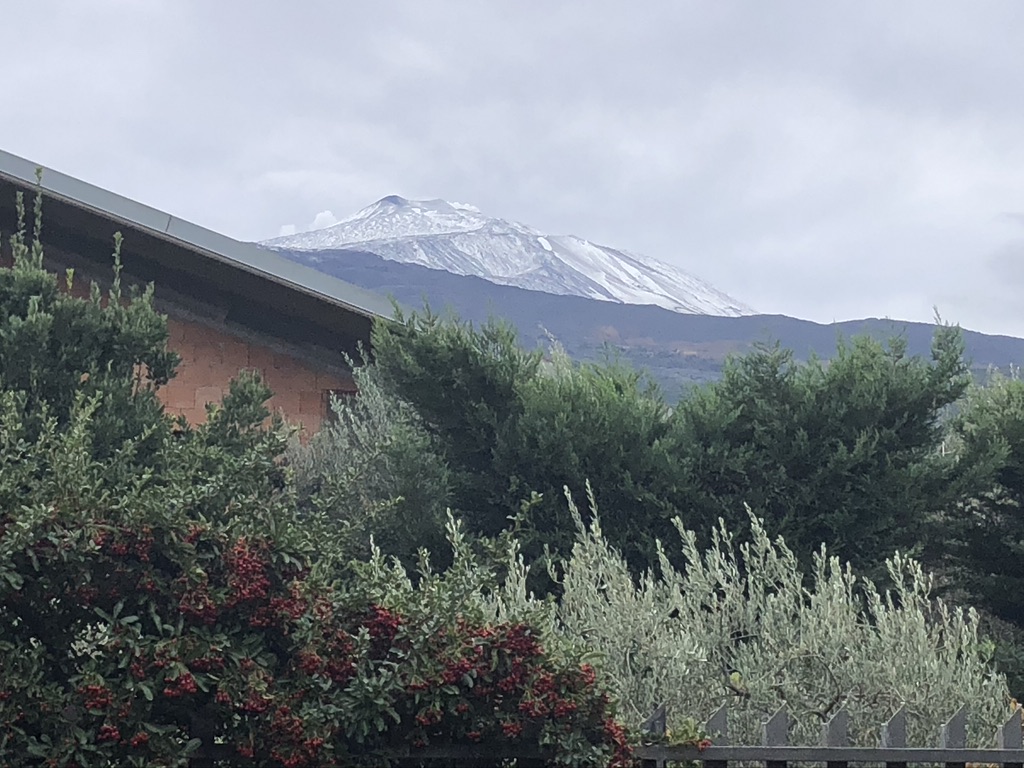
From Calabria we caught the ferry that took us and our car over to Sicily, arriving in the port city of Messina. We headed south and then inland to the slopes of Mt. Etna, stopping at Randazzo, which would be our base for the next three days. With views of the smoking cone of Etna – Europe’s highest and most active volcano – and surrounded by vineyards and olive groves, the home of our hosts, Tina and Nicola, was the perfect place to stay. The garden area outside our comfortable apartment had a dining area, loungers, a barbeque, roses, herb and chile plants, fruit trees and was the playground for the couples two dogs. Tina supplied us with fresh eggs from their hens, homemade cherry jam and muffins, while Nicola proudly pointed out the bottle of his homemade grappa he had provided us. We spent our time touring the countryside and exploring the slopes of Etna, waking one morning to marvel at the fresh snow that had fallen overnight on its upper slopes.
Mt. Etna blowing a little smokeThe view of Etna from Tina and Nicola’s place in Randazzo
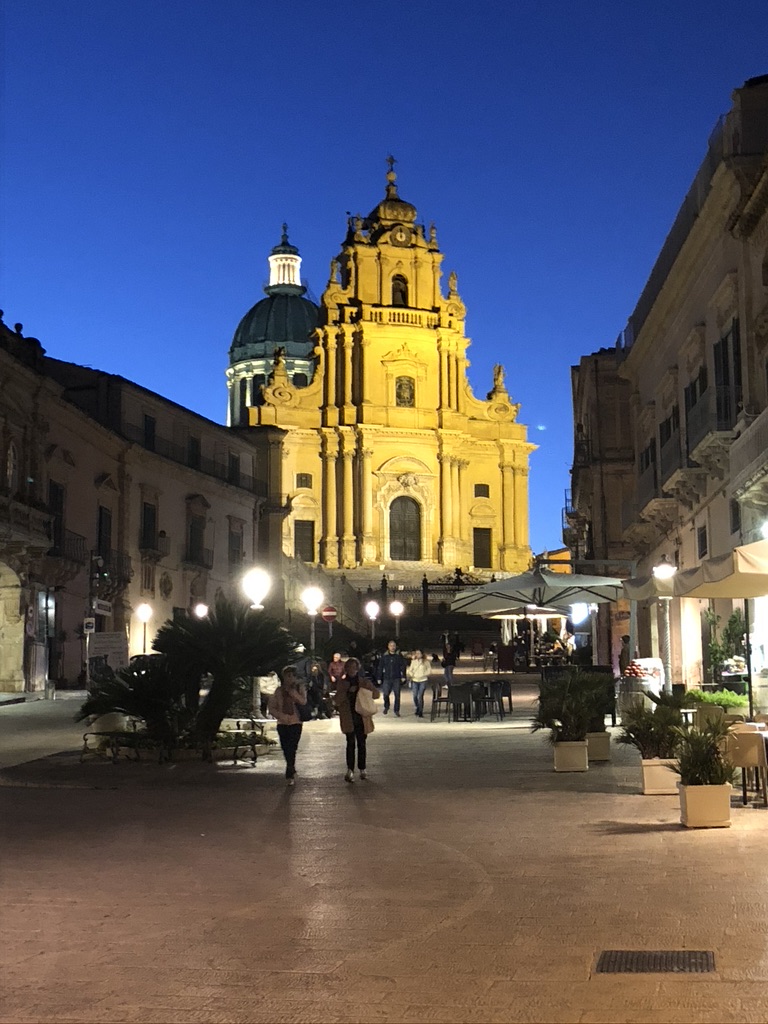
Our final stop before we turned northward for our return to Naples, and our flight home, was the southeastern town of Ragusa. Noted for its Baroque architecture showcased on its palaces and churches, Ragusa Ibla, the old town, occupies a hilltop just outside the newer part of town. Our B&B offered a wonderful view of Ibla from its terrace, as well as an impressive breakfast spread set up each morning by our host, Salvo, who would bring fresh pastries and savory treats from the local patisserie to supplement the yogurt, juices, cured meats, cheeses and fruits he offered. We walked up and down the quiet lanes of the old town, strolled through the villa comunale, or town park, and enjoyed a gelato while sitting on the Piazza Duomo, gazing at the massive cathedral on the main square. From town it was just a twenty minute drive down to the sea where we spent the next day on the beach at Marina Di Ragusa.
The cathedral dominates Ragusa Ibla’s main piazzaRagusa’a old town from our B&B
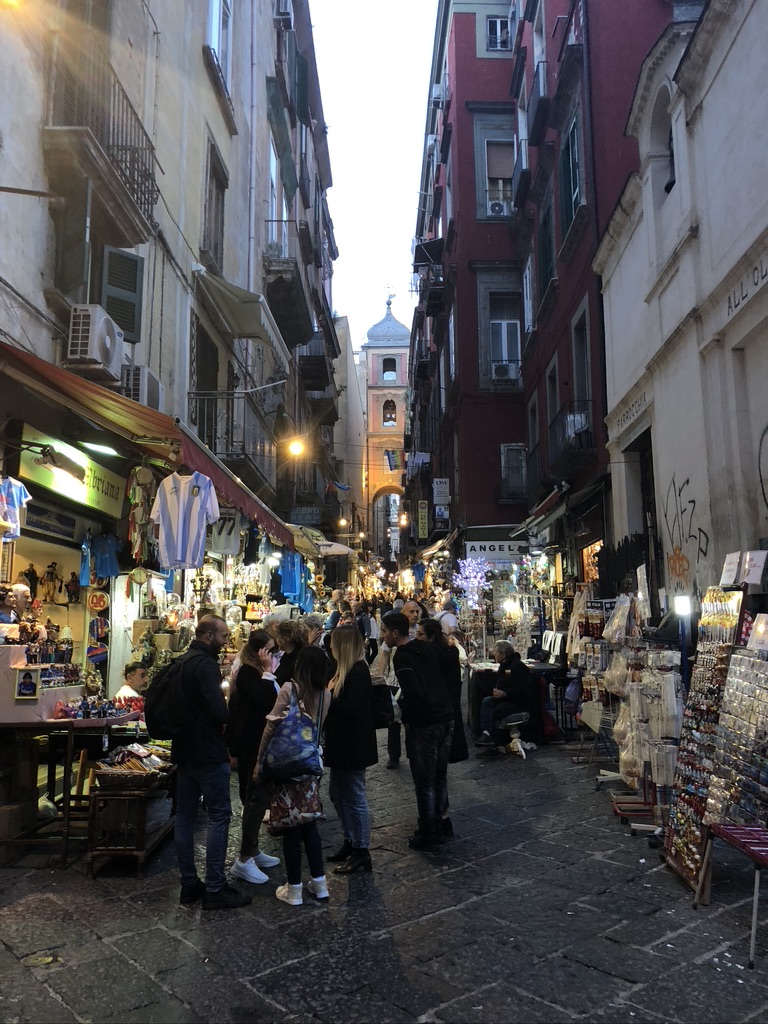
Our final night would be spent in Naples, where we were happy to drop off the car at the airport before taking a thrilling taxi ride through the chaotic traffic-choked streets into the city center before being dropped off at our hotel. Fortunately, we were smack dab in the middle of the Decumani neighborhood, which featured a grid of pedestrian lanes (Italians consider themselves pedestrians even when they’re on their motorbikes) lined with restaurants, pizzerias, gelato stands, street food stalls and souvenir shops. It made for a nice way to spend our final evening. The next morning, after breakfast at our hotel, we were off to the airport for the flight home – via Istanbul, Chicago and a night in Denver, finally arriving back in Steamboat Springs some thirty-five hours later.




















 The Rhum Line