The Rhum Line

The aimless and sometimes muddled route of a traveling couple looking for their next great adventure


Leave a comment

Europe ’22: Part 5 – Puglia

Olives.

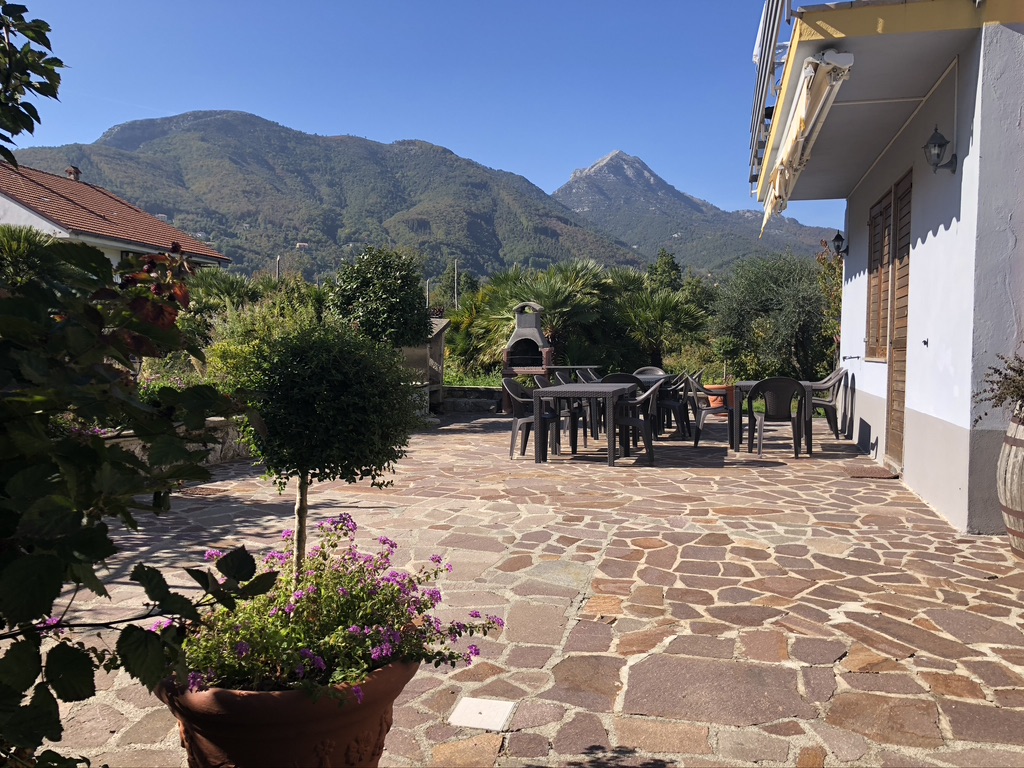
Everywhere you look as you travel through Puglia, in southern Italy, you’ll see olives – hanging on the trees that carpet the hillsides, littering the dusty country lanes, served alongside your glass of wine at a cafe and offered as first-press extra virgin oil at roadside stands. The region encompasses the ‘heel’ of the Italian boot – an agricultural region that produces the most grapes for winemaking of any Italian region as well as 40% of Italy’s olive oil (from over fifty million trees). After leaving the Amalfi coast, and it’s crowds, we were thrilled to be driving through rolling hills crisscrossed with limestone walls and small villages. We didn’t stop driving east until we hit the Adriatic Sea at the end of the Gargano Peninsula, in the north of the region. At the tip of the peninsula lies Vieste, a picturesque town atop limestone cliffs jutting out over the sea. The old town, or centro storico, is a maze of cobblestone streets, beautiful cream-colored block buildings, churches and small piazzas. We stayed just outside town at the Agriturismo Posta Pastorella, surrounded by vineyards and olive groves. The owners produce a line of wines and their own olive oil, and offer a handful of rooms, though we were the only, and the seasons last, guests. Fabio and his brother Tony were extremely gracious hosts, providing us a personalized tasting of their wines and oil and serving us breakfasts of fresh-baked croissants with homemade jam, fresh fruits, juices and cookies. Each morning we would rise and open our door to the expansive terrace to find breakfast laid out on a table, with Fabio appearing soon after to bring Heather a cappuccino. Following breakfast we spent our days walking through the farm or driving the coast road to visit the towns of Rodi Garganico and Peschici, with wide sandy beaches completely devoid of anyone, a stark contrast to the busy beaches back on the Amalfi coast. When asked for a restaurant recommendation for Vieste, Fabio didn’t hesitate to tell us to dine at Al Duomo, his favorite osteria. We found Al Duomo, as the name would suggest, in the shadow of the main church, along a narrow lane of whitewashed buildings in the center of the old town. At seven o’clock we found the front door open, yet the osteria wasn’t yet open – that wouldn’t happen until seven-thirty, but the hostess invited us in to sit and have a glass of wine while we waited for the rest of the staff to show up. At her suggestion we ordered glasses of spumante, which she served with a basket of taralli, a small baked bread knot, to help curb our appetites. For dinner we started with the charred octopus, followed by grilled lamb chops and baked sea bass and ended the meal with a dessert of rich chocolate mousse over pureed figs.
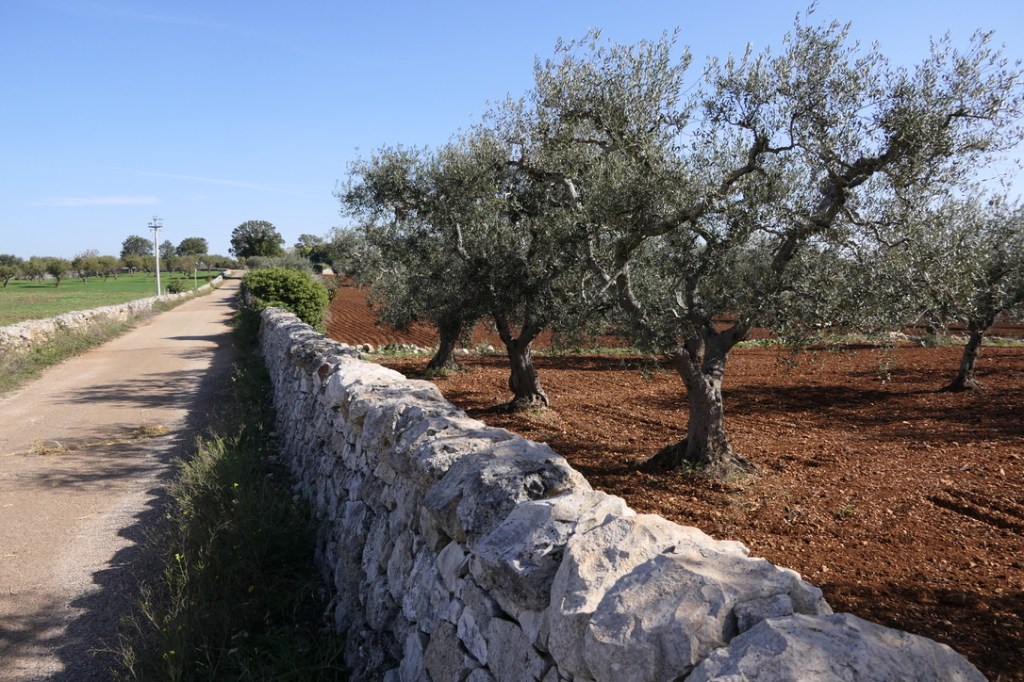
A typical scene in Puglia – olive trees, stone walls and country lanes
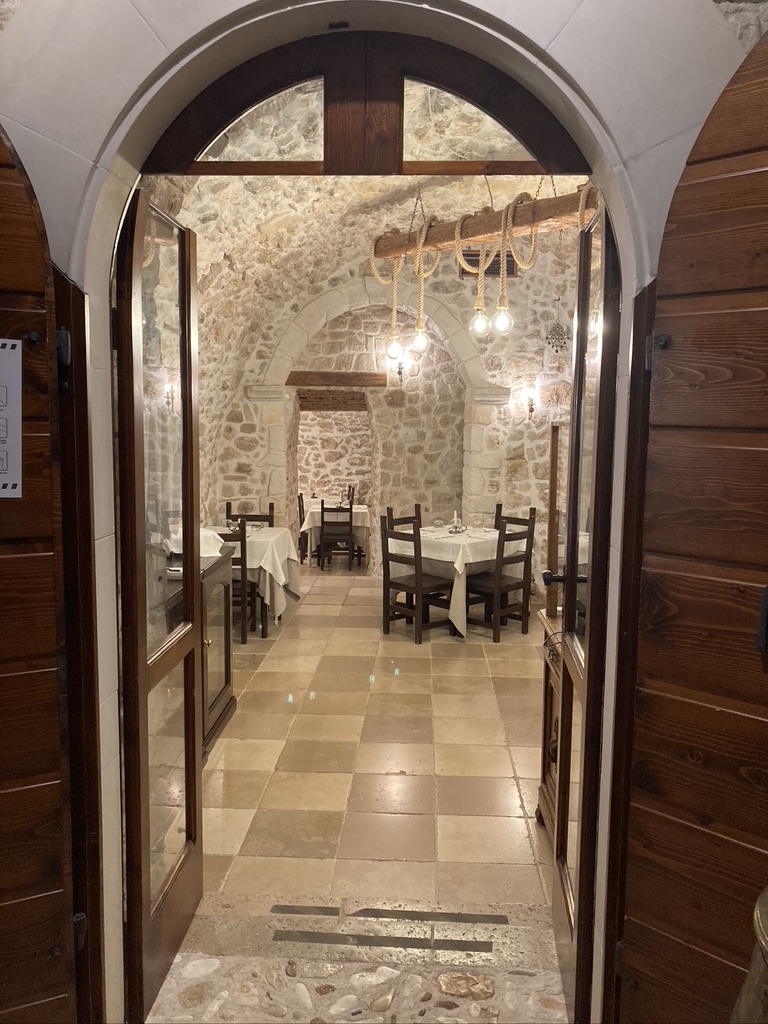
Looking into Osteria Al Duomo

Breakfast on the terrace at Agriturismo Posta Pastorella

A quiet lane in Vieste’s centro storico

Our next stop was just down the coast – the seaside town of Trani. We were deceived at first, turning off the highway and making our way through the bustling ‘modern’ section of town, but when we entered the old town, and came upon the scenic harbor, full of colorful fishing boats, the streets paved with time-worn cobblestones, the tower of the Trani Cathedral looming over all, we were instantly charmed by this village. We parked the car and then wandered through the maze of lanes to find our accommodation, and after checking in went out to satisfy a craving for pizza. Fortunately, we had a clue – our host had given us the name of Al Covo delle Chiacchiere. We found it on a side street a block back from the harbor, and, as is our custom, were the first customers of the evening (still not used to that 7:30 opening time). Pizza is the only thing they do – Neapolitan-style pies baked in a very hot oven that turns out an airy, slightly charred crust topped with local ingredients and fresh cheeses. We barely had time to pour the red wine from the carafe before our pizza arrived. Later, strolling the waterfront, gelato in hand, we took in the sights of the town, made even more beautiful at night.
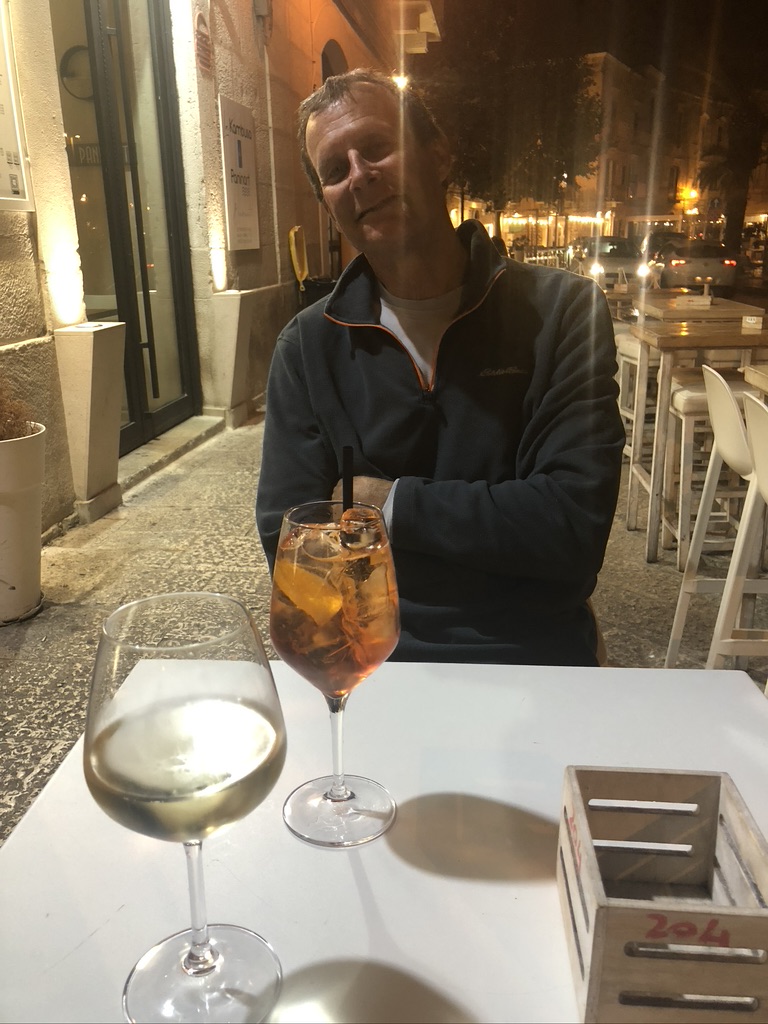
Yep, had to do it – my first Aperol Spritz, the classic Italian aperitivi cocktail (helped to kill time until the pizzeria opened)
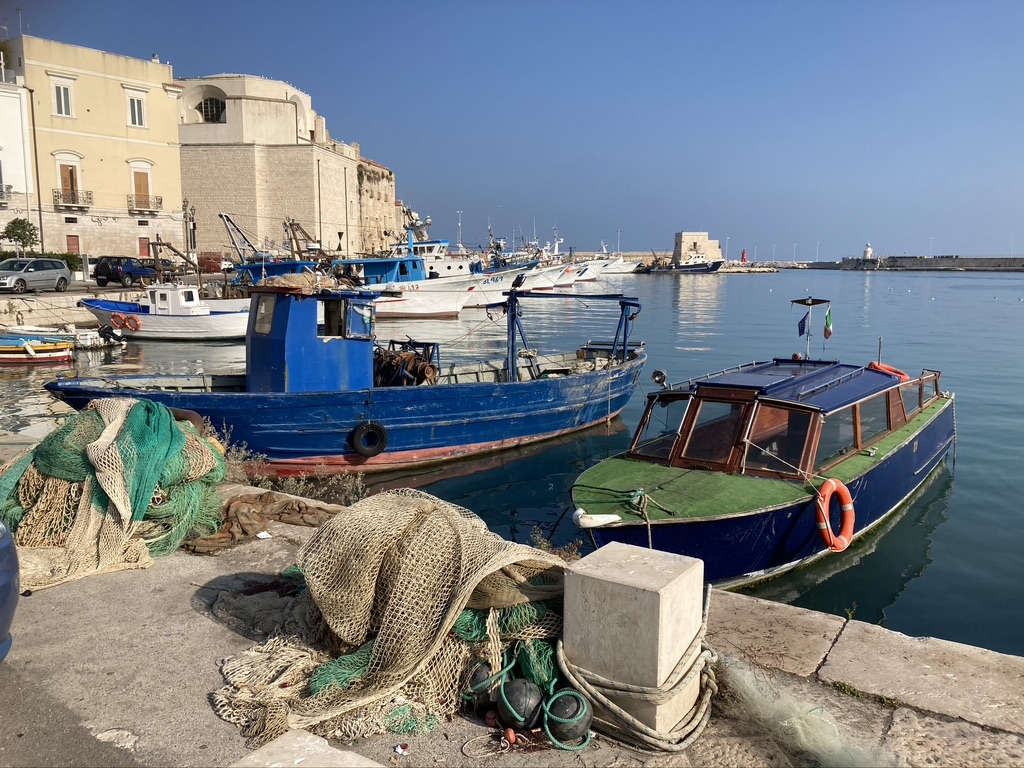
The Trani waterfront by day . . .
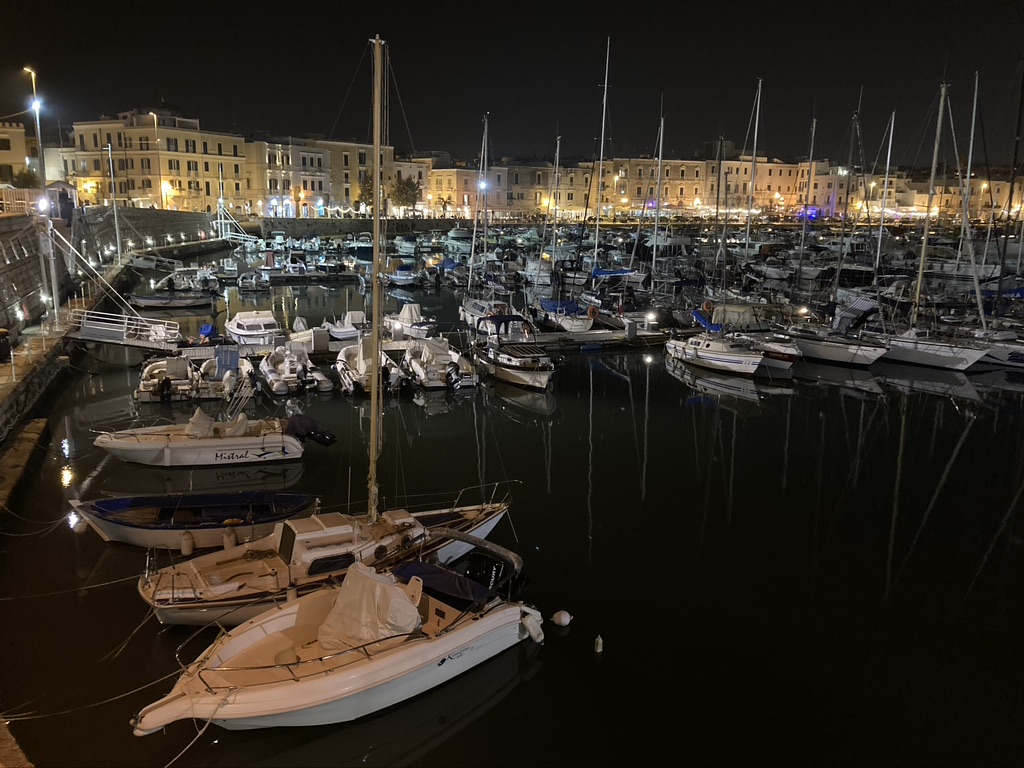
. . . and at night

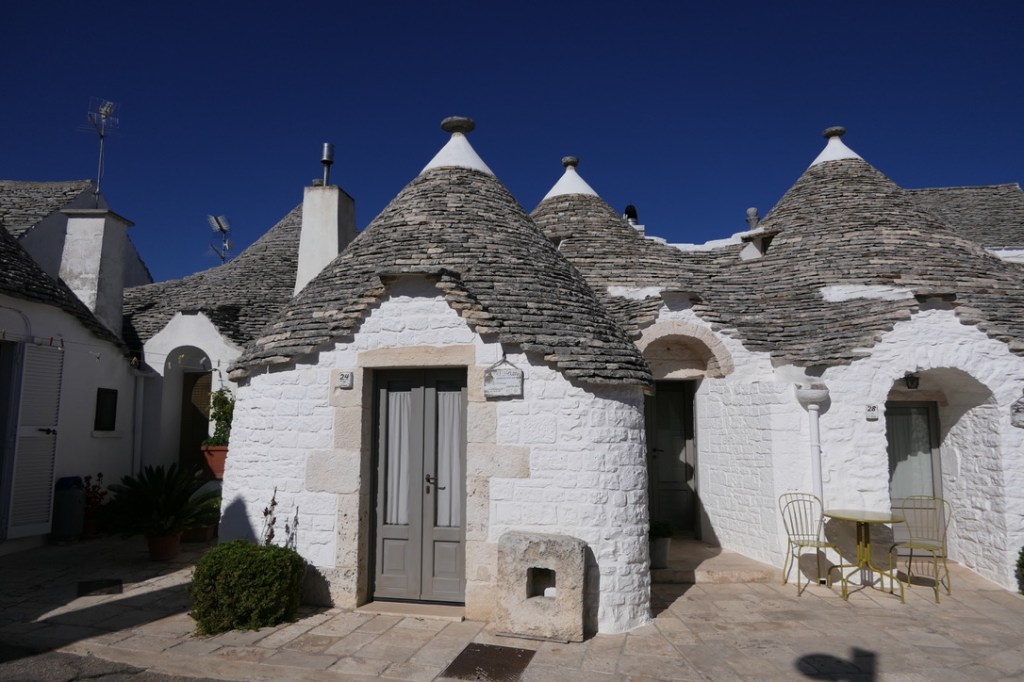
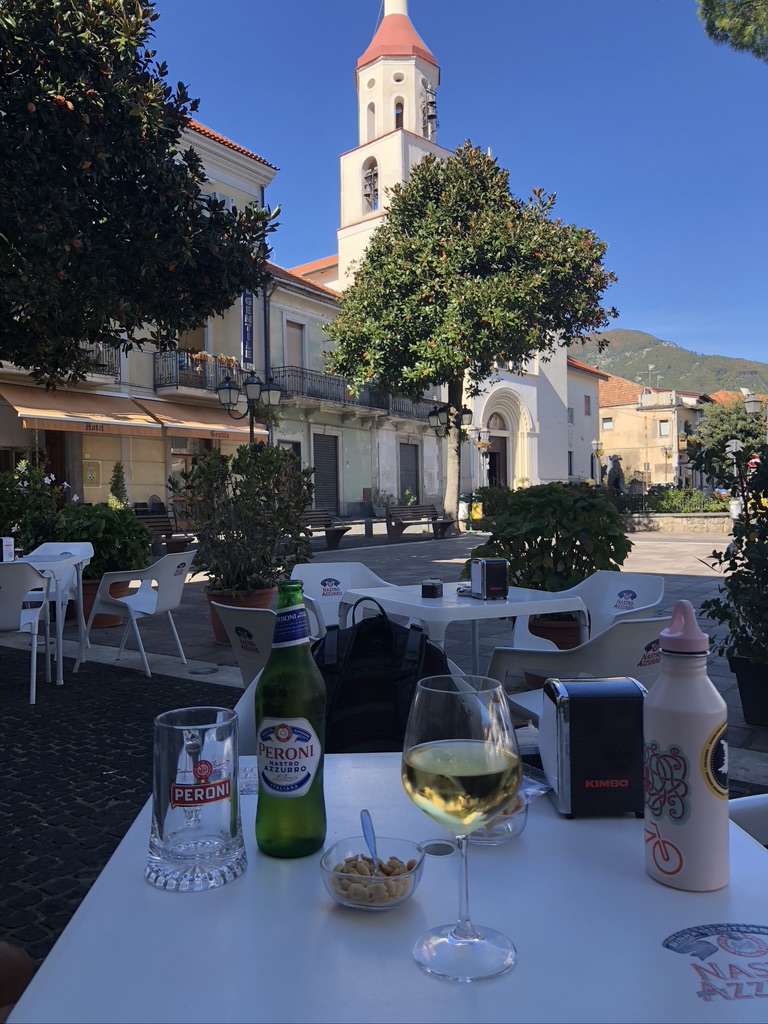
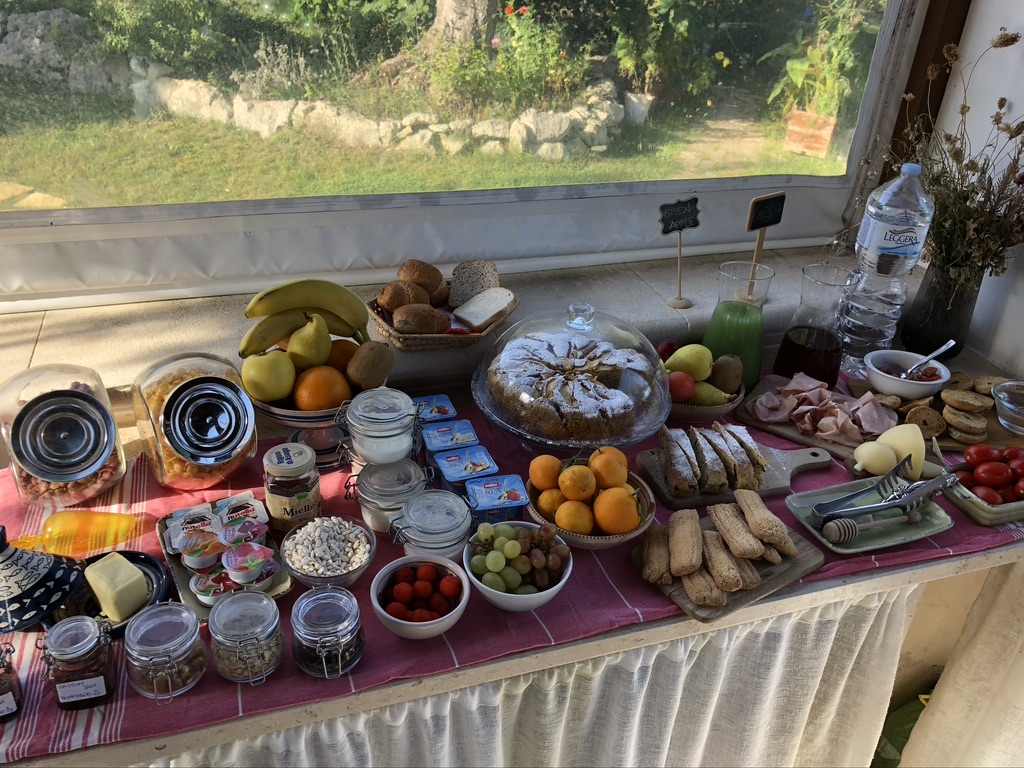
Moving further into Puglia our next stop was the UNESCO-listed town of Alberobello, renowned for it’s trulli – limestone buildings with conical stone roofs, which appeared in this part of the region beginning over a thousand years ago. While trulli can be found throughout the area, the largest concentration of them is in and around Alberobello. Many have been turned into guesthouses, which is where we elected to stay just outside town at Trulli del Bosco. Our host Guilia, in addition to providing all sorts of information on the area, also laid out a pretty impressive breakfast buffet each morning. To start our day we had our fill of homemade yogurt, fresh fruits, local meats and cheeses and a different fresh-baked torte each morning. After tearing ourselves away from breakfast, we spent our days exploring town, walking the countryside or driving to one of the neighboring villages for a wander and lunch.
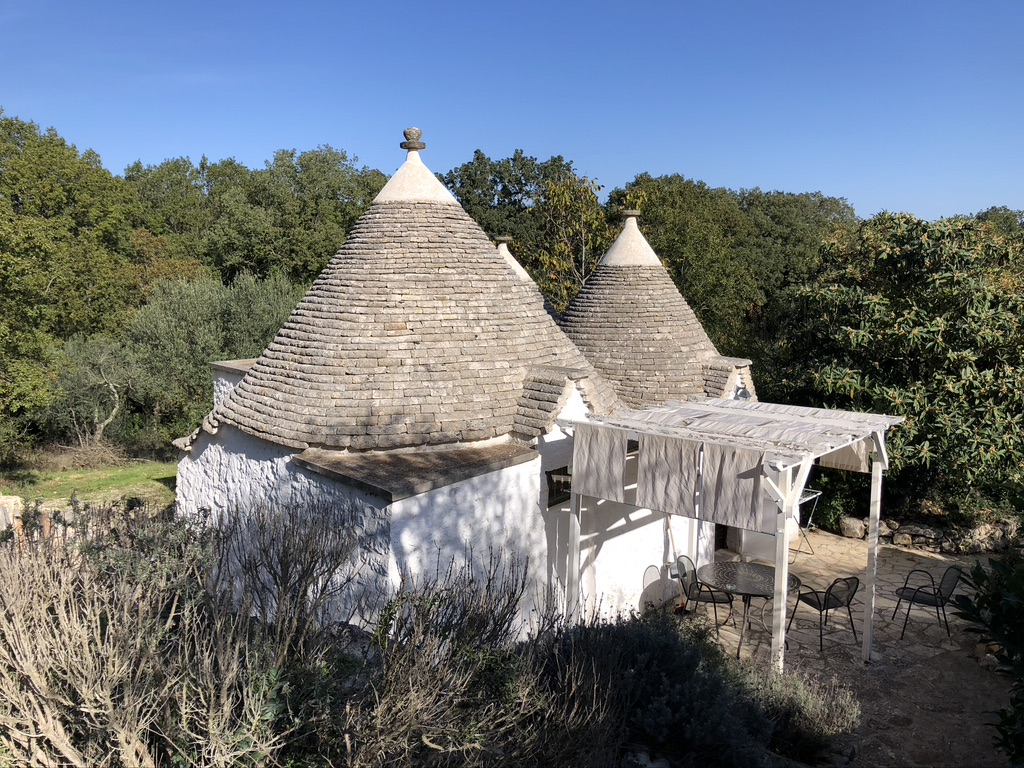
Our trullo (singular) room outside Alberobello
Giulia’a sumptuous breakfast buffet

Trulli in town
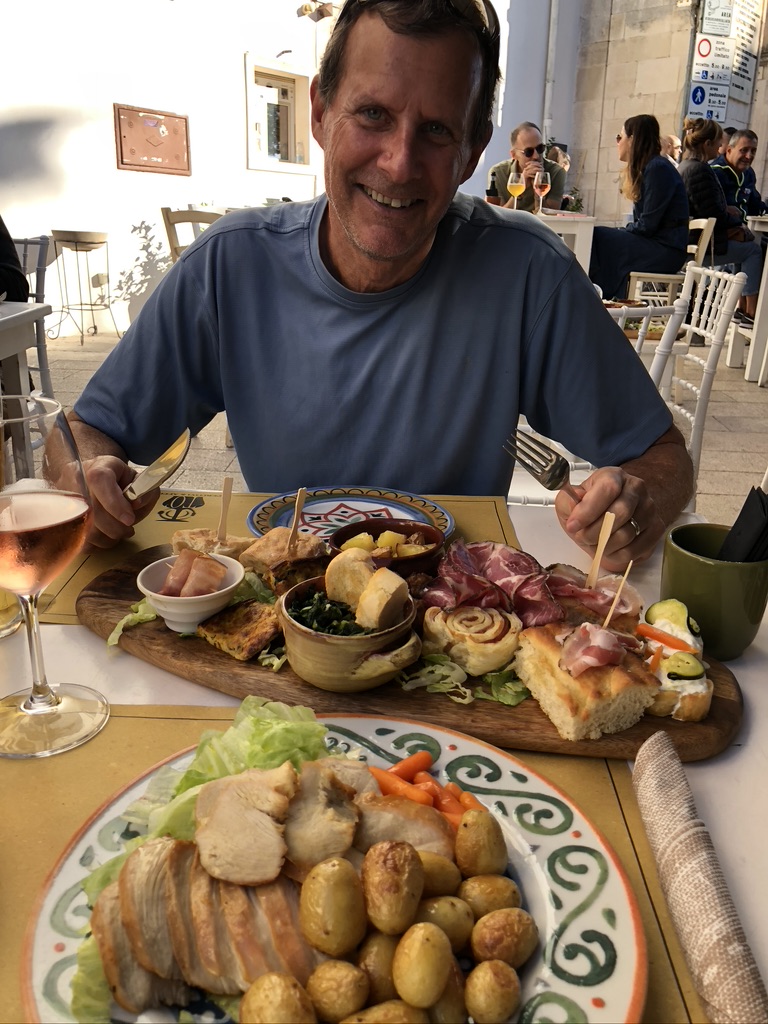
Digging into lunch in Locorotondo, a small village near Alberobello. Heather has the sensible meal while I opted for the antipasti platter for 2.

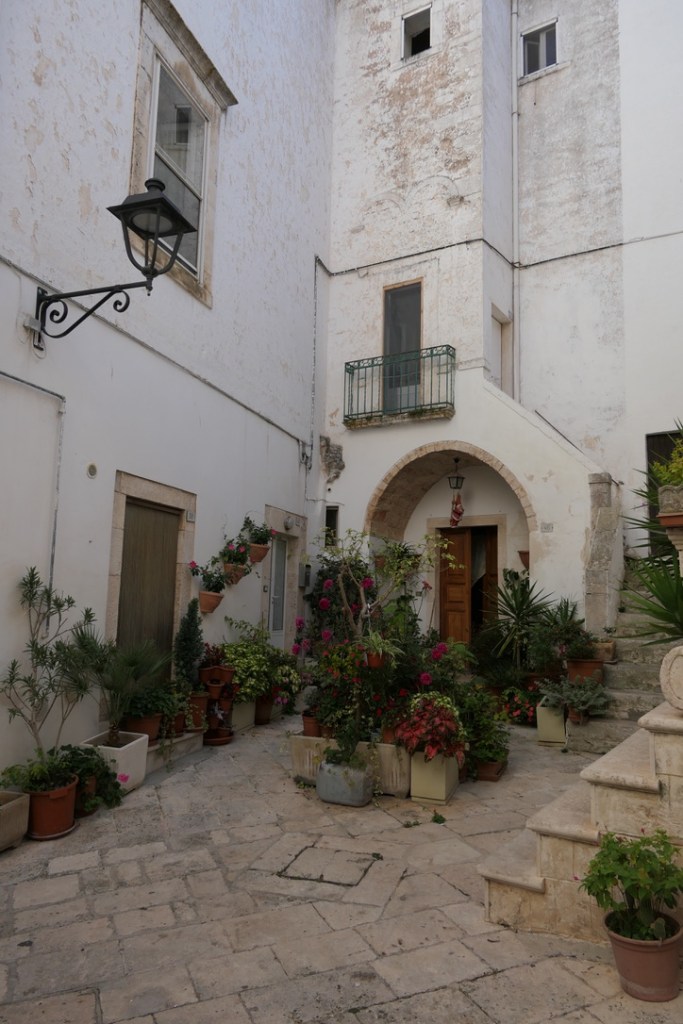
A quiet courtyard on a side street in Locorotondo

Finishing up our tour of Puglia we’ll head west with stops in the regions of Basilicata and Calabria as we make our way to Sicily for the final week of our trip. That’s in the next Rhumline.
Leave a comment

Europe ’22: Part 4 – The Amalfi Coast

The mountainsides are even steeper than I imagined. The roads are even more twisted than I had read about (and the Italians are even worse drivers than I feared). The crowds were more overwhelming than I expected (even in late-October!). The prices for mediocre food are – pun intended – hard to swallow.

We don’t like the Amalfi coast. There, I’ve said it. Per favore, don’t hate us.

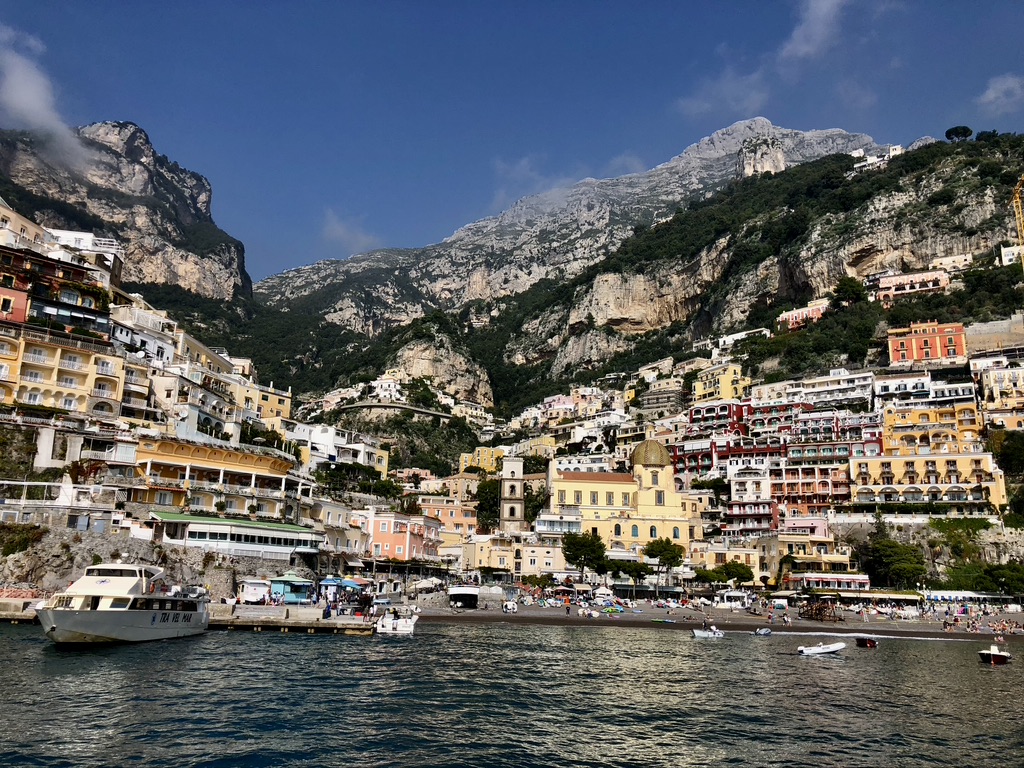
Positano from the ferry – yes, it’s pretty

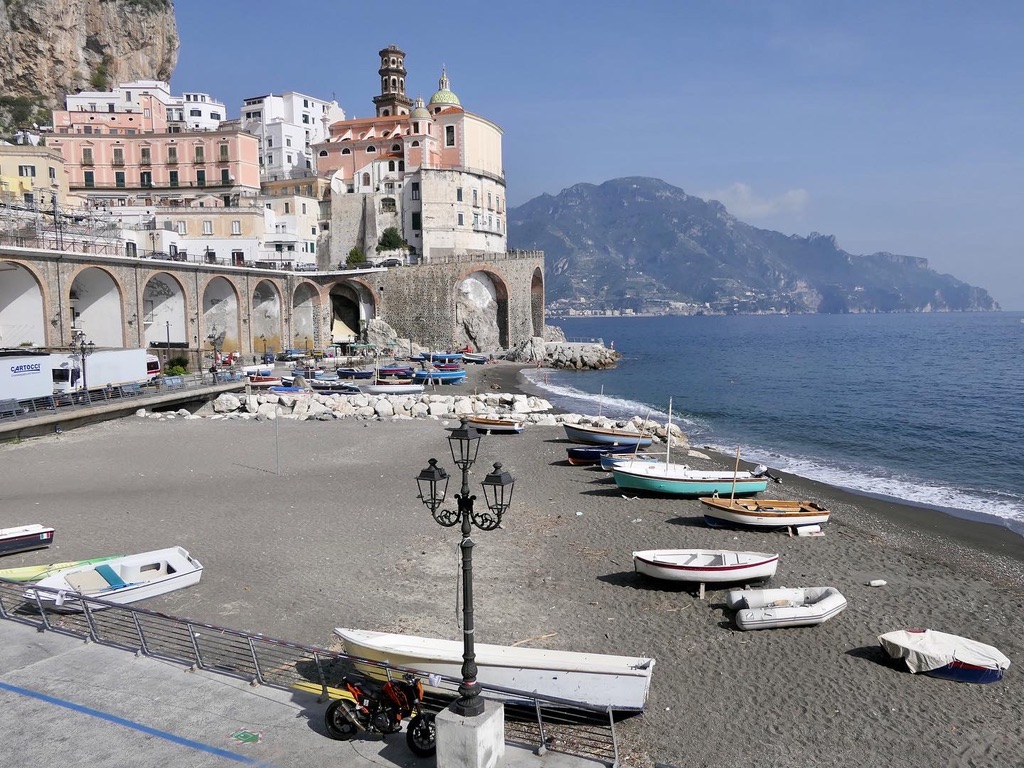
The beach at Atrani, just outside Amalfi – also pretty

But . . . we still had one fantastic day that I’d like to tell you about.

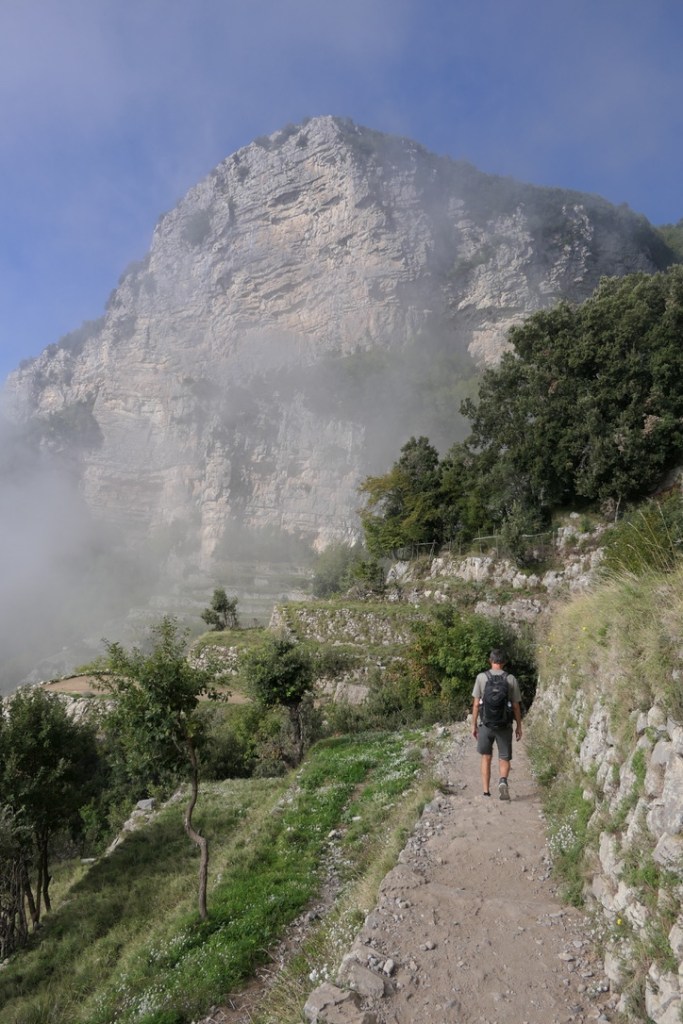
We chose to stay in the small village of Bomerano, in the Agerola valley, high above the busy coast. On a beautiful Monday morning, the sun was already warming the terrace outside Villa Elisa, the family farmhouse turned guesthouse run by two sisters, Cristina and Antonella. We woke to the gobbling of turkeys and mooing of the cows from the neighbors barnyard before joining the family cat, who was already lazing in the brilliant sunshine, out on the terrace where we were served breakfast. Sharp mountain peaks lined the horizon to the north. The guesthouse is surrounded by grape vines, flowers and trees bearing olives and persimmons. The Agerola has a rural, alpine feel, far removed from the hustle and bustle of Amalfi and Positano, a thirty minute drive away and a drop of two-thousand feet in elevation. Our plan for the day was simple – stay away from the crowds down on the coast by walking the Sentiero Degli Dei, the Path of the Gods, which starts right in the center of tiny Bomerano and follows the mountainsides past terraces of grape vines, goat herders huts, cliff-hugging monasteries and the ruins of ancient chapels, eventually ending in the village of Nocelle, just above Positano. We strolled into the Piazza Paolo Capasso to find Salumeria Manna, where we purchased fresh-made sandwiches from the gracious proprietor as well as a few pieces of fruit for a picnic lunch to have somewhere along the trail. At 10:30 we were on the path, following a cobblestone lane out of town, crossing a wooden footbridge and climbing a set of stairs to meet the trail which climbed up to give us our first views of the sea, before descending to a dirt path we would follow for the next hour and a half. It was slow going – not because the trail was particularly arduous, but because we couldn’t help but stop every couple minutes to take in the views and snap photos of the breathtaking scenery. Morning mist was still wafting up from the sea below cloaking the mountainsides. At times we could hear the tinkling of the bells worn around the necks of the goats grazing nearby. As we neared the end of the trail Positano came into view as we wound around another cliff face. At this point most walkers continue on, descending to Positano, but determined as we were to avoid the crowds there, we elected to turn around and retrace our steps back to Bomerano. On the way back we found a shady spot just off the trail with a view down to Praiano, another of the coastal towns below. By one o’clock we were back on the piazza, sweaty and gratified to have found a piece of paradise high above the Amalfi coast. We settled in at a cafe table overlooking the piazza for a celebratory beer and to watch a few other hikers as they came off the trail. An amazing morning indeed. But the perfect day wasn’t over.

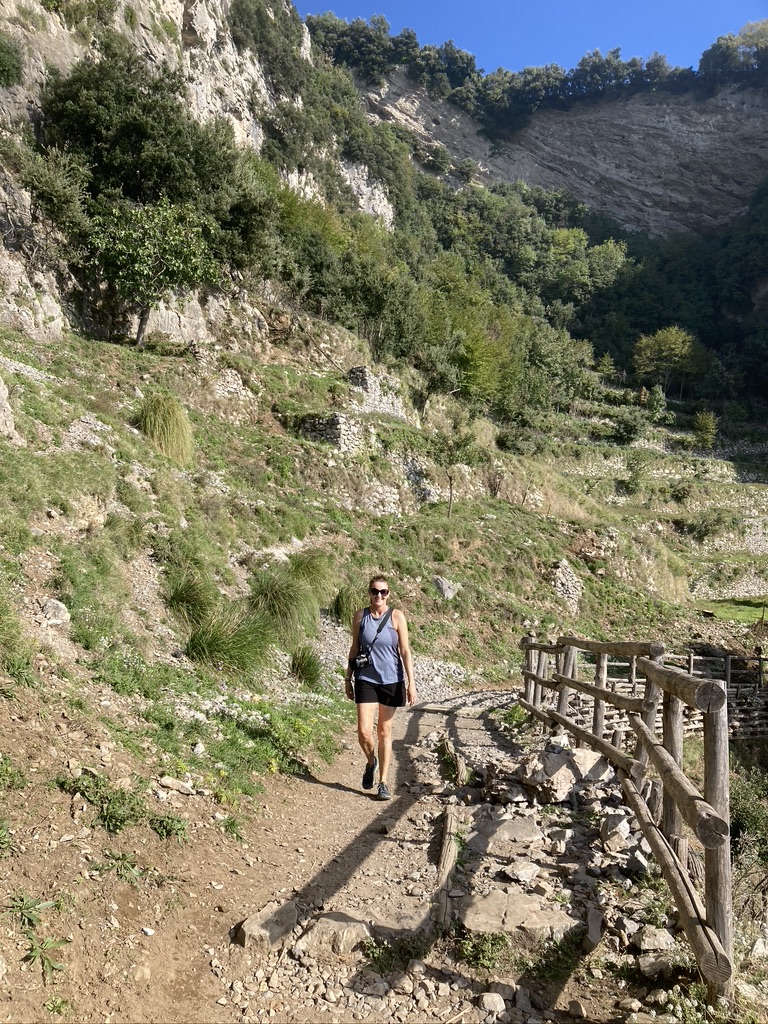
On the Sentiero Degli Dei

Morning mists high over the Amalfi coast

Enjoying the reward after returning to Bomerano

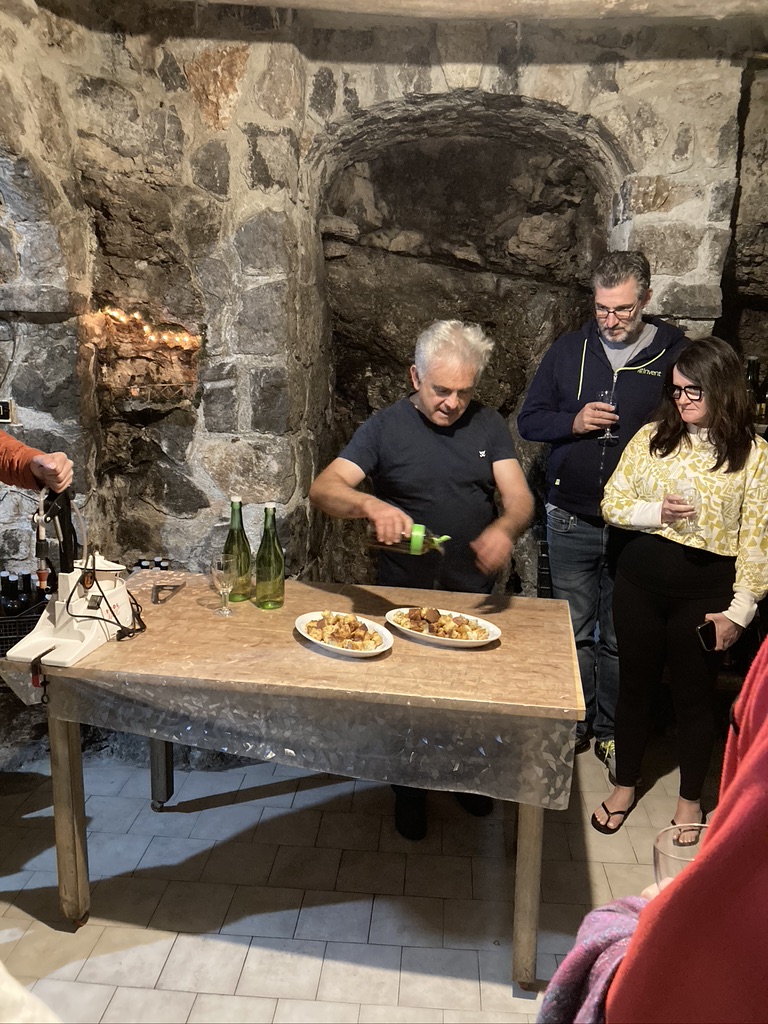
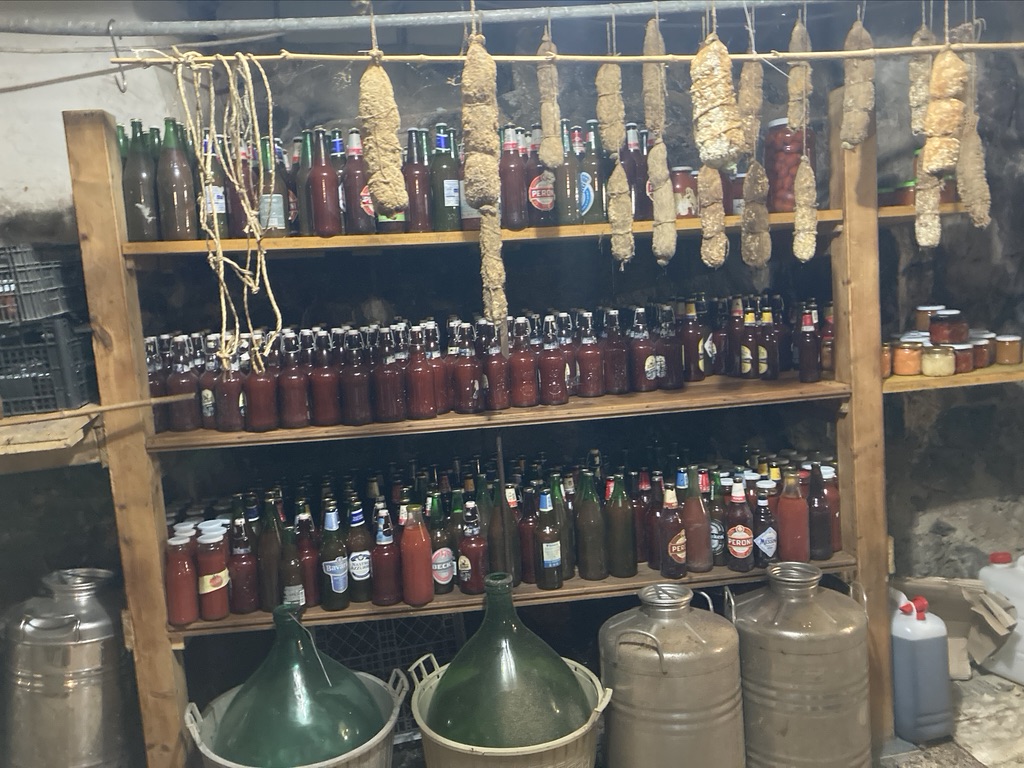
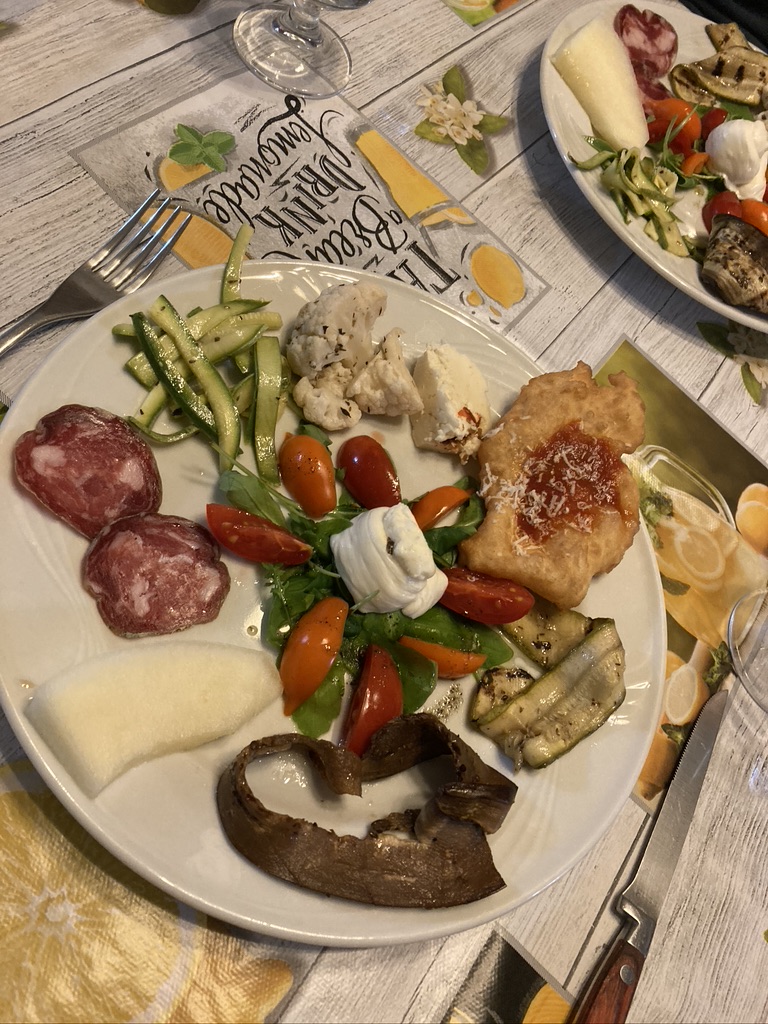
San Lazzaro is another of the small villages in the Agerola, just a couple miles from Bomerano. On the outskirts of the village sits La Vigna Degli Dei, a bed and breakfast/restaurant/farm/winery run by Pasquale and Rosanna. We had heard that they offered a pretty special experience and were keen to try them out for dinner. We drove over around five o’clock and found Pasquale working outside the restaurant. He confirmed they were open for dinner and we should come back around seven o’clock. In the meantime we could explore San Lazzaro and take in the views down to Amalfi. At seven we returned to find one table in the small restaurant – with eighteen places set. Pasquale explained that he and Rosanna were hosting a tour group that evening and we would be joining sixteen strangers at their table. When we raised an objection to intruding on their party, Pasquale insisted that we stay (“English-speaking group. You will enjoy yourselves – I promise!”) The group arrived shortly thereafter and he was right – they welcomed us warmly to their table. While Rosanna bustled around in the kitchen preparing the four courses we would be served (no menus – you eat what they’re cooking that night), Pasquale ushered us downstairs into the stone cellar where the winemaking operation was housed to explain his methods (he produces about 2,500 bottles a year – all for consumption in the restaurant), his family history (he’s the third generation winemaker) and the hard work that goes into managing a farm (everything on the plates we would be served later comes from the property). After tasting the wines (one white and one red – it’s a simple operation) we returned to the table for dinner. The antipasti plate, our first course, contained grilled eggplant slices, pickled cauliflower, julienned raw zucchini dressed with olive oil, slices of salumi (which we had seen curing in the wine cellar), melon, fried pizza dough, cherry tomatoes and two cheeses – a fresh mozzarella and a spiced goat cheese. When those plates were cleared, they were replaced by the pasta course – house-made fusilli tossed with a fresh tomato and eggplant sauce, topped with grated parmigiano. Our main course was a ground pork and beef rollatine baked in a bread ring with a side of bibb lettuce salad. To finish we were presented with individual ramekins of tiramisu as well as Pasquale’s homemade limoncello. It was truly a memorable evening, made more special by enjoying it with new friends and being embraced by the warmth and hospitality of Rosanna and Pasquale. Before we left we were able to wrangle a couple bottles of the house wine to take back to Bomerano to be enjoyed on the terrace at Villa Elisa over the next couple days.

Pasquale pours the fruit of his labors in the wine cellar

Curing salumi and canned tomatoes (in recycled bottles) ready for the sauce

Farm to table – the antipasti plate

My favorite view from the Amalfi coast – the mountains around Bomerano from the terrace at Villa Elisa

After four days on the coast we would be heading right across the country to the region of Puglia, along the Adriatic Sea for a week of walled medieval towns, vineyards and far too much Puglian cuisine – in the next Rhumline post.


1 Comment

Europe ’22: Part 3 – Milos & Athens

The Meltemi is the name for the seasonal winds that blow across the Cyclades, howling down from the Balkans in the north. In July and August they can provide a welcome relief from the sweltering summer heat. While that’s the peak time for the Meltemi, they can sometimes kick up in June or September for days at a time. Or, even in mid-October, when we happened to be visiting. When they blast the islands it can create rough seas which can disrupt the ferries that ply the waters between islands. That’s just what happened last week when our plan to leave Milos to visit Sifnos, the last stop on our island-hopping tour, was scuttled. We were forced to spend another two days on Milos (do I hear the sound of tiny violins?) and then head directly to Athens when the seas calmed enough for the boats to start running again. Hmmm . . . how could we fill a couple extra days on a Greek island . . .

We had based ourselves in the village of Pollonia, on Milos’ northeast coast, for our stay. With a rental car we would be able to explore the island and visit beaches (Sarakiniko in the north and Fyriplaka on the south coast); the unique village of Klima, with it’s colorfully-painted ‘boat houses’; the remote seaside village of Mandrakia and the main town of Adamantas, which hosts the ferry port, a marina for sail boats and a string of tavernas along the water. In Pollonia itself, we only had to walk a short distance for excellent seafood at places like Enolian (steamed mussels and grilled sea bream), Yialos (grilled calamari and pasta with shrimp) or Alkis (fried calamari). As a bonus, just on the edge of town we found the Kostantakis Cave Winery, which offered tastings of its line of white, rose and red wines as well as a couple distilled spirits in a comfortable outdoor setting at the mouth of its cave storage cellar.

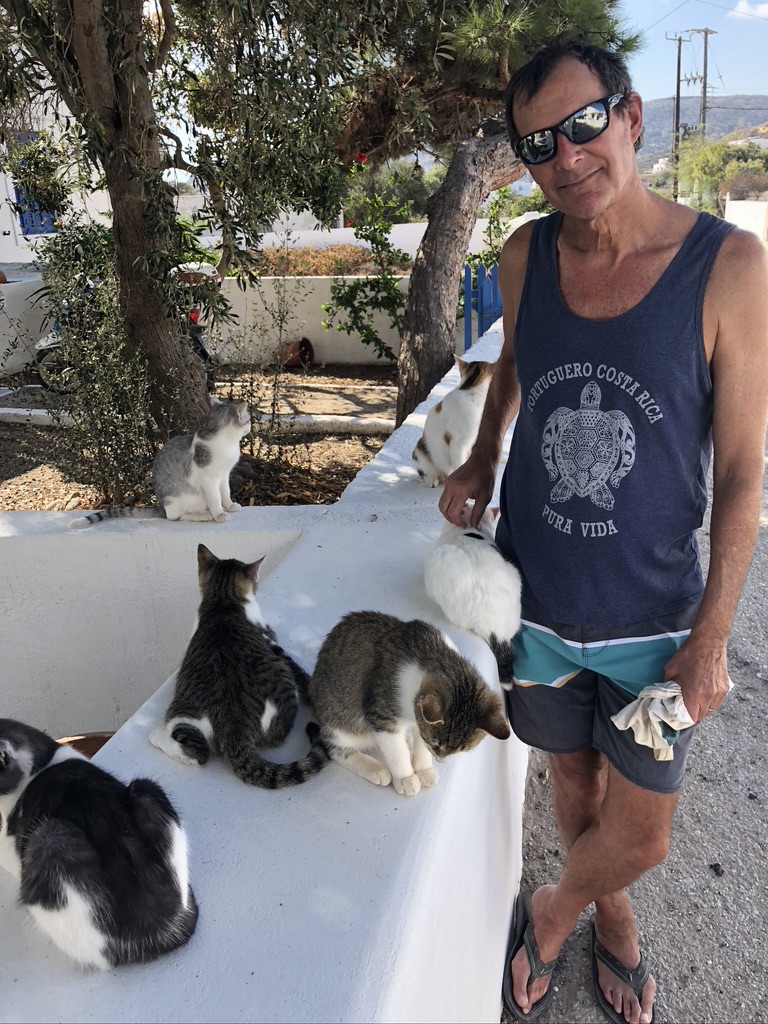
Yep, Milos has cats like the other islands . . .
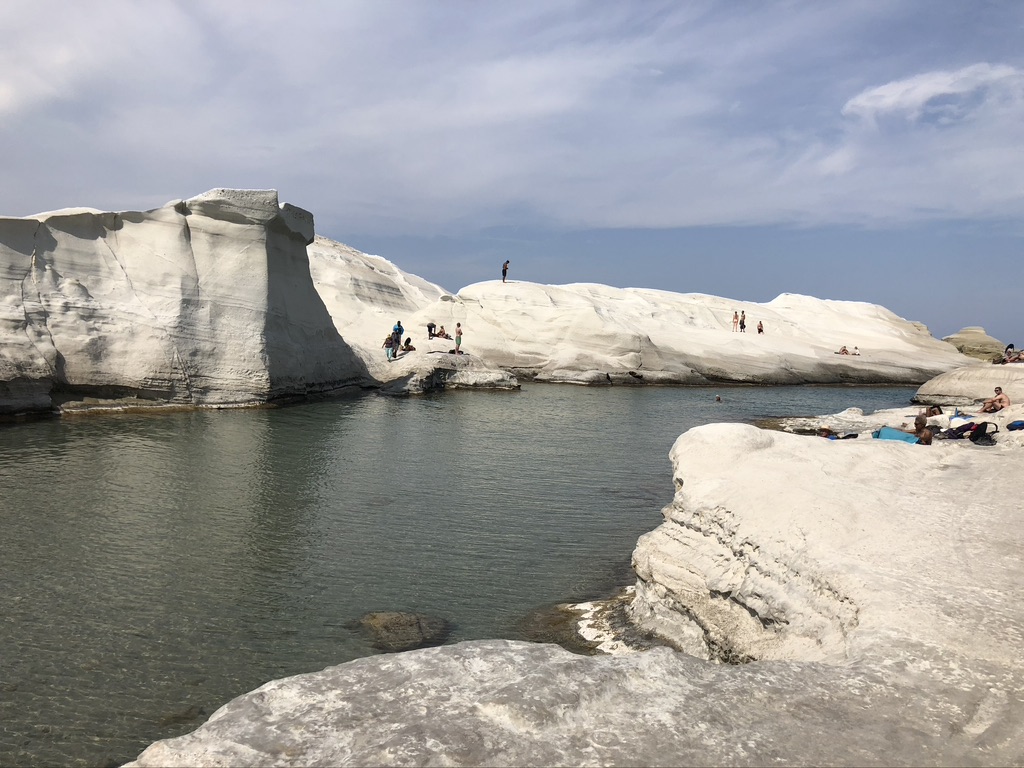
The limestone beach at Sarakiniko
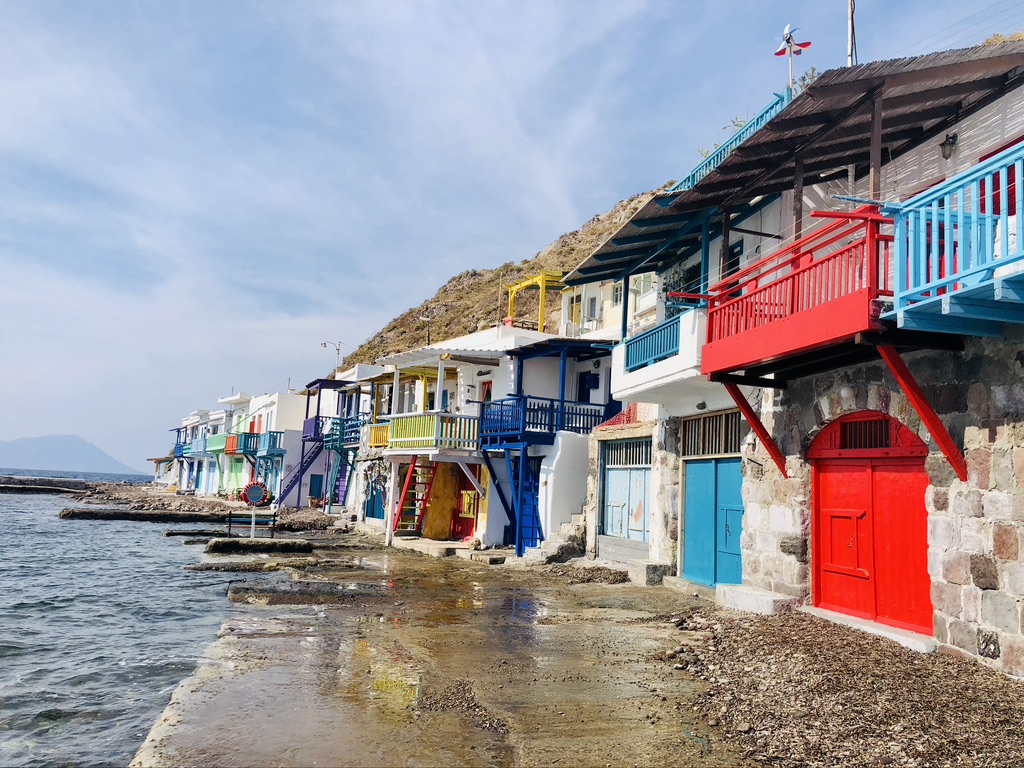
Boat houses at Klima – boat storage on the first level, living quarters upstairs
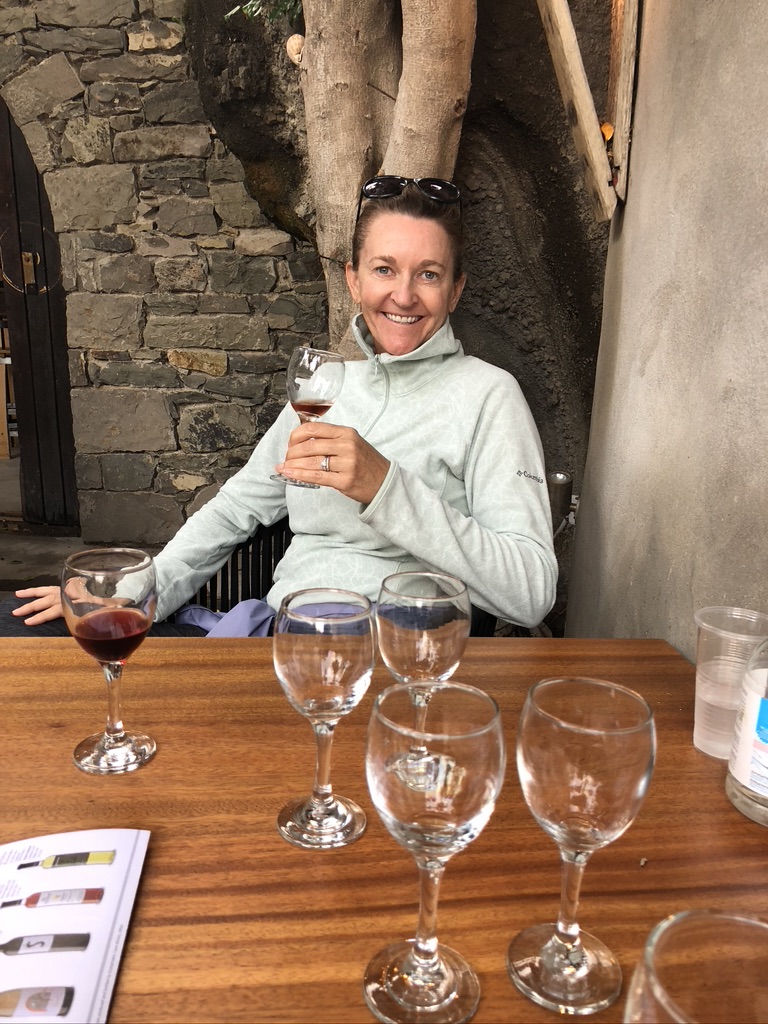
Wine tasting at Kostantakis Cave Winery
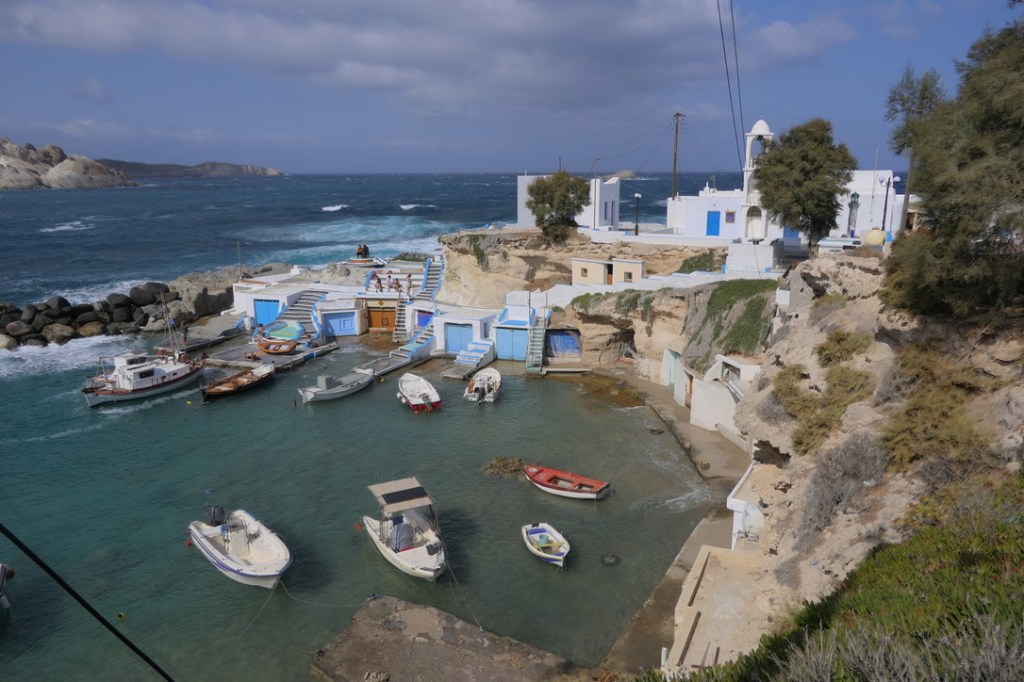
Mandrakia

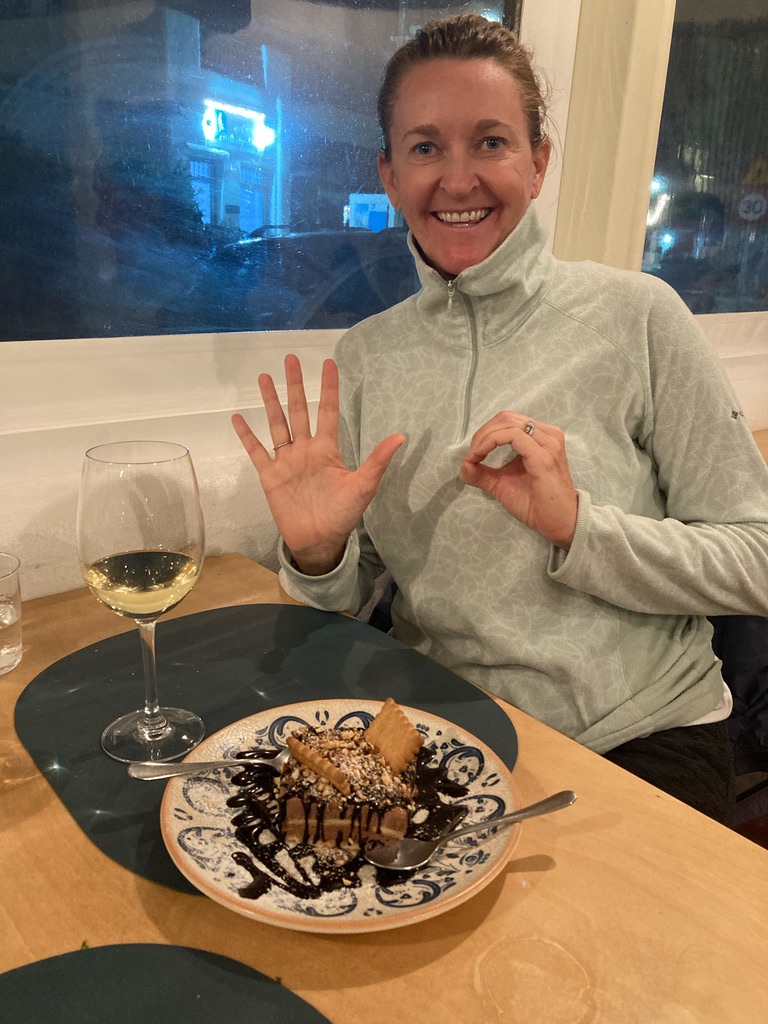
Someone’s celebrating a special birthday!!

A car won’t get you to the best scenery on Milos, however. To see the beautiful limestone cliffs and rock formations at Kleftiko, the collapsed sea cave at Sikia and the wild and rugged west coast you have to get on a boat. We signed on for one of the full-day boat tours that leave from the marina at Adamantas and, along with a group of international visitors and the two-man crew set out on a gorgeous sunny day. Our first stop was the cave at Sikia, which could only be entered via the boats dinghy through a small arched opening. The roof of the cave had collapsed about twenty years ago, leaving it open to the sky. We had a chance to swim outside the cave and everyone took advantage of the opportunity to jump into the sea. A short time later we motored into the cove at Kleftiko – a former haunt of pirates who used the area for a safe anchorage protected from the northern winds. The crew took us around by dinghy to view the limestone formations before serving us lunch. After another swim, the anchor was raised and it was time to return to port.

Inside the roofless sea cave at Sikia
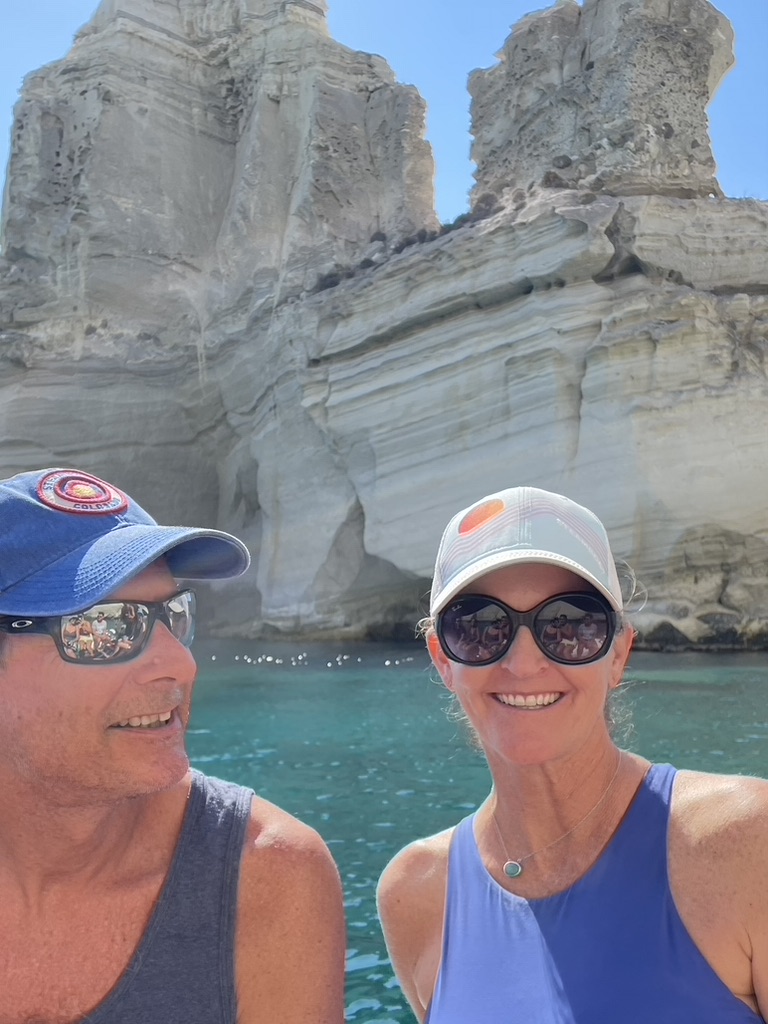
Smiles at Kleftiko

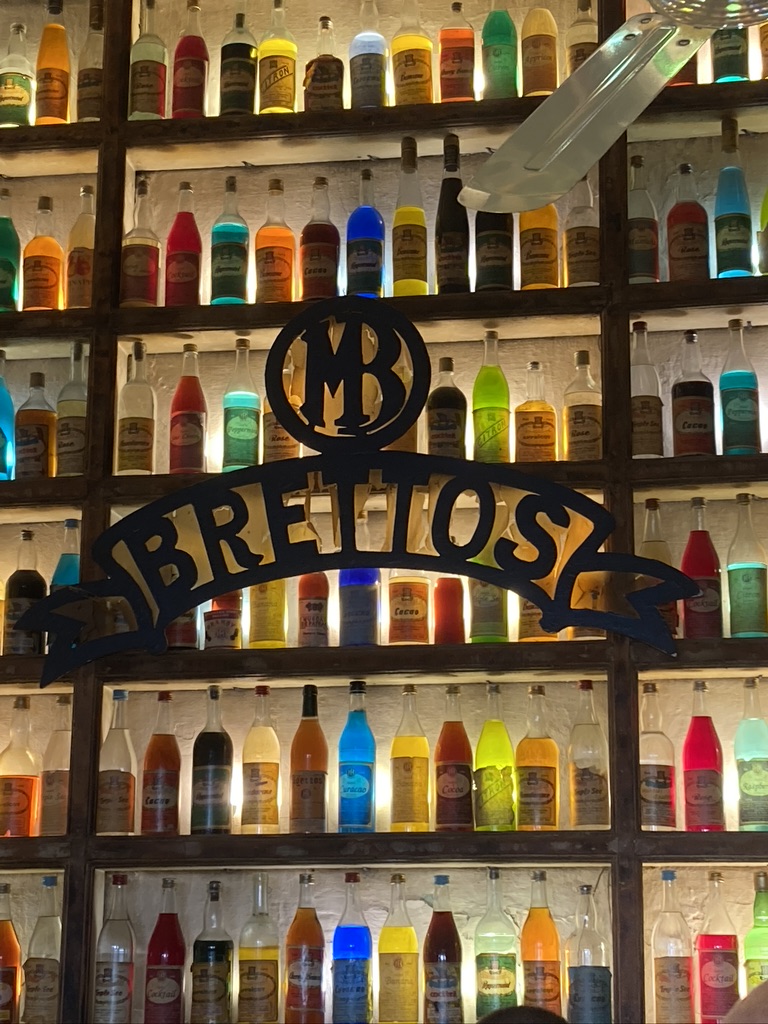
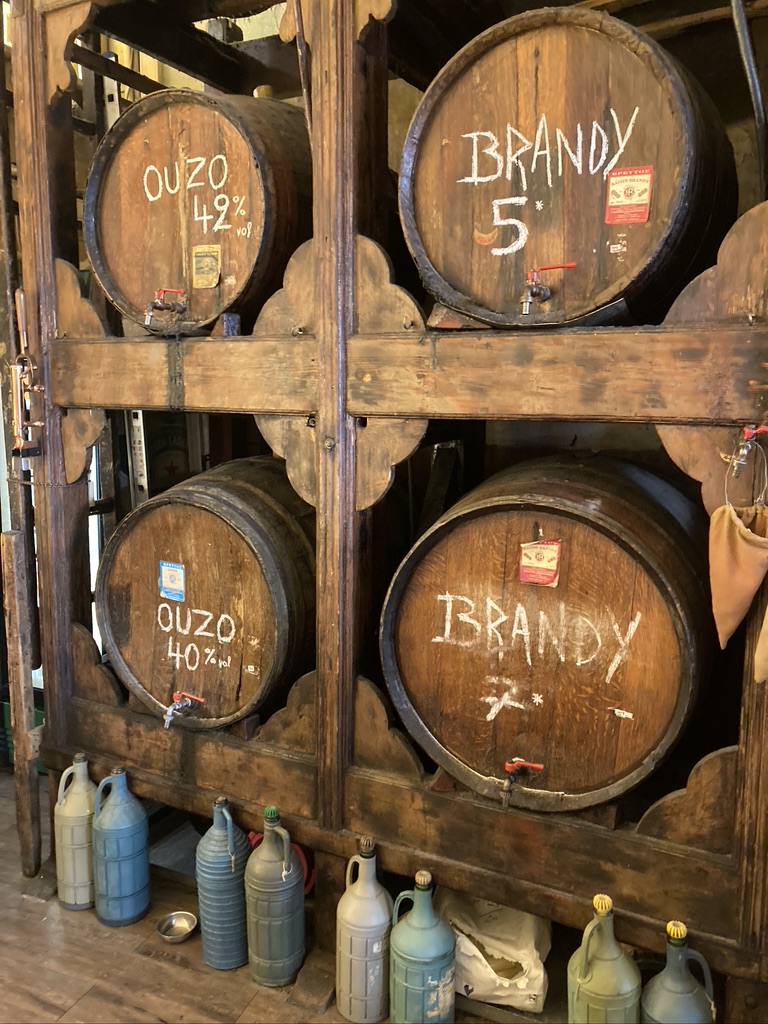
After leaving Milos we traveled via ferry to Athens and spent some time wandering around the Acropolis, the National Gardens and the Plaka neighborhood. Plaka is THE tourist district – just below the Acropolis, pedestrian streets lined with souvenir shops, jewelry stores, gelato stands and tavernas, it’s wall-to-wall people. The crowds reach their apex right at the intersection of Adianou and Kidathineon streets, the center of Plaka. A few steps away from the intersection you can step up into Brettos bar, though, and you’re transported away from the crowds and into old Athens. The first thing you’ll notice is the back bar, which is a floor-to-ceiling display of hundreds of back-lit colored bottles. To the right of the door is the original, hand-made distiller that the owner first used, while another wall is lined by the wooden casks containing their house-made ouzo and brandy. The bar dispenses thirty-five other house-made liquers, as well as over 100 wines by the glass. Brettos is the perfect spot for people-watching – seats inside provided a quiet respite from the crowded streets, yet offered a window to view the meandering masses, whose numbers were surprising to us having just come from the islands where visitors seemed to be heading home and businesses were shuttering for the season. Athens was a place where we could relax on familiar ground after three weeks of island-hopping and regroup before embarking on our next leg – another three weeks road-tripping through southern Italy.

The back bar at Brettos

Ouzo – straight from the cask, right where it’s made – Brettos


Leave a comment

Europe ’22: Part 2 – Naxos

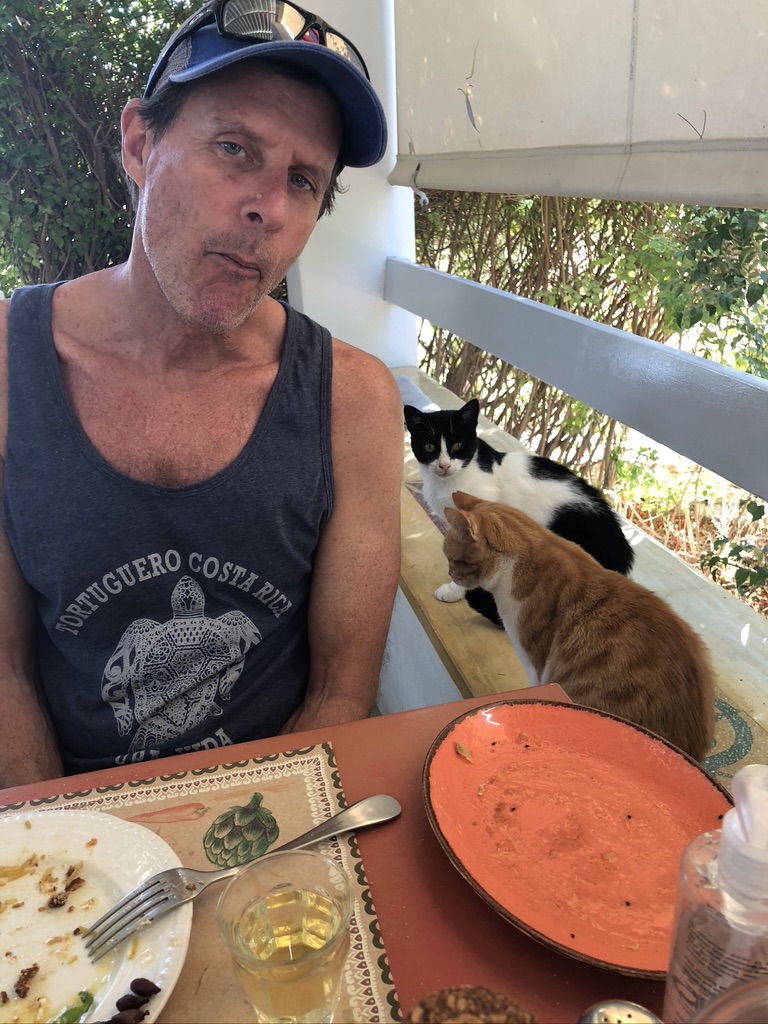
Naxos is often described by a host of adjectives: it’s the largest of the Cyclades islands (the group that includes Santorini and Mykonos amongst others); it contains the highest point in the Cyclades (Mt. Zas, fabled birthplace of Zeus); it’s the most fertile island (the high mountains bring more rainfall – its extensive agricultural sector makes it almost self-sufficient); and I can add one other observation – it has the most cats of any Greek island we’ve visited (which are all known for their cat populations). In every taverna you’ll usually have to move a cat from your chair before sitting down; every lane in every village will have felines lounging on stoops, stairs and window sills; our guesthouse provided a haven for more cats than it had rooms for guests. With a week on the island we’d have ample time to play with the friendly kitties, explore this large island by car, spend an afternoon hiking in the mountains and enjoying all the home-grown produce and seafood available to us.

Ummm, that’s my seat . . .

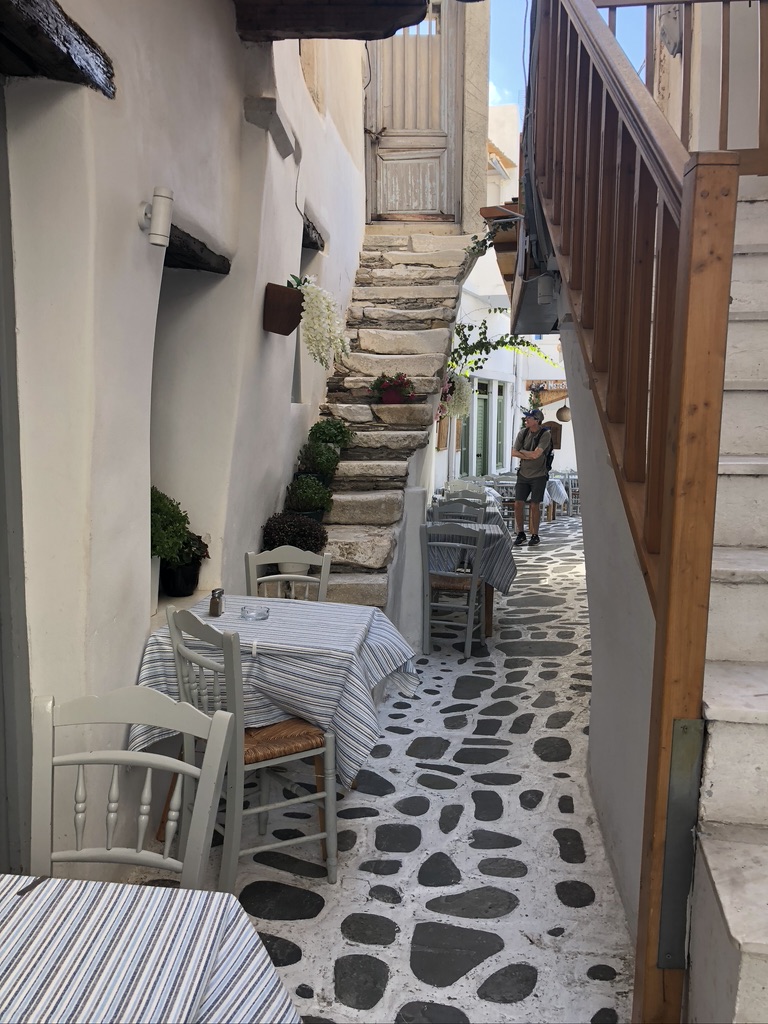
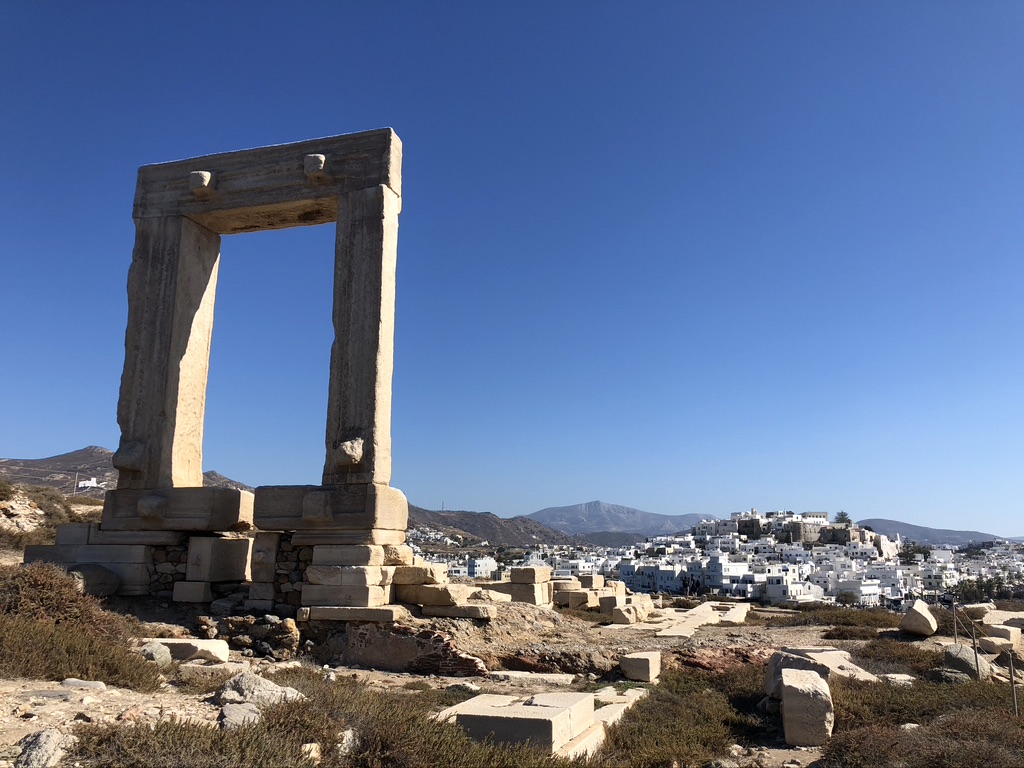
We spent one day in the port town wandering the maze of lanes in the ‘old market’ area; climbing up to the ruins of the old Venetian castle for the views over to Paros, a neighboring island; visiting the ruins of the temple of Apollo, and finally, indulging in fresh seafood offered at one of the waterfront tavernas.

The maze of streets in Chora’s ‘old market’ area
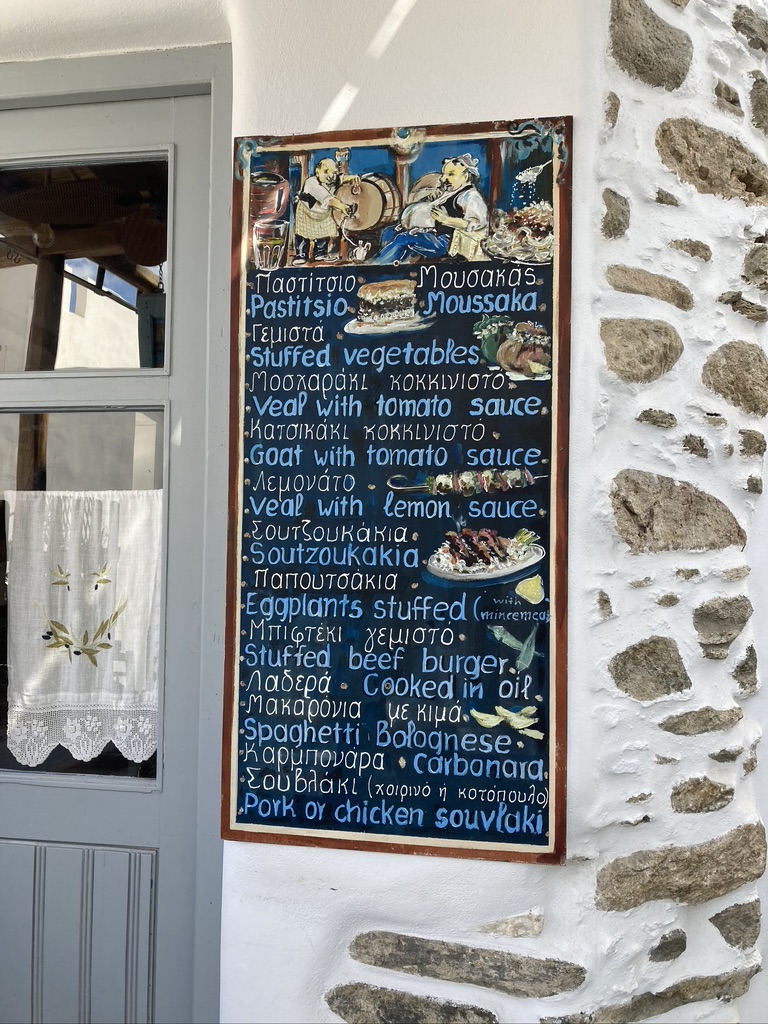
A taverna menu in Chora, the port town
The gate to the ancient temple, Naxos town in the background

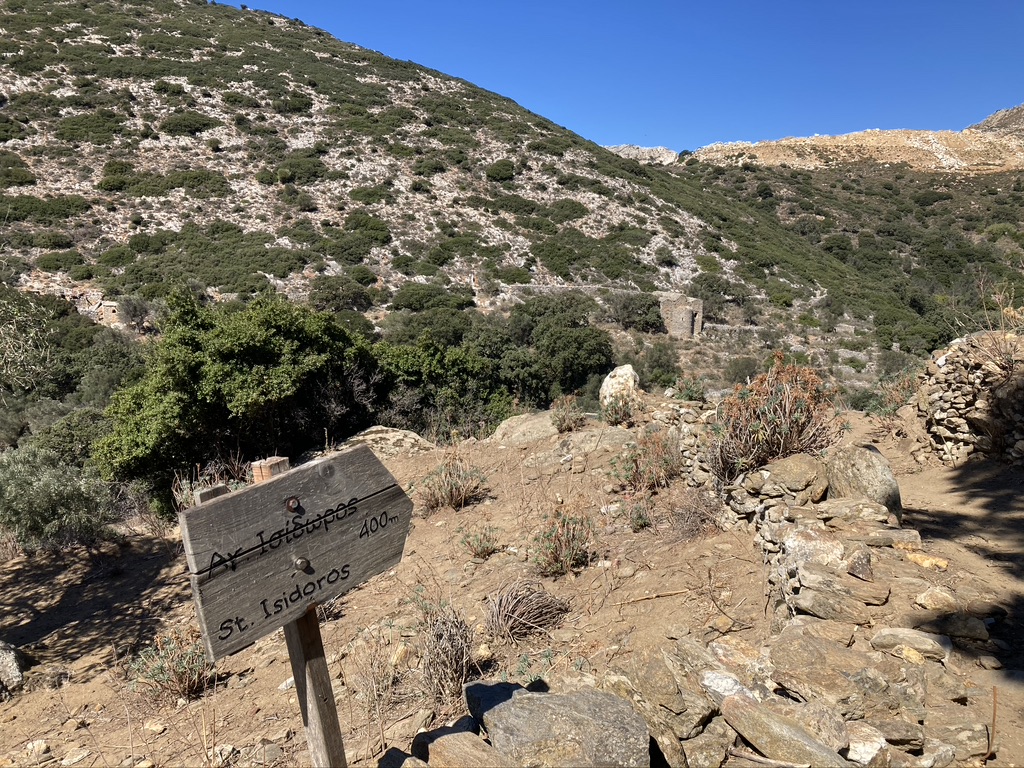
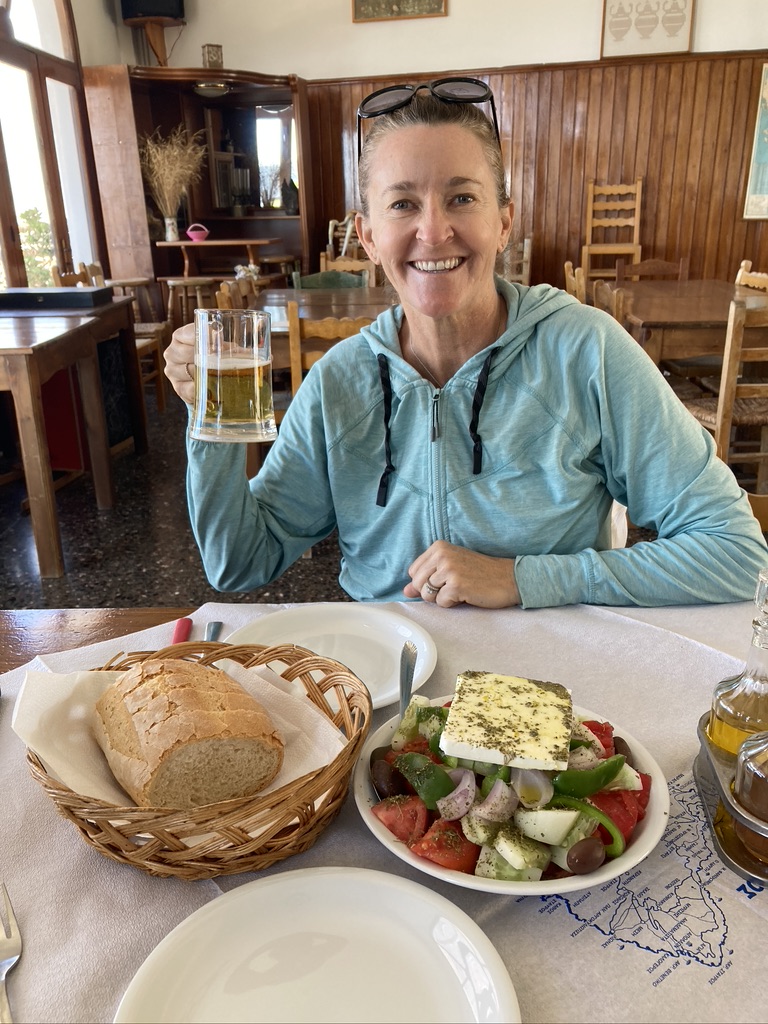
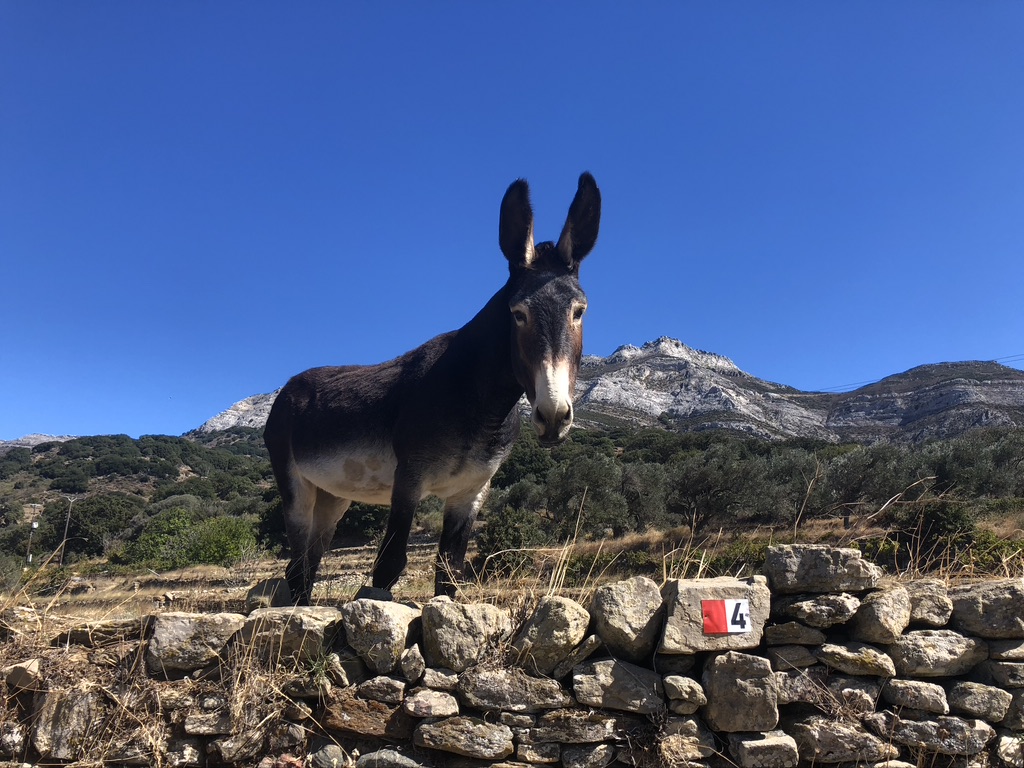
A highlight of Naxos is the well-maintained trail network, one of which connects the central mountain villages of Chalki and Moni. The trail follows a cobbled lane out of Chalki, passes several small chapels before meandering on a dirt path along a dry streambed, always ascending up the valley until reaching the village of Moni about an hour later. If you were pressed for time you could continue the loop, descending back to Chalki along the other side of the valley, but then you’d miss the experience of dining at To Panorama in the middle of Moni. We were wandering along the street when an old local, sitting on a chair outside the taverna, beckoned us in. Setting foot inside we were warmly greeted by an elderly woman. Seated at a table in the empty restaurant we asked if there was a menu. “No” replied the woman, who then listed what she had to offer us – beans, salad and bread. “Yes” we said, though with no real choice in the matter. Soon, after our cold bottle of Mythos beer was served, the plates arrived – a heaping platter of stewed fava beans in a light tomato sauce and a towering bowl of Greek salad, topped with a thick slab of feta cheese dusted with oregano. A basket of bread rounded out our lunch. We happily munched our food while taking in the ‘panoramic’ views of the valley from the large windows. Reluctantly, with full stomachs, we departed for the return to Chalki, descending through olive groves and vineyards, stopping to pick pomegranates from a tree whose loaded branches were drooping over the rock wall beside the trail, passing a lonely donkey who walked with us the length of his pasture until the fencing prevented him from going any further and wandered through the charming, nearly deserted village of Kaloxylos before reentering Chalki, where we treated ourselves to dishes of ice cream made from local cherries and strawberries.

Leaving Chalki on the trail to Moni
A side trail to one of the numerous stone chapels in the valley
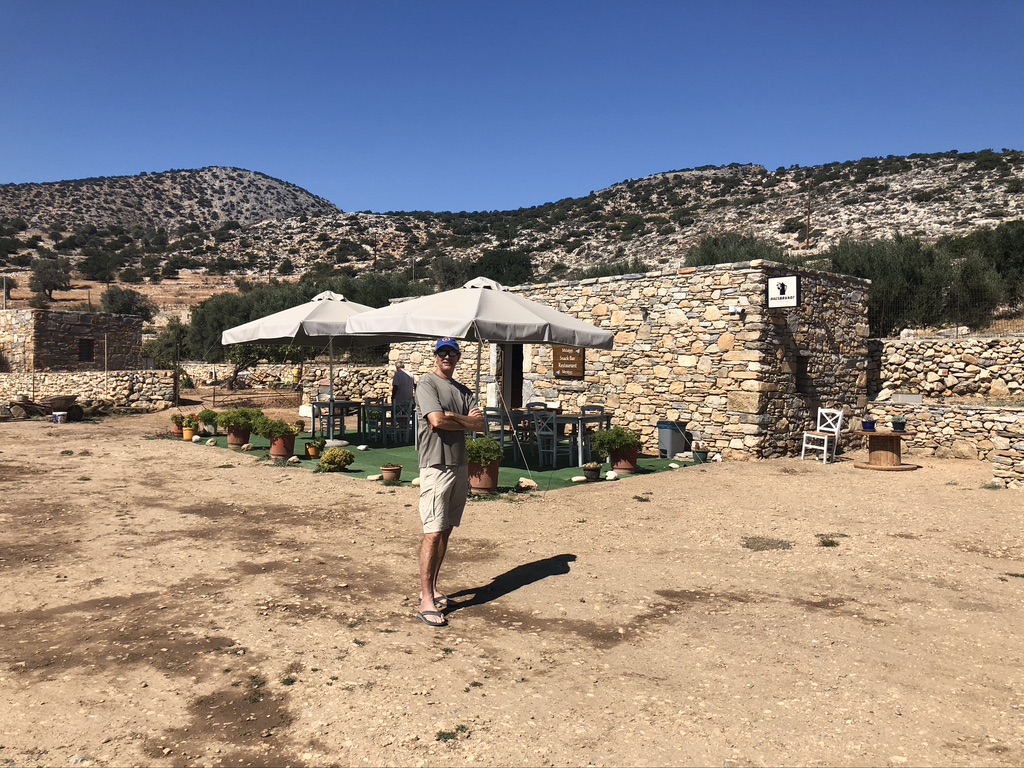
A happy hiker at To Panorama in Moni
A hiking companion, if only for a short stretch
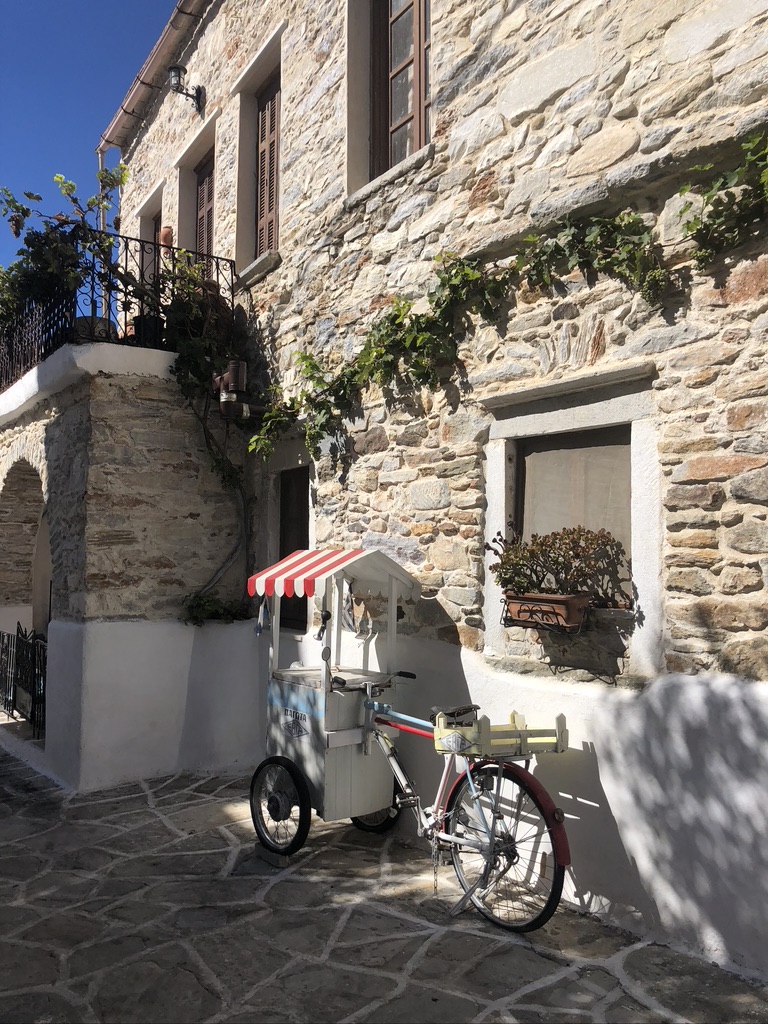
A vendors bike, parked for the evening, in Kaloxylos

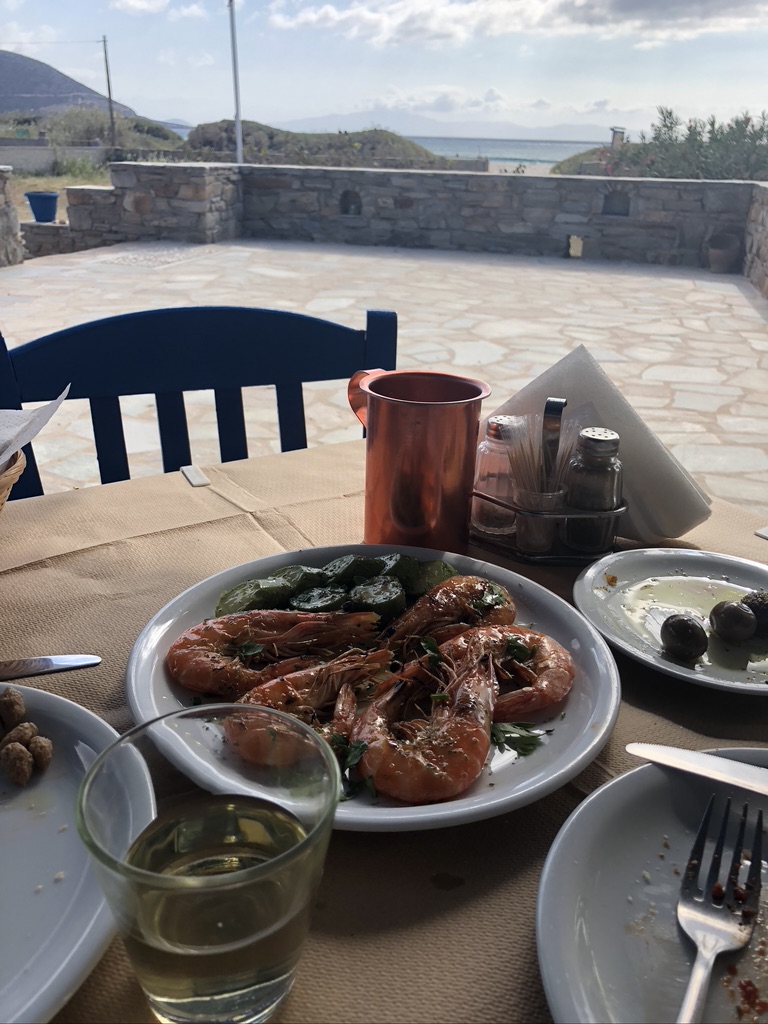
One day we drove through the center of Naxos and climbed over a mountain pass before descending to the coast on the eastern side of the island. At Moutsounas we turned south and followed a twisting road that hugged the shoreline. The road ended at the village (as far as five stone houses constitutes a village) of Panormos, and more specifically at a dusty parking area in front of Mitatos taverna, which overlooks tiny Panormos Bay, with views even further to the islands of Koufonisia, Schoinousa and Ios. There were a few other intrepid visitors swimming in the bay, but we elected to forego the chilly water and instead enjoy a chilly beverage on the terrace of Mitatos and take in the view. Another day was spent navigating yet another dirt road to Agiossos Beach on the southwest side of the island in order to have lunch on the sun-splashed terrace of Panormitis Cafe. We dined on grilled prawns, baked eggplant, olives and baklava before heading back to our guesthouse for sunset.

The end of the road – Panormos Bay, Naxos
Mitatis taverna
Grilled prawns and the view at Panormitis Cafe

As the calendar moves to mid-October, things are starting to close down on Naxos. Several restaurants have already shuttered for the winter and we’re seeing more close each day. We asked our host if it would be possible to stay in our room a little longer on our last day, as our ferry wouldn’t depart until the evening. Her response – “Stay as long as you like. You’re the last guests of the season”.

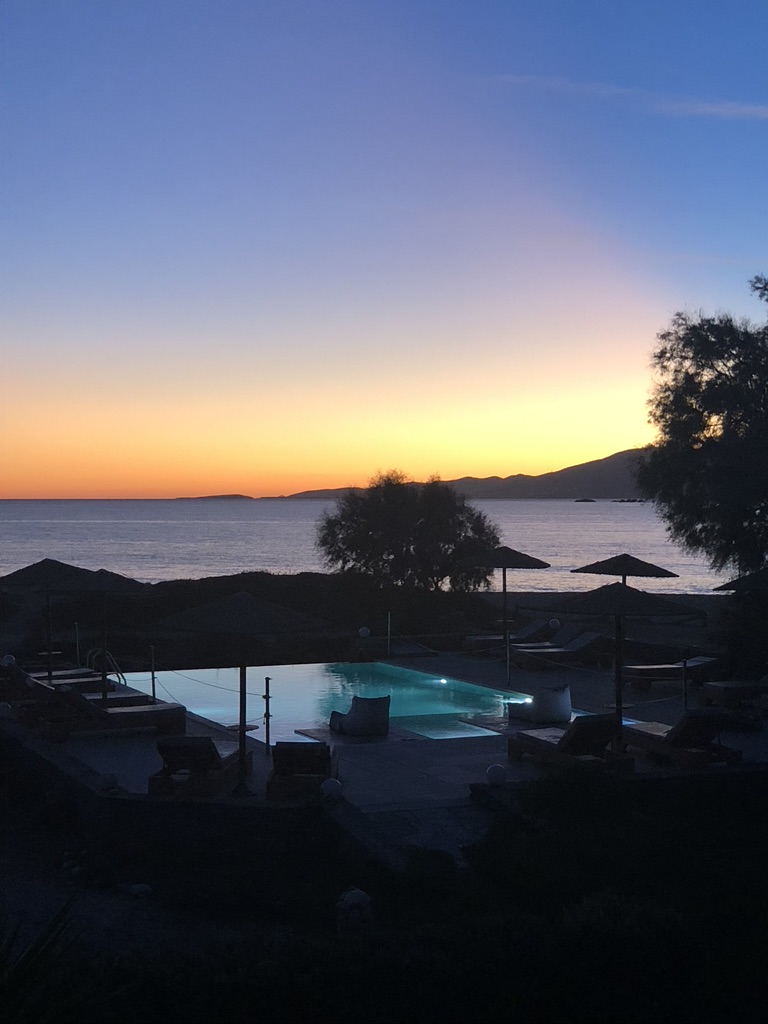
The final sunset from our guesthouse overlooking Plaka Beach and the island of Paros

After enjoying our return visits to Santorini and Naxos, we’re headed to new territory for us: the islands of Milos and Sifnos, where we’ll celebrate a milestone occasion . . . in the next Rhumline post.


Leave a comment

Europe ’22: Part 1 – Santorini

Ammoudi Bay sits at the very northern tip of the island of Santorini, occupying a dramatic setting just below the town of Oia, which clings to the clifftop overlooking the bay. Right at the rocky shoreline sit four restaurants and if you’re visiting Ammoudi Bay for lunch or dinner you have to decide between them. The good news: there’s no wrong choice. One of those restaurants, the Ammoudi Fish Tavern, provided what may be one of the best dining experiences we’ve had recently. By a stroke of luck, we arrived just as they were opening their dining area and were the first patrons of the day, scoring a table for two perched mere inches above the Aegean Sea. A quick glance at the menu told us this was a serious seafood joint – not a chicken, lamb or pork item could be found on its extensive menu. We opted for a starter of roasted beets and candied walnuts dressed with a yogurt sauce and basil oil, followed by a heaping bowl of steamed mussels in white wine and garlic along with a plate of grilled sun-dried octopus, drizzled with olive oil and dusted with herbs. Chewy sourdough rolls, with more oil and an olive tapenade for dipping, rounded out the meal. We savored every bite, washed down with a crisp, local white wine while watching the sun-dappled sea. Afterwards we strolled through the other restaurants along the waterfront, savoring the smells and sights of plates of grilled sea bass and grouper; bowls of pasta heaped with lobster and prawns and platters of crisply-fried calamari.

Ammoudi Bay and it’s seafood tavernas lie below Oia
It’s also spectacular from the top!

Santorini was the starting point for our six-week European trip. Having visited the island twice before, we planned on spending just four days here, mainly for the chance to rest up from what turned out to be a grueling day of travel – and by ‘day’ I mean twenty-seven hours. At the last minute our first flight of the journey was canceled, prompting a five-hour drive to New York City before our overnight flight to London, where we spent seven hours before boarding our flight to Santorini, which then sat at the gate for another one and a half hours before departing for the four-hour trip to Greece. Arriving well after dark, we were happy to find Kostas, from Cool Cars, who was supplying our rental car, still waiting in the airport parking lot. After a brief inspection of the vehicle, signing a few forms (it’s all Greek to me!) and paying with the Euros we had just gotten from the airport ATM, we were off to Perissa beach, on the island’s southern shore. Rolling down the windows we let the warm air wash over us as we passed by the quintessential whitewashed stone buildings that are so iconic of Santorini. Arriving at our guesthouse we checked in, dropped our bags and fell into bed, eager for sleep and looking forward to a few days refreshing all our Greek memories: grilled fish at the seafront tavernas; gyros wrapped in warm, pillowy pita; crisp white wines; terraced vineyards baking in the sun; lonesome blue-roofed chapels tucked into mountainsides, ruins of old windmills . . . When I woke the next morning the sun was already streaming through the open windows of our room, the brilliant blue of the sky was visible and a slight breeze ruffled the cedar and olive trees. It was so good to be back in Greece. My reverie was broken moments later when a cry arose from next to me “GET ME COFFEE!!!”.

The advantage to visiting Santorini during the ‘shoulder season’ – Perissa Beach
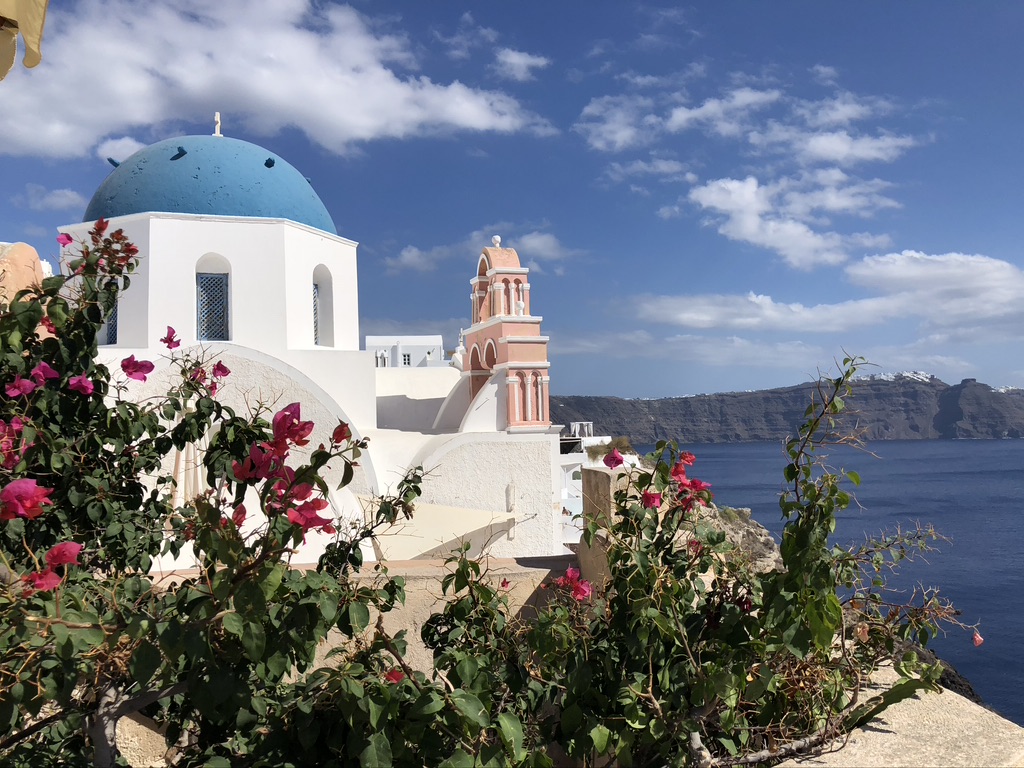
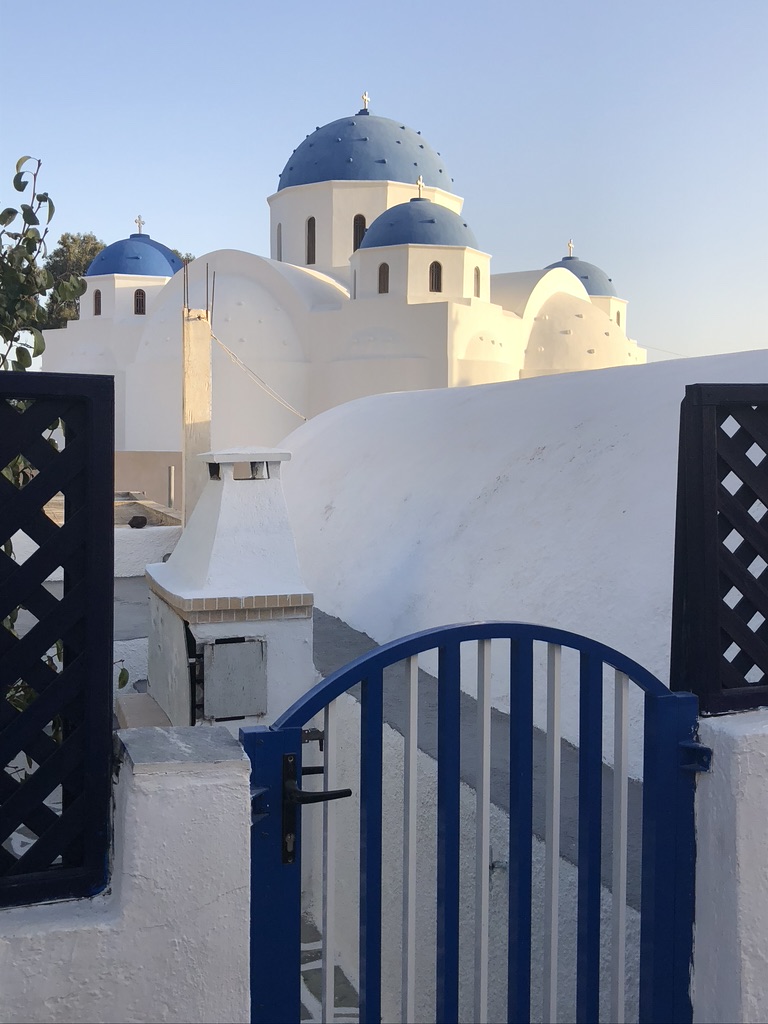
Blue and white – easy color scheme in Santorini

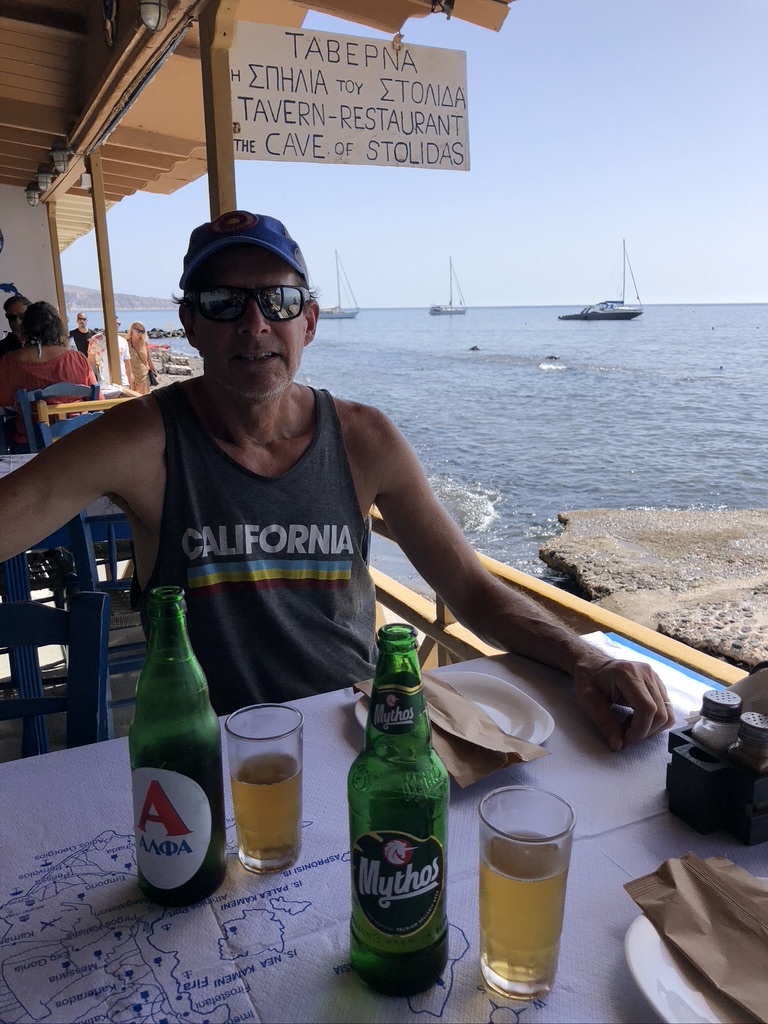
While our lunch at the Ammoudi Fish Tavern was the headline highlight, we won’t soon forget the other culinary experiences from Santorini. On our second day we explored the southern coastline, visiting the beach at Vlychada and the lighthouse at Faros before parking the car at the entrance to the beach outside Akrotiri. Much like Ammoudi Bay, there are a handful of tavernas overlooking the sea and we chose to settle in at The Cave of Stolidas for lunch. Our server suggested we start with the saganaki, a traditional dish of fried cheese made with local kefalograviera cheese, followed by dorado, a white fish grilled over a charcoal fire. No argument here! With a couple cold beers to start, we were content to look out over the sparkling sun-dappled water until our food arrived.

Overlooking the sea at Akrotiri – Cave of Stolidas – eager for grilled fish!

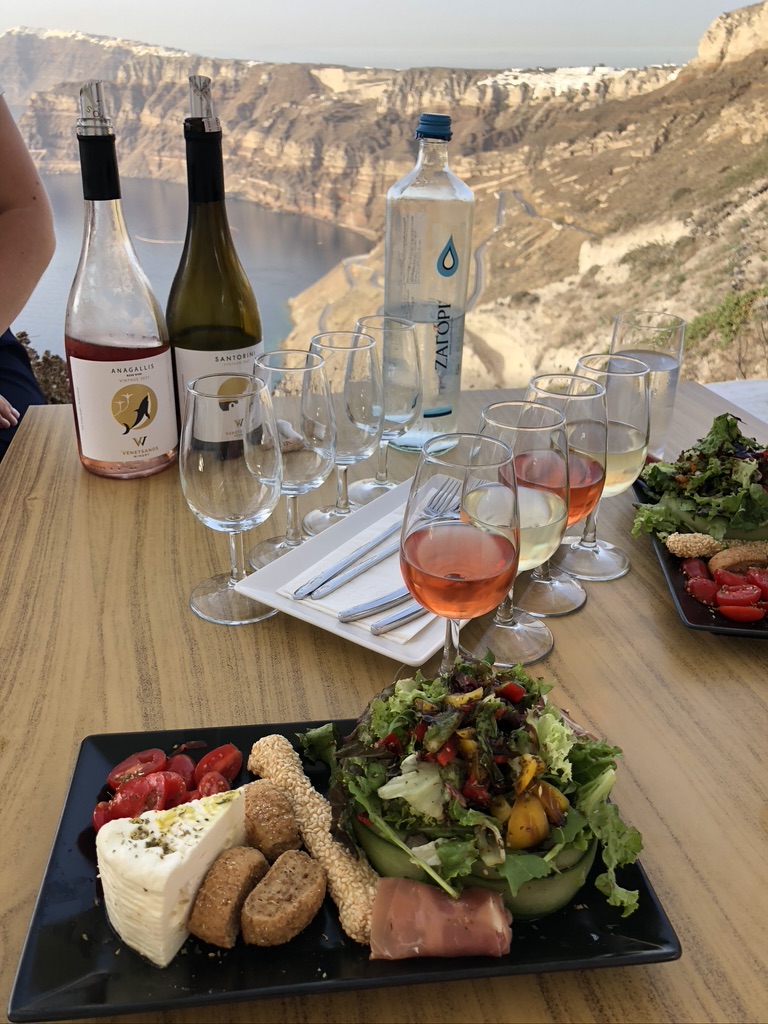
One of the attractions of Santorini is the fact it’s located on the rim of a former volcano and the views from the caldera looking over the sea to the west, especially at sunset, are breathtaking. One of the best places to take in that view is from the terrace of the Venetsanos Winery, which offers a tasting of its wines along with plates of locally-sourced food. We grabbed a table about an hour before sunset and our personal ‘sommelier’ poured us a sampling of the four most popular offerings – a crisp white, a complex rose, a minerally red and the islands famous ‘vin santo’ dessert wine.
This does NOT suck! – Venetsanos winery

No sooner had we caught up on our sleep, started to get a little color on our skin and I had developed a taste for an after-dinner ouzo, it was time to move along. Our next stop would be a return to one of our favorite islands – Naxos.

A wrap on another visit to Santorini


2 Comments

A Summer Road Trip

National parks. Soaring volcanic peaks. Cascading waterfalls. Remote stretches of rugged coastline abundant with birdlife. Perfect scenery for a summer road trip. Make the trip in a Mini-class rental car costing over $100 a day and running on $9.00 a gallon gas, travel in mid-summer where high temperatures never top sixty degrees, end the day with a $10 happy hour beer and be in bed long before it gets even close to being dark – that’s road tripping Iceland-style.

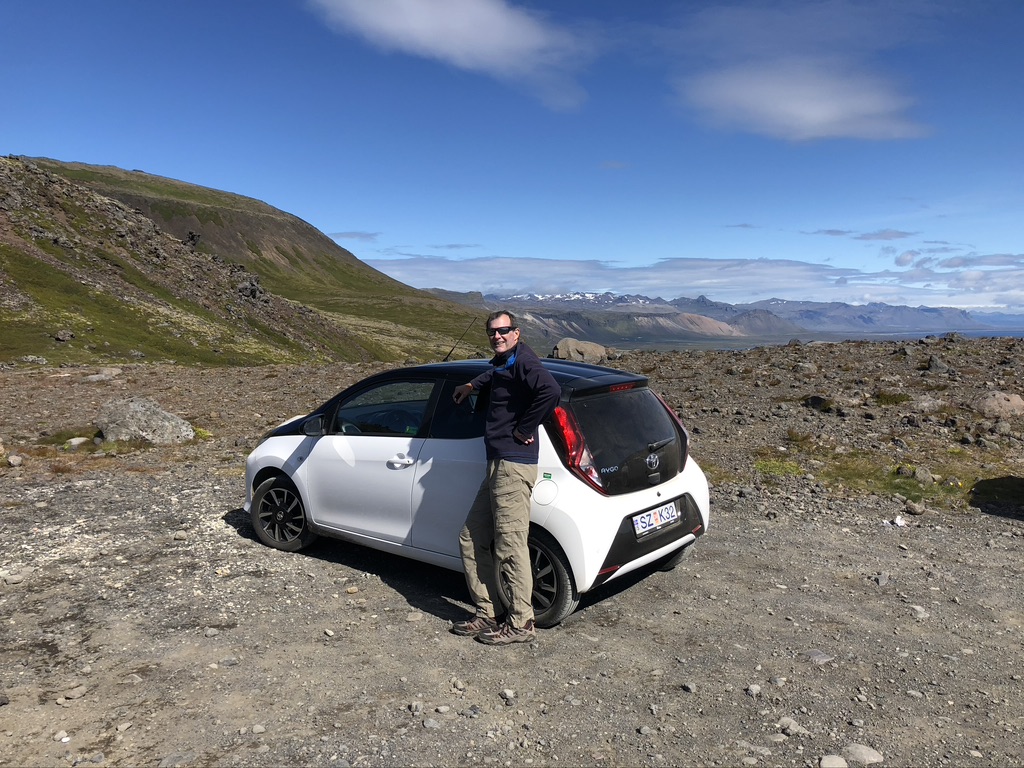
Our Toyota Aygo got us around Iceland and even to some places it shouldn’t have . . .

Like the previous summer’s trip to Alaska, which was proposed by Heather as we wiled away a November afternoon on the beach at Puerto Morelos, Mexico, our Iceland road trip idea was born on a scorching hot day in Placencia, Belize this past spring. It seems something about the oppressive heat of the tropics that makes Heather yearn for a cool summer destination. I, for one, take issue with having to pack long johns, heavy socks and a wool hat for a summer trip. But with those items, along with a full set of rain gear, a high-limit credit card and the maximum allowance of purchases at the airport’s duty-free liquor store we set out on a two-week road trip that would take us nearly 1,200 miles around the ‘land of fire and ice’. After an overnight flight from Denver to Iceland’s international airport in Keflavik, we picked up our teeny-tiny rental car (at $100/day the cheapest available) and pointed it eastward toward the capital of Reykjavik. We passed along its outskirts, turned north, and entered the countryside – rollings hills, scattered stone farmhouses, meandering streams, dirt roads and pastures of grazing sheep and horses. After a visit to a pair of waterfalls we settled into our first nights guesthouse, had an early dinner of Icelandic cod and chips, and, allowing jet lag to overtake us, were in bed long before the sun had neared the western horizon.

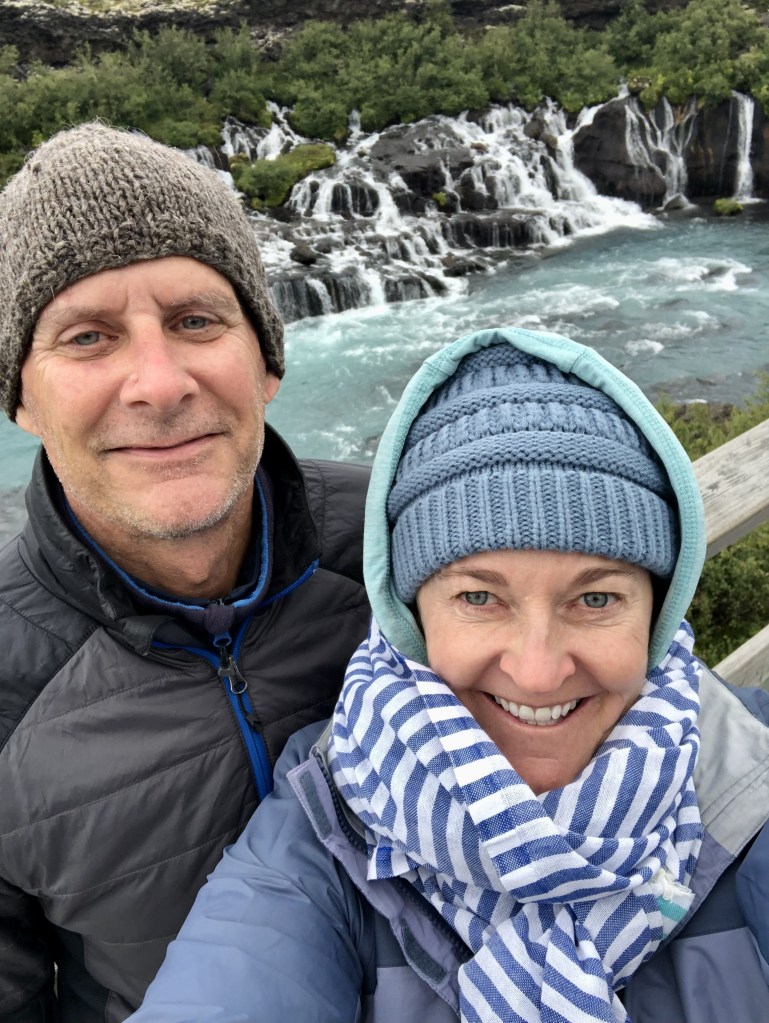
Tired from an overnight flight, bundled up for ‘summer’, but excited about our first Icelandic waterfall stop
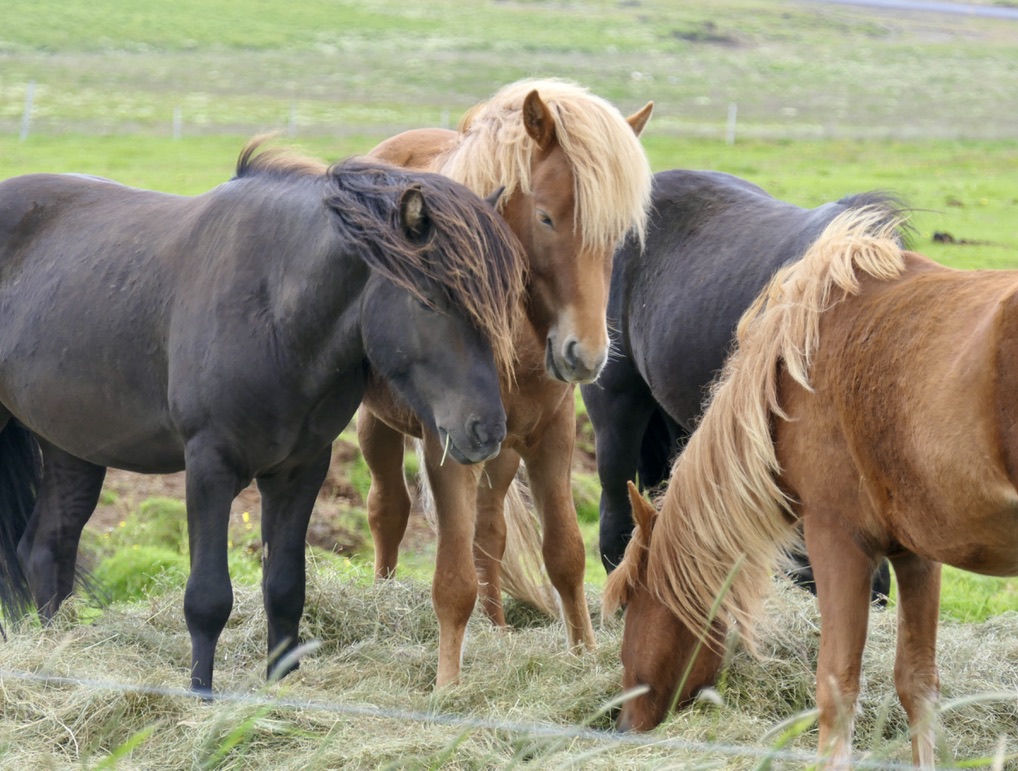
Hearty Icelandic horses were spotted in pastures throughout the country

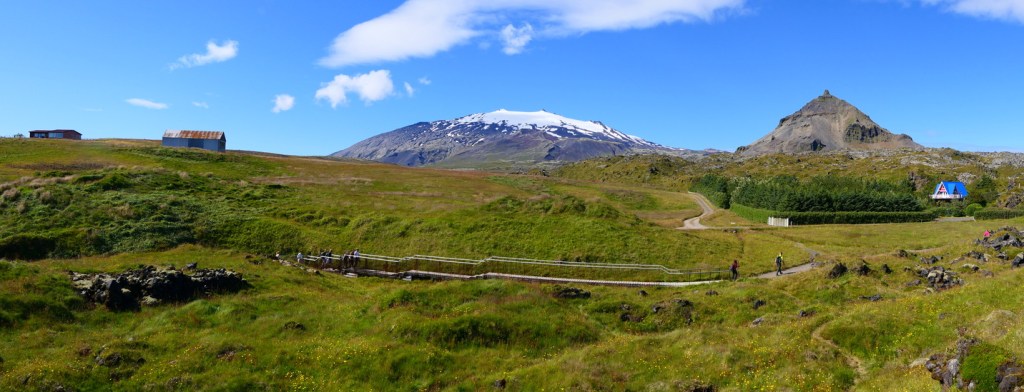
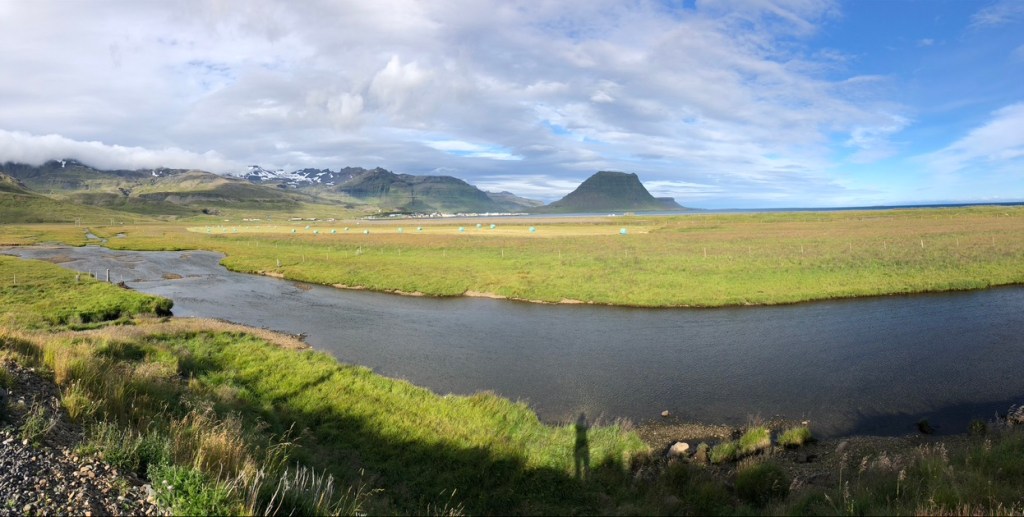
Day two would take us around the Snaefellsnes peninsula, which juts out into the northern Atlantic Ocean towards Greenland, only a couple hundred miles away. The peninsula is bisected by a mountain range, the coastline is dotted with small fishing villages and the end is capped by the massive Snaefellsjokul glacier. After stopping to enjoy the views of volcanic cliffs, the Bjarnafoss waterfall, seeing sea lions lounging on the rocks at a coastal nature reserve, driving to the base of the glacier (apparently a no-no for our class of rental car given the rugged road) and enjoying a seaside lunch of soup and homebaked bread at a cafe in the fishing village of Arnastapi, we ended the day in Grundafjordur, on the peninsula’s north coast, in the shadow of Kirkufell, Iceland’s most photographed mountain.

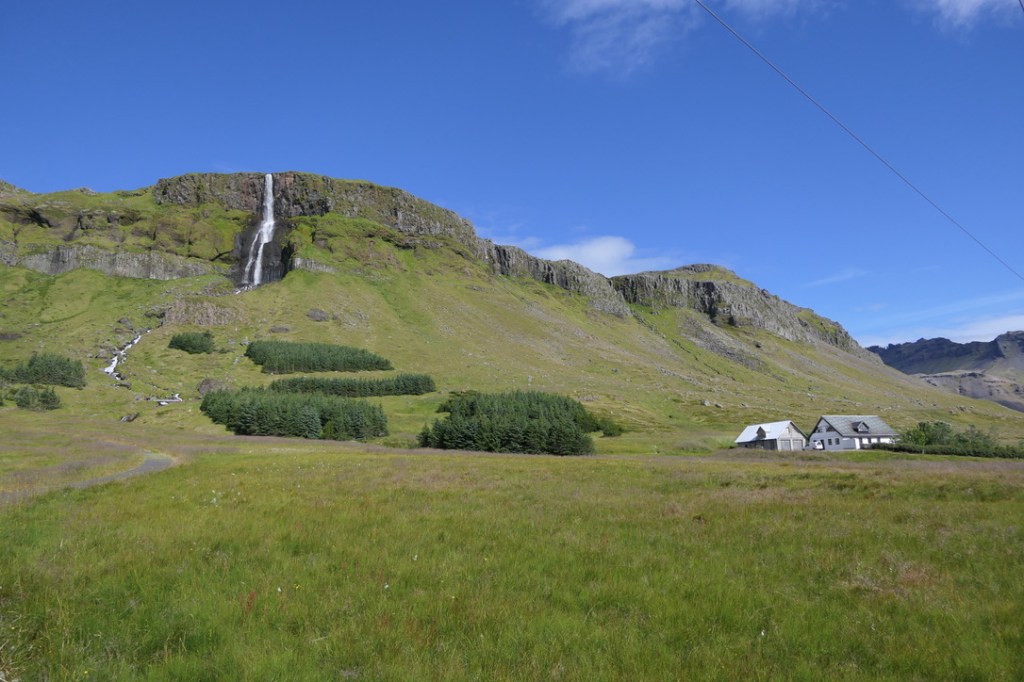
The Bjarn family farmhouse has a pretty impressive view from their back door – Bjarnafoss waterfall
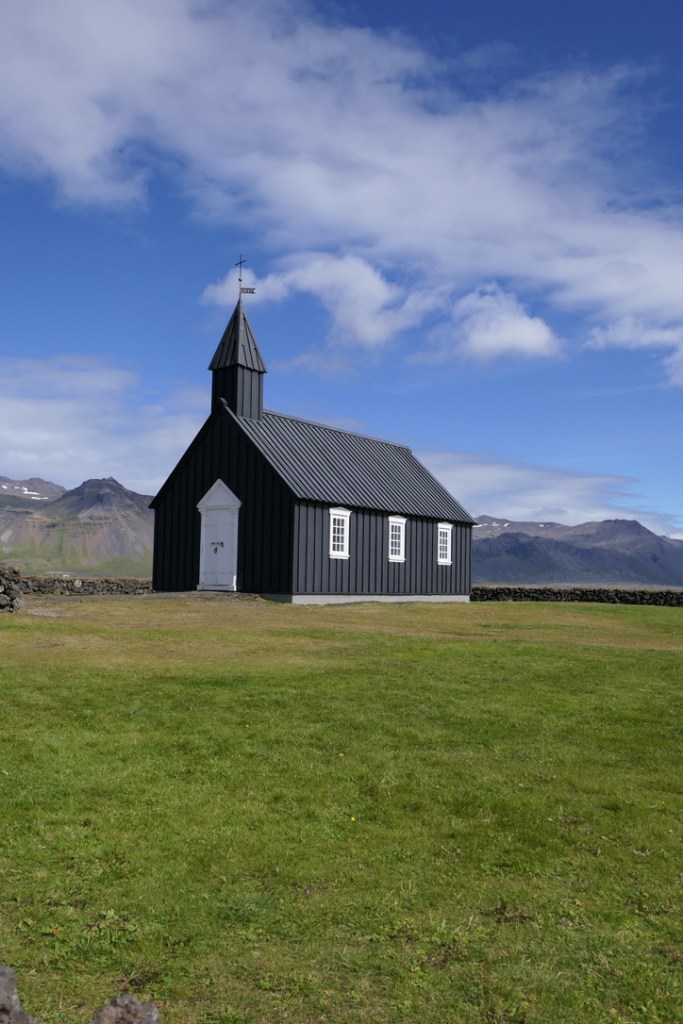
The famous black church in Budir, on the peninsulas south coast
The glacier is ever-present on the drive around the peninsula
Our view of Kirkufell from the Grund Guesthouse

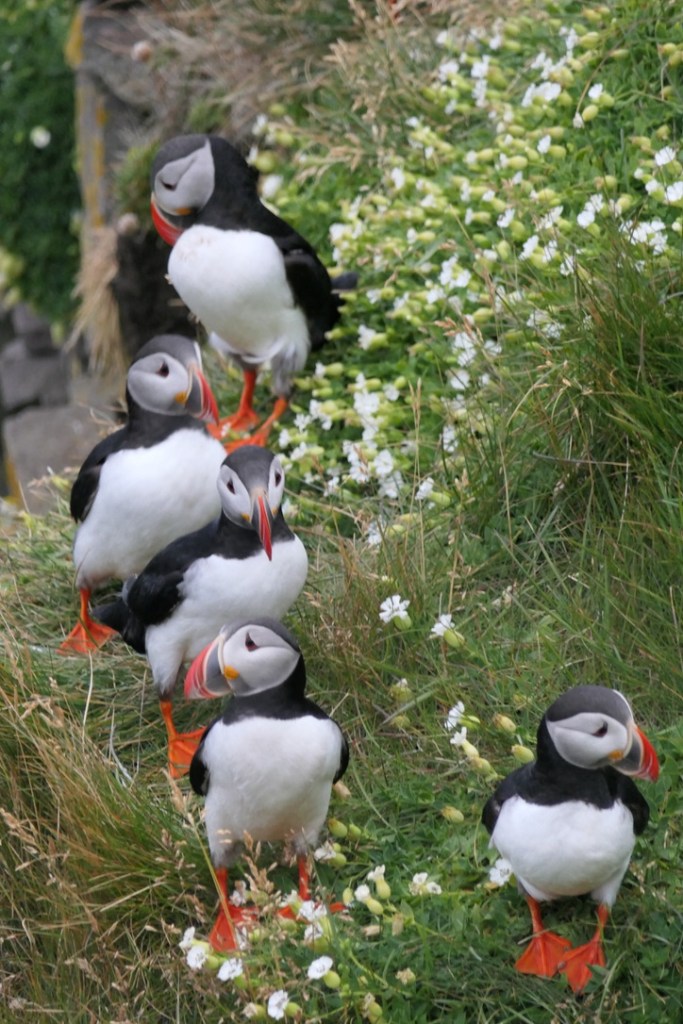
For the next three days we traveled through the Westfjords, the country’s most sparsely populated area, a region of remote valleys, fjords, high alpine passes and one of three spots on our trip where we could see puffins. At the tip of one of the many fingers of land in the Westfjords, a sea cliff stretches for three miles along the Greenland Strait and is home to over a million seabirds through the short chilly season Icelanders call summer. At the Latrabjarg cliffs, the puffins roost in small burrows along the top of the cliff face, where the young chicks eagerly await the return of their parents – hopefully with a mouthful of small fish for dinner.

A puffin amongst summer wildflowers at Latrabjarg
Lining up for a chance to pose for Heather’s camera

Each day we drove in and out of several fjords, sometimes hugging the coastline, at other times climbing up and over the mountains separating them, creeping through the thick mists that obscured the heights. At the end of the day we were always relieved to reach our night’s accommodation, whether is was for the plokkfiskur, a traditional dish of cod, potatoes and onions at the Hotel Latrabjarg, which overlooked the white sands and Caribbean-like blue waters of Patreksfjordur; the fish and chips and friendly vibe of the pub at the Fisherman in Sudereyri; or the geothermal pool of the Hotel Laugerholl in the countryside outside Holmavik on our last night in the region. The remoteness and variety of scenery made the Westfjords my favorite region of the country.

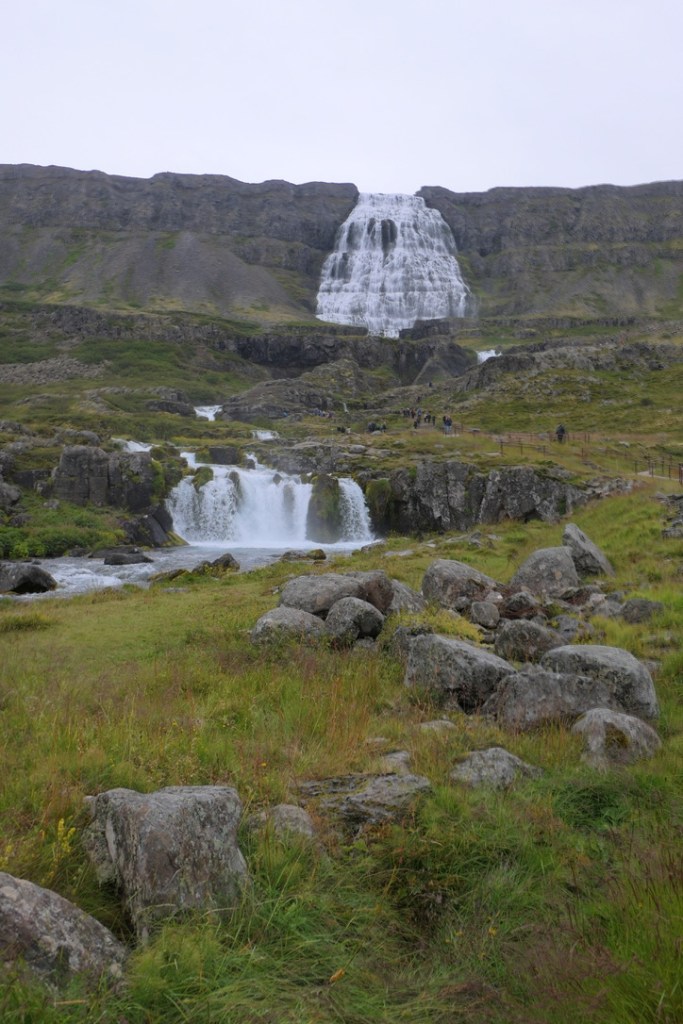
The Dynjandi waterfall in the Westfjords
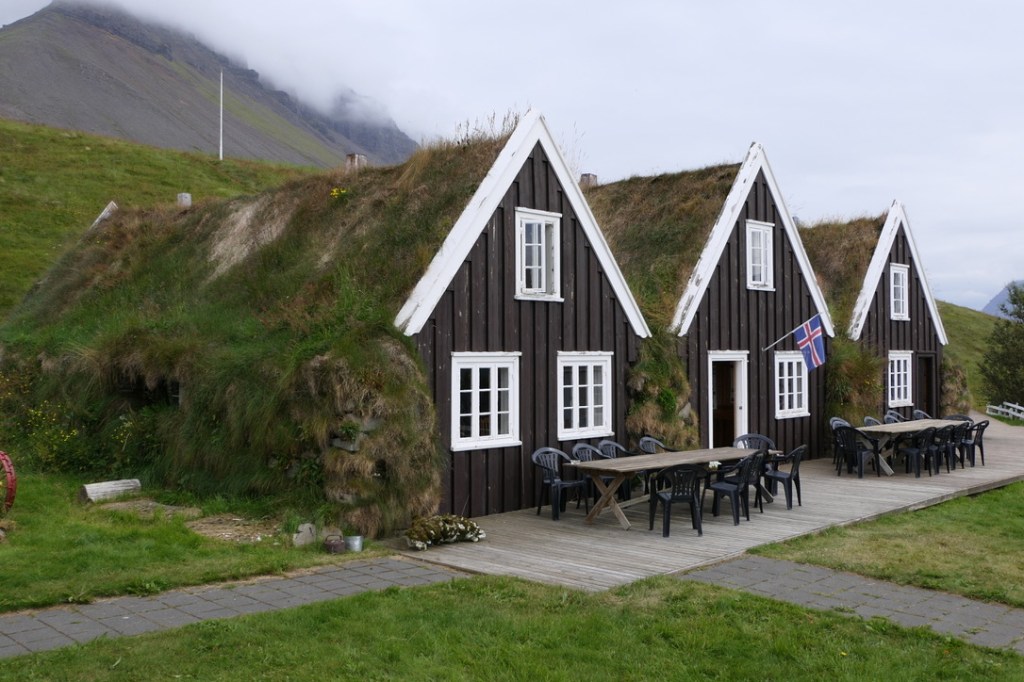
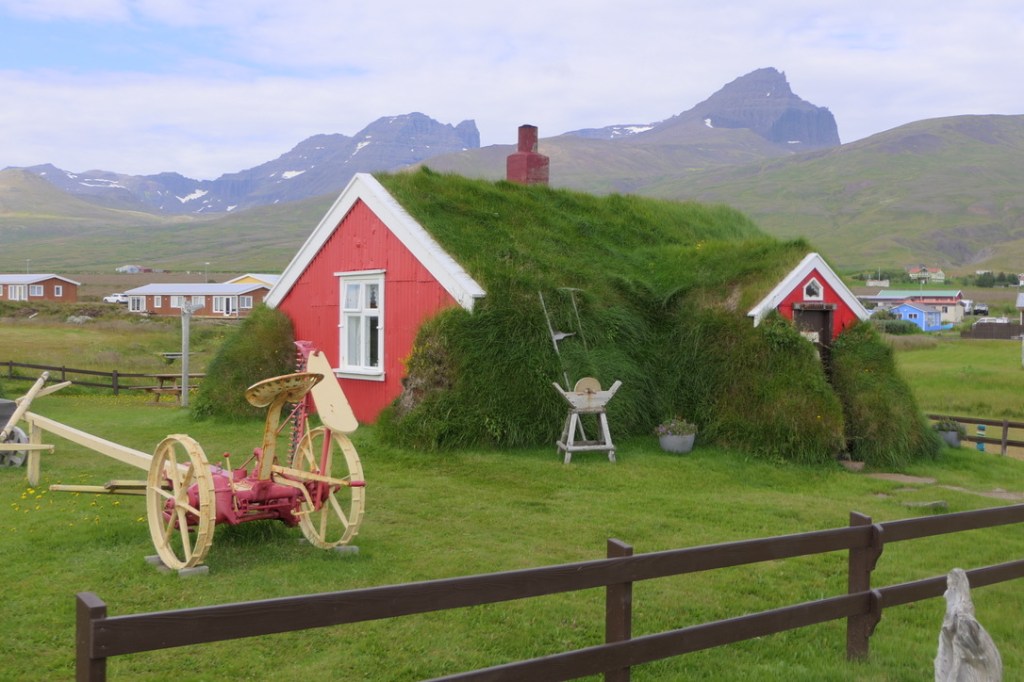
Turf houses are seen throughout the country – this one hosts a pub
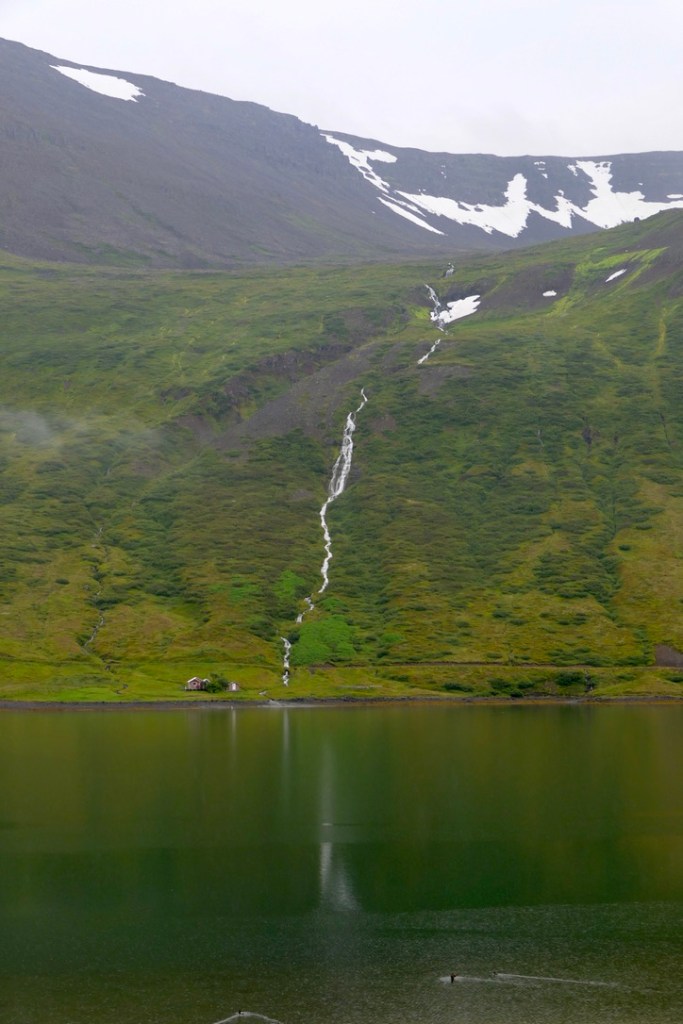
A waterfall, an isolated farmhouse and a calm fjord – a common scene in the Westfjords

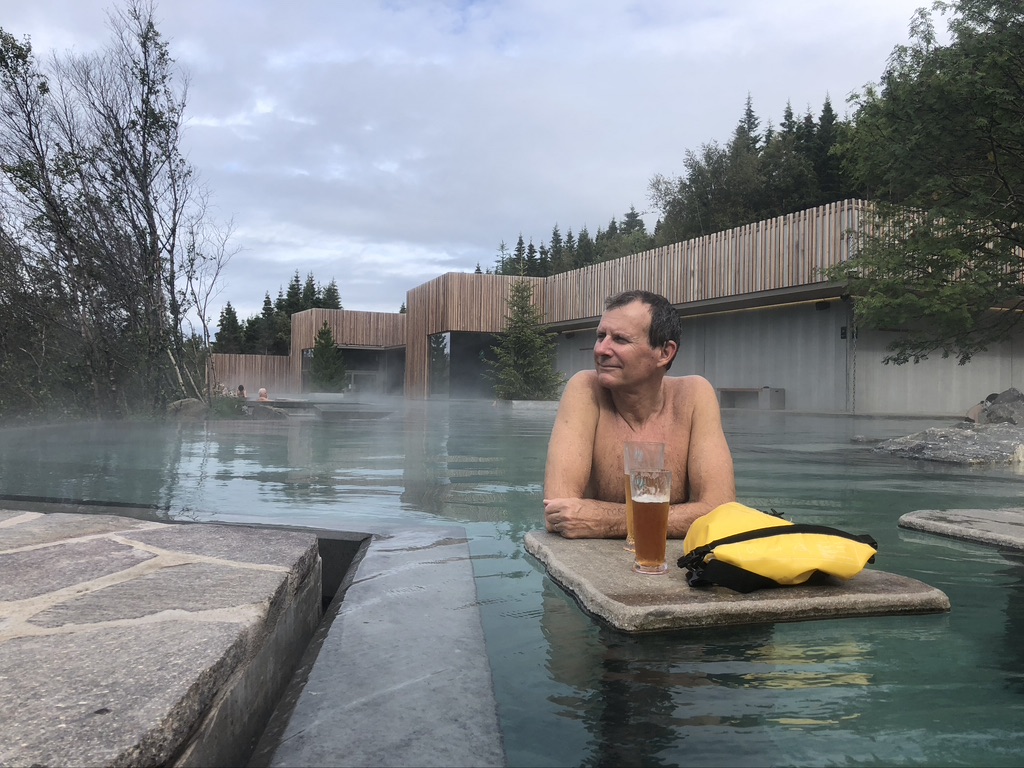
Leaving the Westfjords we traveled across the north coast, visiting colorful Siglofjordur, a village steeped in fishing history; camped under the stars in a yurt; and spent an afternoon soaking in the thermal pools of the Forest Lagoon outside Iceland’s second largest city – Akureyri. The spa featured soaking pools, a cold plunge pool and a Finnish sauna. As if staring through scented pines at the water of the Eyjafjordur while enjoying the naturally-heated waters of the soaking pools, the Forest Lagoon also has a bar offering cold beer, wine and cocktails right at the pools edge.

I can get used to this . . .

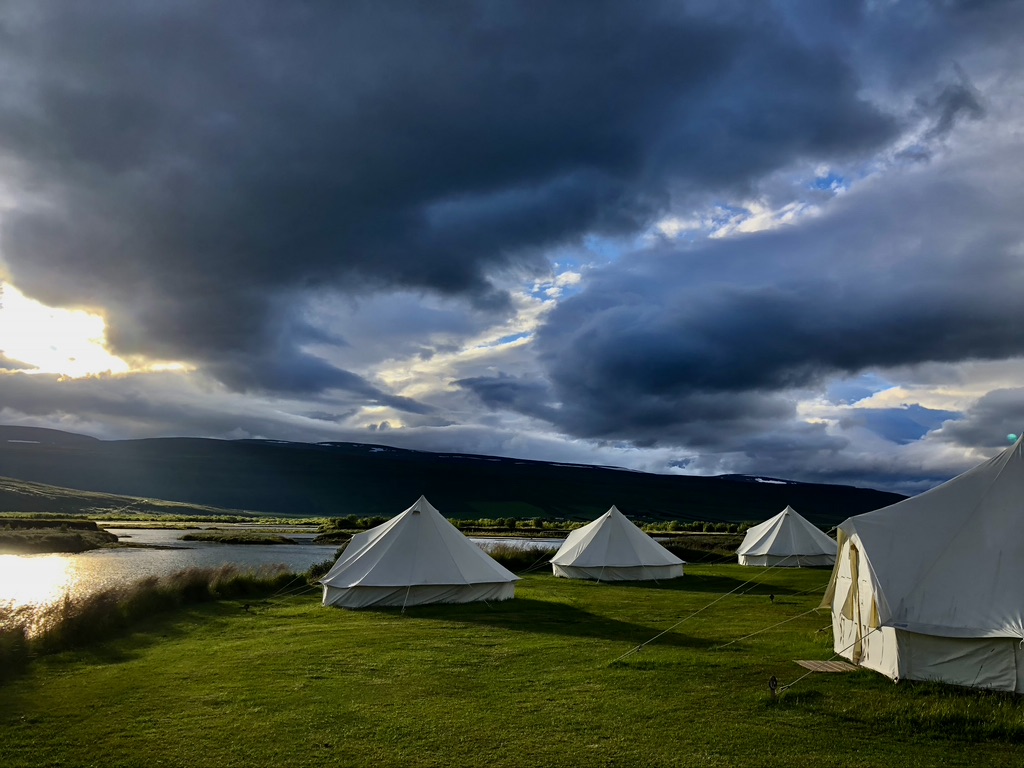
A dramatic sky over the yurts of Original North’s campground on the north coast

The highlight of Iceland’s east coast was the village of Borgarfjordur, which sits on the Norwegian Sea. Our room at the Blabjorg Guesthouse overlooked the water; the on-site restaurant offered a tasty menu, a selection of Icelandic craft beers and spirits from the neighboring distillery; and the puffin colony at the nearby marina was just a short drive away. While on the east coast we also spend an enjoyable night at Brekka i Loni, a farm outside the village of Stafafell, where our room overlooked the owners sheep and horse pastures and the waters of the Jokulsa River.

A turf house in Borgarfjordur
Dinner delivery for the little ones

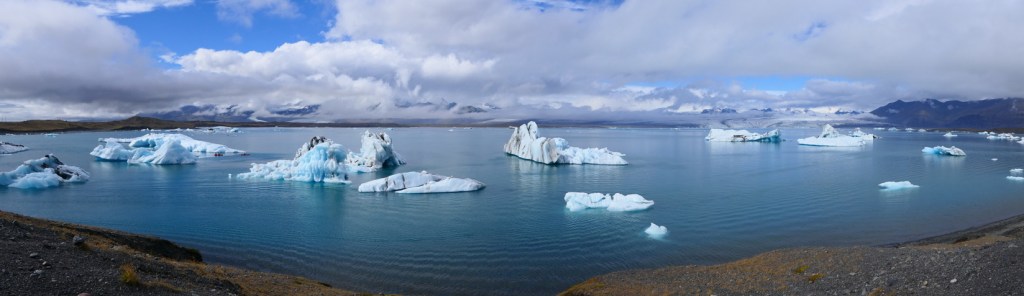
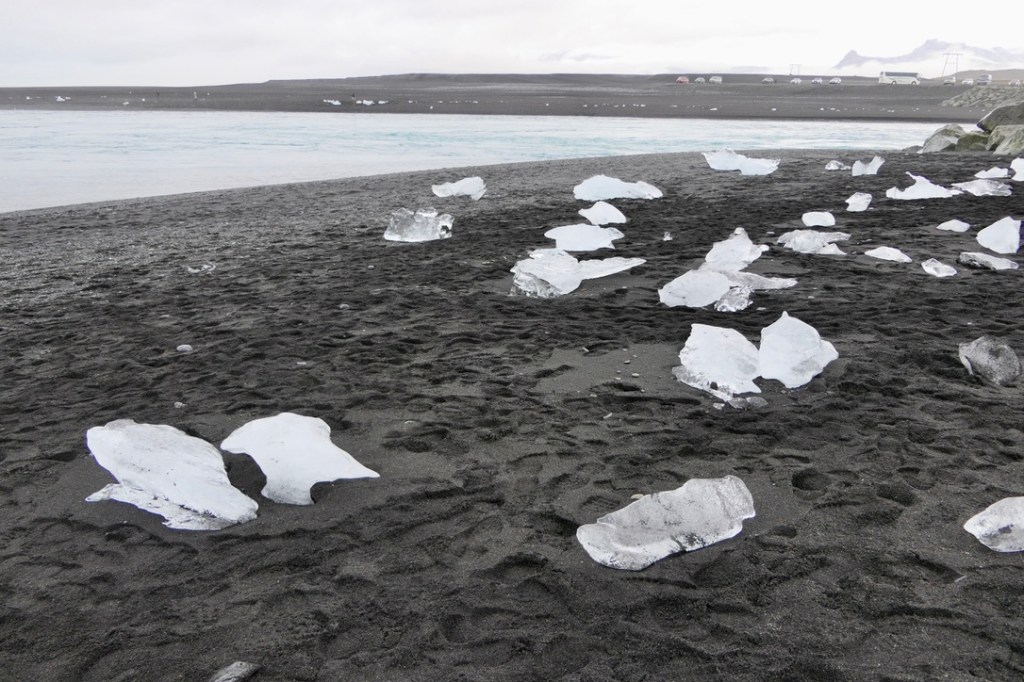
The previous ten days of our road trip had spoiled us. The roads were virtually devoid of traffic. Our guesthouses were small, quaint and quiet. As we rounded the southeast corner of the country and made our way along the south coast, things changed. The roads were choked with traffic around the popular sights, parking lots were packed and the accommodations were often large, character-less hotels catering to the bus tours that plied the south coast highway. The coastline was still stunning, the waterfalls were still impressive, the colorful puffins at the Dyrholaey arch were still cute, but we found ourselves overwhelmed by the crowds and spending very little time at any of the attractions. One spot that was well worth a visit was the Jokulsarlon Lagoon, which sits at the base of Iceland’s largest glacier and is filled with icebergs that have calved off the glacier’s wall. As the bergs make their way out to sea through a short river from the lagoon, many wash ashore, polished clear by the sea water, to settle on the black sands of Diamond Beach.

The Jokulsarlon Lagoon was a great stop on the south coast
‘Diamonds’ on the beach

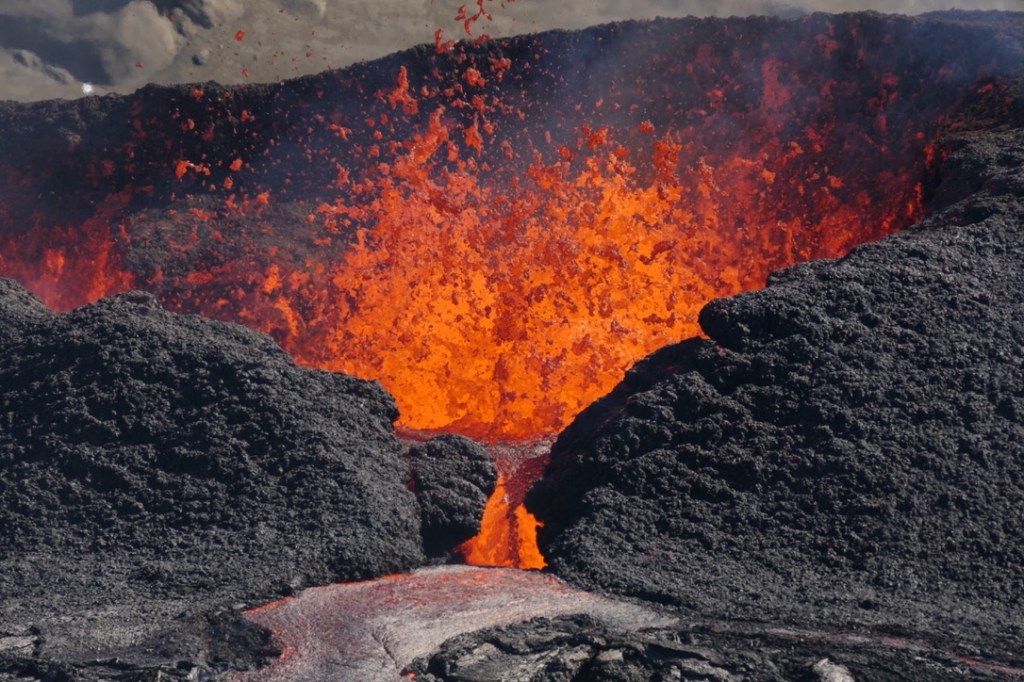
On our first night, we had learned that the Fragradalsfjall volcano had begun erupting just hours after we had landed. Hoping to see this active volcano, we had to keep our fingers crossed that the eruption would continue as we made our way around the country, eventually circling back to the area around Reykjavik. On our next to last night we decided to forego the next days planned itinerary and use the day to visit the volcano. After breakfast at our guesthouse we packed the car and drove seventy-five miles out to the Reykjanes peninsula to a parking area at the trailhead. The trail climbed up to a ridge that overlooked the site of last years eruption, which was covered in a river of solid black lava. Moving along the older lava flow, we could see faint puffs of smoke in the distance. Cresting another ridge after nearly two hours of hiking we had our first glimpse of the new eruption. Stopping in our tracks, our mouths hanging open, we were enthralled by the sight of molten lava spewing into the air. We moved closer down the hillside and took a seat on the ground, enjoying natures show while munching on the sandwiches we had packed. Once Heather felt she had enough photos, and with a harsh wind chilling us to the bone, we trekked back to the car. By late afternoon we had driven into Reykjavik, checked into our absurdly tiny room, and ventured out for food and drinks in the capital city. We rehashed the incredible experiences of the past couple weeks, noting how unique Iceland’s scenery is, but also agreeing we were ready to return home, peel off the long johns, stash the wool hats and rain gear and soak up the last bit of Colorado’s summer. Of course, we also had to start planning our next trip.

A fitting end to our tour of the amazing volcanic landscapes of Iceland – the ‘land of fire and ice’.


Leave a comment

Island Time

I discovered Errolyn’s House of Fry Jacks by accident. I wasn’t even looking for breakfast at the time. Rather, I was walking one of Caye Caulker’s back streets looking for the only ATM in town. After finding the Atlantic bank branch and withdrawing some cash, I noticed a small crowd milling about outside a nondescript building at the junction of two dusty streets a few yards away. The menu was simple and the name said it all: Fry jacks were the only thing on the menu, stuffed with any possible combination of eggs, cheese, beans, chicken, ham and bacon. A fry jack begins as a clump of wet dough, patted by hand into a disk and slipped into hot oil, where it fries up into an airy, crispy pocket into which the chosen ingredients are stuffed, with the whole thing wrapped into a paper towel and handed through a small window to the hungry patrons patiently waiting for each hand-shaped, fried-to-order concoction. After placing my order I headed next door to the fruit and vegetable stand which offered containers of freshly cut fruit and just-pressed juices. Once the fry jacks were ready, I headed back to our hotel, stopping briefly to nab a slice of pineapple cake from another vendor selling his assorted sweet treats from a tray balanced on the handlebars of his bicycle. Once back at our room at the Anchorage Resort, Heather and I sat at the table on our third floor terrace, with a view through the coconut palms to the blue-green Caribbean Sea. The wind rustled the palms and we could see where the sea crashed onto the outer reef just a couple hundred yards offshore. It was the start of another glorious day on little Caye Caulker.

You can’t blame us for spending lots of time on our terrace at the Anchorage Resort

We had arrived on the island a few days prior, choosing this spot to spend our final week of our winter travels before heading back to Colorado. It’s a popular place, much changed from the sleepy little island getaway we found on our first visit 27 years ago. The waterfront has filled in with guesthouses, restaurants, shops and tour operators. Tourists cruise up and down the 3/4 mile main street in rented golf carts (there are no cars on the island), drinks in hand, heading to any one of the waterside happy hours or perhaps going to the Split, which divides the island in two and where the Lazy Lizard slings drinks to the sunburned masses who wade in the crystal-clear water and snooze in the loungers lining the channel. ‘Go Slow’ is the island’s motto, and it’s taken to heart by residents and visitors alike. On more than one occasion we were passed by locals while walking the main drag who greeted us with the slogan, one even adding “the island welcomes you”. There was no doubting his sincerity when he flashed a big toothy smile. Friendly folks for sure.

Taking that whole ‘Go Slow’ thing seriously

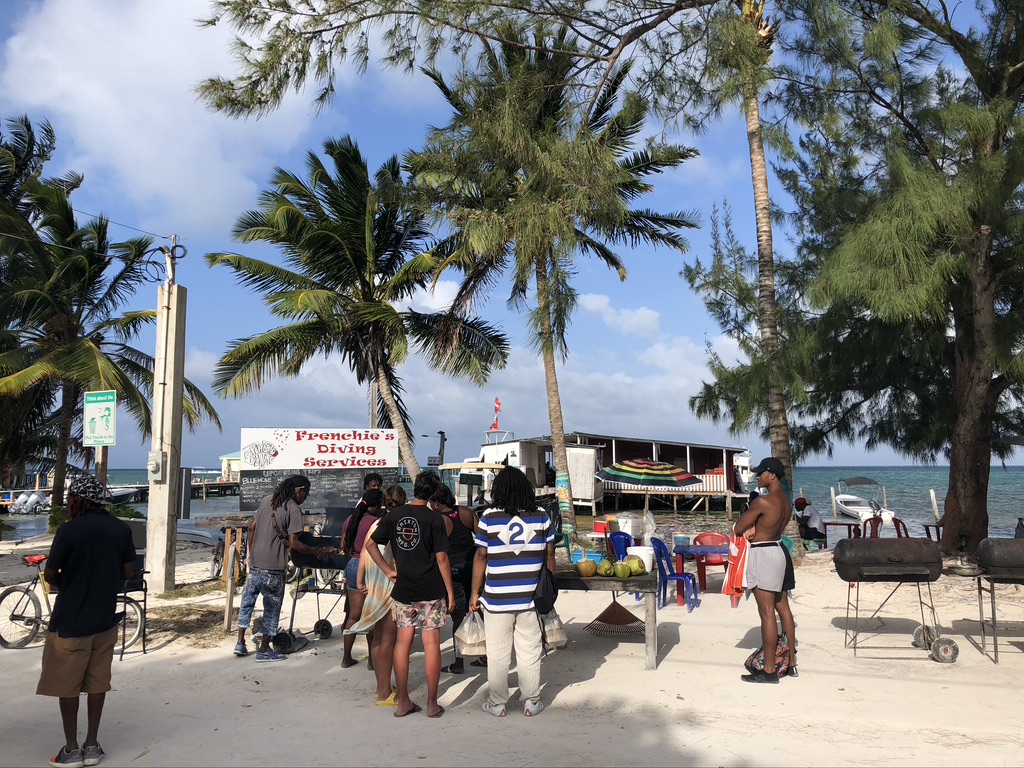
If one is inclined, there are activities on offer – snorkeling and diving trips, sunset cruises aboard a catamaran and fishing charters are available. But most visitors seem content to do nothing more than relax, enjoy a meal and retire early (or maybe that’s just us). We certainly don’t mind spending most of the morning and a chunk of the afternoon on our terrace, enjoying the view and the breeze. When the fry jack breakfast wears off we’ll stroll into the village and find dinner – perhaps a jerk pork sandwich at the Sports Bar (where the ex-pats flock for happy hour rum drinks), grilled fish at Maggie’s Sunset Kitchen or a simple plate of chicken, rice and beans, slaw and a fiery habanero salsa from one of the roadside barbeque grills that set up in front of the beach at the towns north end.

Folks lined up for the roadside bbq chicken

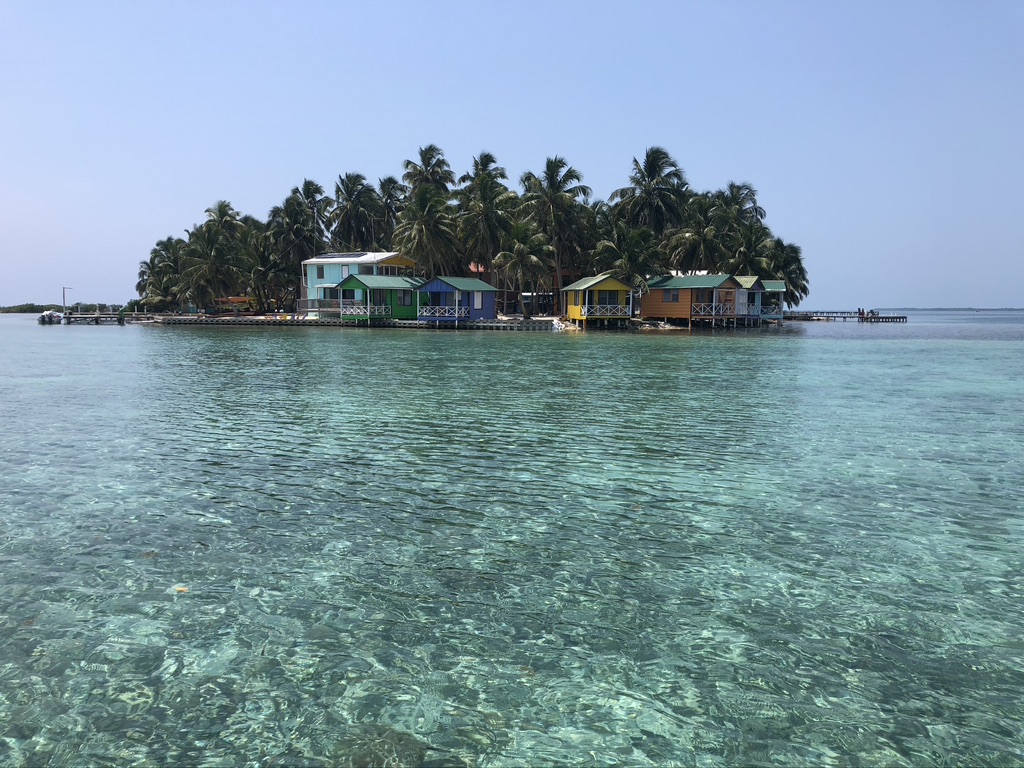
Prior to our arrival on Caye Caulker we spent four days on Tobacco Caye, a tiny speck of sand and palm trees located twelve miles offshore, smack dab on the barrier reef that runs all the way from Cancun, Mexico to the Bay Islands of Honduras. When I say it’s a speck, I mean it. Walking around the circumference of the island would take all of ten minutes – provided you stopped at the Tobacco Caye Lodge’s bar for nine minutes to have a beer and a short chat with Kirk, the bartender. We came to snorkel the reef and it’s a beautiful and lively one. We spotted a bevy of the usual reef fish along with some big stuff: nurse and bull sharks; turtles; southern, whiptail, spotted eagle and yellow rays; barracuda and perhaps most impressive of all – a school of nearly one hundred tarpon ranging in size from two to five feet in length. If snorkeling isn’t your thing, fly fishing the flats just inside the reef for permit is another activity that attracts many visitors. No matter what you choose to do during the day, everyone gathers at the overwater bar at the Reefs End Lodge to swap stories, make new friends and watch the sunset.
Tobacco Caye from our paddleboards
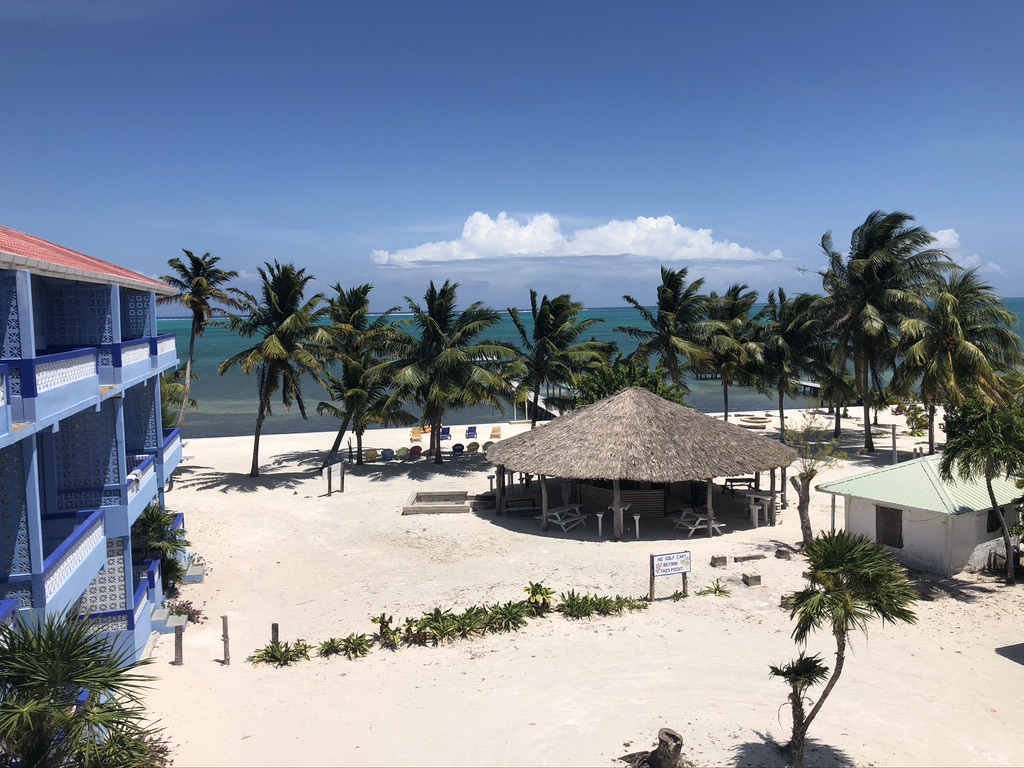
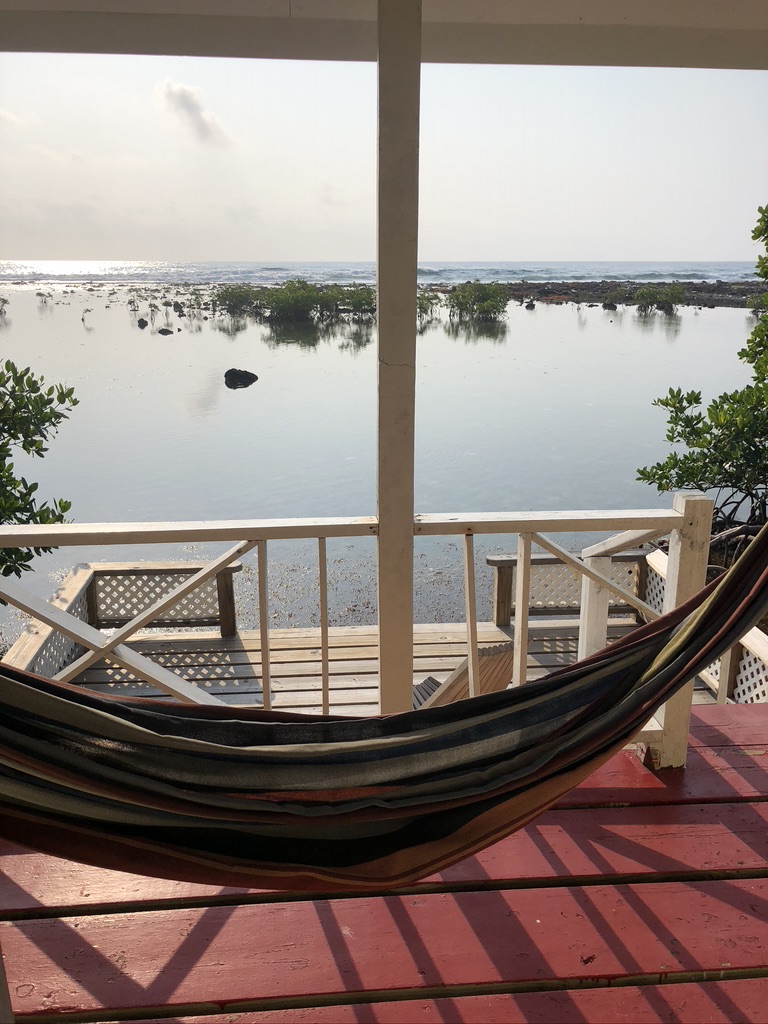
The view from our cabin at Joe Jo’s By The Reef on Tobacco Caye
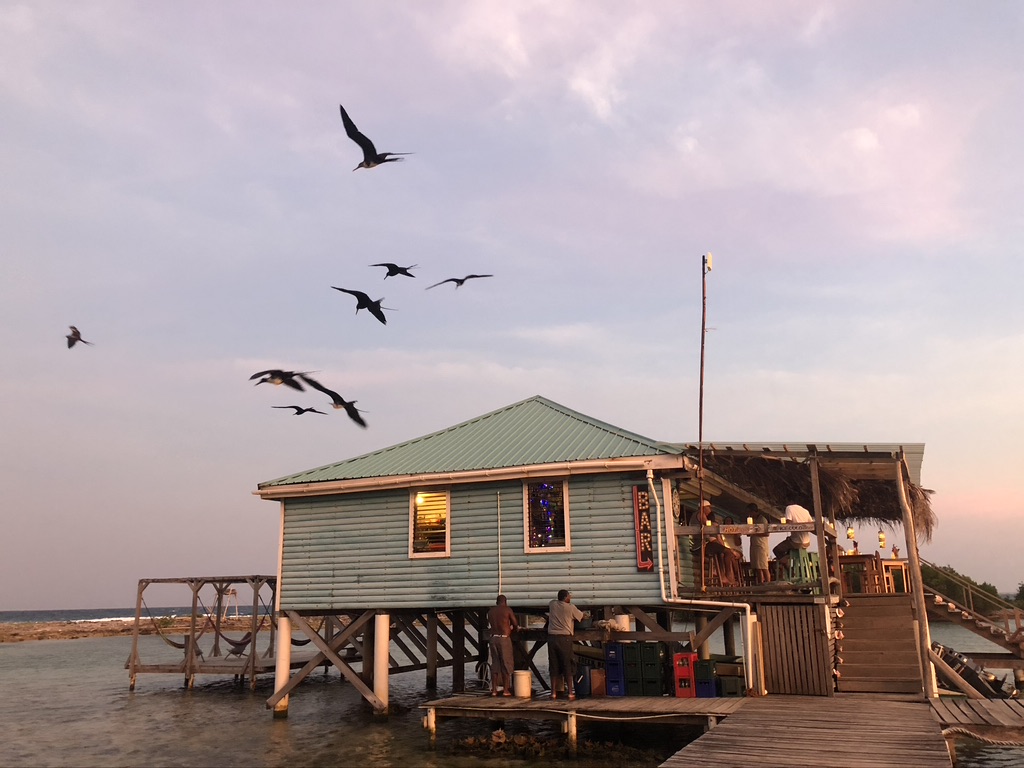
Cleaning the days catch outside the bar of the Reefs End Lodge at sunset

In a couple days we’ll head home to Colorado. Ski season is over but winter doesn’t know it yet – snow is expected for much of this week and thirty degree temperatures will welcome us back, if only for a day or so until spring makes its appearance. If nothing else, we look forward to getting back to our daily walks around town and getting on our bikes for some exercise – after a week of staring at the sea and daily visits to Errolyn’s, I’m starting to look a little like a fry jack.
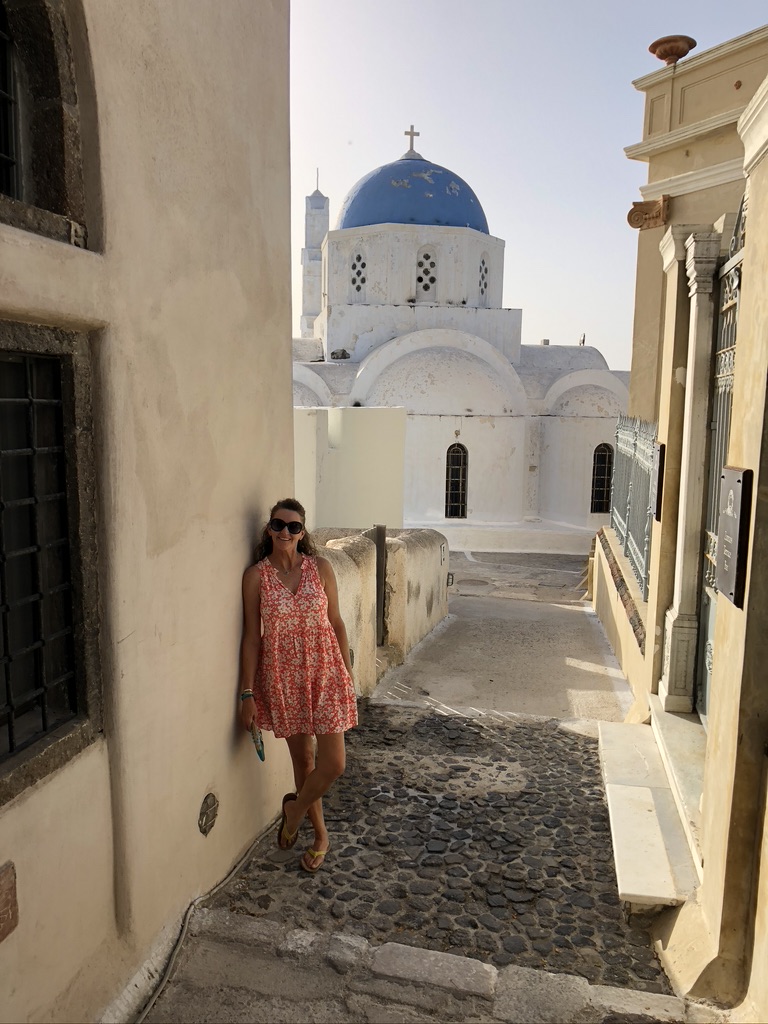
“Whaddaya mean we have to go home! Have you seen the weather report for Colorado!”


Leave a comment

A Change Of Scenery

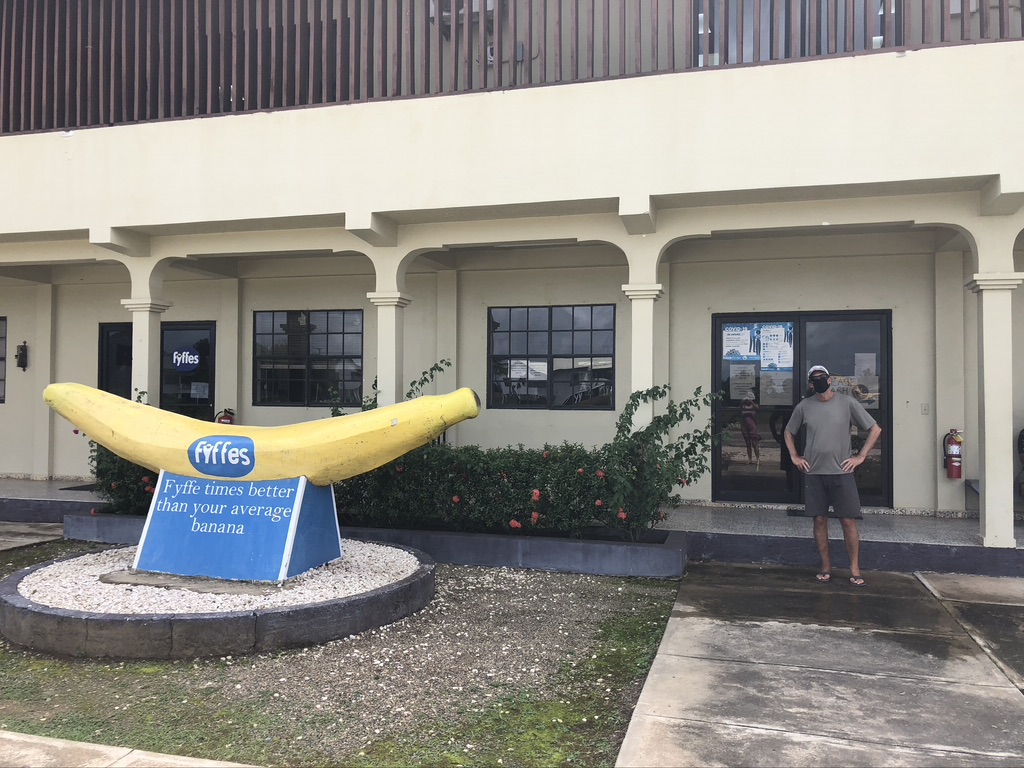
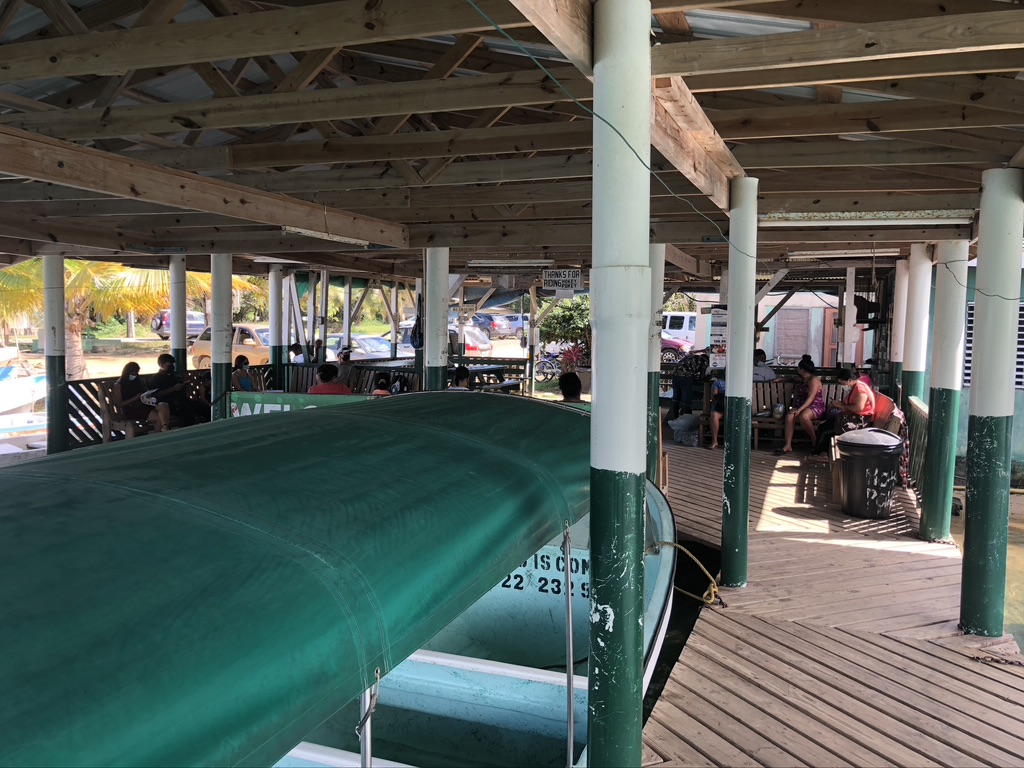
The Hokey Pokey water taxi connects Placencia village with the small town of Independence on Belize’s mainland. The service mainly ferries the local population from their homes on the mainland to jobs on the Placencia peninsula. One day last month Heather and I took the trip across the lagoon because it was time for us to renew our visitors permit so we could remain in the country beyond the 30-day allowance granted to tourists upon their arrival. From all accounts, this is a pretty easy process: after the twenty minute boat ride one steps into a waiting taxi, gets driven to the district immigration office on the outskirts of town where you present your passport and the required fee ($100 for each 30-day extension!), get a fresh visitor’s permit, then return to Placencia, where you hope to be seated at one of the beachfront bars by the start of happy hour. In our case, the plan doesn’t quite work like that. We have no problem getting a seat on the water taxi and the ride across the lagoon and up Mango Creek is pleasant. As we disembark, a knot of taxi drivers are waiting and call out to us “Going to immigration?”. ‘This is going to be easier than I thought’ I say to myself. Our driver quotes a round-trip price for the drive to the office and assures us he’ll wait while we complete the formalities and have us back to the dock in time for the water taxi’s return to Placencia. In minutes we roll up to the nondescript building housing the immigration office, which lacks any signage that identifies it as such. It does, however, have a large cement banana in front. When we step to the window, the officer asks if we have proof of our hotel reservations for the following month, which surprises us, but we answer that we do. Then she asks for a copy of a bank statement. Umm. Huh? Momentarily stunned by this request, we regroup and say that, yes, we do also have this information available, “If we can just connect to wifi, we’ll show you all that on the phone” Heather explains. “I need written copies” she says. Now we’re really reeling. I’m seeing an entire day wasted as we have to return to Placencia and find a way to print out the information she’s requested, only to spend another day returning here to submit it, and can only picture us at the beach bar happy hour having accomplished nothing. The officer then adds, “There’s a copy shop in town. We’re open until 3:30”. We dash back to the waiting taxi and our driver, shaking his head over this bureaucratic runaround, drives us back into Independence and stops at the internet cafe/print shop/party-supply store, where a young gal talks us through how to get all our required documents to her through WhatsApp, then prints out the eight pages we need. Once again we load into the taxi, make our way to the building with the big banana out front and present our documentation to the waiting officer. She looks through the pages then hands them back while directing us to have a seat on the bench outside her window. While clutching our stack of printed pages in her hand, Heather starts to say “Why couldn’t you just have looked at this on the phone . . .” but before she can finish the window has slammed shut and we’ve got no alternative but to have a seat on the bench where we stare at the cement banana until the window opens and a hand appears holding our passports. Finally, we make the drive back to town and the dock where we board the Hokey Pokey for the return trip. The rum drinks at happy hour are enjoyed with a well-deserved sense of accomplishment!

In case you thought I was kidding about the banana – standing in front of the immigration office in Independence, Belize
The Hokey Pokey waits for the return trip from Independence

After a day of bureaucratic runaround

To break up our extended stay in Placencia, we decide to take a road trip in order to see a bit of Belize’s wild side. We get a rental car and head inland to the Cayo district in western Belize. We’ve been told the area is full of natural wonders – Mayan ruins, remote waterfalls and rivers, caves, jungle lodges and towns with lively markets offering all sorts of produce and amazing local food. After picking up the car, it’s not long before we’re off the Placencia peninsula and heading into the lush green mountains of the interior. The central valleys are home to Belize’s citrus industry, and we pass by miles of orange groves, driving through bucolic towns with names like Hummingbird Gap, Toucan Ridge and Teakettle. When we reach Unitedville we leave the highway and bounce down a short stretch of dirt road to find the Green Valley Inn, and it’s proprietor, Marcela. She, and her three dogs, welcome us to her homestead, which includes seven cabins nestled amongst palms and fruit trees. Once we’re settled in, Marcela helps us plan out our next three days with suggestions for can’t-miss sights. After some hammock time and a couple Belikins, we’re summoned to the open-air dining area where she serves dinner featuring fresh snapper. Mango ice cream puts the finishing touch on the evening and we’re ready to retire, excited for our adventures to come.

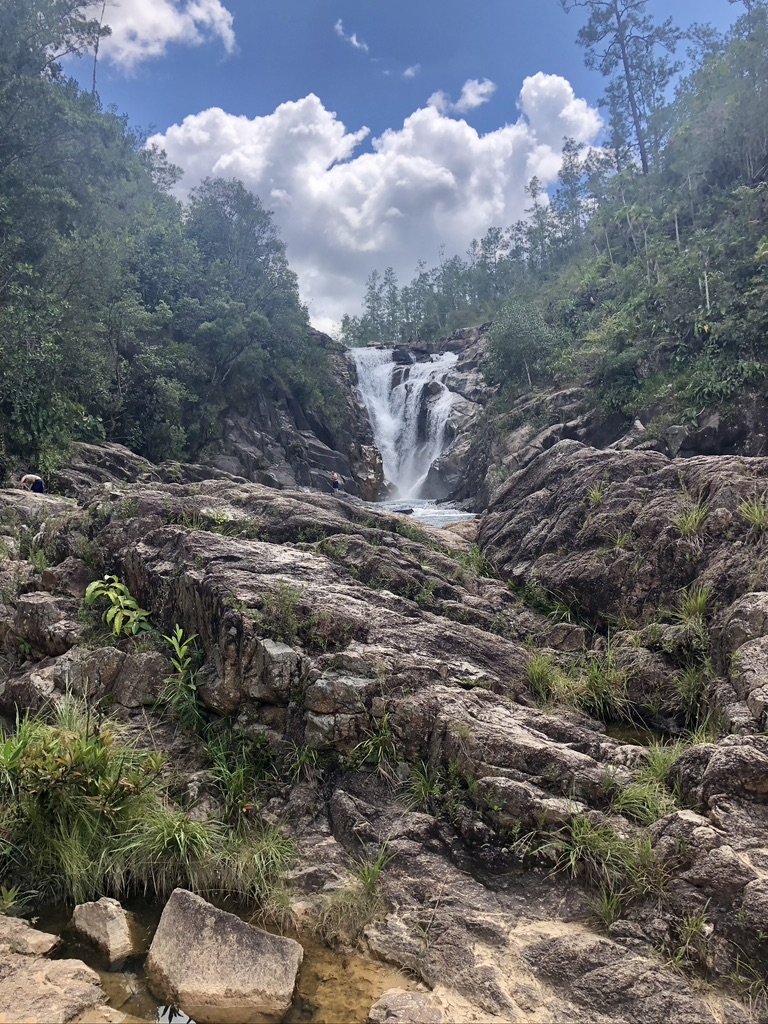
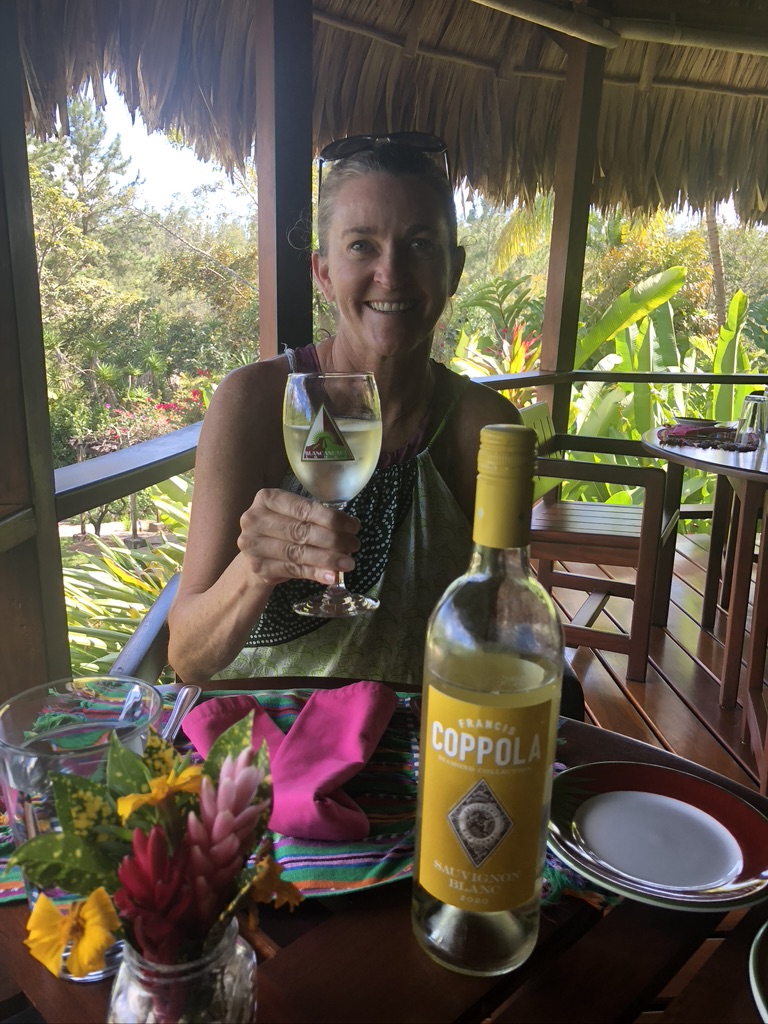
After Marcela’s breakfast, we’re off to the Mountain Pine Ridge Forest Reserve. This reserve was established in the 40’s to protect the native pine forest, which sits atop a granite massif, with areas of limestone where numerous rivers have carved out cave systems over the years. We turn off the main highway and follow a freshly paved road for fourteen miles, climbing steadily through dry forest before we reach the pines. The pavement ends abruptly, and we continue on a pot-holed dirt road for another two miles to reach our first stop – Big Rock Waterfall. The small parking area has only one other car – certainly a benefit of our visit coming on a weekday. We start out on a pleasant trail which then descends down several steep sets of rickety stairs to reach the rocky riverbank. The falls are impressive and an inviting pool at its base has us slipping into the cool water as soon as we drop our pack. After a refreshing swim, we dry off in the sun while lounging on the rocks, then gather our gear and head back to the car just as several more groups arrive to enjoy the falls. We return to the road and continue several more miles south to reach stop #2 – the Rio On Pools. Here, the River On tumbles over huge granite boulders, forming cascades and pools that invite exploration. Though more remote than Big Rock Waterfall, this place is swarming with families and couples, lazing in the pools and relaxing on the riverbank. We follow a faint path downstream and are able to find a stretch of river to ourselves, where once again we swim and slide through chutes between boulders before walking back up on the rocks. It’s a delightful way to spend an afternoon. Once we’ve dried off again, we decide it’s time to grab an early dinner. We have our sights set on the Blancaneaux Lodge, which we had passed on our way into the Reserve. The lodge, one of several in Belize owned by the Coppola family (yes, the one of Godfather and Apocalypse Now fame), sits above Privassion Creek, surrounded by jungle, with thatch-roofed bungalows, a pool and three restaurants. With excellent food, beautiful views, a cool bar (featuring old photos of geological expeditions throughout Central America) and wines by the glass from the Coppola family vineyard, this stop was a perfect cap to our first day in Cayo.

Big Rock Waterfall offers big views and a welcoming pool
The Rio On pools are a popular attraction
Good wine – happy wife! Courtesy of the Coppola’s

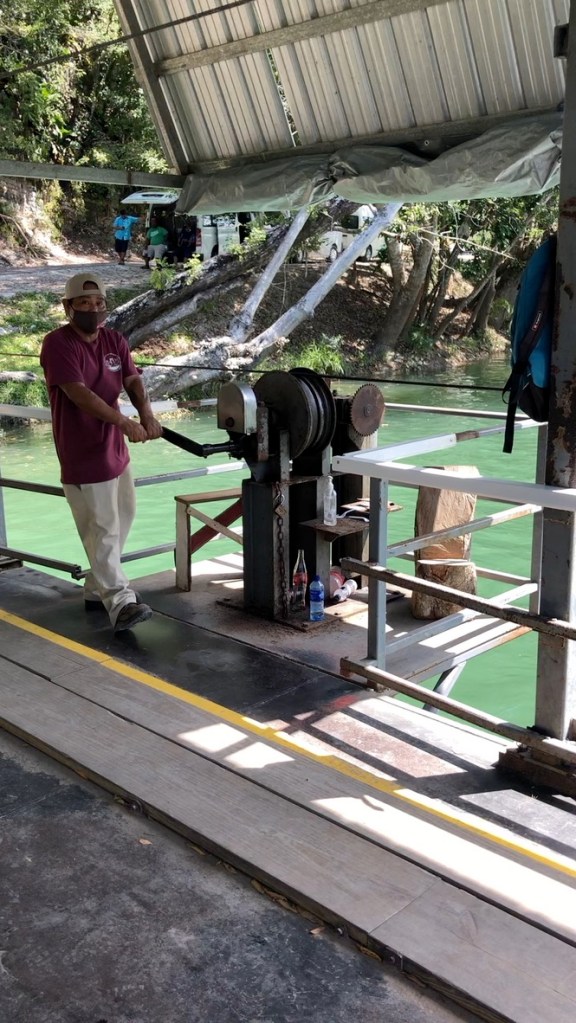
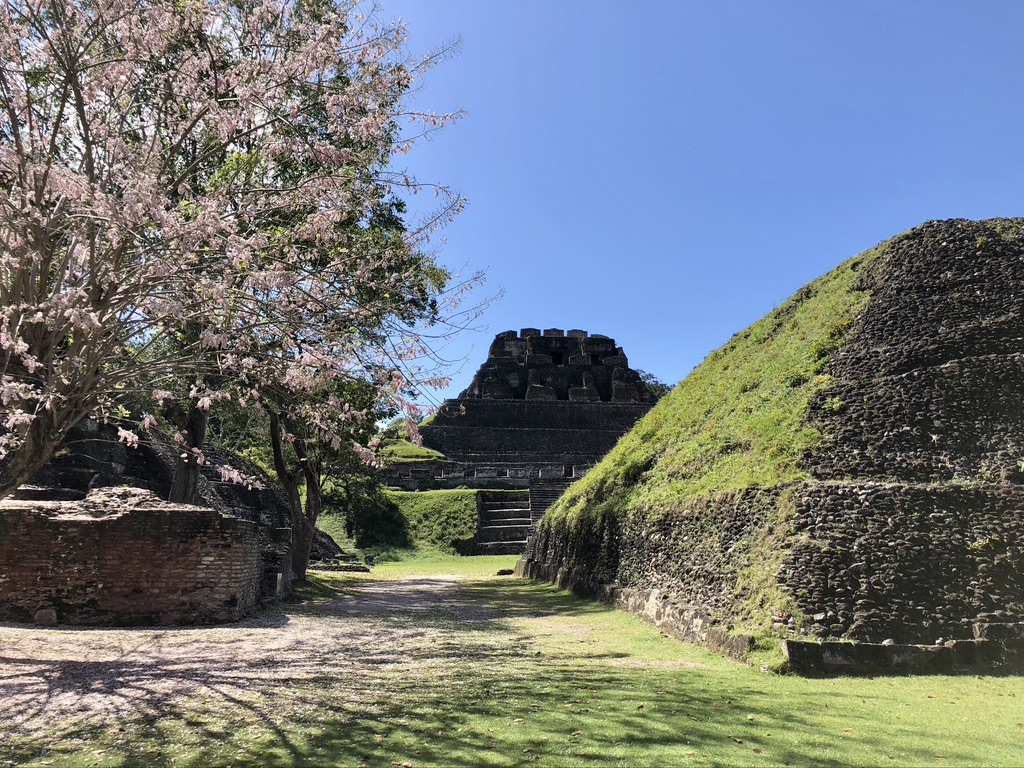
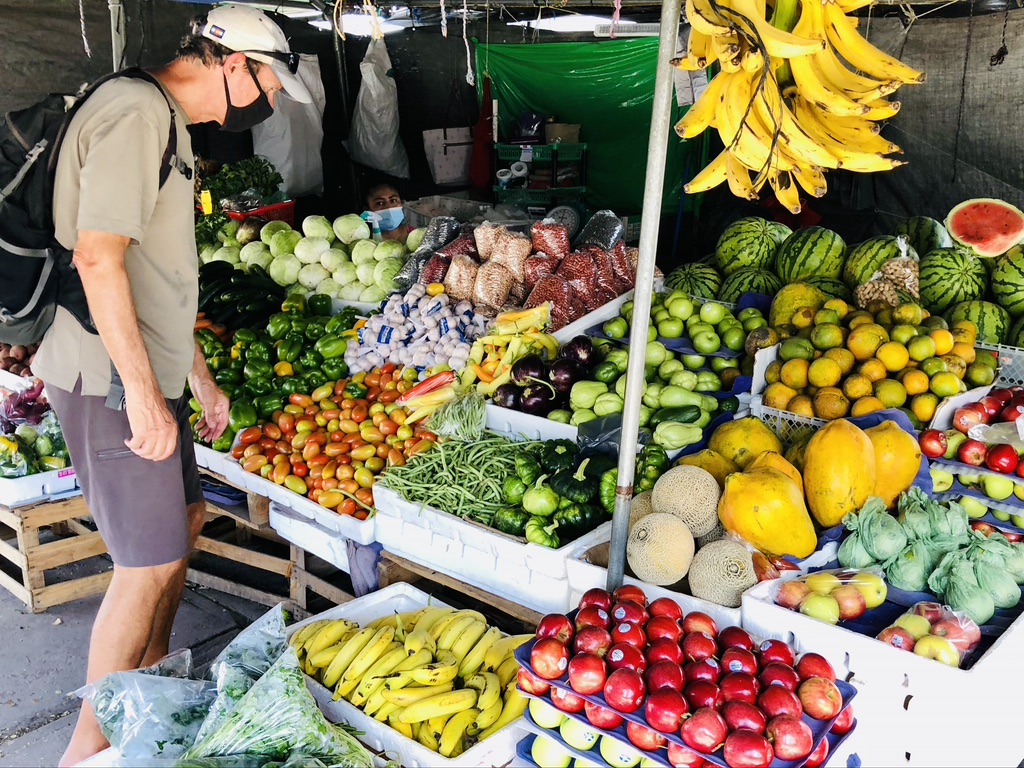
After an early breakfast we’re on the road for the start of day 2. Our destination for the morning is the Mayan ruins at Xunantunich, tucked into the jungle just shy of the Guatemalan border. To access the archeological site, you first have to cross a river by a hand-cranked ferry. The crossing takes about a minute, then we’re on our way again to cover the last mile to the parking lot at the ruins. Getting an early start means we arrive before the tour vans and buses show up, so we can stroll the grounds and climb the various structures crowd-free. By the time we leave at 10:30, the parking lot is filling up and the temperature is also climbing towards triple digits. We welcome the refreshing AC in the rental car on the drive to San Ignacio, where we’ll visit the daily market. But along the way we detour for a visit to Black Rock Lodge, set deep into the forest overlooking the Macal River, bounded by steep canyon walls on both sides of the valley. We grab a couple seats in the open-air restaurant, order some drinks and spend an hour watching the river and the profusion of birds that visit the feeding platform that sits just below us. We decide against staying for lunch as we have our hearts set on dining at the San Ignacio market, so we return to the car and head into town. The market is a collection of stalls offering local produce and meats from nearby farms, clothing and souvenirs. But we’re here for the food so we head right into the middle of the market where two rows of stalls are offering a variety of local dishes. We find a couple stools at one of the stalls and order a plate of grilled chicken (accompanied by coconut rice and beans, mixed salad and salsa), two pupusas (cornmeal cakes stuffed with ground pork, beans and cheese then grilled, served with a side of cabbage salad) and fresh watermelon juice. The food comes quickly and we dig in, pausing only long enough to grab several pineapple-filled empanadas from a passing vendor to have for dessert afterwards. Completely stuffed by our $6 lunch, we wander the rest of the market and eventually pick up some fresh fruits to take back to our bungalow. Our final stop on the way home is the Green Hills Butterfly Ranch. We wander through an enclosure holding hundreds of butterflies as well as sit and observe dozens of hummingbirds buzzing around several feeders. Heather reluctantly agrees to pull herself (and her camera) away from her fluttering friends so we can make it back to our lodge before dark.

Hauling the ferry across to the Xunantunich ruins
A view of El Castillo at Xunantunich
Our view from Black Rock Lodge
Perusing the bounty at the San Ignacio market
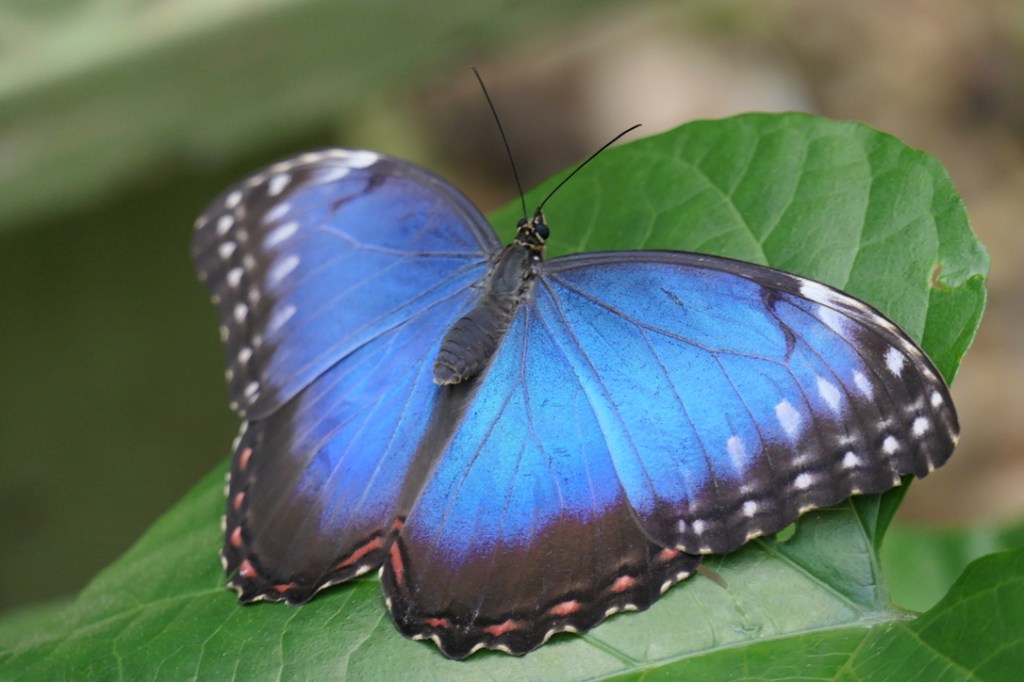
Heather’s favorite butterfly species – the Blue Morpho.

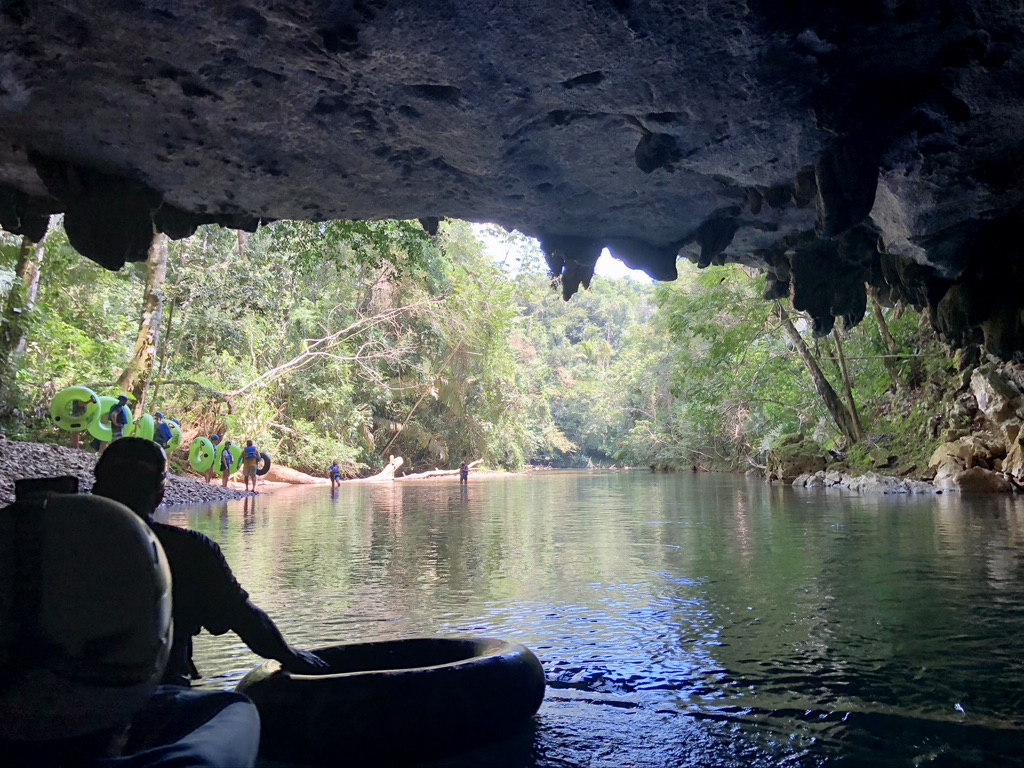
Our last day in Cayo begins with a long drive to the Nohoch Che’en Archeological Reserve, where we’ve reserved a tour with Fernando, who will take us tubing on the Caves Branch River through the Jaguar’s Paw Cave. We pay our entrance fee at the gate to the reserve, then meet Fernando, who’s waiting for us in the parking area. He outfits us with helmets, headlamps and a tube, before we make the half-hour trek through the forest to the cave opening. We pass piles of tubes stacked by the riverside, awaiting the busloads of cruise ship tourists who will be arriving behind us. We plop down into our tubes and are soon entering the cave. We float in complete darkness except for the beams of light from our headlamps until we emerge back into the sunlight. Another half hour is spent drifting down the river under the arching branches of the trees overhanging the water, the crystal clear water turning to opalescent blue where it has formed deep pools. Far too soon we have reached the take-out point and carry our tubes back to the parking area and say goodbye to Fernando. When we drive off we debate where to have a late lunch: back to the market in San Ignacio for cheap eats with the locals, or perhaps returning to Blancaneaux Lodge for their famous wood-fired pizzas and jungle views. We eventually decide to try somewhere new – a restaurant in San Ignacio recommended by a friend from Placencia. We’re pleased as punch (or in this case 2-for-1 sangrias) by our decision to try Guava Limb. It’s not much to look at from the outside, but inside it’s airy, open and the menu has so many tantalizing choices it’s hard to decide. It’s easy, though, to choose a couple desserts from their display case to take back to Marcela’s place to enjoy later by the pool.

Exiting the Jaguar Paw cave back into the jungle

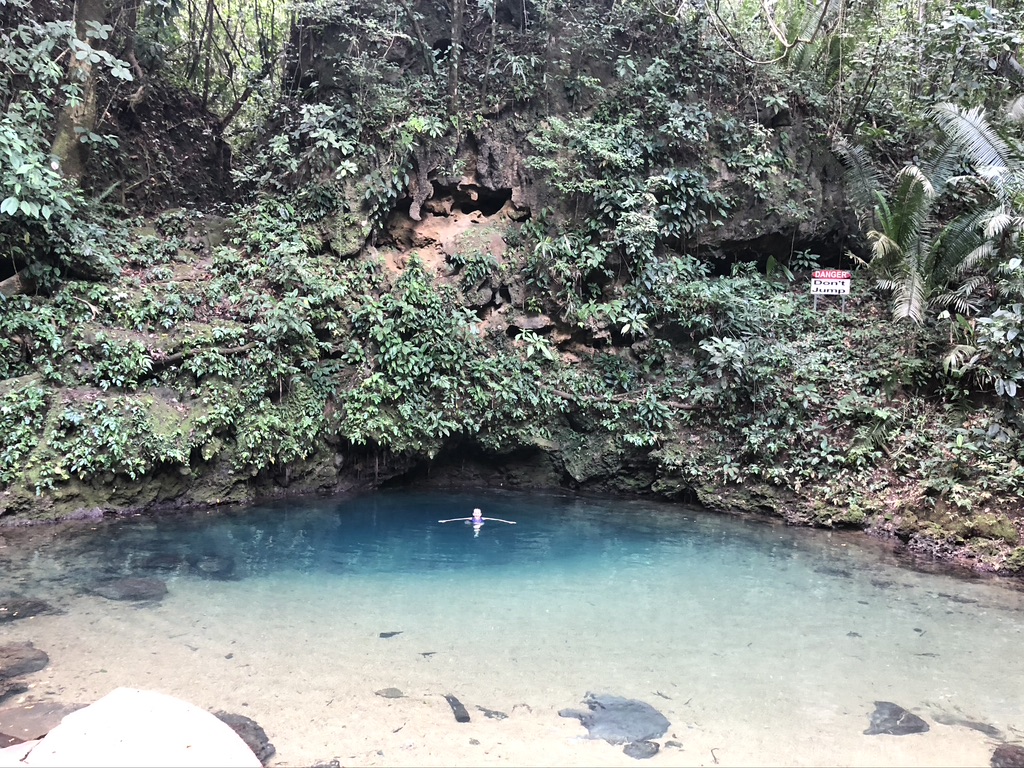
Our four days in Cayo are over too soon (like our tubing tour) and we regretfully depart for the return trip to Placencia. Looking at the map of the route back we notice there’s one stop we could make to break up the trip – St. Herman’s Blue Hole National Park. The park contains some walking trails, a cave system and a feature that sounds perfect for a break from the 90-degree heat of the day – a jungle pool from which the park gets its name. This spring-fed sinkhole proves to be a refreshing stop and we arrive in time to have it all to ourselves. After a swim, we head back to our car just as a tour bus pulls into the parking area. Perfect timing! We’re back on the road and reach Placencia by mid-afternoon, refreshed by our four-day adventure and ready for three more weeks of beach-time.

Heather cools off in the Blue Hole


Leave a comment

A Million Dollar View

Belize is a small country that packs a big punch. It doesn’t get the attention of other Central American countries like Mexico and Costa Rica, but you’d be remiss in overlooking this Caribbean coast gem. We had been eager to return to the country that we had left prematurely in March of 2020, when the pandemic had begun its assault on the world and travel had come to a screeching halt. Then, we had only been in the country for ten days when we received the news that the borders were being shuttered and we were faced with the choice of returning to the US or waiting out COVID there (returning home had been the right choice – the country stayed shut for six months). Prior to leaving we had planned on visiting Placencia, a beach town located on the southern Belizean coast, and it was here that we were headed upon our return in late January. Placencia encompasses a twenty-plus mile long peninsula, with the village of the same name anchoring the southern tip. Offshore lies a coral reef stretching from Cancun, Mexico down to the Bay Islands of Honduras, the second largest reef system in the world. Leaving Mexico, we flew to the airport in Belize City from Cancun aboard a small eighteen passenger twin-prop plane, which might be the smallest plane flying an international route that I’m aware of. When we reached Belize City, we transferred to an even smaller plane, with just eight seats, that would make the thirty minute hop to Placencia. With only two other passengers, we boarded the Maya Air flight, where the pilot greeted us while standing on the tarmac outside the cockpit. When we were seated, he reached in the open door of the plane, turned the key and fired up the engine. After climbing aboard, he turned around and invited Heather up to the copilot’s seat to his right. Without hesitation she slipped into the seat, buckled her harness and moments later we were airborne. Climbing out of the city we were treated to views of the blue-green Caribbean Sea to our left and the rolling green hills of the interior to our right. The pilot pointed out the small settlements that passed below us and before we knew it we were descending down to land at the Placencia airstrip. We were met by our host for our first weeks stay – being the only person outside the terminal she wasn’t hard to find. Jenny drove us to her four room guesthouse located midway down the peninsula in Maya Beach, which conveniently sat between the lagoon that separated the peninsula from the mainland, and the sea. With access to cruiser bikes and kayaks we were free to explore the area – kayaking in the lagoon to see the wildlife amongst the mangrove shores and riding to the various beach bars on the sea side to play a round of cornhole on the beach, enjoy some drinks and a bite to eat. As if this wasn’t enough to make for a pleasant stay, Jenny’s daughter-in-law, Tati, manning the kitchen at the guesthouse, turned out delicious breakfasts of fluffy scrambled eggs, crispy bacon, fresh-baked rolls and zucchini bread, homemade mango jam and mounds of fresh tropical fruits. Awaiting us in our room upon check-in we also found Tati’s homemade chocolate truffles and she also surprised us by bringing fresh-from-the-oven chocolate cookies to us as we lounged by the pool. Within the lush foliage around the guesthouse we spotted quite a few iguanas, agoutis, and a plethora of birdlife. Crocodiles could be seen in the canals bordering the property. It was a delight to say the least. Although we were planning on staying in the area for a couple months, Jenny’s place had bookings that meant we would have to leave after our week and find another accommodation.

Just getting to Placencia is half the fun!
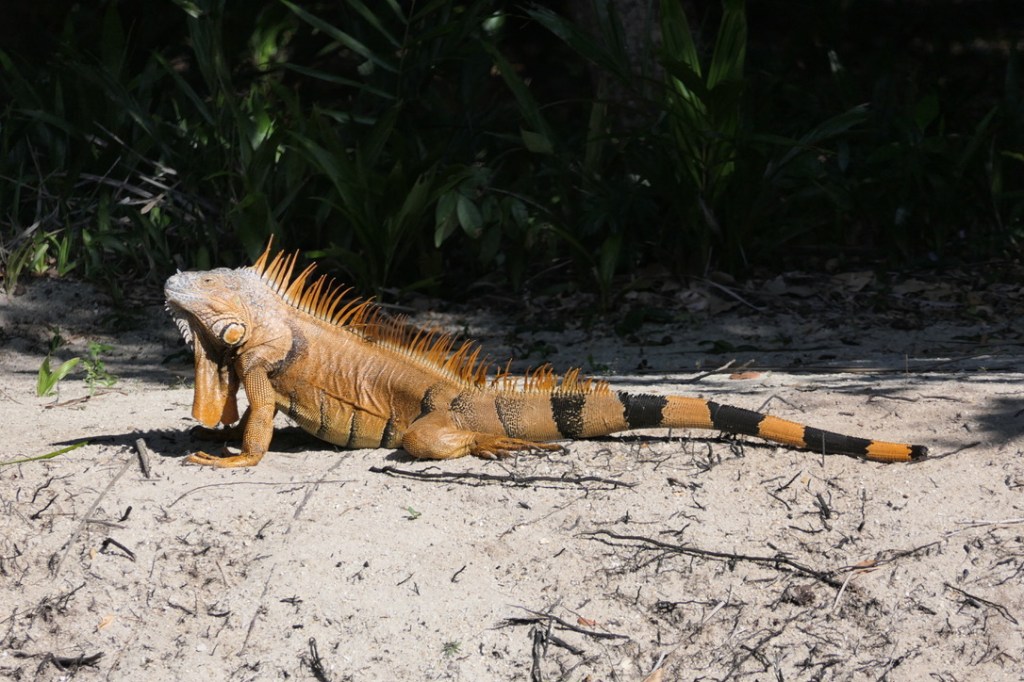
Iguanas prowl the canal alongside our guesthouse
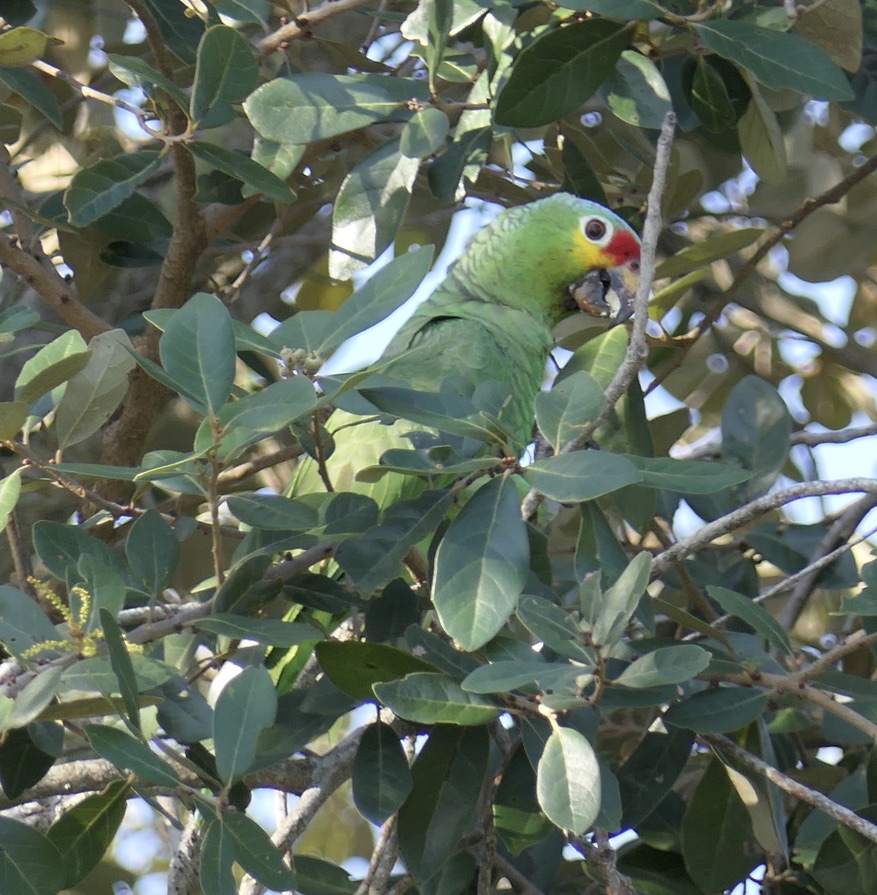
Parrots inhabit the trees
A double rainbow on a rare stormy day

You wouldn’t think it could get any better. Turns out . . . it does! Since there were no rooms available at our first guesthouse after our initial week, we began to search for new accommodation. Heather found an Air B&B available for a month that sounded too good to be true. It was located in a resort just a couple miles from where we had been staying so we jumped on the cruiser bikes and rode up the road to check it out. As soon as we stepped foot on the beach and took in the ‘million dollar view’, we were sold – not only was the unit beach-front, it offered all the resort amenities which included a massive pool (with swim-up bar), cruiser bikes, kayaks, paddle boards and a shuttle service to Placencia village three times a day. We had found paradise!

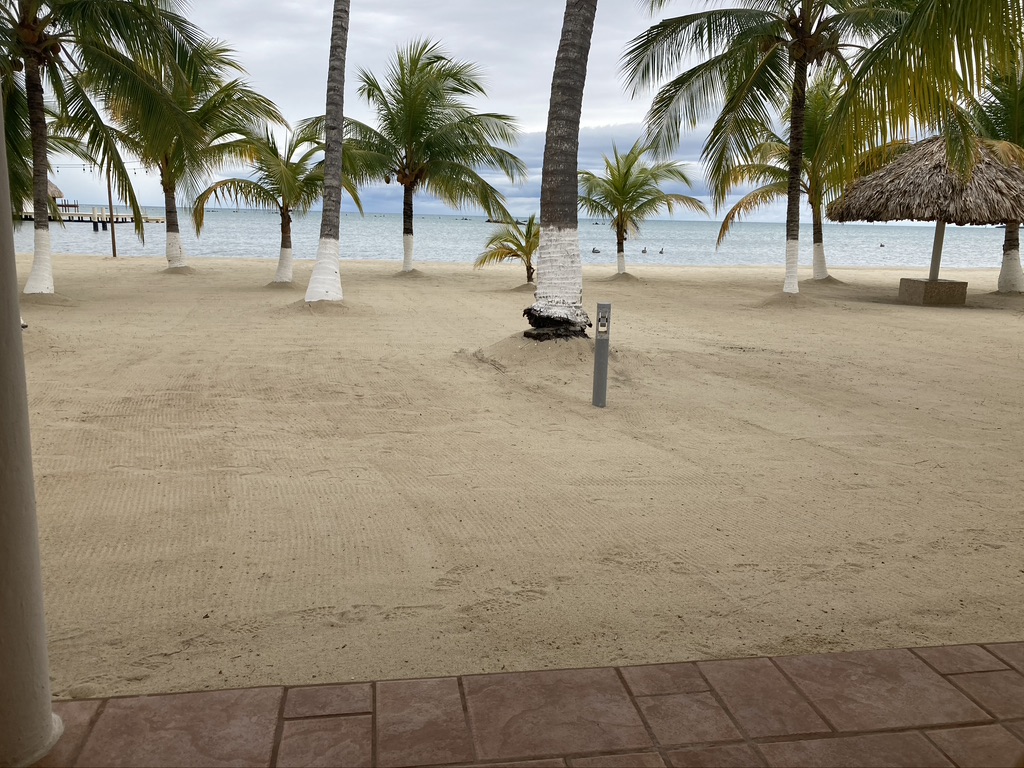
The view from our terrace – and yes, the beach gets raked every morning!
The pool and bar
Looking back to The Placencia resort from the end of the pier
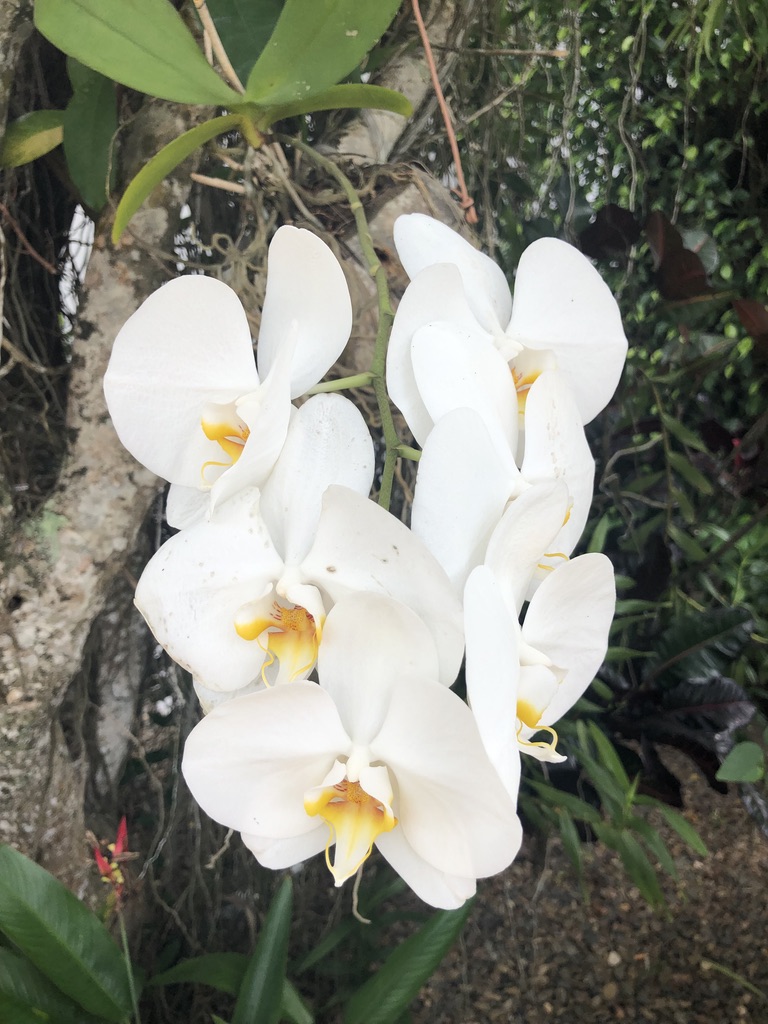
Orchids abound throughout the property, along with iguanas and a resident crocodile

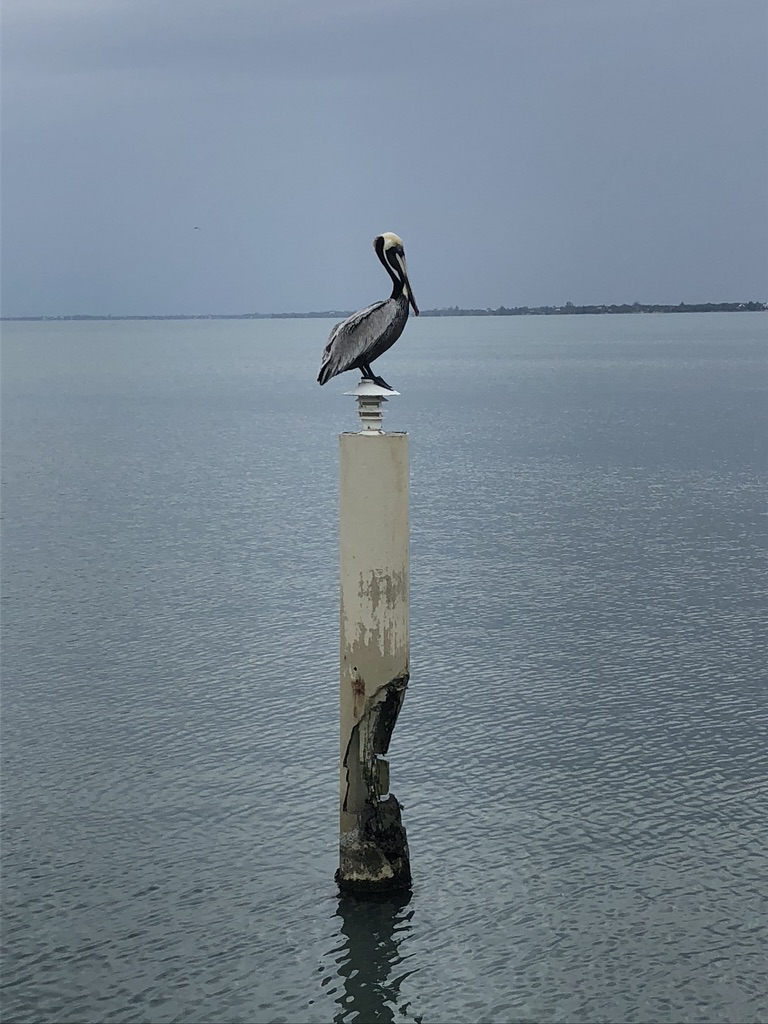
We’re not typically resort people, but The Placencia was such a low-key, laid-back place we felt like we fit right in. We spent hours sitting on our terrace, lounging in our hammocks or relaxing by the pool and admiring the view out to the sea. Taking the paddle boards out most mornings we would encounter manatees as they feasted on sea grass growing on the sandy bottom just offshore. Herons and egrets stalked the beach along the waterline. Pelicans and cormorants occupied the pilings of the pier and the rocks of the seawall when they weren’t diving into the water for fish. Iguanas lazed on the branches of a couple trees overhanging one of the ponds on the grounds, while turtles and a crocodile sunned themselves around another pond. This would definitely be one of those places that would be soooo hard to leave – but for now, we’re not going anywhere.

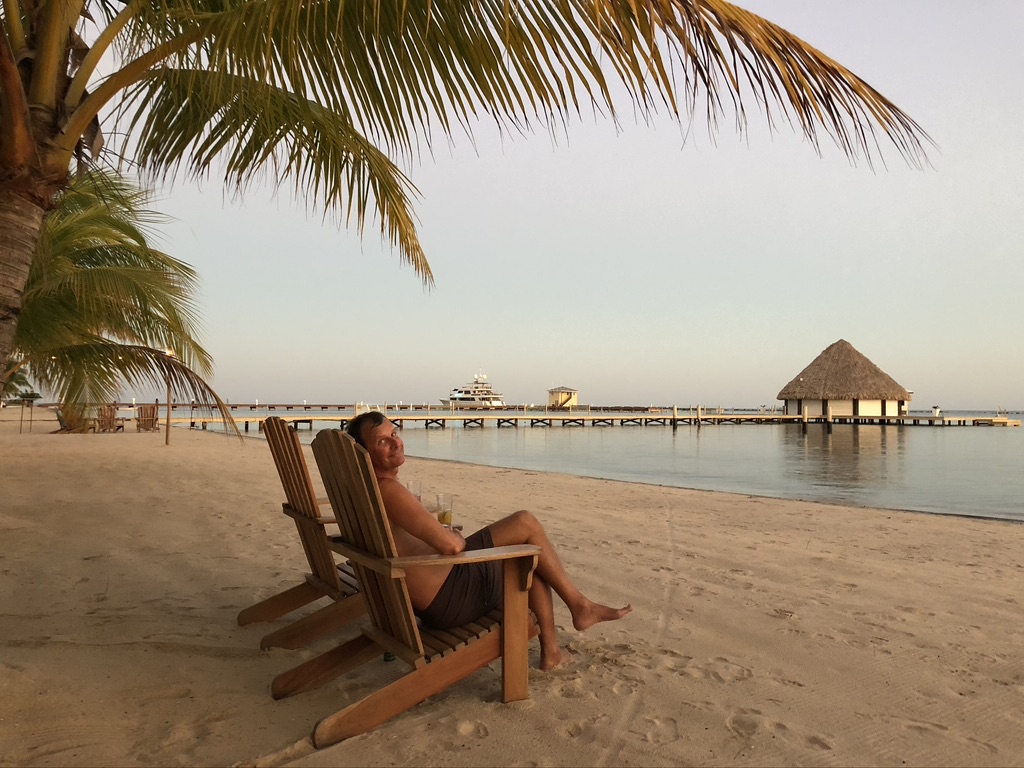
Don’t make me leave . . .


Leave a comment

Local Sounds

I always thought roosters only crowed at dawn. I also was under the impression that if a dog in your house is constantly barking, you would attempt to quiet it down, maybe offer a treat or some attention to quell the noise. Perhaps the propane delivery truck that makes the rounds through the neighborhood wouldn’t blare an announcement, paired with an admittedly catchy jingle, through its roof-mounted speaker, before 8 am. But after almost nine-plus years of near constant travel around the world, I still have a lot to learn about other cultures. While we were warned about the ‘local sounds’ around our accommodation in Punta de Mita, it still took some getting used to. The local roosters didn’t START crowing at dawn, since they never stopped, bellowing all day and throughout the night. The dogs were the same – any time a stray wandered down the street, all the homebound canines would alert everyone to the intruders presence. The gas truck was just the first of several vehicles to make their way through the area – the cheese vendor also made its presence known with an equally loud message, punctuated with the recording of a mooing cow. The scrap metal collector had no such endearing message, just a scratchy blast of unintelligible gibberish that reminded me of an old radio being left to broadcast static after its tuning dial had been moved from the actual station. Fortunately for us, Punta de Mita is that type of place that grows on you, and after acclimatizing to the local sounds after a couple days, the charms of this town, located on a peninsula at the northern tip of the Bay of Banderas, outside of Puerto Vallarta, won us over.

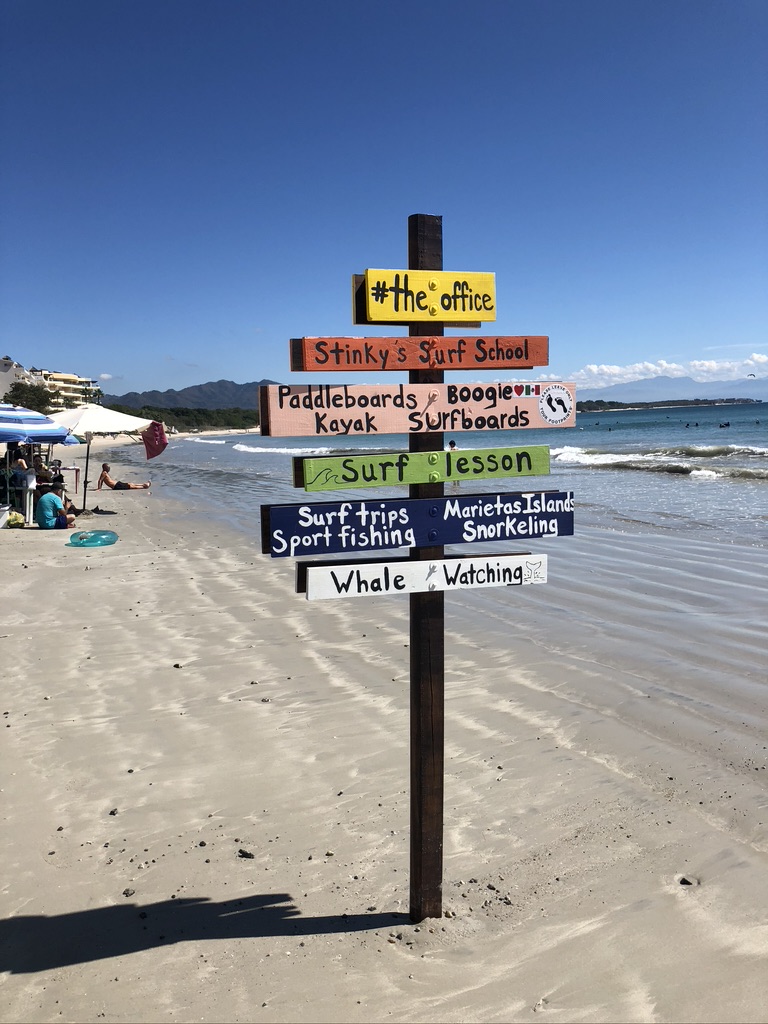
There are a few activities to do here in Punta Mita
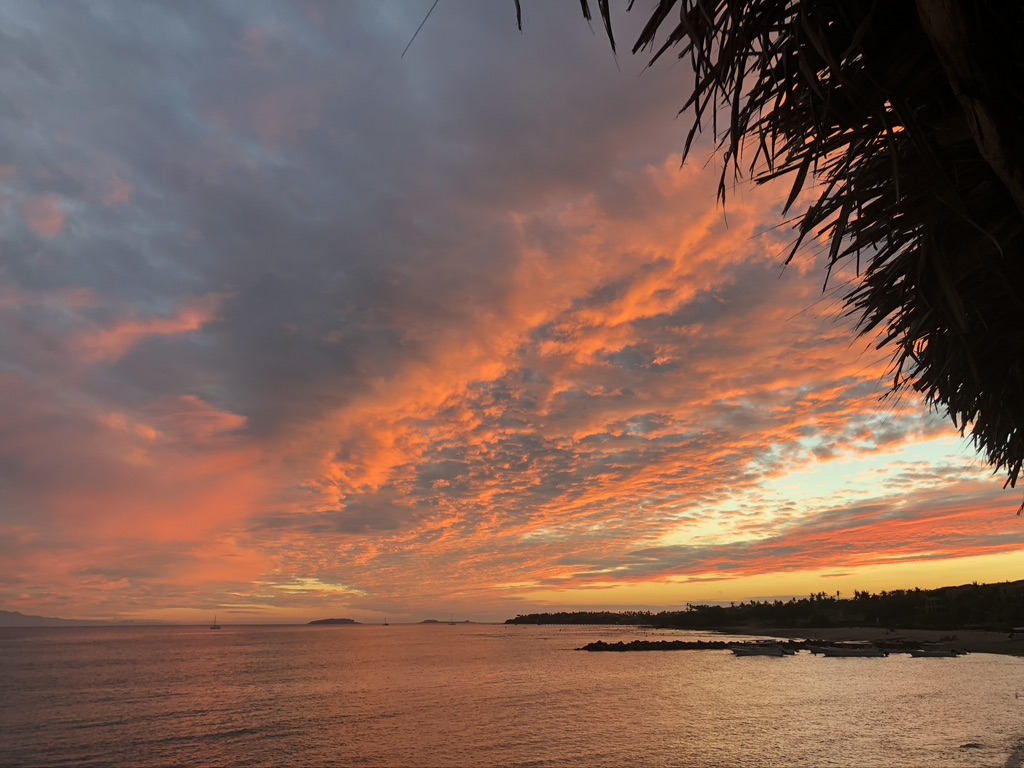
Stunning sunsets to be had from La Cabana, our favorite Punta Mita hangout

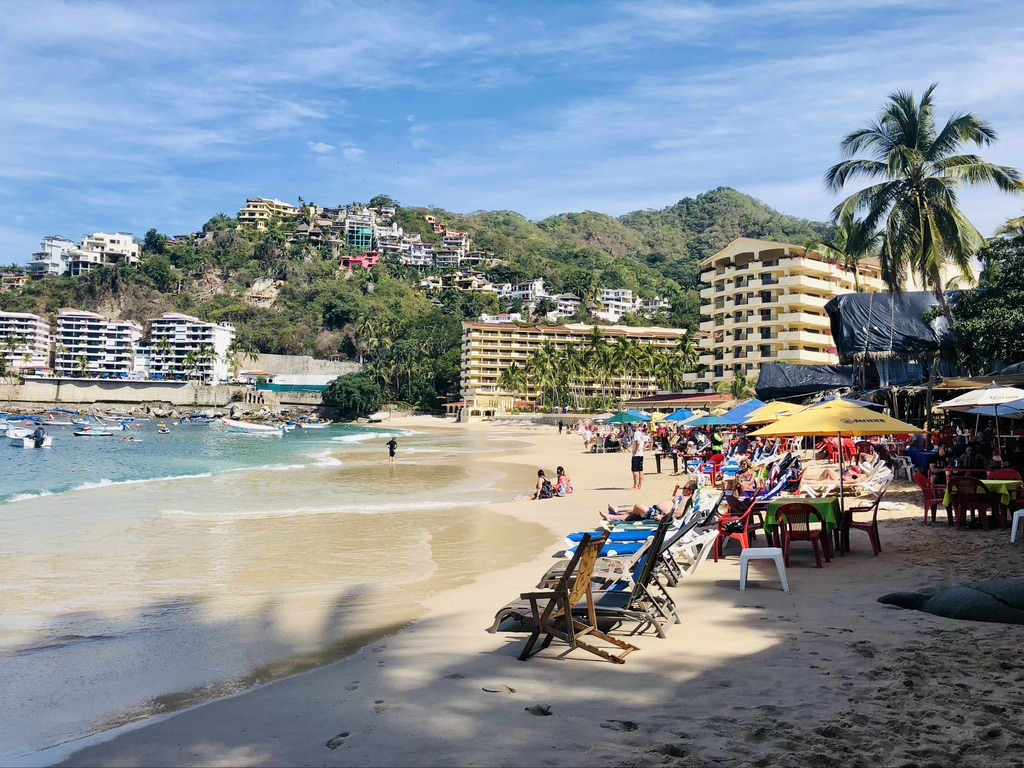
We had settled on Punta de Mita as our base for the exploration of the coastline both north and south of Puerto Vallarta. To the south, we visited pretty little Mismaloya, a small beach tucked into a cove, reached by driving the winding highway out of PV. After leaving the city center, the road twists and turns along the hillside, giving glimpses of the glistening waters of the bay between the resorts and homes built overlooking the water. Mismaloya is a small town, dominated by the massive Barcelo resort at its center. The beach is backed by a series of palapa-roofed restaurants, tour and fishing boats bob in the water and pelicans put on a show by rising up off the surface before diving back down attempting to catch a meal. Most folks visit here on a day trip, occupying the lounge chairs provided by the restaurants, sipping margaritas and enjoying a lunch of fresh seafood before returning to the city. We picked a table in the shade, shed our flip-flops, ordered Pacificos and ceviche and spent a lovely afternoon admiring the view over the water.

Day-time action on Mismaloya beach

To the north, a string of towns attract visitors for sun, surf and relaxation. Perhaps the best known of these towns is Sayulita, just about ten miles up the coastal road. It was our intention to spend some time staying in Sayulita, as we had heard good reports on the town from friends back home in Colorado who had visited on surf trips after the end of ski season. But recently the news hasn’t been as glowing – overdevelopment there has led to problems such as piles of trash rotting on the streets, a sewer system incapable of handling the swelling number of tourists and even people getting sick from swimming in the fouled water off the beach. We decided to give it a pass. Instead, we opted to stop in and check out Rincon de Guayabitos, a further eighteen miles north. What I thought would be a relatively off-the-beaten-path destination took us by surprise. We found a thriving ex-pat community of American and Canadian retirees, a long stretch of relatively uncrowded beach, and calm waters dotted with small rocky islands. We plunked ourselves down at Victor’s Beach Bar, once again kicked off our sandals, ordered lunch (grilled fish sandwiches this time) and sipped cervezas. Yet another perfect afternoon gazing out to sea with our feet in the sand.

No photos of Guayabitos – so here’s one of Punta Mita’s beach

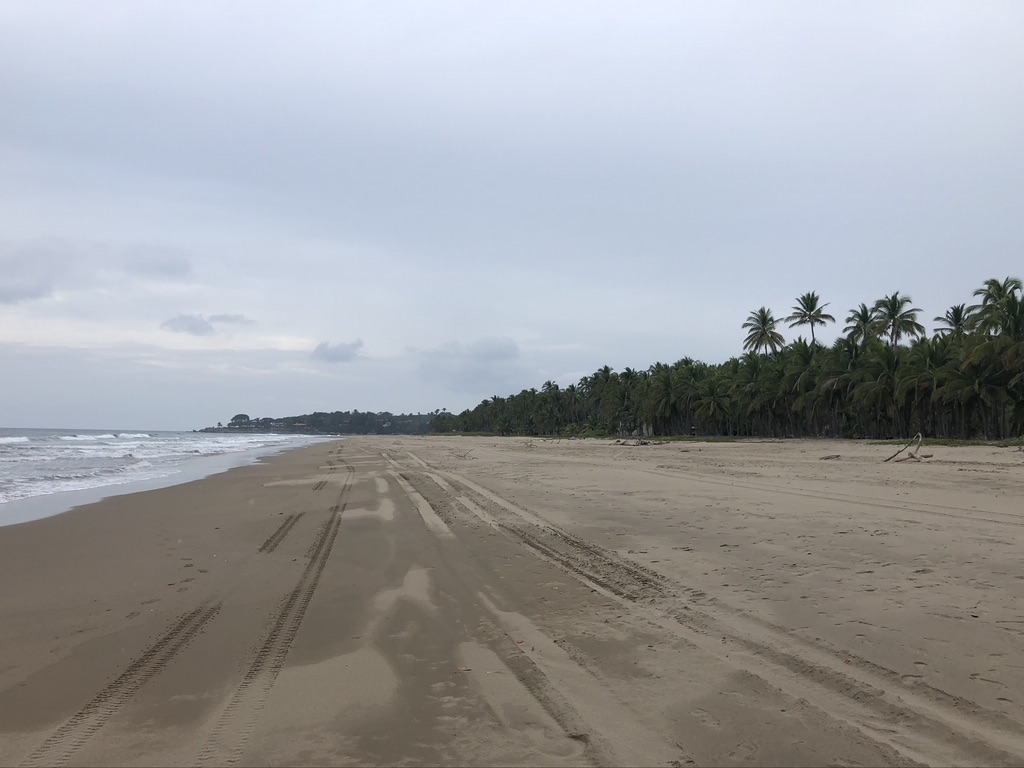
Neighbors of ours in Colorado had intrigued us with photos of their recent trip to a desolate beach even further north than Guayabitos. So one more time we pointed the rental car up the coast and made the two-hour drive to Playa Las Tortugas. Passing through a succession of small towns along the highway, we left the paved road and bounced down a dusty dirt road for four miles, passing mango and breadfruit plantations to reach the beach. Playa Las Tortugas is REALLY ‘out there’! We found a place to park amongst the palm trees and walked out onto a stretch of dark sand with nothing, and nobody, in sight. The ten mile beach has virtually no development save for a cluster of homes at its northern end and a turtle conservation camp. The waves crashed against the sandy shore and pelicans glided inches above the waters surface. Under an overcast sky we spread a blanket and set out the picnic lunch Heather had packed for us – steamed tamales, organic cherries and bars of chocolate – all items I had purchased the previous day at the weekly farmer’s market in La Cruz de Huanacaxtle, a town along the Bay of Banderas next to Punta de Mita. After enjoying our lunch we strolled the beach, enjoying the solitude, sounds of nature and the sand under our feet.

Playa Las Tortugas – signs that someone else has been here!

I don’t mean to shortchange Punta de Mita with my opening comments. It’s a delightful town, known for its forgiving, beginner-friendly waves, welcoming and affordable beach-front restaurants and that ‘boisterous’ local village. Its also got whales – lots of whales. We spotted whales while walking the beach in the mornings, from our guesthouse’s roof-top terrace in the afternoons and from our favorite restaurant on the waterfront at sunset. Every. Single. Day. It’s a great choice for a base to explore the area. And If you’d like to avoid the ‘local sounds’, there’s always the Four Seasons resort at the end of the peninsula – peace and quiet, though, comes with a $1,500 a night price tag.

Sunset, beachfront, whales, a margarita and a smile – life is good!

Our two weeks in Punta de Mita wraps up our time in Mexico this winter – three months in total. Now we’re off to the next destination: Belize. We’ll be visiting Placencia (at least to start) on the country’s southern Caribbean coast, looking for some paddling opportunities and a chance to snorkel its world-famous barrier reef.