The Rhum Line

The aimless and sometimes muddled route of a traveling couple looking for their next great adventure


Leave a comment

Bali, Part Two – Sidemen, Candidasa and Sanur

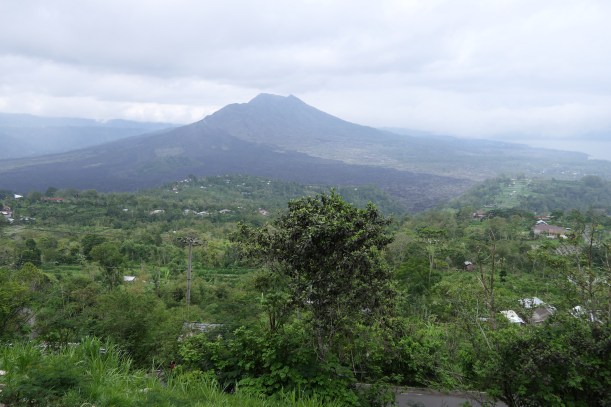
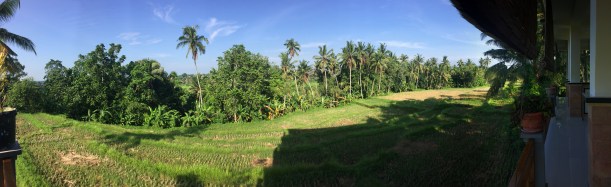
With our Canadian friend, Rene, and a rental car in hand it was time to leave Ubud after two weeks. Our plan was to drive an hour or so to the east to a small village named Sidemen. Sidemen had never been on our radar until Heather decided to get her hair cut in a salon in Ubud the week before. She chatted with a German tourist in the next chair over. “Sidemen is what Ubud was like twenty years ago” he claimed. “Hmmm” she thought, “we were in Ubud twenty years ago and it was pretty cool then”. Upon returning to our guesthouse she started researching. Pictures showed rice terraces surrounded by jungle-clad peaks with Mt. Agung in the background. A smattering of guesthouses and warungs (family-run restaurants) dotted the valley. It was just so . . . tranquil. And very green. And turned out to be exactly like the photos.
p1130455

The Sidemen valley capped by the volcano – Agung.

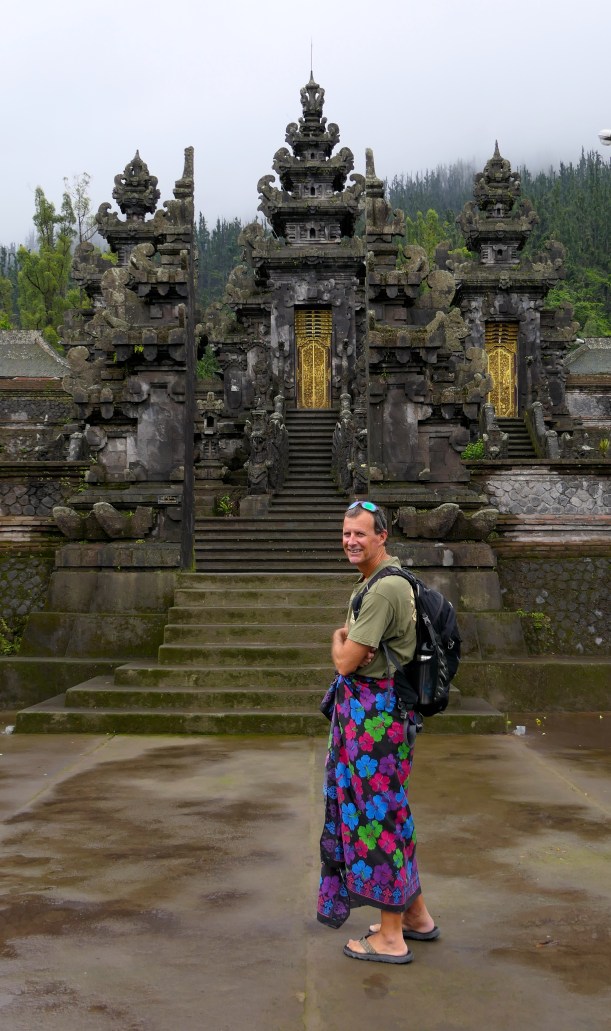
The first afternoon was spent admiring the views from our guesthouse terrace. The next day, under threatening skies, we drove towards Mt. Agung, with the intention of driving up the flank of the volcano to see the temple that perched midway. The road climbed, and switch-backed, and narrowed as we ascended. There was no other traffic to be seen. We started to get almost incredulous stares from the locals as we passed by. Perhaps, we thought, not many folks make the drive up here. At times, the road was so steep our little Suzuki SUV would lose traction on the rain-slicked asphalt, only to grab hold and power us upward again. We eventually reached a ticket-seller just below the temple who waved for us to stop. “Fifty thousand rupiah (about $3.50) each person.” Then he carefully read off each of the items that the ticket covered, which were clearly printed, in English, on the face of the ticket: parking at the temple, entrance to the temple itself, a sari to cover our bare legs, access to the selfie spot (!) and the wooden platform (for views over the valley). We paid the fee and then asked if anyone else had visited this day. “Five other tourists. On motorbikes. Already gone.” We would have the temple to ourselves.
p1130487

I paid for it – I’m gonna wear it. Pura Pasar Agung.

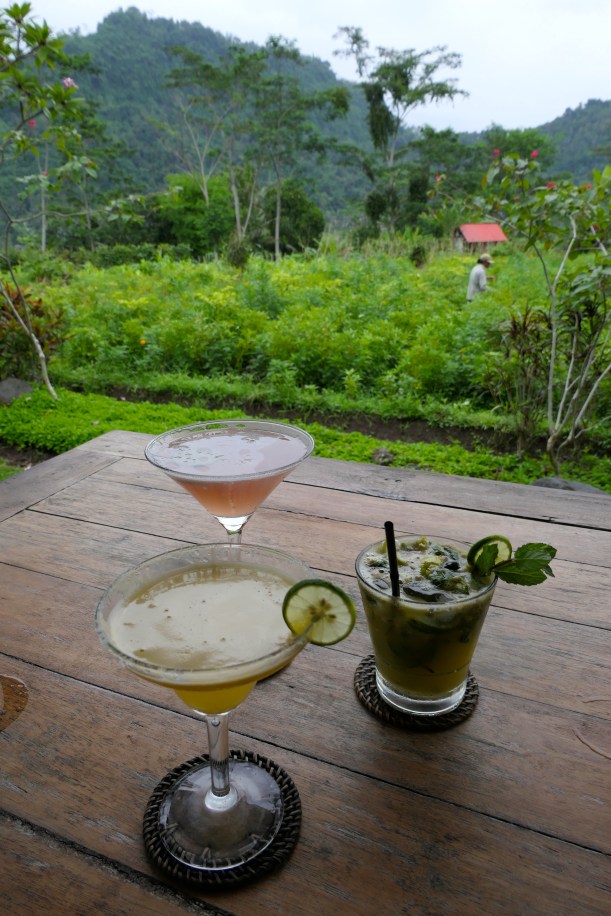
After descending the mountain, we returned to Sidemen for the afternoon. A drink was in order, so we ventured down one of the three roads in the valley until we found what looked like a promising warung, with a vine-covered bar adjacent. The bar overlooked a garden where a farmer tended to her chili plants. The eighteen-year-old bartender, who was incredibly passionate about his craft, proudly boasted of his drink menu. “We use only fresh fruit in season for our cocktails” he claimed. True to his word, we watched him step out from behind the bar to pick fresh passionfruit and mint leaves to craft our margaritas and mojitos. We chatted the entire afternoon, learning about the rice-growing process, his hopes to gain employment on a cruise ship some day, and the toll having a girlfriend took on his school studies.
p1130534

Cocktails, conversation and chili-harvesting.

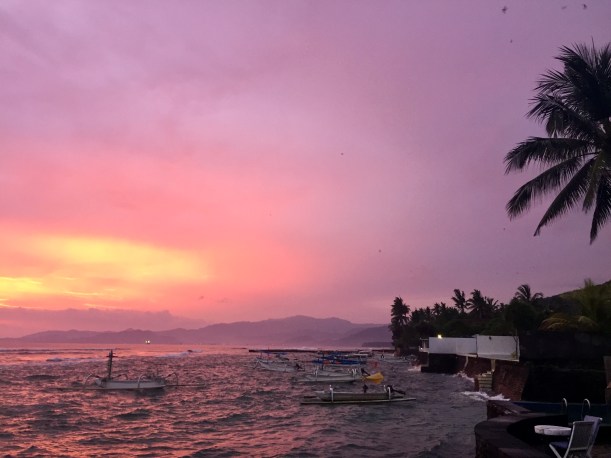
The next day we drove more winding mountain roads, passing through rainforest-clad valleys, past coconut palms and banana trees, eventually bursting out of the dense jungle to reach the eastern shore at Candidasa. There were a number of temples to be seen in the area and the possibility of some snorkeling to be done. After checking in to our guesthouse, we opted out of the temple visits and settled for some time lounging by the pool and a little snorkeling in the bay after seeing several turtles come to the surface just off the beach. The snorkeling proved fruitless, however, as we couldn’t spot any turtles and a recent storm had left the water churned up, reducing visibility. We ventured out later for dinner and were rewarded with a stellar sunset (and the largest glasses of wine we’ve seen outside our own home).
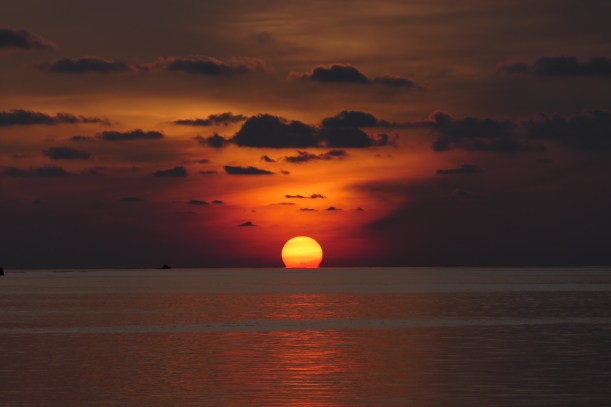
img_e9348

Candidasa sunset.

Finally, to complete our eastern Bali road trip, we drove down to Sanur, an old favorite stop of ours near Denpasar. Sanur is a strip of hotels, smaller guesthouses, warungs, hip restaurants (Soul On The Beach is our new favorite) all linked by a seaside promenade and also the speedboats that make the run out to Lembongan, Ceningan and Penida islands. In the past we’ve used Sanur as a base – to spend a week while extending our Indonesian visas, visiting a dentist for check-ups and cleanings or stocking up on supplies before heading out to Raja Ampat in the eastern part of the country. As in the rest of Bali, good value accommodation isn’t hard to find here. We wanted Rene to see the place in case she wanted to spend more time here after we split up in a few days. The next day we’d all be heading over to Penida for three days of exploring that large island and it’s many rugged beaches. But for now, we’d enjoy a pool, a long walk along the promenade and some really good food.

img_e9366

Can you say ‘Coco Loco’? Coconut water mojitos at Soul On The Beach, Sanur.

Leave a comment

Bali, Part One – Ubud

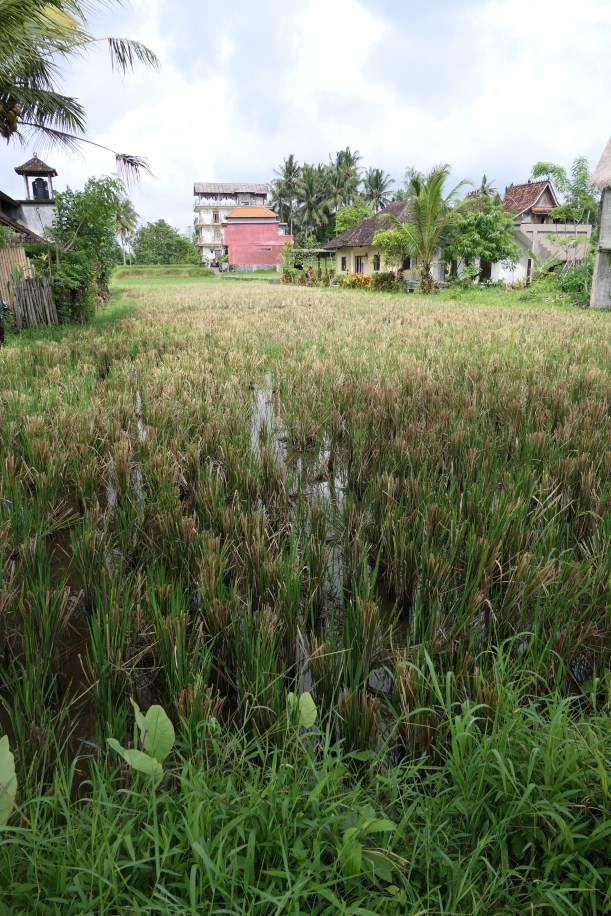
“What is it about Bali that keeps you returning there?” we are often asked. Our answer is always the same – the people are genuine, warm and friendly; the Balinese Hindu culture is unique; the value of accommodation is unequaled anywhere. Despite becoming ever more increasingly popular since our first visit back in 1998, those qualities have remained unchanged in the ensuing years. Each and every time we visit (this trip marks our sixth) we marvel at the people, food, architecture and spirit. Our go-to spot has become Ubud, in the central highlands, a cultural and artistic center for the island. People are drawn to the yoga centers, the fantastic artwork on display and sale and the profusion of cool and hip cafes and restaurants. Ubud suffers some from its popularity, however. Traffic is appalling. The sidewalks are too narrow and falling into disrepair. The key, we’ve found, is to find a guesthouse just outside town, amongst the rice fields, where the traffic noise and crowds fade away and the serenity of the terraces and forest envelop you. We typically spend a part of each day strolling through town, peeking into temple courtyards, catching a glimpse of families in their holiday dress making offerings, sampling fresh-made coconut ice cream to find which small shop has the best (hands-down it’s Tukies, topped with toasted coconut curls and ground coconut brittle), and maybe enjoying a few cold Bintang beers at a cafe and people-watching. Then we return to our beautiful guesthouse, take a swim in the pool to cool off (it’s so hot and humid just blinking can make you sweat) and relax on our balcony. That’s when Ubud’s real attraction becomes apparent. Swinging in our hammocks, gazing across emerald fields of rice plants, egrets hunting among the paddies for insects, bamboo chimes making soft music, doves cooing in the trees . . . magic.

img_9240

Peace and quiet outside our Ubud guesthouse

p1130198

Yes, our guesthouse is literally in the rice fields!

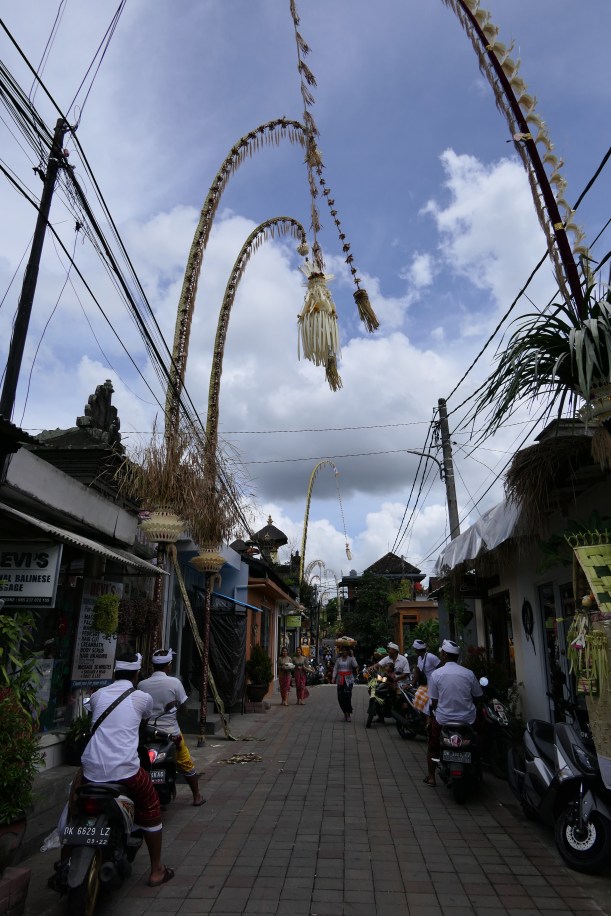
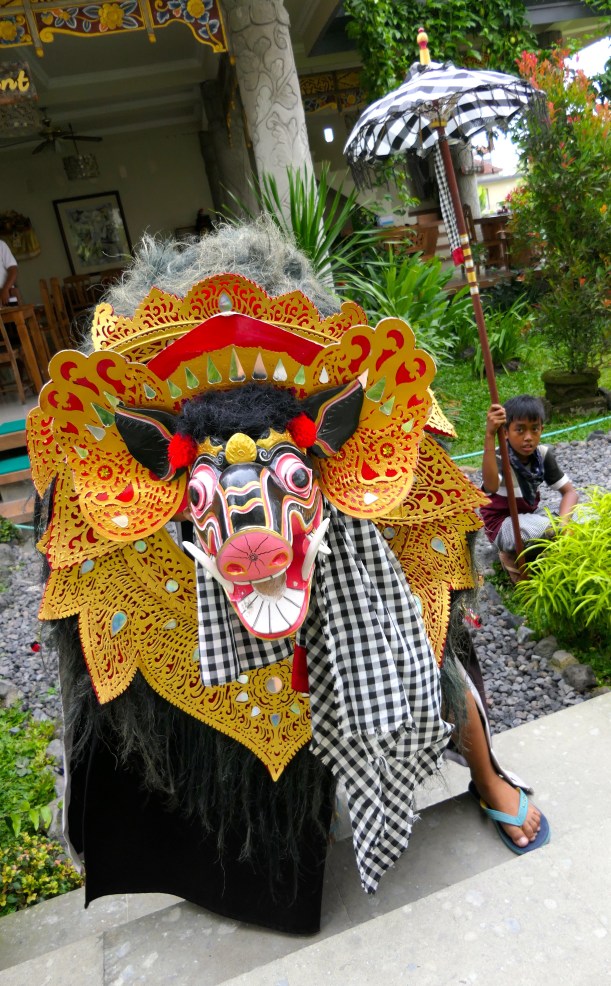
Our plan was to spend a week in Ubud through the Christmas holiday. Two days into that week, we extended our stay for a second. That would take us through the Balinese holiday of Galungun and into the new year. Galungun is a time to celebrate the triumph of good over evil and make offerings to ensure good luck through the next six months (it’s celebrated twice a year). Locals were busy crafting penjors, tall bamboo poles decorated with colorful fabric, paper cutouts, rice panicles (the top of the plant containing the grains) and flowers, which are erected outside each home and business. Groups of kids roam through neighborhoods, some dressed in a mythical lion costume, called a barong, while others bang drums and gongs, collecting donations from onlookers and homeowners who hope to build good karma. What’s amazing to us is that these types of sights and events happen nearly every day in Bali, as it seems nearly every day there’s a reason to celebrate something or other.

p1130245

Panjors line a street in Ubud during Galungun.

P1130304

A visit from a barong

Thinking that New Year’s Eve wouldn’t be a big thing on Bali, given that their traditional calender differs from our western one, we couldn’t have been more wrong. The Balinese are crazy about fireworks! Starting just after sundown (7 o’clock) and continuing until well after midnight, the sky was lit up with the colorful starbursts of fireworks in a circle around us. Bursts from as far away as Denpasar to the south could be seen. At midnight, a deafening crescendo of explosions encircled us to ring in the new year. Just to show everyone that they weren’t done, the fireworks started again, albeit briefly, the next morning at sunrise.


Leave a comment

The Maldives

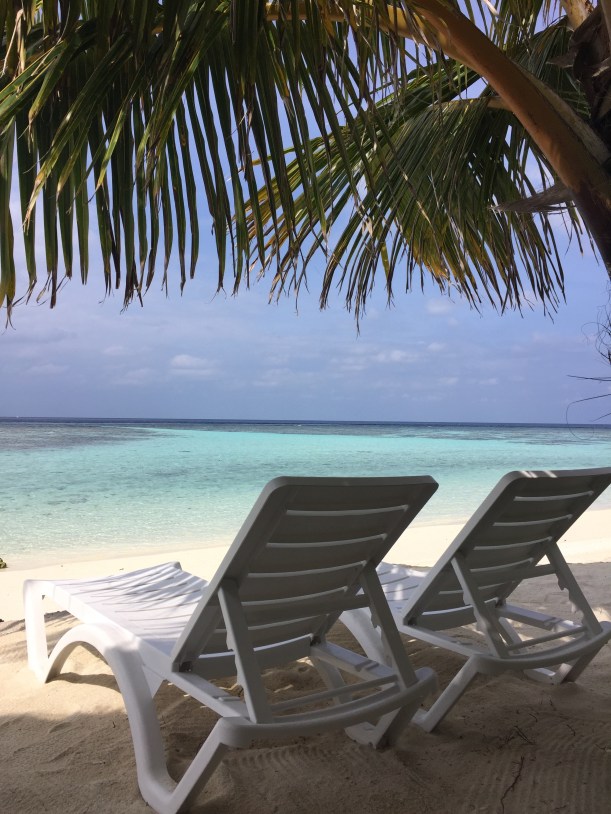
IMG_9135

How can you say no to the Maldives?

“We should go to the Maldives!” Heather said, completely out of the blue, while we were in Thailand.

“I’d love to, but I thought it’s really expensive. That’s why we didn’t go last year, remember?” was my reply.

“Yeah, that’s right. But I really wanted to see those islands. Who knows, they might disappear soon – climate change and all.” With that I would’ve thought Heather would move on from the idea. But no. “Last year we were thinking of going during Christmas. That’s high season. If we go a bit earlier, prices are actually pretty reasonable. I think we can do it!” And that’s how we decided to visit this stunning archipelago in the Indian Ocean.

The Maldives are unique. Sure, there’s the crystal-clear waters, blinding white sand beaches, vibrant reefs and whale sharks and manta rays. But it’s a Muslim country. Serious in a very devout kind of way. That means no liquor and no pork – you can’t even bring your own booze into the country! Swimsuits are only allowed on the “bikini beaches” that are managed by resorts. On public beaches full dress is expected – ever hear of a burkhini? It’s a real thing. So, we went into our nine-day visit thinking of it as kind of a spa/detox vacation. The Maldives takes some planning, as the twenty-six atolls that make up the country comprise a thousand islands, and the capital, Male, which hosts the international airport, is not the place you want to spend your vacation in. We chose two islands, in two different atolls, which promised affordable accommodation and stellar snorkeling on house reefs. Our first stop was Thinadhoo, a ninety-minute boat ride south of Male. It did not fail to impress. The “bikini beach” was stunning. The snorkeling was stupendous. The staff at our hotel were incredibly friendly. The food was decent. We couldn’t ask for more (okay, maybe just ONE cold beer would be nice).

IMG_9181

Our view out from the “bikini beach”, which was always deserted midday.

Each day around noon all the other guests on the island would return to their respective hotels for lunch, as most visitors opted for the full-board plan. Heather and I only had a bed & breakfast plan, which meant we had the entire beach, which spanned one entire side of the island, to ourselves for most of the afternoon.

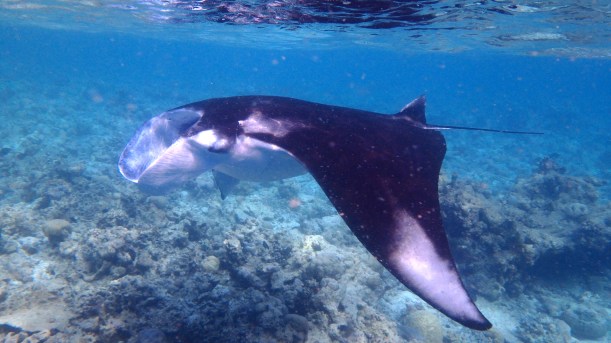
After six days on Thinadhoo, we were transported by a speedboat to our second destination – the western atoll island of Bodufolhudhu. Folhudhu, as the locals thankfully called it, was similarly sized to Thinadhoo, boasting a small village of about twenty families. Upon check-in the staff told us of the activities available: water sports, including diving and snorkeling tours through the onsite dive shop; snorkeling at the house reef; and a walk around the island, which would “take about ten minutes. If you want to shop in the market or souvenir shop, let me know. I will the call the shopkeepers to open up for you.” This promised to be a pretty relaxed, laid-back place. As before, our days consisted of leisurely mornings snorkeling, breakfast, leisurely late mornings on loungers, snorkeling, leisurely afternoons, snorkeling and dinner. Tough to stay awake past nine. One day we opted for the Manta Search Trip, a snorkeling trip to a nearby reef that had been recommended by another guest. At 7:30am, in order to beat the other boats to the manta area, we boarded a small speedboat and roared across the sea for about ten minutes until we reached an offshore reef. A large manta was on the surface, flapping it’s massive wings and splashing around. “Here” the captain shouted to us. So we really didn’t have to “search” all that hard. Heather and I were in the water quickly. Two more mantas swam at us, mouths wide open, scooping up plankton. At the last second they would turn away or dive below us. Then another, and another. For thirty minutes, the same group of mantas moved back and forth across the reef wall, just a foot or two below the surface. Once they moved off we returned to the boat. Still no sign of another tour. Another amazing experience, all to ourselves.

OLYMPUS DIGITAL CAMERA

A successful search.

OLYMPUS DIGITAL CAMERA

Enjoying a sunset paddle off Folhudhu. The kayak only came with one paddle. Lucky me! Then . . .

P1130118

Oh yeah!

We enjoyed nine amazing days in the Maldives. And made it through without any pork. How can we ever top this? Um . . . how about Bali for Christmas.


Leave a comment

South . . . To The Islands

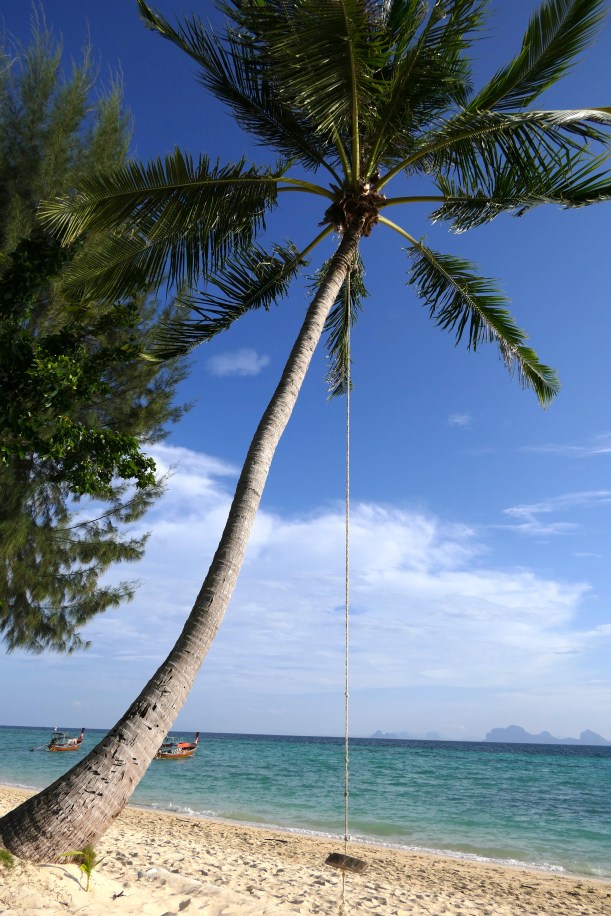
After two weeks in the north of Thailand we were ready for some beach time. The folks who managed our guesthouse in Pai had warned us how cold it could be up north in the “winter”. Then again, as Heather and I left our room each morning in shorts and tank-tops to have breakfast in the open-air restaurant, they would greet us from in front of the huge brick firelace that dominated one end of the dining area, a huge wood fire burning in it’s hearth, wrapped in down coats and wool hats. Maybe they don’t really know what winter is. But it was time to head south. After several visits to idyllic tropical Thai islands in the past, we knew that many had been over-touristed and overdeveloped. Signs in Russian and Chinese began to appear, indicating the onslaught of those particular groups. The locals had developed a certain surliness and indifference, no doubt in response to the treatment they were receiving.We had even told ourselves that we probably wouldn’t return to Thailand after our last visit in 2015. But we wondered if there were still any islands that hadn’t suffered from a Communist takeover. We found one island that did peak our interest. Ko Ngai is located off the west coast of southern Thailand, in the Andaman Sea, south of the larger islands of Ko Lanta and Phuket. It was everything we had hoped for. Ngai is home to about five or so sets of bungalows and three upscale resorts . . . and nothing else. No local village. No roads. No cars. No motorbikes. No jet skis. Just a long stretch of sandy beach, a decent coral reef and a swing hanging from a palm tree in front of our bungalow. But it wasn’t all Robinson Crusoe-esque. Each day around noon several long-tail boats would motor up to our beach, disgorge a couple dozen day-trippers who would spend an hour taking selfies, rouse me from the comfort of my beach lounger to take photos of them on the swing, then wade back out to their boats and return to their busy islands to the north. The folks who were staying on Ngai, if they had hidden out in their bungalows or enjoyed lunch in one of the restaurants during the onslaught, would reemerge like a swarm of hermit crabs, making their way back onto the beach to reclaim a chair or a shady spot under a palm tree.

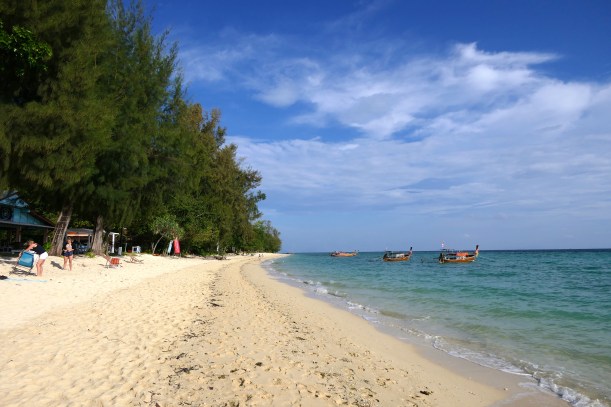
P1120734

The beach on Ko Ngai for all but one hour a day.


P1120736

The swing in front of our place. I’m sure it’s an Instagram hit across Europe.

IMG_9007

The livings easy on Ko Ngai.

A fairly decent coral reef just off the beach provided the only entertainment we needed. Hornbills roosted in the trees overhead. The only challenge to be faced was which of the four restaurants to dine in that evening and when could I enjoy my first cold beer. Ko Ngai restored my faith in Thai islands.


Leave a comment

A Slice of Pai

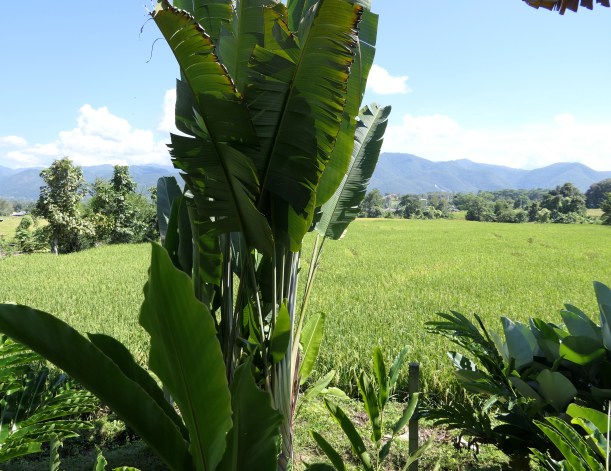
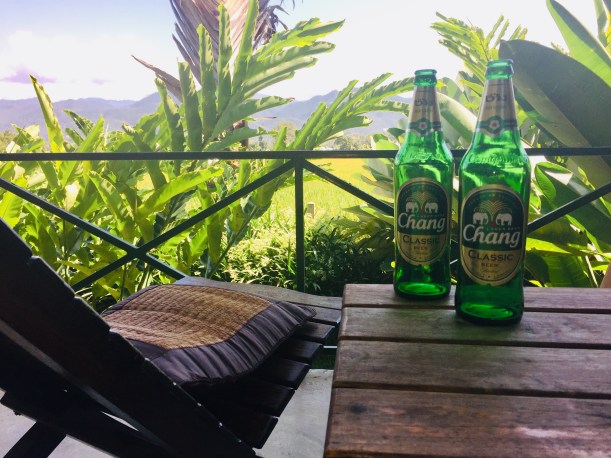
The road from Chiang Mai to Pai, in northern Thailand, covers 762 curves. It also crosses three mountain passes, meaning all those twists and turns are climbing or descending at the same time. This is not a combination that makes for a comfortable ride for someone (Heather) who can be prone to car-sickness. Forgoing the Dramamine tablets we had purchased in a local pharmacy the day before (“They’ll make me drowsy and I don’t want to miss anything along the way”) and despite her preventative measures, such as wearing pressure-point wrist bands, sipping ginger-ale and even using mentholated essential oils, she spent most of the ride curled into a ball on the seat next to me in the minivan, missing everything.  Upon arriving in Pai, while Heather recovered a bit, I negotiated a taxi to take us outside town to our chosen guesthouse, which promised views over the rice terraces to the surrounding mountains. They did not disappoint. We entered our room and headed immediately to the terrace off the back. From the green metal railing, over the deep green foliage just off the terrace, past the faded green of the royal palms marking the property boundary, across the green of the rice paddies just beyond and all the way to the pine tree-covered mountains surrounding town, it was simply stunning. We sat spellbound, neither of us talking (no small feat for Heather).

P1120367

View from our terrace.

Eventually, other colors started to show themselves. A farmer on the far side of the rice paddy, only visible due to his red shirt. A pair of white egrets taking flight. Several black butterflies flitted amongst the foliage inches in front of us. A red dragonfly alit on a palm frond.

P1120374

A little red amongst all the green.

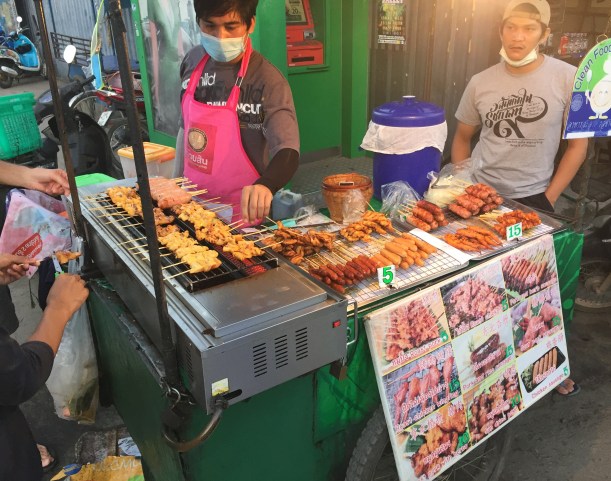
 At first, upon arriving in town, we wondered if we had made a mistake by staying so far outside town, and possibly missing out on all the action there. But, after arranging to hire a motorbike for the five days we’d be here, and riding into town for dinner and some groceries (beer and wine), we were convinced we had made the right choice. Settling into the lounge chairs on our terrace later, we sipped our “groceries”, watched the setting sun light up the mountaintops, listened to the crickets and other singing insects come alive while a few lights from town came on and twinkled in the dusk. Over the course of the next nine days (we extended our stay) we drove around the valley seeing waterfalls, wats (Buddhist temples), and other sights, always happily returning to our terrace each afternoon to soak in those views (after soaking in the pool) before heading into town to sample all the wonderful dishes from Pai’s famous Walking Street food stalls.

IMG_8914

A regular stop for us on Walking Street – 15 cent skewers!

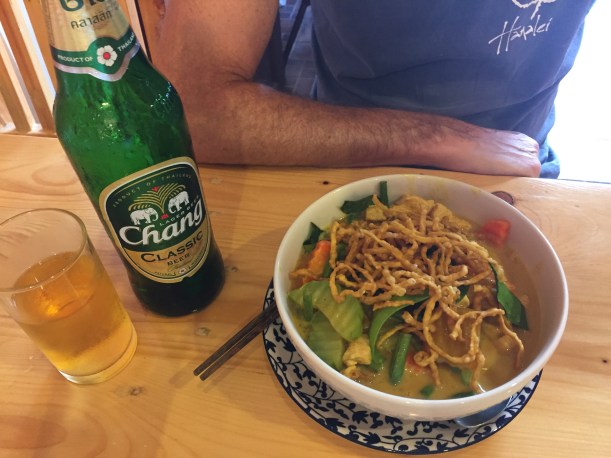
One particular dish stood out for me. A specialty only found in northern Thailand, Khao Soi is a spicy bowl of rich coconut milk broth, infused with generous amounts of lemongrass and lime leaf, served over yellow egg noodles, topped with succulent chicken and vegetables, then finally garnished with crispy fried noodles. Small dishes alongside include sliced shallots and fresh lime wedges to balance the richness of the coconut broth, and a dab of chili paste. However, with all the Khao Soi dishes I enjoyed in Chiang Mai and Pai, I couldn’t even consider adding any more spice to the bowl. By the time I slurped the last noodle and broth from the bowl, I had formed a small pile of the small, thin tissues that pass for napkins on Thai restaurant tables, soaked with the sweat and tears generated by the potent red chilies in the dish.

IMG_8875

Who needs Pad Thai! Khao Soi is my new favorite Thai dish.


Leave a comment

A Real Thai Massage

While in Chiang Mai, Heather suggested we get massages. Just within a short walk from our guesthouse, there were several massage parlors with their prices posted on large signs out front. You couldn’t beat the price – 180Baht for a one hour Thai-style massage, or the equivalent of two large bottles of Chang beer. That translates to under $6USD! For an hour. It would be unseemly not to partake of this relaxing Thai tradition. I thought of a petite Thai women gently massaging my back and shoulders, lulling me into a blissful state of consciousness. Yes, a massage would be a great idea. We walked the street and checked prices – pretty much all the same. Stopping at one parlor, we asked the proprietor if he could accommodate two of us at the same time. “Yes, sure, no problem. Just wait five minutes. Inside, sit, air conditioning very nice.” So we walked inside and had a seat, enjoying the cool temperature of the waiting room. Eventually, a young, stocky man ushered us into the next room, where he gently washed and dried our feet in preparation for our massage. Where are those petite women I wondered. He directed us upstairs where we passed a couple curtained alcoves where others were receiving their massages by young women. We were led to our own alcove and told to change into loose-fitting pants and shirts. Then the same guy from downstairs entered and asked me to roll onto my front. Wait! No, this is not what I imagined! A young woman also entered and instructed Heather to do the same. Couldn’t we swap? Is there some mistake? But before I could put my thoughts to words his hands were on me. Okay, he did have soft hands and was quite gentle while washing my feet. Perhaps this wouldn’t be so bad. There was some gentle rubbing to loosen up the back but then the work began in earnest. He was up on the table, kneeling over me, pushing his hands, and then elbows, into my back. I imagined it was as if I was a pile of pie dough and he was attempting to roll out my body in order to fit the dimensions of the table. Then it was down to the legs. Again, the elbows were used to separate muscle from bone. He twisted my calf muscles as if they were the strings of an old mop, wringing every last drop of water from them. Finally, he performed the old figure-four leg lock, twisting my legs into a pretzel, apparently a move learned by watching Saturday night wrestling on TV. “Ugh, I don’t know how much more of this relaxation I can take” I thought to myself. I chanced a peek over to Heather who seemed to have achieved another level of consciousness. Her face was peaceful, eyes closed, a slight smile and her breathing slow and soft. Meanwhile I was grunting, having my breath forced out of my body while Killer Kowalski continued his assault. Eventually, he motioned for me to turn over, placed a pillow on his lap and put my head on it. He began gently massaging my scalp and forehead, then my neck. Now, this is what I was hoping for! Just as I began to really relax and melt into the pillow he pushed me up and grabbed both arms, pulling them back, seemingly attempting to remove them from my torso. Unsuccessful at first, he placed the soles of each foot onto my lower back to gain more leverage and continued his attempt at dismemberment. Eventually giving up, he ended the session with a final chopping motion along my back. As Heather sat up she opened her eyes and exclaimed “Wasn’t that amazing? I can’t wait to do this again!” I could only think that my time, and money, would be better spent drinking those two big beers instead.

P1120293

How I expected to feel after a Thai massage.

P1120180

but I felt more like this afterwards.

IMG_8936

If Heather suggests another massage . . .


Leave a comment

Why We Love Hoi An

After starting our Asian winter trip by spending ten days in beautiful Hoi An, Vietnam, it’s time to start thinking about moving on. When we arrived we had booked a guesthouse for five nights, but within a couple days decided it made sense to stay a bit longer. We’re so happy we got to really explore this town in depth and I wanted to share some of the things we really love about it:

-In Hoi An, Heather found us the perfect guesthouse: Vinci Villa is located a short walk from the ancient town center in a residential (local) neighborhood, surrounded by good and cheap restaurants, and run by the friendliest family imaginable (and they have two puppies!). Our $30USD/night room is huge and modern, overlooks the beautiful pool, includes a delicious cooked-to-order breakfast and offers free bikes to use around town.

-In the late afternoons, after spending the day sightseeing in town or riding out to the beach at An Bang, we can sit on our second-story terrace and listen to the sounds of local life in the neighborhood: kids playing in the maze of alleys surrounding us; the chatter of women as they pass on the street below; the sizzle of a wok and the smell of fish sauce as a meal is prepared next door; and always, always, always, the rumbling and honking of the motorbikes speeding by on the bigger streets a block away.

-On Sunday afternoon and into the evening we can hear the melodic (yes, sarcasm) strains of the neighborhood kareoke bar.

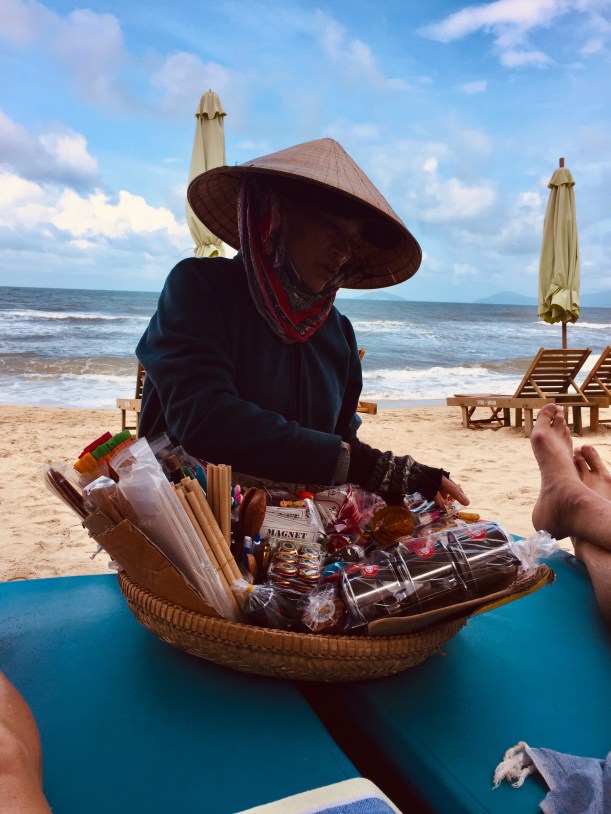
-At An Bang beach, after a couple visits, we’ve gotten to know the ladies who walk up and down the beach hawking souvenirs. While we haven’t bought any of the chopstick sets, fridge magnets or wind chimes they deal out of the big bamboo baskets they carry around, we love when they come over to our lounge chairs, set down their baskets and chat about the weather, their families and our travels. Always smiling, they love to hear how much we enjoy their town and beach.

-Sitting in a cafe along one of Hoi An’s busy streets and just watching life go by. Seeing the rush of motorbikes zig-zagging down the street, avoiding tourists and dogs and old ladies, some bikes holding entire families of four, or a driver and passenger who’s holding a folded-over mattress or 15′ lengths of PVC pipe; watching young Asian tourists, faces buried in their phones, try not to kill themselves on the uneven and crowded sidewalks; the elderly Vietnamese shuffle along in outfits that look a lot like pajamas.

-The food. Dumplings, noodles, soups, sandwiches. I miss them already.

-The prices. Meals and drinks for two under $10USD! I miss them already.

IMG_8801

Our host, Plum, and her kids at our favorite restaurant, Thuan Y.

P1110875

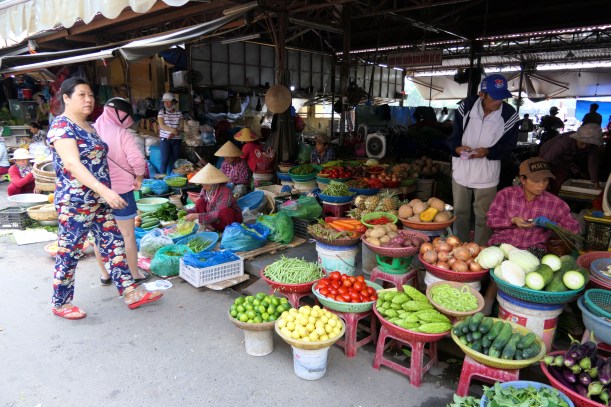
Hoi An’s central market, where the ingredients for all the delicious meals come from.

IMG_8689

One of the beach hawkers takes a break to chat.


Leave a comment

The Perfect Lunch

IMG_8667

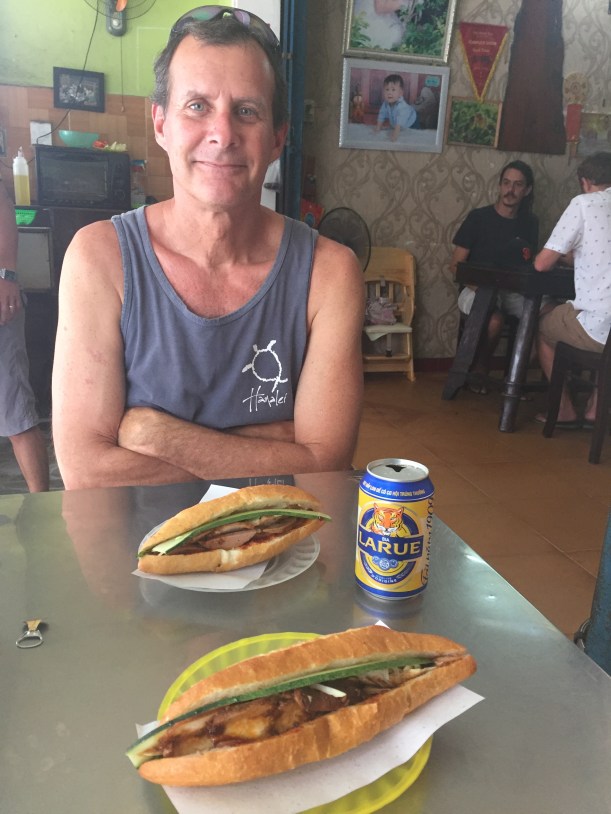
The famous banh mi sandwich – a Vietnamese classic at Phi Banh Mi

One Vietnamese food export I’ve enjoyed is the traditional sandwich called the banh mi. Built in a crusty mini baguette (one positive aspect of the French occupation of the country in the 1950’s) the sandwich contains a couple varieties of pork product, a vinegary mix of julienned carrot and green papaya, slices of cucumber, fresh cilantro leaves and a smear of chili paste. In order to cater to foreign tastes, many banh mi stalls offer shredded chicken in place of the pork and will add cheese and/or avocado as well. As luck would have it, a well-reviewed and well-rated banh mi shop happened to be located just around the corner from our guesthouse. After a leisurely morning doing some trip research online, we walked to the shop for lunch. We figured a place that had been discovered by travelers and had been recommended online would probably be a bit more pricey than other hole-in-the-wall food shops. I couldn’t have been more surprised after sitting down at one of the three tables and glancing at the menu to discover that the traditional banh mi was offered at only 15,000 dong, or the equivalent of ~.67 USD! Lunch for under a dollar! But wait. Is it possible that they also sell a can of the local beer, Larue, for the same price? Sandwich and a brew for less than two bucks. I don’t usually drink beer before noon, but it would be unseemly not to at these prices. Within seconds after ordering our sandwiches appeared, along with a cold can of beer. The baguette was crusty on the outside, soft on the inside. The pork was tender, the carrot-papaya “slaw” tart, the cucumber added crunch, the cilantro was fresh and zippy and the chile added the perfect amount of heat. Midway through lunch the place started to fill up and by the time we left a line had formed on the sidewalk. If not for those eagerly waiting for their turn to enjoy the perfect lunch, I easily could have had a second – sandwich and beer. But we also wanted to get back into town and explore some more, then find more of those Vietnamese classic meals.

IMG_8683

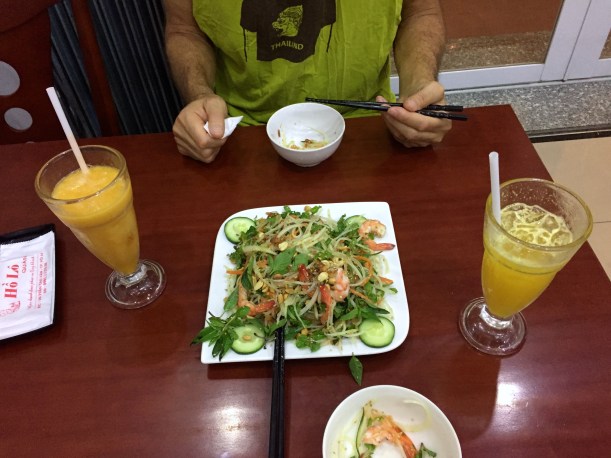
Green papaya salad with shrimp and fresh passion fruit juice at Ho Lo Quan.

P1110994

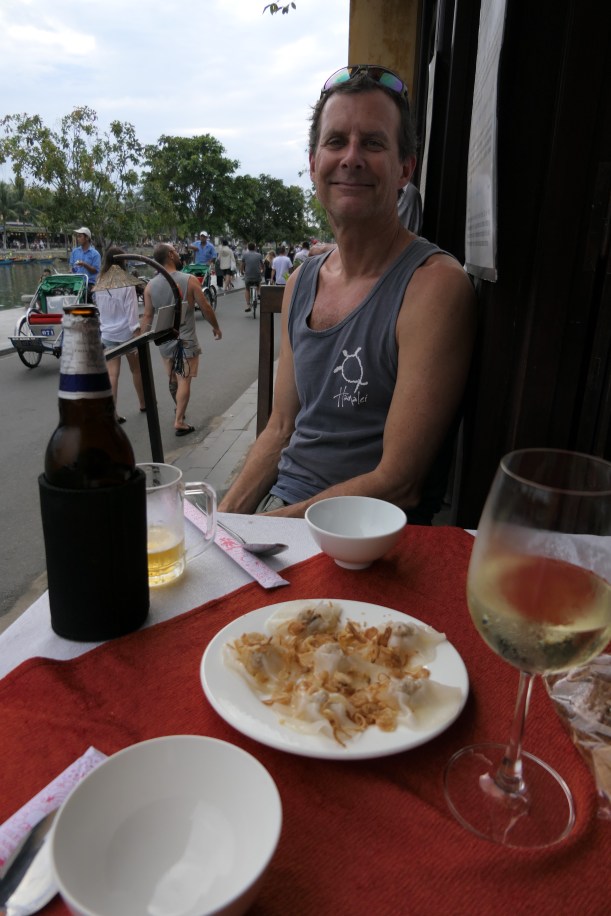
Enjoying Hoi An’s special dish of White Rose – rice flour dumplings filled with pork and topped with fried shallots – and watching the parade of tourists along the riverfront.


Leave a comment

Good Morning, Vietnam!

Twenty and a quarter hours flying time. Ten and a half hours sitting around in three different airports. Four hours in two different shuttles on each end of the trip. Leaving Steamboat Springs, and it’s 19 degree weather, to arrive in Hoi An, Vietnam nearly two days later – so worth it!

We decided to start our journey in Hoi An because it was the highlight of our Vietnam leg of an Asian trip we took ten years ago. Also, because Heather was sick most of the three days we spent here then, and she wanted to enjoy the sights and flavors in a better frame of mind. This is a small city known for it’s culinary delights – cao lau, a dish of noodles, pork and greens found only here; com ga, featuring rice and shredded chicken with mint, onion and chilies; and white rose, a translucent dumpling filled with shrimp, the dough made from the water of one specific well in town, the recipe a closely-guarded secret from one family. The Unesco World Heritage listed town sits along the Thu Bon River, and is just four kilometers from An Bang beach on the South China Sea. Those of you who know us know that the combination of good food and a good beach make for the perfect destination.

Ten years ago Hoi An was a sleepy little destination. But travelers and tourists have found this spot and the hordes of Korean and Chinese tour groups can inundate the ancient town’s charming pedestian-only streets and bridges. But by evening, the majority of the tour groups return to larger Danang, thirty kilometers to the north. Still, sitting in one of the riverside cafes, sipping a Tiger beer while watching the masses of selfie-taking tourists can provide hours of entertainment.

Our first day was fairly uneventful. A couple hours of shut-eye after arrival gave us the energy to walk into the ancient town, explore the narrow streets, gaze at shops selling colorful lanterns and artwork and find that perfect riverside cafe for dinner and drinks. Returning to our guesthouse, our heads hit the pillow at 8pm.

After a fantastic breakfast of eggs, toast and fresh fruits, we borrowed bicycles from the guesthouse and rode out to An Bang beach for the day. While the highway to the beach had it’s fair share of traffic (mainly motorbikes, some trucks and a handful of tourists  also biking to the beach) the views out across the rice fields were nice. White egrets patrolled the flooded paddies in search of a meal and we even passed a farmer napping on the back of his water buffalo. After parking our bikes, we dropped onto the beach and picked one of the restaurants that had lounge chairs and umbrellas set up in front. The general rule: buy drinks or food and the loungers are free. A deal, considering our meal of chicken and rice, a couple beers and a fresh fruit juice cost less then 8USD. After spending the afternoon watching folks get wiped out by the rough shore break, we decided it was time to head back to town and enjoy a little pool time before walking back into the

P1110937

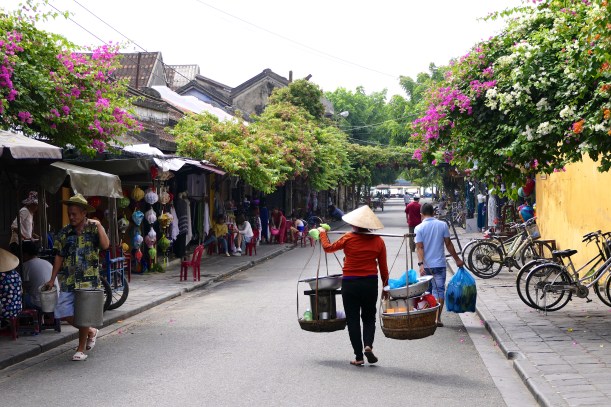
The streets are quiet in the mornings

P1110848

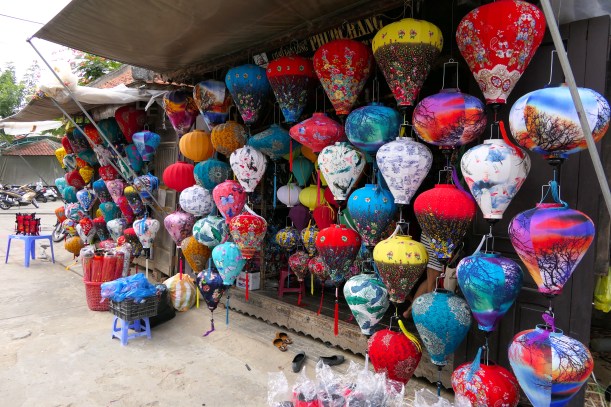
Lanterns for sale. They also adorn the outside of most buildings.

town center for happy hour. We settled into the same cafe as the evening before to enjoy the show unfold before us. After a couple drinks we returned to our guesthouse, determined to push the envelope and stay awake a little later but found our eyelids closing at 8 again. Apparently it’ll take more than two days to get over the twelve hour time change.


Leave a comment

The Packing List

“How do you even begin to pack for a six-month trip” many folks ask us. “Same as for a one-month trip” would be our standard reply. Of course, packing for a winter-long trip isn’t the same as for a week-long trip to an all-inclusive resort in Mexico. We have to plan on being more self-sufficient and be prepared for small emergencies, such as road rash from dumping your motorbike in Vietnam, or guarding against infection from a scrape against corals while snorkeling, or treatment for stomach issues as the result of a late-night street food binge (I guess this is something to be considered on a visit to Mexico as well) or even the mundane tasks of doing laundry in your guesthouse’s bathroom sink. To many people’s surprise, it’s not the clothes needed for a trip of this length that fills the space in our back packs. It’s really all the peripheral stuff, and especially in the new age of technology, the laptop, phone, e-readers, cameras and associated charging cords, spare batteries, surge protector and outlet adapters that consume so much of the valuable space that will ride on our backs. One lesson we’ve learned over the years and the course of many extended trips overseas – keep your travels to locations with similar climates and the amount of clothing needed will be minimal. Last winter took us to sunny Greece, southern India, Indonesia and Singapore. But also to Nepal, Tibet, Bhutan and New Zealand (during their fall). Having to carry cold-weather clothing like wool socks, pants, hats, gloves, fleece layers and rain jackets filled our packs to overflowing. Don’t get me wrong – each piece was absolutely essential and was worn regularly. But with the itinerary we’re envisioning this winter, none of that gear will be coming along. It’s board shorts, tank tops and flip-flops. Pack a small amount of laundry detergent, a length of clothes line and a sink stopper and you’ve got a wardrobe suitable for an entire winter of travel. Add a few items for entertainment (deck of cards, small journal, hammocks), medical kit, assorted small miscellaneous items and toiletries and we’re set for adventure. One new item we’ll be packing this year: reusable bamboo straws. Our sunset cocktails at the beach bars will be consumed guilt-free, knowing we’re not contributing to plastic straw pollution.